
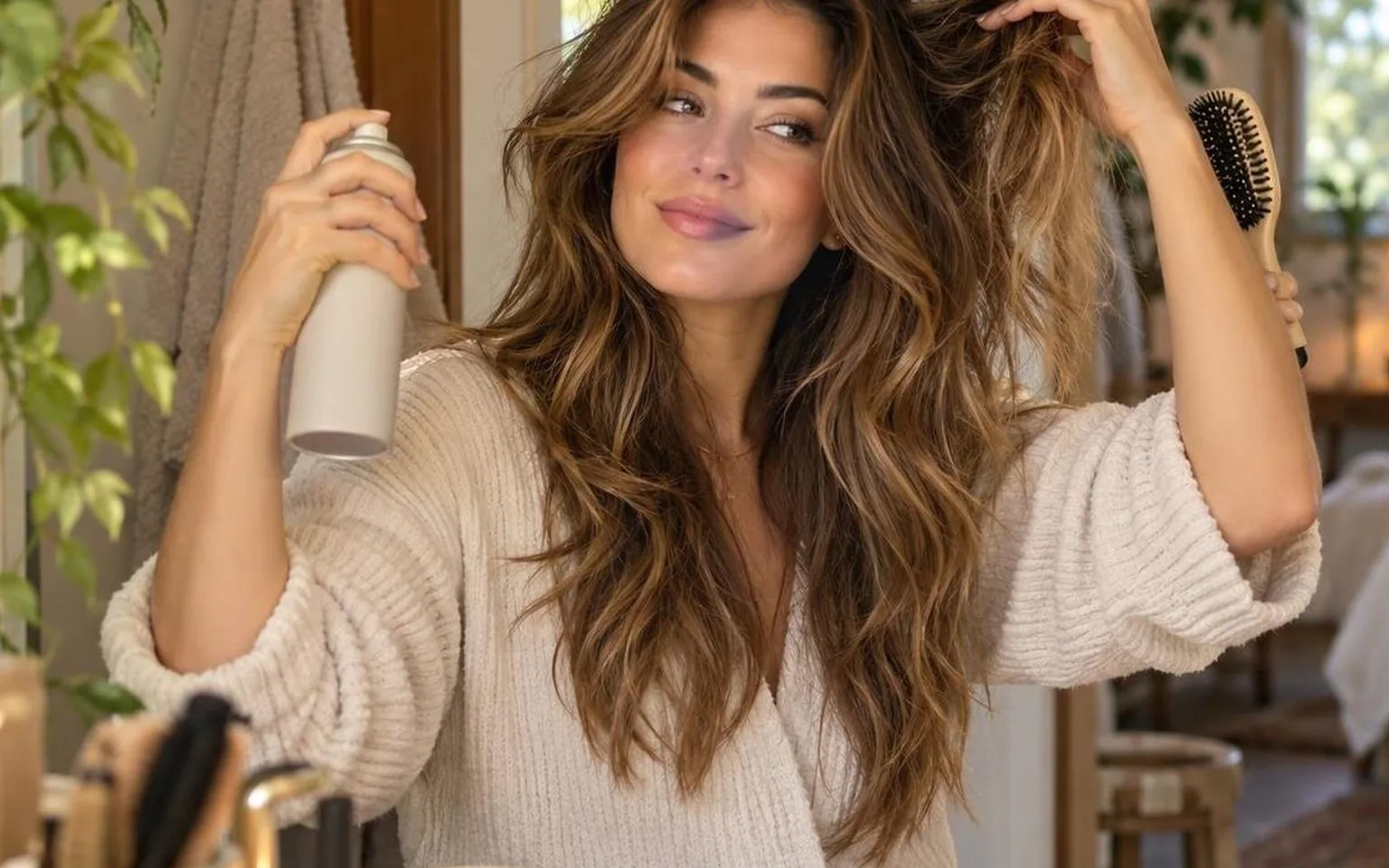
how to refresh a blowout without washing: warm the roots with a dryer on low for 30 seconds, then lift them with a 43-millimetre round brush. This technique removes flattened sections without adding moisture, while a cool shot sets the shape.
Work in 5-centimetre sections for controlled volume.
- Brush through mid-lengths with a wide-tooth comb.
- Use dry shampoo sparingly at the roots.
- Twist face-framing pieces around a 32-millimetre iron.
Refresh the ends by smoothing one section at a time with a paddle brush and low airflow. Avoid repeated heat passes, which can reduce shine and make the finish look dry.
Finish with a light mist of flexible hairspray, keeping the nozzle 25 centimetres from the hair.
Map Your Blowout’s Weak Spots First
Before grabbing any product, spend 60 seconds identifying exactly where your blowout has collapsed. Every head loses hold in a predictable pattern tied to oil output, sleep position, and original sectioning.

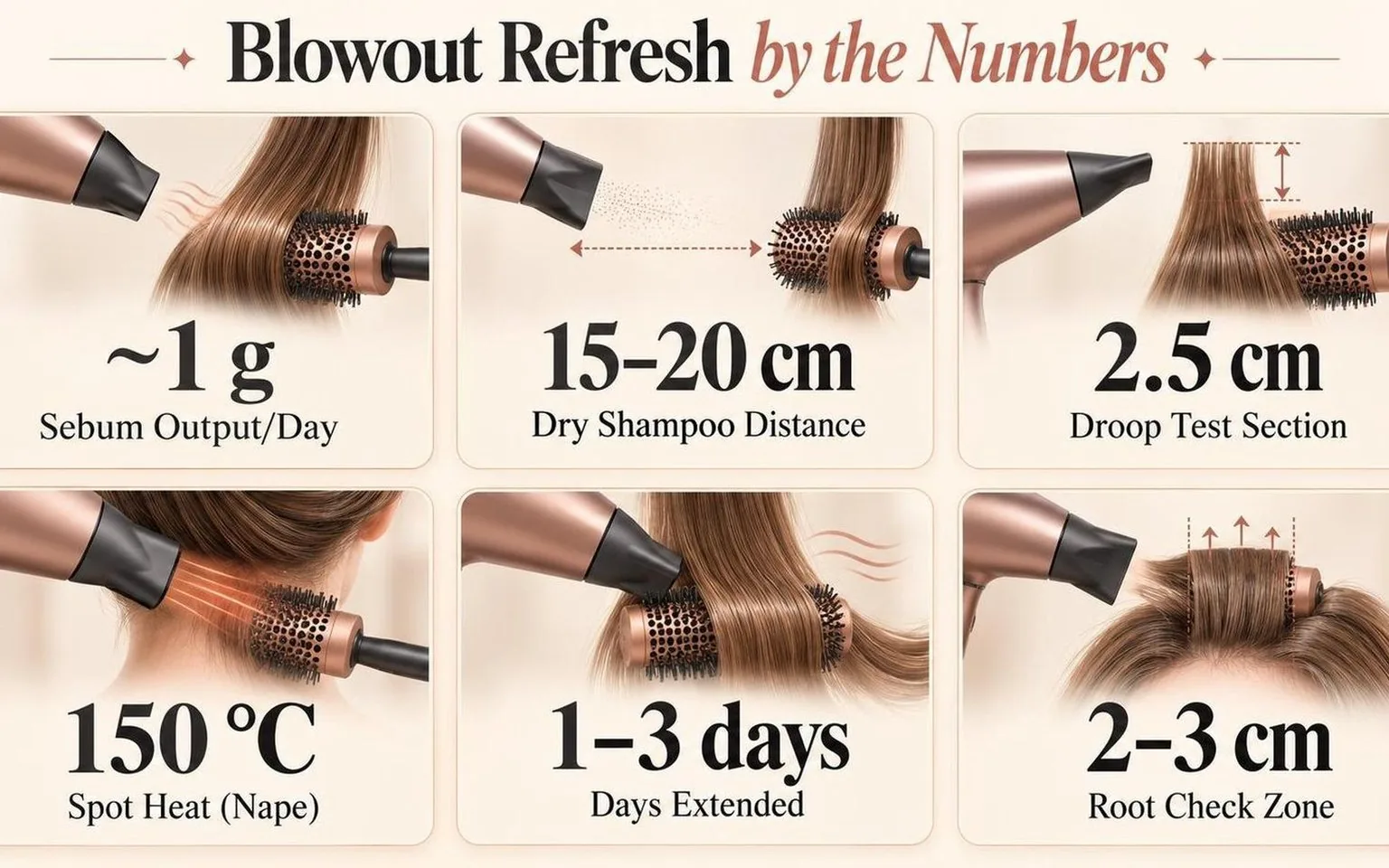
- Part your hair down the centre and check the root zone 2-3 cm from the scalp. If roots look dark, damp, or flat in the crown and temples, those are your primary oil zones. Mark them mentally — they get dry shampoo first, everything else second.
- Pull a 2.5 cm section from the mid-lengths and hold it horizontally. If it droops within 3 seconds, the mid-shaft has lost its internal structure. This section needs heat re-engagement, not just powder.
- Check the nape by running two fingers underneath at the hairline. If hair feels tacky or limp within 5 cm of the neck, humidity or pillow friction has broken the cuticle seal there. The nape often needs a different fix from the crown — typically a quick pass with a 32 mm barrel at 150 °C rather than dry shampoo, which can build up and create visible residue on darker hair in that zone.
- Count the days since your original blowout. Day 2 hair typically needs only product and finger-styling. Day 3-4 hair almost always requires spot heat from a dryer or iron on at least two sections.
Write down your weak spots: crown, temples, nape, or mid-lengths. The refresh steps that follow target each zone differently, so knowing yours saves product and time.
What the Data Shows
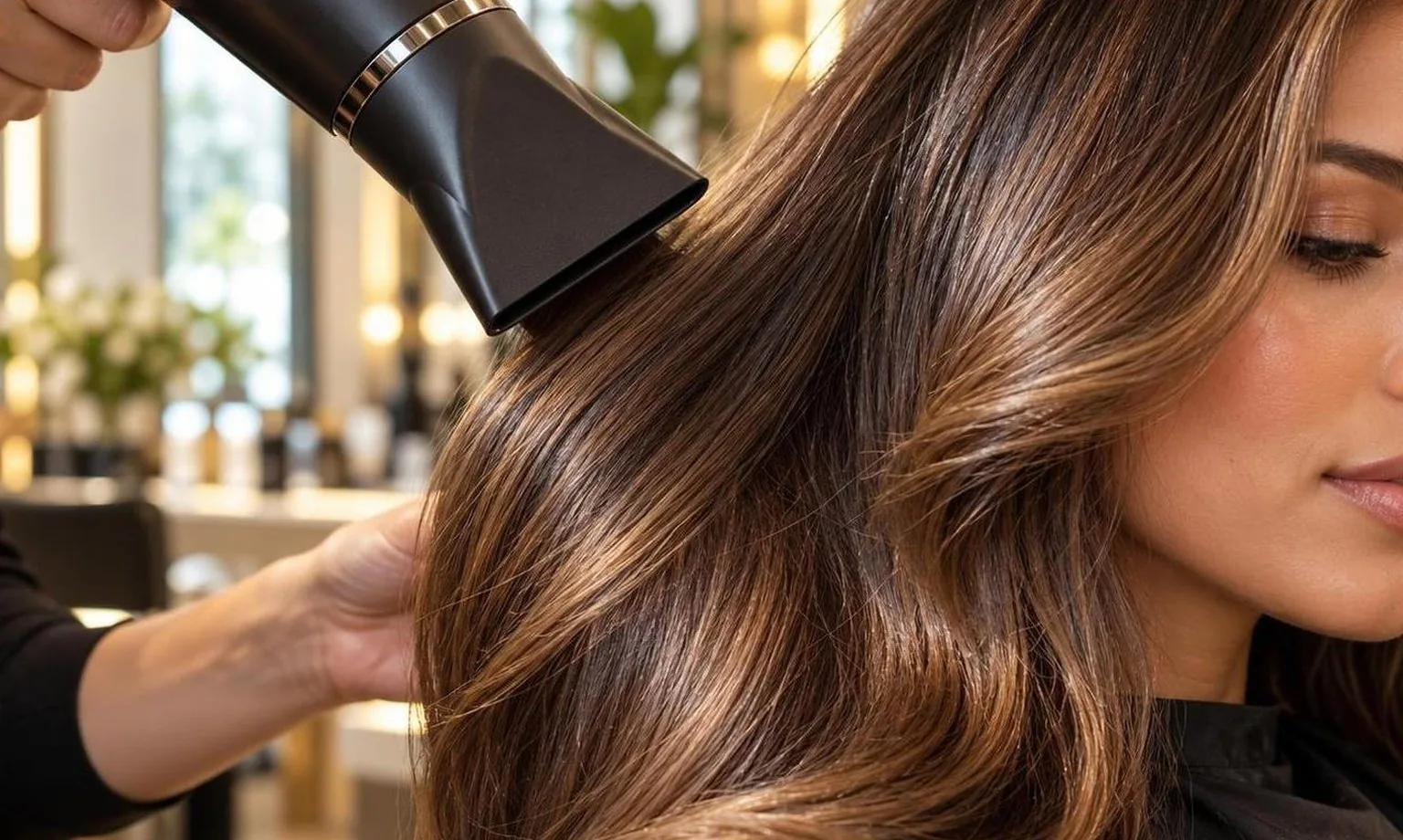
Consumer survey data consistently indicates that most professional blowouts last between 3 and 5 days before clients feel the need to wash.
Refresh techniques — dry shampoo, targeted re-styling, and controlled heat — can extend that window by 1 to 3 additional days.
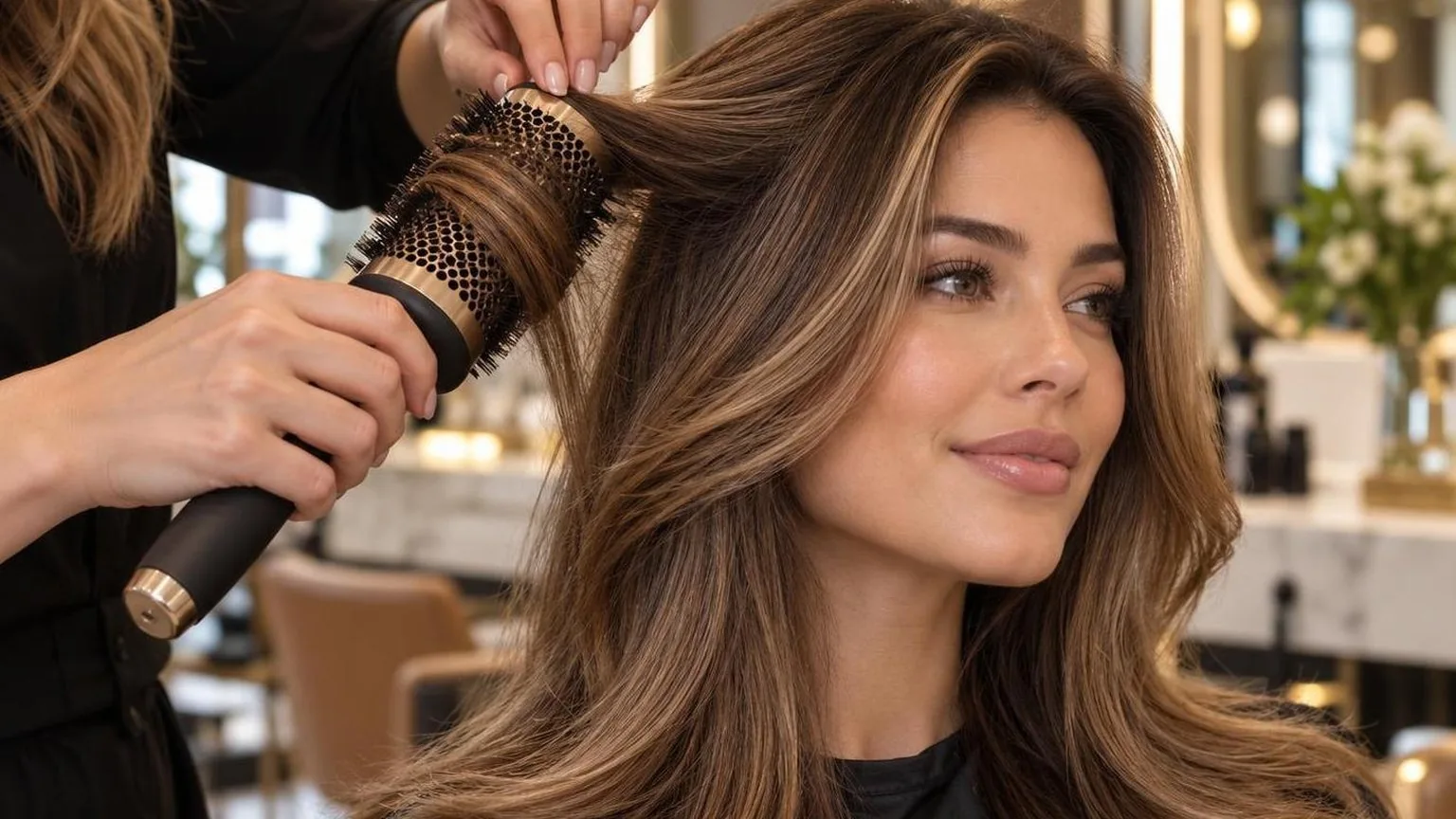
The primary factor degrading a blowout is sebum production. The human scalp produces an average of roughly 1 gram of sebum per day, though output varies by hair density, texture, and hormonal profile.
Blowout Longevity by Hair Type
Hair texture significantly affects how quickly oil travels from root to tip. Finer strands show visible oil sooner because sebum coats a smaller surface area per strand.
| Hair Type | Typical Blowout Duration (No Refresh) | With Refresh Techniques |
| Fine / Straight | 2–3 days | 4–5 days |
| Medium / Wavy | 3–4 days | 5–6 days |
| Thick / Coarse | 4–5 days | 6–7 days |
| Curly / Coily | 5–7 days | 7–10 days |
Curly and coily textures retain blowouts longest because the hair’s natural bend slows sebum migration along the strand. This is well documented in trichology literature.
Dry Shampoo: Absorption Capacity
Dry shampoo is the most widely used blowout refresh product. Its active absorbent — typically rice starch, tapioca starch, or aluminum starch octenylsuccinate — works by binding to excess sebum at the root zone.
Most aerosol dry shampoos are designed to be sprayed from a distance of 15–20 cm (6–8 inches) from the scalp. Holding the can closer oversaturates the root and leaves visible white residue.
| Absorbent Ingredient | Oil Absorption Rate | Residue Visibility |
| Rice Starch | Moderate | Low to moderate |
| Tapioca Starch | Moderate | Low |
| Aluminum Starch Octenylsuccinate | High | Moderate to high |
Powder-based dry shampoos generally deliver more absorbent per application than aerosol formats, where propellants and solvents account for a significant portion of the can’s volume.
Heat Refresh Parameters
Re-touching sections with a round brush and blow dryer is the second most effective refresh method.
Stylists recommend keeping the dryer at medium heat — approximately 60–70 °C (140–158 °F) at the nozzle — to avoid cumulative thermal damage.
Focus heat on the root area and the front hairline, where oil accumulation and flattening are most visible. Each section needs only 8–12 seconds of directed airflow to restore volume.
- Use a 32–43 mm (1.25–1.75 inch) round brush for medium to long lengths
- Lift each section at a 90-degree angle from the scalp before applying heat
- Finish with a 3–5 second blast of cool air to reset the hydrogen bonds in the cuticle
- Limit refresh sessions to the top layer and crown — over-handling mid-lengths increases frizz
Environmental Factors
Humidity above 60% accelerates blowout breakdown. Hydrogen bonds that hold the styled shape are disrupted as moisture penetrates the cortex. Sleeping on a silk or satin pillowcase reduces friction-related frizz by roughly 40% compared to cotton.
Clients who exercise regularly report blowouts degrading 1–2 days faster. Sweat introduces both moisture and salt to the root zone, compounding sebum buildup.
A targeted dry shampoo application immediately post-workout mitigates this effect significantly.
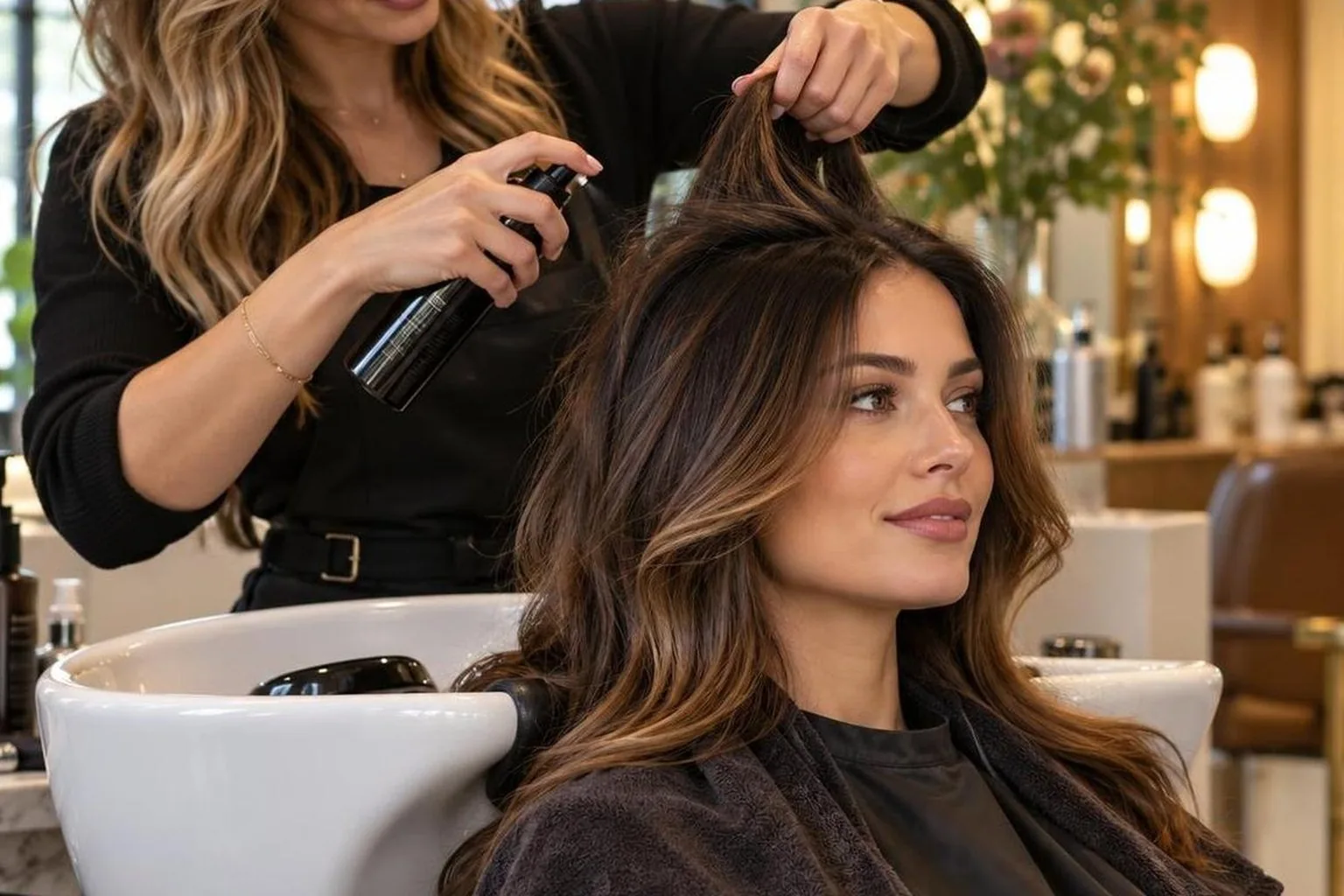
What Changes the Result
Three variables determine whether a refreshed blowout looks salon-grade or flat: humidity exposure, sebum production rate, and the tools you choose for the touch-up.
Controlling even one of these shifts the outcome from a mediocre restyle to a convincing day-three finish.
Humidity and Cuticle Behaviour
Hair absorbs moisture from the surrounding air through its cuticle layer. Porosity dictates how fast this happens.
High-porosity strands can absorb up to 30% of their own weight in water, causing hydrogen bonds set during the original blowout to break and reform in their natural wave pattern.
At relative humidity above 60%, even low-porosity hair begins losing its smooth shape within 4–6 hours.
A lightweight silicone-based serum coats the cuticle and slows moisture uptake, buying an extra 8–12 hours of hold before frizz sets in.
Sebum Accumulation by Hair Type
Sebaceous glands produce oil at different rates depending on density of follicles per square centimetre, texture, and scalp physiology. This oil is the primary reason blowouts lose volume at the root.
| Hair Texture | Typical Sebum Visibility at Root | Dry Shampoo Timing |
| Fine / straight | 12–18 hours post-wash | Apply preventatively at 10–12 hours |
| Medium / wavy | 24–36 hours post-wash | Apply at first sign of flatness, around 24 hours |
| Coarse / curly | 48–72 hours post-wash | Often unnecessary; use only at the crown if needed |
Applying dry shampoo before oil becomes visible is more effective than trying to reverse visible greasiness. Starch- or rice-based formulas absorb roughly 0.5–1 g of oil per application at the root zone.
Tool Selection for the Touch-Up
The tool you reach for during a refresh matters as much as the original styling. A 32 mm or 38 mm barrel curling iron on medium heat (150–165 °C) re-establishes bend at the mid-shaft without disturbing root volume.
Velcro rollers (40–50 mm diameter) set at the crown for 10–15 minutes while cooling offer lift without direct heat. This approach reduces cumulative thermal stress on strands already processed by the initial blow dry.
A concentrator nozzle on a dryer set to medium heat and high speed re-smooths flyaways in targeted 5–8 second passes. Holding the nozzle 10–15 cm from the hair keeps surface temperature below 130 °C, avoiding unnecessary cuticle damage.
Product Layering Order
- Dry shampoo at the roots first — spray 20–25 cm from the scalp, wait 60 seconds, then massage in.
- Lightweight serum or oil (1–2 drops) on the mid-lengths and ends only to restore shine without adding weight at the crown.
- Flexible-hold hairspray as a finishing barrier — a single pass from 30 cm distance deposits roughly 0.3 g of resin, enough to hold without stiffness.
Reversing this order — applying serum before dry shampoo — collapses root lift. The oil migrates upward through capillary action within minutes, negating the absorbent powder entirely.
Each of these factors compounds. High humidity plus fine hair plus wrong product order can cut a blowout’s lifespan by half. Controlling all three extends a single wash-and-style to 4–5 usable days.
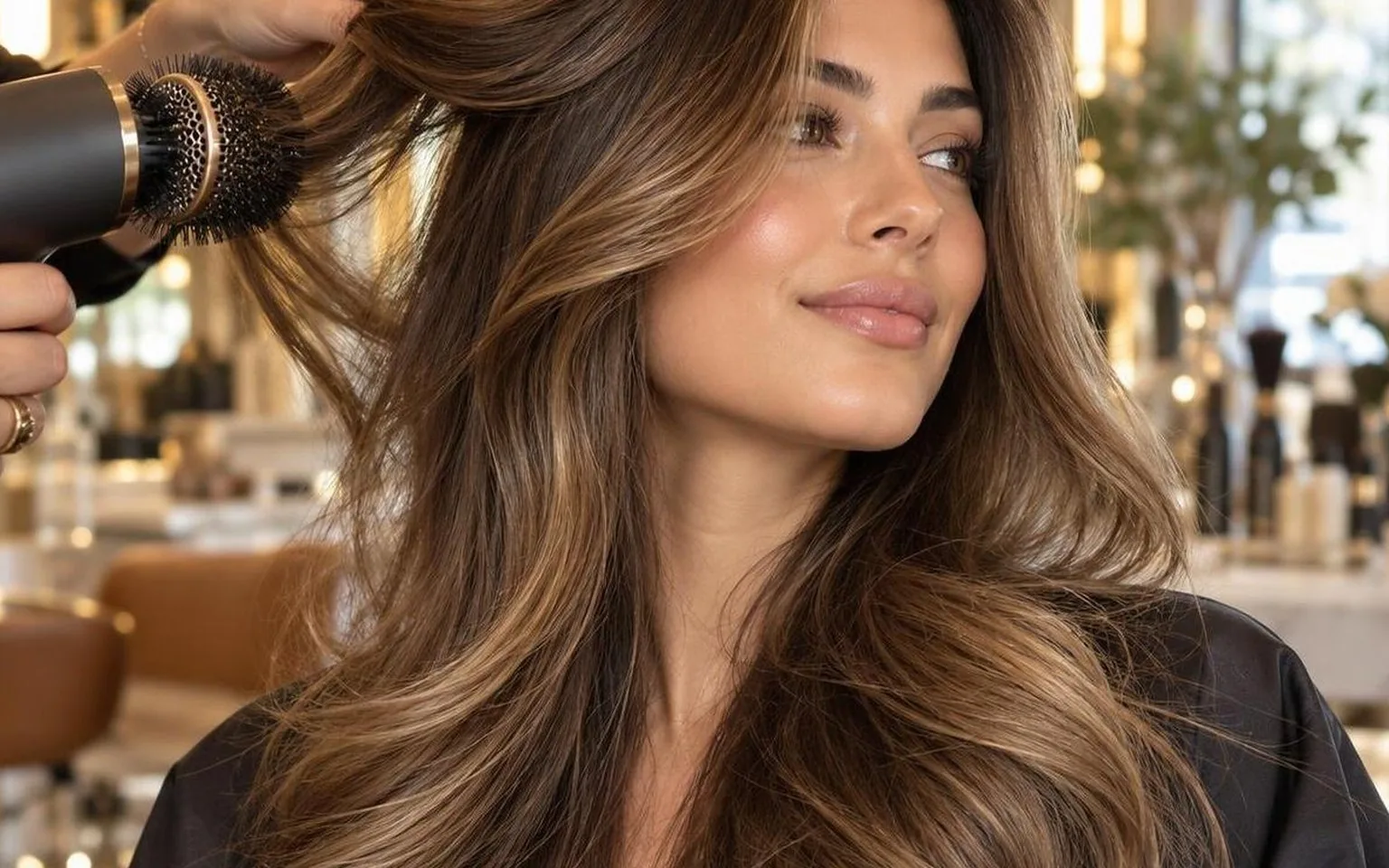
Spotting It on the Day
A blowout starts losing its shape within 12–72 hours depending on hair texture, humidity, and sleeping method. Recognising the early signs of deflation lets you intervene with targeted touch-ups rather than a full re-style.
The sooner you spot flatness or oil buildup, the less effort the refresh demands.
The Three Warning Signs
Flat roots, visible oil at the crown, and bent ends are the classic trio. Each appears at a different pace depending on your sebum production rate and hair diameter.
Fine hair (under 60 microns) shows oil faster than coarse strands (above 80 microns).
- Flat roots: Volume loss at the crown and part line, usually noticeable when hair sits within 5 mm of the scalp instead of lifting 10–15 mm at the root.
- Oily sheen at the crown: Sebaceous glands concentrate at the top of the head, producing roughly 1 mg of sebum per 10 sq cm every 3 hours, making this zone the first to look greasy.
- Bent or kinked ends: Caused by compression during sleep or from tucking hair behind the ears repeatedly, creating creases in the lower 5–8 cm of the lengths.
Timing by Hair Type
Not every client’s blowout fades at the same rate. The table below gives realistic windows for when each warning sign typically appears, based on texture and density.
| Hair Type | Flat Roots Appear | Oil Visible | Ends Bend |
| Fine / straight | 12–18 hours | 18–24 hours | After first sleep |
| Medium / wavy | 24–36 hours | 30–42 hours | After first sleep |
| Thick / coarse | 48–60 hours | 48–72 hours | After second sleep |
The Mirror Check Method
Hold a hand mirror at 45 degrees behind the crown while facing a wall mirror. This dual-mirror angle exposes root lift and oil sheen that a straight-on view hides. Stylists at busy blow dry bars teach this to clients as a 10-second daily diagnostic.
Run two fingers along the part line from forehead to crown. If they glide without resistance, sebum has coated the strand surface and dry shampoo is overdue. If there is slight texture or grip, the blowout still has hold.
Humidity: The Invisible Accelerator
Relative humidity above 65% breaks hydrogen bonds in the hair cortex faster, collapsing volume and encouraging frizz.
A simple hygrometer — available at any hardware shop — lets you anticipate a bad blowout day before you even check the mirror.
Indoor environments with central heating can drop humidity below 30%, which preserves smoothness but causes static. The ideal range for blowout longevity sits between 40% and 55% relative humidity.
When to Refresh vs. When to Rewash
If only one or two of the three warning signs are present, a targeted refresh — dry shampoo at roots, a round brush pass on bent ends — takes under 8 minutes.
All three signs appearing together, especially after 72 hours, usually signals that a full wash and re-blow is the more efficient path.
Catching the blowout at the one-sign stage keeps total refresh time between 3 and 5 minutes. Waiting until all three signs converge triples that window and often yields a less polished result.
What the Other Routes Give You
Beyond dry shampoo, several alternative methods extend a blowout by 24–72 additional hours.
Each route targets a different problem — oil, flatness, frizz, or shape loss — and choosing the right one depends on your hair texture, density, and how many days post-blowout you are.
Targeted Refresh Methods Compared
| Method | Best For | Hold Extension | Heat Required | Time |
| Velcro rollers (43 mm diameter) | Root lift on fine hair | 24–36 hours | None or cool shot | 10–15 min set time |
| Low-heat touch-up with round brush | Bent or flattened ends | 24–48 hours | 130–150 °C / 265–300 °F | 5–8 min |
| Silk or satin pillowcase | Overnight frizz prevention | 12–24 hours per night | None | 0 min active |
| Shower cap steam avoidance | Humidity protection | Preserves existing shape | None | 0 min active |
| Texture or finishing spray | Mid-length grip and movement | 12–24 hours | None | 1–2 min |
Velcro Rollers
Use 43 mm rollers for medium to long hair, 32 mm for bobs. Section hair into 2-inch panels, roll from ends to root, and leave for 10–15 minutes. A 3-second cool shot per roller before removal locks the curve.
This method adds volume without reintroducing moisture or product residue. It works best on day-two hair that has gone flat at the crown but still feels clean at the mid-lengths.
Low-Heat Round Brush Touch-Up
Set your dryer to 130–150 °C and use a 45 mm ceramic barrel brush. Focus only on the front hairline and ends — the two zones that lose shape first. Limit each section to 6–8 seconds of heat exposure.
Overworking mid-lengths strips the natural oils that are actually helping your blowout hold. Touch up selectively. Two to three sections at the face frame is typically enough.
Silk and Satin Pillowcases
Cotton pillowcases create friction that roughens the cuticle and pulls moisture from the hair shaft. Silk (19 momme weight or higher) and satin reduce that friction significantly, preserving smoothness overnight without any product.
Pair the pillowcase with a loose, high bun secured by a spiral hair tie. This keeps root direction intact and prevents crease marks that a standard elastic would leave across the mid-shaft.
Texture and Finishing Sprays
A light-hold texture spray applied from 25–30 cm away adds grip and separation without the powdery residue of dry shampoo.
Look for formulas listing silica or rice starch within the first eight ingredients for oil absorption without visible buildup.
Spray in short 1-second bursts at the root zone, then shake the hair at the base with your fingertips. Avoid brushing after application — brushing distributes the product too evenly and flattens the lift you just created.
Shower Cap Discipline
Bathroom humidity above 60% relative humidity can swell the hair cuticle and undo smooth blowout results within minutes. A standard shower cap keeps steam off the hair entirely during a 10–15 minute shower.
For extra protection, clip hair loosely at the crown before placing the cap. Tight compression against a warm scalp under the cap can create unwanted bends at the root area.

Heat Without the Cost to Hair
Refreshing a blowout with heat tools does not require the same temperatures used during the initial styling.
Lower settings — between 130°C and 150°C (265°F–300°F) — are sufficient to re-smooth and revive second- or third-day hair without compounding thermal damage.
The logic is straightforward: freshly washed hair contains more internal moisture that demands higher heat to reshape hydrogen bonds. Day-two hair retains much of its original set, so less energy is needed to re-form it.
Temperature Guidelines by Hair Texture
Match your refresh temperature to the hair’s porosity and density. The table below gives practical ranges for touch-up passes only, not full styling from wet.
| Hair Texture | Full Blowout Temp | Refresh Temp | Max Passes per Section |
| Fine / Low Density | 150°C (300°F) | 130°C (265°F) | 1 |
| Medium / Normal | 180°C (356°F) | 140°C (285°F) | 2 |
| Coarse / High Density | 210°C (410°F) | 150°C (300°F) | 2–3 |
Limiting passes matters as much as temperature. Each additional pass over the same section compounds heat exposure, degrading the cuticle layer progressively even at moderate settings.
Tool Selection for a Refresh
A full-size round brush and dryer are unnecessary. The best refresh tools deliver focused, gentle heat to targeted sections — typically the face frame, crown, and ends.
- 32 mm or 38 mm hot brush: Wraps mid-lengths and ends in a single motion. Apply tension for 6–8 seconds per section, then release and let hair cool before touching.
- Flat iron (narrow plate, 25 mm or less): Best for smoothing the front hairline and nape flyaways. One slow pass at 130°C–140°C is sufficient for fine-to-medium hair.
- Concentrator nozzle on a dryer (low heat, medium speed): Directs airflow to re-activate bend at the root without disturbing the lengths. Hold the nozzle 15 cm from the scalp and keep it moving.
Protecting the Cuticle During a Refresh
A lightweight heat protectant is still warranted, even at reduced temperatures. Thermal damage begins at approximately 130°C for fine hair according to research published in the Journal of Cosmetic Science.
Apply a mist-format protectant sparingly — two to three sprays across the face frame and ends. Cream-based protectants add weight and accelerate the greasy look you are trying to avoid.
Allow the protectant 30–60 seconds to distribute before applying any heat. This drying window prevents steam damage, where trapped moisture boils inside the cortex and causes bubble hair.
The Cool-Shot Finish
End every refresh section with 5 seconds of cool air from the dryer. Cool air closes the cuticle and locks the hydrogen bonds into their newly smoothed position, extending the style by another 8–12 hours.
Skipping the cool shot is the most common refresh mistake. Warm, open cuticles revert faster, absorb ambient humidity, and lose smoothness within hours — negating the time spent touching up.
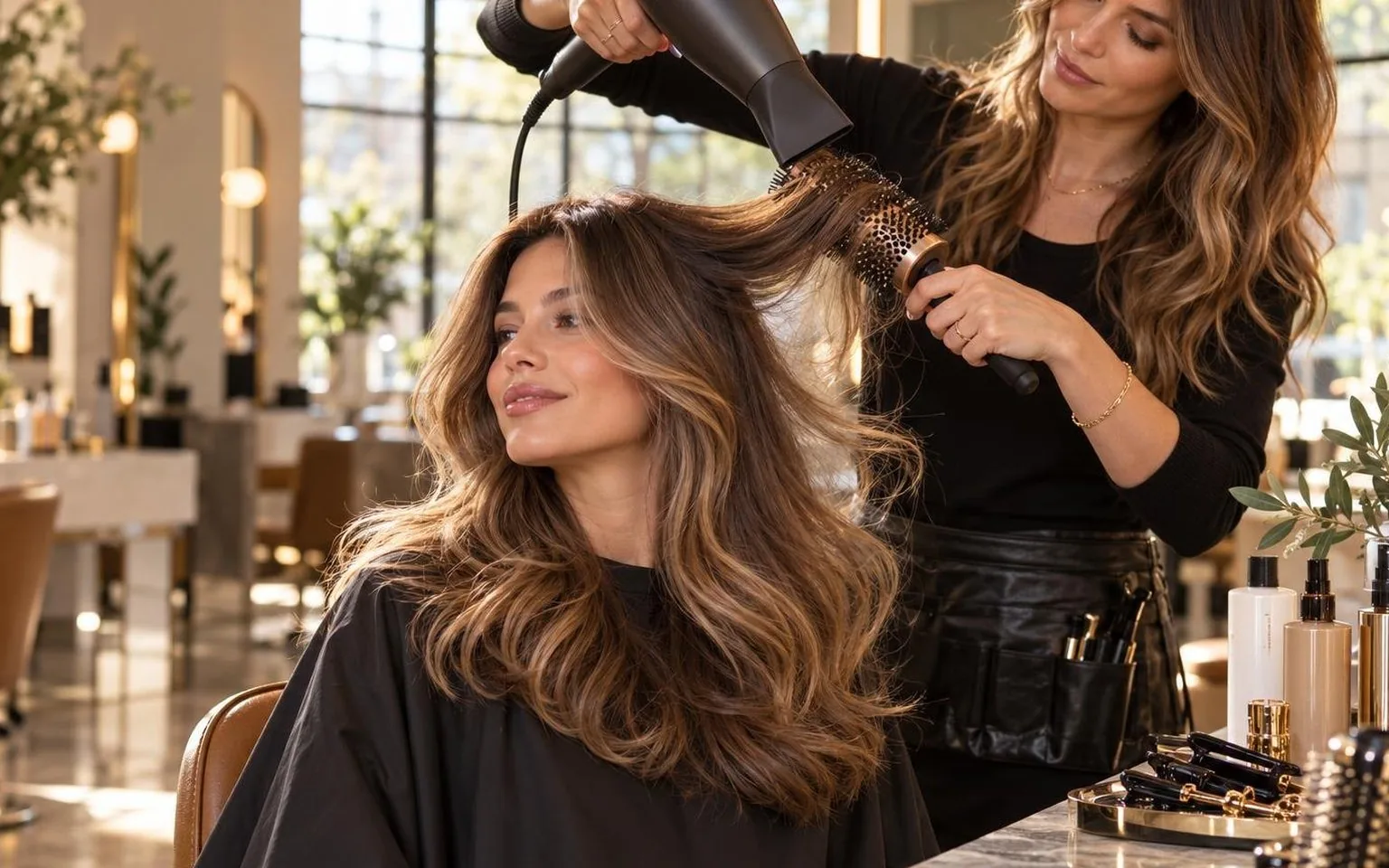
Frequently Asked Questions
How long can a professional blowout last before it needs refreshing?
A well-executed blowout typically holds 3–5 days depending on hair density, humidity, and sleeping method. Fine hair loses volume fastest, usually by day 2.
Refreshing techniques can extend the style an additional 1–2 days beyond its natural lifespan without rewashing.
What is the correct way to use dry shampoo to revive a blowout?
Hold the canister 15–20 cm from the scalp and spray in short bursts along the part line and behind the ears, where oil concentrates first.
Wait 60–90 seconds for the starch to absorb sebum, then massage with fingertips and brush through with a natural-bristle paddle brush.
Can a blow dryer be used to re-volumise roots without wetting hair?
Set the dryer to medium heat (roughly 70–80 °C at the nozzle) and low airflow. Lift sections at the crown with a 43 mm round brush, directing heat at the root for 8–10 seconds per section.
Finish with a 5-second cool shot to lock the lift in place.
Does sleeping position affect how well a blowout holds overnight?
Gathering hair into a loose, high twist secured with a silk scrunchie prevents friction-based frizz. A silk or satin pillowcase with a friction coefficient roughly half that of cotton further reduces cuticle disruption.
Side sleepers should pin the lower section loosely away from the face before bed.
Which touch-up tools work best for smoothing mid-length flyaways between washes?
A 25 mm flat iron on a low setting of 130–150 °C can smooth individual flyaway sections in a single pass without resetting the overall shape.
A boar-bristle finishing brush dressed with a light mist of flexible-hold hairspray also tames surface frizz without adding weight or residue.
How does humidity undermine a blowout, and what helps block it?
Hydrogen bonds reformed during blow drying break when hair absorbs atmospheric moisture above roughly 60% relative humidity.
Applying a thin layer of silicone-based finishing serum — roughly a pea-sized amount for medium-length hair — coats the cuticle and acts as a vapour barrier, slowing moisture uptake throughout the day.
Related Reading
- How to blow dry your hair at home, step by step
- What the cool shot button actually does
- Blow drying thick hair faster without cutting corners
- Root volume that survives the first hour
- How to blow dry a finish that survives humidity
- The complete guide to blow drying technique
- U.S. Small Business Administration (SBA)
- PubMed – National Library of Medicine
- Titi Tudorancea – Journal of Cosmetic Science via NLM Catalog
- Purdue University – Department of Chemistry (Polymer and Materials Science)
- Underwriters Laboratories (UL)
- Professional Beauty Association
- NIH National Library of Medicine
- EPA Safer Choice Program