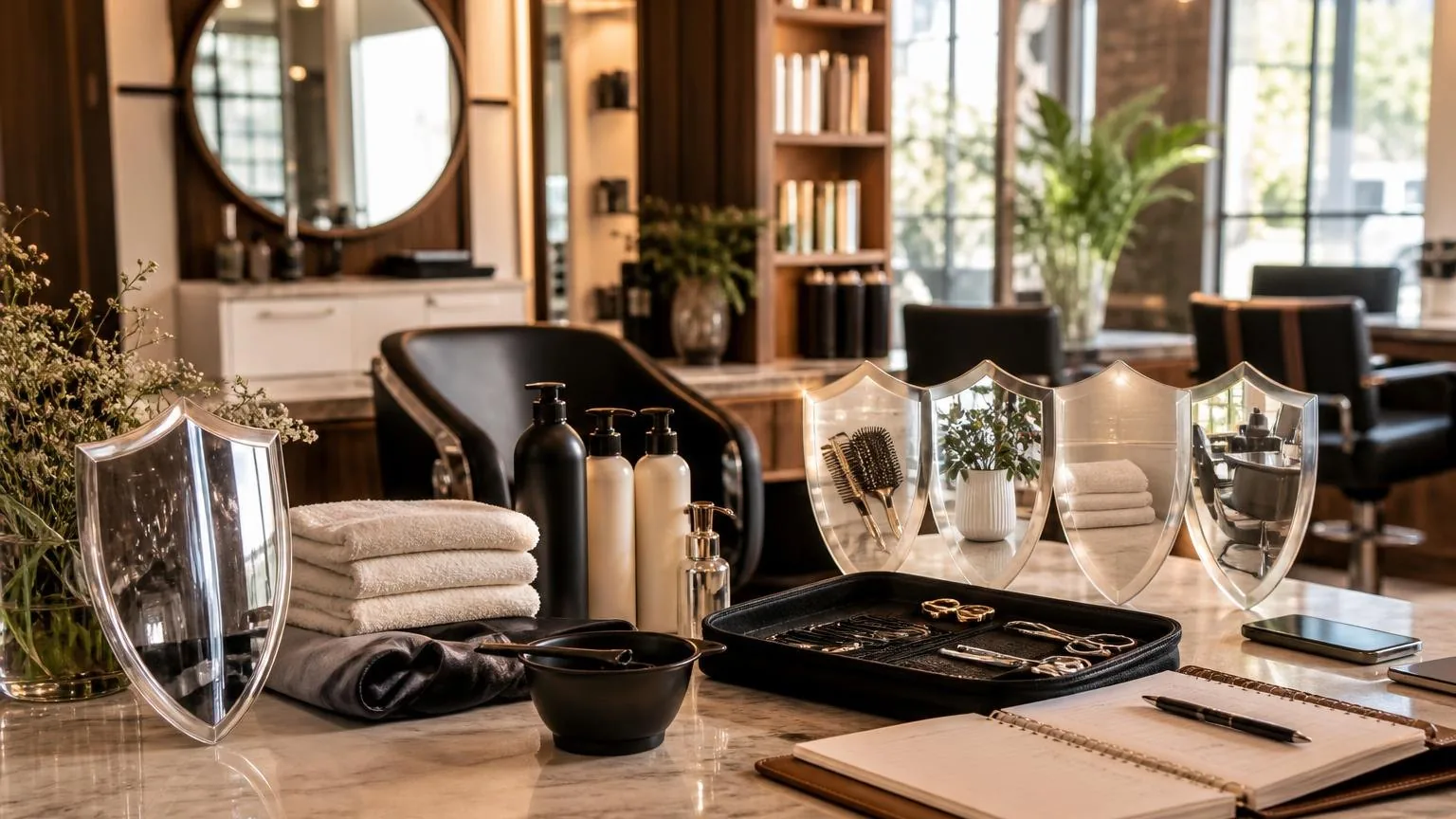
The types of salon insurance, and what each covers are usually five core policies: general liability, professional liability, property, workers’ compensation, and business interruption,.
Each protecting a different failure point in a salon’s daily service chain.
For blow dry bars, that means separating slip-and-fall claims from styling-service complaints, tool damage, staff injuries, and lost trading time.
This guide breaks down what each policy typically covers, what it does not, and where salon owners should check limits, exclusions, deductibles, and contractor arrangements.
Map Your Salon Cover
Use this 10-minute check before you compare quotes. It helps you match each policy to a real risk in your blow dry bar, instead of buying a bundle without knowing what sits where.
- List your daily client count. Write down your busiest-day number, not your average. If you style 35 clients on a Saturday, use 35. Higher footfall usually means higher slip, burn, complaint and property-damage exposure.
- Price your kit and stock. Add dryers, brushes, hot tools, chairs, mirrors, reception equipment, retail shelves and backbar stock. A 6-chair bar can easily hold 20 to 40 electrical tools once spares are included.
- Count who works there. Separate employees, chair renters, freelancers and trainees. Workers’ compensation usually follows employees, while contractor cover may need checking in writing. Ask for certificates before they take clients.
- Work out your closure cost. Add one week of rent, payroll, utilities, software, loan payments and expected takings. If a water leak shuts you for 5 trading days, this is the number business interruption cover needs to answer.
- Check your outside risks. Note home-visit styling, wedding call-outs, product deliveries, online booking, stored card details and client photos. These can point to commercial auto, cyber, product liability or extra professional liability limits.
Keep the figures in one document. When an insurer asks about limits, deductibles or exclusions, you can answer from your actual salon set-up, not a guess.
What the Numbers Actually Say
The numbers say salon insurance is less about one “salon policy” and more about matching limits to the claims that can realistically hit a blow dry bar.
The hard figures are legal minimums, lease requirements, certificate limits, excesses, and payroll-based covers.
For owners, the first audit is simple: identify who could claim against you, then check whether the relevant policy limit is high enough for that route.
| Insurance type | Key number to check | What it covers in practice |
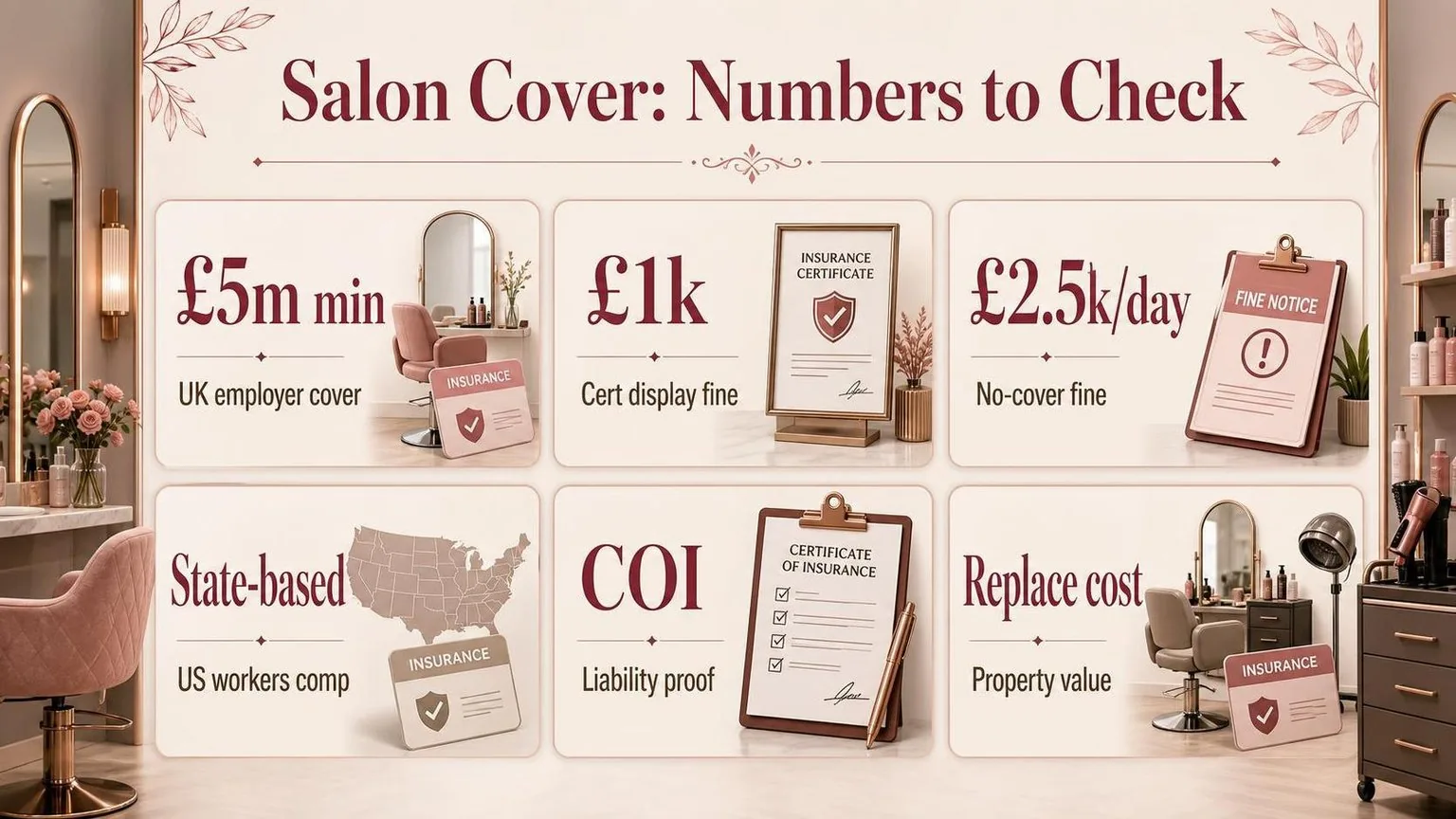
| Employers’ liability, UK | At least £5,000,000 cover required by law where applicable | Employee injury or illness claims connected to work, such as slips in the backwash area or accidents involving salon duties |
| Employers’ liability certificate, UK | Up to £1,000 fine for not displaying or making the certificate available | Proof that the business holds the required employee cover |
| Employers’ liability inspection, UK | Up to £2,500 fine for each day without required cover | Regulatory exposure if a salon employs staff without the required insurance |
| Workers’ compensation, US | Thresholds vary by state, often triggered by employee count | Employee workplace injuries, wage replacement, and related statutory benefits |
| General or public liability | Often checked by landlords through a certificate of insurance | Client or visitor injury and property damage, such as a trip over a dryer cord or water escaping into a neighboring unit |
| Professional liability or treatment liability | Limit should match the services listed on the policy schedule | Allegations that a paid service caused harm or financial loss, including styling service disputes |
| Property insurance | Insured value should reflect replacement cost, not second-hand value | Chairs, mirrors, dryers, reception desk, stock, towels, electrical tools, and tenant improvements |
| Business interruption | Indemnity period commonly needs to cover rebuild, refit, inspection, and reopening time | Lost income and continuing expenses after an insured property loss |
HSE guidance is the cleanest UK benchmark: employers’ liability must be at least £5,000,000, and many insurers provide £10,000,000 as standard.
That matters for salons because even a compact blow dry bar may have employed assistants, reception staff, apprentices, and freelance-looking workers who are legally employees.
In the US, the headline number is not one national limit. Workers’ compensation is state-based, so a single-chair owner-operator and a multi-site blow dry group may have different obligations in different states.
For liability limits, certificates matter operationally. A landlord, shopping center, hotel, wedding venue, or pop-up partner may require specific insured limits before keys, access, or event approval are released.
- Check whether subcontractors must carry their own insurance and name the salon where required.
- Match professional liability wording to actual services performed, not just “hair services” broadly.
- Set property values from a room-by-room inventory, including dryers, styling stations, laundry equipment, tablets, stock, and retail shelving.
- Review excesses and deductibles separately; a low premium can hide a claim payment the salon must fund first.
Where the Difference Comes From
The insurance outcome changes when the insurer sees more people, hotter tools, higher-value equipment, or higher contractual liability.
A blow dry bar with employed stylists, multiple chairs, and retail stock needs a different mix of cover than a solo stylist renting a booth.
Underwriters usually rate salon risk through premises exposure, services offered, payroll or turnover, claims history, and whether staff are employees or independent contractors. Policy wording matters as much as the headline cover.
Service menu and heat exposure
Blow dry bars look lower-risk than colour-led salons, but heat tools still drive liability questions.
Insurers may ask about dryers, hot brushes, tongs, straighteners, extension leads, PAT testing in the UK, and whether tools are switched off between clients.
| Tool or setting | Typical salon detail insurers may ask about |
| Professional dryer | Commonly rated around 1,800 to 2,200 watts |
| Flat iron | Often adjustable up to 450°F or 230°C |
| Hot brush or tong barrel | Common diameters include 25 mm, 32 mm, and 38 mm |
| Client service time | A blowout appointment often runs 30 to 45 minutes |
Who is doing the work
Employee status changes the insurance stack. In the US, workers’ compensation is generally handled at state level.
In the UK, employers’ liability insurance is legally required for most businesses with employees, according to the Health and Safety Executive.
| Workforce setup | Cover affected |
| Owner-only studio | General liability, professional liability, property, tools |
| Employees on payroll | Employers’ liability or workers’ compensation becomes central |
| Booth renters | Contracts should require each renter to carry their own cover |
| Mobile stylists | Off-premises tools, transit, and client-site liability need checking |
Premises, equipment, and stock
A landlord, lender, or shopping centre may require minimum liability limits and to be named as an additional insured or interested party. Lease clauses often change the answer faster than the salon menu does.
| Asset or contract point | Why it changes cover |
| Styling chairs and stations | Raises business personal property values |
| Wash basins and plumbing | Can affect escape-of-water and premises questions |
| Retail shelves | Product stock may need separate limits |
| Lease agreement | May require specified liability wording and certificates |
Claims history and documentation
Insurers treat neat records as risk control. Keep consultation notes, incident logs, staff training records, appliance checks, cleaning schedules, and product instructions.
The Insurance Information Institute notes that business interruption cover depends on covered property damage, not ordinary slow trade.
- General liability: responds to third-party injury or property damage allegations.
- Professional liability: responds to service-related allegations, such as an unsatisfactory or disputed finish.
- Property insurance: covers insured salon contents, fixtures, stock, and tools, subject to limits and exclusions.
- Cyber cover: matters when online booking, stored cards, email marketing, or client records are used.
Checking It at the Chair
Judge salon insurance by walking through a normal blowout, not by reading policy names alone. If a client, stylist, dryer, mirror, booking system, or product shelf can create a loss during service, the policy should show where that loss is covered.
Use one full appointment as the test: consultation, shampoo, rough-dry, brush work, hot-tool finish, payment, retail sale, and clean-down. Mark every point where property, injury, advice, or employee risk appears.
Run the blowout risk test
| Real salon moment | Insurance to check | What it should respond to |
| Client trips over a dryer cord at the station | Public liability or general liability | Third-party injury claim, legal defence, settlement, medical costs where covered |
| Round brush or dryer damages a client’s clothing | Public liability or general liability | Third-party property damage during a service |
| Stylist gives finishing advice that leads to a complaint | Professional liability or treatment liability | Claims tied to professional services, technique, or beauty treatment work |
| Employee strains a wrist during back-to-back blowouts | Workers’ compensation or employers’ liability | Employee injury connected with salon duties, subject to local law |
| Water leak damages dryers, chairs, and retail stock | Commercial property or contents cover | Owned equipment, fixtures, furnishings, stock, and sometimes tenant improvements |
| Salon closes while covered damage is repaired | Business interruption | Lost income and continuing expenses after an insured property loss |
| Online booking or client card data is compromised | Cyber liability | Data breach response, notification costs, investigation, and certain cyber claims |
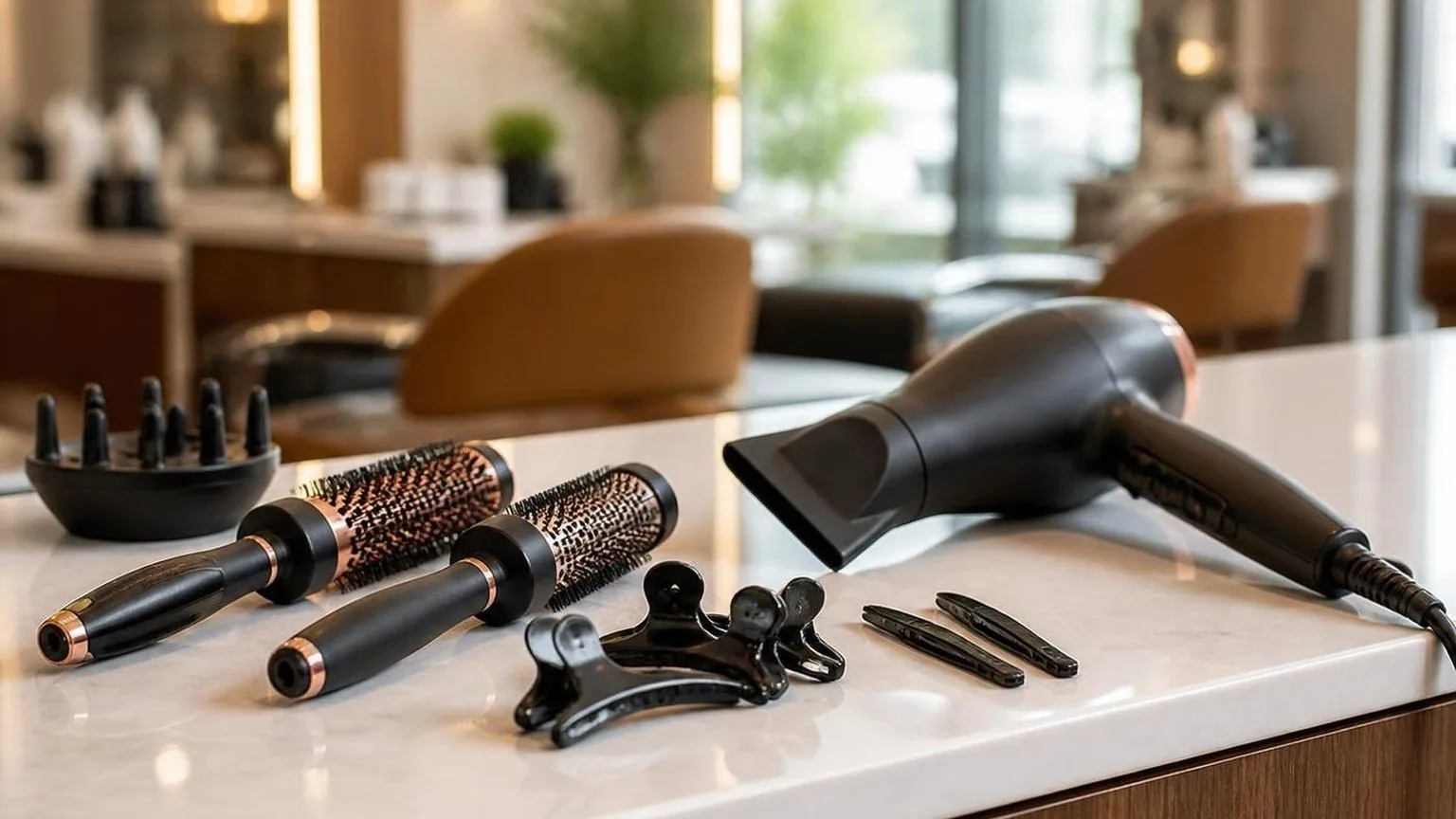
For a blow dry bar, equipment values climb quickly. Count every dryer, hood dryer, hot brush, chair, trolley, mirror, washer, dryer, iPad, phone, and retail unit before accepting a contents limit.
| Item to count | Typical quantity to verify | Why it matters |
| Styling stations | 4 to 12 | Sets the scale for chairs, mirrors, trolleys, tools, and electrical load |
| Handheld dryers per station | 1 to 2 | Backups matter when a dryer fails mid-service |
| Hot tools per station | 2 to 4 | Curling irons, wands, and smoothing irons may need separate listing if high value |
| Appointments per stylist shift | 6 to 10 | Helps judge liability exposure and business interruption impact |
Questions that expose weak cover
- Does the policy name blow dry, styling, shampooing, updos, and retail sales as covered activities?
- Are independent stylists, renters, trainees, and mobile staff included, or do they need separate cover?
- Is heat-tool work included without a hidden exclusion for professional treatments?
- Are client belongings covered if a coat, bag, or garment is damaged in the salon?
- Does business interruption start only after physical damage, or does it include utility interruption where available?
- Are defence costs inside the limit or in addition to the limit?
Ask the broker to confirm answers in writing, using the policy wording rather than a summary sheet.
The Association of British Insurers and the Insurance Information Institute both stress that exclusions, limits, and conditions control how cover actually applies.
Weighed Against What Else Is Used
Salon insurance is usually broader than relying on a single policy, a waiver, or a landlord’s cover.
The main difference is that a salon package can combine client injury, treatment mistakes, stock, tools, staff, and premises risks in one structure.
For a blow dry bar, the practical comparison is simple: choose cover by what could stop trading for a day, trigger a client claim, or leave you replacing kit out of pocket.
A waiver does not pay legal defence costs, and a lease rarely protects your chairs, dryers, or retail stock.
| Option | What it usually covers | Key gap for salons |
| Salon insurance package | Public liability, employers’ liability where required, contents, stock, treatment liability, business interruption, and optional cyber cover | Limits, excesses, and treatment definitions must match the services actually offered |
| Public liability only | Third-party injury or property damage, such as a client tripping over a dryer cable | Usually no cover for stolen tools, staff injury obligations, or faulty professional service allegations |
| Professional or treatment liability only | Claims linked to hands-on services, advice, or application technique | Usually no premises, stock, contents, or general slip-and-trip protection |
| Landlord’s building insurance | The building shell, often including walls, roof, and permanent fixtures | Tenant’s mirrors, chairs, retail stock, electrical tools, and lost income are usually outside scope |
| Client waiver | Evidence that a client accepted certain stated risks | Does not stop a claim being made and does not replace insurer-funded defence |
Where a package beats piecemeal cover
A busy blow dry bar can have several exposures happening at once: wet floors, trailing cords, hot tools, card payments, staff shifts, retail shelving, and appointment data.
Separate policies can work, but gaps appear when each insurer says another policy should respond.
- Public liability: often bought with limits such as £1 million, £2 million, or £5 million in the UK, and comparable layered limits in the US depending on lease and contract requirements.
- Employers’ liability: compulsory for most UK businesses with staff, with a legal minimum cover level of £5 million, according to UK government guidance.
- Workers’ compensation: handled at state level in the US, with requirements varying by employee count and location, according to state insurance regulators.
- Contents and tools: should reflect replacement cost, not what the dryer, stool, or point-of-sale tablet is worth second-hand.
- Business interruption: only helps if the insured event and waiting period fit real salon downtime, such as closure after insured water damage.
The alternative to salon insurance is not “no paperwork.” It is usually self-insuring every uncovered loss.
One damaged colour station, a stolen tool kit, or a client injury allegation can involve cleaning costs, replacement costs, cancelled appointments, and legal correspondence at the same time.
For home-based or mobile stylists, the comparison changes slightly. Home insurance may exclude business visitors, paid services, and professional tools.
Mobile cover should follow the stylist to venues, hotels, weddings, and client homes, not just protect items stored overnight.
Heat, Tension and Keeping Hair Intact
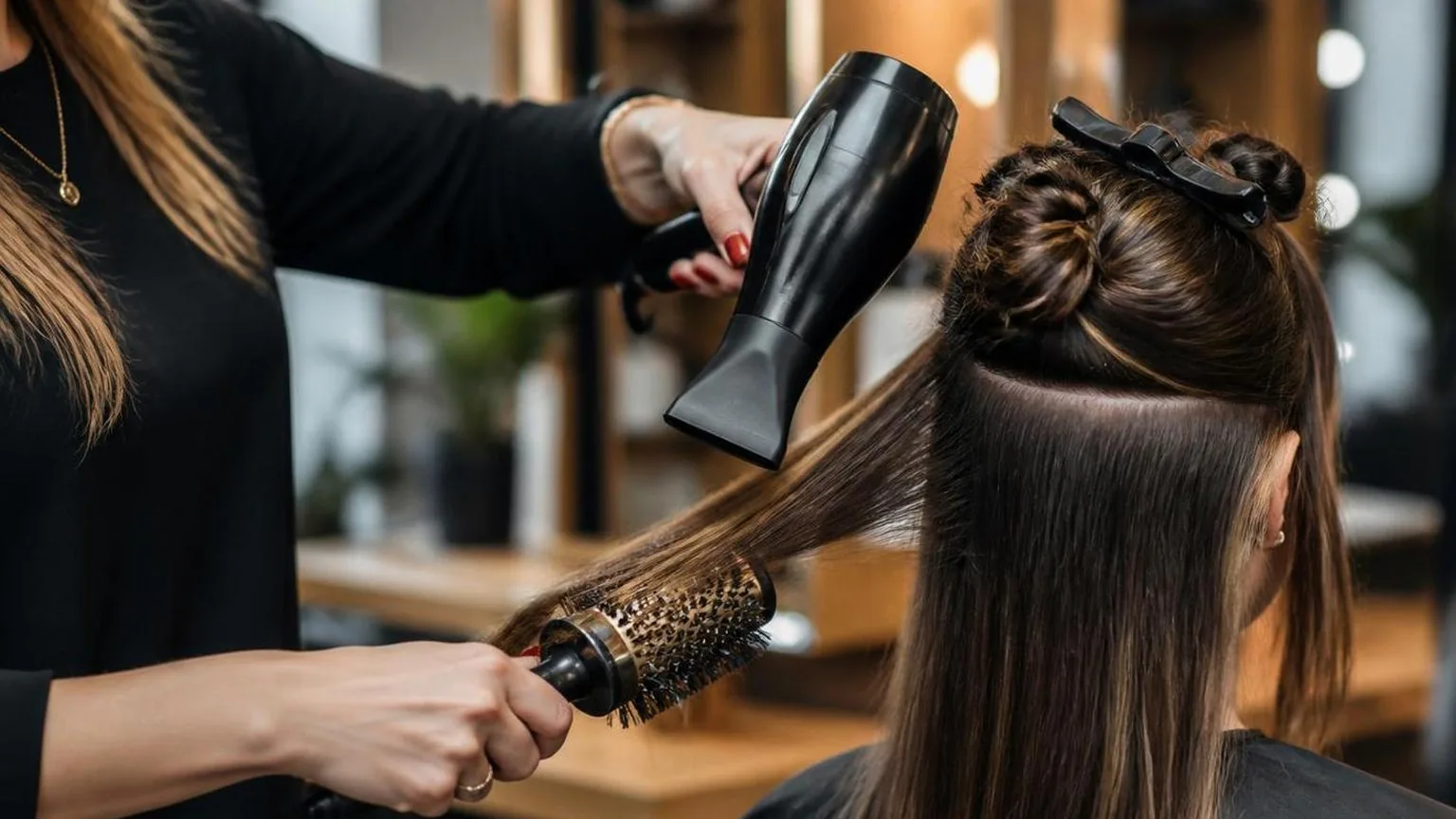
Heat and tension claims usually sit at the fault line between professional liability and general liability.
If a client alleges breakage, singeing, burns from a hot tool, or damage caused by excessive pulling during a blowout, your cover depends on what happened and how your policy defines “professional services.”.
For blow dry bars, the practical control point is documentation: tool temperature, section size, product use, and client consultation. Insurers and adjusters look for a repeatable service process, not just a stylist’s memory after a complaint.
Where insurance cover usually applies
| Incident | Likely policy section | What it may cover |
| Client says a round brush was pulled too tightly and hair snapped | Professional liability | Alleged negligence in the service technique |
| Client’s ear is burned by a curling iron or concentrator nozzle | Professional liability or general liability | Injury linked to salon service or premises operations |
| Hot tool scorches a client’s coat on the styling station | General liability | Third-party property damage |
| Dryer overheats and damages salon fixtures | Commercial property or equipment breakdown | Owned business property, subject to policy terms |
Most professional dryers used in salons draw around 1,600 to 2,000 watts. The outlet load matters because overheated cords, daisy-chained extensions, and crowded power strips can turn a styling mistake into a property claim.
| Control point | Working number | Why it matters |
| Flat iron temperature | 300–410°F | Higher settings increase risk of visible heat damage, especially on fine or fragile hair |
| Curling iron temperature | 280–400°F | Lower settings are commonly used for fine hair; higher settings require shorter contact |
| Hot tool contact time | 3–8 seconds per pass | Long holds are harder to defend if damage is alleged |
| Blow-dryer distance | 6 inches or more | Reduces concentrated heat on one area |
| Round-brush section width | 1–2 inches | Smaller sections need less pulling force and dry more evenly |
Records that help defend a claim
- Client intake notes covering hair texture, previous heat styling, and stated concerns.
- Tool settings recorded for irons, wands, and smoothing brushes when heat is used.
- Photographs taken before and after corrective or high-tension styling services, with client consent.
- Manufacturer instructions kept for dryers, irons, brushes, and electrical equipment.
- Staff training logs showing safe handling, sectioning, heat control, and cord checks.
OSHA electrical guidance emphasizes using equipment according to listing and labeling, and the UK HSE gives similar direction on maintaining electrical work equipment.
Those basics matter in a salon insurance file because they show the business had a system, not guesswork.
Ask your broker whether “professional treatment,” “thermal styling,” “damage to hair,” and “care, custody or control” are excluded or sub-limited. The wording is more important than the policy name.
The Mechanism, Step by Step
Salon insurance is not one policy. It is a bundle matched to how the service is delivered. In blow dry bars, the main cover gaps usually sit around client injury, tool damage, staff injury, and claims tied to advice or finished results.
A real blow-dry service creates different risk points than a theoretical menu description.
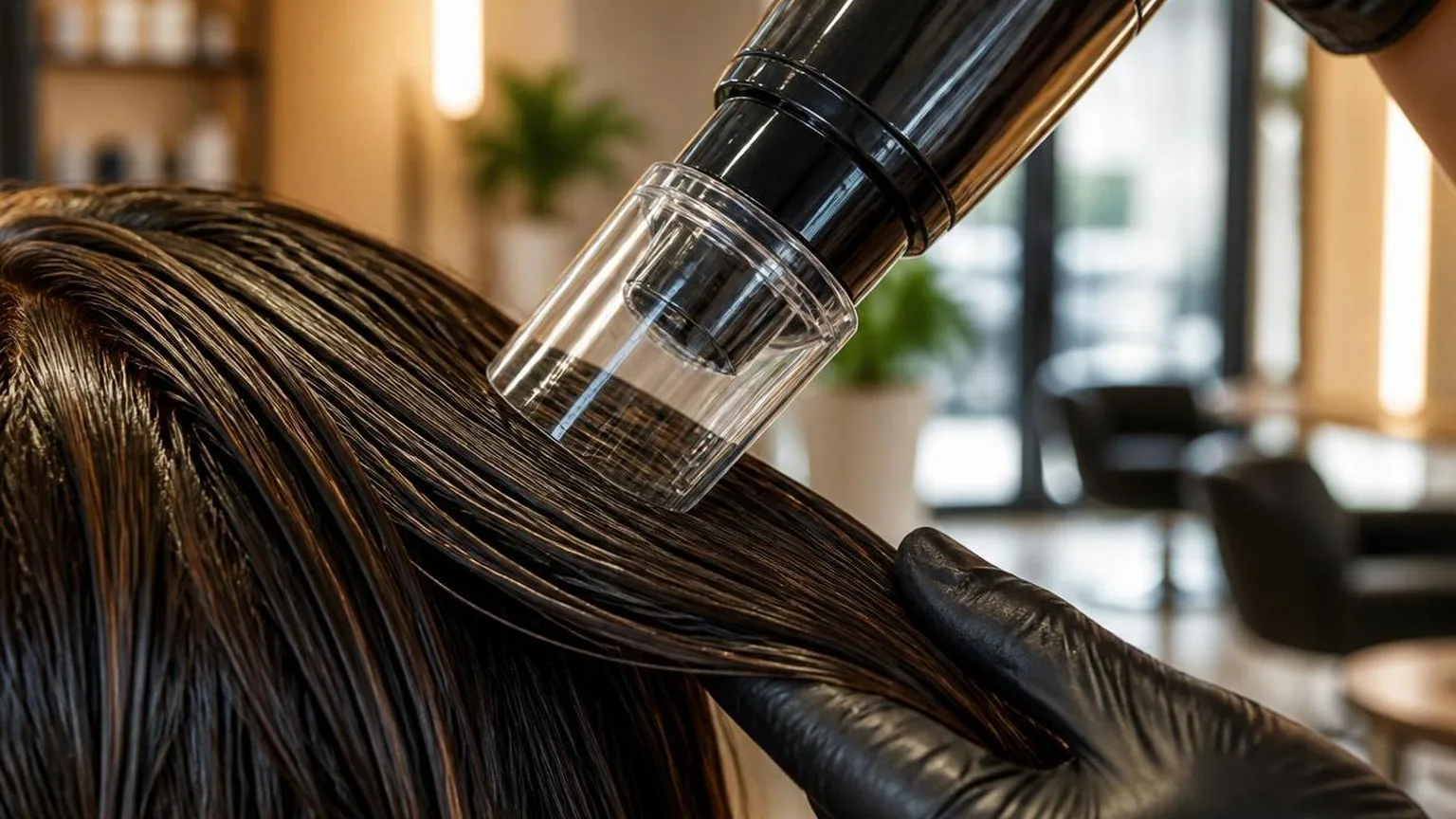
Washed, towel-blotted hair, controlled sectioning, nozzle spacing, and repeat passes all change the working environment. Each choice affects cords, clips, heat exposure, posture, and the chance of a client dispute.
| Variable | Working range | Why it matters for insurance |
| Section size | 2-inch horizontal sections | More clips, cords, and repositioning increase trip and burn exposure |
| Nozzle distance | 2 to 3 inches from the hair | Close tool work raises the importance of general liability |
| Passes per section | 3 passes on medium hair, 5 on coarse hair | Longer heat exposure makes tool failure and client complaint scenarios more relevant |
| Service count | 18 blowouts across fine, medium, and coarse textures | Repeated services create repeated points of risk during normal salon work |
General liability is the core client-facing policy. It is designed for third-party bodily injury and property damage claims, such as a client tripping over a dryer cord or a round brush damaging a client’s clothing or bag.
Professional liability, often called errors and omissions cover, matters when the issue is the service itself.
The relevant scenarios are not simple accidents. They are disputes about advice, styling outcome, product selection, or whether the finished look matched the consultation.
Property insurance applies to the kit used to run the service: dryers, brushes, chairs, mirrors, trolleys, washers, stock, and front-desk equipment.
A salon with six dryers and multiple hot tools has a different exposure than a solo stylist with one station.
| Insurance type | Typical cover area | Salon exposure |
| General liability | Client injury or client property damage | Cords, wet floors, hot tools near shoulders and clothing |
| Professional liability | Service-related allegations | Consultation notes, styling expectations, product choices |
| Property insurance | Salon contents and equipment | Dryers, chairs, mirrors, brushes, stock, reception kit |
| Workers’ compensation | Employee injury in the course of work | Repetitive blow-dry posture, slips, tool handling, lifting stock |
| Business interruption | Lost income after a covered property event | How quickly bookings fail when chairs, power, or premises are unavailable |
Workers’ compensation is the clearest staff-side cover. Back-to-back services require repeated wrist rotation, shoulder elevation, and dryer handling for 35 to 50 minutes per model.
That is workplace exposure, separate from client-facing liability.
Business interruption only makes sense when tied to property cover. If a covered fire or water event closes the salon, it can help with lost income and continuing expenses, subject to the policy wording, waiting period, and limits.
A blow dry bar should not buy cover by name alone. Match each policy to actual chair count, employed staff, mobile work, tool inventory, lease requirements, and whether stylists give formal service advice.
Myths That Keep Going Round
Most salon insurance mistakes come from assuming one policy covers every loss.
In practice, public liability, employers’ liability, professional liability, property, business interruption, and cyber cover respond to different triggers, exclusions, and evidence requirements.
The biggest myth is that “low risk” blow-dry services do not need structured cover. A client trip, a hot-tool burn allegation, stolen dryers, or a card-payment data issue can each sit under a different policy section.
Myth: Public liability covers staff injuries
Public liability is designed for third-party injury or property damage, such as a client slipping near reception. It is not the same as employers’ liability, which responds to employee injury claims connected with their work.
| Scenario | Likely policy area |
| Client trips over a dryer cable | Public liability |
| Stylist burns their hand on a hot tool | Employers’ liability or workers’ compensation |
| Client alleges poor service caused damage | Professional liability |
| Stolen hood dryers or styling chairs | Business property cover |
Myth: Freelancers are automatically covered
Chair renters, booth renters, and freelance artists may not be insured under the salon’s policy. Many insurers distinguish between employees, subcontractors, and independent traders, so the contract wording matters as much as the certificate.
- Check whether the policy names freelancers, temporary staff, and visiting stylists.
- Ask freelancers for their own public liability and professional liability evidence.
- Keep certificates on file before they take appointments on the floor.
Myth: Contents insurance equals full equipment protection
Property cover may protect owned salon contents, but limits, excesses, theft conditions, and off-site restrictions still apply. A dryer used at an event, a phone used for bookings, or tools kept in a car may need explicit cover.
| Item | Common coverage question |
| Hand dryers | Are tools covered away from the premises? |
| Reception tablet | Is accidental damage included? |
| Retail stock | Is stock valued at cost or selling price? |
| Salon mirrors | Is fixed glass separately insured? |
Myth: Business interruption pays after any closure
Business interruption usually needs an insured property event first, such as fire, flood, or storm damage. A closure caused by staff shortage, poor trading, or an uninsured utility failure may not trigger a payout.
Myth: Cyber cover is only for large salons
A small blow-dry bar may still hold client names, phone numbers, booking notes, payment tokens, and staff payroll details.
The UK Information Commissioner’s Office and US Federal Trade Commission both treat small businesses as responsible for basic data protection practices.
Practical checks before renewal
- Match each service on the menu to the policy wording, not the brochure summary.
- Confirm hot-tool use is not excluded or restricted.
- Set indemnity limits around lease, landlord, and event-contract requirements.
- Photograph equipment serial numbers and keep purchase records off-site.
- Report incidents promptly, even where no claim has been made yet.
Frequently Asked Questions
What does general liability insurance cover for a salon?
General liability typically covers third-party bodily injury, property damage, and related legal defense costs.
In a blow dry bar, that could include a client slipping on a wet floor or a stylist damaging a client’s handbag with water or product.
What does professional liability insurance cover?
Professional liability, often called errors and omissions cover, responds to claims that a service caused financial or physical harm through a professional mistake.
For salons, that may include a disputed styling service, incorrect product use, or alleged failure to follow a client’s instructions.
What does property insurance cover in a salon?
Commercial property insurance covers salon-owned items such as chairs, mirrors, dryers, reception desks, stock, and back-bar products after insured events like fire, theft, or certain water damage.
Check whether portable tools are covered on-site only or also during weddings, shoots, and mobile appointments.
What does workers’ compensation insurance cover?
Workers’ compensation covers employees for work-related injuries, usually including medical costs and a portion of lost wages under state rules.
In a salon, common insured incidents include burns from hot tools, slips in the shampoo area, or wrist and shoulder injuries from repetitive styling work.
What does business interruption insurance cover?
Business interruption insurance helps replace lost income when the salon cannot trade because of covered property damage.
For example, if a fire damages the blow dry stations, it may cover ongoing rent, payroll, and lost net income during the insured reopening period.
Do salons need cyber liability insurance?
Cyber liability insurance can help if a salon stores client details, appointment records, or payment information online. It may cover costs linked to data breaches, notification, recovery, and certain legal expenses.
What is commercial auto insurance for a salon?
Commercial auto insurance covers vehicles used for salon business, such as travel to on-location appointments or product delivery. Personal auto policies may not cover accidents that happen during business use.
Related Reading
- What a blow dry bar is, and how the model works
- How blow dry stylists are paid: the three structures
- The licences a blow dry bar needs, and who issues them
- How booth rental works, and who it suits
- How salon memberships work, and when they backfire
- The blow dry bar business model, explained
- The complete guide to the blow dry bar business
- OSHA Hair Salons: Facts about Formaldehyde in Hair Products
- U.S. Small Business Administration Business Insurance
- California Board of Barbering and Cosmetology
- National Careers Service Hairdresser
- PubMed
- National Association of Insurance Commissioners
- California Department of Insurance
- Texas Department of Insurance
- U.S. Small Business Administration
- SBA — Business Guide
- Federal Trade Commission — Business Guidance