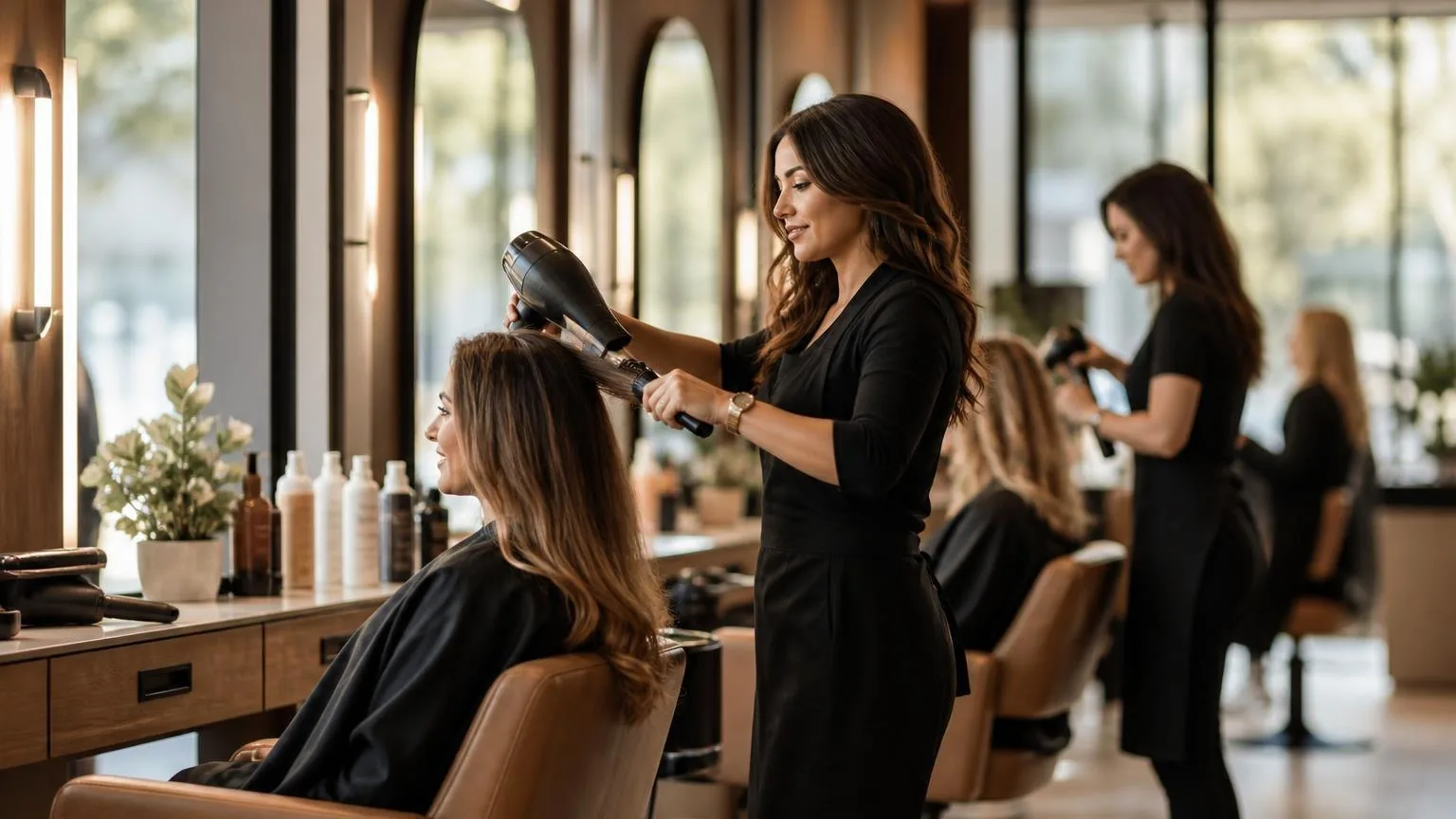
A 45-minute service menu is The blow dry bar business model, explained: sell repeatable wash-and-style appointments, not cuts or color, using standardized technique, timed stations, membership demand, and retail add-ons to keep chairs turning.
The model works because it narrows labor, tools, and training around one result: a polished finish.
Operators typically build service tiers around hair length, texture, occasion styling, and speed, then track utilization, rebooking, and product attachment per stylist.
For owners, the key question is unit economics: how many chairs can produce consistent blowouts per hour, at what labor ratio, and with which booking mix.
For stylists, it is a craft system: sectioning, tension, airflow, heat control, and finish discipline.
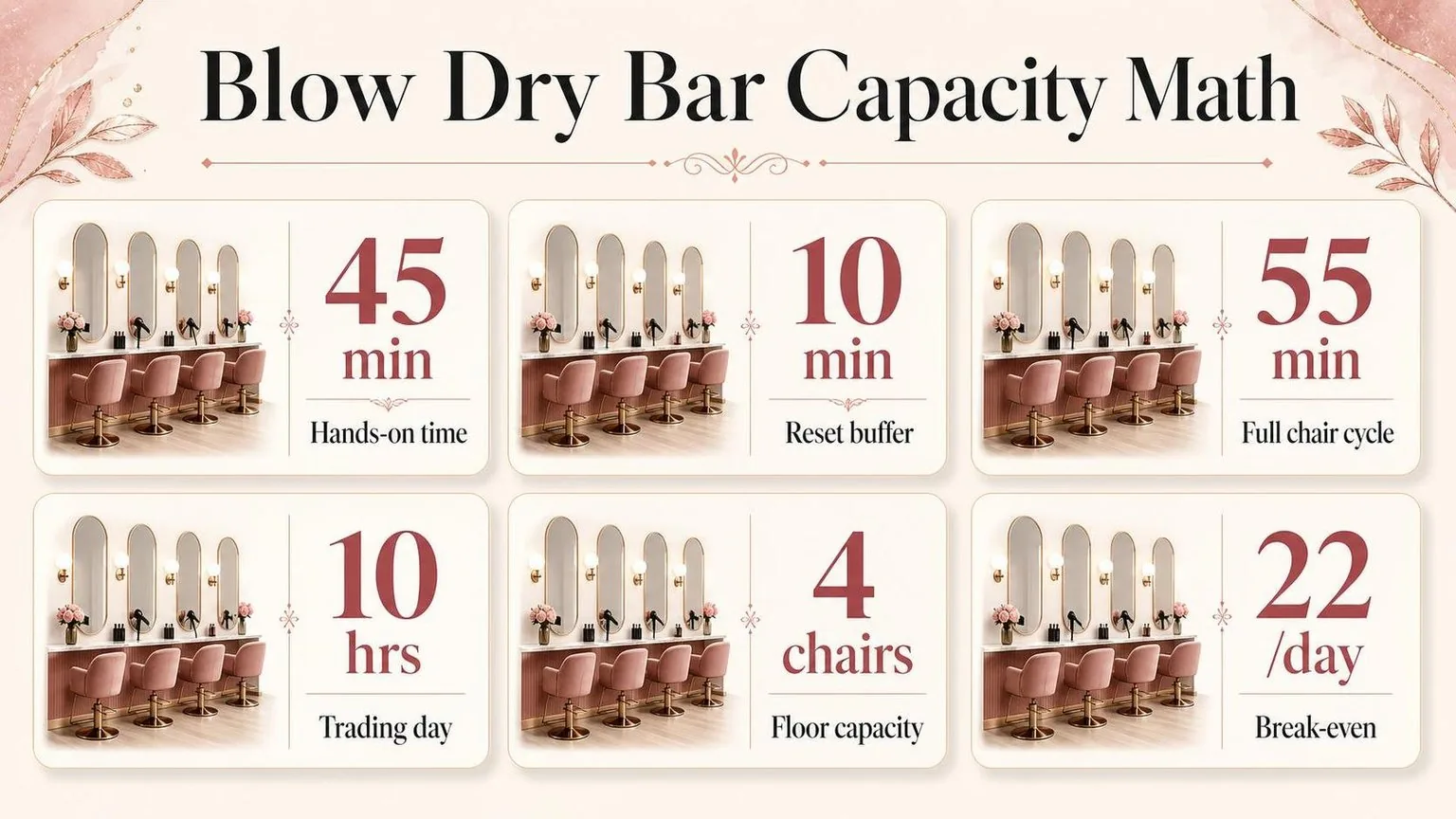
Map Your Chair Math
Use this quick exercise to see whether your blow dry bar model can support the service pace, staffing, and pricing you have in mind. Start with one chair, then multiply across the floor.
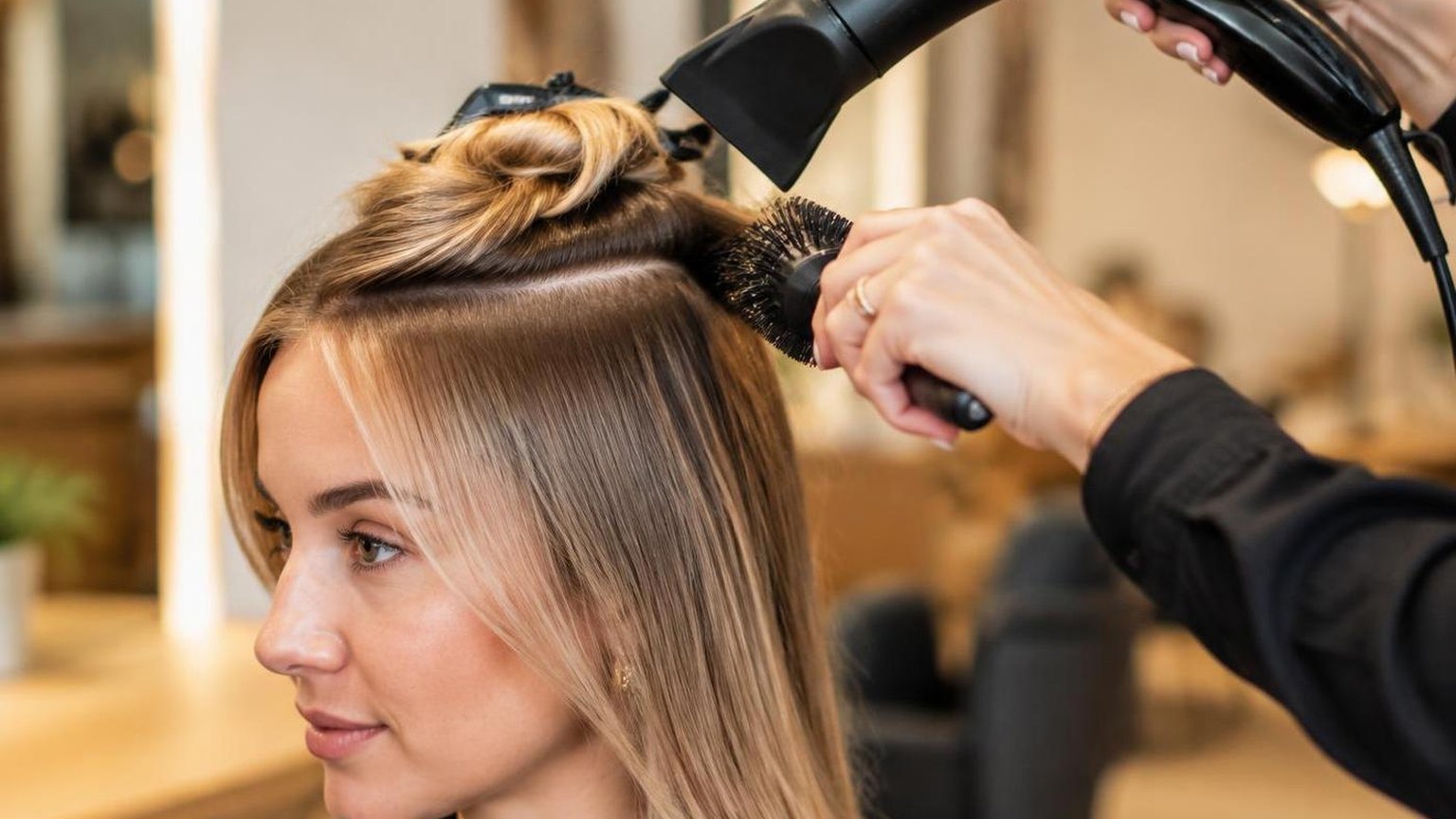
- Set the appointment length. Use 45 minutes as the base. Add 10–15 minutes for thick hair, extensions, textured hair, or occasion styling. Keep a separate 30-minute express option only if the look is tightly defined.
- Count sellable slots. One chair open for 8 hours can hold about 10 standard 45-minute services if reset time is controlled. With 6 chairs, that is about 60 possible appointments before no-shows, gaps, and staff breaks.
- Apply realistic utilization. New bars may plan around 45–60% booked capacity. Established locations often target 70–85% on strong days. A 6-chair bar at 70% of 60 slots needs about 42 paid services.
- Check labor ratio. If a blowout sells for $55 and stylist labor costs $22 per service, labor is 40% before front desk, payroll costs, and downtime. If add-ons lift the ticket to $70, the same labor drops to 31% of service revenue.
- Add repeat demand. Estimate memberships, standing weekly bookings, bridal trials, and corporate events. If 25 members each book twice a month, that is 50 appointments already filling the calendar.
If the chairs only work on weekends, the model is under pressure. If memberships and rebooking fill weekdays, the same menu can become a steadier, service-only business.
What the Numbers Actually Say
The blow dry bar model is a capacity business: chairs, minutes, rebooking, and labor control matter more than product retail. A shop can look busy and still miss profit if service times drift or stylist utilization sits below target.
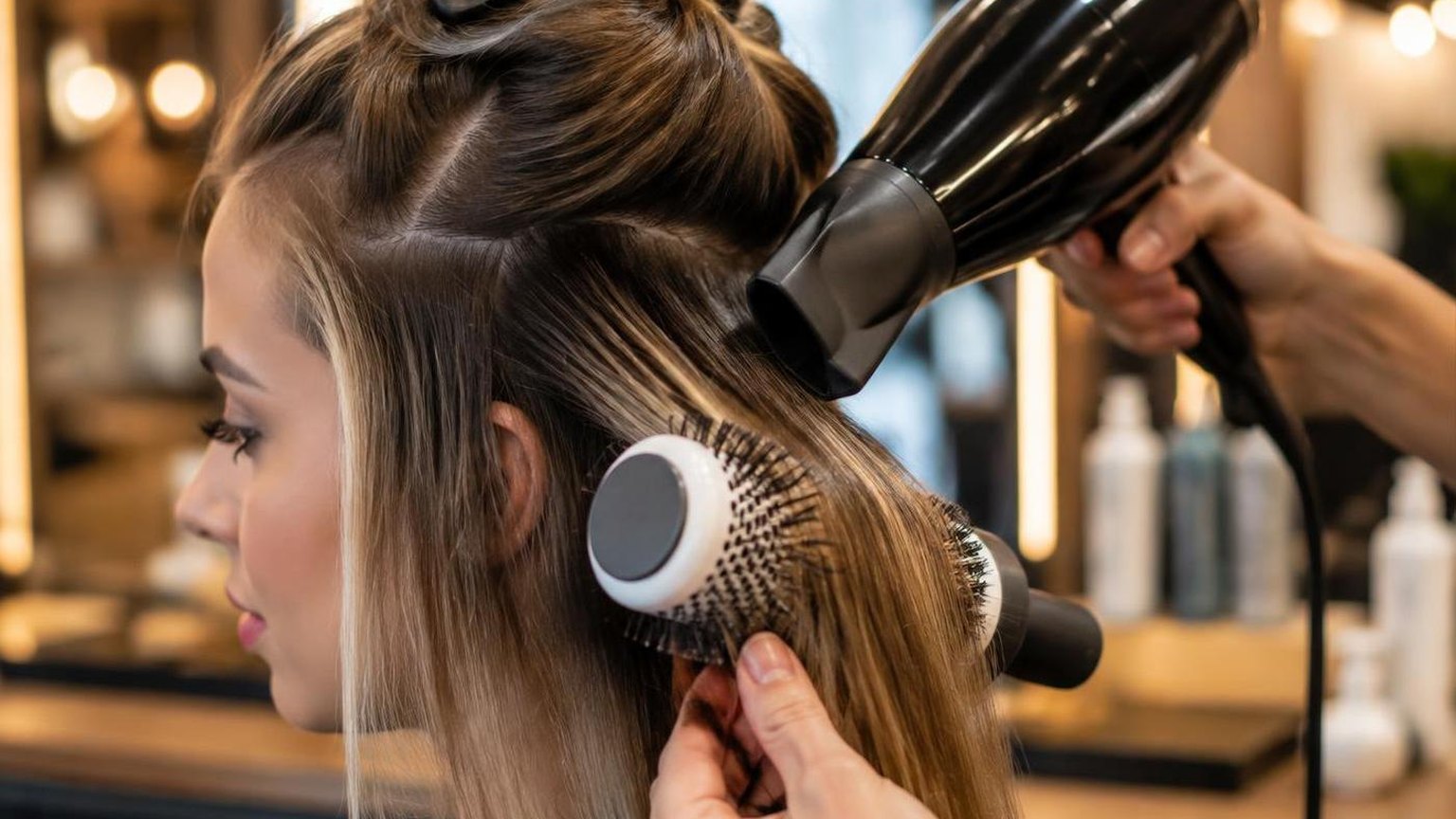
The core unit is not “a blowout.” It is a timed chair slot.
In a practical bar setup, a standard service often needs shampoo, sectioning, brush work, finish, payment, sanitation, and reset, so the calendar must be built around the full cycle.
| Operating input | Example planning number | Why it matters |
| Hands-on blow dry time | 45 minutes | Sets the stylist’s productive window |
| Reset and checkout allowance | 10 minutes | Prevents late starts and rushed finishes |
| Total chair cycle | 55 minutes | Defines bookable capacity |
| Trading day | 10 hours | Creates 600 available chair minutes |
| Chairs on floor | 4 chairs | Creates 2,400 chair minutes before utilization |
That arithmetic puts the theoretical ceiling at about 43 full cycles per day in a four-chair shop.
Real life is lower because arrivals bunch, stylists take breaks, clients run late, and some appointments need extra pass work at the crown, fringe, or extensions.
| Utilization of chair capacity | Daily services, rounded | Monthly services over 26 trading days |
| 50% | 22 | 572 |
| 70% | 31 | 806 |
| 85% | 37 | 962 |
This is why membership and pre-booking are central to the model. The strongest shops are not simply filling Saturday. They are using subscriptions, standing appointments, and event traffic to lift Tuesday through Thursday utilization.
| Sample break-even model | Number | Calculation role |
| Average ticket | $55 | Service revenue before tips |
| Variable labor and supplies | $23 | Stylist pay, backbar, laundry, disposables |
| Contribution per service | $32 | Amount left for rent, reception, software, insurance, profit |
| Monthly fixed overhead | $18,000 | Illustrative rent, utilities, admin, base staffing, marketing |
| Break-even services | 563 | Fixed overhead divided by contribution |
| Break-even services per trading day | 22 | Based on 26 trading days |
Labor is the pressure point. The U.S.
Bureau of Labor Statistics groups blow dry specialists within hairdressers, hairstylists, and cosmetologists, so local wage benchmarking should start there, then be adjusted for commission, hourly guarantees, assistants, and front desk coverage.
Retail helps, but it rarely fixes weak chair economics. A brush, thermal spray, or finishing cream sale is useful because it raises ticket value without adding another 45-minute slot. Still, service capacity remains the primary engine.
- Track daily: booked chair minutes, completed services, re-dos, late cancellations, and stylist rebooking rate.
- Track weekly: utilization by daypart, average ticket, labor percentage, and membership redemptions.
- Track monthly: break-even services, contribution per service, rent as a share of sales, and client retention.
The Variables That Matter
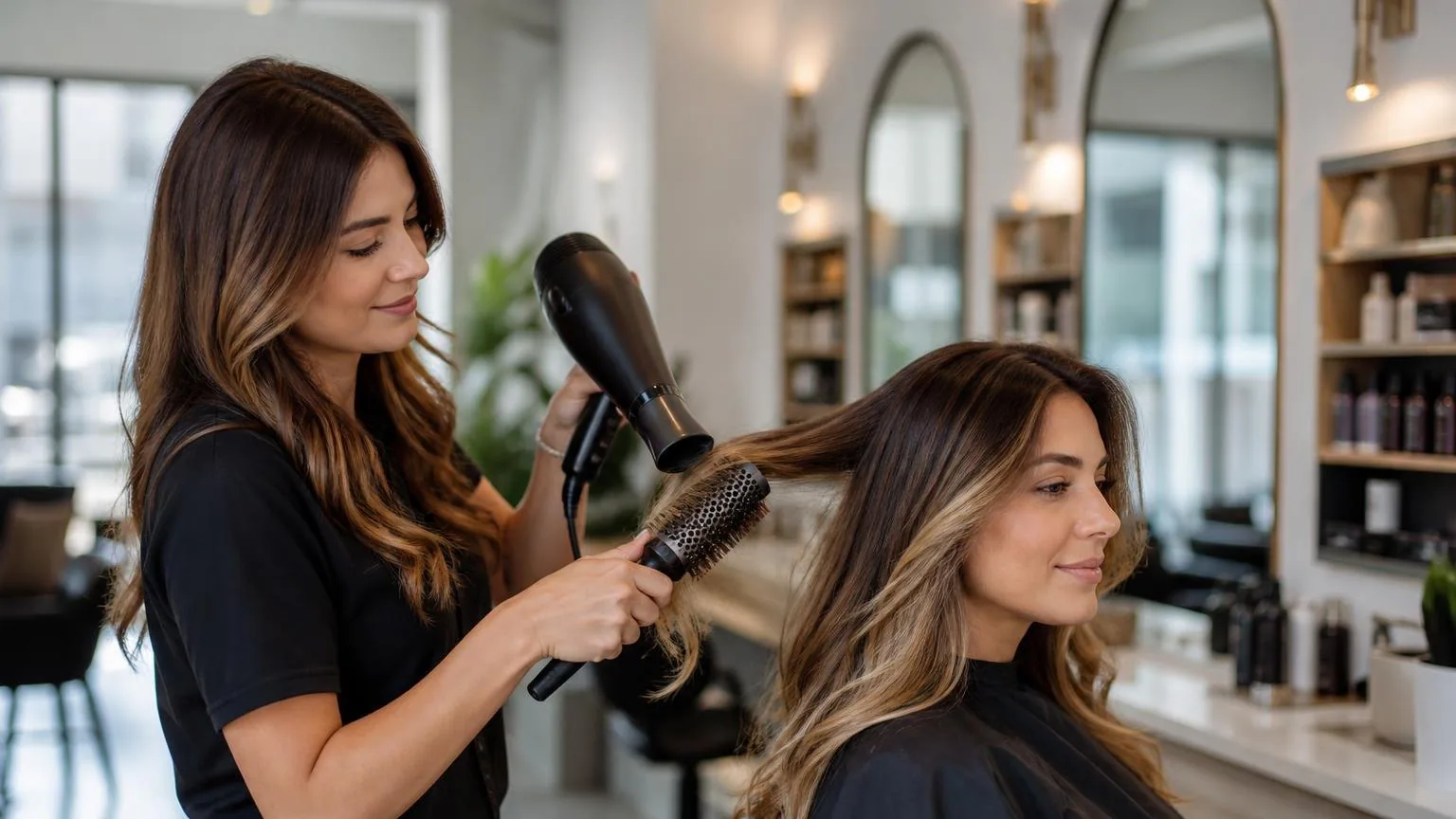
The blow dry bar result changes when time, chair utilization, finish consistency, and rebooking discipline change. The model is simple, but small operational differences compound fast across every station, stylist, and hour on the schedule.
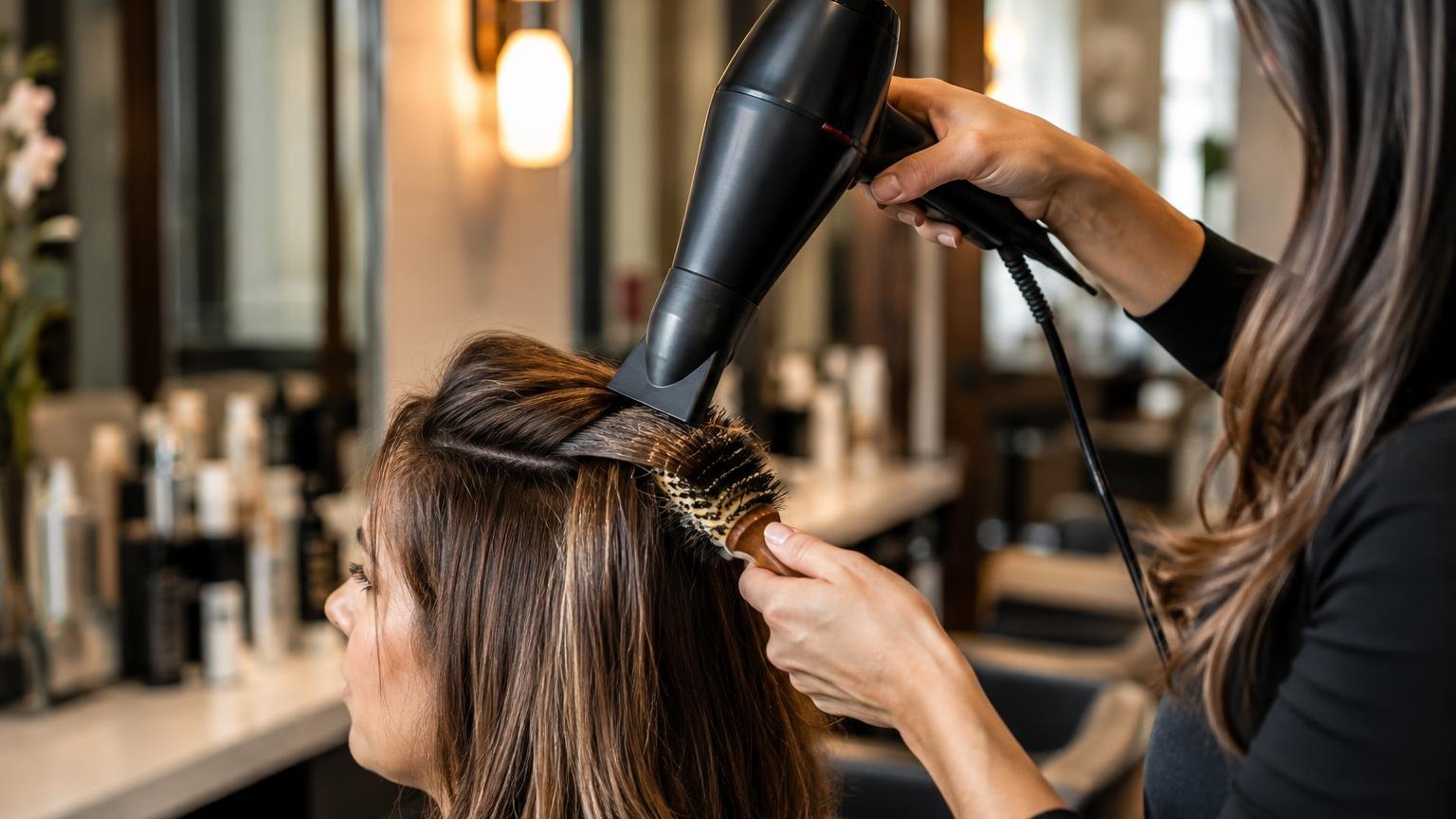
In practice, the biggest lever is not the menu name. It is whether the service can be repeated inside a controlled appointment window without lowering the finish standard.
| Variable | Operational target | Why it matters |
| Consultation | 2 to 4 minutes | Prevents rework by confirming parting, volume, curl direction, and hold level before water or heat touches the hair. |
| Shampoo and towel-dry | 8 to 12 minutes | Controls moisture level, which affects drying time more than brush choice. |
| Blow-dry and finish | 25 to 35 minutes | Keeps a standard appointment profitable while leaving room for detailing. |
| Reset between guests | 5 to 8 minutes | Protects punctuality, sanitation, and tool readiness. |
Moisture removal is the craft variable most owners underestimate. Hair should be towel-blotted, then rough-dried before round-brush work begins.
Many stylists aim for hair that is mostly dry at the roots before building shape through the mid-lengths and ends.
| Hair state | Typical styling implication |
| Too wet at brush stage | Longer service, tired arms, weaker lift, more heat exposure per section. |
| Evenly pre-dried | Faster brush control, cleaner tension, more predictable volume. |
| Over-dried before shaping | Harder polish, less bend memory, more reliance on hot tools. |
Tool specification also changes the business result because it affects speed and consistency. Professional dryers commonly sit in the 1,600 to 2,000 watt range, but wattage alone is not the finish.
Airflow, nozzle fit, weight, and heat control matter at the chair.
| Tool or setup | Useful specification | Service impact |
| Concentrator nozzle | 6 to 10 millimetre slot | Directs airflow down the cuticle for smoother polish. |
| Round brush | 25 to 55 millimetre barrel | Smaller barrels create bend; larger barrels create stretch and volume. |
| Air temperature at outlet | Often above 80°C on high heat | Requires movement, distance, and section control to avoid overworking one area. |
Staffing changes the economics as much as styling skill. A bar with strong technical standards but weak scheduling will leak capacity. A bar with fast booking but inconsistent finishing will leak repeat visits.
- Menu architecture: limit core looks so training, timing, photography, and guest language stay consistent.
- Sectioning discipline: clean 2 to 4 centimetre sections dry faster and polish better than oversized sections.
- Rebooking prompts: ask before checkout, not after the guest has mentally left the chair.
- Retail fit: recommend only what was used and demonstrated during the appointment.
The best blow dry bars measure both craft and capacity. Track average service time, late starts, redo requests, stylist utilization, rebooking rate, and product attachment.
Those numbers show whether the model is scaling skill or simply filling chairs.
What a Good Result Looks Like
Judge a blow dry bar model by watching whether the same finish can be repeated across different heads of hair, within the booked slot, without rework.
The business works when technique, timing, tool choice, and client comfort stay predictable under busy-floor conditions.
Use a controlled chair test, not a mannequin test
Mannequins do not show true density, cowlicks, humidity response, or client movement. Test on live models with clean, towel-blotted hair and record section size, dryer setting, brush barrel, product amount, and finish durability.
| Hair case | What to test | Pass mark |
| Fine, shoulder-length hair | Volume without collapse | Root lift still visible after 4 hours |
| Dense, mid-back hair | Throughput and arm fatigue | Full finish completed in 45 to 60 minutes |
| Curly or coily hair | Smoothing, stretch, and shape retention | No damp roots; ends polished, not puffy |
| Bob or lob | Shape control around the perimeter | Clean bevel with no flat crown |
Milady Standard Cosmetology emphasizes section control, tension, airflow direction, and brush selection as core blow-dry mechanics.
Those are also the levers that make a blow dry bar scalable: junior stylists can be trained against observable standards.
Measure technique at the chair
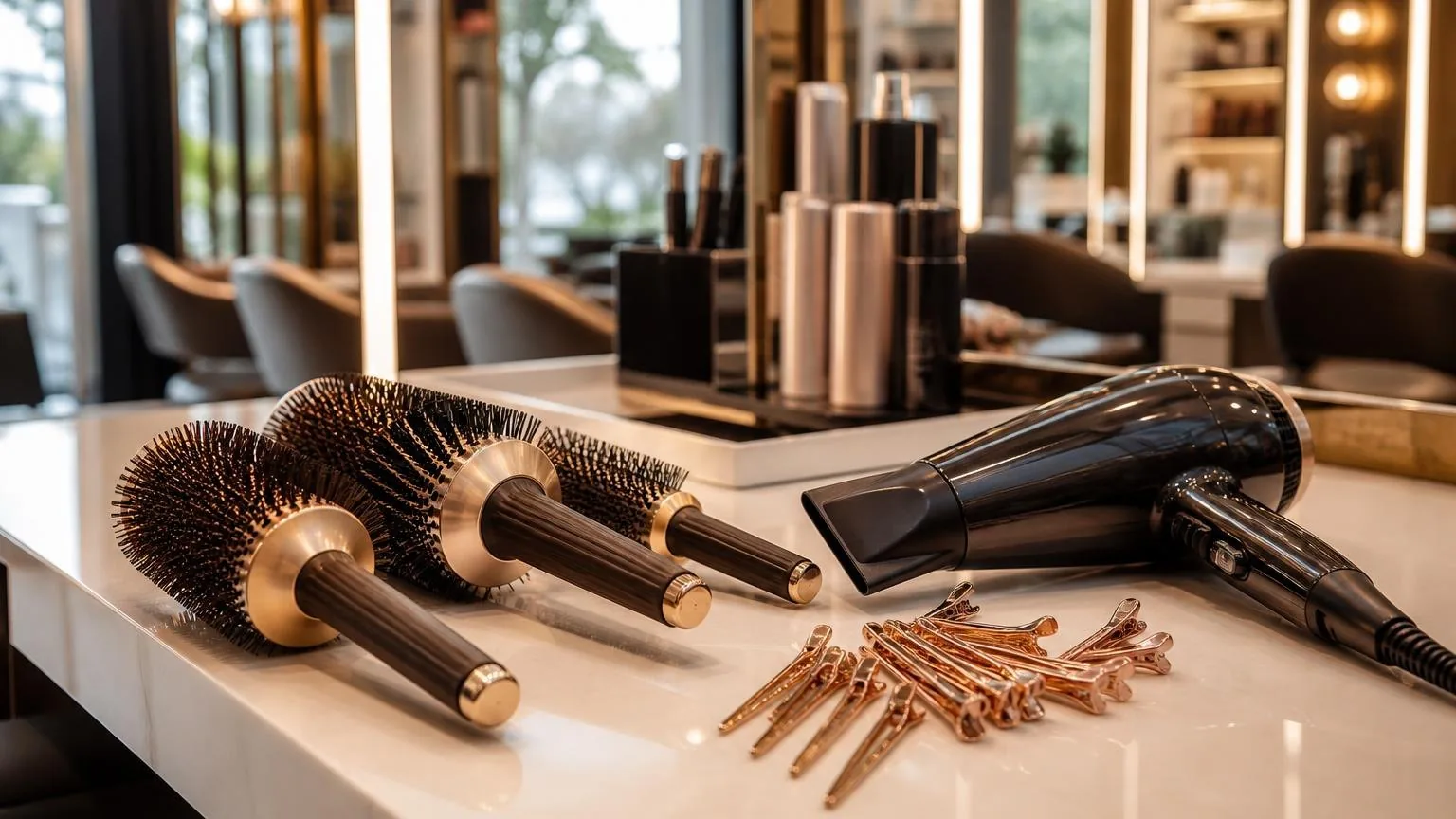
Use a thermometer, timer, sectioning clips, and a simple service card. The aim is not maximum heat. It is repeatable drying from roots to ends while keeping the cuticle direction smooth and the client comfortable.
| Control point | Practical range | Why it matters |
| Section width | 2 to 5 cm | Allows airflow to reach the root instead of only polishing the surface |
| Round brush barrel | 25 to 53 mm | Smaller barrels build bend; larger barrels smooth and stretch |
| Nozzle distance | 5 to 10 cm from hair | Keeps airflow controlled without concentrating heat in one spot |
| Working air temperature | 70 to 95°C at the outlet | Enough to shape most hair when paired with tension and airflow |
| Cool-shot set | 5 to 10 seconds per section | Helps lock the brush shape before releasing |
Score the business model through the finish
A good blow dry bar is not judged only by the reveal photo. It is judged by how often the team can produce a clean finish, protect the appointment book, and avoid free corrections.
- Root dryness: check the crown, nape, and behind the ears before styling the ends.
- Shape consistency: compare left and right panels from the client’s eye line and from the back.
- Product discipline: weigh or pump-count styling products so finishes are not dependent on one stylist’s guesswork.
- Client handoff: note the brush size, parting, and finishing spray so the next visit can be reproduced.
OSHA and UK HSE salon guidance both stress workstation layout, ventilation, and repetitive-motion risk control.
For owners, that turns into practical planning: dryer weight, cord reach, matting, brush storage, and enough space for stylists to work without crossing arms or cords.
Weighed Against What Else Is Used
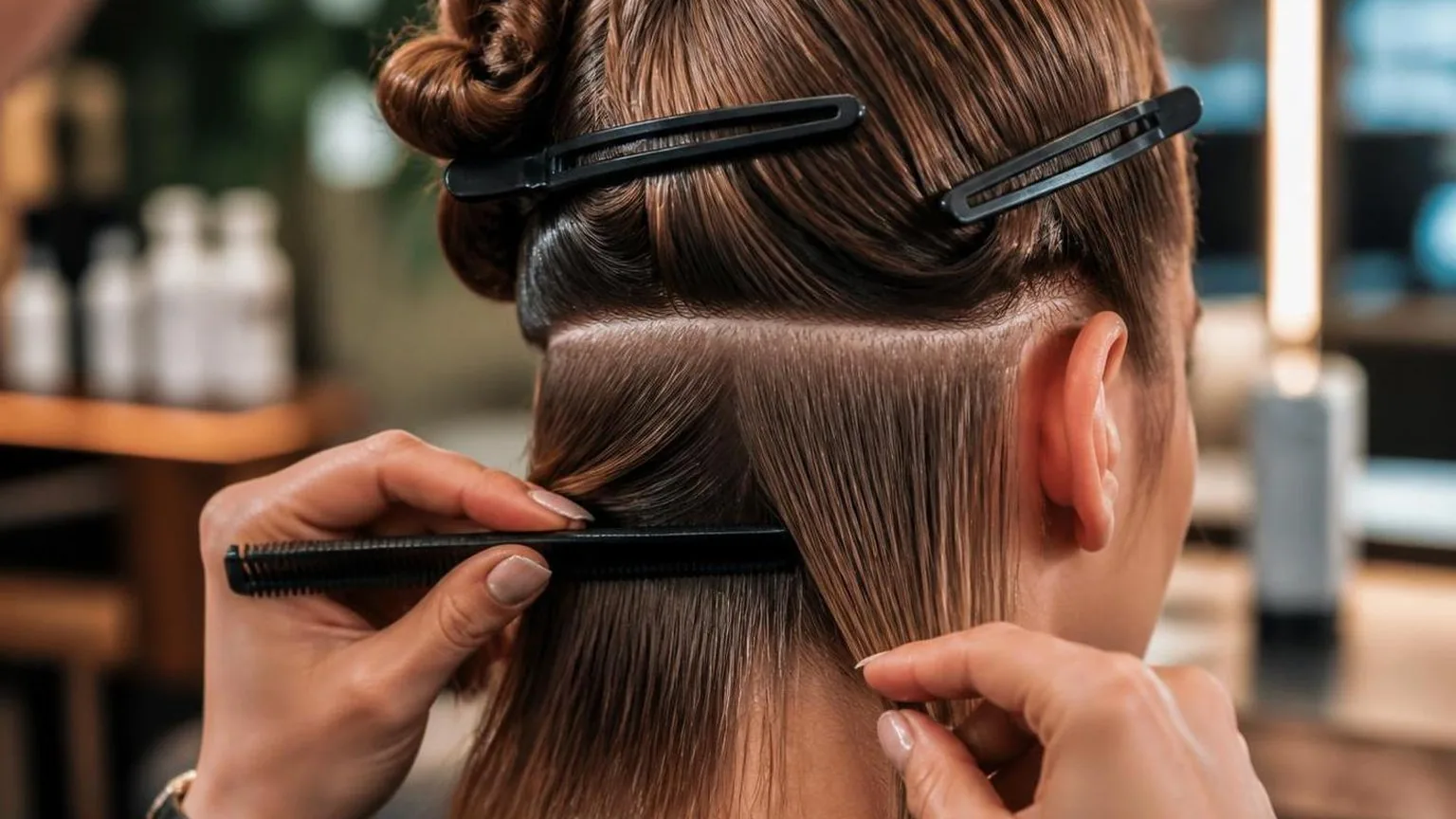
A blow dry bar is narrower than a full-service salon: it sells wash, blowout, and finish, not cuts or color.
That narrower menu changes the economics: shorter appointments, fewer technical product lines, simpler training, and heavier reliance on repeat visits.
Compared with mobile styling or chair-rental salons, the blow dry bar is more systemized. The model works best when the service can be timed, taught, photographed, and repeated across multiple stylists.
| Model | Typical core service time | Revenue driver | Operational constraint |
| Blow dry bar | 35 to 45 minutes for a standard wash and blowout | High visit frequency, memberships, add-ons | Chair utilization and consistent finish |
| Full-service salon | 45 to 90 minutes for cut and style; longer for technical services | Higher ticket, broader menu | More specialized staffing and inventory |
| Booth-rental salon | Set by each independent stylist | Rent paid by professionals | Less control over guest experience |
| Mobile styling | 45 to 75 minutes plus travel time | Convenience fee and event work | Travel gaps, parking, setup, limited volume |
Against a full-service salon
The blow dry bar usually has lower menu complexity. A team can standardize around round-brush work, paddle drying, hot-tool finishing, and service consultation.
In a full salon, a stylist may need separate expertise for cutting, color placement, formulation, and finishing.
The trade-off is ticket ceiling. A blowout-only ticket is usually built from volume and repeat frequency, not long technical appointments.
That makes punctuality critical: a 10-minute delay on a 40-minute service removes 25% of the next slot’s buffer.
Against chair rental
Chair rental shifts risk to independent professionals. The owner sells space; the stylist controls pricing, timing, retail language, and client records.
A blow dry bar does the opposite: the brand owns the booking flow, service steps, photography standards, and rebooking script.
That control supports multi-location consistency, but it also means payroll pressure. If three stylists, one front-desk lead, and one shampoo assistant are scheduled, the room needs enough booked chairs per hour to justify the labor.
Against mobile and event styling
Mobile styling can command strong fees for weddings, shoots, and hotel calls, but the stylist loses capacity to travel and setup. A fixed blow dry bar can run shampoo bowls, dryers, brushes, and backbar in a tighter production line.
For operators, the key comparison is throughput. Four styling stations turning every 45 minutes can theoretically handle 20-plus services across a long trading day, before breaks and no-shows.
A mobile stylist may complete far fewer because travel time is not sellable styling time.
- Best fit: dense neighborhoods, office districts, hotel corridors, gyms, and event-heavy markets.
- Weak fit: areas where guests expect one stylist to handle cut, color, and finish in one visit.
- Main advantage: repeatable service choreography.
- Main risk: underfilled chairs during off-peak hours.
Keeping Condition Through the Dry
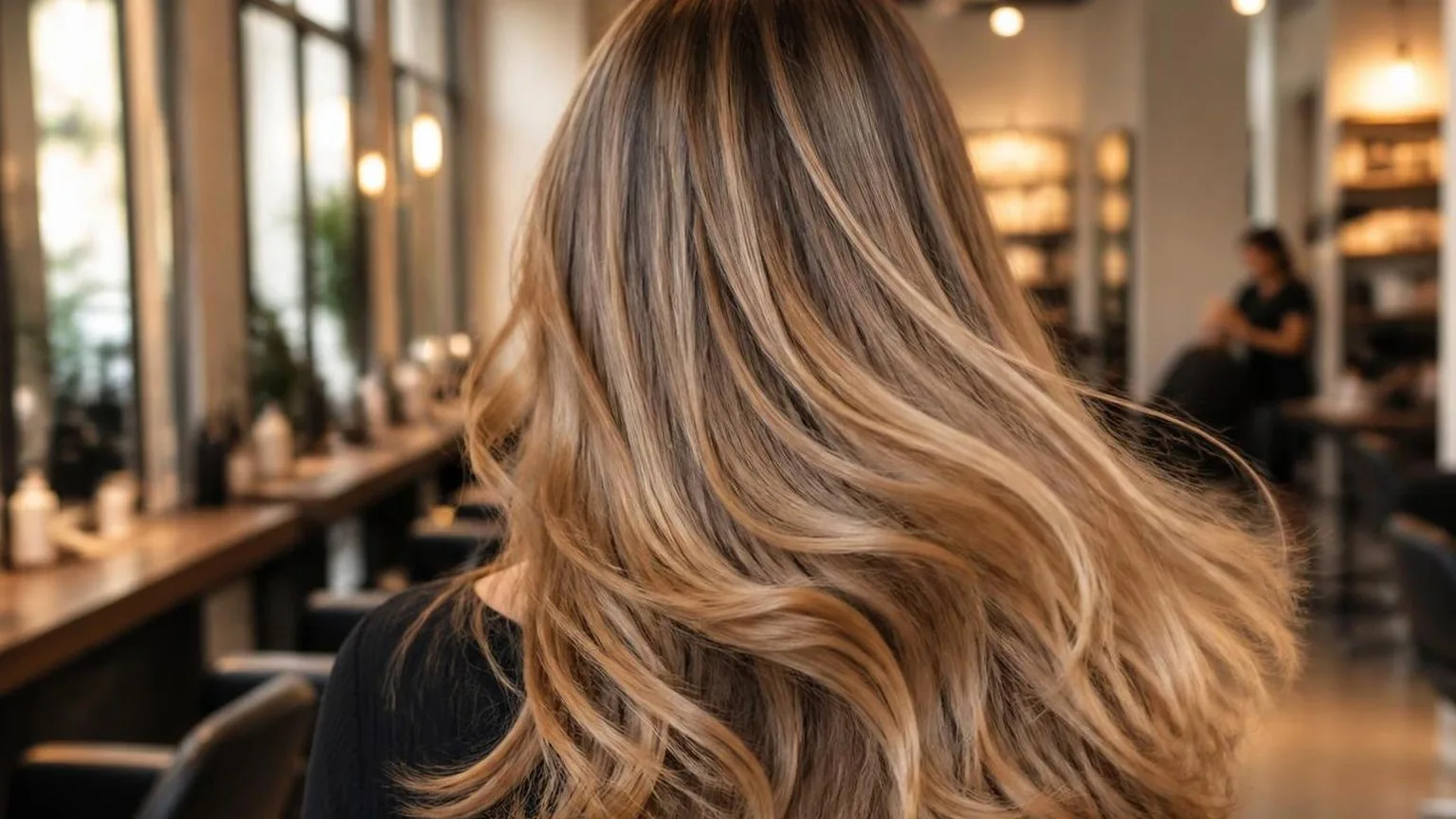
In a blow dry bar, hair stays intact when heat, airflow and brush tension are controlled as a repeatable service standard, not left to stylist habit.
The aim is to remove water efficiently, shape the fiber while it is pliable, then cool it before release.
Robbins’ Chemical and Physical Behavior of Human Hair explains that wet hair swells and has higher friction, so aggressive brushing on soaked hair creates avoidable mechanical wear.
For service design, that means rough-dry first, then add tension only when the section can respond quickly.
| Control point | Practical salon target |
| Pre-dry before round brushing | Hair about 70–80% dry |
| Section width | No wider than the brush barrel |
| Nozzle distance from hair | About 1–2 in / 2.5–5 cm |
| Nozzle angle | Down the hair shaft, not against the cuticle |
| Cool shot before release | 5–10 seconds per finished section |
The business reason is simple: these targets make results teachable.
A new stylist can be assessed on section size, dryer distance and finishing temperature instead of being told to “use less heat,” which is too vague to protect finish quality.
Brush tension should be firm enough to smooth but not so strong that the client’s head moves or the section stretches excessively.
In training, owners can watch the scalp-facing root area: if the section is pulling upward hard, tension is doing the work that airflow should do.
| Hair feel | Tool choice | Heat approach |
| Fine or easily flattened | 1.25–1.75 in round brush | High airflow, medium heat, shorter dwell |
| Medium density | 1.75–2.25 in round brush | Medium-to-high airflow, controlled tension |
| Dense or coarse-feeling | 2–2.5 in round brush | Strong airflow, smaller sections, patient drying |
Cosmetic science literature consistently treats heat exposure as a combination of temperature and contact time.
A blow dryer is safer when kept moving because the fiber is not held at peak temperature in one spot, unlike a hot plate tool clamped on hair.
- Standardize the pass: roots first, mid-lengths second, ends last, because ends are older and need less dwell.
- Use the concentrator: it narrows airflow, reduces frizz from random turbulence and lets the stylist work farther from the fiber.
- Finish with cooling: releasing a hot section too early lets the shape drop before the hydrogen-bond reset is stable.
- Audit stations: keep vents clear, nozzles attached and brushes clean so airflow stays consistent across chairs.
For a blow dry bar, this is operational risk control as much as craft. Consistent heat and tension reduce redo time, protect the client experience and let managers coach from visible behaviors rather than subjective taste.
What Is Happening to the Hair
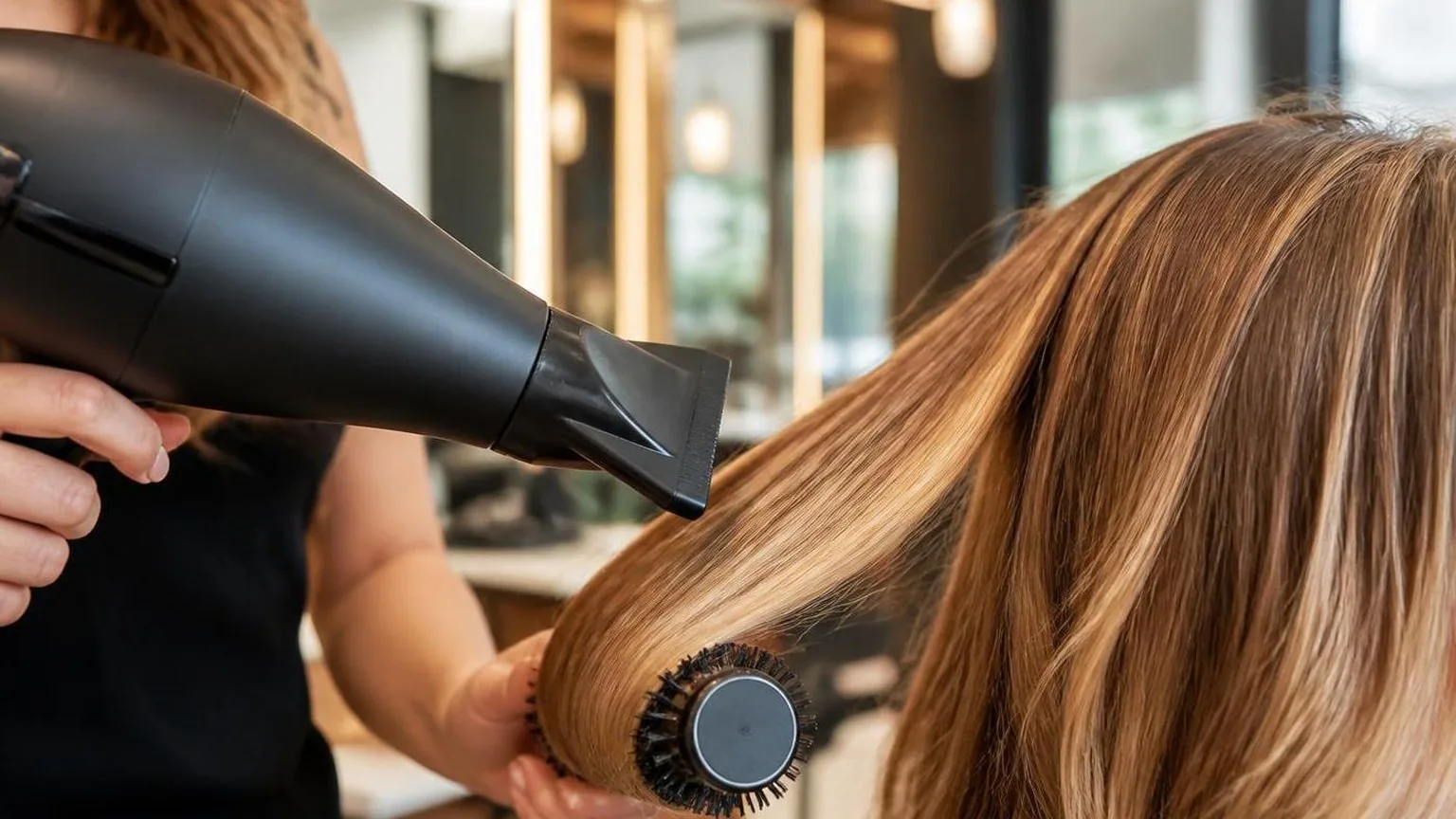
The blow dry bar model works when the service is built like a repeatable production line, not a loose salon appointment.
Small changes in section size, nozzle distance, and pass count affect ticket time because they change airflow control, brush tension, moisture removal, and the number of movements required per head.
Classic round-brush blowouts depend on consistent preparation: washed, towel-blotted hair, then a fixed section map.
Standard order is nape first, then sides, crown, and fringe, so the stylist controls moisture, shape, and access without reopening finished areas.
| Hair type | Section width | Nozzle distance | Average passes per section |
| Fine, shoulder length | 1 inch | 2 inches | 3 passes |
| Medium, collarbone length | 1.25 inches | 2 inches | 4 passes |
| Dense, below shoulder | 0.75 inch | 2.5 inches | 5 passes |
“Dry enough” is not good enough in a bar format. Roots must be fully dried because root moisture weakens lift, shortens shape retention, and forces extra correction at the finish.
| Workflow | Active service time | Reset time | Total chair block |
| Fine hair, smooth finish | 28 minutes | 4 minutes | 32 minutes |
| Medium hair, volume finish | 38 minutes | 5 minutes | 43 minutes |
| Dense hair, polished wave finish | 52 minutes | 6 minutes | 58 minutes |
Density changes the labor. Two clients with the same length can require different service blocks when one head has twice the number of working sections.
More sections mean more clipping, more brush placement, more dryer passes, and more finish checks before reset can begin.
- Clean partings, clips staged before the client sits down, and a concentrator nozzle kept parallel to the hair shaft support the fastest repeatable setup.
- Round brushes under 2 inches improve root control on short layers but slow long-hair smoothing.
- Brushes over 2.5 inches speed up mid-length smoothing but lose bend on face-framing sections.
- One extra pass per section adds several minutes across a full head.
For owners, pricing and booking should reflect labor bands, not just “short,” “medium,” and “long.” A dense shoulder-length client can occupy the chair longer than a fine-haired client with longer hair.
For stylists, the profitable finish comes from consistency: same section map, same nozzle distance, same dry-to-finish sequence. The model breaks down when every blowout becomes custom craft without a controlled timing system.
Common Mistakes and Myths
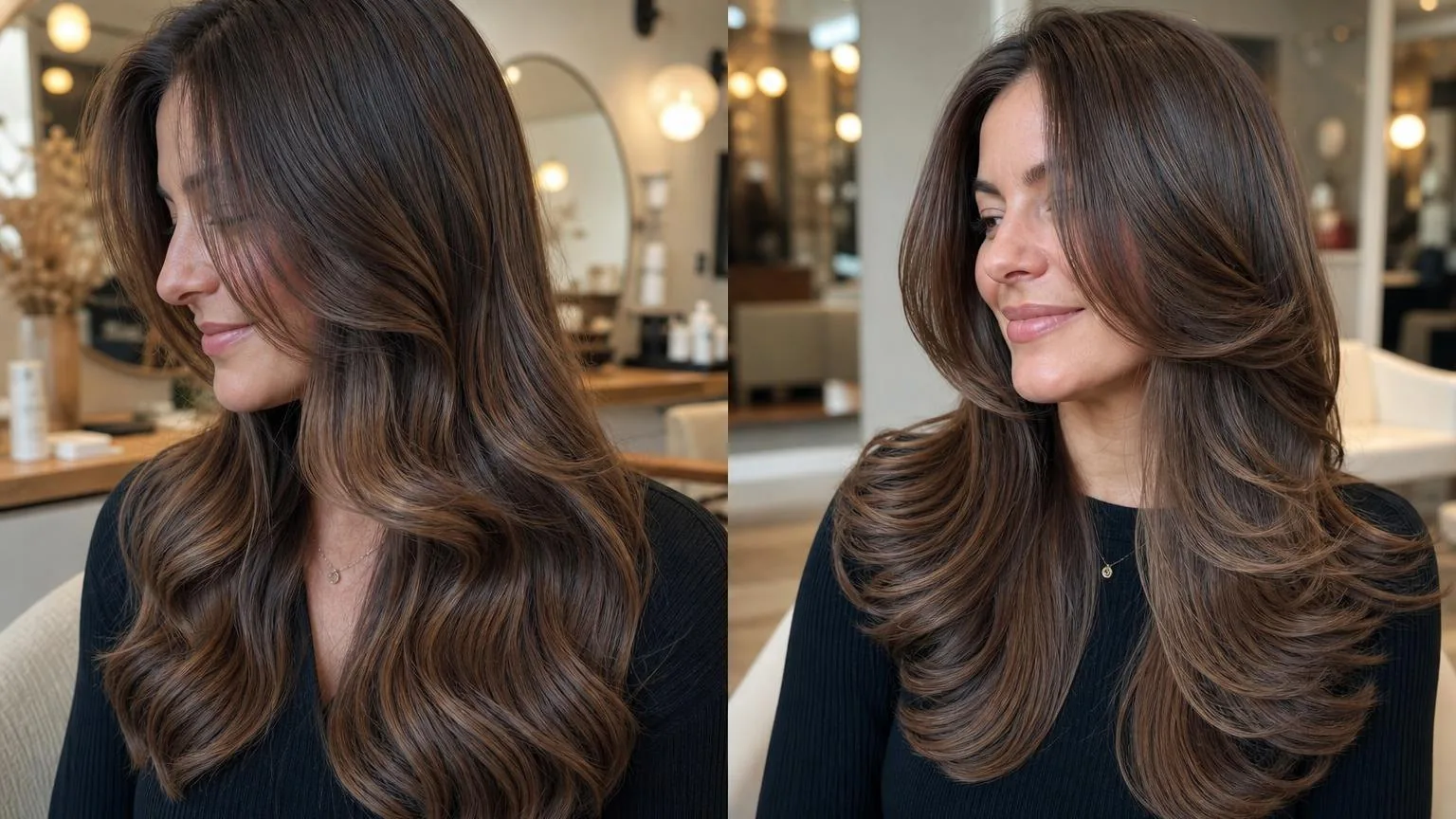
The biggest mistake is treating a blow dry bar like a small salon without cuts or color. The model works only when timing, chair utilization, menu design, and retail attachment are engineered around repeatable services.
Most myths come from underestimating operational discipline. A beautiful bar with weak booking intervals, unclear service standards, or slow checkout can lose margin even when the appointment book looks busy.
Myth: “A blowout is simple, so training can be minimal”
A consistent finish depends on sectioning, tension, airflow direction, brush size, and heat control. Training should standardize the service, not just the style menu.
| Operational standard | Practical benchmark |
| Section width for dense hair | About the same width as the brush barrel |
| Round brush barrel for volume work | Medium barrels around 1.5 to 2 inches are common |
| Dryer nozzle position | Angled down the hair shaft to smooth the cuticle |
| Typical professional dryer wattage | Often around 1,800 to 2,000 watts, depending on model |
Myth: “More menu options mean more revenue”
Too many styles slow consultation, confuse guests, and create inconsistent timing. A tighter menu usually trains faster and photographs better for marketing.
- Mistake: offering highly customized looks without time buffers.
- Better practice: build styles from repeatable foundations: smooth, volume, wave, curl, upstyle add-on.
- Mistake: pricing add-ons vaguely at checkout.
- Better practice: define add-ons before styling starts, especially extensions, extra-dense hair, and hot-tool finishing.
Myth: “Full chairs automatically mean profit”
Utilization matters, but chair time must cover labor, product, laundry, booking fees, rent, and front-desk time. A packed Saturday can still underperform if services run late and staff miss retail conversations.
| Metric to track | Why it matters |
| Service time per guest | Protects appointment flow and labor planning |
| Rebook rate | Shows whether the bar is building habits, not just one-off traffic |
| Retail units per ticket | Measures whether stylists are translating the finish into home care |
| No-show rate | Reveals whether deposits, confirmations, and cancellation rules are working |
Myth: “Retail is optional”
Retail is part of the service model because guests want to recreate the finish at home. The strongest recommendation is specific: brush size, product amount, heat setting, and where to apply it.
Myth: “Location fixes everything”
Foot traffic helps, but a blow dry bar is often habit-driven. Memberships, event partnerships, corporate clients, and bridal bookings can smooth demand beyond peak weekend windows.
- Mistake: relying only on walk-ins near shops or gyms.
- Better practice: create booking reasons: work presentations, dinners, photoshoots, weddings, travel, and weekly polish.
- Mistake: copying salon staffing patterns.
- Better practice: staff around arrival waves, shampoo capacity, and finish-station turnover.
Frequently Asked Questions
What does a blow dry bar sell?
A blow dry bar sells shampoo, blowout styling, add-on finishes, memberships, and retail haircare.
The core service is usually a wash, round-brush blow dry, and hot-tool polish completed in about 35 to 50 minutes, with no cutting or color service required.
Why is the model different from a full-service salon?
The menu is narrower, so training, station setup, and appointment timing are more standardized.
A stylist can repeat defined looks using 1.25 to 2.5 inch round brushes, concentrator nozzles, sectioning clips, and irons set to appropriate hair-type temperatures.
How do blow dry bars make money beyond single appointments?
Common revenue layers include recurring memberships, prepaid packages, event bookings, bridal parties, express styling, deep-conditioning add-ons, and retail commissions.
The business works best when rebooking and utilization are tracked by chair, stylist, and hour rather than by daily sales alone.
What are the main cost drivers?
Labor is usually the largest controllable cost, followed by rent, laundry, booking software, backbar product, retail inventory, and tool replacement.
Operators also need enough dryers, brushes, clips, capes, towels, and clean stations to turn appointments without delaying the next guest.
What metrics should an owner watch first?
Track average ticket, rebooking rate, membership churn, stylist utilization, retail attachment, and service time.
A practical target is keeping standard blowouts inside a consistent 45-minute block, because 10 extra minutes per guest can remove multiple sellable slots per station each week.
Who is the typical customer for a blow dry bar?
The typical customer wants polished hair without a cut or color service. Common occasions include work events, weddings, parties, travel, and regular weekly styling.
How can location affect a blow dry bar business model?
A strong location makes walk-ins and repeat visits easier. Areas near offices, shopping streets, hotels, gyms, or event venues can support steady appointment demand.
What services can be added without becoming a full salon?
A blow dry bar can add simple styling services such as updos, braids, scalp treatments, or add-on conditioning masks. These fit the focused model while keeping appointments shorter than cut or color services.
Related Reading
- The licences a blow dry bar needs, and who issues them
- How blow dry stylists are paid: the three structures
- How salon memberships work, and when they backfire
- What a blow dry bar is, and how the model works
- The types of salon insurance, and what each covers
- Insuring a stylist’s hands: what cover exists
- When a salon needs an alcohol licence
- The complete guide to the blow dry bar business
- Occupational Safety and Health Administration Hair Salons
- U.S. Small Business Administration Business Guide
- PubMed
- National Center for Biotechnology Information Bookshelf
- Federal Trade Commission Business Guidance
- National Fire Protection Association Electrical Safety
- Professional Beauty Association
- British Beauty Council
- PubMed Central
- Occupational Safety and Health Administration
- OSHA — Personal Protective Equipment