
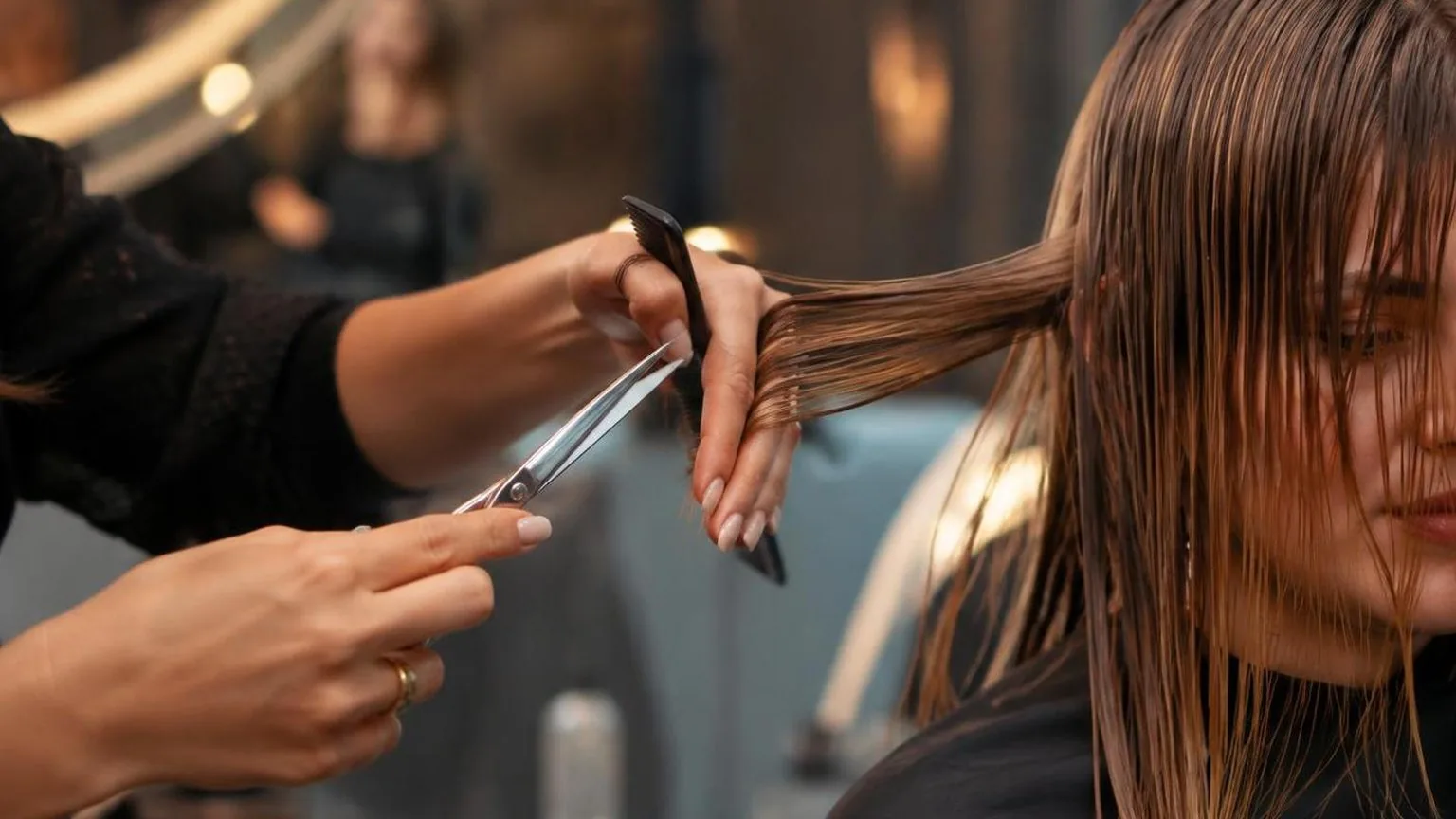
Hand insurance for hairdressers is specialist cover designed to protect income and business costs if a hand injury stops cutting, blow-drying, colouring, sectioning, or tool control.
One missed Saturday column can mean 6–10 lost appointments, so the policy matters most when your hands are the revenue engine.
For salon owners, it sits beside public liability, employer’s liability, and tool cover. For freelancers, it can support rent-a-chair fees, diary gaps, and client rebooking pressure.
Check waiting periods, payout triggers, exclusions, and whether the wording covers both hands, thumbs, wrists, and repetitive salon tasks.
This guide explains what to ask an insurer, what evidence to keep, and how to compare policies without buying cover that fails during real salon work.
Price Your Hand Risk
Work out the cover limit you need before you compare policies. Use your own service times, your own takings, and the tools you hold all day. The goal is simple: put a number on lost earning power and replacement costs.
Start with one working hand as the unit that matters. If your cutting hand or dominant blowdry hand is out, estimate how much booked work stops, how much can be reassigned, and what kit would need replacing after theft or damage.
| Measure | Your number | How to calculate it |
| Daily service income | £____ | Add one full day’s booked services. Example timings: blowdry 30-45 minutes, cut and finish 45-60 minutes, extensions styling 60-90 minutes. |
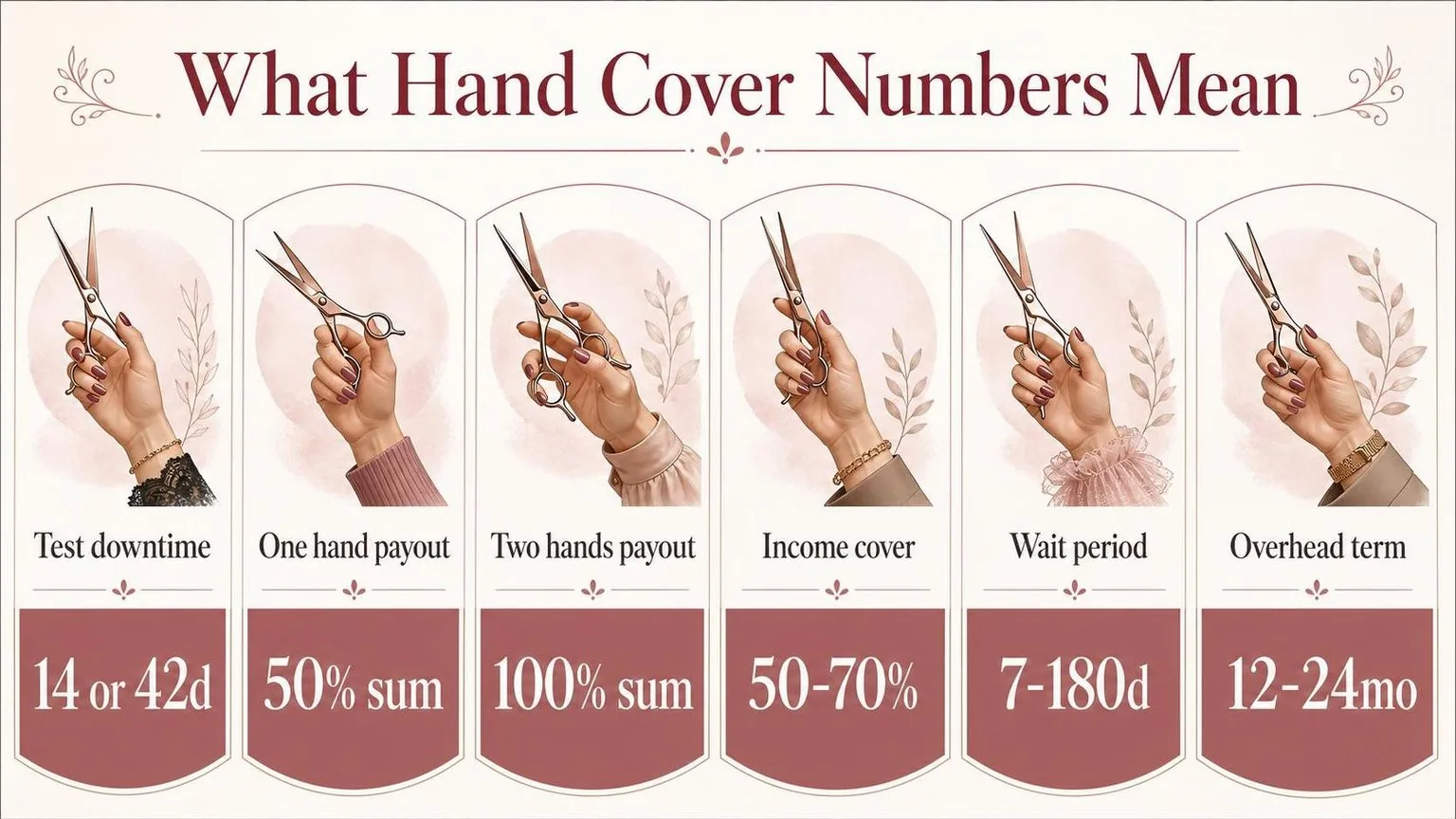
| Stopped-work days | ____ days | Use the number of days you could not perform core services with one hand impaired. Test two scenarios: 14 days and 42 days. |
| Lost income | £____ | Daily service income × stopped-work days. |
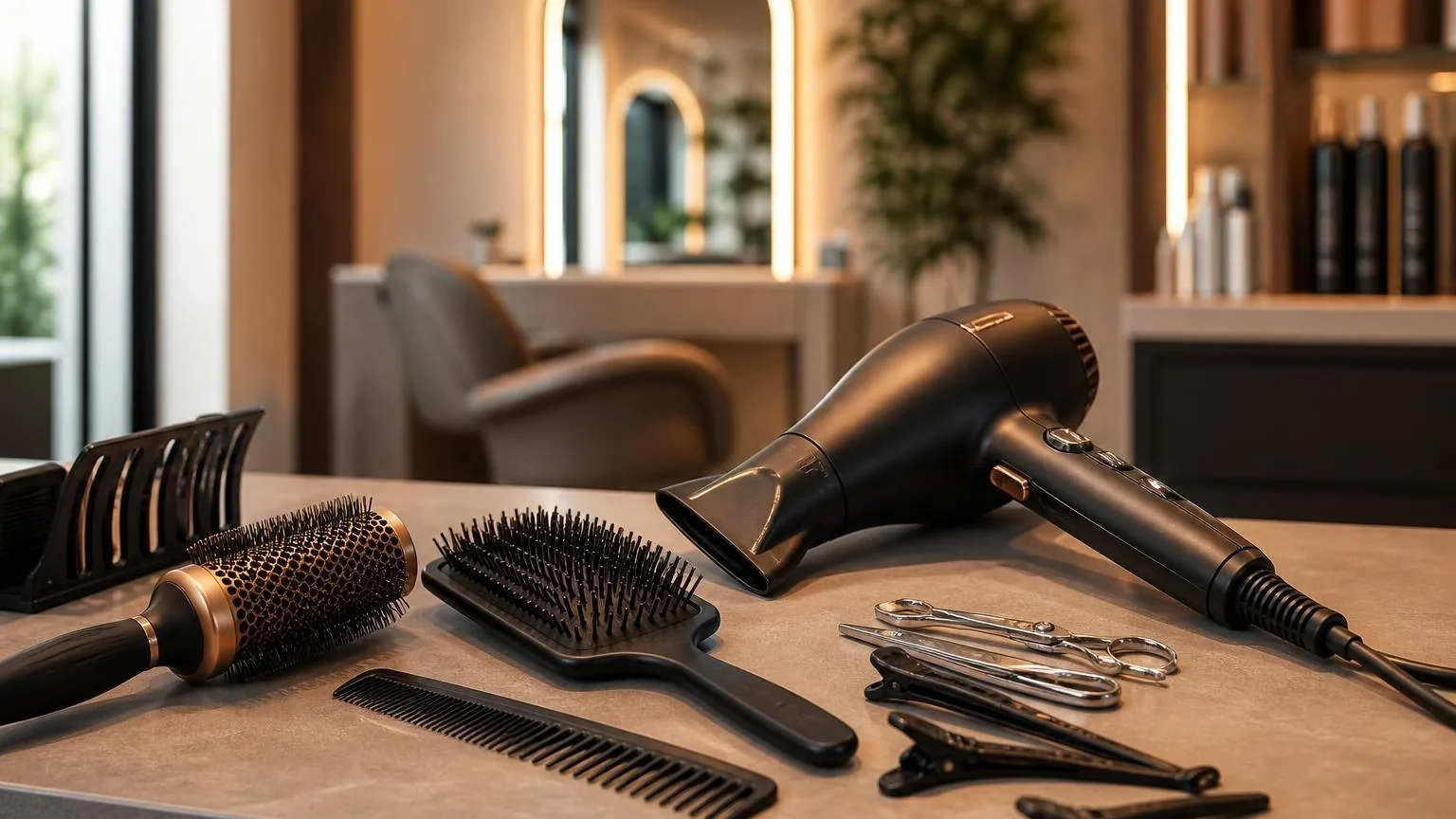
| Immediate kit value | £____ | Total your main tools: 1 dryer, 2 clippers or trimmers, 3 shears, 2 brushes in 25 mm and 43 mm sizes, 1 straightener, 1 session kit bag. |
| Minimum cover target | £____ | Lost income + immediate kit value + one week of chair rent or salon overhead. |
If your minimum cover target is higher than your current hand, tool, or income protection limit, note the shortfall.
Then compare policies for waiting periods, single-hand wording, self-employed clauses, and whether scissors, dryers, and electrical tools are covered inside or outside the salon.
The Numbers That Matter Here
The hard number is this: true “hand insurance” is rarely a single product. For hairdressers, the meaningful protection usually comes from income protection, personal accident cover, or business overhead expense cover.
Each pays differently, and the percentages matter more than the label.
If your income depends on grip strength, scissor control, and all-day blow-dry work, a policy that only pays for total loss of a hand can miss the real business risk. The useful comparison is trigger, payout method, and how long benefits last.
| Cover type | Typical trigger | Typical payout structure | Typical duration |
| Personal accident | Accidental loss, or permanent loss of use, of one hand | Often 50% of the policy’s principal sum for one hand; 100% for two hands | Usually a one-off lump sum |
| Income protection / disability income | Unable to work in your insured occupation | Commonly 50% to 70% of pre-disability income, subject to policy limits | Often 12 months, 24 months, 60 months, or to retirement age, depending on policy |
| Business overhead expense | Owner unable to work and the business still has fixed costs | Monthly reimbursement up to the insured expense amount | Commonly 12 to 24 months |
The biggest number gap is between lump-sum cover and income replacement. A one-off payment can help with debt or a temporary closure.
It does not automatically replace weekly earnings, standing rent, software, utilities, or chair wages over several months.
Waiting periods also change the value of the cover. Shorter waits cost more, but they matter in service businesses where cash flow turns quickly and rebooking drops fast when the owner cannot work on the floor.
| Policy feature | Common numbers in the market | Why a stylist should care |
| Deferred period before income benefits start | 7, 14, 30, 60, 90, or 180 days | A 90-day wait leaves roughly 13 weeks to self-fund |
| Benefit replacement level | 50% to 70% of income | High earners with strong retail or tip income should check what the insurer counts as income |
| Business overhead benefit period | 12 to 24 months | Useful for rent-heavy salons with fixed monthly outgoings |
Read the definition of disability with care. “Own occupation” wording is stronger for hairdressers than broad “any occupation” wording. The first asks whether you can still do hair professionally.
The second asks whether you can do any work at all.
Also separate accident-only cover from full disability cover. Many hand-related work interruptions are not dramatic one-time accidents.
If the policy only responds to accidental loss or severance, the numbers can look generous but still fail the day-to-day salon test.
What Tips It One Way
The result changes with the insurer’s definition of your work, the proof of your earnings, and the level of risk attached to your hands.
For hairdressers, small wording differences can decide whether a damaged finger is treated as a minor injury or a work-stopping claim.
The biggest swing factor is occupation wording. “Own occupation” cover asks whether you can still work as a hairdresser. “Any suited occupation” asks whether you could do another job, such as reception or retail.
Which can reduce or block a payout.
| Factor | What insurers look at | Why it changes the result |
| Occupation definition | Own occupation vs suited occupation | Own occupation is usually more favourable for stylists whose income depends on hand precision |
| Deferred period | Common options: 1, 4, 8, 13, 26, 52 weeks | Shorter waits usually mean higher premiums but faster benefit start |
| Benefit level | Often capped at about 50% to 70% of pre-disability income, insurer dependent | Higher insured income needs stronger evidence and affects pricing |
| Evidence of earnings | Payslips, tax returns, bank statements, appointment records | Irregular cash flow can slow underwriting or reduce accepted benefit |
| Policy type | Accident-only vs broader income protection | Accident-only is narrower; income protection wording is often more important than headline sum insured |
Hand use details matter. A stylist cutting six to ten clients a day, holding scissors for repeated 20- to 45-minute services, presents a different risk profile from a salon owner mostly doing admin.
Underwriters may ask how many hours you spend cutting, blow-drying, and colour-applying.
Your dominant hand can matter if a policy includes a specific loss table. Some personal accident contracts pay set percentages for loss of use of a thumb, index finger, or hand.
Those schedules are strict, so the exact wording and measurement standard drive the outcome.
Evidence quality changes results fast. Clean documents showing average monthly earnings, chair-rental income, and retail commission make the insured amount easier to support.
Gaps between declared income and banked income can trigger reductions, exclusions, or extra questions.
- Use the job title “hairdresser” or “stylist,” not a generic “beauty therapist,” if cutting is your main work.
- Ask whether scissors, clippers, razors, and blow-drying are all listed in the occupational duties considered.
- Check the deferred period against your cash reserve. A 13-week wait needs more savings than a 1-week wait.
- Read the exclusions page first. That page often changes the practical value of the policy more than the headline benefit.
The result is rarely about one number. It is the combination of occupation wording, waiting period, documented earnings, and hand-specific definitions that decides whether cover fits salon work.
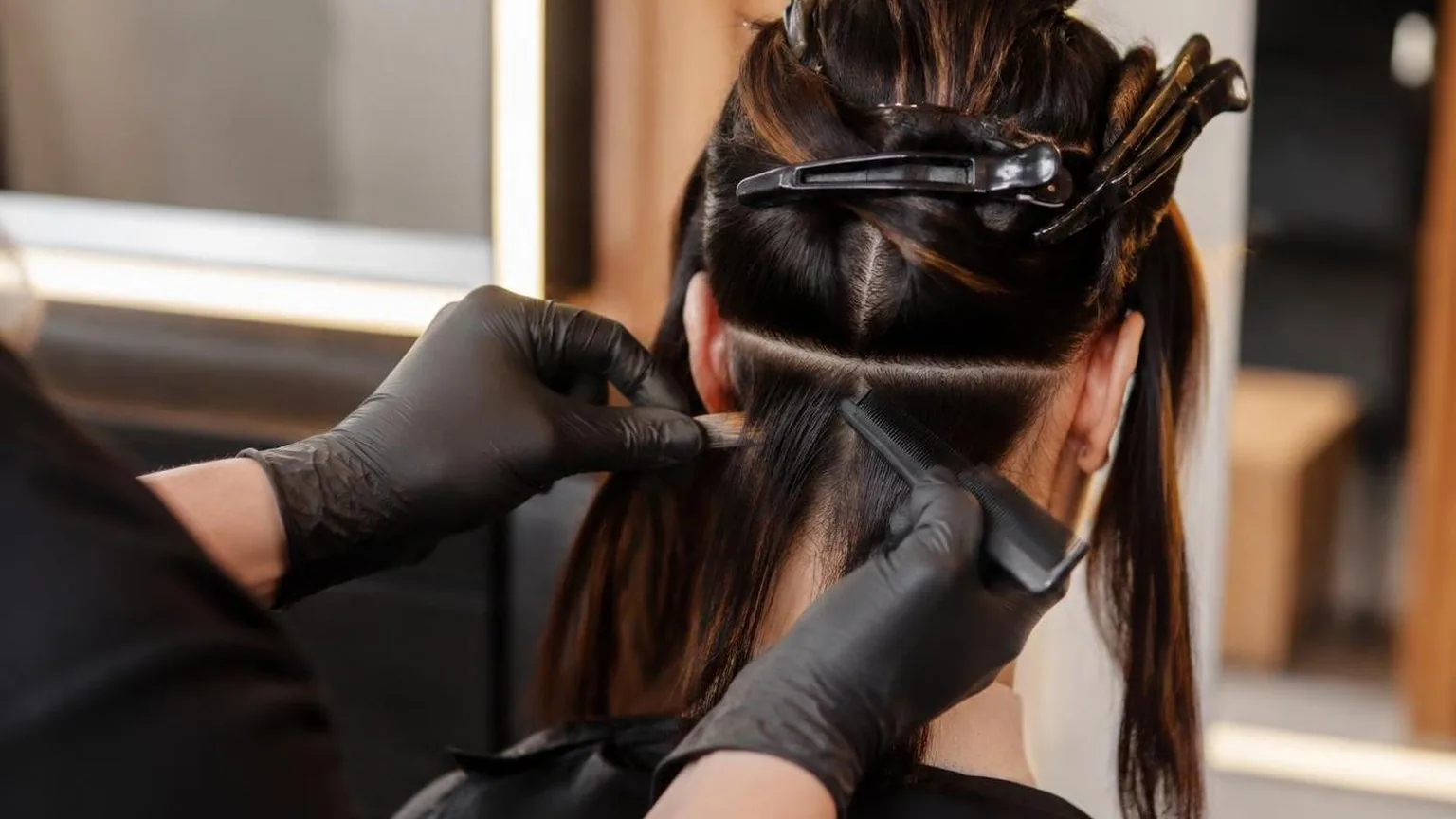
How to Judge It on Real Hair
Judge hand insurance against the services that pay your rent: cutting, round-brush tension, clipper control, sectioning, and back-to-back blow-dries.
If the policy would not replace income when one hand cannot do those tasks for a full column, it is too weak.
Start with your busiest service block, not the brochure summary. A stylist can open and close the hand thousands of times in one shift, but the policy trigger is simpler: can you still perform your insured occupation safely and to salon standard.
Bring a one-week service mix to the quote review. Count how many cuts, blow-dries, tong sets, braid finishes, and clipper services you complete.
Then test each policy term against the hand you use most, because losing pinch strength in the thumb and index finger hits scissor and brush control first.
| What to test | Real-hair check | Why it matters |
| Definition of disability | Look for “own occupation” wording | Hairdressing needs fine motor control, not only general ability to work |
| Waiting period | Check 7, 14, 30, 60, or 90 days | Shorter waits protect cash flow during cancelled columns |
| Benefit period | Check 12, 24, or 60 months, or to retirement age if offered | Hand injuries can stop income for more than one season |
| Partial disability | Confirm cover if you can work fewer clients | Reduced capacity is common before full return |
| Specified injury schedule | Read percentages for thumb, index finger, or hand loss | The thumb contributes roughly 40% of hand function in many clinical references |
| Exclusions | Read sport, self-employment, and repetitive-use wording | Small exclusions can defeat a valid salon claim |
Test the policy using three salon drills. First, hold a 25 mm round brush for a 35-minute blowout. Second, perform a scissor-over-comb section with the non-dominant hand assisting. Third, complete six precise partings in a row using a tail comb.
If pain, weakness, stiffness, or loss of dexterity would force you to slow down, refuse clients, or change finish quality.
The policy must treat that as occupational disability or partial disability. “Able to work” is not enough if you cannot produce saleable hair.
- Ask whether sickness and accidental injury are both covered.
- Ask how self-employed income is evidenced at claim stage.
- Ask whether salon owners are assessed differently from employed stylists.
- Ask for the full schedule of hand and finger benefits, not a summary.
Final check: compare the monthly benefit with your personal drawings or wage, not salon turnover. If one injured hand removes 50% of your service capacity, the policy needs to bridge that gap fast enough to keep the chair and column viable.
Side by Side With the Options
Hand insurance is narrower than most salon policies. It pays when an insured hand, thumb, or finger injury matches the policy definition, while alternatives usually replace part of income, cover business liability, or meet short-term sick-pay rules.
For working stylists, the trade-off is precision versus breadth. A hand-specific policy can target the exact body part that earns the money, but it usually will not replace every missed appointment or cover rent, staff wages, or client claims.
| Option | What it is designed to pay for | How benefits are usually paid | Typical trigger |
| Hand insurance | Permanent loss of use, loss, or severe impairment of a hand, thumb, or finger | Lump sum | Injury meeting the schedule and definition in the policy |
| Income protection | Ongoing lost earnings | Monthly benefit, often 50% to 70% of pre-disability income | Inability to work after a waiting period |
| Personal accident | Accidental injury, sometimes fractures or hospital stays | Lump sum or short-term weekly benefit | Accident listed in the wording |
| Employers’ liability or workers’ compensation | Employee injury at work | Claim payment under statute or policy terms | Work-related injury to staff, not the owner’s own hands in many setups |
| Public liability | Third-party injury or property damage | Claim payment and legal defense | Client or visitor claim |
The biggest difference is claim design. Hand insurance usually works from a schedule. If one thumb or one finger is central to your cutting grip, check whether the wording values digits separately or only pays for an entire hand.
That matters because hairdressing is fine-motor work. A stylist uses 2 hands, 10 digits, and repeated wrist rotation all day.
A policy that only pays for total hand loss can feel too blunt for a craft built on grip, sectioning, tension, and scissor control.
| Feature | Hand insurance | Income protection | Personal accident |
| Best for | Body-part-specific risk | Earnings replacement | Broader accident events |
| Payment timing | After accepted permanent impairment claim | After 7, 14, 30, 90, or 180-day waiting period, depending on plan | Usually faster if the event matches the schedule |
| How long it pays | One-off benefit | Months or years, subject to policy term | Usually one-off or short term |
| Main limitation | Narrow trigger | Can exclude very short absences | May not reflect occupation-specific hand value |
For salon owners, hand insurance also differs from business overhead cover. Overhead policies are built to help with fixed costs, while hand insurance is built around the stylist’s body. One protects the chair’s economics.
The other protects the operator.
- Choose hand insurance if your income depends on one-to-one technical work and you want a body-part-specific lump sum.
- Choose income protection if losing 1, 3, or 6 months of bookings is the bigger threat than a permanent scheduled injury.
- Keep liability cover separate. It handles client and staff claims, not your own earning hand.
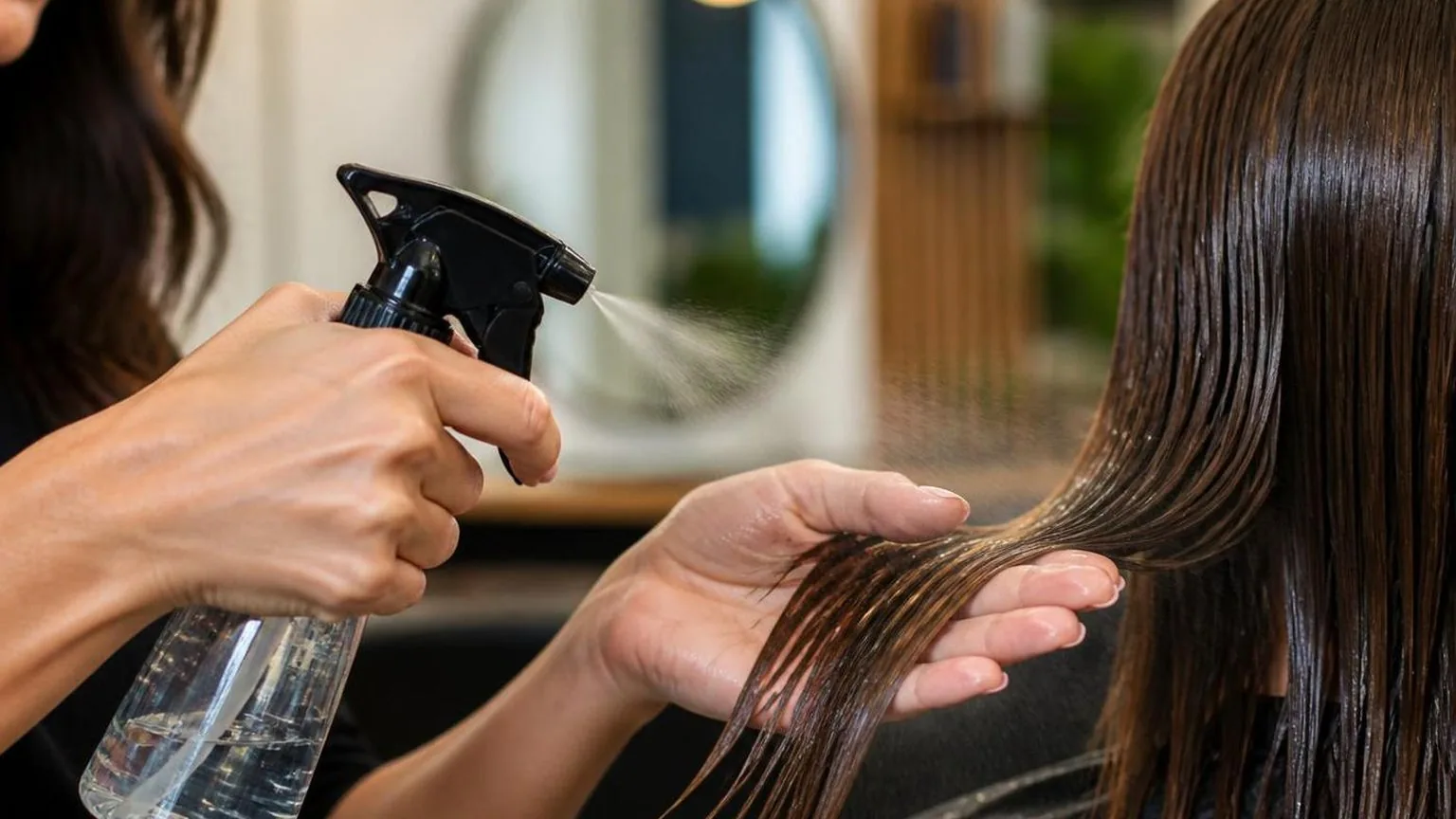
Protecting the Hair While You Work
Heat and tension are the two variables that decide whether a blowout looks polished or frays out by the second pass.
Keep the dryer in a controlled temperature range, keep brush tension firm but not aggressive, and hair stays smoother with fewer snapped ends.
For salon work, the safest habit is measurable control. Use smaller sections, a consistent nozzle distance, and fewer passes. That protects the cuticle, reduces mechanical drag, and lowers the chance of stretching wet lengths until they roughen.
Hair is weakest when wet. That is why rough drying should stop before full evaporation. Take hair to about 70 to 80 percent dry with hands first, then switch to a brush for shaping. The brush should refine, not force water out.
| Variable | Working range | Why it matters |
| Pre-dry level | 70 to 80% dry | Less time under brush tension |
| Nozzle distance | 2 to 4 inches | Concentrates airflow without scorching one spot |
| Section width | 1 to 2 inches | Gives even heat through the section |
| Section thickness | About the brush diameter | Prevents overworking the outer layer |
| Passes per section | 2 to 4 | Limits repeated friction |
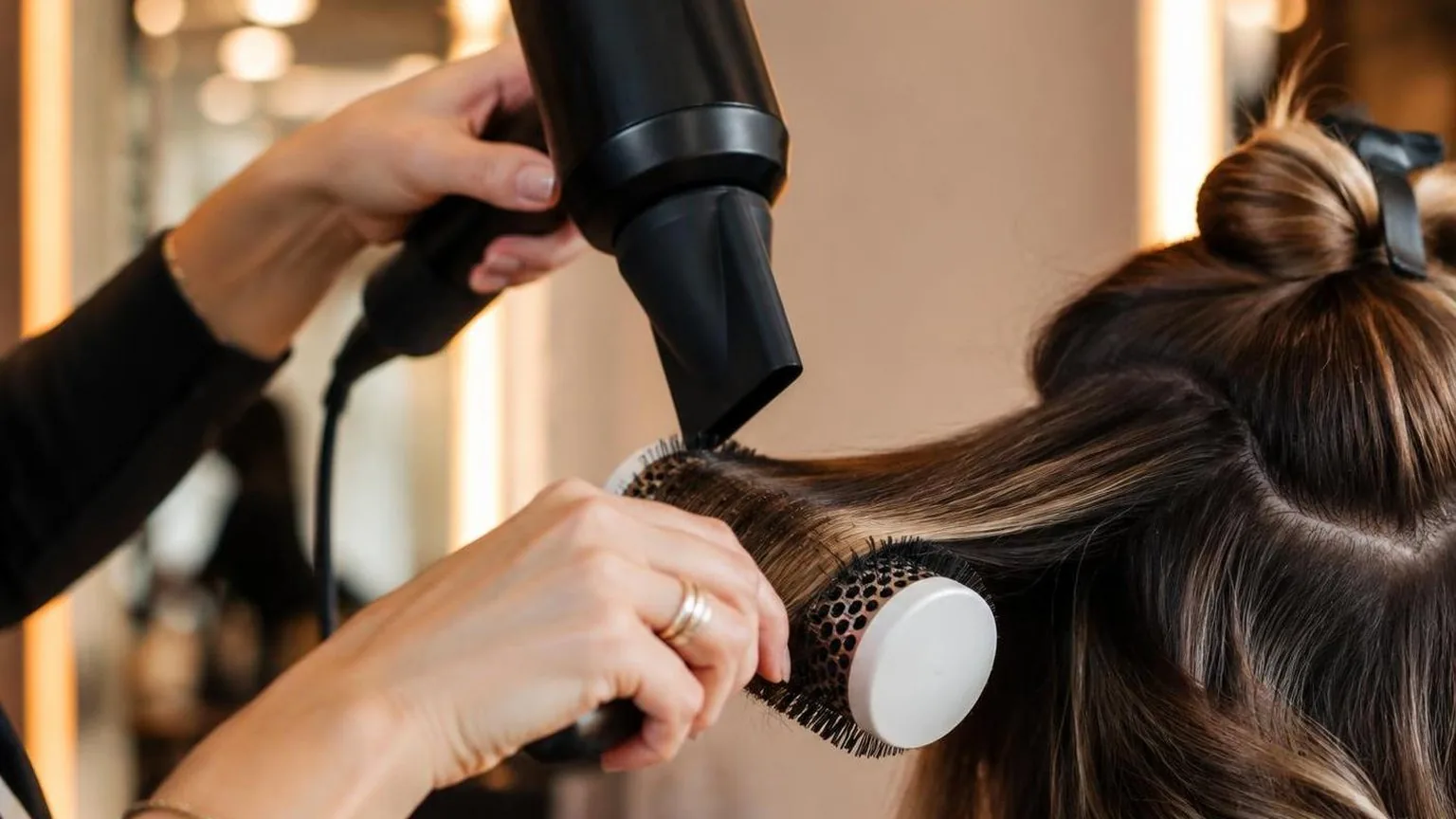
Tool choice changes the tension profile. A ceramic or vented round brush in a 25 mm, 35 mm, or 45 mm diameter lets you match grip to hair length. Oversized barrels on short layers force harder pulling and usually leave the roots damp.
Heat setting matters more than stylists admit. Fine or fragile lengths respond better to low to medium heat. Medium to coarse hair usually tolerates medium to high heat, but only with constant movement and airflow directed from roots to ends.
| Hair pattern | Brush tension | Heat approach |
| Fine | Light to moderate | Low to medium, more airflow |
| Medium | Moderate | Medium, steady passes |
| Coarse | Moderate to firm | Medium to high, smaller sections |
| Textured stretch work | Firm, controlled | Medium heat, slow roots, quick ends |
Watch the ends. If they wrap too tightly around the brush, tension spikes exactly where fibre wear shows first. Leave the last 1 inch less compressed, and use the cool shot for 5 to 10 seconds to set shape without another hot pass.
- Keep the nozzle parallel to the hair shaft, not angled across it.
- Do not park heat on one section while regripping the brush.
- Detangle fully before the round brush touches the hair.
- Reduce tension the moment the section is dry.
For stylists, this is hand insurance as much as hair insurance. Clean sectioning, fewer passes, and correct barrel size cut strain on wrists and fingers while keeping the finish intact.
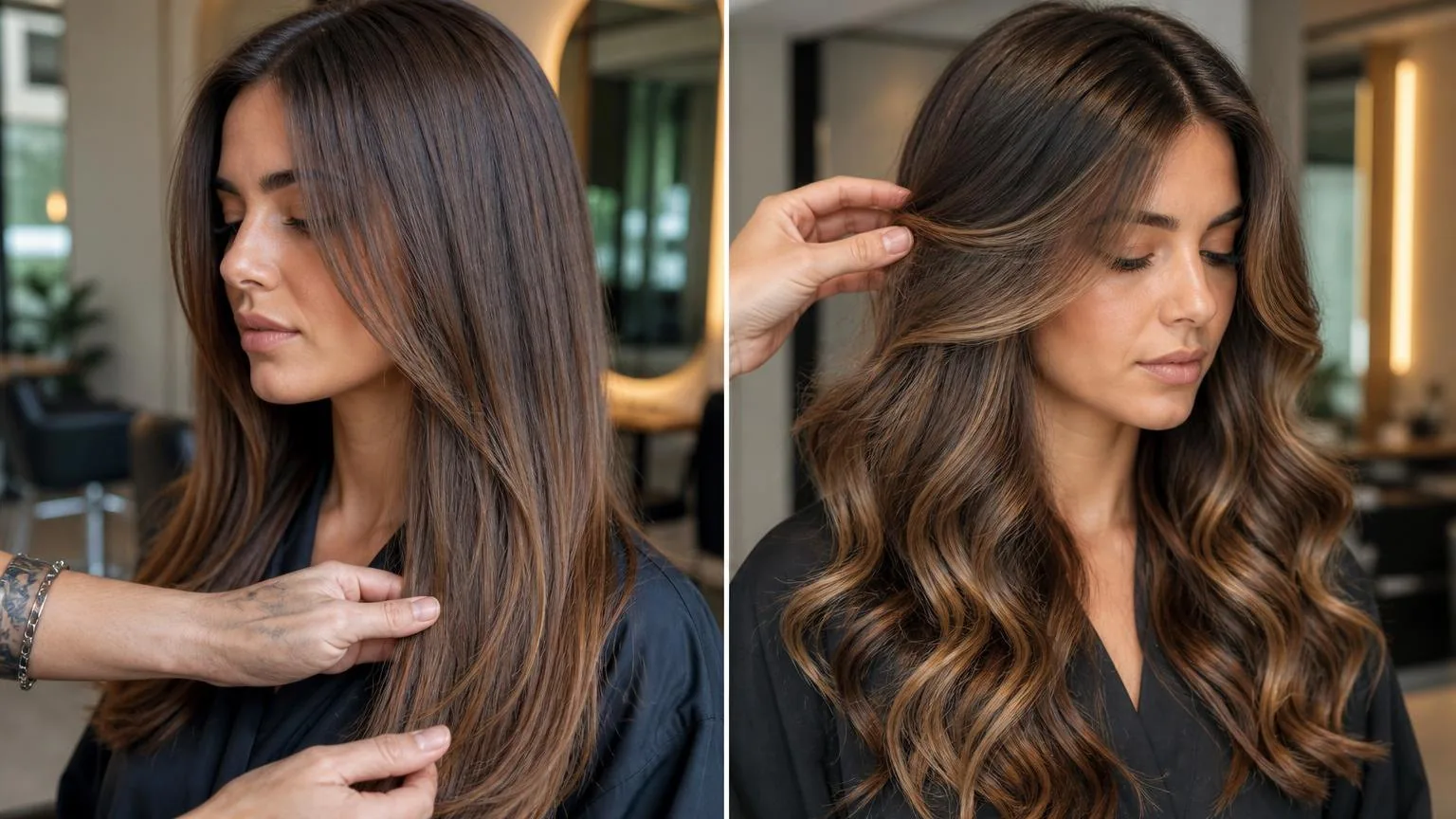
What the Method Actually Changes
Hand insurance changes the trigger, payout speed, and proof standard of a claim.
The practical difference is not the word “hand” on the schedule; it is how occupation, waiting period, and benefit design respond when scissor, brush, or dryer work cannot be done safely or consistently.
A policy written around “own occupation” changes the outcome first.
If styling, cutting, and finishing are the insured occupation, inability to hold tension through a round-brush blowout can meet the definition earlier than a broader “any occupation” test.
| Variable | Typical range | What changes in practice |
| Waiting period | 7, 14, 30, 60, 90 days | Shorter waiting periods start benefits sooner but usually cost more. |
| Benefit level | Often 50% to 70% of pre-disability income | Higher percentages protect chair income better but require stronger income evidence. |
| Benefit period | 12, 24, 60 months, or longer | Longer periods matter more when return to full column hours is delayed. |
| Excess | Common fixed amount per claim | Higher excess lowers premium but increases out-of-pocket cost before payout. |
Waiting period changes cash flow immediately. A 14-day deferment covers a two-week interruption differently from a 30-day deferment. For a stylist booked 5 days a week, that is roughly 10 working days versus about 22 before benefits can begin.
Benefit level changes whether overhead can still be met. Income replacement at 50% leaves a larger gap than 70% once rent, assistant pay, and product minimums are deducted.
The policy does not change fixed costs; it changes how much of them can still be carried.
Evidence requirements change claim friction. Insurers usually ask for earnings records, treatment notes, and occupational detail.
A file describing 45-minute blowouts, 2.5 cm sections, and repeated wrist rotation during a 30- to 40-minute finish is stronger than a generic “hairdresser” description.
Dominant-hand wording changes threshold. Loss of function in a non-dominant hand may still allow some tasks, but loss in the dominant hand can stop cutting, sectioning, and brush control sooner.
The policy outcome turns on insured duties, not on a broad title alone.
- Section size matters in evidence because it shows grip repetition. A full-head blowout can involve dozens of repeated passes per section.
- Tool weight matters because a dryer around 400 g to 700 g changes fatigue exposure over a long column.
- Shift length matters because 6 to 8 hours of continuous hand use is different from occasional desk work.
The method changes precision. Specific duties, exact deferment, and defined payout percentages decide whether cover behaves like marketing language or usable income protection.
Myths That Keep Going Round
The biggest mistake is assuming “hand insurance” is a standalone policy that pays whenever a stylist hurts a hand.
In practice, cover is usually built through personal accident, disability income, or specialist accident-and-sickness policies, and the claim trigger is tighter than most stylists expect.
A second mistake is buying on price alone. For hairdressers, the wording around occupation, waiting periods, benefit periods, and exclusions usually matters more than the headline premium.
Myth: any hand injury leads to an automatic payout. Reality: insurers usually test whether you can perform your own occupation, any suited occupation, or a defined set of salon duties.
| Common claim trigger | What it usually means |
| Own occupation | You cannot work specifically as a hairdresser or barber |
| Suited occupation | You may be expected to do other work matching your training or experience |
| Specified loss | Lump sum only for severe, listed permanent loss, not short-term strains or minor cuts |
Myth: public liability or salon insurance covers your hands. Reality: those policies usually protect the business against third-party claims, stock loss, or property damage, not your personal earning ability.
Myth: part-time stylists do not need cover. Reality: insurers often base benefits on provable income, not full-time status. Freelancers, renters, and mobile stylists can be more exposed because missed appointments stop cash flow immediately.
| Typical feature | Common range | Why it matters for stylists |
| Income replacement | Up to 50%–70% | A lower percentage can leave rent, chair fees, and tools unpaid |
| Waiting period | 14, 30, 60, or 90 days | Shorter waits cost more but suit workers with little savings buffer |
| Benefit period | 1, 2, or 5 years | Short periods may not protect against long recovery gaps |
Myth: repetitive strain is always covered. Reality: many policies narrow cover for gradual onset problems, pre-existing symptoms, or non-accidental causes. The exclusion section decides this, not the sales summary.
Myth: a doctor’s note is enough. Reality: insurers often ask for income evidence, appointment books, tax records, treatment notes, and proof that salon tasks cannot be done safely.
- Check whether blow-drying, cutting, sectioning, scissor control, and sustained grip are named occupational duties.
- Ask if self-employed income is averaged over invoices, tax returns, or bank statements.
- Confirm whether salon owners are assessed as managers or hands-on stylists.
- Read exclusions for sport, nightlife work, undeclared second jobs, and hazardous hobbies.
The most expensive error is vague wording. If your income depends on wrist rotation, grip strength, and all-day tool control, the policy must describe that work precisely before a claim ever happens.
Frequently Asked Questions
What is hand insurance for hairdressers?
It is usually personal accident, disability, or income protection cover tailored to a stylist whose earnings depend on manual work.
Policies can pay a lump sum or monthly benefit if a covered injury stops you cutting, blow-drying, sectioning, or using tools safely.
Does a standard salon insurance policy cover your hands?
Usually not in a personal income sense. Salon policies often cover public liability, employers’ liability, stock, and equipment, while hand-related loss of earnings is more likely to sit under personal accident or income protection wording.
What evidence do insurers ask for when a hairdresser applies?
Expect questions on your role, weekly hours behind the chair, turnover, and whether you are employed, self-employed, or rent a chair.
Some insurers also ask about previous claims, sports or manual hobbies, and the split between cutting, colouring, styling, and education work.
How much cover should a hairdresser consider for hand-related income loss?
Start with fixed monthly costs: chair rent, tools, insurance, phone, transport, and home bills. Then compare that total with the benefit cap, waiting period, and payout length, because a 4-week deferment works differently from a 13-week deferment.
What exclusions matter most in hand insurance for hairdressers?
Read the wording for exclusions on pre-existing conditions, high-risk sports, self-inflicted injury, and work done outside the declared occupation.
Check how the policy defines inability to work, because “own occupation” cover is narrower and often more useful for a full-time stylist.
Who might need hand insurance in a hairdressing business?
Self-employed stylists, salon owners, colourists, barbers, and mobile hairdressers may consider it if hand use is essential to their income. It can be especially relevant for people who cut, blow dry, colour, or style clients for most of their working day.
Can hand insurance help if a hairdresser has to stop working temporarily?
Some policies may provide a benefit if an injury or covered condition prevents you from carrying out hairdressing work. The exact support depends on the policy terms, waiting period, and how the insurer defines inability to work.
What should hairdressers check before choosing hand insurance?
Check the benefit amount, waiting period, claim rules, exclusions, and whether cover applies to both injury and illness. It is also useful to confirm whether the policy covers your specific hairdressing duties, including mobile work or salon ownership tasks.
Related Reading
- How blow dry stylists are paid: the three structures
- The licences a blow dry bar needs, and who issues them
- What a blow dry bar is, and how the model works
- The blow dry bar business model, explained
- When a salon needs an alcohol licence
- How salon memberships work, and when they backfire
- The types of salon insurance, and what each covers
- What it costs to open a blow dry bar
- How booth rental works, and who it suits
- The complete guide to the blow dry bar business
- PubMed
- National Center for Biotechnology Information Bookshelf
- U.S. Small Business Administration Guide to Business Licenses and Permits
- Milady
- Professional Beauty Association
- National Hair & Beauty Federation
- MedlinePlus
- Harvard T.H. Chan School of Public Health
- Occupational Safety and Health Administration