
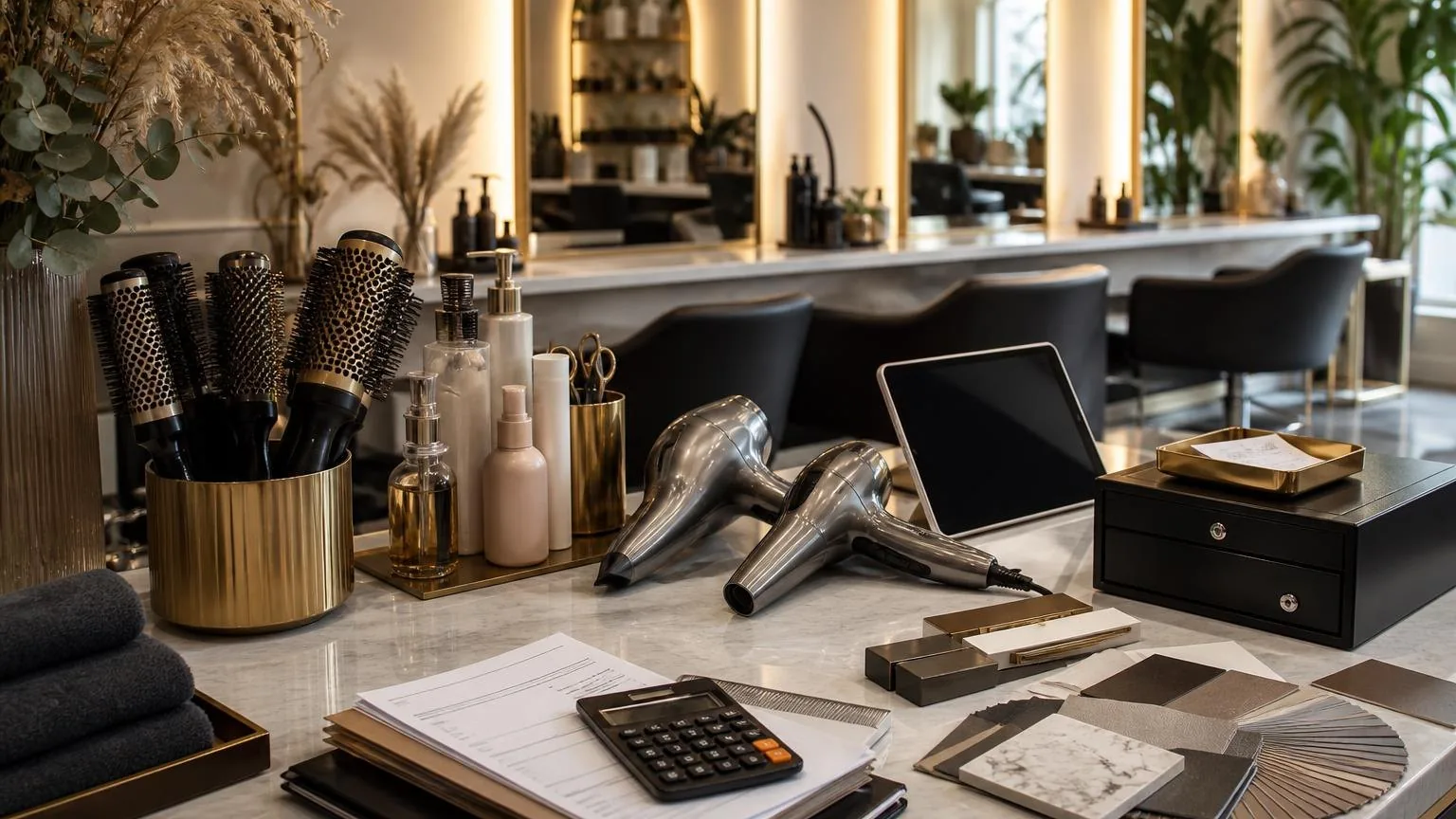
What it costs to open a blow dry bar is typically a six-figure launch budget once lease deposit, fit-out, shampoo bowls, chairs, dryers, booking software, opening stock, licensing, insurance, payroll float, and marketing are counted.
For operators, the real question is cost control: how many styling stations you build, how fast each service turns, and whether your layout supports a steady 35–45 minute blowout without wasted steps.
Build Your Opening Budget
Open a spreadsheet now. Use your own quotes, not averages. A blow dry bar budget works best when it is built by station, because chairs, mirrors, dryers, electrical load, storage, and retail all scale from that number.
| Line | Do this now | Your number |
| Stations | Count styling positions. Allow 900 mm to 1,200 mm width per station, plus 1,200 mm clear circulation behind chairs. | __ stations |
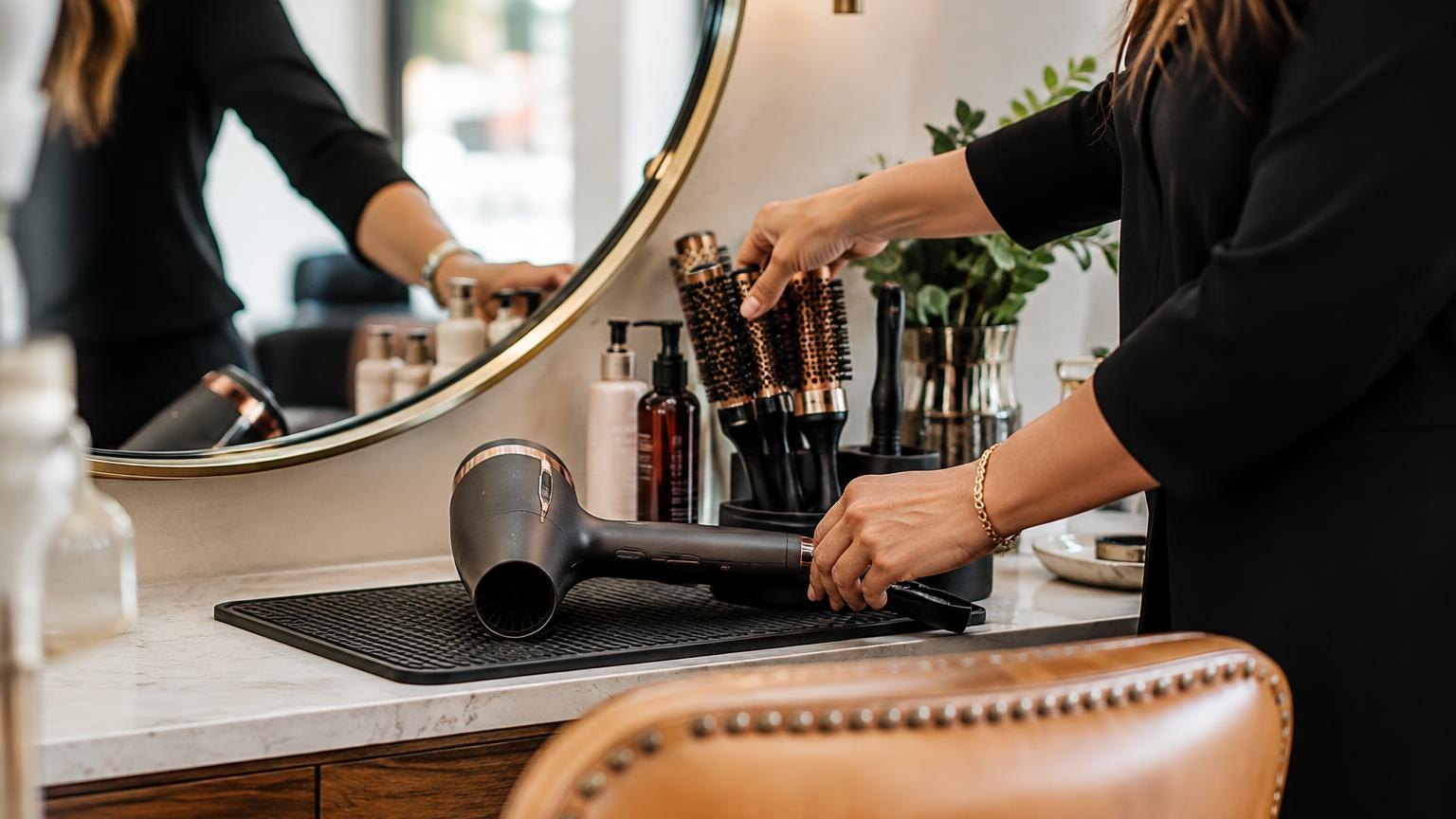
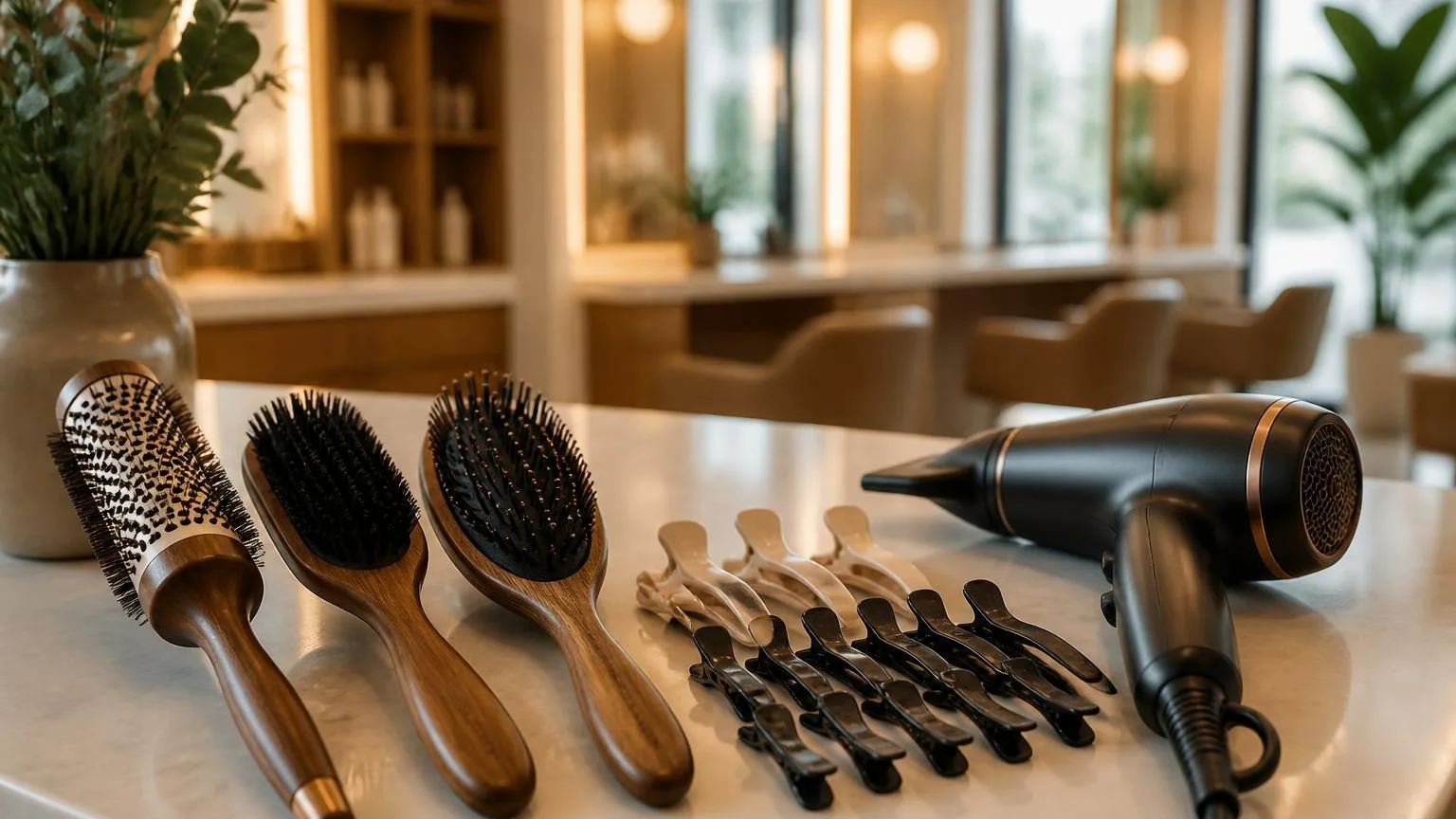
| Tools | Price 1 dryer, 2 round brushes, 6 sectioning clips, 2 heat mats, and 1 trolley per station. | __ per station |
| Back bar | List shampoo, conditioner, styling spray, mousse, serum, towels, capes, and laundry stock for 2 busy weeks. | __ opening stock |
| Fit-out | Get contractor quotes for plumbing, extraction, lighting, flooring, mirrors, joinery, reception, and electrical outlets. | __ fit-out |
| Pre-opening cash | Add rent deposit, licences, insurance, software, signage, training time, and payroll before the first paid appointment. | __ cash reserve |
Now multiply the station tool total by your station count. Add fit-out, opening stock, and pre-opening cash. Then add a contingency of 10% to 20%, depending on how much construction is involved.
Check electrical capacity before signing. A typical professional dryer may draw around 1,600 to 2,000 watts. Six dryers running together can demand 9.6 to 12 kW before lighting, laundry, point-of-sale, and HVAC are counted.
Your first-pass opening budget is the number you can defend with quotes, measurements, and load calculations, not the number that feels comfortable.
The Numbers That Matter Here
Opening a blow dry bar is usually a six-figure project once lease deposits, plumbing, ventilation, stations, dryers, retail launch stock, payroll cushion and marketing are counted.
The leanest models reduce spend by taking second-generation salon space, limiting wet services and controlling station count.
The practical budgeting unit is not the whole salon; it is the styling chair. Every extra chair adds mirror width, electrical load, tool inventory, stylist payroll exposure and booking capacity.
| Cost line | Typical planning range | What drives it |
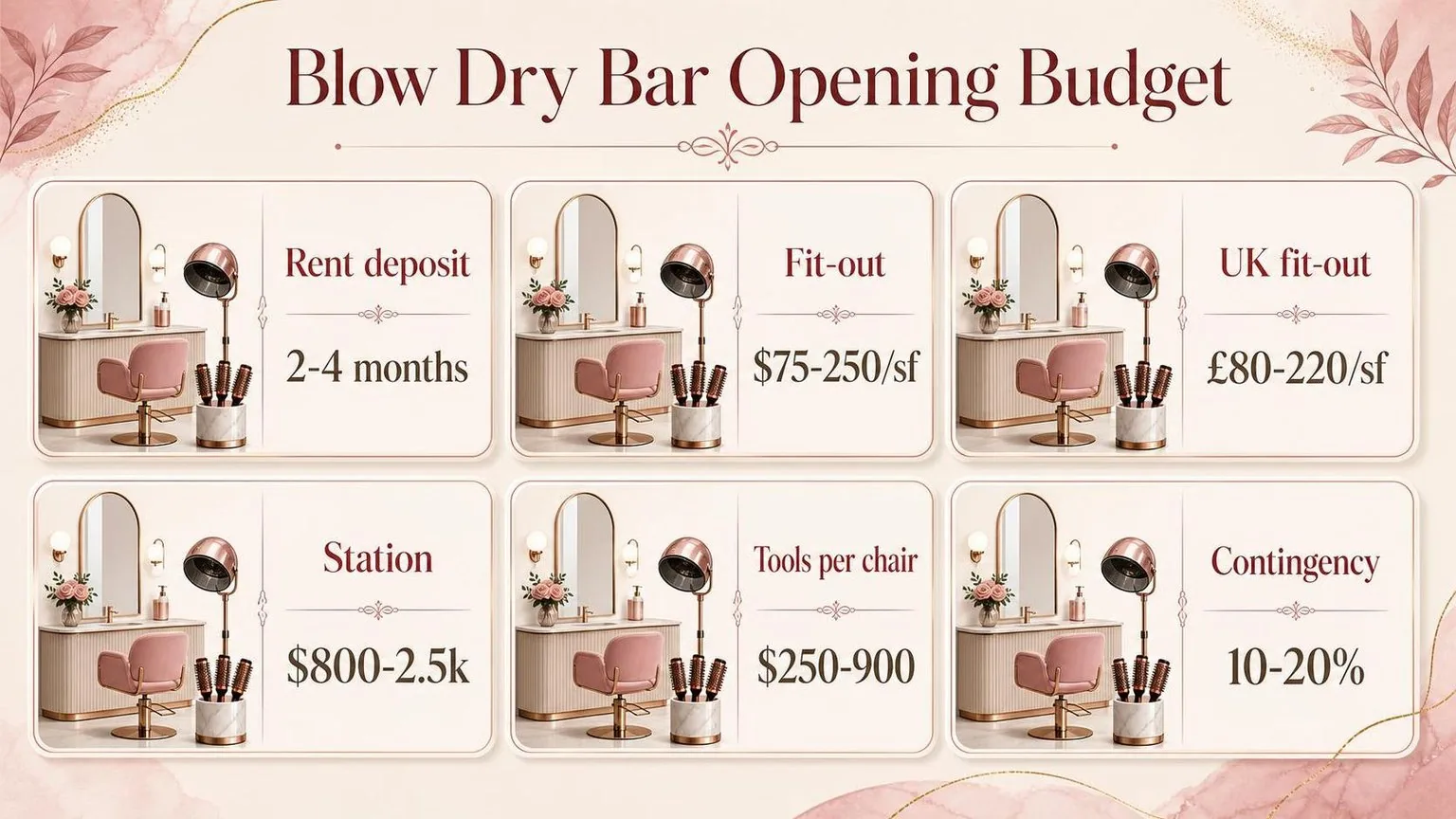
| Lease deposit and initial rent | Equivalent of 2 to 4 months’ rent | Landlord terms, credit strength, location demand |
| Fit-out and light construction | $75 to $250 per sq ft / £80 to £220 per sq ft | Second-generation salon versus raw shell, plumbing moves, electrical upgrades |
| Styling stations | $800 to $2,500 / £650 to £2,000 per station | Custom millwork, mirrors, storage, task lighting, chair quality |
| Shampoo bowls and plumbing | $1,500 to $6,000 / £1,200 to £5,000 per bowl installed | Drain distance, water heating, flooring repair, backwash furniture |
| Professional dryers and hot tools | $250 to $900 / £200 to £750 per active chair | Number of duplicate tools, voltage, warranty level |
| Opening product and retail stock | $3,000 to $15,000 / £2,500 to £12,000 | Backbar depth, retail range, towel system, sampling |
| Pre-opening payroll and training | 2 to 6 weeks of wages | Hiring pace, model training, reception coverage |
| Working capital cushion | 3 to 6 months of fixed costs | Rent, payroll, utilities, insurance, software, debt service |
Contractors price salons differently from simple retail because water, heat and power are concentrated. A six-chair blow dry bar can run multiple dryers at once, so electrical capacity and circuit layout should be checked before signing a lease.
| Operating metric | Useful planning number | Why it matters |
| Core service time | 35 to 60 minutes | Sets chair turns and booking gaps |
| Chair width allowance | 42 to 48 inches | Allows stylist movement and tool clearance |
| Dryer power draw | 1,200 to 1,875 watts per dryer | Affects circuit count and simultaneous use |
| Backbar towel use | 2 to 4 towels per guest | Drives laundry, storage and daily par levels |
| Reception and retail zone | 8% to 15% of floor area | Protects check-in flow and product conversion |
Use the U.S. Small Business Administration method: separate one-time startup costs from recurring expenses, then fund both.
For salon-specific build-outs, compare landlord work letters, licensed contractor bids and local permitting requirements before treating any range as final.
The number most often missed is ramp-up cash. Even with strong bookings, a new bar needs time to train hands, standardise finish quality, build rebooking habits and learn peak staffing. Underfunding that period is riskier than buying fewer mirrors.
What Tips It One Way
The opening cost changes most with fit-out scope, chair count, rent structure, and whether you build plumbing from scratch.
A compact second-generation salon can open lean; a prime high-street or urban unit with new services, extraction, laundry, and bespoke millwork climbs fast.
Site condition and lease terms
A former salon or beauty unit is usually the biggest cost saver because water, waste, electrical capacity, mirrors, lighting, and back-bar zones may already be usable.
A plain retail shell shifts more spend into contractors before the first blowout is sold.
| Space condition | Typical impact |
| Second-generation salon | Lower build-out; reuse may cover wash area, reception, mirrors, and staff room |
| White-box retail unit | Medium build-out; walls, lighting, flooring, and plumbing usually need work |
| Raw shell | Highest build-out; new mechanical, electrical, plumbing, flooring, and inspections |
Landlord contributions matter, but read the lease carefully. A rent-free period helps cash flow; a tenant improvement allowance helps construction invoices.
They are not the same thing, and both can be tied to personal guarantees or longer commitments.
Chair count, stations, and backwash layout
Blow dry bars look simple, but capacity is built in inches. A comfortable styling station often needs enough width for a chair, tool trolley, stylist stance, client movement, and cord safety. Crowding saves rent, then costs time every service.
| Planning item | Practical benchmark |
| Styling station width | About 48 to 60 inches per station |
| Clear aisle behind chairs | About 36 inches minimum working clearance |
| Backwash unit footprint | About 30 to 36 inches wide, plus recline clearance |
| Blowout timing | About 35 to 50 minutes, depending on length and finish |
From hands-on salon planning, the mistake is underbuilding support space. Towel storage, colour-free product storage, dirty-linen bins, dryer parking, and a mop sink do not sell services directly, but they keep stylists on schedule.
Tools, power, and heat load
Electrical capacity can change the quote quickly. Multiple dryers, irons, reception equipment, laundry, music, lighting, and HVAC run together during peak slots.
The National Electrical Code is the key reference your licensed electrician will use for load calculations.
| Item | Common working range |
| Professional blow dryer | About 1,600 to 2,000 watts |
| Flat iron temperature | About 300 to 410°F, selected by hair type and finish |
| Curling iron barrel | About 1 to 1.5 inches for most blowout wave finishes |
| Round brush diameter | About 1.5 to 3 inches, matched to length and bend |
Labour model and opening stock
Payroll structure changes working capital as much as construction does. The U.S.
Bureau of Labor Statistics’ wage data and the UK Office for National Statistics’ earnings data are useful baselines, but local stylist availability sets the real number.
- Commission-heavy teams reduce fixed payroll pressure but can make forecasting harder.
- Hourly teams give tighter scheduling control but require stronger opening cash reserves.
- Retail-led menus need more starting inventory, shelving, testers, and shrink control.
- Membership-led menus need booking software, retention tracking, and front-desk training from day one.
The result changes when the business is designed around actual throughput, not just a beautiful room. Cost it from service time, chair turns, towel cycles, dryer load, and stylist movement, then let the décor budget follow.
How to Judge It on Real Hair
Judge opening costs by testing whether each station can produce a repeatable finish on real clients, not by comparing invoices alone. A cheaper fit-out becomes expensive if it slows the book, overheats the room, or forces stylists to redo sections.
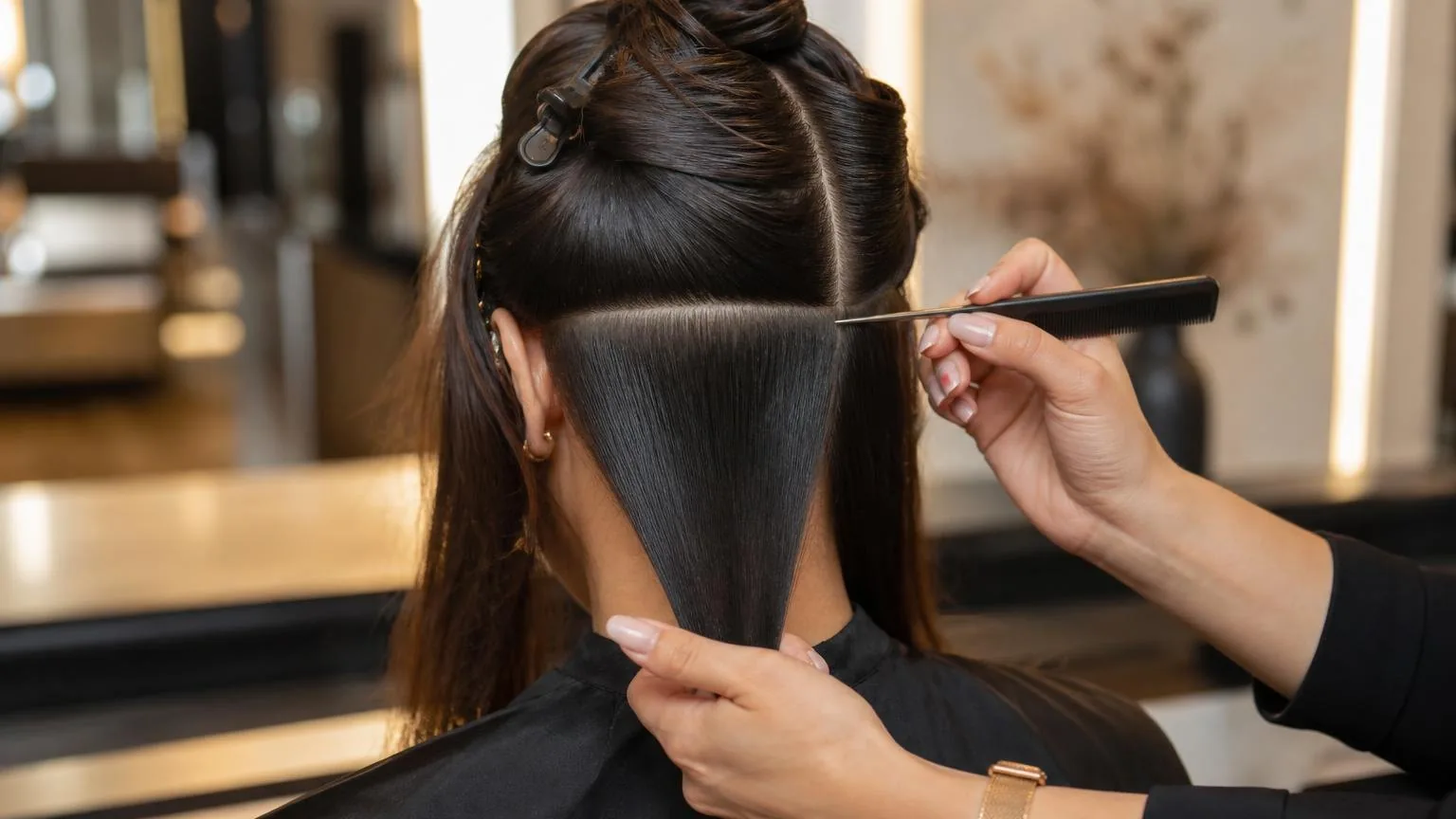
Run a practical trial before committing to dryers, chairs, mirrors, brushes, towels, and backbar quantities. Use hair models that reflect your menu: fine, dense, textured, long, bob-length, and fringe-heavy finishes.
| Test item | Real-hair target | Cost signal |
| Classic smooth blowout | Finished without re-wetting sections | Shows whether dryer power, nozzle control, and brush stock are adequate |
| Long, dense hair | Completed within the booked service window | Reveals if you need higher airflow, more assistants, or longer appointment slots |
| Root lift and bend | Holds shape after cooling | Tests chair ergonomics, sectioning clips, airflow direction, and product usage |
| Frizz-prone lengths | Polished finish with controlled tension | Identifies whether low-cost brushes or weak concentrators will create rework |
Time every service from consultation to cape removal. The useful number is not only the blowdry time; it is the full chair cycle, including setup, sectioning, finishing, retail conversation, and reset.
| Measured step | What to record | Why it affects opening cost |
| Station setup | Minutes before the client sits | Determines towel count, tool duplication, and assistant support |
| Drying and styling | Minutes with dryer running | Impacts labor cost, noise exposure, heat load, and booking capacity |
| Cool setting work | Sections cooled before release | Shows whether the finish depends on extra pins, clips, or hot tools |
| Reset | Minutes to clean and restock | Determines how tightly stations can be scheduled |
Check heat and airflow with discipline.
Cosmetology training materials from Milady and Pivot Point emphasize controlled tension, directional airflow, and cooling before release; those fundamentals are what separate a profitable service from a rushed redo.
| Tool check | Practical benchmark | What failure looks like |
| Nozzle width | Narrow enough to direct air down one section | Cuticle disruption, flyaways, and extra smoothing time |
| Brush barrel range | Small, medium, and large barrels at each active station | Stylists sharing brushes or compromising shape |
| Outlet placement | Cord reaches without crossing the client’s lap | Slower movement and higher trip risk |
| Noise check | Conversation possible without shouting | Client fatigue and poor stylist communication |
- Weigh product before and after services. This gives real grams per blowout, not guessed backbar usage.
- Photograph the finish under salon lighting. Mirrors can flatter; camera review exposes weak crown lift, unfinished napes, and uneven polish.
- Test at full station density. A dryer that feels fine alone may make the room hot and loud when every chair is booked.
- Ask stylists what they reached for twice. Duplicate those items in the opening budget before adding decorative extras.
The best cost judgment is operational: if real hair finishes consistently, within the planned appointment flow, with no borrowing or rework, the spend is justified.
If not, the shortfall belongs in the opening budget before leasehold or marketing extras.
How It Compares to the Alternatives
A blow dry bar usually sits between a mobile styling business and a full-service salon: more capital than a solo setup, but less plumbing, inventory, and technical back-room space than a cut-and-colour salon.
The trade-off is volume pressure: chairs must turn fast because the service ticket is narrower.
Use these as planning ranges, not quotes.
SBA guidance stresses estimating leasehold improvements, equipment, opening inventory, licences, insurance, deposits, and working capital separately; UK operators should make the same split before speaking to landlords, lenders, or fit-out contractors.
| Model | Typical opening cash needed | Space | Main cost driver |
| Mobile blowouts | $5,000-$20,000 / £3,000-£15,000 | No leased salon | Tools, insurance, booking software, transport |
| Salon suite | $8,000-$25,000 / £5,000-£18,000 | 100-250 sq ft | Deposit, weekly rent, compact equipment |
| Independent blow dry bar | $175,000-$350,000 / £120,000-£260,000 | 800-1,200 sq ft | Fit-out, stations, wash area, launch payroll |
| Full-service salon | $300,000-$650,000 / £220,000-£500,000 | 1,200-2,500 sq ft | More plumbing, storage, services, staff mix |
The blow dry bar’s advantage is a simpler operating box. A practical layout can run with 6-8 styling stations, 2 shampoo bowls, 1 reception desk, and a back bar.
Keep at least 36 inches of accessible route in US plans; UK layouts often need 900-1,200 mm circulation depending on the premises.
| Item | Blow dry bar | Full-service salon |
| Styling chairs | 6-8 | 8-14 |
| Wash bowls | 2-3 | 3-6 |
| Typical service time | 35-50 minutes | 45-180 minutes |
| Retail depth | Focused: styling, brushes, finishers | Broader: wet line, styling, tools |
Compared with a suite, the blow dry bar buys brand visibility and chair capacity. It also takes on landlord negotiations, utilities, front-desk labour, laundry, card processing, and local marketing.
A suite can break even with one busy stylist; a bar needs consistent multi-chair utilisation.
Compared with mobile, the bar is less flexible but more scalable. Mobile work avoids rent, yet travel time can erase booking capacity.
In a fixed bar, 8 chairs completing 6 blowouts each can produce 48 services in a day, assuming staffing, laundry, and booking flow hold.
- Choose mobile if capital is tight and travel is acceptable.
- Choose a suite if you are testing demand with one operator.
- Choose a blow dry bar if you can fund fit-out and fill chairs repeatedly.
- Choose full-service only if the wider menu justifies the higher build and staffing load.
Keeping Condition Through the Dry
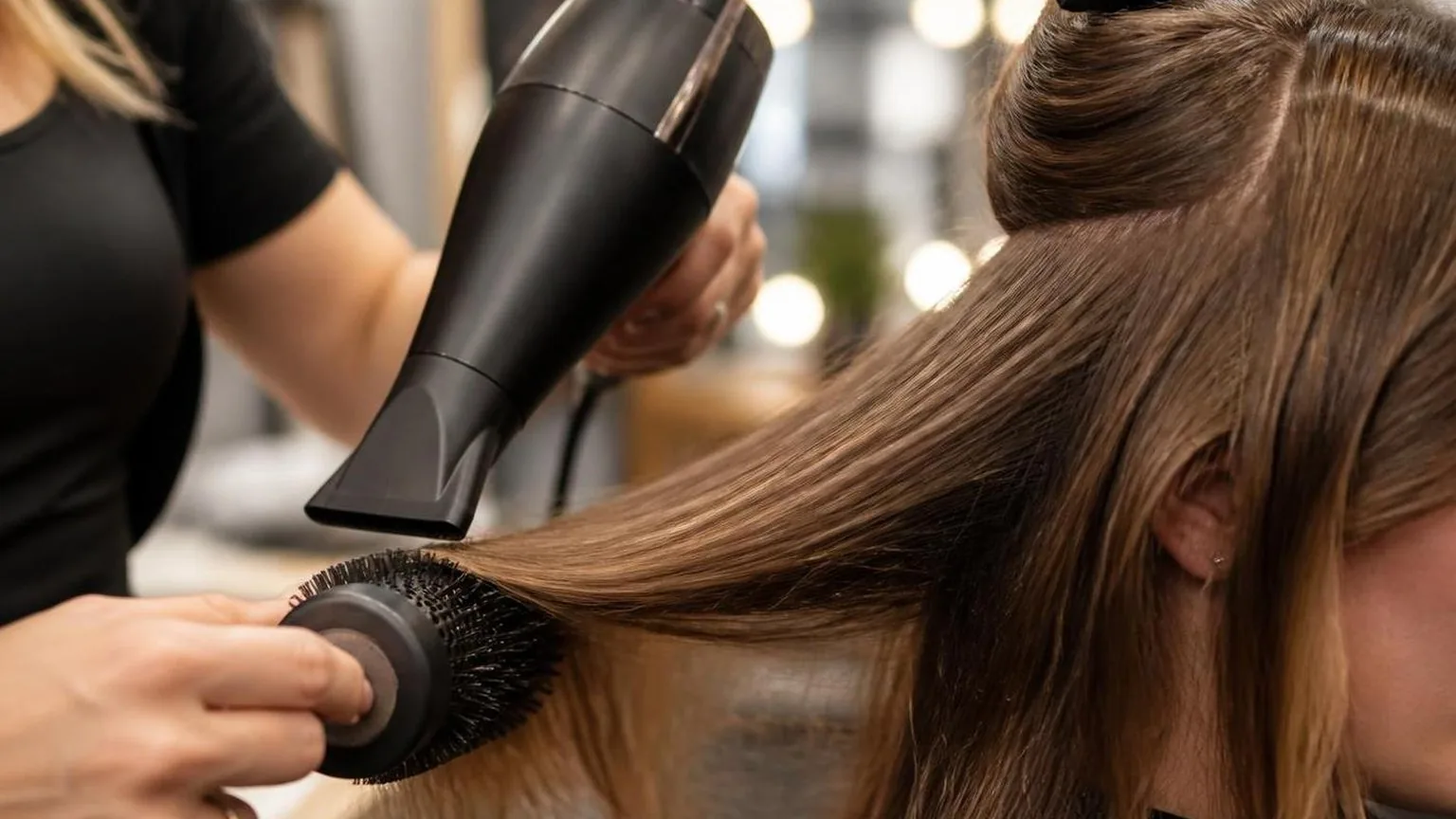
Heat control is a cost line, not a styling afterthought. A blow dry bar needs tools, training and booking times that let stylists smooth hair without relying on maximum temperature or excessive brush pull.
The practical budget decision is to buy dryers and irons with verifiable temperature control, then train every stylist to work by hair condition, section size and airflow distance. That protects finish quality and reduces rework at the chair.
Operating targets for daily blow dry work
| Item | Working target | Why it matters |
| Dryer airflow distance | About 15 cm from the hair | Close enough to shape, far enough to avoid concentrating heat on one point |
| Nozzle width | 6 cm to 8 cm | Focuses airflow down the hair shaft for polish and less frizz |
| Round brush barrel | 25 mm to 55 mm | Smaller barrels bend shorter hair; larger barrels build smoother volume |
| Flat iron range for finishing | 150°C to 185°C | Enough for light sealing passes on most blowout finishes without using maximum settings |
| Pass speed with iron | About 2 seconds to 4 seconds per section | Slow passes raise exposure; repeated passes raise cumulative heat |
For a new bar, the hidden cost is consistency. A dryer with weak airflow pushes stylists toward hotter settings. A brush with poor grip encourages over-tension. Both add minutes to service time and make the finish harder to repeat across the team.
Where to spend first
- Professional dryers: Prioritise balanced weight, cool-shot reliability, a narrow concentrator and removable filters. The filter matters because lint build-up reduces airflow and forces unnecessary heat.
- Brush kit: Stock several barrel diameters rather than one “all-purpose” brush. The wrong barrel makes stylists pull harder to create bend or lift.
- Heat tools: Choose irons with visible temperature settings, not vague low-to-high dials. Stylists should be able to repeat the same setting at every station.
- Training time: Budget paid practice sessions for sectioning, brush angle, root lift and cool-shot setting. Technique lowers heat demand more reliably than product layering.
Set limits in the service protocol
| Hair response at the chair | Protocol adjustment |
| Hair dries quickly and feels fine in the hand | Use lower heat, smaller sections and lighter tension |
| Hair holds water and collapses at the root | Dry roots first, then mids and ends, keeping airflow moving |
| Hair needs polish after drying | Use one controlled finishing pass instead of repeated hot passes |
| Ends look expanded or rough | Reduce heat, increase airflow control and finish with the cool shot |
Trichology texts and cosmetic science references consistently describe hair fibre as heat-sensitive keratin.
In salon terms, that means the safest business model is repeatable control: measured heat, clean airflow, correct brush size and disciplined tension.

The Mechanism, Step by Step
The method changes the opening cost by changing time, stations, ventilation demand, towel volume, product use, and payroll coverage.
A 35-minute finish needs a different shop fit and staffing model than a 55-minute finish, even when the menu looks identical to the client.
In a blow dry bar, cost is not driven only by rent and mirrors. It is driven by how hair is sectioned, dried, tensioned, cooled, and turned over at the chair.
| Operating variable | Typical craft setting | Cost outcome |
| Section size | 2.5 cm to 5 cm wide panels | Smaller panels increase finish control but add minutes, raising labor cost per ticket. |
| Nozzle distance | 5 cm to 15 cm from hair | Holding the nozzle 5 cm closer raises surface temperature, which can set the cuticle before the root is dry. |
| Air direction | Root to end, nozzle parallel to the section | Poor direction increases rework, product use, and chair time. |
| Brush diameter | 25 mm to 55 mm round brush | Smaller barrels create bend but slow throughput; larger barrels suit smooth volume and faster services. |
| Cool setting | 10 to 20 seconds per section | Cooling fixes shape, reducing redo time at checkout and complaints after humidity exposure. |
Chair count changes capital cost because every station duplicates power, lighting, chair, mirror, dryer, brush stock, matting, and retail-adjacent storage.
A 6-chair bar is not simply double a 3-chair bar; the backbar, laundry, reception queue, and booking software load also increase.
| Bar size | Stylists on floor | Services per stylist at 45 minutes | Service capacity |
| 3 chairs | 3 | 8 in 6 working hours | 24 finishes |
| 6 chairs | 6 | 8 in 6 working hours | 48 finishes |
| 8 chairs | 8 | 8 in 6 working hours | 64 finishes |
Service time changes break-even pressure. A 30-minute express finish can turn two clients per chair per hour. A 60-minute textured, high-tension finish turns one.
The slower method may earn a higher ticket, but it needs pricing that covers the lost slot.
Heat method changes utility and compliance planning. Many professional dryers operate in the 1,600 W to 2,000 W range, so six dryers running together can draw roughly 9.6 kW to 12 kW before lighting, laundry, and reception equipment are counted.
Laundry method also changes opening cost. One shampoo, one towel wrap, and one finishing towel per client can mean 72 towels for 24 services before reserve stock. On-site laundering needs plumbing, drainage, heat, storage, and staff handling time.
- Dry styling first reduces wash-basin demand but increases dependency on hot tools and heat-protective product control.
- Wash-and-blow as standard requires more basins, towels, water heating, and wet-area flooring.
- Express menu design lowers dwell time but needs tighter section discipline and fewer add-on steps.
- Luxury finish design raises product and labor minutes, so the ticket price must carry the slower chair turnover.
Where It Usually Goes Wrong
The most expensive mistakes are not usually dryers or mirrors; they are lease assumptions, underpriced labor, weak ventilation planning, and cash reserves that run out before repeat bookings stabilize.
The myth is that a blow dry bar is “low build-out” by default.
In practice, costs swing sharply by location, chair count, landlord work letter, and whether shampoo plumbing already exists. Use written bids, not salon folklore, and separate one-time opening costs from monthly burn.
Myth: “No cutting or color means almost no build-out”
Blow dry bars still need water, drainage, electrical capacity, lighting, storage, laundry flow, reception, and waiting space.
Shampoo bowls often drive more disruption than styling stations because they affect plumbing routes, floor penetrations, and backflow requirements.
| Cost area | Common undercount | Why it matters |
| Shampoo area | Water lines, drainage, waterproof flooring | Plumbing work can delay opening if not verified before lease signing |
| Electrical | Multiple dryers, irons, laundry, point-of-sale | Overloaded circuits interrupt service and may require panel upgrades |
| Ventilation | Heat from dryers and bodies | Comfort drops quickly during back-to-back appointments |
| Laundry | Towel volume, hampers, detergent storage | Slow towel turnover limits chair utilization |
Myth: “Revenue is simply chairs multiplied by hours”
A chair is not productive for every open minute. Check-in, consultation, shampoo, sectioning, finishing, checkout, cleaning, and late arrivals all reduce sellable capacity.
A strong model uses service timing by hair density and finish type, not just appointment slots.
| Planning item | Safer operating assumption |
| Blowout service block | About 45 minutes for many standard finishes |
| Reset between guests | About 5 to 10 minutes |
| Opening cash reserve | At least 3 months of fixed expenses |
| Lease review buffer | Landlord approvals plus permits before build-out starts |
Mistake: pricing without labor math
Owners often price from nearby salons instead of the chair-level labor model. The IRS treats wages, payroll taxes, and worker classification as compliance issues, not styling preferences, so payroll assumptions need accountant review before hiring.
- Model each service with stylist time, assistant time, front-desk time, and cleanup time.
- Include no-show risk, re-dos, complimentary fixes, and membership discounts.
- Track product use per service: shampoo, conditioner, heat protectant, mousse, spray, pins, and towels.
- Do not count tips as a substitute for competitive base compensation.
Mistake: signing the lease before testing the layout
A beautiful storefront can fail operationally if stations are too tight. In salon planning, allow enough room for the stylist to work behind the chair with a dryer, brush, and cord without crossing another stylist’s zone.
| Layout checkpoint | Practical target |
| Styling station width | About 4 feet per station |
| Aisle behind chairs | About 3 feet clear where possible |
| Shampoo bowl working depth | About 6 feet including client recline and stylist access |
| Dedicated retail or display depth | About 12 to 18 inches to avoid blocking circulation |
Myth: “Marketing can wait until opening week”
Pre-opening demand is part of the opening budget. The U.S. Small Business Administration consistently advises owners to plan marketing and working capital together because early sales rarely cover fixed costs immediately.
- Build founder offers before construction finishes.
- Photograph real finishes on varied hair lengths and textures.
- Train staff on timing, consultation language, and finish standards before taking paid guests.
- Keep a separate contingency for delayed inspections, landlord punch-list items, and supplier backorders.
Frequently Asked Questions
How much does it cost to open a blow dry bar?
A lean single-location blow dry bar commonly needs about $150,000–$350,000 in the US or £90,000–£250,000 in the UK before opening.
The biggest variables are lease deposits, plumbing, electrical work, ventilation, chairs, wash units, dryers, and launch payroll.
What build-out costs should I budget for?
Plan for roughly $75–$250 per square foot in the US or £60–£180 per square foot in the UK, depending on condition.
A 900-square-foot unit with 6 styling stations and 2 backwash units needs more plumbing and power than a simple retail shell.
How much equipment does a small blow dry bar need?
For 6 chairs, budget for 6 styling stations, 2 shampoo backwash units, 6 professional dryers, sectioning clips, brushes from 25–65 mm, towels, capes, and laundry capacity.
Equipment and salon furniture can land around $25,000–$75,000 or £18,000–£55,000.
How much working capital should be set aside?
Keep at least 3–6 months of fixed costs available after opening.
Include rent, utilities, booking software, card fees, insurance, reception cover, stylist wages, product replenishment, laundry, and marketing before daily bookings reach break-even.
What is the fastest cost to underestimate?
Labour is often underestimated because blow dry bars depend on appointment density.
If a service takes 35–45 minutes plus reset time, wages, payroll taxes or National Insurance, tips administration, and reception coverage must be built into every chair-hour calculation.
What licenses and permits may add to startup costs?
Costs can include business registration, salon or cosmetology permits, occupancy approval, and local health or safety fees. Requirements vary by city and state.
How can a blow dry bar keep opening costs lower?
Start with fewer chairs, a simple service menu, and durable core tools. Leasing a smaller space and buying only needed inventory can reduce upfront spending.
Related Reading
- How blow dry stylists are paid: the three structures
- The licences a blow dry bar needs, and who issues them
- How booth rental works, and who it suits
- What a blow dry bar is, and how the model works
- The blow dry bar business model, explained
- Insuring a stylist’s hands: what cover exists
- The complete guide to the blow dry bar business