
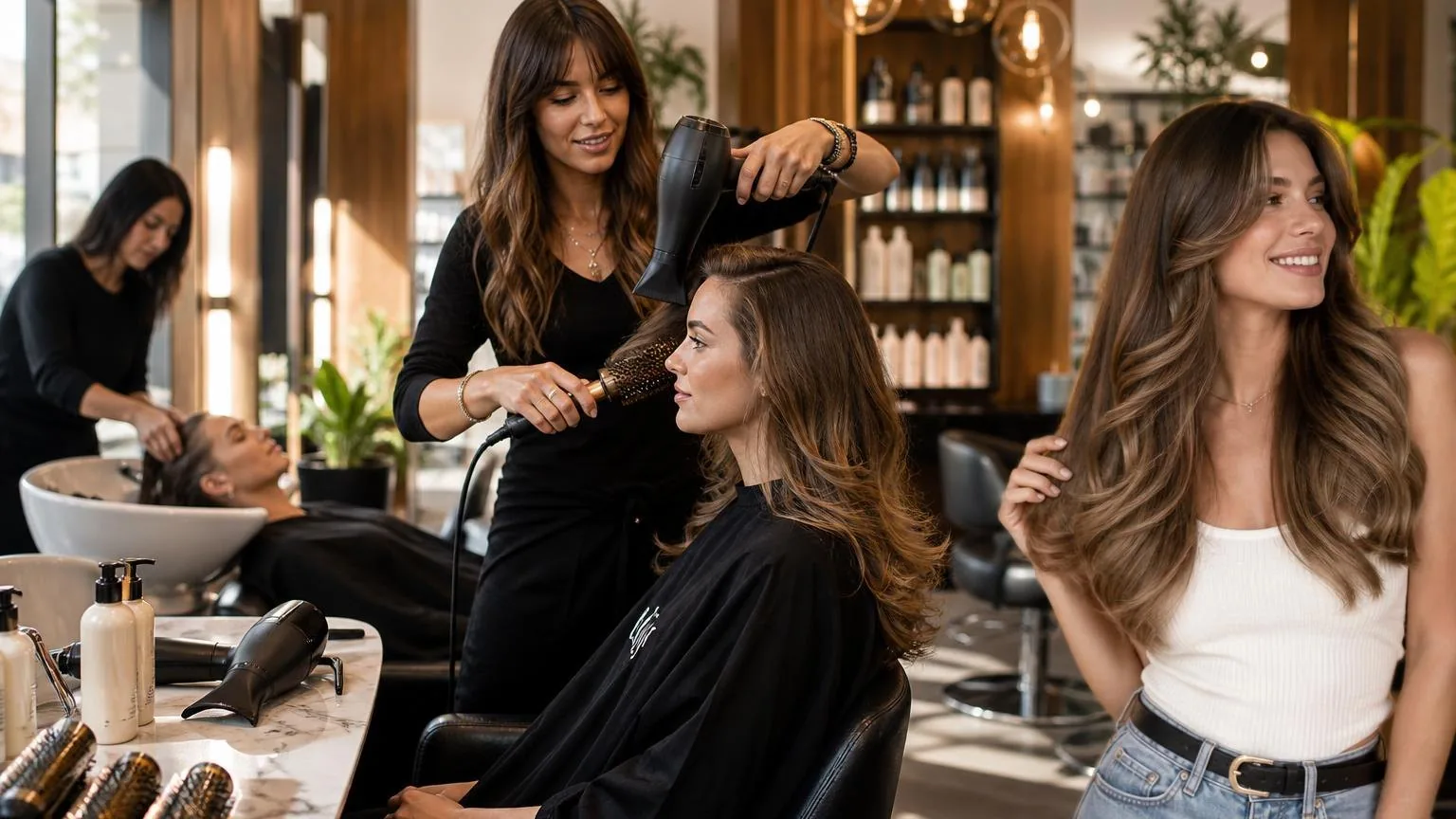
What a blow dry bar is, and how the model works: it is a salon format built around wash, blow-dry and finish services, usually booked in 30- to 60-minute slots rather than cut-and-colour appointments.
The model relies on a tight service menu, repeatable sectioning, controlled airflow, and chair utilisation.
Stylists typically work from a style lookbook, using round brushes, concentrator nozzles and set finishing sequences so owners can schedule labour, timing and product use with precision.
Map Your Chair Model
Use this quick exercise to see whether a blow dry bar format fits your space, timing, staff, and kit. Work from one styling chair first, then multiply only after the numbers look realistic.
- Set your core service time. Choose one standard slot: 30, 45, or 60 minutes. Include consultation, wash, blow-dry, finish, photo check, and chair reset. If most looks need hot tools, start with 45 or 60 minutes.
- Count usable chair hours. One chair open for 8 hours gives 480 minutes. At 45-minute slots, that is 10 possible bookings before breaks, late arrivals, and cleaning time.
- Check your kit per chair. Plan one shampoo bowl share for every 2–3 chairs, one dryer, 3–5 round brushes, sectioning clips, concentrator nozzle, paddle brush, finishing brush, and hot tools for waves or polish.
- Build a tight menu. Limit the first menu to 4–6 finishes: smooth, volume, waves, curls, sleek, and event-ready. Each style should have a repeatable sectioning pattern and finish sequence.
- Test the labour fit. If one stylist can finish 6–8 guests in a full shift without rushing, the service model is close. If timing slips past 60 minutes often, simplify the lookbook or raise the booking length.
Your answer is the smallest repeatable unit: one chair, one stylist, one service slot, one kit list, and one menu. Once that unit works cleanly, add chairs rather than complexity.
Reading the Numbers Properly
A blow dry bar is a high-throughput styling business built around repeatable timed services, not a full salon menu.
The model works when chair time, stylist time, tool heat, and rebooking frequency are measured tightly enough to keep the station earning.
The strongest operator metric is not the posted blowout price; it is occupied chair minutes. A dry styling station that sits empty for half a trading day cannot be rescued by retail add-ons or premium branding.
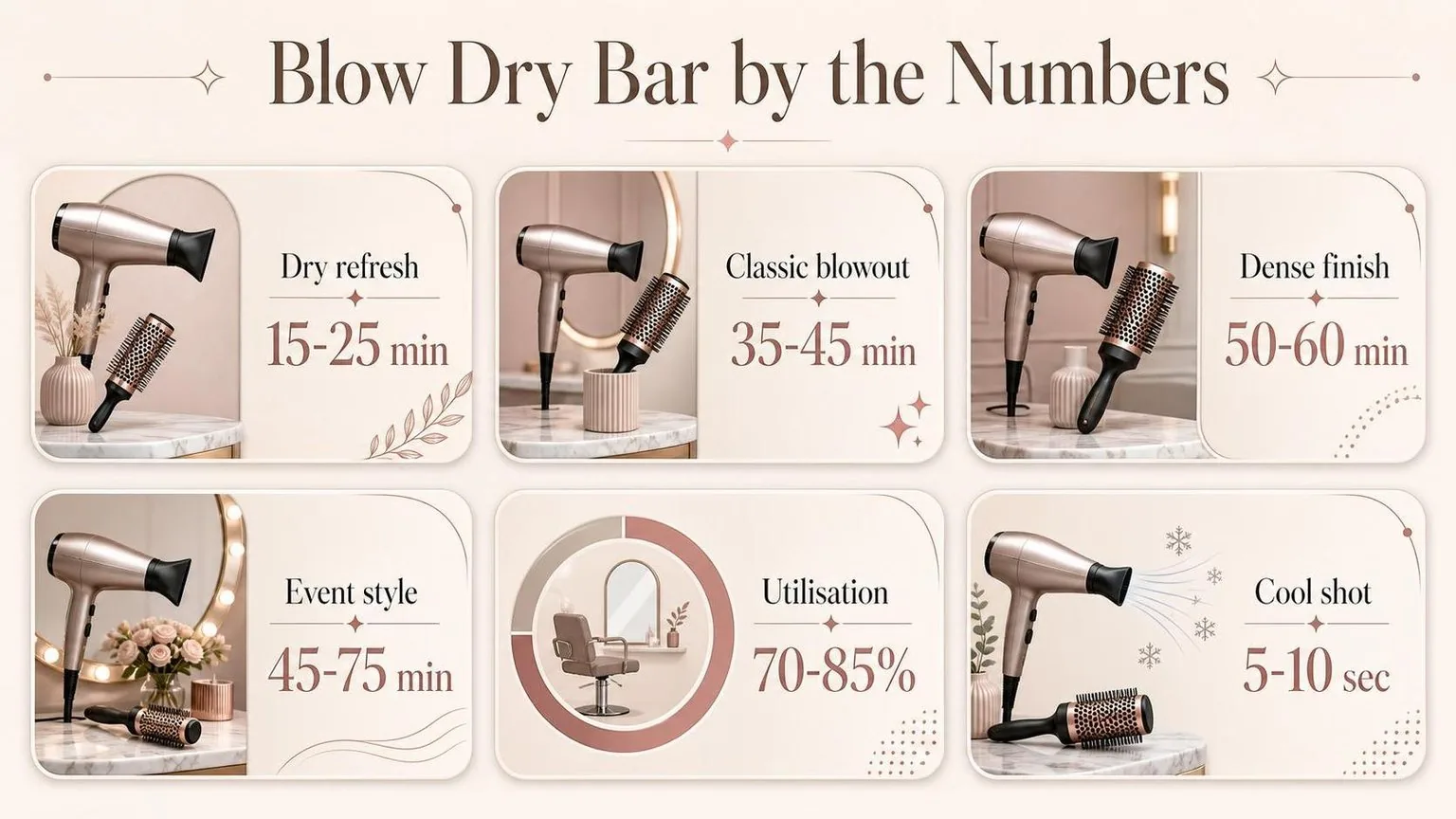
| Service type | Typical booked time | Operational note |
| Dry styling refresh | 15-25 minutes | Best for clean, fully dry hair; low shampoo-basin demand. |
| Classic wash and blowout | 35-45 minutes | Core blow dry bar service; depends on density and length. |
| Long, dense, or highly detailed finish | 50-60 minutes | Needs smaller sections and more brush passes. |
| Event styling or upstyle | 45-75 minutes | Higher skill time; often disrupts standard blowout flow. |
In practice, the wash area becomes the choke point before the styling floor does. A site with many chairs but too few basins can create idle stylists even when the diary looks full.
| Capacity item | Example number | What it means |
| Styling chairs | 6 chairs | Six simultaneous finishing stations. |
| Open trading time | 10 hours | 60 chair-hours before breaks and resets. |
| Average blowout block | 45 minutes | Up to 80 theoretical chair slots. |
| Realistic utilisation target | 70-85% | 56-68 filled slots before no-shows and overruns. |
Tool numbers matter because blow dry bars repeat the same motion all day. Professional dryers commonly sit around 1,600-2,200 watts, while concentrator nozzles narrow airflow so the stylist can dry the hair surface without roughing the section.
| Tool or setting | Common working range | Use on the floor |
| Round brush barrel | 25-55 mm | Smaller barrels build bend; larger barrels smooth longer lengths. |
| Section width | 25-50 mm | Wider sections slow drying and reduce polish. |
| Hot tool finishing | 150-210°C / 300-410°F | Lower settings for finer hair; higher settings only when needed. |
| Cool-shot hold | 5-10 seconds | Sets the brush shape before releasing the section. |
Booking platforms such as Fresha, Vagaro, Square Appointments, and Mindbody show why the category scales: the service menu is short, repeatable, and easy to schedule in fixed blocks.
- Labour: the model depends on stylists who can finish consistently inside the booked block.
- Layout: basins, chairs, tool storage, and electrical access must support rapid turnover.
- Retail: brushes, heat protectants, and finishing sprays help, but they do not replace chair utilisation.
- Retention: memberships and packages work only when clients can book predictable peak-time slots.
What Changes the Result
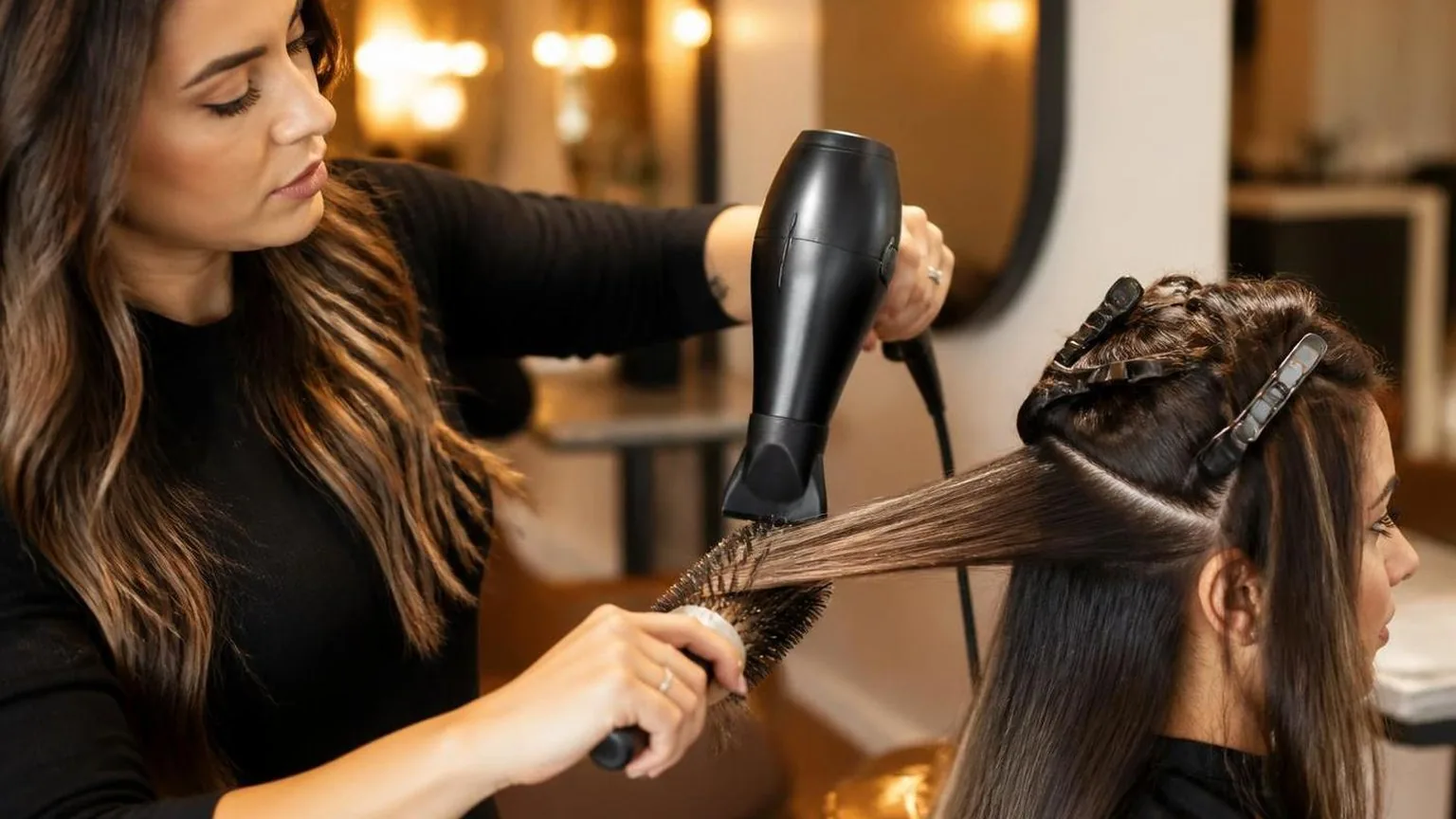
The finish changes when the bar changes four variables: moisture left in the hair, section size, airflow direction, and brush tension.
The same menu item can look sleek, bouncy, or short-lived depending on how those variables are controlled at the chair.
Moisture control
A professional result starts before the round brush appears. Hair that is too wet takes longer, overheats in sections, and collapses sooner. Hair that is too dry will not reshape cleanly, especially around the hairline, crown, and ends.
| Stage | Useful target | Why it matters |
| Towel blot | No dripping water | Prevents wasting dryer time on surface water |
| Rough dry | About 70 to 80% dry | Leaves enough moisture for brush shaping |
| Brush work | Small damp sections | Allows tension, heat, and cooling to set shape |
| Final pass | Fully dry before finishing | Reduces frizz return and shape collapse |
Section size and brush choice
Blow dry bars work fast because sectioning is systematic. A common working section is no wider than the brush barrel and not thicker than the air can penetrate. Oversized sections look smooth on top but stay damp inside.
| Tool or section | Typical measurement | Best use |
| Small round brush | 25 to 35 mm barrel | Fringe, short layers, root lift |
| Medium round brush | 43 to 53 mm barrel | Movement, bend, polished volume |
| Large round brush | 65 mm and above | Smoother finish on longer hair |
| Working subsection | About 2 to 5 cm thick | Even drying without hidden moisture |
Heat, airflow, and cooling
The nozzle matters. A concentrator narrows airflow so the cuticle is directed from roots to ends, which is why stylists keep the dryer moving down the hair shaft rather than blowing upward into the surface.
- Distance: keep the nozzle close enough to control the section, but avoid pressing it against the hair or brush.
- Direction: airflow should follow the brush path from roots toward ends for a smoother finish.
- Cooling: hold the section on the brush until it cools, or use the cool shot, before releasing.
- Tension: firm, even pull creates polish; excessive pull flattens volume and tires the stylist.
In a blow dry bar, consistency comes from repeating this sequence across every guest. The service model depends on speed, but the finish depends on controlled drying, not simply stronger heat or more product.
How to Judge It on Real Hair
Judge a blow dry bar by what the finish does on actual hair, not by the menu wording. A good service should leave the roots controlled, the mid-lengths smooth, the ends polished, and the shape wearable after the client leaves the chair.
Start your assessment before the brush is picked up. The stylist should read density, porosity, natural movement, cut shape, parting, and the client’s end use: office polish, volume, event hair, or wash-and-wear longevity.
| Hair check | What to look for | Why it matters |
| Fine, low-density hair | Root lift without heavy product | Prevents collapse at the crown |
| Dense hair | Small, clean sections | Allows heat and tension to reach the interior |
| Wavy hair | Consistent direction at the hairline | Stops frizz returning around the face |
| Coarse ends | Polished ends, not just smooth roots | Shows the blowout was completed, not rushed |
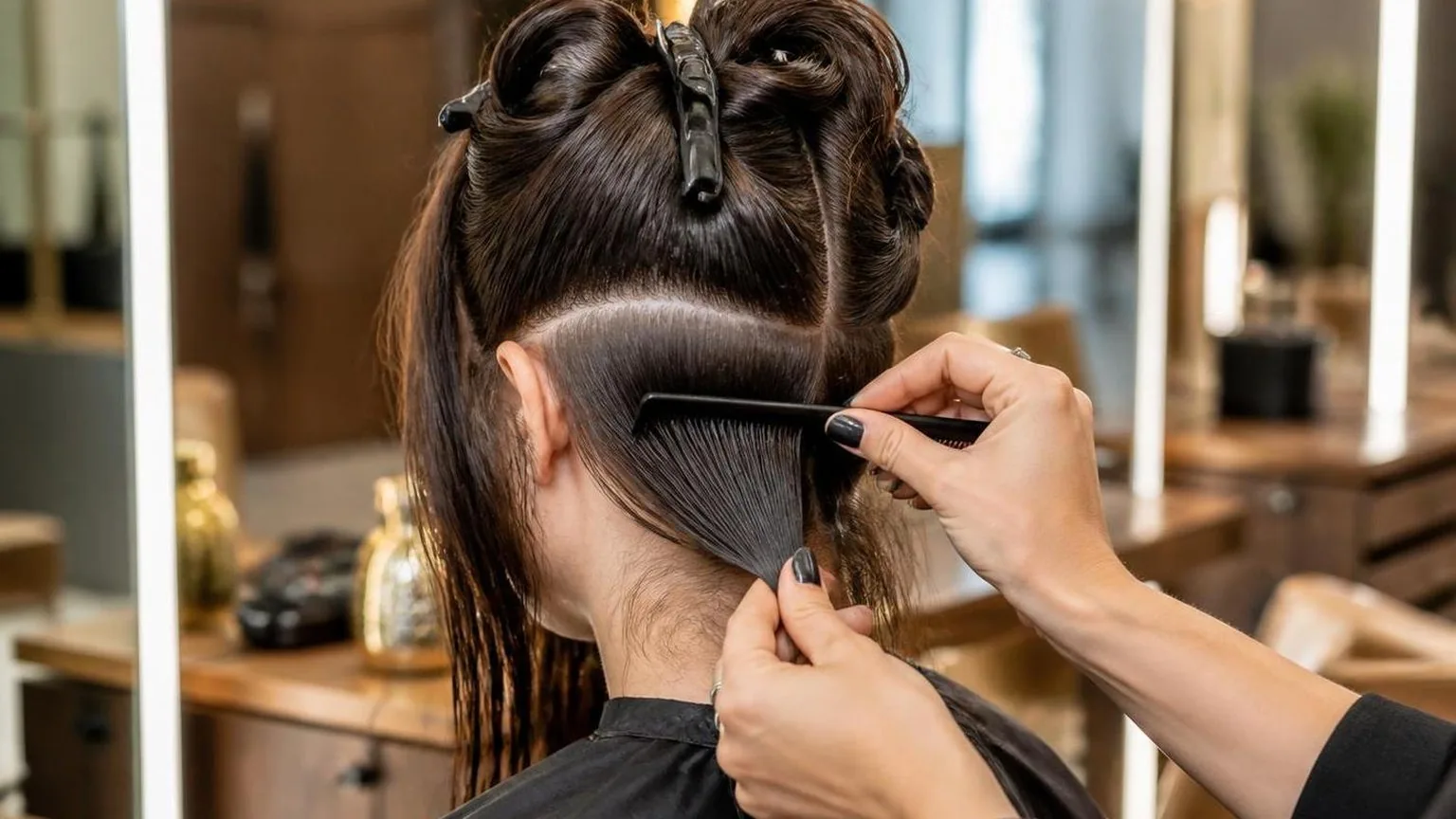
Sectioning is the clearest sign of craft. On real salon hair, panels that are too wide dry the surface while leaving moisture inside. That creates a finish that looks acceptable in the mirror, then expands or drops soon after.
| Technical checkpoint | Professional benchmark |
| Section width | About one to two inches, matched to brush diameter |
| Nozzle distance | Roughly one to three inches from the brush, not pressed into the hair |
| Air direction | Down the hair shaft from roots toward ends |
| Root drying | Roots fully dry before shaping the ends |
| Cool setting | Used to set shape before the section is released |
Heat control should be deliberate. The stylist should not rely on maximum heat for every head. Fine or fragile-feeling hair needs lower heat and more airflow control; dense hair often needs better sectioning before it needs more temperature.
| Tool or setting | Useful working range | Real-hair cue |
| Round brush diameter | One to two inches | More bend, lift, and shorter-layer control |
| Round brush diameter | Two and a half to three and a half inches | Smoother finish on longer hair |
| Dryer airflow | High airflow with controlled heat | Dries efficiently without scorching the section |
| Flat iron touch-up | Lowest effective setting | Only for detail areas, not the whole blowout |
Watch the hairline and nape. These areas reveal whether the bar’s time model is realistic. If those sections are damp, puffy, or directionless, the service has been styled for the chair, not for wear.
Timing also tells you how the model works. A fast bar can be excellent, but only when the booking length matches the hair. Thick, long, or highly textured hair needs a different time allowance than a chin-length bob.
| Hair scenario | Reasonable service signal |
| Short to medium, average density | Efficient wash, dry, and shape without skipped sectioning |
| Long or dense hair | Extra drying time offered before styling begins |
| High-volume finish | Root work completed section by section |
| Sleek finish | Ends sealed with tension, nozzle direction, and cool air |
The final test is movement. Hair should swing, separate naturally, and keep the requested silhouette without feeling coated. If the finish depends on hairspray to hide unfinished drying, the technique is doing too little of the work.
Set Against the Other Options
A blow dry bar sits between a full-service salon and at-home styling: it is faster and more repeatable than a cut-and-colour visit, but more polished than most DIY blowouts.
The model is built around wash, blow-dry, hot-tool finishing, and high chair turnover.
The core difference is scope. A blow dry bar typically avoids cutting and complex colour work, so the menu, staffing, stock, and timing can be tighter. That makes it closer to a production kitchen than a traditional salon department.
| Option | Typical service scope | Common chair time | Operational focus |
| Blow dry bar | Wash, blow-dry, curls, waves, smoothing, upstyle add-ons | 30 to 60 minutes | Repeatable finishing and fast turnover |
| Full-service salon | Cutting, colour, styling, treatments, consultations | 45 minutes to 3 hours-plus | Technical services and longer client journeys |
| At-home styling | Self-shampoo, dryer, brush, irons, finishing products | 20 to 75 minutes | Convenience and low overhead |
| Mobile stylist | Blow-dry, event styling, bridal, on-location finishing | 45 to 90 minutes per client | Travel convenience and occasion work |
From a service-design view, the blow dry bar wins on consistency. Stylists can repeat a limited set of finishes, such as sleek, bouncy, beach wave, or soft curl, using the same sectioning patterns, brush sizes, and dryer nozzles.
- Typical round brush range: about 25 mm for short layers, 35 to 45 mm for medium movement, and 50 to 65 mm for long, loose volume.
- Common dryer power: professional salon dryers often sit around 1,600 to 2,000 watts, depending on model and market.
- Hot-tool range: many stylists work around 150°C to 185°C for fine to medium hair and lower heat where control allows.
- Sectioning rhythm: clean 2 to 4 cm sections help dry the roots fully before polishing the mid-lengths and ends.
Compared with a full-service salon, the trade-off is depth. A salon can redesign shape with a cut or alter colour placement. A blow dry bar mainly changes finish, volume, texture, and event readiness.
Compared with home styling, the advantage is hands, angles, and airflow control. A stylist can maintain tension from root to end while directing the nozzle down the hair shaft. That is difficult to reproduce behind your own head.
| Client need | Best fit | Why |
| Lunch-break polish | Blow dry bar | Short menu and appointment pacing |
| New shape or fringe | Full-service salon | Requires cutting consultation and technical execution |
| Low-maintenance weekly routine | At home | No travel time and flexible timing |
| Wedding party prep | Mobile stylist or blow dry bar | Depends on location, group size, and schedule |
Industry training bodies such as City & Guilds and state cosmetology boards emphasise sectioning, tool control, hygiene, and client consultation.
Blow dry bars turn those fundamentals into a narrow, high-frequency retail model rather than a broad technical salon menu.
Protecting the Hair While You Work
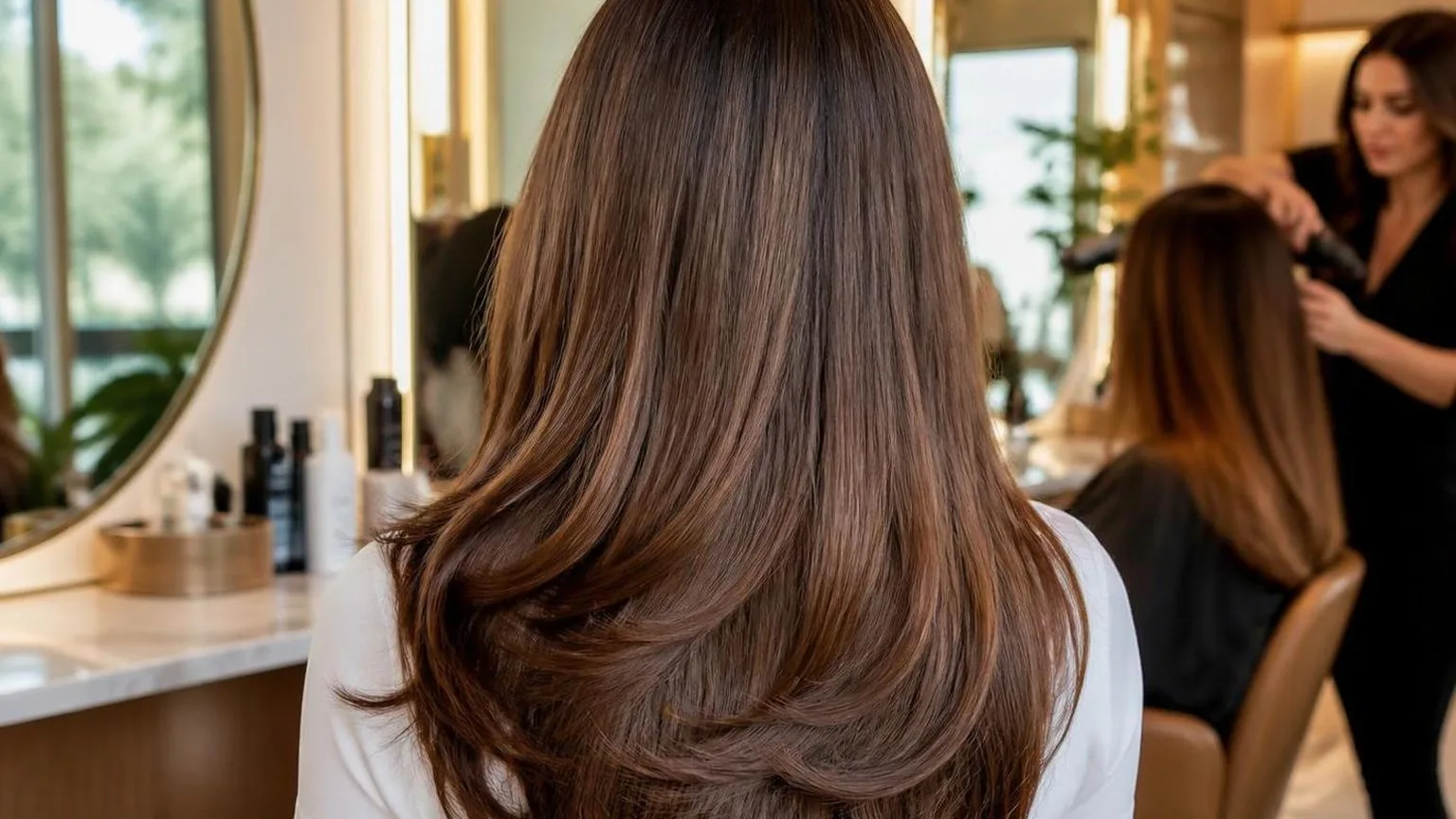
Heat and tension are the two levers a blow dry bar uses to reshape wet hair into a polished finish without overworking the fibre.
The model works because trained stylists control airflow, section size, brush angle and time under heat, rather than simply using a hotter dryer.
Hair is weakest when wet, so the first goal is water removal with minimal pulling.
In a bar setting, stylists usually rough-dry to a damp stage before round-brushing, keeping the nozzle moving and the airflow pointed from roots to ends to reduce cuticle lift.
| Stage | Typical target | Why it matters |
| Towel blotting | No rubbing; press and squeeze | Reduces friction before tools are used |
| Rough-dry | About 70% to 80% dry | Removes bulk moisture before brush tension |
| Brush styling | Small sections, controlled pull | Shapes the hair while limiting repeated passes |
| Cool finish | Cool shot until section feels set | Helps hold shape after heat is removed |
Tool temperature matters, but airflow and distance matter just as much.
Dyson, ghd and other professional tool makers commonly publish heat-control claims because excessive surface temperature can dull the finish and make hair harder to style consistently.
| Heat reference | Practical salon use |
| Below 100°C airflow at the hair is a conservative target for frequent blow drying | Useful for fine, fragile-feeling or previously heat-styled hair |
| 100°C to 150°C airflow zone | Common working range for fast smoothing with a nozzle and brush |
| Over 185°C contact heat | Usually associated with hot irons, not standard brush-and-dryer work |
In hands-on blow dry work, tension should feel firm, not sharp. A stylist anchors the section, wraps hair cleanly over the brush, then turns the wrist while moving heat along the strand.
Pulling against tangles is avoided; detangling comes before the brush set.
| Hair type or finish goal | Common brush diameter | Typical section width |
| Short layers or root lift | 25 mm to 35 mm | 25 mm to 40 mm |
| Medium bounce | 40 mm to 50 mm | 40 mm to 60 mm |
| Long, smooth bends | 55 mm to 65 mm | 50 mm to 75 mm |
The nozzle is a control tool, not an accessory. Concentrators narrow the airflow so the cuticle can be laid in one direction. Most bars keep the nozzle close enough to direct the section, but not pressed onto the hair or brush.
- Use clean sections so each pass dries evenly.
- Keep airflow moving; do not park heat on one spot.
- Match brush size to the desired bend, not just hair length.
- Lower heat before increasing tension on fine or delicate-feeling hair.
- Finish each section with reduced heat or cool air before release.
This is where the blow dry bar earns its repeat business: consistent mechanics. The service is not just “hot air and a round brush”; it is controlled drying, staged moisture removal and measured tension repeated section by section.
The Mechanism, Step by Step
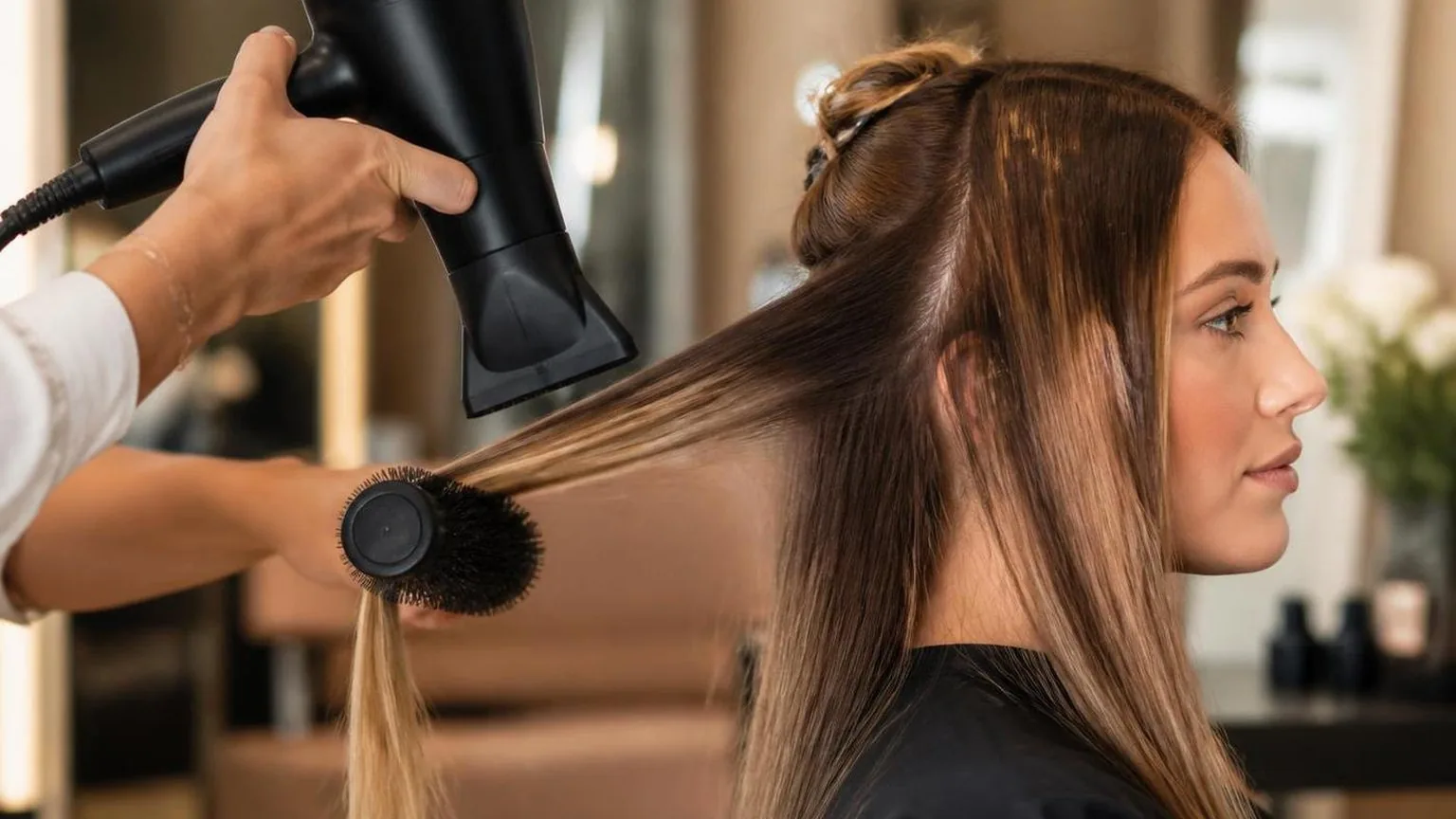
A blow dry bar works because it standardizes a high-skill service into a repeatable station flow: consult, wash, rough dry, section, brush finish, cool set.
The finish changes when stylists control timing and section size as tightly as the chosen look. Hair responds to heat, airflow, tension, and cooling, so small changes in the working method change polish, volume, and consistency.
The same service path can serve straight, wavy, curly, fine, dense, shoulder-length, and long finishes when the variables are adjusted on purpose.
Standard craft practice is to keep the process stable, then change section size, brush size, tension, and pass count to suit the hair.
| Variable | Working range | Why it changes the result |
| Section width | 1 to 2 inches | Sections no wider than the brush barrel allow even tension, airflow contact, and surface polish. |
| Nozzle distance | 2 to 4 inches from hair | This range helps direct airflow along the hair shaft. Closer than that makes control harder and can raise frizz on textured finishes. |
| Passes per section | 3 to 6 passes | Fine hair usually finishes faster because less mass holds water. Dense hair often needs more passes at the root where moisture and bulk remain longest. |
| Brush barrel | 1.5 to 2.5 inches | Smaller barrels create bend by curving the hair more tightly. Larger barrels stretch the hair over a wider surface for smoother volume. |
The key operational point is that blow dry bars are not “quick” because the styling is simple.
They are quicker because the menu is narrow, tools are already staged, assistants reset stations, and stylists repeat the same service pattern all day.
- Consultations work best when limited to shape, volume level, parting, and finish texture.
- Photos are most useful after the stylist translates them into brush size and section pattern.
- The rough dry should stop before the hair feels fully dry, so the brush finish still has enough moisture to reshape the hair.
- Clean horizontal sections from nape to crown reduce rework because each area receives controlled tension and airflow.
| Hair type | Rough-dry target | Finishing pattern |
| Fine, straight | About 80 percent dry | Large round brush, low lift at ends |
| Medium, wavy | About 70 percent dry | Medium brush, root lift, smoothed mids |
| Dense, curly | About 60 percent dry | Smaller sections, higher tension, slower passes |
From a business-model view, the service succeeds when the chair time is predictable.
Bottlenecks usually come from late consultations, tangled wet hair, unclear style menus, and stylists switching tools mid-service instead of preselecting the brush and nozzle setup.
For home users copying the blow dry bar method, the most transferable habit is not speed. It is repeatability: same section size, same airflow direction, same brush angle, then a cool shot before releasing the section.
Myths That Keep Going Round
Most mistakes about blow dry bars come from treating them like cut-and-color salons. The model is built around focused styling services, tight appointment timing, repeatable menus, and high chair utilization rather than long technical appointments.
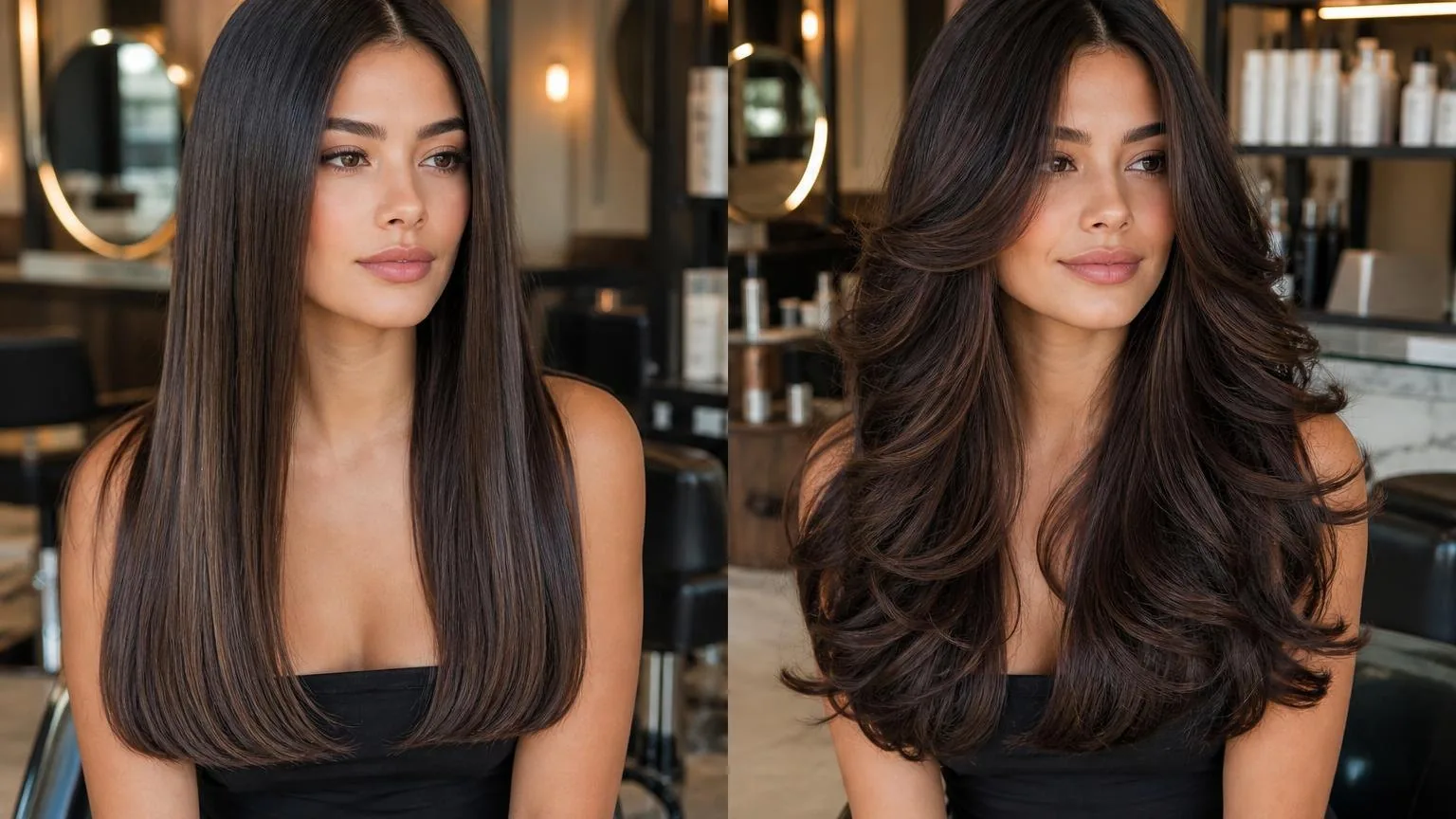
The biggest myth is that a blow dry bar is “just quick drying.” In practice, the service is a structured finish: cleanse or prep, sectioning, brush work, cooling, product control, and a result matched to a menu look.
Myth: every appointment takes the same time
Standardization matters, but timing still shifts with density, length, texture, extensions, and the chosen finish. A sleek bob and a high-volume curled finish should not be scheduled as identical labor.
| Service factor | Typical impact on timing |
| Fine hair above shoulders | Often fits a 30-minute blowout block |
| Dense or waist-length hair | May need 45 to 60 minutes |
| Brush curls or iron finish | Adds about 10 to 20 minutes |
| Upstyle or event finish | Often scheduled separately from a basic blowout |
Myth: hotter tools mean a better finish
Professional results come from tension, airflow direction, clean sectioning, and cooling the shape before release. Heat alone can create a puffy, unstable finish if the cuticle is roughened by poor nozzle control.
| Tool or setting | Practical benchmark |
| Dryer nozzle gap | Keep about 1 to 2 inches from the hair |
| Section width | Match roughly the brush barrel width |
| Round brush barrel | 1.5 inches for bend, 2 to 2.5 inches for volume |
| Flat iron finishing | Often 300 to 380°F, adjusted by hair type |
Mistake: building the menu around trends, not throughput
A blow dry bar menu should be easy to quote, teach, book, and repeat. Too many looks slow consultations, confuse clients, and make timing inconsistent across stylists.
- Limit core blowout looks to about 5 to 7 named finishes.
- Use add-ons for braids, iron work, extra-long hair, and conditioning masks.
- Train each look with the same sectioning map and finishing checklist.
- Track rebook rate, average ticket, chair occupancy, and service overrun minutes.
Myth: retail is optional
Retail is not a side table; it supports the finish clients came to buy. The most useful recommendations are specific: one prep product, one finishing product, and one tool habit the client can repeat at home.
Mistake: skipping the client reset
Fast service still needs a clear reset. Confirm the occasion, parting, volume level, curl direction, and expected longevity before shampoo or prep. That 60-second consultation prevents most remakes and keeps the business model on schedule.
Frequently Asked Questions
What is a blow dry bar?
A blow dry bar is a salon focused on washing, blow-drying, and styling hair without cuts or colour services. The service menu usually centres on finish types, such as smooth, volume, waves, curls, or upstyles.
How does a blow dry bar appointment usually work?
Most visits start with a shampoo, conditioner, and brief consultation on finish, parting, volume, and hold. The stylist then sections hair, blow-dries with a nozzle and round brush, and finishes with cool air, pins, or light styling product.
How long does a blow dry bar service take?
A standard blowout commonly takes 30 to 45 minutes, depending on hair length, density, and desired finish. Very long, thick, or tightly textured hair may need 60 minutes or more for proper sectioning and brush control.
How do blow dry bars make money?
The model relies on high service volume, efficient timing, repeat bookings, memberships, event work, and retail add-ons.
Because the menu is narrow, stations can turn faster than a full-service salon when scheduling, staffing, and shampoo flow are tightly managed.
What tools define a professional blow dry bar setup?
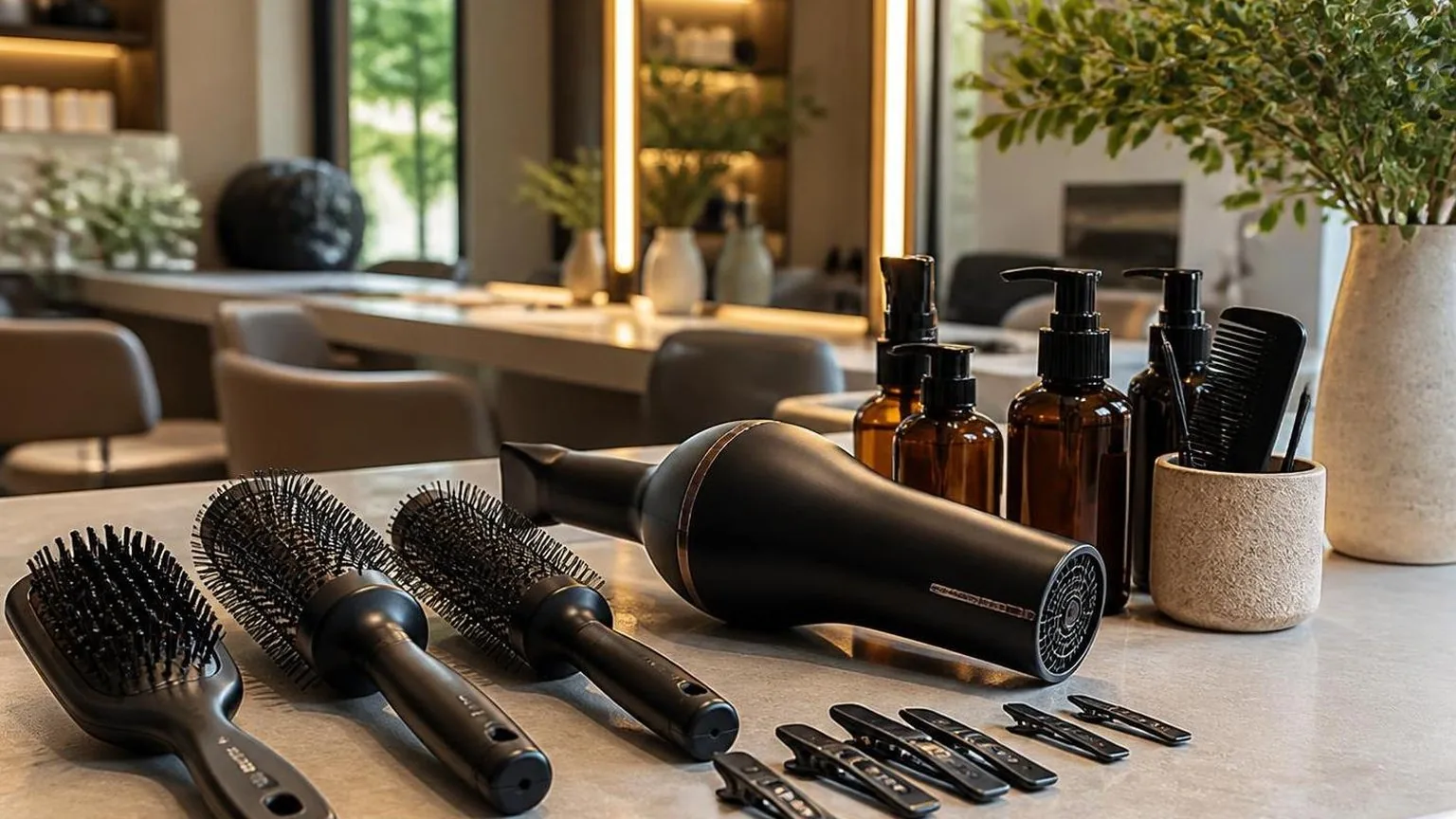
Core tools include a concentrator dryer, round brushes in multiple barrel sizes, sectioning clips, tail combs, and finishing brushes.
Many stylists use 1.5-inch to 3-inch round brushes, selecting smaller barrels for bend and larger barrels for smoother volume.
What services can you get at a blow dry bar besides a basic blowout?
Many blow dry bars offer curls, waves, smoothing styles, updos, and add-on treatments such as scalp massage or conditioning masks. Some also provide makeup or bridal styling, depending on the salon.
Do you need clean hair before visiting a blow dry bar?
Most blow dry bars include a shampoo as part of the service, so you usually do not need to wash your hair first. If you have heavy product buildup, mention it when you arrive so the stylist can choose the right cleansing approach.
Who is a blow dry bar best for?
A blow dry bar is useful for people who want styled hair without a cut or color service. It can suit events, workdays, travel, or anyone who prefers a polished finish.
Related Reading
- The licences a blow dry bar needs, and who issues them
- The types of salon insurance, and what each covers
- The blow dry bar business model, explained
- How salon memberships work, and when they backfire
- How blow dry stylists are paid: the three structures
- How booth rental works, and who it suits
- Insuring a stylist’s hands: what cover exists
- The complete guide to the blow dry bar business