
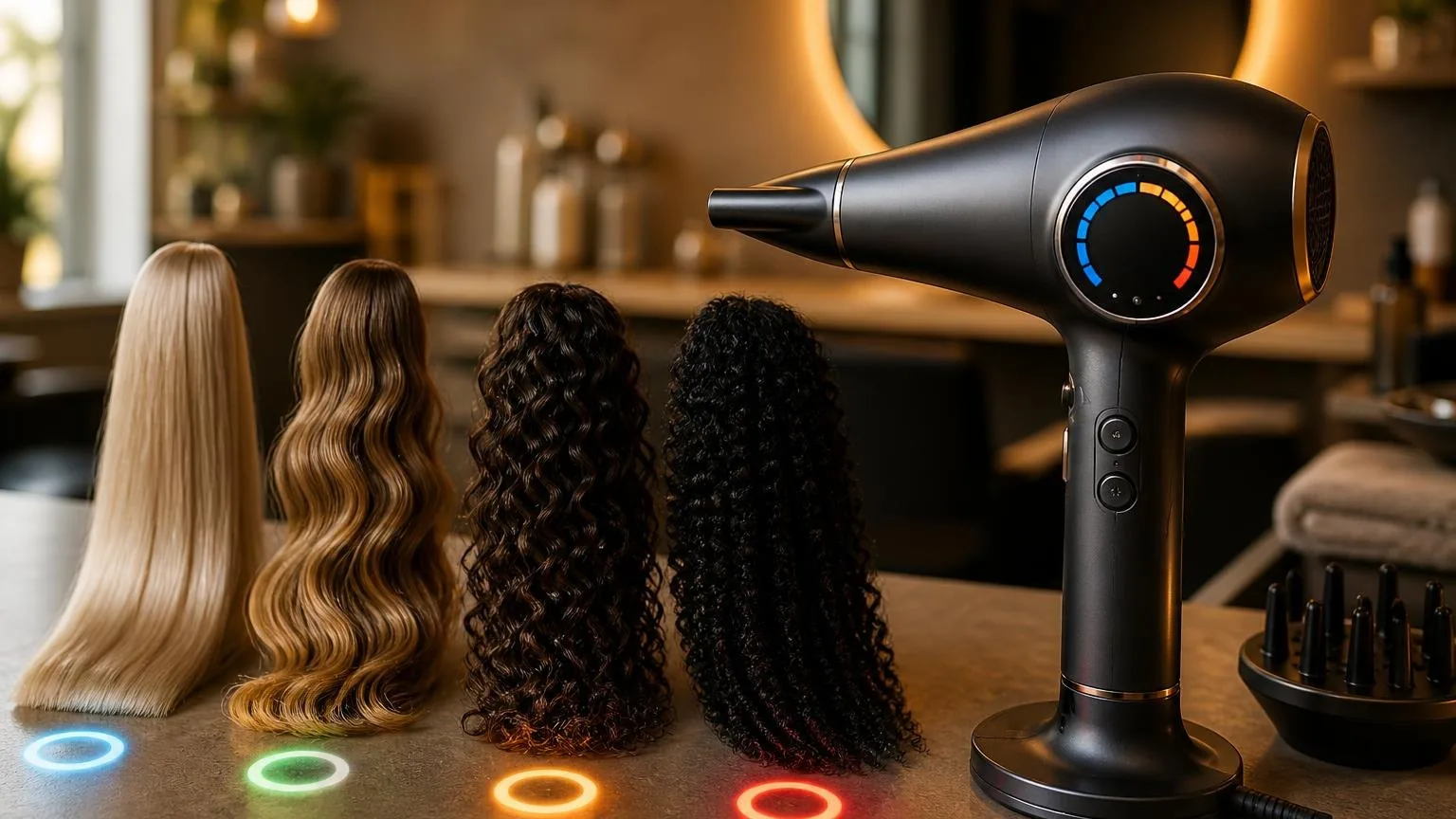
Safe heat settings for a blow dry, by hair type: use low heat at 80–120°C for fine or fragile hair, medium at 120–150°C for average strands, and high only up to 180°C for coarse, dense hair, keeping airflow moving 15–20 cm from the head.
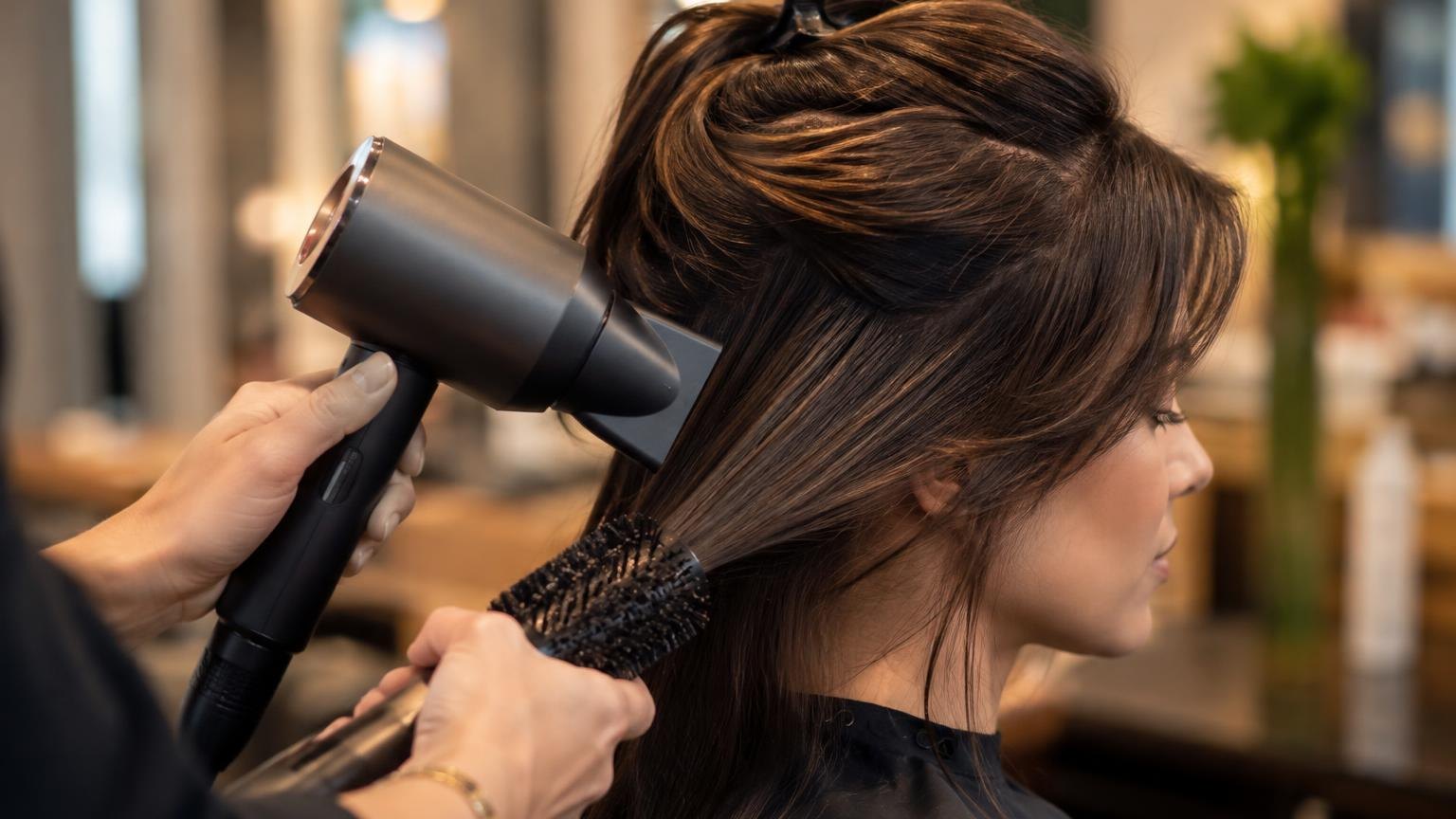
Professional dryer nozzles concentrate heat, so section size matters: work in 2–4 cm panels, keep tension even, and finish each section with 5–10 seconds of cool air.
These ranges align with common salon heat-control practice and trichology-led guidance on reducing unnecessary thermal stress.
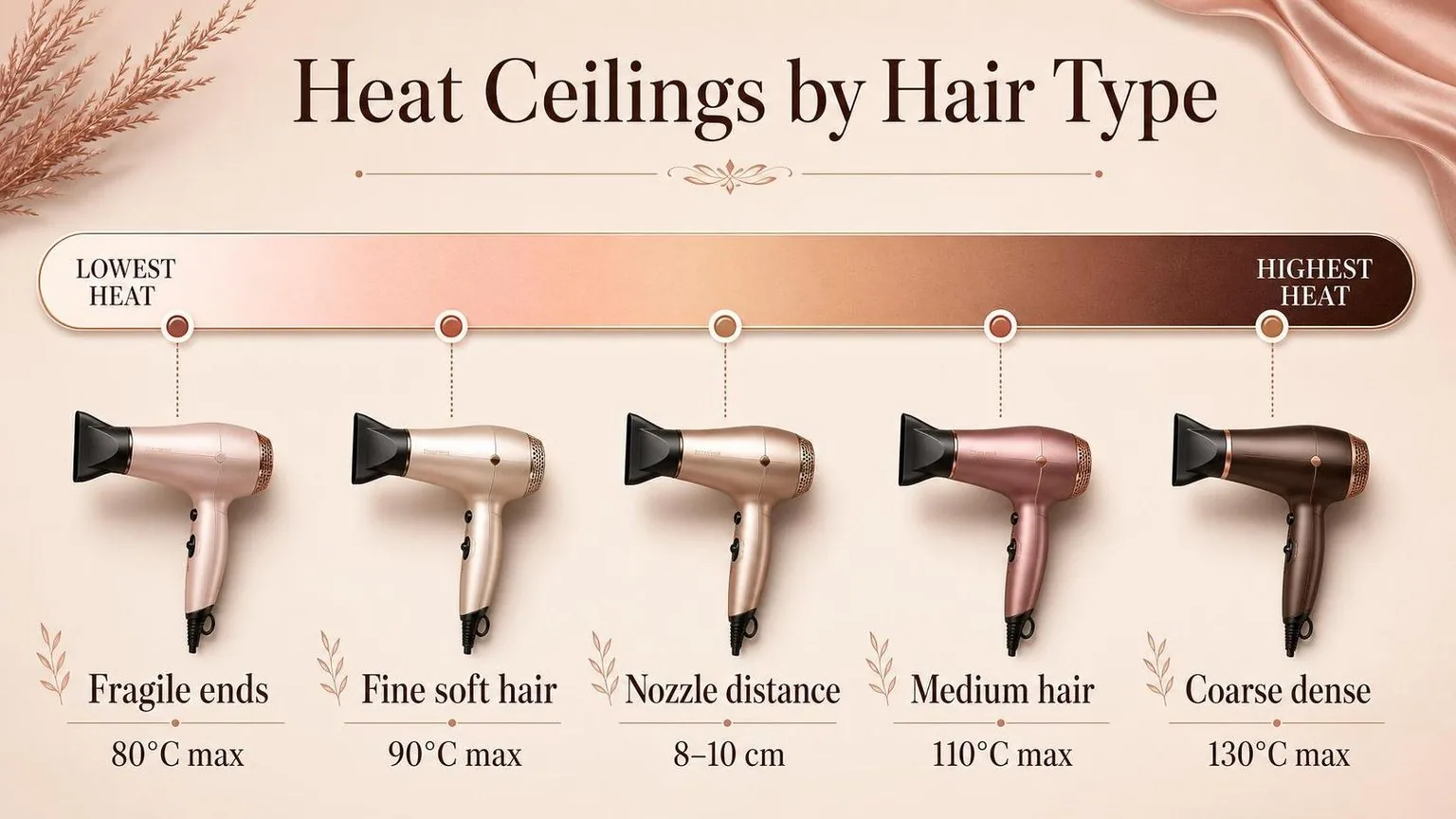
Set Your Heat Ceiling
Use this chair-side check before choosing a dryer setting. You need a clean, dry hand, a tail comb, your dryer nozzle, and sections clipped to 2 cm wide by 1 cm deep. Keep the nozzle 8–10 cm from the hair.
| Your strand feel | Start at the nozzle | Do not exceed |
| Fine, soft, bends easily | 60–70°C | 90°C |
| Medium, holds a bend, average density | 75–85°C | 110°C |
| Coarse, resistant, dense section | 90–100°C | 130°C |
| Fragile-feeling ends or previously heat-styled mid-lengths | 50–60°C | 80°C |
If your dryer has only low, medium, and high, map it manually. Hold airflow over your palm at the styling distance for 3 seconds. Comfortable warmth is low, hot but tolerable is medium, and sharp heat is high.
For a professional finish, raise airflow before raising heat. Use a concentrator nozzle around 6–8 cm wide, angle it down the hair shaft, and keep each pass moving at about 2–3 cm per second.
The American Academy of Dermatology advises using the lowest heat that gets the job done. In practice, your correct setting is the lowest temperature that dries one test section to smooth in 45–75 seconds without needing repeated passes.
What the Numbers Actually Say
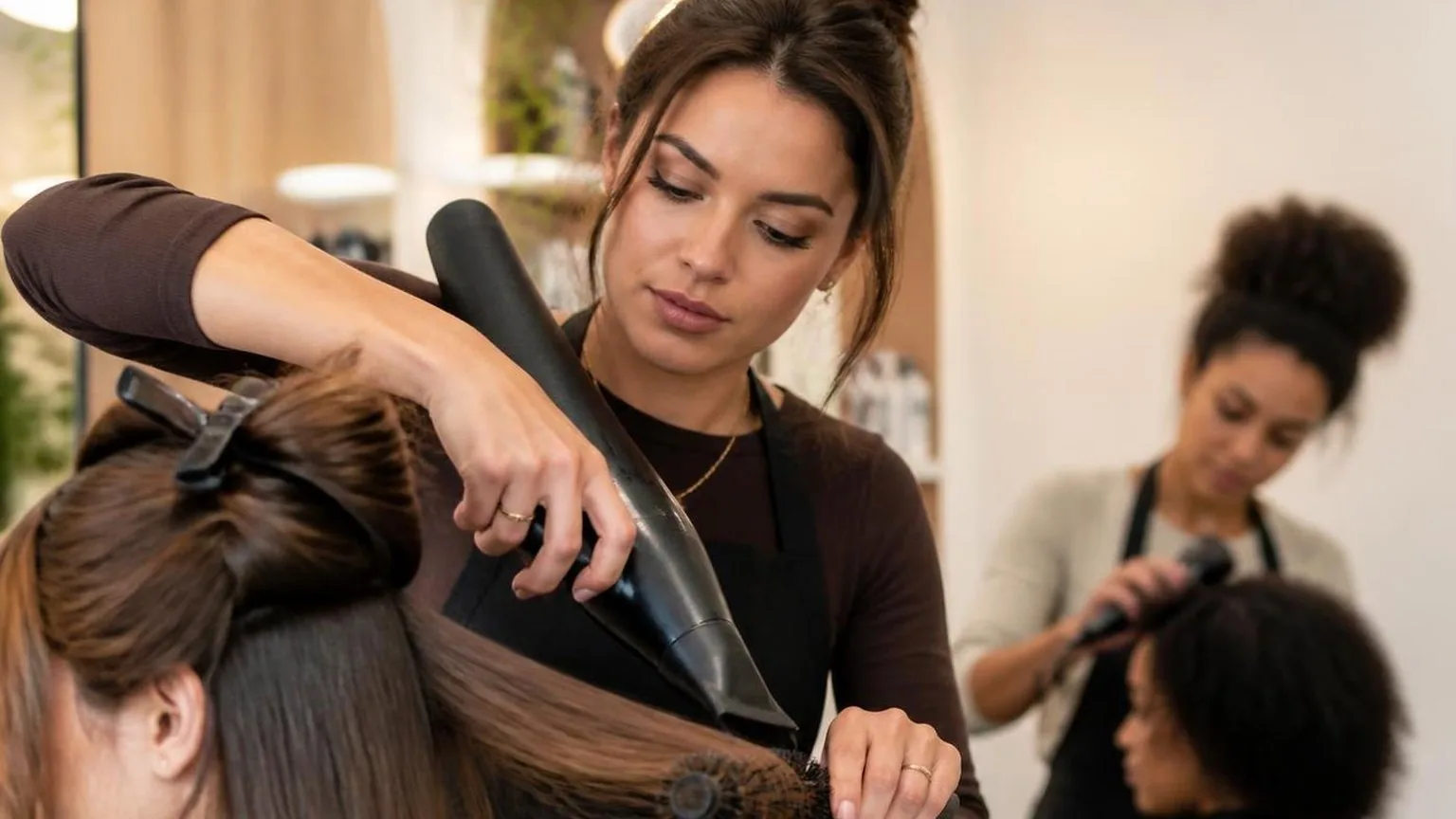
Safe blow-dry heat is less about the label on the switch and more about the temperature reaching the fibre.
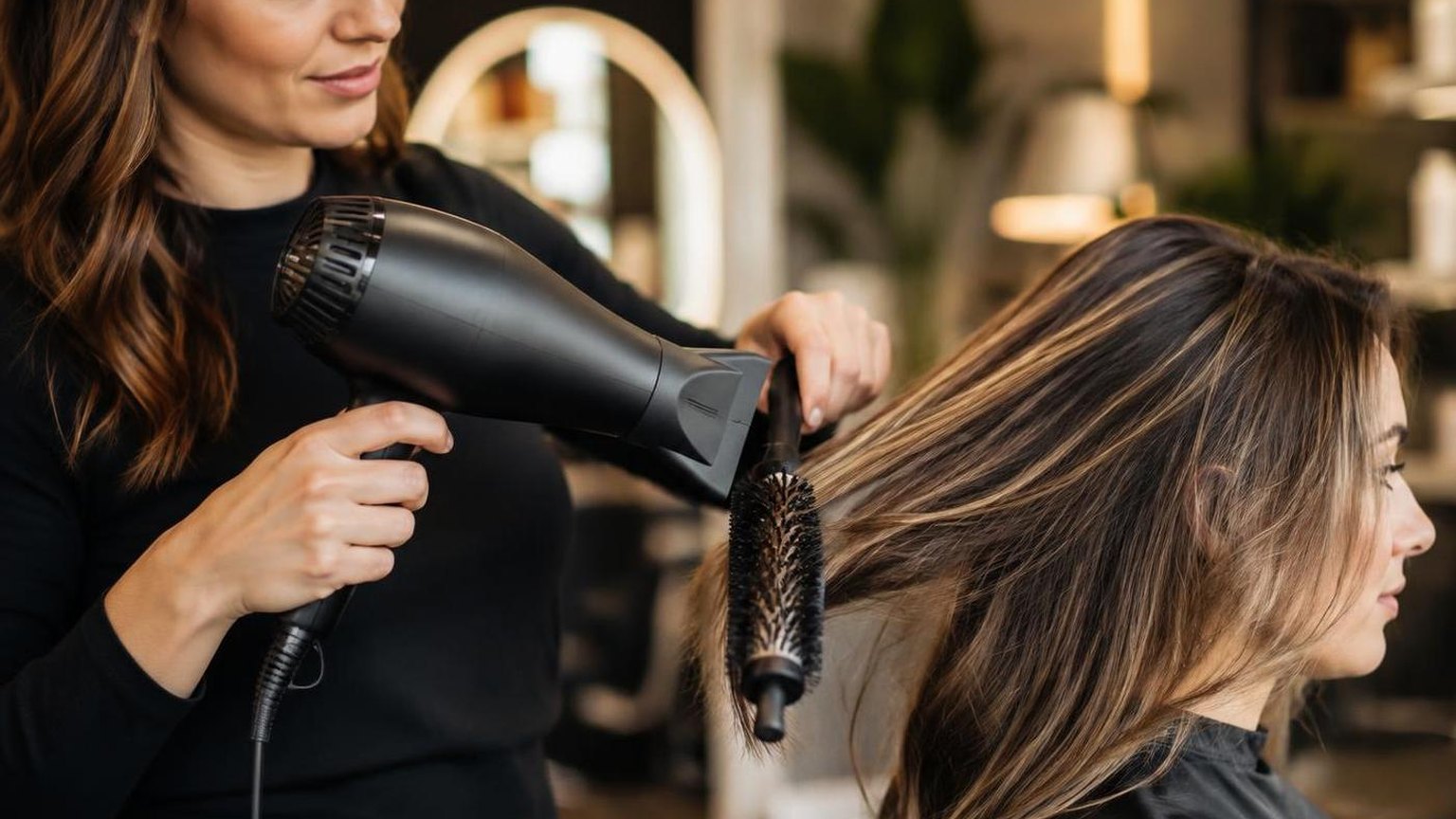
Fine, fragile, lightened-feeling, or highly porous hair needs lower air heat, more distance, and shorter exposure than coarse, dense, low-porosity hair.
The most useful benchmark comes from “Hair Shaft Damage from Heat and Drying Time of Hair Dryer,” published in Annals of Dermatology.
In that lab work, lower temperature with greater distance and continuous movement reduced visible surface damage compared with hotter, closer drying.
| Measured dryer condition | Air temperature at hair | Distance from hair | Practical salon reading |
| Cooler test setting | About 47°C | 15 cm | Closest to a low, controlled finish pass |
| Middle test setting | About 61°C | 10 cm | Useful for general drying when the dryer keeps moving |
| Hotter test setting | About 95°C | 5 cm | High-risk zone if held still or used on fine ends |
For day-to-day work, treat the following as working targets at the hair, not just the outlet grille. The nozzle should keep moving, and the concentrator should not be pressed into the brush or hair.
| Hair type | Target air heat at hair | Dryer distance | Best use |
| Fine, low-density, or delicate ends | 45–60°C | 15–20 cm | Rough-dry and polish with low tension |
| Medium density, healthy-feeling hair | 55–70°C | 10–15 cm | Standard blowout with a concentrator |
| Coarse, dense, low-porosity hair | 65–80°C | 10–15 cm | Moisture removal before brush finishing |
| Curly or coily hair with diffuser | 45–65°C | Diffuser cupped, no pressing | Set curl shape with slower airflow |
| Ends, fringe, face frame | 40–55°C | 15–20 cm | Final shaping and correction |
Time matters as much as temperature. Hair is most vulnerable to rough handling when wet, so remove excess water first with a towel blot, then use airflow to reach a damp state before brush tension increases.
| Stage | Moisture feel | Heat approach | Timing guide |
| Pre-dry | Wet, dripping stopped | Low to medium heat, high airflow | Until hair feels about 70–80 percent dry |
| Shape | Damp, flexible | Medium heat, controlled sections | 10–20 seconds per brush pass |
| Set | Dry to touch | Cool shot or lowest heat | 5–10 seconds before release |
Section size changes the heat load. A round brush overloaded with hair traps moisture and invites repeated passes, while a smaller section dries faster at a lower setting.
| Brush barrel | Section width | Section depth | Heat note |
| 25–35 mm | Up to 35 mm | 10–15 mm | Use lower heat near fringes and ends |
| 45–55 mm | Up to 55 mm | 15–20 mm | Medium heat suits most smoothing work |
| 60–75 mm | Up to 75 mm | 20–25 mm | Use for volume, not prolonged end work |
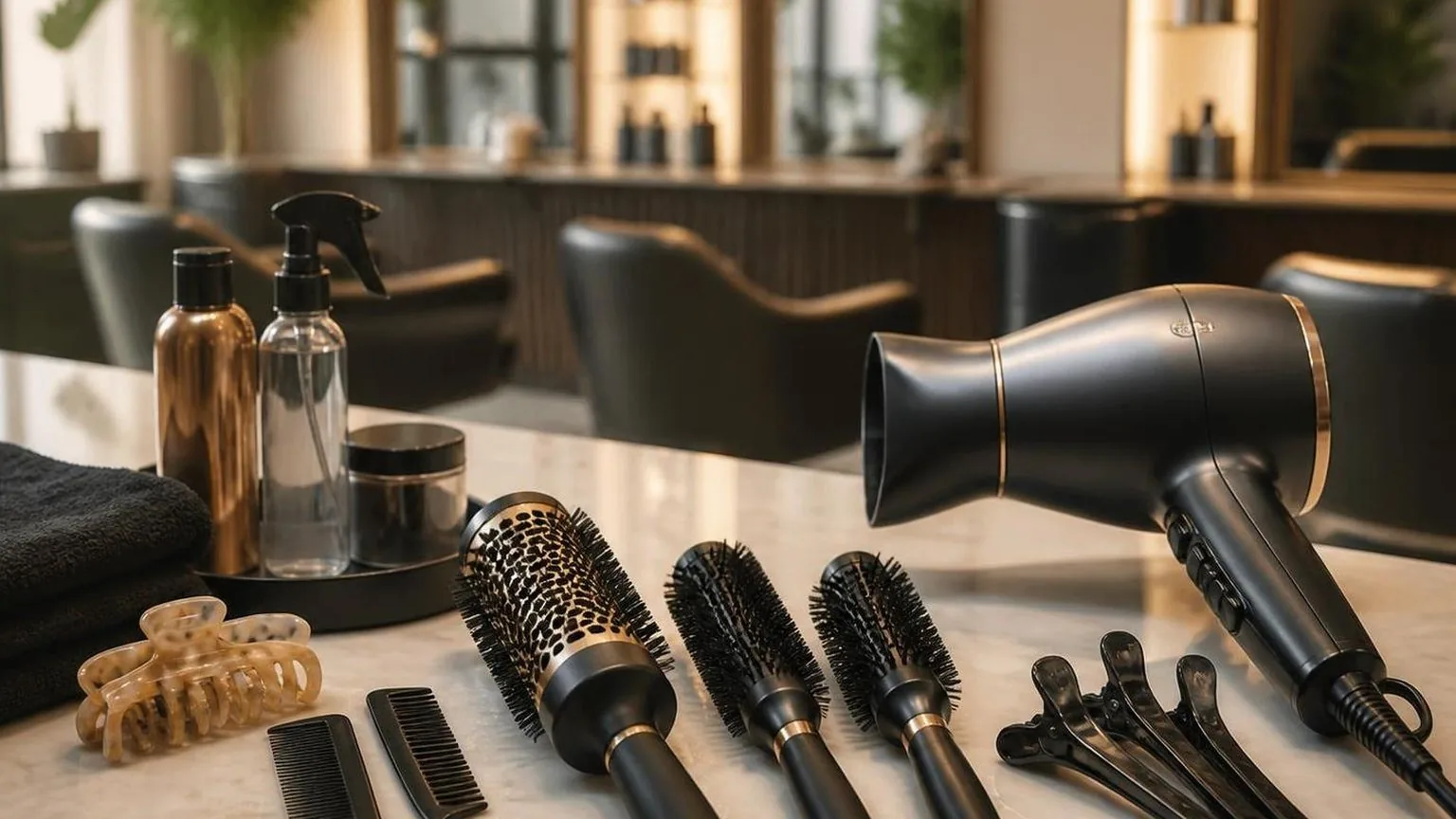
Where the Difference Comes From
The safe heat setting is not decided by hair type alone. The result changes with water content, strand diameter, airflow, nozzle distance, brush tension, and how long one section sits in the hot airstream.
In salon work, the same dryer setting can feel gentle on coarse, wet hair and too aggressive on fine hair that is almost dry. Control comes from matching heat with movement and stopping before the hair feels hot to the fingers.
Moisture level changes heat tolerance
Hair is most vulnerable when it is wet and swollen with water, so blasting soaking-wet lengths on maximum heat is inefficient and rough on the finish. Towel-blot first, then use medium heat and higher airflow until the hair is mostly dry.
| Stage | Practical cue | Safer dryer approach |
| Wet | Water can be squeezed from ends | Medium heat, high airflow, no brush tension |
| Damp | Feels cool, no dripping | Medium heat with sectioning and nozzle control |
| Nearly dry | Feels light, slightly cool inside section | Low to medium heat, finish with cool air |
| Dry | No coolness inside the section | Low heat only, brief polishing passes |
Diameter, density, and texture alter the setting
Fine hair heats quickly because each fibre has less mass. Coarse hair usually needs more time and airflow, not simply the hottest button.
Curly and coily textures also need gentler handling because repeated tension plus heat can reduce definition and shine.
| Hair type | Starting heat | Section size | Pass time |
| Fine or fragile-feeling | Low to medium | About the width of the brush barrel | Keep each pass moving continuously |
| Medium density | Medium | One to two fingers deep | Work until dry, then cool-shot |
| Coarse or dense | Medium to high airflow, medium to high heat | Thin, clean panels | Use smaller sections before increasing heat |
| Curly or coily | Low to medium heat | Small, controlled sections | Use tension carefully and avoid repeated passes |
Distance and nozzle shape matter
A concentrator nozzle should point down the hair shaft, not into the section.
The American Academy of Dermatology advises keeping blow dryers moving and using the lowest heat that dries the hair effectively, which supports professional practice behind the chair.
| Tool factor | Why it changes the result | Best practice |
| Nozzle distance | Closer airflow concentrates heat | Keep space between nozzle and hair; avoid touching the nozzle to the strand |
| Nozzle angle | Raised cuticle looks rougher | Direct airflow from roots toward ends |
| Brush size | Small barrels create more bend and tension | Use larger barrels for smoothing, smaller barrels for lift |
| Airflow speed | High airflow removes water faster | Use airflow before escalating heat |
Hands-on control beats the hottest setting
Stylists check heat with touch: if the section is too hot to hold, the setting or timing is too aggressive. A glossy finish usually comes from clean sections, steady tension, downward airflow, and a cool shot after the shape is dry.
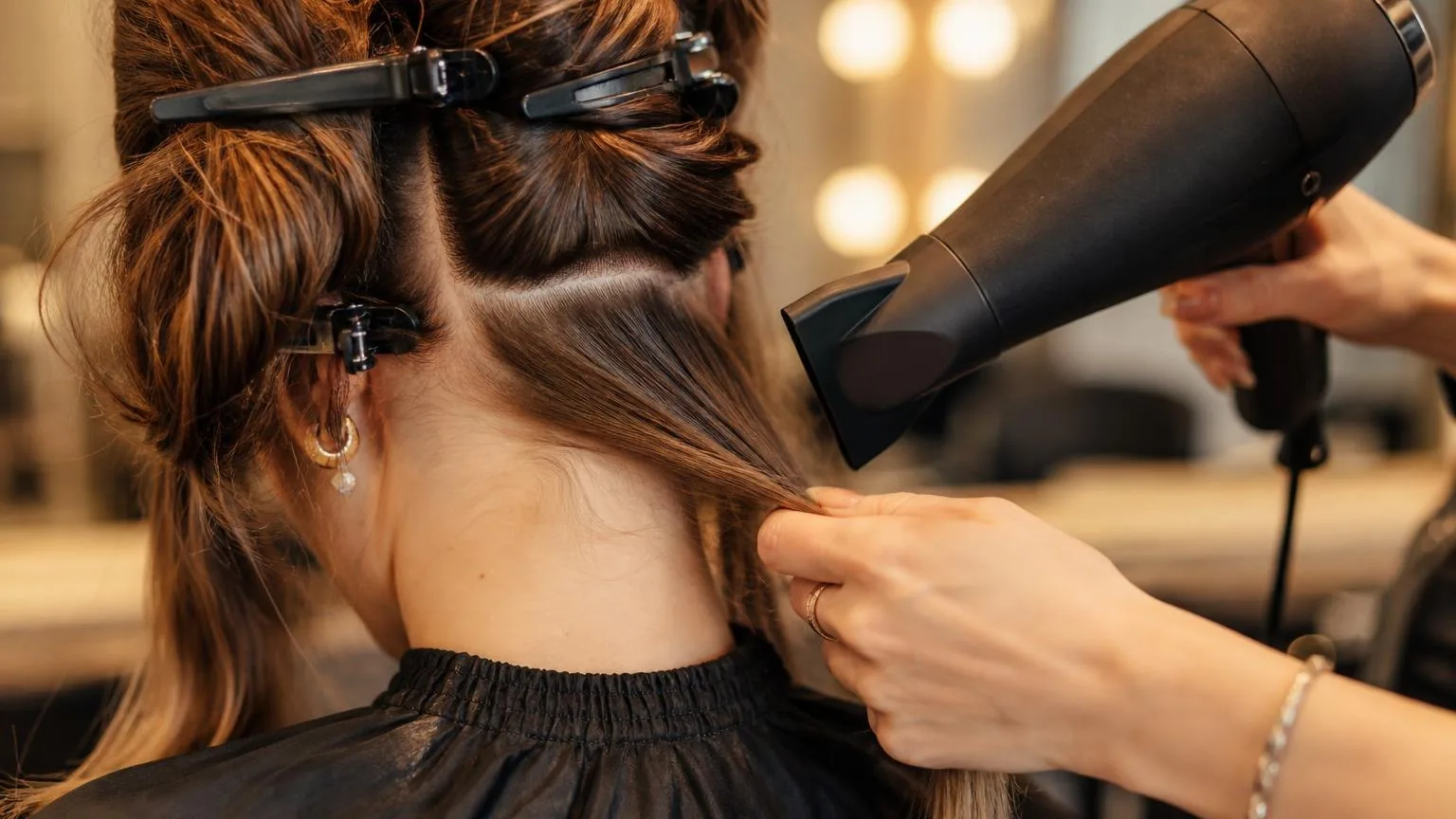
How to Judge It on Real Hair
Judge safe heat by what the hair does in the first pass, not by the dial alone. The right setting dries a small section smoothly in one or two passes, without steam clouds, rough ends, hot-to-touch hair, or a scorched smell.
Work on towel-blotted hair first. The American Academy of Dermatology advises letting hair air-dry partly before heat styling, because wetter hair needs longer exposure.
In practice, start when hair feels damp, not dripping, and water no longer flicks from the ends.
| Hair feel during test pass | What it means | Adjustment |
| Section dries in under 20 seconds | Heat or airflow may be higher than needed | Drop one heat setting or move nozzle farther away |
| Section still wet after 45 seconds | Section is too thick, too wet, or heat is too low | Subsection smaller before increasing heat |
| Ends feel crisp or rough | Too much heat on the oldest hair | Use cooler air on ends and reduce brush tension |
| Hair feels hot on fingers | Exposure is too intense | Pause, use cool shot, then lower heat |
Use sections you can control. For most blow dry bars, that means panels about 1 to 2 inches wide and no wider than the brush barrel. Dense or curly hair often needs ½-inch subsections near the nape and crown.
| Hair type | Starting outlet-air range | Real-hair target |
| Fine or fragile-feeling hair | 120°F to 150°F | Shape forms quickly with low tension |
| Medium straight or wavy hair | 150°F to 180°F | Cuticle lies flatter after one slow pass |
| Coarse, dense, or curly hair | 180°F to 210°F | Section dries evenly without repeated passes |
| Color-treated-looking porous ends | 120°F to 160°F | Ends stay pliable, not papery |
These are outlet-air ranges, not hair-fiber temperatures. A dryer’s internal coil may run hotter than the air reaching the head. Distance matters: keep a concentrator about 2 to 4 inches from the hair, moving continuously.
- Hold the airflow down the strand, from roots toward ends, to reduce raised cuticle feel.
- Keep the nozzle off the brush. Direct contact can overheat one spot and flatten the section.
- Use medium airflow for fine hair; high airflow can whip the cuticle before the style sets.
- For curls, dry the roots first, then refine ends with lower heat and slower passes.
Do a touch test after each section. Hair should feel warm, flexible, and dry at the roots. If it feels hot, stiff, or smells warm, the setting is not safe for that head of hair, even if it suits another client.
Set Against the Other Options
A controlled blow dry sits between air drying and direct hot tools: faster than air drying, but usually gentler than plates or barrels touching the hair.
The safest setup is moving air, a nozzle held 10–15 cm from the hair, and heat matched to fibre diameter.
The key difference is contact. A dryer heats water and fibre through airflow; a straightener or tong clamps hair between hot surfaces.
Robbins’ Chemical and Physical Behavior of Human Hair notes that wet hair is more vulnerable to heat and mechanical stress, so tension and temperature both matter.
| Method | Typical working heat | Contact time | Best use case |
| Air drying | Room temperature | Often 60–180 minutes | Low heat exposure, poor shape control |
| Blow dry, low setting | About 50–70°C at the hair | 10–20 minutes | Fine, fragile, or highly porous hair |
| Blow dry, medium setting | About 70–90°C at the hair | 8–15 minutes | Medium-density straight, wavy, or curly hair |
| Blow dry, high setting | About 90–110°C at the hair | 5–12 minutes | Coarse, dense hair when the dryer keeps moving |
| Hot brush | Often around 80–120°C airflow or barrel surface | 8–18 minutes | Smoothing with less wrist work, but more repeated passes |
| Flat iron | About 150–230°C plate temperature | 1–3 passes per section | Maximum polish after hair is fully dry |
| Curling tong | About 120–210°C barrel temperature | 5–10 seconds per wrap | Defined bends or curls on dry hair |
Compared with air drying, blow drying gives more predictable lift, bevel, and smoothness. Use rough drying to remove about 70–80% of moisture before brush work. That shortens time under heat and reduces the need to pull hard on wet sections.
Compared with a hot brush, a dryer and separate brush allow better temperature control. A 45–55 mm round brush suits long, loose movement; a 25–35 mm brush gives root lift and bend on shorter layers.
Smaller barrels concentrate tension and heat.
Compared with flat irons, blow drying can finish many clients at lower temperatures.
Fine hair that would scorch or collapse under 180°C plates often shapes well with 60–70°C airflow, light tension, and a cool shot for 10–15 seconds per section.
Compared with curling tongs, a blow dry gives softer shape and less direct surface heat. For coarse hair, use medium-high airflow first, then high heat only on the final dampness.
Keep the nozzle moving continuously rather than holding it over one point.
- Fine hair: choose low heat, high airflow, 5–7 cm sections, and finish each section while barely damp.
- Medium hair: use medium heat, medium-high airflow, and 7–10 cm sections for efficient smoothing.
- Coarse or dense hair: use higher heat briefly, smaller 4–6 cm sections, and a nozzle distance of 10–15 cm.
- Curly hair with a diffuser: use low or medium heat, low airflow, and hold each placement for 20–40 seconds before moving.
Keeping Condition Through the Dry
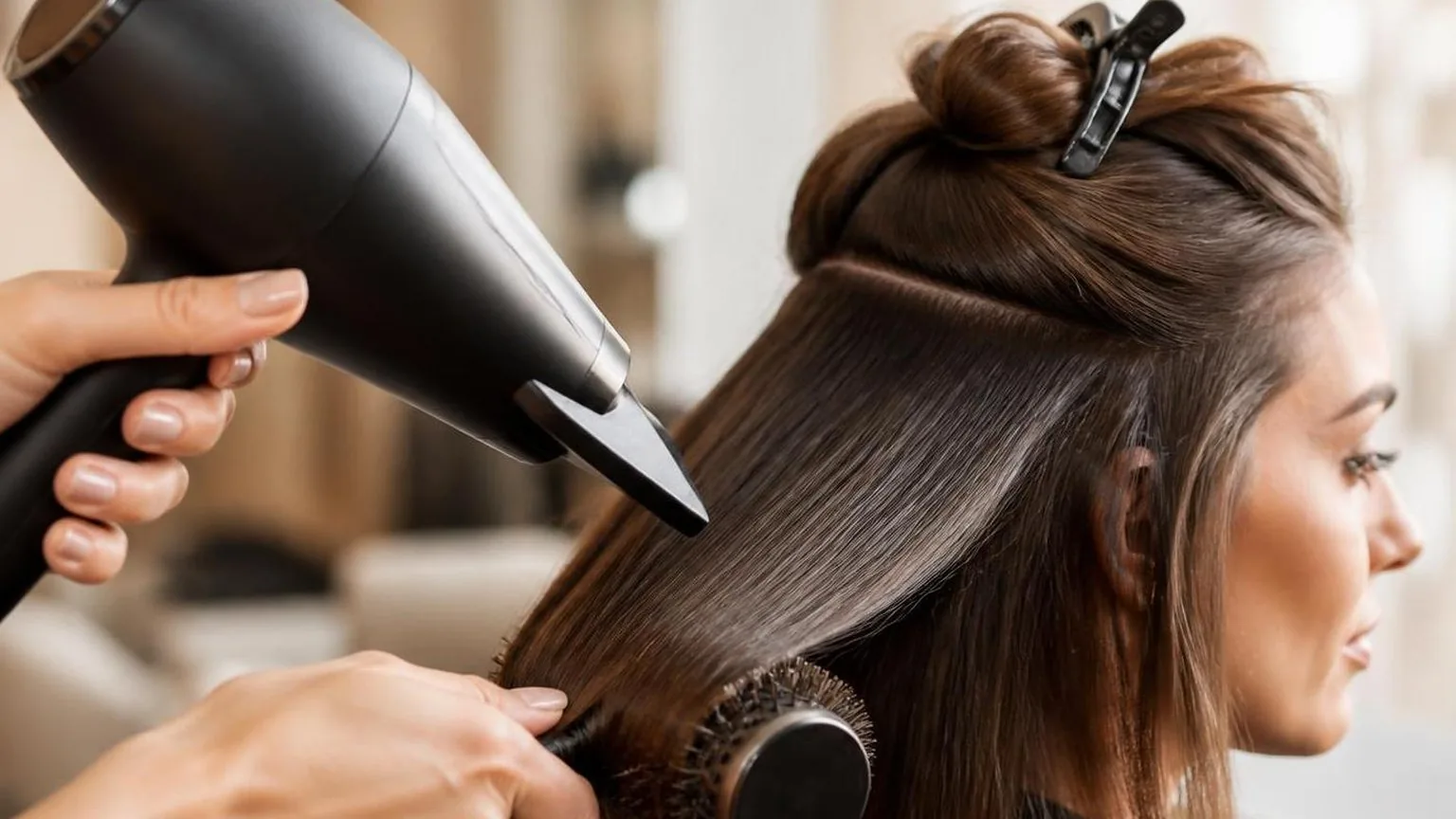
Safe blow drying is the balance of enough heat to move water out, enough tension to align the cuticle, and enough motion to avoid hot spots. Hair should feel warm and pliable, not too hot to touch immediately after the brush passes.
In salon work, the safest finish usually comes from reducing moisture first, then using controlled tension only for the final shaping passes.
Robbins’ hair-fibre work and L’Oréal fibre testing both show that repeated high heat weakens the cuticle surface before damage is obvious to the eye.
| Hair type | Dryer air setting at nozzle | Brush tension | Best use |
| Fine or fragile | Low to medium, about 50–70°C | Light, enough to keep the section flat | Root lift, smoothing, fringe work |
| Medium density | Medium, about 70–90°C | Moderate, with steady brush rotation | Everyday smooth blow dry |
| Coarse or very dense | Medium to high, about 90–110°C | Firm, without stretching the hair hard | Stretching and polishing larger sections |
| Textured curls and coils | Low to medium, about 60–85°C | Gentle to moderate, section by section | Diffusing, stretching, controlled volume |
Those temperatures refer to air at the outlet, not the label on the dryer. Distance matters: moving the nozzle farther from the hair drops delivered heat quickly, especially when the airflow is kept moving.
| Technique point | Practical number | Why it protects the fibre |
| Nozzle distance | Keep 10–15 cm from the hair | Reduces surface overheating while still directing airflow |
| Nozzle opening | Use a concentrator about 6–8 cm wide | Spreads heat across the brush width instead of one small spot |
| Section thickness | Work in 1–2 cm subsections for smoothing | Lets air pass through rather than cooking the outside layer |
| Brush dwell time | Keep each pass under 5–8 seconds | Limits repeated heat loading on the same area |
Tension should come from clean sectioning and brush control, not pulling strength. If the strand visibly narrows, snaps back sharply, or the client’s head is being pulled off position, the tension is too high.
- Start wetter with airflow, not tension: rough-dry to about 70–80 percent dry before round-brushing fine or medium hair.
- Use more passes, not more heat: two controlled medium-heat passes are safer than one slow high-heat pass.
- Cool before release: hold the shape for 5–10 seconds on cool air before unwrapping the brush.
- Check touch temperature: if hair is uncomfortable against the back of your fingers, lower heat or increase distance.
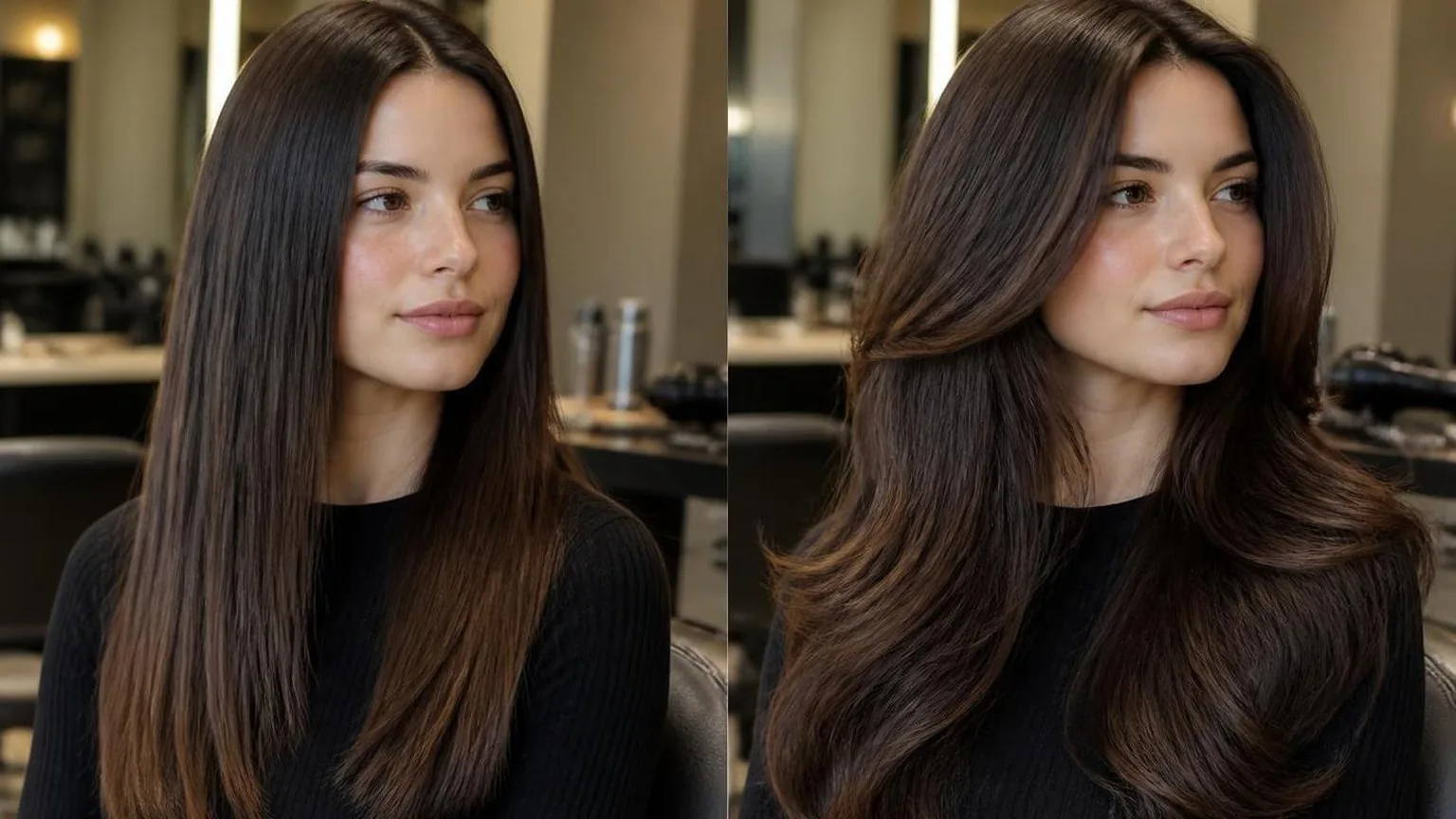
The intact finish is made in the last stretch-and-cool phase. Heat softens the set, tension aligns it, and cooling locks the shape without needing to overheat the fibre.
The Mechanism, Step by Step
The method changes how quickly water leaves the hair, how hot the fibre surface becomes, and where the shape sets. Heat setting is not just a dial choice; distance, airflow, section width, brush tension, and dwell time decide the actual finish.
Hair is mostly shaped while damp, then fixed as it cools. Cosmetic science texts describe temporary styling as a balance of water, heat, tension, and cooling; changing any one variable changes smoothness, lift, bend, and frizz control.
Distance changes surface temperature
Holding the nozzle 5 cm closer raises surface temperature, which can set the cuticle-facing surface before the root area is dry. A longer distance lowers intensity, but also slows evaporation and can extend total heat exposure.
| Variable | Practical setting | What changes |
| Nozzle distance | 10 to 15 cm from hair | Faster drying with controlled heat concentration |
| Close work | 5 to 8 cm from hair | Higher surface heat; use only for brief smoothing passes |
| Gentle drying | 15 to 20 cm from hair | Lower heat intensity; useful for fine or fragile-feeling ends |
| Nozzle angle | Down the strand, about 30 to 45 degrees | Flattens the cuticle-facing surface and reduces roughness |
Section size changes drying speed
A 2 cm section dries more evenly than a 5 cm section because air reaches the inner hairs. Thick sections often feel dry outside while the middle remains damp, so more passes are needed and the outer layer receives repeated heat.
| Hair type | Section width | Typical heat approach |
| Fine or low-density hair | 2 to 3 cm | Low to medium heat, high airflow |
| Medium hair | 3 to 4 cm | Medium heat, medium to high airflow |
| Coarse or high-density hair | 2 to 3 cm | Medium to high heat, controlled tension |
| Tightly curled hair | 2 cm or smaller | Medium heat with slower brush work |
Airflow changes dehydration pattern
High airflow moves water away quickly, so less time is spent heating one spot. Low airflow with high heat can make the surface hot while leaving internal moisture, especially at the nape, crown, and dense root sections.
Tension changes smoothness and bend
Brush tension aligns fibres while water exits. Too little tension leaves expansion and fuzz. Too much tension slows brush movement, increasing dwell time on one area.
A steady pass of 5 to 8 seconds per section is usually safer than stopping under heat.
Cooling changes hold
Shape is more stable after cooling on the brush for 5 to 10 seconds. Removing the brush while the section is still hot allows the bend to relax. The cool shot works best after the hair feels dry, not while water is still flashing off.
- Fine hair: reduce heat first, then reduce section size if roots collapse.
- Coarse hair: keep sections narrow before increasing heat.
- Curly hair: use slower tension, not a hotter nozzle, to stretch evenly.
- Ends: finish with shorter passes because ends dry before roots.
Common Mistakes and Myths
Most heat damage in blow drying comes from using too much heat too early, holding the nozzle too close, or drying one section for too long. Safe settings are hair-type specific, but technique controls the final risk as much as the temperature dial.
Trichology texts and cosmetic science guidance consistently treat wet hair as more fragile than dry hair. Water inside the fibre, stretched cuticle edges, and high airflow tension make the first drying stage the easiest place to overdo it.
Mistake: starting on the hottest setting
High heat is best saved for the last shaping pass, not the first rough dry. Begin with medium heat until hair is mostly dry, then increase only if the hair type can tolerate it and the section still needs polishing.
| Hair type | Safer working heat | When to use higher heat |
| Fine or fragile-feeling hair | Low to medium, about 120–140°F airflow at the hair | Rarely; use tension and airflow instead |
| Medium-density straight or wavy hair | Medium, about 140–160°F airflow at the hair | Brief polishing passes only |
| Coarse, dense, or very curly hair | Medium-high, about 160–180°F airflow at the hair | For smoothing, with constant movement |
Myth: the hottest setting makes the blow dry last longer
Longevity comes from drying the section fully and letting it cool in shape. A round-brush section that feels even slightly cool or damp at the root will drop, no matter how hot the dryer was.
| Stage | Target dryness | Practical timing |
| Rough dry | 70–80% dry | Use fingers, wide airflow, and medium heat |
| Brush work | 90–100% dry | Work sections about 1–2 inches wide |
| Set | Fully dry before release | Cool for 5–10 seconds on the brush |
Mistake: pressing the nozzle onto the hair
A concentrator should guide air, not touch the fibre. Keep the nozzle about 2–4 inches from the hair and point airflow from roots toward ends to help the cuticle lie flatter.
- Too close: heat spikes on one spot and can roughen the surface.
- Too slow: one section overheats while the rest stays damp.
- Too wide a section: the outside dries while the centre remains wet.
Myth: cool shot dries the hair
The cool button sets shape; it does not finish drying efficiently. Use it only after the section is dry and hot to the touch. Cooling damp hair simply locks in moisture and weakens the finish.
Mistake: using the same setting everywhere
Hairline, fringe, and face-framing pieces usually need less heat than the back and crown. Switch down one setting for shorter, finer areas, and use smaller sections where density is highest.
Frequently Asked Questions
What heat setting is safest for fine hair?
Use low heat, about 120–140°F at the hair surface, with medium airflow. Keep the nozzle 6 inches from the hair and keep it moving to avoid hot spots, a method supported by AAD heat-styling guidance.
What heat setting works for medium or normal-density hair?
Use medium heat, roughly 140–160°F at the hair surface, with a concentrator nozzle 1/2–3/4 inch wide. Work in 1–2 inch sections and dry each section for 20–40 seconds before reassessing moisture.
What heat setting is safest for coarse or thick hair?
Start on medium-high heat, about 160–180°F at the hair surface, not the dryer’s internal temperature. Use strong airflow, 1-inch sections, and stop applying heat once the section feels dry and smooth.
What heat setting should be used on curly or coily hair?
Use low to medium heat, about 120–160°F at the hair surface, with a diffuser rather than a narrow nozzle. Hover or cup sections for 30–60 seconds, keeping airflow gentle to preserve pattern and reduce roughening.
Is the highest dryer setting ever safe for a blow dry?
Reserve high heat for brief rough-drying on dense, wet hair, then drop to medium before brush work. The safer professional test is comfort: air aimed at your hand for 3 seconds should feel hot, not sharp or burning.
How can you tell if a hair dryer is too hot?
A dryer is too hot if your scalp feels uncomfortable, your hair feels rough quickly, or the airflow burns your hand at the same distance you use on your hair. Lower the heat, increase distance, or switch to warm air.
Should you change the heat during a blow dry?
Yes. Use warmer air to remove excess moisture, then reduce the heat as the hair gets drier and more shaped. Finish with a cool shot to help set the style and reduce the need for extra heat.
How far should you hold a hair dryer from your hair?
Keep the dryer about 6 inches from the hair. This helps heat spread more evenly and lowers the chance of overheating one spot.
Does nozzle attachment affect dryer heat?
Yes. A nozzle concentrates airflow, so keep it moving and avoid pressing it against the hair. Use it to direct air down the hair shaft for a smoother finish.
Related Reading
- Ionic or ceramic: what the labels actually mean
- Boar, nylon or mixed: choosing round brush bristles
- How long a hair dryer lasts, and what shortens it
- Ceramic or tourmaline: what changes inside the barrel
- Paddle or round: which brush does which job
- What a paddle brush is actually for
- The complete guide to blow dry tools