
Paddle or round: use a paddle brush for fast smoothing and detangling, and a round brush when you need lift, bend, or a polished bevel at the ends. The working difference is tension plus airflow direction, not just brush shape.
A paddle brush covers wider sections, usually 5 to 8 cm, so it suits straight, low-volume finishes and rough-dry control. A round brush works in smaller 2 to 5 cm sections, wrapping hair around a barrel to build curve and root elevation.
This guide breaks down when stylists reach for each tool, how barrel size changes the result, and the heat-and-cool timing that helps a blowout hold without overworking the hair.
Pick Your Brush Now
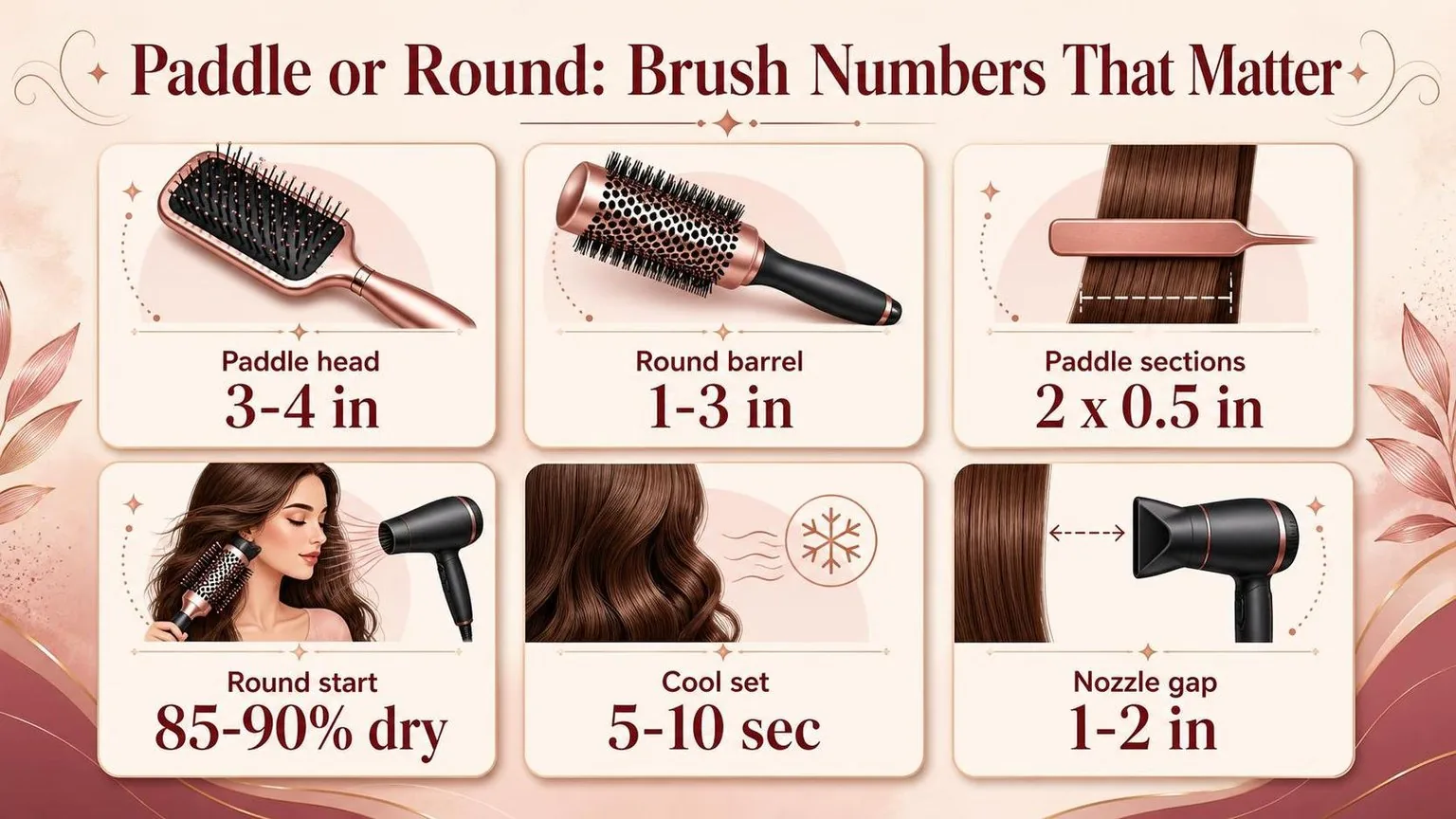
Set out your dryer, nozzle, one paddle, and one round brush. Use this quick read-off before you shampoo, so the choice matches your finish, timing, and wrist control.
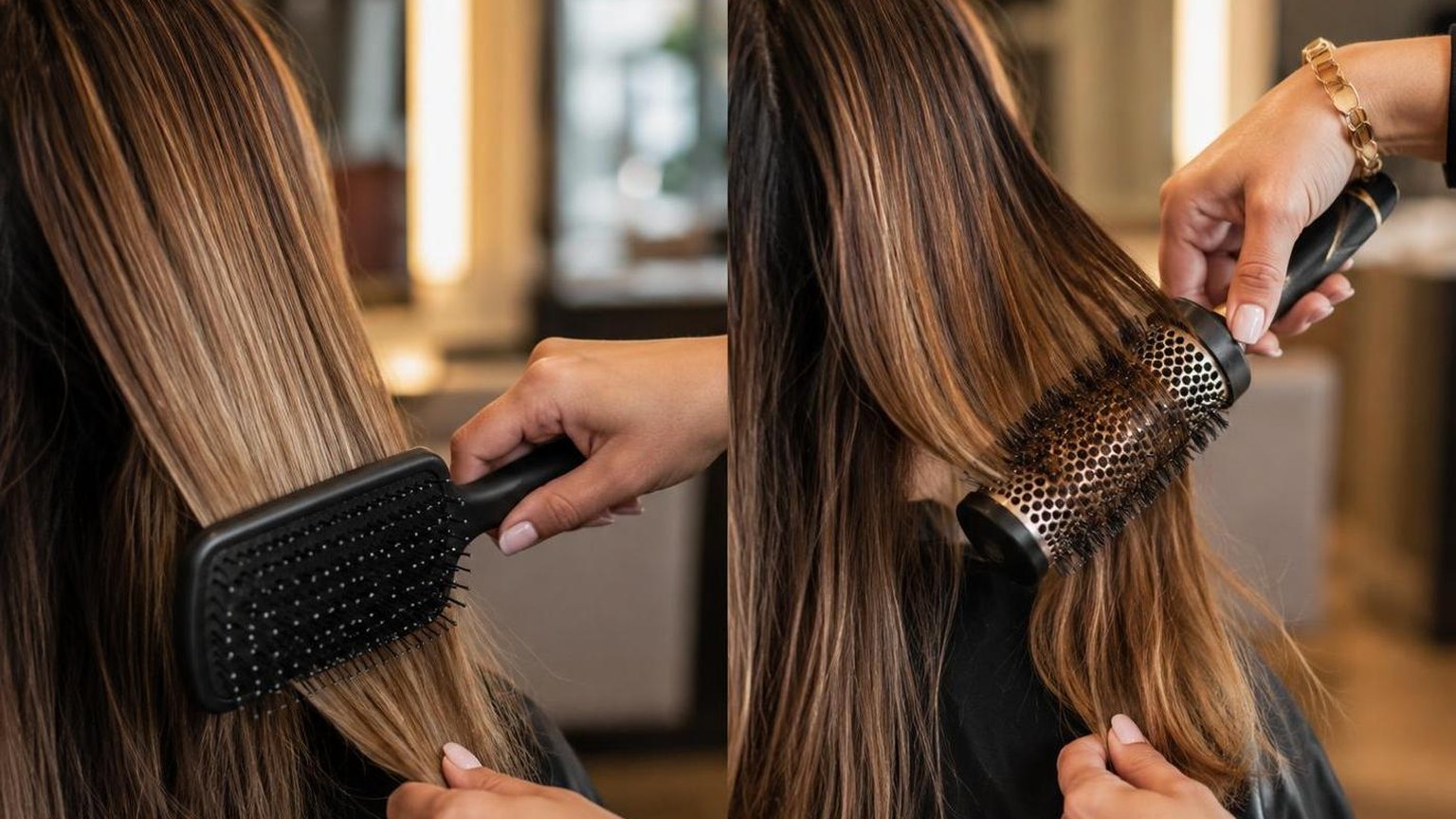
| Your hair or service | Use a paddle when | Use a round when |
| Length | Hair sits below the collarbone and you want a smooth, fast wrap-dry. Choose a paddle around 3 by 4 inches. | Hair is chin to shoulder length, or you need lift and bend. Choose a barrel from 1.5 to 2.25 inches. |
| Density | High-density hair needs broad tension. Work in sections no wider than 2 inches and no thicker than 0.5 inch. | Fine to medium density benefits from controlled overdirection. Keep each section narrower than the barrel width. |
| Finish | Use for straighter polish, flatter roots, and quicker smoothing. Keep the nozzle 1 to 2 inches from the brush. | Use for bevelled ends, root lift, curtain movement, or a bouncy blowout. Roll and cool for 5 to 10 seconds. |
| Heat and timing | Use medium heat for rough-drying to about 80 percent dry, then paddle-finish for 3 to 6 passes per section. | Start round brushing at about 85 to 90 percent dry. Use medium heat, then a cool shot before unwinding. |
If the row is split, choose by the client’s brief. “Sleek and quick” points to paddle. “Shape that lasts through a commute” points to round.
For home users, pick the brush you can keep moving without snagging. Professional finish depends on steady tension, nozzle direction, and cooling, not just brush shape.
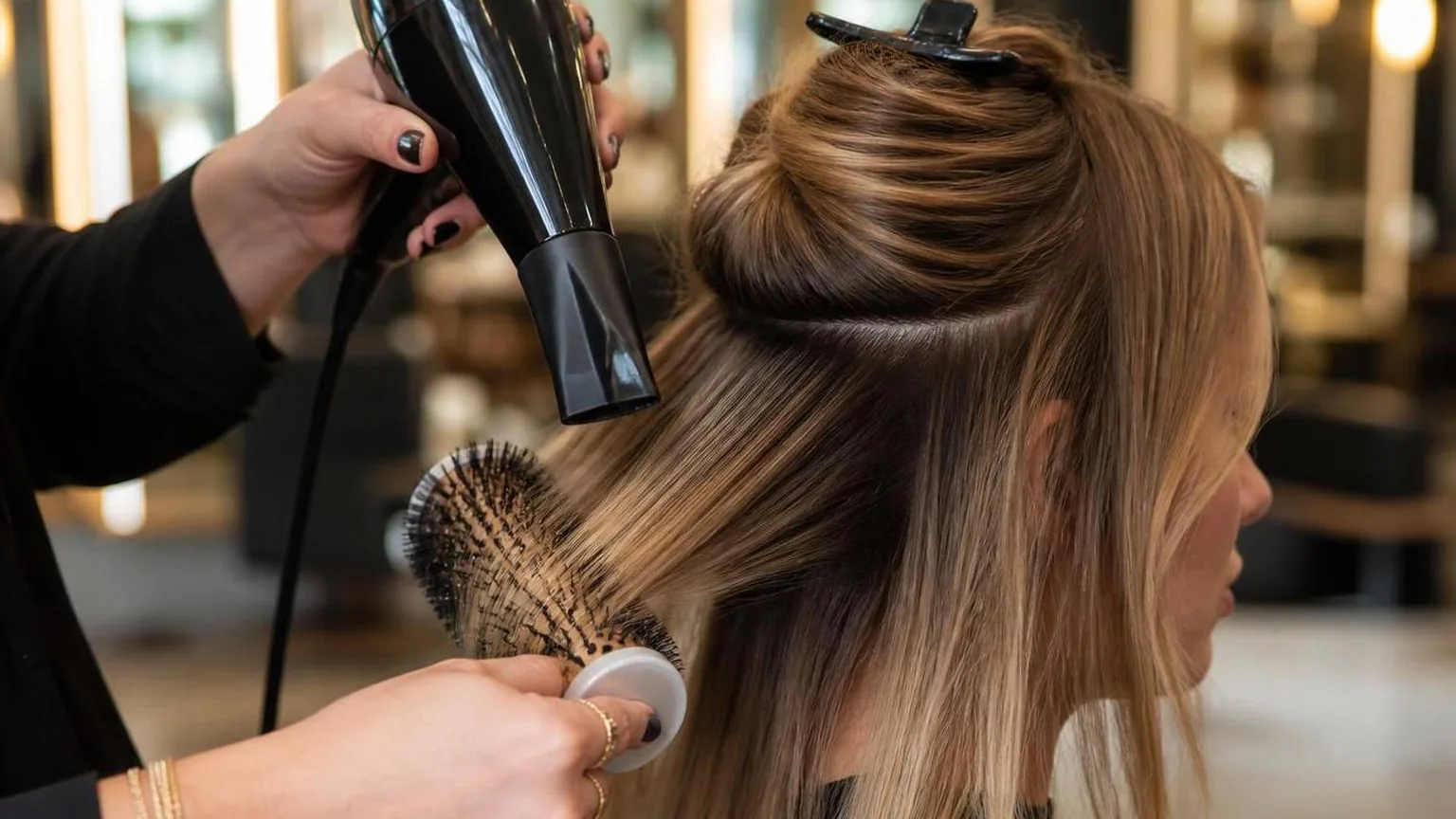
What the Data Shows
Paddle brushes win on speed, detangling, and smooth stretch; round brushes win on bend, lift, and polished ends. The difference is mainly contact area, barrel diameter, tension, and how long hot air stays on one section.
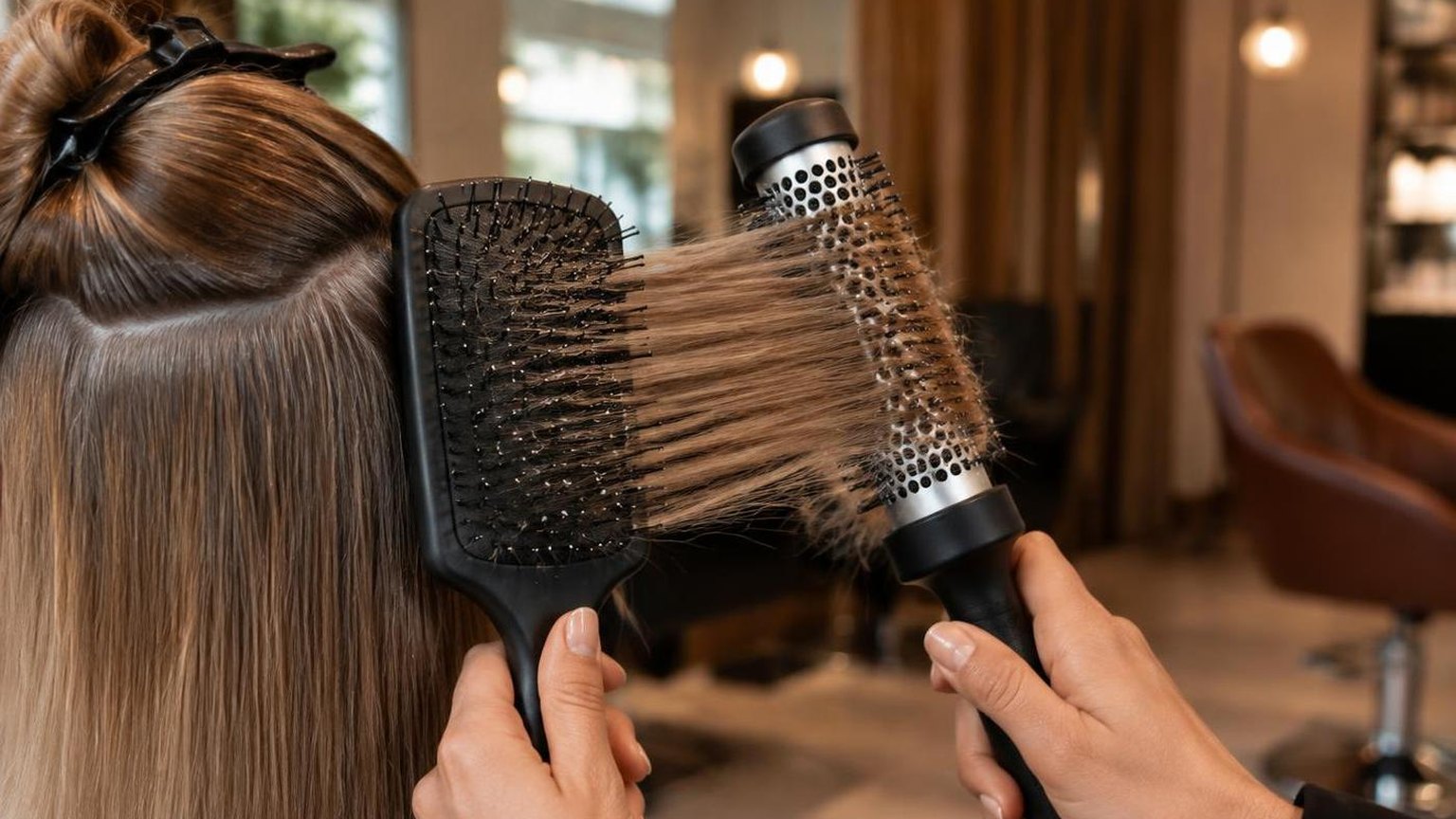
In practical blow-dry work, a paddle brush behaves like a wide flat support. A round brush behaves like a shaping tool.
Sam Villa and Dyson education both teach the same principle: airflow sets shape when hair is held under tension, then allowed to cool.
| Tool | Typical working size | Best numerical advantage |
| Paddle brush | About 3 to 4 in wide head | Covers roughly 2 to 3 times more width per pass than a medium round brush |
| Round brush | About 1 to 3 in barrel diameter | Creates bend, root lift, and bevel by wrapping hair around a curved surface |
For sectioning, the numbers favor control over speed. A round brush section should usually be no wider than the barrel length and no deeper than the barrel diameter. Overloading the brush drops tension and leaves damp centers.
| Barrel diameter | Likely finish | Best use |
| 1 in | Tighter bend and stronger flick | Fringe, short layers, face frame |
| 1.5 to 2 in | Medium curve and bounce | Bob to collarbone lengths |
| 2.5 to 3 in | Soft bend, smoother ends | Long layers and loose volume |
Heat also changes the decision. Fine hair usually needs lower heat and shorter exposure. Coarse or dense hair can need higher airflow and more tension, but the brush still matters more than maximum heat.
| Hair feel | Dryer setting to start | Section drying target |
| Fine or fragile-feeling | Low to medium heat | About 20 to 40 seconds per section |
| Medium density | Medium heat | About 30 to 60 seconds per section |
| Dense or coarse-feeling | Medium to high heat with strong airflow | About 45 to 90 seconds per section |
The temperature safety number most stylists quote comes from heat-tool testing: keratin damage risk rises as temperatures climb toward about 450°F. Blow-dryer air at the nozzle can still be very hot, so keep the nozzle moving and off the bristles.
- Choose paddle when the aim is straightening, fast drying, smoothing a large surface, or stretching wave without adding curl.
- Choose round when the aim is root lift, bevelled ends, curtain-fringe movement, or a salon-style bend through the mid-lengths.
- Use both for the fastest pro finish: paddle to remove most moisture, round brush for the final 10 to 20 percent of drying.
The cleanest workflow is numerical: rough-dry to about 70 to 80 percent dry, paddle smooth the body, then round-brush only the visible layers and ends. That saves time while keeping the finish intentional.
The Variables That Matter
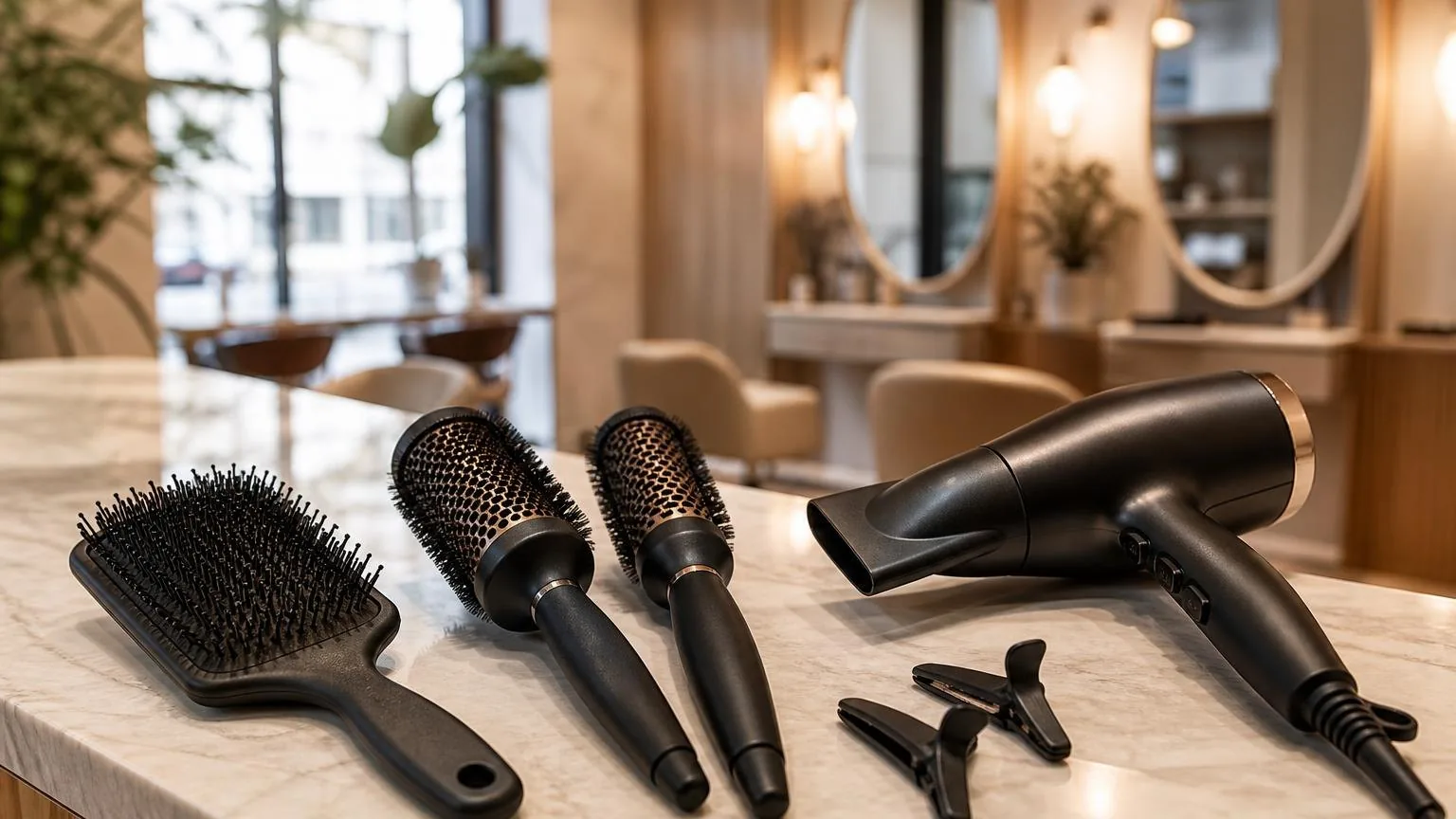
The result changes because a paddle brush controls direction and surface smoothness, while a round brush changes shape, lift, bend, and polish.
Heat, tension, section size, airflow angle, and cooling time decide whether hair finishes flat, beveled, bouncy, or curled.
In salon work, the brush is only half the system. The dryer nozzle, hand tension, and section thickness matter just as much. Dyson, ghd, and BaBylissPRO education all teach directing airflow down the hair shaft to reduce roughness and increase shine.
Brush shape and contact area
| Tool | Typical working width | Primary result |
| Paddle brush | 3 to 4 inches across the pad | Straight, smooth, low-volume finish |
| Small round brush | 1 to 1.5 inch barrel | Tighter bend, fringe control, short layers |
| Medium round brush | 1.75 to 2.25 inch barrel | Soft curve, root lift, classic blowout |
| Large round brush | 2.5 to 3 inch barrel | Loose bend, volume on long hair |
A paddle brush spreads the hair over a broad, flat surface, so the section dries straighter. A round brush wraps the hair around a cylinder, so heat sets a curve. The smaller the barrel, the stronger the bend.
Section size and drying control
| Hair density | Recommended section thickness | Why it matters |
| Fine or low density | 0.5 to 0.75 inch | Prevents over-drying and keeps lift |
| Medium density | 0.75 to 1 inch | Allows even heat and controlled tension |
| Thick or high density | 0.5 inch subsections | Stops damp interiors and puffy ends |
For either brush, the section should be no wider than the brush face or barrel. If hair spills past the edges, airflow becomes uneven. Stylists usually rough-dry to about 80 percent dry before detailed brush work.
Heat, airflow, and timing
| Setting | Useful range | Best use |
| Air temperature at nozzle | 140 to 185°F | Shaping without scorching the section |
| Nozzle distance | 1 to 3 inches from hair | Focused airflow and faster smoothing |
| Brush pass duration | 5 to 10 seconds per pass | Enough time to dry and shape |
| Cool shot | 5 to 8 seconds | Locks in bend or smoothness |
Round-brush work needs heat followed by cooling while the hair is still curved around the barrel. Paddle-brush work needs consistent downward airflow from roots to ends. A concentrator nozzle should point with the cuticle direction, not against it.
- More tension gives a sleeker finish, especially with a paddle brush.
- More elevation at the root gives lift, especially with a round brush held at 90 degrees.
- More wrapping around the barrel creates stronger bend through mid-lengths and ends.
- More cooling time improves hold without adding extra heat.
How to Judge It on Real Hair
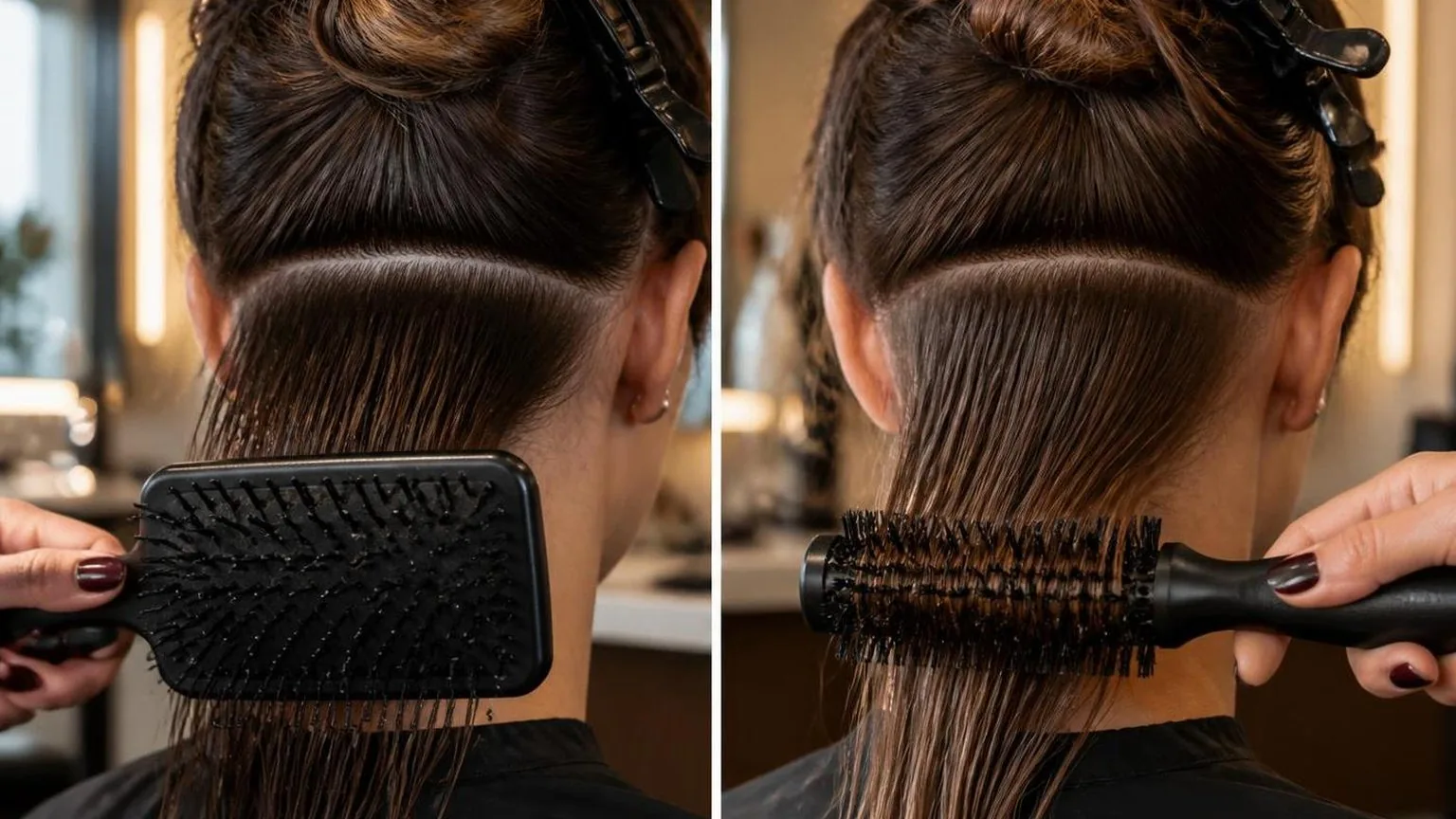
Choose paddle when the hair needs alignment, speed, and a flatter finish. Choose round when the hair needs bend, lift, bevel, or controlled expansion at the ends.
Do not decide from the haircut alone. Decide from how the hair behaves after rough-drying: where it swells, where it collapses, and whether the ends need stretching or shaping.
Read the hair after rough-drying
In salon work, the brush decision becomes clearer once most surface water is gone. Wet hair lies. Damp hair shows growth pattern, density, frizz, and how much tension the fibre can tolerate without snagging.
| Checkpoint | What you see | Better first brush |
| About 70% dry | Roots still heavy, lengths beginning to separate | Paddle to organise and remove bulk moisture |
| About 80% dry | Shape holds briefly, ends still pliable | Round to build bend and root lift |
| About 90% dry | Hair cools quickly, shape is nearly set | Round only for polish; paddle for smoothing passes |
Use density, not just length
A chin-length bob can still need a paddle if the panel is dense and resistant. Long, fine hair may need a round brush because it lacks movement and collapses at the crown.
| Hair reading | Paddle advantage | Round advantage |
| High density | Controls wider sections without overworking | Useful only in smaller subsections |
| Fine density | Can flatten the root too much | Adds elevation and end direction |
| Coarse texture | Gives steady tension through broad panels | Best after smoothing, for bevel or curve |
| Very soft hair | May remove too much body | Creates memory with less tension |
Match the brush to the section size
The brush should control the whole subsection without crowding the bristles. If hair spills beyond the brush edge, the section is too wide, not necessarily the tool wrong.
| Working section | Tool choice | Why it works |
| 2 inch wide panel | Paddle | Keeps tension even from root to end |
| 1 inch vertical section | Round | Allows lift, rotation, and bevel |
| 1.5 inch crown section | Round | Builds elevation without dragging the root flat |
Check airflow and heat response
According to professional dryer guidance from major tool manufacturers, concentrator nozzles should direct air down the hair shaft for smoothing.
In practice, paddle brushes make that easier on wide panels; round brushes need more precise nozzle control.
| Setting cue | Paddle result | Round result |
| Medium heat | Safer for slow, broad tension work | Good for fine hair or fringe control |
| High heat | Useful on dense, wet sections when moving constantly | Risky if held still on one spot |
| Cool shot for 5 to 10 seconds | Sets a smoother fall | Sets bevel, flick, or crown lift |
The practical salon test
- If the root goes flat before the mid-length is dry, switch from paddle to round at the crown.
- If the ends look stringy on a round brush, smooth first with a paddle, then bevel only the last section.
- If the client wants “sleek but not flat,” paddle the underneath and round-brush the hairline, crown, and ends.
- If the arm is fighting the brush, reduce section size before increasing heat.
How It Compares to the Alternatives
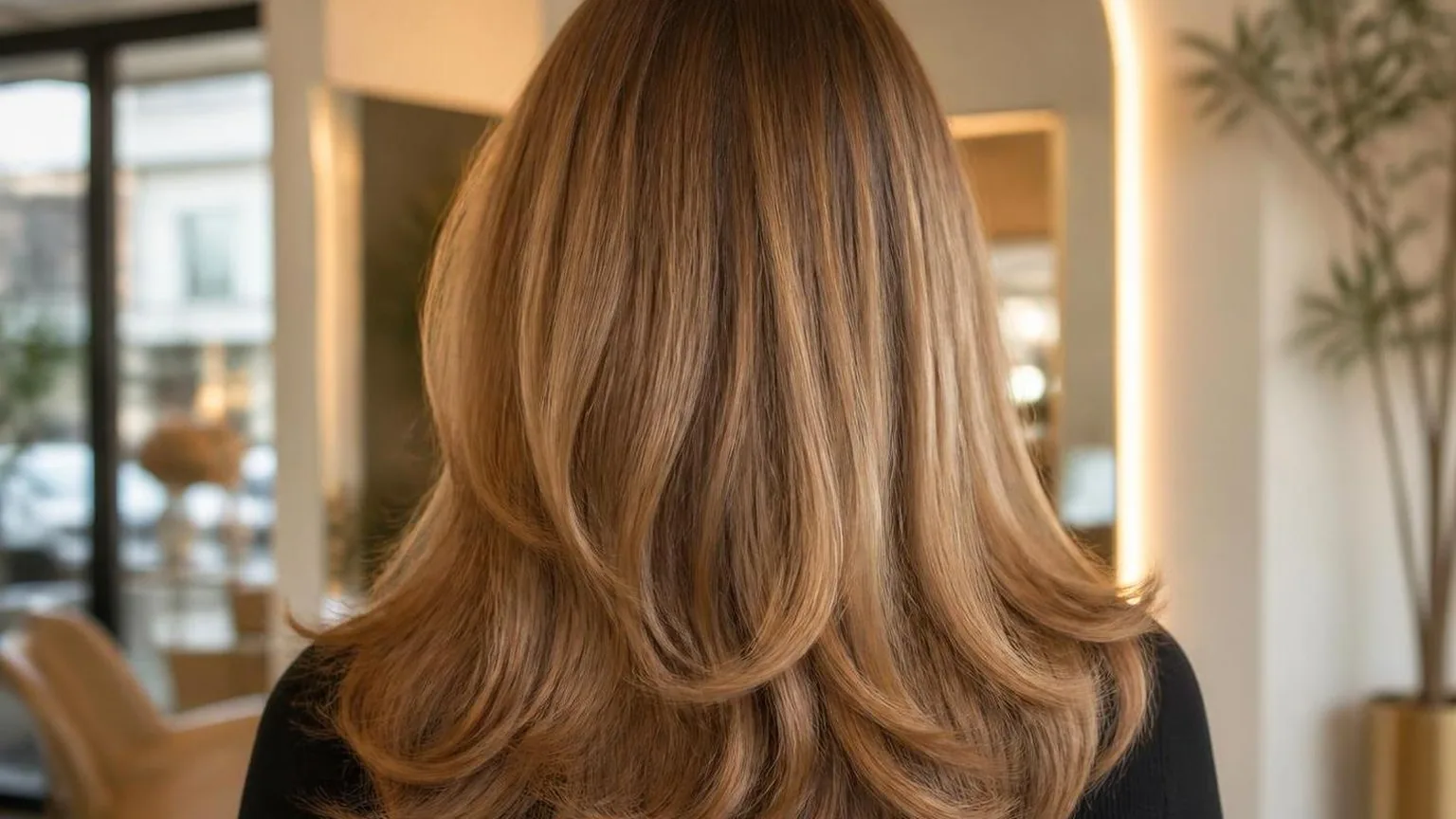
A paddle brush is faster for smoothing and detangling broad sections; a round brush gives more lift, bend, and bevel. The right choice depends on whether you need flat polish, root volume, or shaped ends.
In salon work, the paddle is the “control” tool: broad, stable, and efficient on medium to long lengths. The round brush is the finishing tool: narrower contact, more tension, and more movement through the ends.
| Tool | Best use | Typical working section | Finish |
| Paddle brush | Smoothing, wrap-drying, detangling before styling | About the brush width, usually wider than a round-brush section | Straighter, flatter, softer polish |
| Round brush | Root lift, bevelled ends, curtain fringe, bounce | No wider than the barrel length | Curved, lifted, more “blowout” shape |
| Vent brush | Fast rough-drying and airflow | Loose, open sections | Airy, less tension, less polish |
| Hot brush | Dry-hair refresh or low-tension shaping | Small to medium panels | Smoothed surface with moderate bend |
Compared with a vent brush, a paddle brush gives more surface control because the cushion and pins hold the panel flatter. The trade-off is airflow.
Vented designs move air through the brush body more freely, so they are useful before precision finishing.
Compared with a round brush, the paddle creates less mechanical lift at the root. A round barrel lets the stylist over-direct the section, hold tension, and cool the hair in a curved position before release.
| Round brush barrel diameter | Practical effect | Typical use |
| About 25 mm | Tighter bend and stronger flick | Short layers, fringe, shaped ends |
| About 33 mm | Balanced lift and bend | Bobs, face frames, medium layers |
| About 43 mm | Loose volume with less curl | Long layers and smoother blowouts |
| About 53 mm | Stretching and large, soft movement | Long, dense hair when bend is minimal |
Manufacturer guidance from Dyson and ghd consistently separates smoothing attachments from volumising barrels for this reason: flat surfaces align hair; curved barrels shape it. The same physics applies with conventional dryer-and-brush work.
- Choose paddle when the goal is smooth, straight movement with minimal bend.
- Choose round when the finish needs lift at the crown, bevelled ends, or visible bounce.
- Choose vent for the early drying stage, then switch before the surface gets too dry to reshape.
- Choose hot brush for convenience, not maximum salon tension.
For a professional finish, many stylists use both: rough-dry first, paddle to align the surface, then round brush only the fringe, crown, and ends. That keeps the service efficient without sacrificing the polished blow-dry shape clients notice.
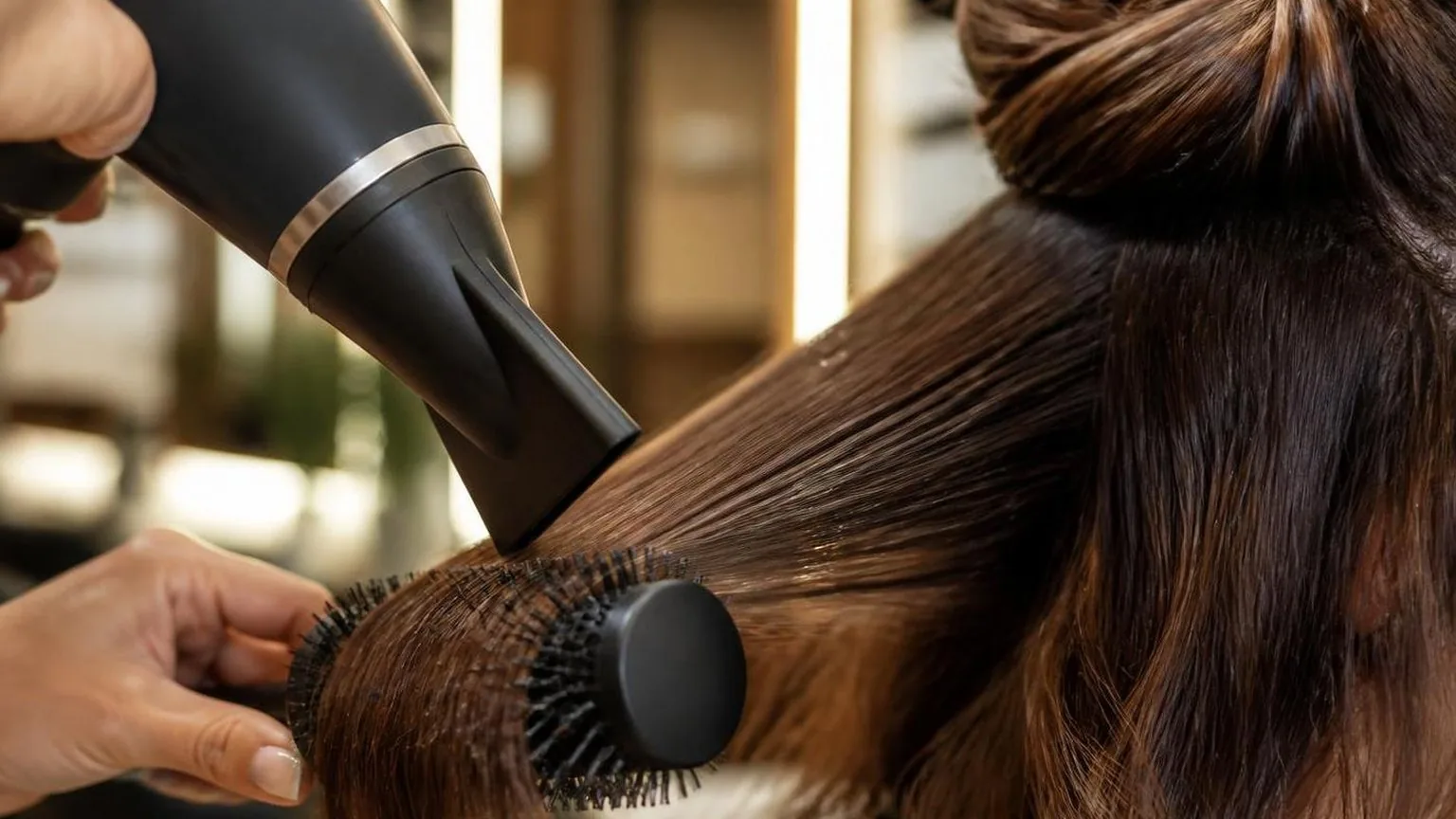
Heat, Tension and Keeping Hair Intact
Paddle brushes are safer for low-tension drying, detangling, and smoothing larger sections. Round brushes create more polish and bend, but they concentrate heat and pull, so section size, dryer distance, and rotation speed matter.
For most blow-dry work, keep airflow moving, use the concentrator parallel to the hair shaft, and avoid holding the nozzle still over one spot.
Hair becomes easier to deform when warm and wet, so excessive stretch at this stage can cause cuticle roughness and breakage.
Heat control: what changes between paddle and round
A paddle brush spreads hair across a wider surface, which lowers local tension and helps water leave evenly. It is the better choice for removing the first bulk of moisture before shaping.
A round brush wraps hair around a barrel, trapping heat between the brush, hair, and airflow. That is useful for root lift and curve, but it raises the risk of overdrying if the section is too thick or the dryer is too close.
| Control point | Paddle brush | Round brush |
| Best starting moisture | Hair about 70 to 80 percent dry | Hair about 80 to 90 percent dry |
| Typical section width | 5 to 8 cm | 2.5 to 5 cm |
| Dryer distance | 10 to 15 cm from hair | 8 to 12 cm from hair |
| Safe airflow movement | Continuous passes from roots to ends | Rotate, heat for 3 to 5 seconds, then move |
Tension: enough to smooth, not enough to stretch
Good tension feels firm, not forceful. If the brush stalls, catches, or pulls the head position, the section is too large, too wet, or insufficiently detangled.
With a paddle, tension comes from the flat pad and hand angle. With a round brush, tension multiplies because the hair is bent around the barrel while being pulled away from the head.
| Hair feel during drying | Adjustment |
| Brush drags or squeaks | Reduce section size by half and lower heat |
| Ends look frayed while drying | Stop rolling through ends; bevel only the last 2 to 3 cm |
| Hair feels hot to touch | Pause heat, use cool air for 5 to 10 seconds |
| Root flattens immediately | Lift at 90 degrees and dry root first for 4 to 6 seconds |
Keeping the cuticle intact
- Detangle before heat, starting at the last 5 cm, then working upward.
- Use medium heat for fine or fragile-feeling hair; reserve high heat for dense sections that still feel damp.
- Keep the concentrator aligned downward, not blasting upward against the cuticle.
- Finish each shaped section with cool air for 5 to 10 seconds before releasing tension.
- Choose larger barrels, about 43 to 53 mm, for smoothing; use smaller barrels, about 25 to 33 mm, only when tighter bend is needed.
The practical rule is simple: paddle first for moisture removal and control, round last for shape. The less time hair spends wet, hot, and stretched at the same time, the better it keeps its surface intact.
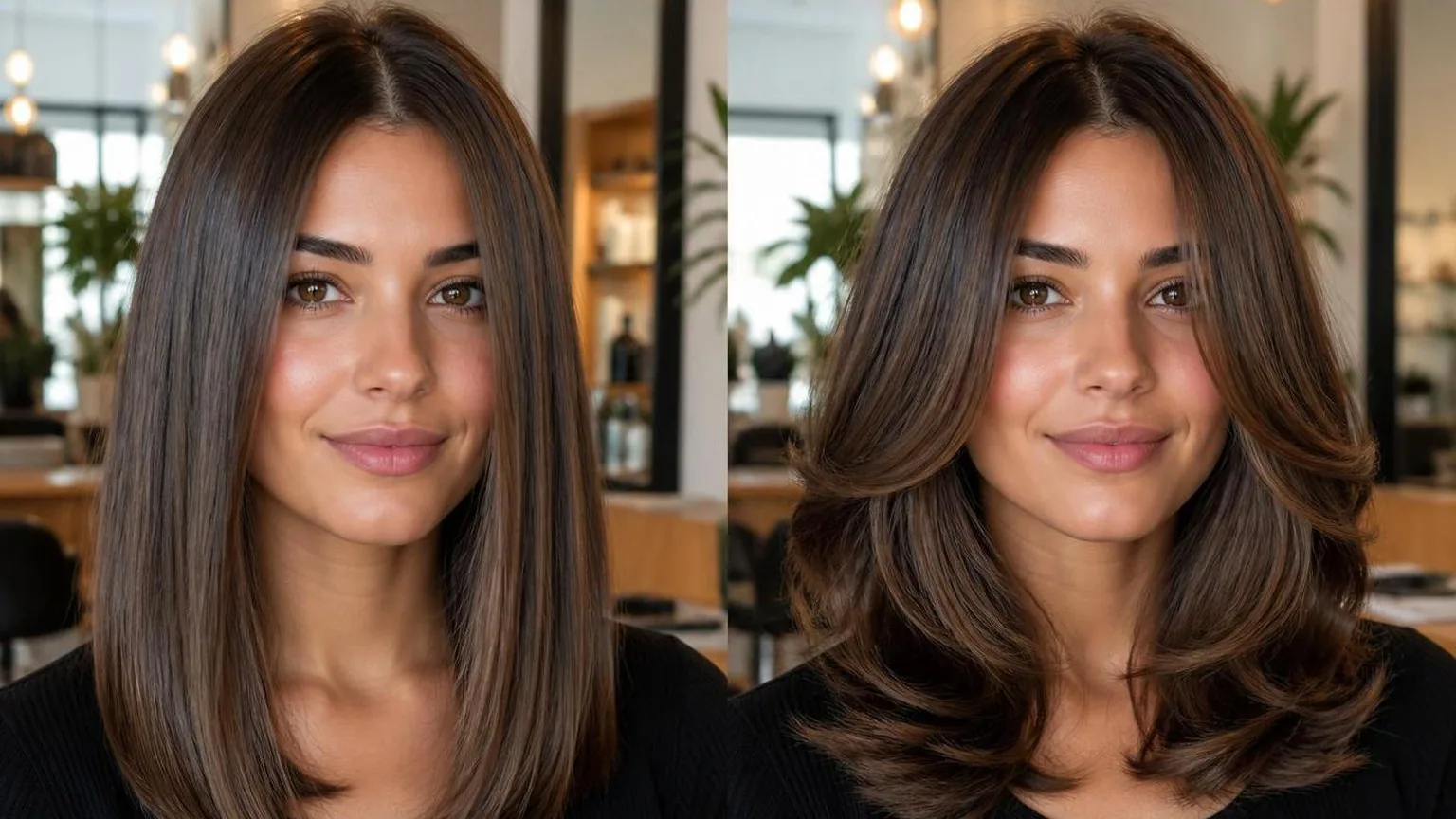
Why the Technique Works
Paddle brushing changes alignment, speed, and smoothness. Round brushing changes lift, bend, and end shape by wrapping hair around a curved surface while heat and tension set the section.
The difference is mechanical: a paddle brush stretches hair in a flat sheet, while a round brush changes the cooling shape of the fibre bundle. Hair holds its blow-dried form best when it cools in the shape created under tension.
| Variable | Paddle method | Round method | Why the outcome changes |
| Typical section width | 5-8 cm | 3-5 cm | Narrower sections wrap more fully, so heat reaches the inner layers and the curve sets more evenly. |
| Section depth | 1-2 cm | 1-1.5 cm | Thicker sections trap moisture at the root and middle, reducing polish and hold. |
| Nozzle distance | 8-12 cm | 5-8 cm | Holding the nozzle 5 cm closer raises surface temperature, which can set the outer layer before the root is dry. |
| Air direction | Down the strand | Down the strand, then around the brush | Downward airflow encourages flatter alignment; wrapped airflow fixes bend around the barrel. |
| Cooling time | 3-5 seconds | 5-10 seconds | Cooling on the brush preserves shape because hydrogen bonds re-form as the fibre temperature drops. |
A paddle brush puts more hair under tension at once. That makes it efficient for long, medium-density lengths where the goal is a smooth fall rather than root elevation. The large cushion also reduces repeated passes over the same area.
A round brush concentrates tension on a smaller band of hair. A 35-45 mm barrel gives a loose bend on mid-length hair, while a 25-32 mm barrel gives more curve and root lift. Smaller barrels increase rotation and contact time.
Root result changes because the brush angle changes. Lifting a section at roughly 90 degrees from the scalp creates more height than drying it at 0-30 degrees. The root cools in the raised position, so the finished shape stands away from the head.
End finish changes because of overdirection and wrap. Rolling the last 5-8 cm under gives a tucked bevel. Rolling the same length away from the face gives an outward flick.
A paddle brush can smooth ends, but it cannot compress them into a tight curve.
- Use paddle work when the priority is speed, length control, and a straighter finish on sections up to 8 cm wide.
- Use round work when the priority is lift, bend, face framing, or a bevel that needs to survive movement.
- Keep airflow parallel to the hair shaft where possible; the Dyson and ghd professional education materials both teach nozzle control to reduce roughness during finishing.
- Do not finish wet. A section that feels cool but not dry at the root will drop because retained moisture weakens the set.
Myths That Keep Going Round
Most paddle-versus-round mistakes come from using the right brush at the wrong stage. A paddle brush is mainly for stretch, direction and smoothing; a round brush is for bend, lift and bevel, especially when heat and tension are controlled.
The biggest myth is that a round brush automatically creates a salon finish. In practice, the finish comes from section size, nozzle direction, brush tension and cooling time, not from the brush shape alone.
Mistake: choosing brush size by hair length only
Diameter should match the bend you want and the section you can control. A brush that is too large will smooth but not curve. A brush that is too small can over-bend the ends and slow the blow-dry.
| Tool choice | Best use | Typical working section |
| Paddle brush | Pre-dry, stretch, smooth roots to ends | Width no wider than the brush pad |
| Small round brush | Tighter bevel, shorter layers, fringe work | About the brush barrel width |
| Medium round brush | Classic bend, volume, soft movement | About the brush barrel width |
| Large round brush | Smoothing, loose curve, long lengths | Slightly narrower than the barrel length |
Mistake: starting with a round brush on soaking-wet hair
Round brushing too early wastes time and causes unnecessary arm fatigue. Most stylists rough-dry or paddle-dry first, then switch tools when the hair is damp enough to shape but dry enough to hold tension.
| Stage | Hair feel | Better brush choice |
| Very wet | Dripping or heavy | Hands, towel blotting, then paddle |
| Damp | Flexible, no dripping | Paddle for stretch, round for shaping |
| Nearly dry | Warm, light, starting to set | Round brush and cool shot |
Myth: more heat means a smoother result
Smoothness is usually improved by airflow direction, not maximum heat. Keep the nozzle pointed from roots toward ends so the cuticle lies flatter. Hold the dryer close enough to direct air, but do not press it against the brush or hair.
- Skipping tension: A paddle brush should pull hair flat and controlled, not skim the surface.
- Overloading sections: If hair spills beyond the brush edges, the middle will stay damp and puffy.
- Rolling to the scalp: Round brushes create best polish when the section is dried through, then cooled before release.
- Ignoring the nozzle: A concentrator gives cleaner direction than open airflow for both paddle and round brushing.
Myth: paddle brushes are only for straight hair
A paddle brush can build a sleek, expensive-looking base before round-brush detailing. In salon work, it is often the speed tool: roots are stretched, lengths are aligned, then selected front and crown pieces are polished with a round brush.
The practical rule is simple: use a paddle when you need control and speed, then use a round brush where you want shape. Switching at the right moment prevents frizz, flat roots and overworked ends.
Frequently Asked Questions
Should I choose a paddle or round brush for a smooth blowout?
Use a paddle brush when you want flatter, straighter movement with less bend through the ends. Work in 2-inch sections, keep the dryer nozzle 1 to 2 inches from the hair, and follow the brush from roots to ends.
When is a round brush better than a paddle brush?
Choose a round brush when you want lift, curve, or a beveled finish. A 1.5-inch barrel creates tighter bend, while a 2.5-inch barrel gives softer salon-style sweep on medium to long lengths.
Which brush is faster for thick hair?
A paddle brush is usually faster because its wider pad covers more surface area per pass. For dense hair, rough-dry to about 80 percent dry first, then use the paddle in 2 to 3-inch horizontal sections for control.
Can a paddle brush create volume at the roots?
Yes, but it gives softer lift than a round brush. Overdirect the section upward at about 90 degrees, aim medium heat at the roots for 5 to 8 seconds, then let it cool before dropping the section.
Which brush should beginners use for fewer tangles?
A paddle brush is more forgiving because the flat shape is easier to control and less likely to wrap hair too tightly. Start detangling at the ends, then blow-dry with steady tension rather than twisting the brush.
Can I use both a paddle brush and a round brush in one blowout?
Yes. Use a paddle brush first to detangle, stretch, and dry larger sections, then switch to a round brush for shape, bend, or lift where needed. This can save time while still giving the ends a more polished finish.
Related Reading
- What a diffuser does that a concentrator cannot
- Hair dryer wattage, and why more is not better
- Ionic or ceramic: what the labels actually mean
- Boar, nylon or mixed: choosing round brush bristles
- Ceramic or tourmaline: what changes inside the barrel
- How long a hair dryer lasts, and what shortens it
- What a paddle brush is actually for
- The complete guide to blow dry tools
- OSHA
- U.S. Small Business Administration
- Health and Safety Executive
- PubMed Hair Heat Styling Research
- American Academy of Dermatology Hair Care
- UL Solutions Appliance Safety
- Electrical Safety Foundation International
- OSHA — Personal Protective Equipment
- U.S. Small Business Administration
- SBA — Business Guide