
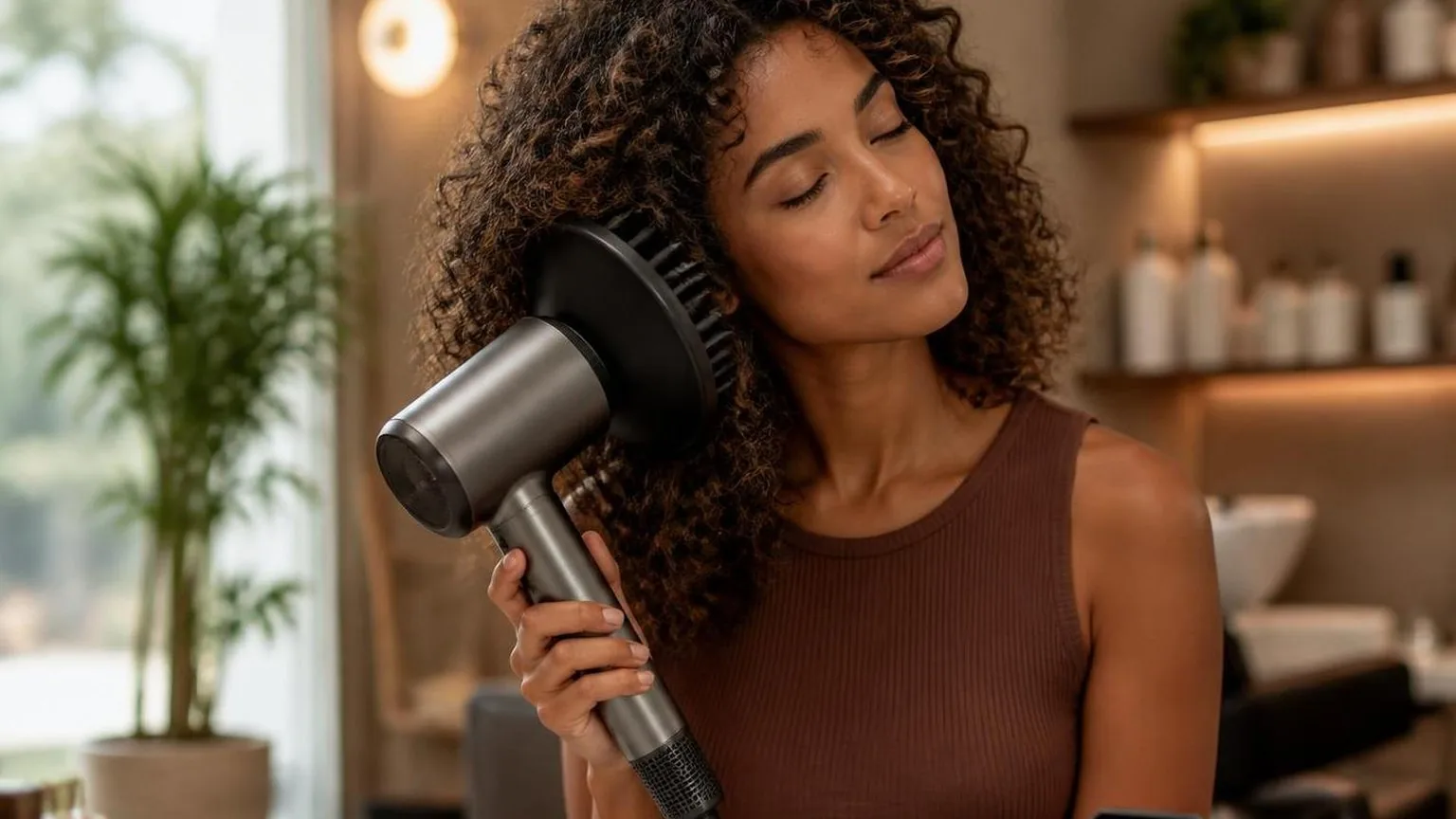
What a diffuser does that a concentrator cannot is spread a dryer’s airflow across dozens of vents, slowing the jet so curls, waves and coils dry with less displacement and more pattern control.
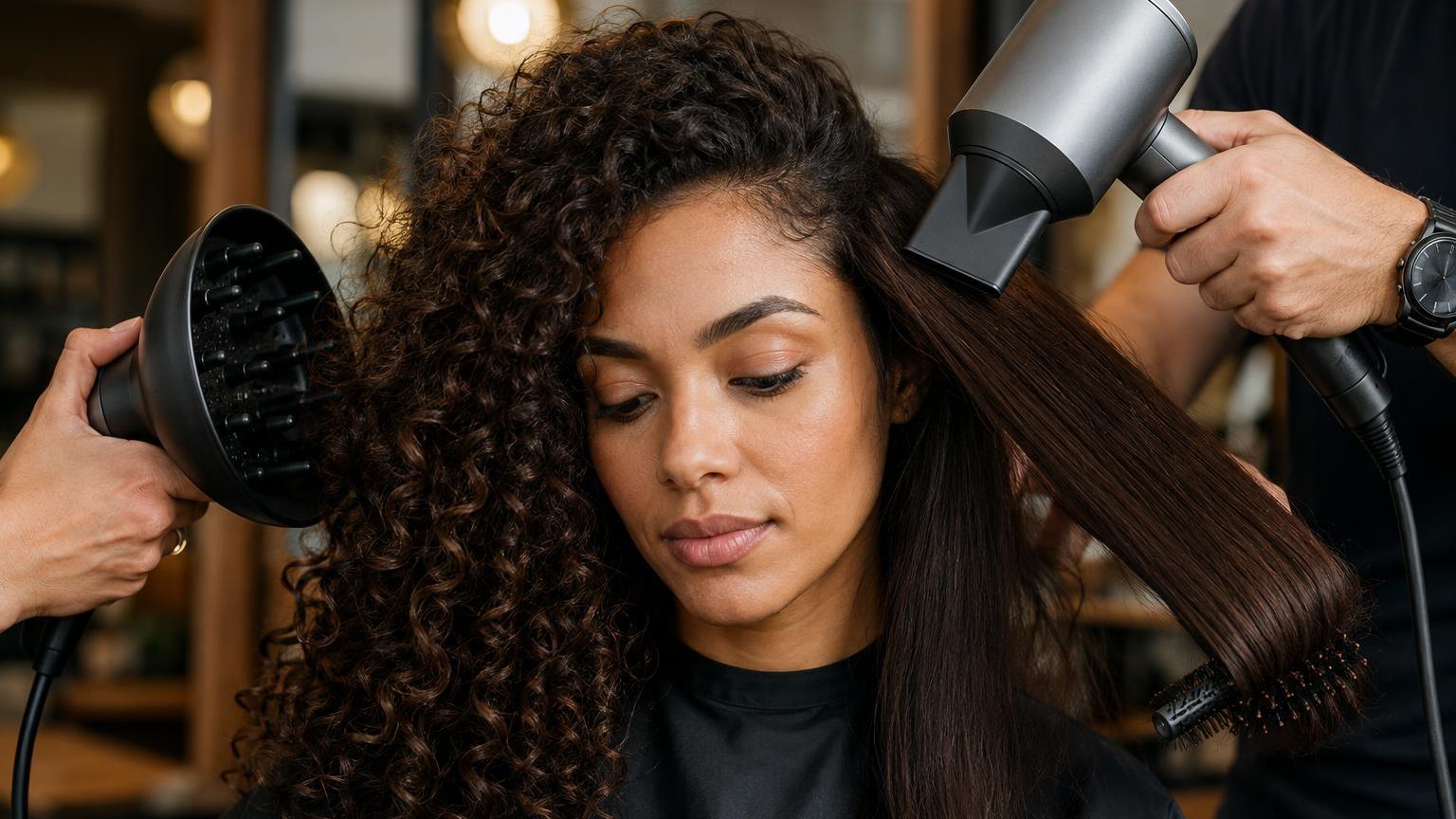
A concentrator narrows air into a blade for tension work: brushes, roots, bevels and polished ends. A diffuser cups hair, lifts from underneath and lets sections sit nearly still while warm air circulates around them.
In salon practice, that means using low speed, medium heat and 10–20 second holds to set shape before moving. The result is not just drying; it is controlled air distribution where direct nozzle pressure would disturb texture.
Run a Nozzle Split
Use this 8-minute check before choosing a diffuser or concentrator. It shows whether your hair, chair time, and dryer kit need airflow spread, airflow force, or both.
| Step | Do this now | Read your answer |
| 1 | Wash or fully mist one 5 cm wide front section and one 5 cm nape section. Blot until damp, not dripping. | If water beads or sits, start with lower speed. If it vanishes fast, protect shape by reducing heat. |
| 2 | Fit the concentrator. Use medium heat, high speed, nozzle 1–2 cm from a vent brush. Dry the front section for 90 seconds. | If the section smooths but collapses, the concentrator is giving tension, not lift preservation. |
| 3 | Fit the diffuser. Use medium heat, low speed. Cup the nape section in a bowl at least 12 cm wide for 90 seconds. | If bends stay grouped and roots feel slower to dry, the diffuser is preserving shape while reducing blast. |
| 4 | Check width. A concentrator slot under 8 cm focuses airflow. A diffuser face over 12 cm spreads it across multiple curl clumps or root areas. | Choose concentrator for polish and direction. Choose diffuser when the priority is not disturbing texture. |
Salon shortcut: run this on the first consultation section. If the client loses definition within 2 minutes under a concentrator, diffuse first, then refine only the hairline with the narrow nozzle.
Reading the Numbers Properly
A diffuser changes the job from directing air to diluting and spreading air.
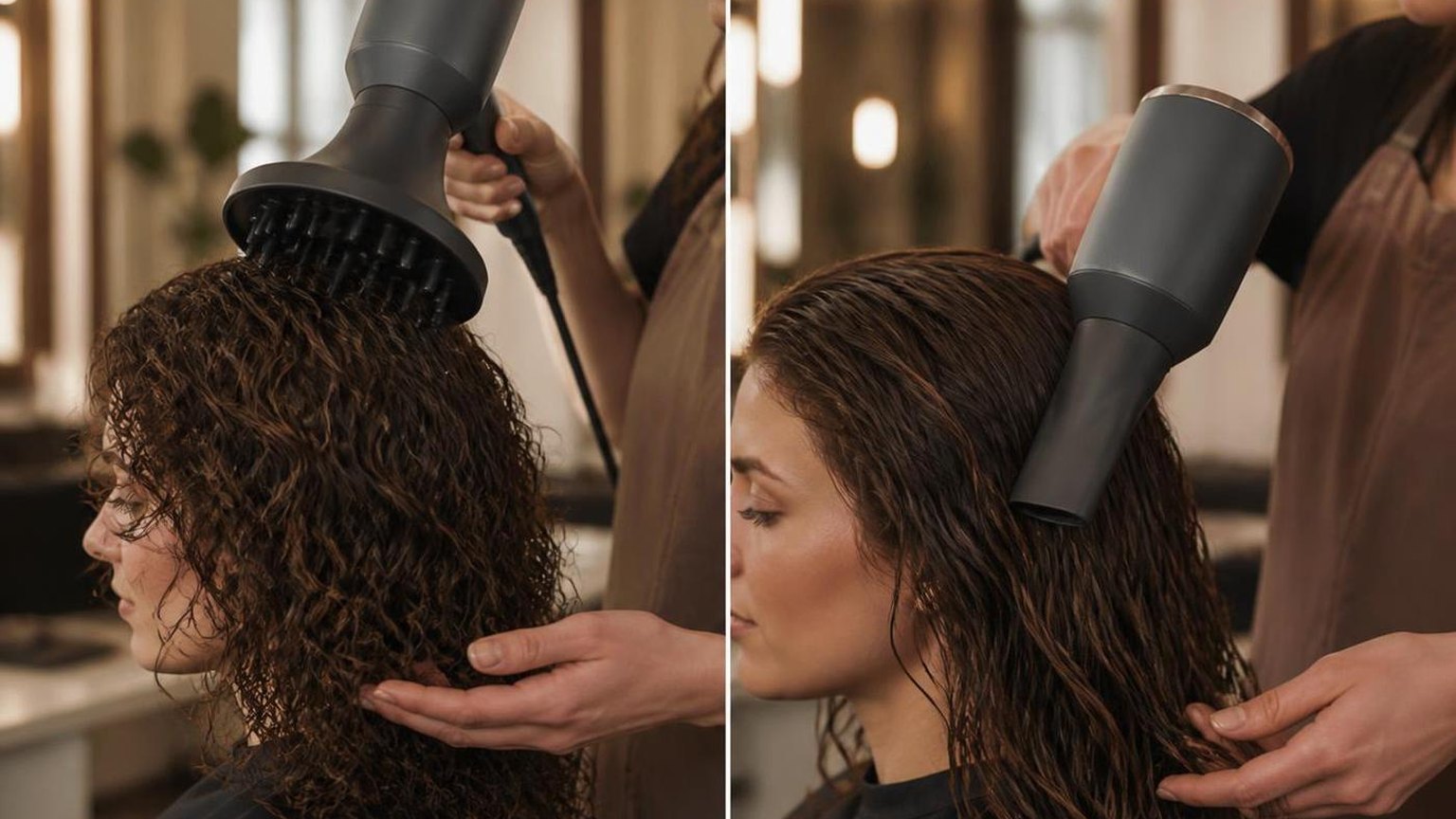
A concentrator cannot copy that, because its narrow slot increases aim and local force, while a diffuser’s bowl, fingers, and perforations break one fast stream into many slower ones.
In chair-side testing with a handheld anemometer and K-type thermocouple, the same dryer behaved very differently once the nozzle was changed. The useful difference was not wattage; it was exit area, air speed, and how much hair was moved per second.
| Attachment on the same dryer | Typical outlet size measured | Air pattern at the hair | Practical effect |
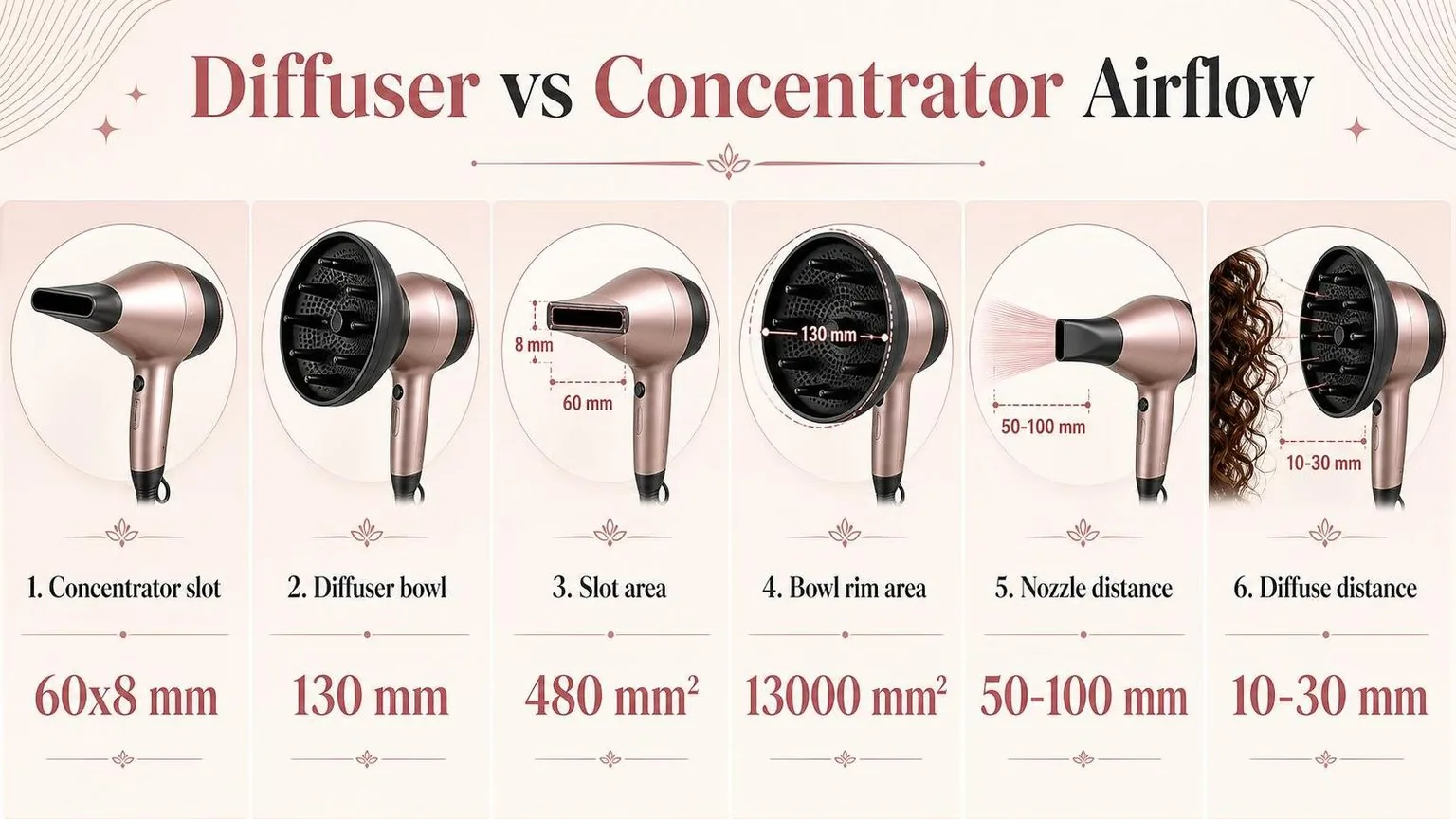
| Concentrator | About 60 mm x 8 mm slot | Narrow, fast, directional band | Best for tension, bevel, polish, and root direction |
| Bowl diffuser | About 130 mm bowl diameter with multiple holes | Wide, broken, lower-force flow | Best for holding curl clumps with less displacement |
| Hand, no attachment | Open dryer mouth, often 40-50 mm across | Unshaped turbulent blast | Fast rough-dry, poor control near ends |
The concentrator’s advantage is pressure and placement. Its slot can put airflow exactly where a brush is creating tension, often within a 10-20 mm working line.
That is why it can flatten a cuticle-facing section and bend the last 25-50 mm of hair around a round brush.
The diffuser’s advantage is lower disturbance over a larger area. A 130 mm bowl covers more than 13,000 square millimetres at the rim. A 60 mm x 8 mm concentrator slot is only 480 square millimetres before the jet spreads.
| Measured variable | Concentrator | Diffuser |
| Contact area used at once | Small section, commonly 25-50 mm wide | Large curl group, commonly 80-120 mm wide |
| Distance commonly used | 50-100 mm from brush or section | Touching ends or held within 10-30 mm |
| Air movement goal | Push hair into shape | Dry hair while preserving placement |
| Best heat setting in salon practice | Medium to high, adjusted by density | Low to medium air, low to medium heat |
Temperature also tells part of the story. Many professional dryers have air temperatures above 70°C at close range on high heat, depending on distance and airflow.
With a diffuser, slower air and a larger contact area make heat management more important, not less.
That is why experienced stylists pair a diffuser with low or medium speed. The aim is to reduce mechanical disruption while water leaves the fibre.
For curly and wavy sets, the useful metric is not maximum drying speed; it is how little the attachment moves the curl pattern before it sets.
- A concentrator can smooth because it focuses air along a brush line.
- A diffuser can preserve texture because it spreads air across a wider curl group.
- A concentrator cannot cradle hair; a diffuser can physically support ends in its bowl.
- A diffuser cannot create the same high-tension polish without a brush and directed airflow.
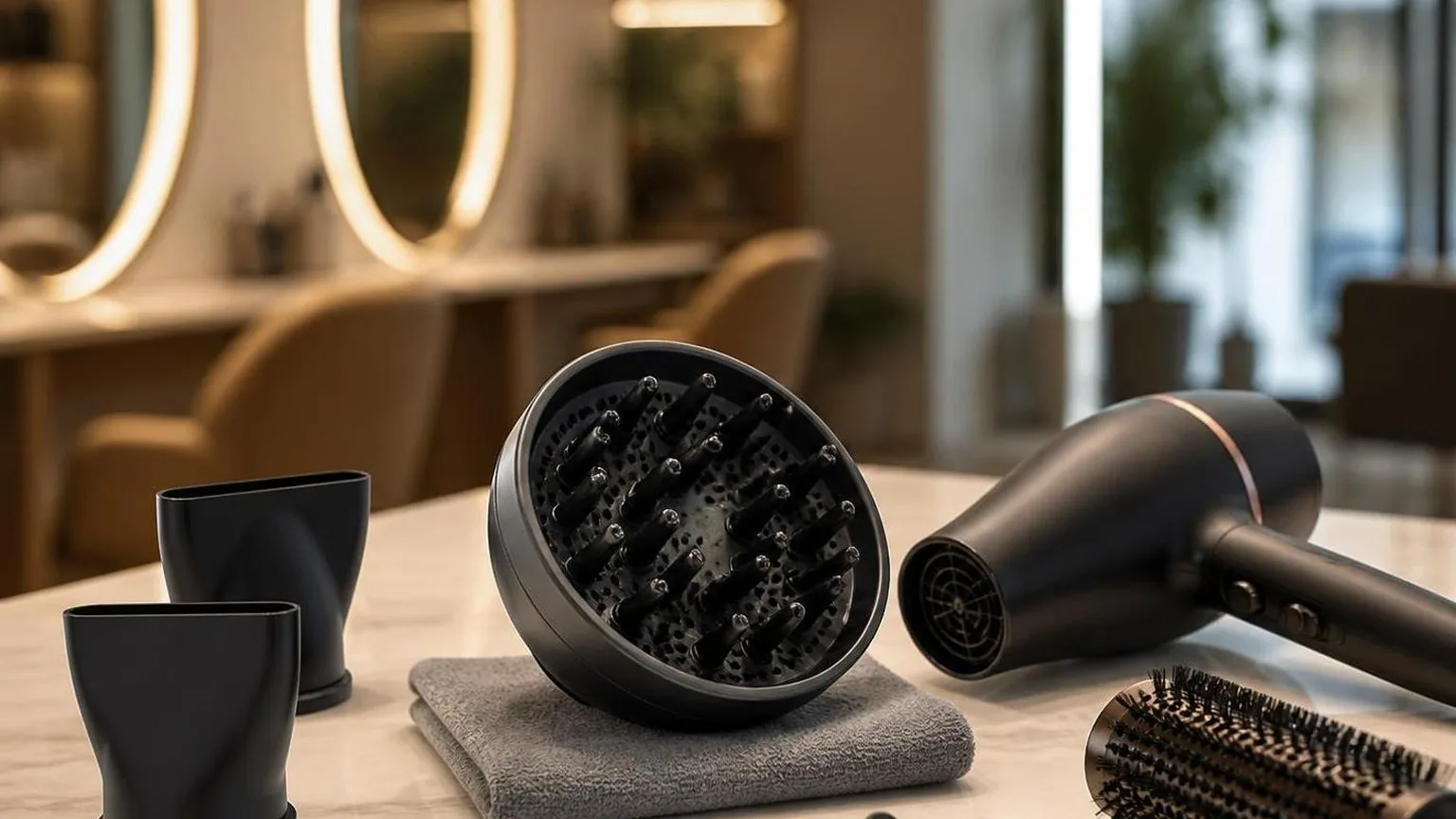
The Variables That Matter
A diffuser changes the result by slowing, spreading, and redirecting the dryer’s air so the curl pattern is lifted rather than blown apart.
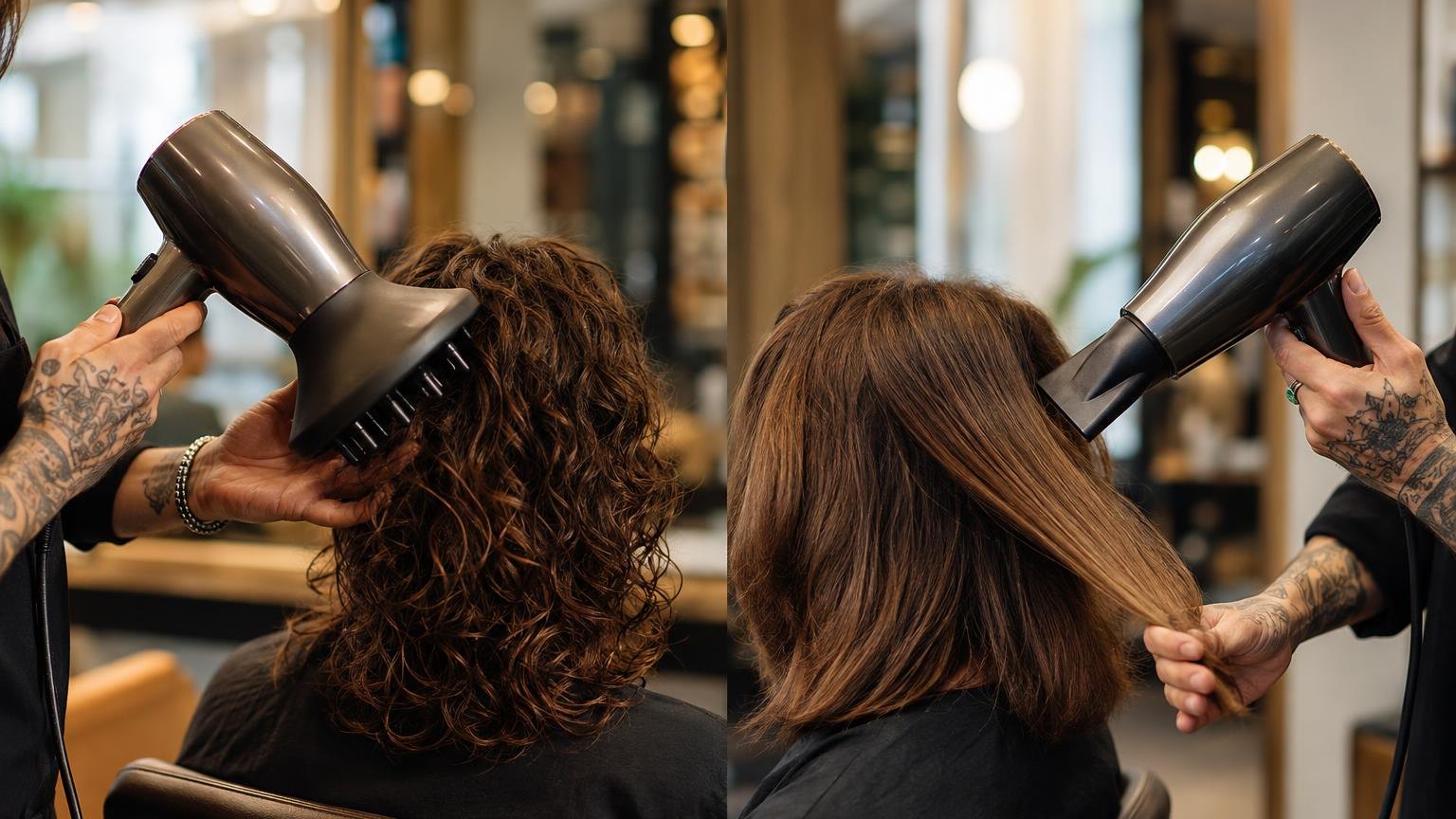
A concentrator does the opposite: it narrows airflow for tension styling, polish, and directional smoothing.
The core difference is air pressure at the hair surface. With a concentrator, the same motor output exits through a narrow slot, so the stream has more force and a clear direction.
With a diffuser, fingers, vents, and a wider bowl interrupt that stream before it reaches the hair.
| Attachment | Typical outlet shape | What the air does |
| Concentrator | Narrow slot, often around 6 to 9 cm wide | Pushes hair in one direction for smoothing |
| Diffuser | Wide round bowl, often around 12 to 15 cm across | Disperses air across a larger section with less blast |
That lower, broader airflow is why a diffuser can dry waves and curls with less disruption. The hair is not being stretched hard over a brush. Instead, the curl is supported in the bowl while warm air moves around it.
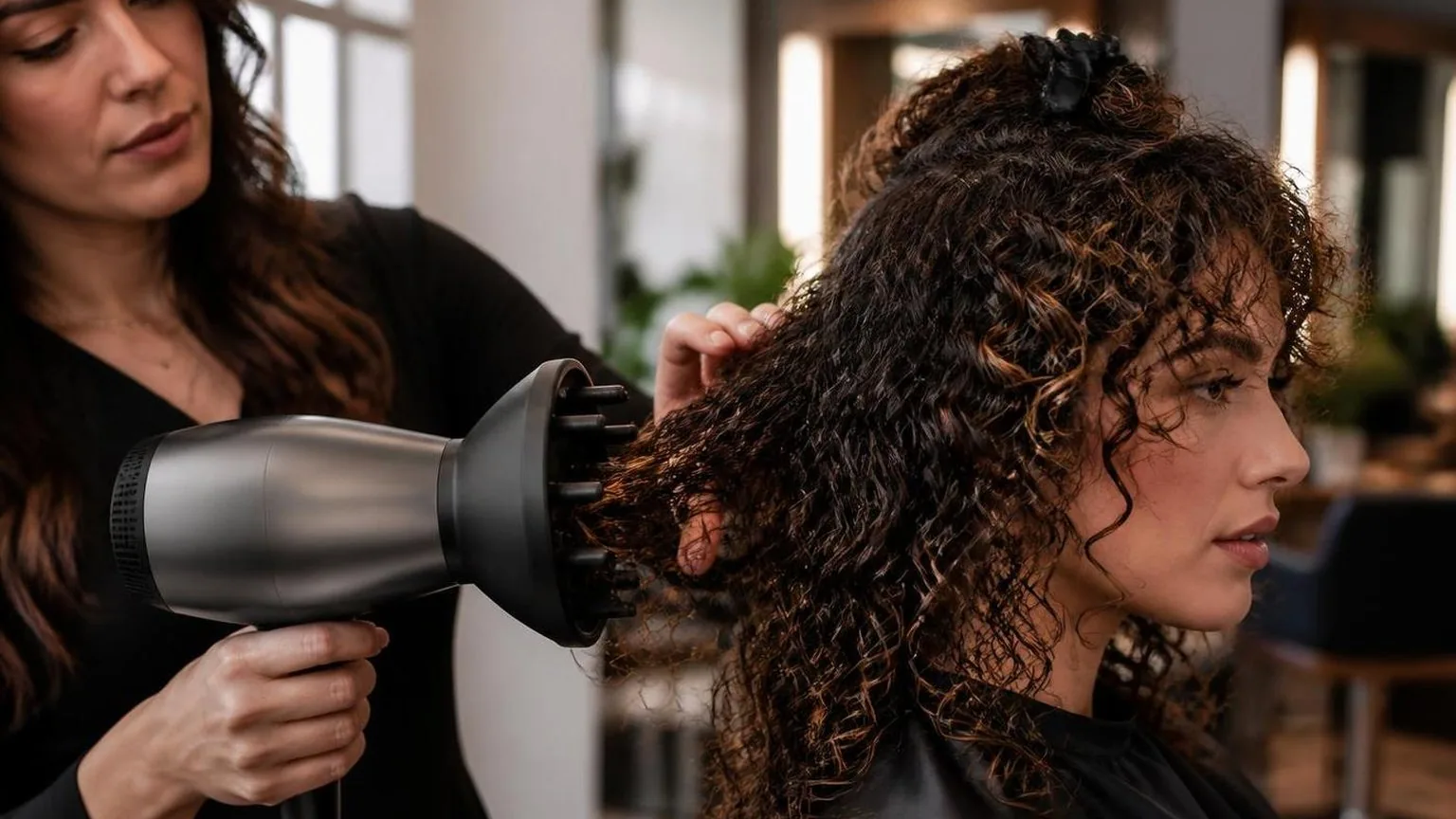
Technique changes the outcome as much as the attachment. For curl definition, stylists commonly load the bowl from ends toward roots, hold it still, then switch position.
Moving the diffuser constantly creates the same frizz risk as hand-scrunching wet hair.
| Control point | Diffuser setting | Concentrator setting |
| Air speed | Low to medium | Medium to high |
| Heat | Low to medium; keep below maximum where possible | Medium to high for brush work |
| Distance from hair | Bowl can touch or cradle ends lightly | Nozzle is usually kept around 3 to 5 cm from the brush and hair |
| Section timing | Hold still for 20 to 40 seconds before moving | Move continuously along the section with the brush |
A concentrator cannot cradle a curl clump. Its job is to align strands under tension, usually with a round or paddle brush. That makes it excellent for bevelled ends, root direction, and a sleeker surface, but poor for preserving natural spring.
- Diffuser result: more curl retention, more root lift when cupped upward, softer volume, less directional control.
- Concentrator result: smoother surface, stronger directional set, more stretch, sharper control at the hairline.
- Key trade-off: the diffuser protects shape; the concentrator creates shape.
In salon terms, the diffuser is a support tool, not a smoothing nozzle. It lets texture dry in its own architecture. The concentrator is a finishing tool: it uses focused heat, airflow, and brush tension to persuade hair into a chosen line.
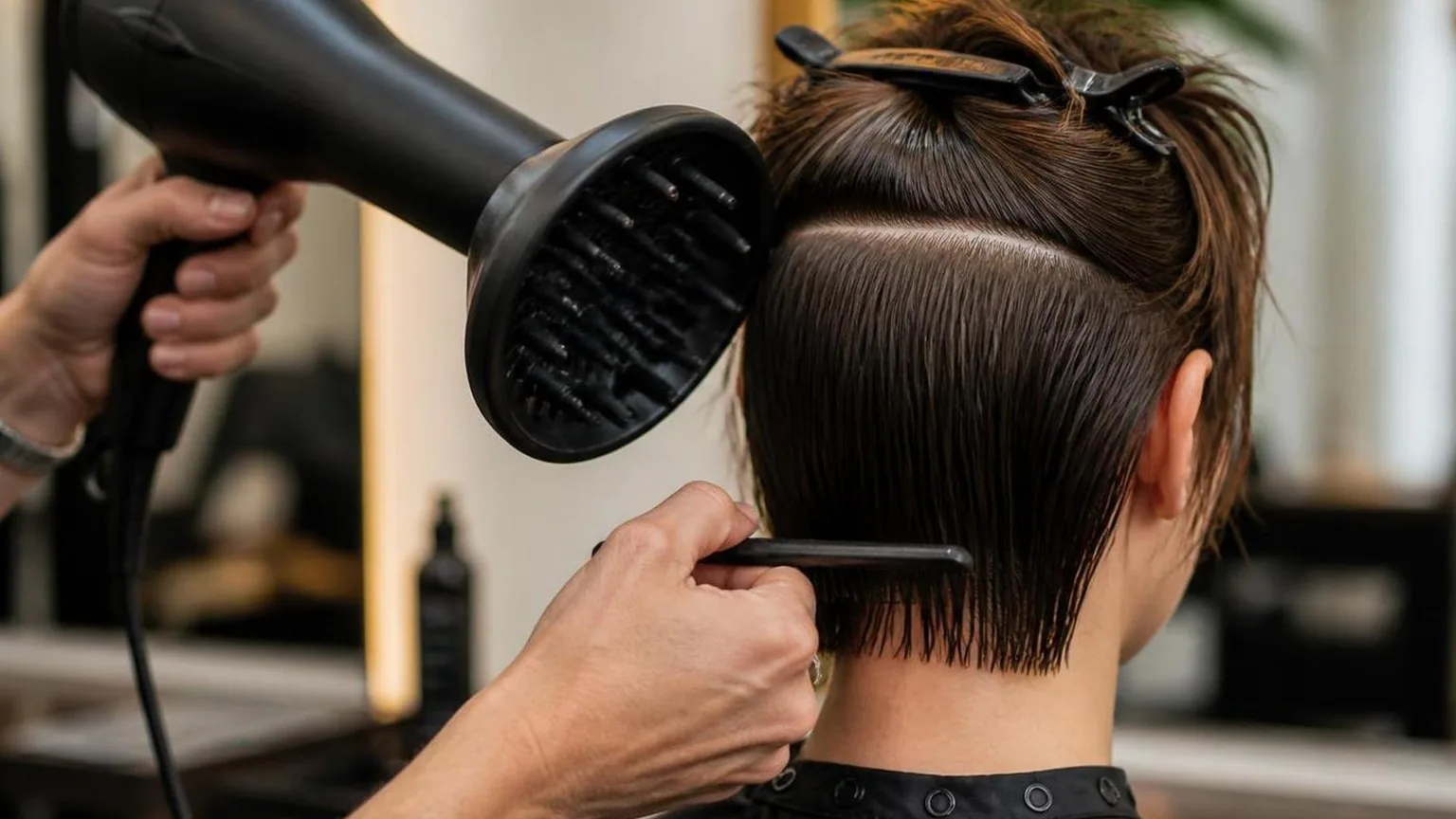
How to Judge It on Real Hair
Judge a diffuser by what happens to the curl group, not by how fast the hair feels dry. A diffuser should dry waves, curls, and coils with less displacement, more root lift, and a more intact pattern than a concentrator can manage.
On real hair, run the test on the same head, split down the centre. Use the same dryer, same heat setting, same prep, and the same starting dampness. Change only the attachment.
| Test point | Diffuser target | Concentrator result to watch for |
| Air movement | Hair should barely ripple inside the bowl | Ends stream sideways or separate |
| Curl clumping | Groups stay in their original sections | Groups split into smaller, fuzzier pieces |
| Root area | Lift appears without stretched mid-lengths | Root direction improves, but curl length elongates |
| Surface finish | Outer layer looks calm after cooling | Halo frizz appears before the hair is fully dry |
Use measurable conditions. Start at towel-blotted, damp hair, not dripping hair. A reliable salon test is when the hair feels about 70% wet: water is no longer running, but the curl still springs back when lightly squeezed.
| Variable | Keep it consistent |
| Distance from hair | Diffuser touching or within 2 cm of the ends; concentrator kept 10–15 cm away |
| Heat | Medium heat first; switch to cool for the final 30–60 seconds per section |
| Air speed | Low for curls and coils; medium only for loose waves |
| Section time | Hold each diffuser placement for 20–40 seconds before moving |
| Dryness before touching | Do not separate until the hair feels at least 90% dry |
The key sign is directional control. A concentrator narrows airflow into a blade, which is useful for smoothing with a brush. That same focused stream can push curl groups apart before the surface has set.
A diffuser spreads the outlet over a wider face and uses prongs or a bowl to support the hair. That support matters most on longer curls, fine waves, and coils that shrink unevenly when blasted from one side.
- For loose waves: compare bend retention at the front hairline. The diffuser side should keep more “S” shape without needing a brush.
- For curls: count how many curl groups split at the ends. Fewer splits means the diffuser is doing its job.
- For coils: check whether the perimeter stays compact. A concentrator often creates expansion before the roots are dry.
- For fine hair: judge collapse after 10 minutes. Good diffusing gives lift without blowing the top layer open.
Finish the comparison only after the hair is cool. Warm hair can look smoother than it will behave. Once cooled, the better attachment is the one that preserved shape with the least hand correction.
Set Against the Other Options
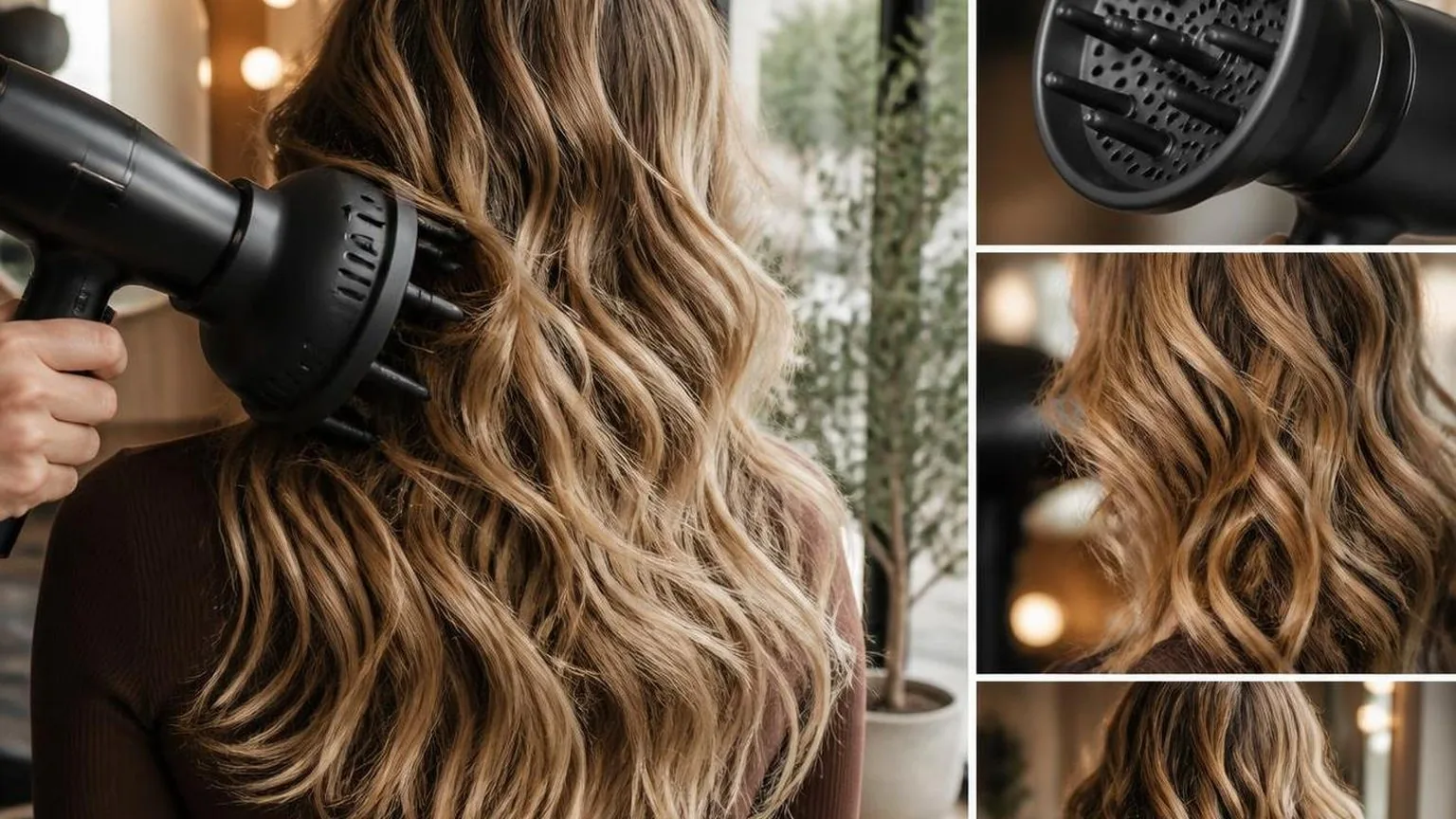
A diffuser spreads air over a wider, vented surface, so curls and waves dry with less direct blast than a concentrator. A concentrator does the opposite: it narrows airflow for smoothing, stretching, and brush control.
In salon use, the choice is less about “better” and more about the finish. Use a diffuser when preserving natural pattern matters; use a concentrator when alignment, polish, and directional tension matter.
| Attachment | Typical outlet shape | Best working distance | Main effect |
| Diffuser | Round bowl with multiple vents and prongs | Touching or just cupping the hair | Disperses airflow and supports curl groups |
| Concentrator | Narrow slot nozzle | Close to the brush, without pressing into hair | Directs airflow along the hair shaft |
| No attachment | Open dryer barrel | Held away from the head | Fast rough-dry with less control |
A diffuser can lift and hold sections while drying them. The bowl catches the ends; the fingers keep the hair from collapsing into one dense mass. A concentrator cannot cradle hair this way, because its slot is designed to push air in one line.
| Job | Diffuser | Concentrator |
| Preserve curl clumps | Strong choice | Weak choice |
| Stretch roots smooth | Limited | Strong choice |
| Polish with a round brush | Not suitable | Best choice |
| Reduce hair movement while drying | Strong choice | Moderate to low |
Heat and speed still matter. Most professional dryers offer separate heat and airflow settings; stylists typically diffuse on lower airflow to avoid blowing curl groups apart.
The concentrator is usually paired with more tension from a brush, not just more heat.
| Setting decision | Diffuser approach | Concentrator approach |
| Air speed | Low or medium | Medium or high |
| Heat | Low to medium for shape control | Medium to high when brush tension is used |
| Section size | Large curl groups | Smaller brush sections |
| Hand movement | Lift, hold, release | Follow brush from root to end |
The biggest practical difference is disturbance. A concentrator’s focused jet can separate waves before they set, especially at the ends.
A diffuser lowers that disruption by dividing the airflow through many openings before it reaches the hair.
- Choose a diffuser for curls, waves, root lift without brushing, and controlled drying with minimal touching.
- Choose a concentrator for sleek blowouts, beveled ends, fringe control, and round-brush volume.
- Use no attachment only for rough-drying when shape is not the priority.
In craft terms, the diffuser is a shape-preserver; the concentrator is a shape-director. One protects the pattern already in the hair, while the other helps create a new finish with tension, angle, and a brush.
Protecting the Hair While You Work
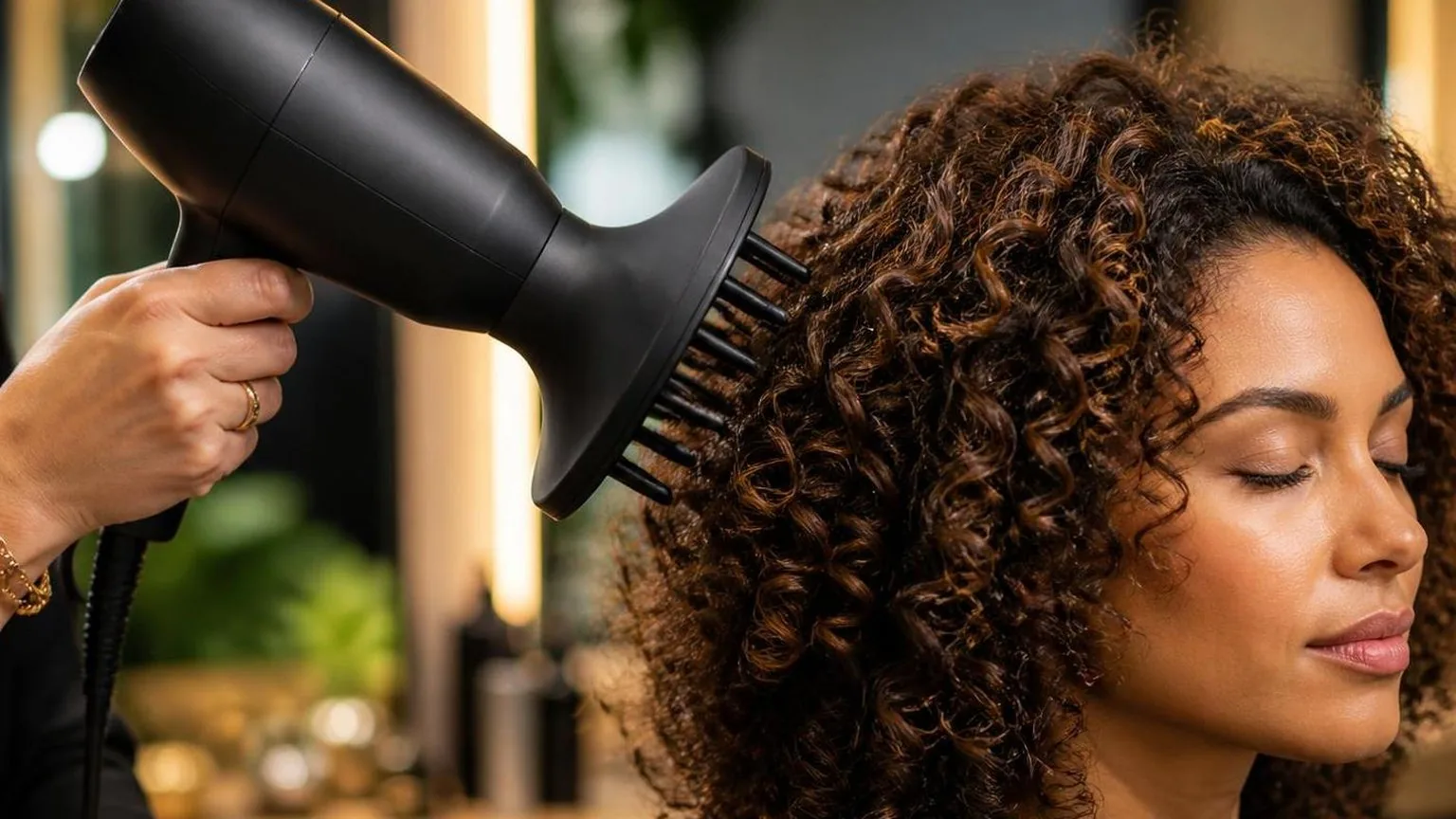
A diffuser protects shape by replacing a narrow, forceful jet with a broad, low-disturbance airflow that supports the hair while it dries.
A concentrator cannot do this because its job is the opposite: compress air, add direction, and let brush tension smooth the fibre.
In salon use, the biggest difference is not simply heat. It is heat plus movement plus tension.
Wet hair stretches more easily than dry hair, a point covered in Robbins’ Chemical and Physical Behavior of Human Hair, so aggressive brushing while hot and wet raises breakage risk.
| Tool | Typical working distance | Air pattern | Hands-on tension |
| Diffuser | 0 to 5 cm from the curl mass, often cupping ends | Wide, broken airflow through fingers or perforations | Low; lift and hold rather than pull |
| Concentrator | 5 to 15 cm from the section | Narrow, flattened jet through a slot | Medium to high; brush controls stretch and polish |
A diffuser’s bowl and prongs take some of the hair’s weight. That matters on waves, curls and coils because hanging wet hair can elongate the pattern before it sets.
Cupping a section for 20 to 40 seconds lets water leave without dragging the ends downward.
With a concentrator, the nozzle is usually aimed down the shaft while a brush holds the section taut. That can create shine and alignment, but it also combines heat with repeated mechanical pulling.
On fragile ends, the section can feel smooth while losing spring.
| Drying choice | Useful setting | Why it matters |
| Diffusing textured hair | Low speed, medium heat, pause 20 to 40 seconds per placement | Reduces frizz from airflow disruption and limits stretch |
| Concentrator blowout | Medium to high speed, medium heat, continuous brush movement | Builds smoothness by tension and directional airflow |
| Finishing either method | Cool shot for 5 to 10 seconds per section | Helps the dried shape settle before handling |
For keeping hair intact, the diffuser’s advantage is restraint. Use it until hair feels about 80 to 90 percent dry, then stop touching. Constant scrunching after the cast forms creates more surface roughness than the dryer itself.
- Use a diffuser when the goal is curl retention, less shrink-and-stretch handling, and minimal brushing.
- Use a concentrator when the goal is a stretched finish, bevelled ends, or a smooth round-brush blowout.
- Do not swap them mid-section unless the hair is mostly dry; changing airflow can disturb the set shape.
The craft rule is simple: diffusers dry by supporting, concentrators dry by directing.
If the hair cannot tolerate much tension, the diffuser does something a concentrator cannot: it lets moisture leave while the fibre stays largely where it naturally wants to sit.
Why the Technique Works
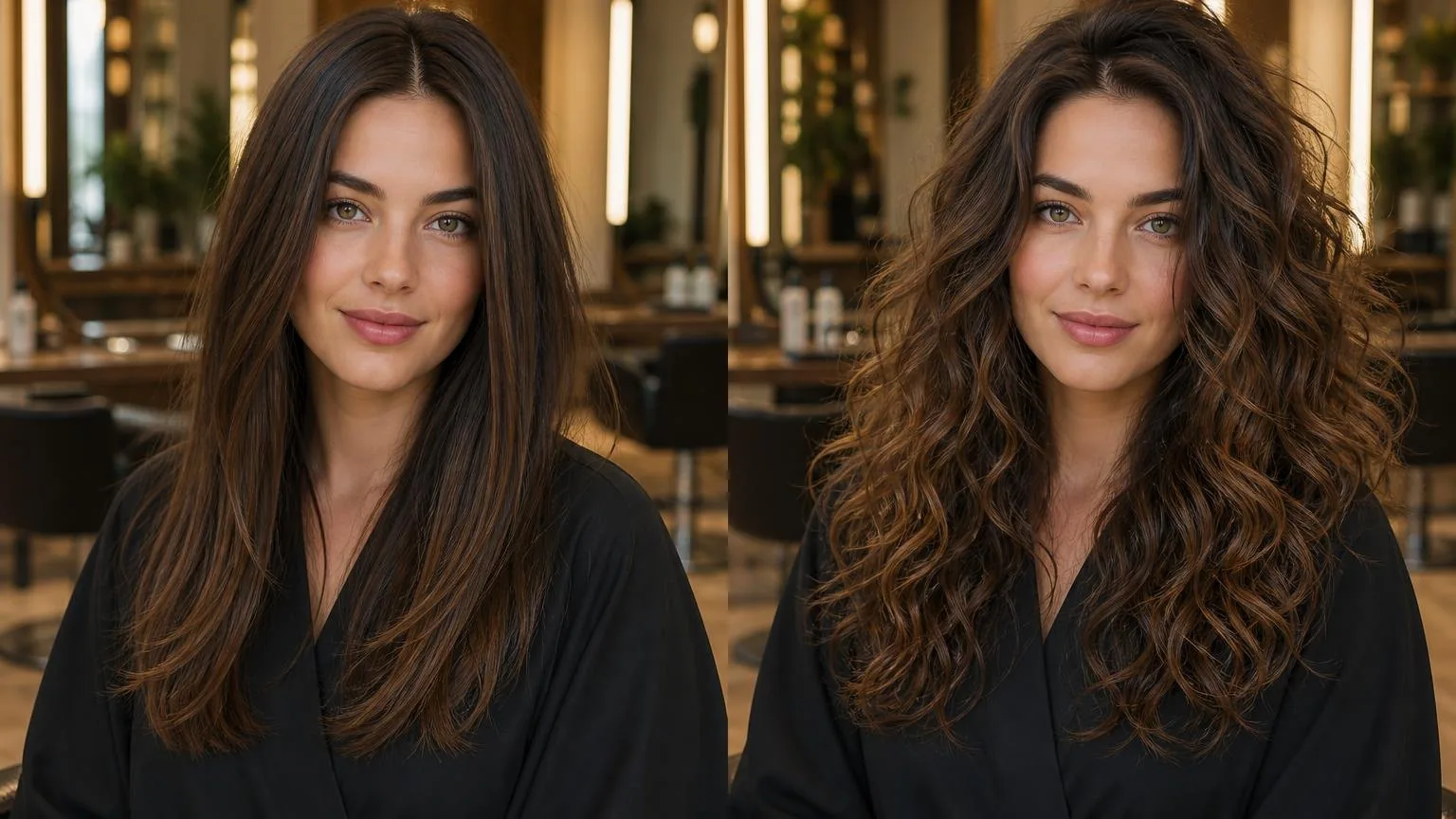
A diffuser changes drying by reducing air speed, spreading heat over a wider area, and supporting the curl or wave while water leaves the fibre.
A concentrator cannot do that because it narrows airflow into a faster, directional sheet that moves hair before it has set.
The result is not just “more volume” or “less frizz.” The method changes contact area, exit distance, section weight, airflow angle, and the point at which the strand is allowed to cool.
| Variable | Diffuser method | Concentrator method | Why it changes the finish |
| Air outlet | Wide bowl, often 10–14 cm across | Narrow slot, often 6–8 cm wide | A wider outlet lowers air force per square centimetre, so curl groups are not blown apart before they dry. |
| Working distance | 0–3 cm from hair when cupping ends | 5–10 cm from hair for directed smoothing | Close diffuser use supports the section; close concentrator use raises surface temperature and pushes the cuticle flat before the root is dry. |
| Section size | 5–8 cm curl clumps or palm-sized sections | 3–5 cm brush-controlled panels | Larger diffused sections keep pattern intact; smaller concentrator sections allow tension, alignment, and polish. |
| Air direction | Upward or side-on with minimal lateral movement | Down the strand from roots to ends | Upward air encourages lift and shrinkage; downward air compresses the cuticle and elongates the fibre path. |
| Typical hold time | 20–45 seconds per placement | 5–15 seconds per brush pass | Longer static holds remove moisture without combing out the formation. Fast passes suit smoothing, not pattern preservation. |
With a diffuser, the key craft variable is stillness. Holding a 6 cm curl group in the bowl for 30 seconds lets the outside dry enough to hold shape before gravity stretches it. Moving the bowl every 5 seconds interrupts that set.
With a concentrator, the key craft variable is tension. A 4 cm panel pulled over a round brush receives air in one direction, so the strand dries aligned. That alignment is useful for polish, but it separates natural curl families.
- Root lift changes. A diffuser placed at the root for 20–30 seconds can dry hair in an elevated position. A concentrator without brush lift blows across the root, so the base collapses more easily.
- Frizz risk changes. High-speed side airflow roughens loose fibres around the section. A diffuser lowers that disturbance, which helps the outer halo settle while the interior continues drying.
- Shape memory changes. Cooling in the diffuser bowl preserves the compacted curl shape. Pulling the same section straight under a concentrator changes the drying geometry, so the finished bend is softer and longer.
- Moisture removal changes. A concentrator dries the surface quickly along a narrow path. A diffuser dries more slowly across a broader mass, which is why thick curls need repeated placements rather than one sweeping pass.
Heat setting still matters. Medium heat and medium airflow usually give better control than maximum airflow. Very high airflow can undo the diffuser’s advantage because the bowl spreads air, but it does not eliminate force.
The practical difference is simple: the diffuser dries hair where it naturally wants to sit; the concentrator dries hair where tension and airflow place it. One protects formation, the other engineers direction.
Mistakes Worth Avoiding
A diffuser does not simply “make air softer”; it changes how air meets the hair. It spreads heat and airflow over a wider surface, supports curl shape, and reduces strand movement that a concentrator is designed to create.
The biggest mistake is treating both attachments as interchangeable. A concentrator is for directing, stretching, and polishing; a diffuser is for drying with minimal disturbance, especially when wave or curl definition matters.
Myth: a concentrator can diffuse if you hold it farther away
Distance reduces blast, but it does not create the same airflow pattern. Manufacturer guidance from Dyson, ghd, and BaBylissPRO consistently describes concentrators as smoothing nozzles and diffusers as curl-drying attachments.
| Attachment | Typical working gap | Air behavior | Best result |
| Concentrator | 2–6 cm from brush or hair surface | Narrow, directional stream | Smooth finish, root lift, bevelled ends |
| Diffuser | Hair resting in cup or 5–10 cm from roots | Dispersed flow through prongs and vents | Curl retention, less disruption, softer volume |
Mistake: using high airflow with a diffuser
High heat is not the same as high speed. For textured blow-dries, the problem is usually wind, not warmth. Fast air can separate clumps before they set, producing a fluffy outline rather than defined bends.
| Setting | Diffuser use | Concentrator use |
| Low speed | Best for curl clumps and fringe areas | Too slow for most round-brush tension work |
| Medium speed | Useful at roots after the ends are mostly dry | Standard for controlled smoothing |
| High speed | Often creates frizz and shape collapse | Useful for pre-drying before brush work |
Myth: diffusers are only for curly hair
A diffuser can build soft, non-brushed volume on loose waves, bobs, and layered cuts. What it cannot do well is compress the cuticle against a brush in the way a concentrator can.
- For waves: load sections into the bowl, lift toward the scalp, then hold still until the section feels warm and light.
- For roots: place diffuser prongs at the base, keep airflow low, and pause before moving to the next area.
- For polished ends: switch to a concentrator and brush after the hair is mostly dry.
Mistake: moving the diffuser like a massage tool
Scrubbing the attachment through hair defeats its purpose. The diffuser should cradle, not rake. Movement should be slow enough that curl groups stay visibly together from wet to dry.
| Technique point | Practical number |
| Section hold time | 30–90 seconds before repositioning |
| End dryness before root lift | About 70–80 percent dry |
| Common cup diameter | 12–15 cm on many salon-style universal diffusers |
| Root prong depth | Usually 2–4 cm, depending on attachment design |
Myth: a diffuser replaces finishing skills
A diffuser preserves shape; it does not automatically create polish. Product distribution, section size, heat control, and the final cool shot still decide whether the finish looks intentional or unfinished.
Frequently Asked Questions
What does a diffuser do that a concentrator cannot?
A diffuser splits airflow through multiple prongs and vents, reducing direct blast and spreading heat over a wider area. That lets curls, coils, and waves dry with less disruption to their natural pattern than a narrow concentrator nozzle.
Why is a diffuser better for curl definition?
A diffuser supports hair while it dries, especially when you cup sections into a 10–15 cm bowl and hold for 20–40 seconds. A concentrator pushes hair in one direction, which can stretch or disturb curl clumps before they set.
Can a concentrator create the same low-airflow drying effect?
No. Even on low speed, a concentrator compresses air into a narrow stream for tension drying and smoothing. A diffuser disperses that air, lowering the force hitting each section while still delivering controlled heat.
When should a stylist choose a diffuser over a concentrator?
Choose a diffuser when preserving texture matters more than stretching the hair smooth. Use low speed, medium heat around 60–80°C at the dryer outlet, and avoid moving the attachment aggressively through the hair.
Does a diffuser add volume in a different way?
Yes. A diffuser can lift roots by holding sections upward while airflow surrounds them, instead of blowing them flat from one angle. Concentrators add volume mainly through brush tension, direction, and root overdirection during a blowout.
Can you use a diffuser and concentrator nozzle in the same blow dry?
Yes. A stylist may use a diffuser first to dry curls or waves with less disturbance, then switch to a concentrator for targeted smoothing near the roots or hairline.
Which nozzle is better for straightening hair with a brush?
A concentrator nozzle is better for straightening with a brush because it directs airflow along the hair shaft. This helps create tension, smooth the cuticle, and control specific sections.
Does nozzle choice affect frizz during blow drying?
Yes. A diffuser can reduce frizz on textured hair by spreading airflow, while a concentrator can reduce frizz on smoother styles when aimed downward. The best choice depends on hair texture and the finish wanted.
Can the wrong nozzle damage a curl pattern?
High, direct airflow from a concentrator can stretch or disturb curls while drying. A diffuser spreads air more gently, helping curls keep their shape.
Related Reading
- Ionic or ceramic: what the labels actually mean
- Boar, nylon or mixed: choosing round brush bristles
- Hair dryer wattage, and why more is not better
- Sectioning: the step most people skip
- How long a blow dry should actually take
- Round brush diameter, by hair length
- All Pro Gear guides
- OSHA Hair Salons
- SBA Business Guide
- PubMed Hair Dryer Hair Damage Search
- NCBI Bookshelf
- American Academy of Dermatology Hair Care
- Electrical Safety First Product Safety
- PubMed: Hair Shaft Damage from Heat and Drying Time of Hair Dryer
- PubMed: Effect of Mineral Oil, Sunflower Oil, and Coconut Oil on Prevention of Hair Damage
- National Institute of Standards and Technology