
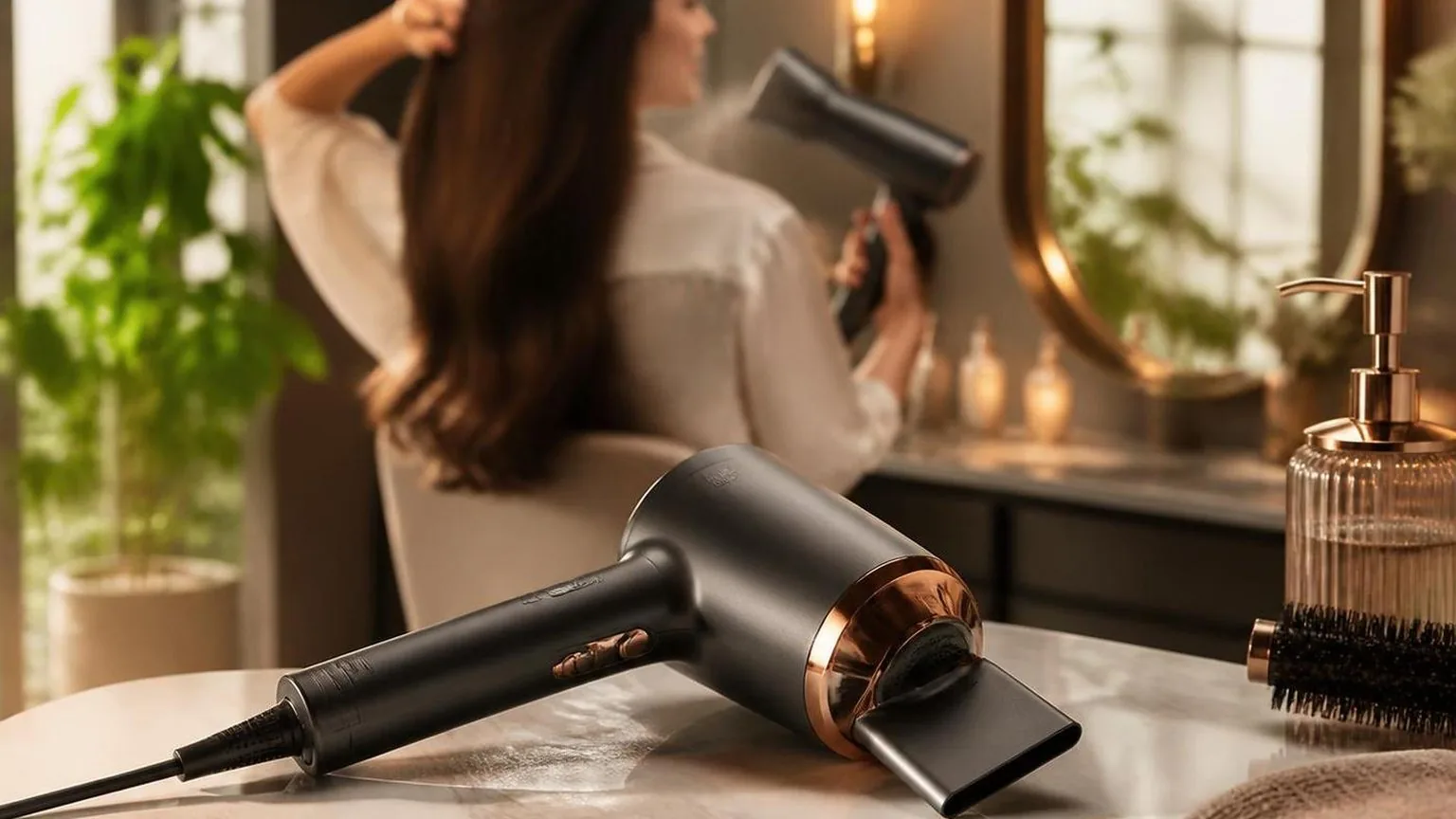
Hair dryer wattage, and why more is not better: 1,600–1,875 watts is usually enough because airflow, heat control, and nozzle discipline dry hair faster than raw electrical draw.
In the chair, we judge performance by exit temperature, air speed, and section size: a 6–8 mm concentrator, 5 cm from the brush, on 2–3 cm sections, often beats a hotter, louder dryer.
This guide explains the wattage ceiling, when lower power protects finish, and what specifications to compare.
Find Your Dryer Ceiling
Use this quick chair-side check before buying a higher-watt dryer or turning the heat up. The aim is to find the lowest wattage and heat setting that still gives clean tension, steady airflow, and a polished finish.
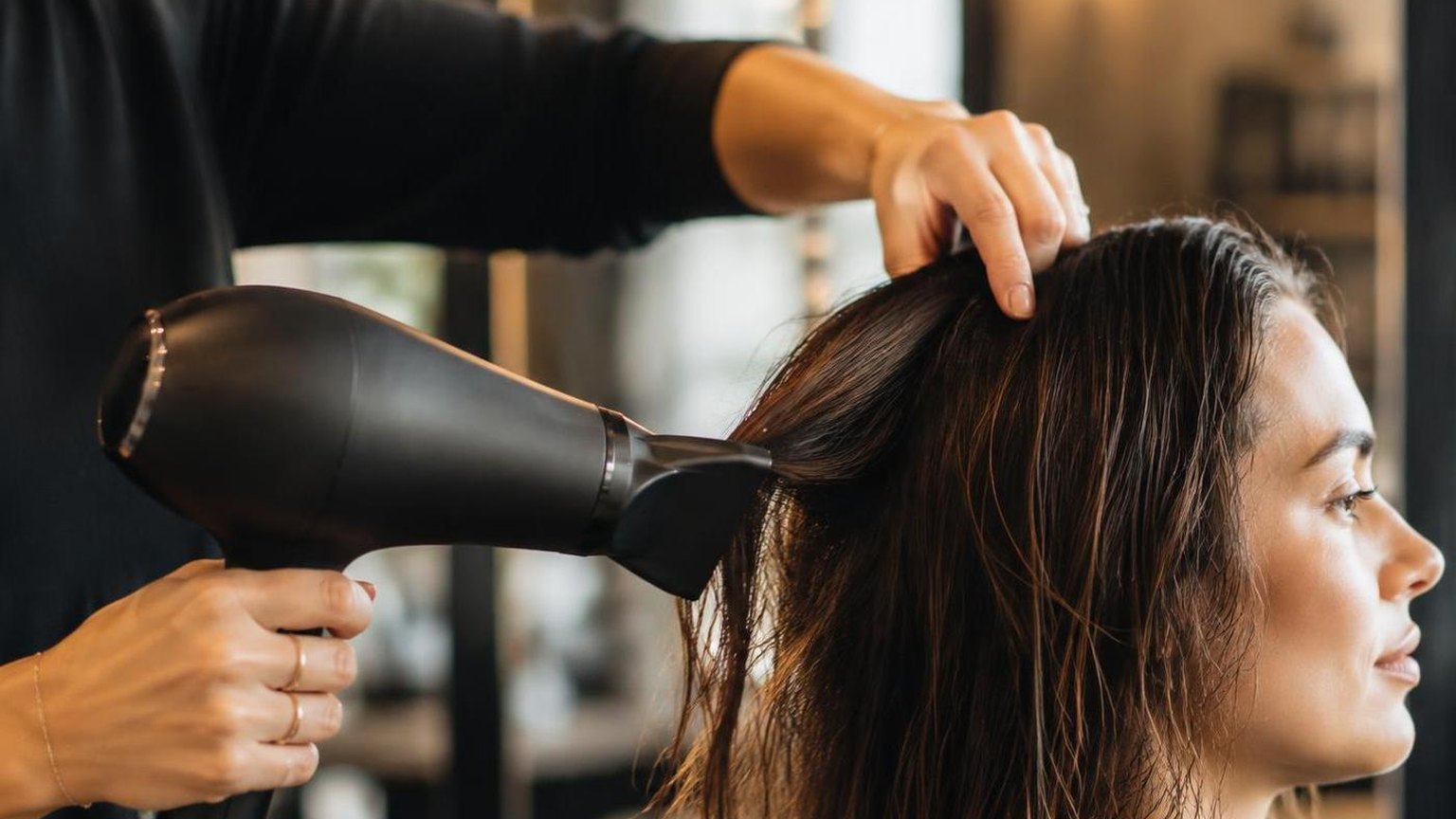
- Start in the sweet spot. Use a 1,600–1,875 watt dryer with a 6–8 mm concentrator. Set medium heat and high air, then keep the nozzle about 5 cm from the brush.
- Section for control. Take 2–3 cm sections. If the section is wider than the brush can tension cleanly, reduce the section before increasing heat or wattage.
- Time one section. A normal section should move from damp to shaped in about 45–90 seconds. If it takes much longer, check airflow, filter, nozzle fit, and section size before blaming wattage.
- Check the finish. If the hair feels hot, rough, or puffy, drop the heat one level and keep air speed high. Move the dryer continuously, 6–8 inches from loose hair and closer only when working on the brush.
- Set your salon rule. If a 1,875 watt dryer on controlled sections already gives speed and finish, more wattage is not your upgrade. Look for better balance, nozzle grip, heat steps, filter access, and quieter airflow.
Your answer is the lowest setting that dries each section on time without overheating the hair or tiring the stylist. That is the working wattage, not the biggest number on the box.
Reading the Numbers Properly
Wattage tells you how much electrical power a dryer can draw, not how well it dries hair. In practice, airflow, heat control, nozzle shape, motor design, and distance from the hair matter more than chasing the highest watt number.
A higher-watt dryer can heat faster, but that does not automatically mean faster, smoother work. If the airflow is weak or poorly directed, extra heat simply raises surface temperature without moving moisture efficiently.
| Typical label wattage | What it usually indicates | Trade takeaway |
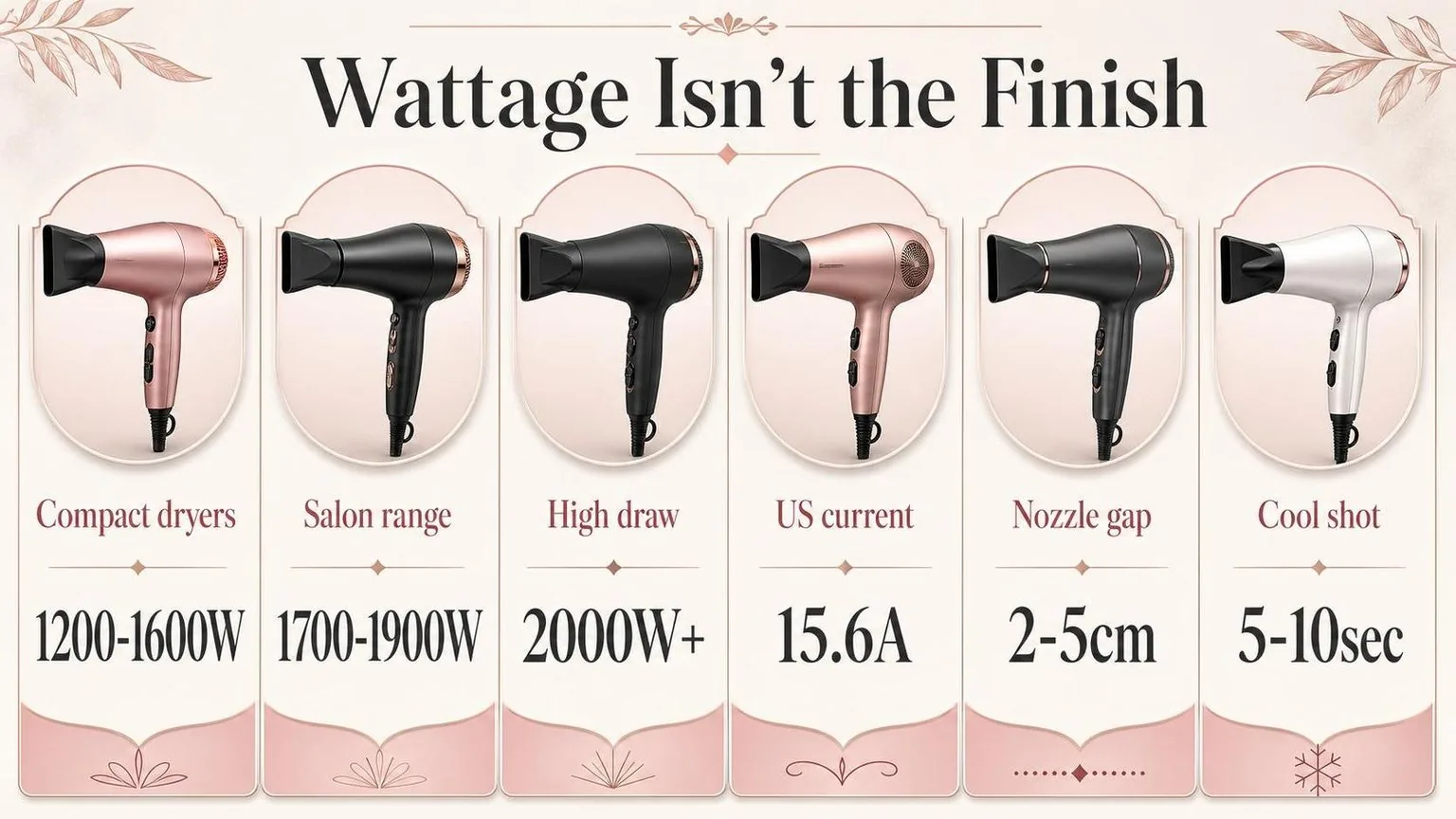
| 1,200 W to 1,600 W | Common compact, travel, or light-duty dryers | Useful for fine hair, short cuts, and low-tension work |
| 1,700 W to 1,900 W | Common professional salon range | Often enough power for repeat blowouts when airflow is well engineered |
| 2,000 W and above | Higher electrical draw and potentially stronger heat output | Not automatically faster; control and airflow decide the finish |
Ohm’s law basics explain the label: watts are volts multiplied by amps. On a standard US circuit, a dryer drawing near the household limit leaves little headroom for other tools on the same circuit.
| Electrical point | Number | Why it matters at the station |
| US nominal outlet voltage | 120 V | Used to estimate current draw from wattage |
| 1,875 W dryer current | About 15.6 A | Can approach the practical limit of many branch circuits |
| UK nominal outlet voltage | 230 V | Same wattage draws fewer amps than on US voltage |
Heat should be selected for hair response, not maxed by default. For a professional finish, stylists usually lean on controlled airflow, section tension, and a concentrator nozzle before increasing temperature.
| Working variable | Practical number | Effect on the blowout |
| Nozzle gap from hair | About 2 cm to 5 cm | Directs airflow without pressing hot plastic onto the strand |
| Concentrator width | About 6 mm to 10 mm slot opening | Narrows air for smoother cuticle direction and brush control |
| Cool-shot dwell | 5 seconds to 10 seconds per section | Helps set shape after heat and tension |
The US Consumer Product Safety Commission focuses on dryer safety features and household electrical risk, not styling performance.
UL-style product testing also evaluates safety under defined conditions, not whether a higher wattage gives a better blowout.
- For fine hair: lower heat with steady airflow is usually more useful than a high-watt blast.
- For dense hair: higher airflow and a narrow concentrator often save more time than extra heat alone.
- For salon use: balance wattage with circuit capacity, cord management, weight, filter access, and nozzle control.
The number on the handle is only one specification. A well-balanced 1,800 W dryer with strong airflow, stable heat, and a precise nozzle can outperform a hotter, heavier dryer that scatters air and overloads the station.
What Moves the Outcome
Wattage changes how much electrical power a dryer can draw, not how polished the finish will be. The result changes more with airflow, heat control, nozzle discipline, section size, and how long the hair stays wet under tension.
A higher-watt dryer can recover heat faster after cool air enters the intake, but that is only useful if the motor, heater, and nozzle are balanced.
In salon use, control beats brute force because cuticle alignment depends on directed air and consistent brush tension.
| Factor | What it changes | Practical salon target |
| Wattage | Power available to motor and heater | Professional dryers commonly sit around the mid to high power range, but wattage alone does not prove speed |
| Air speed | Water removal and root lift | Fast, concentrated airflow dries cleaner than wide, weak airflow |
| Temperature | Softening and reshaping the fibre while brushing | Use the lowest heat that still lets the section dry under tension |
| Nozzle width | Air concentration and polish | Narrow concentrators give more control on smoothing work |
| Section size | Drying time and finish consistency | Smaller sections dry more evenly and need fewer repeated passes |
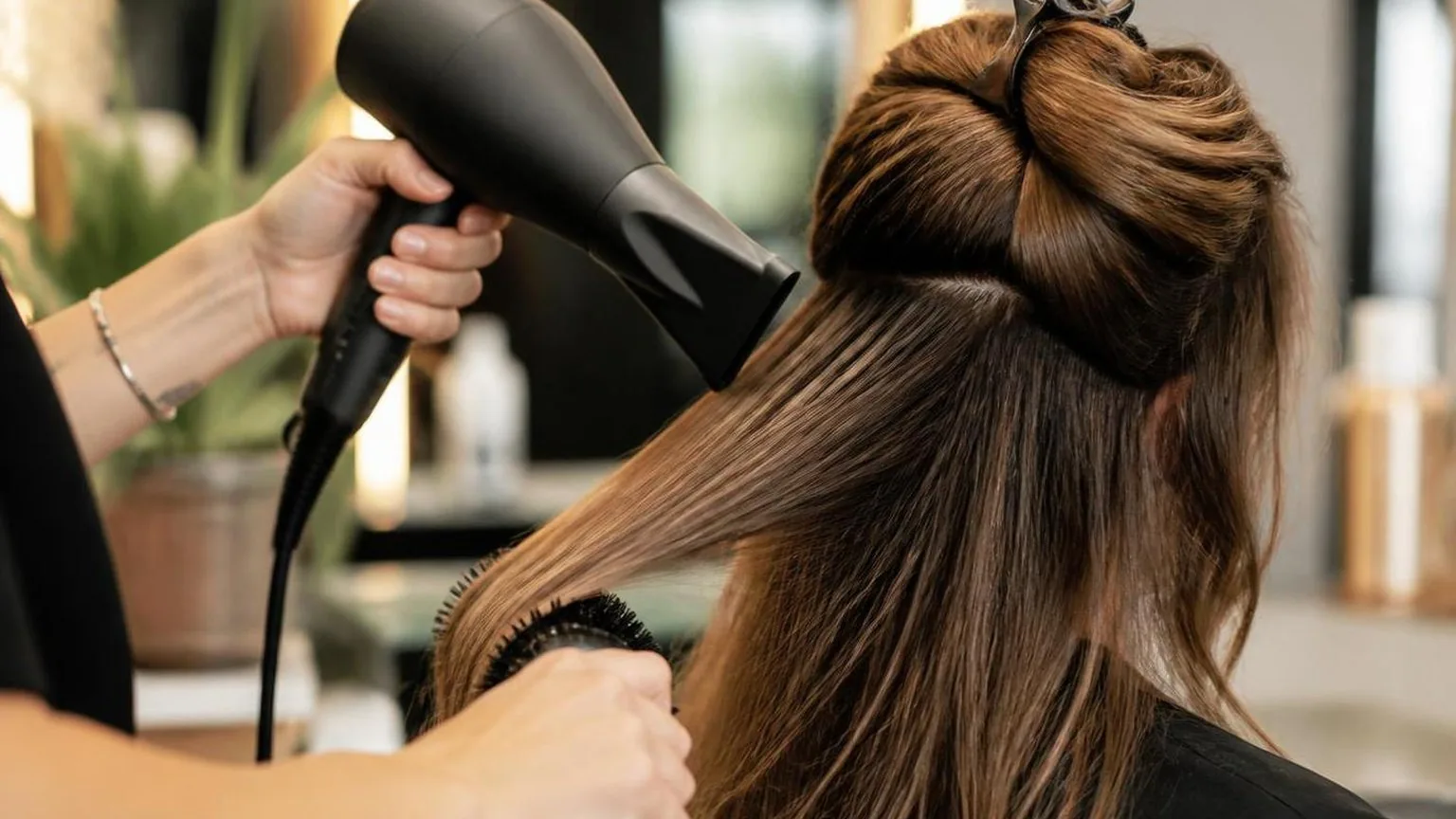
In hands-on blowout work, section size is the first variable to tighten. A thick section traps moisture inside, so the stylist keeps returning with more heat.
A thinner section reaches dry faster, holds shape better, and needs less correction at the ends.
| Work area | Useful measurement | Why it matters |
| Section depth | About the depth of the brush barrel | Lets air reach the full section instead of only the surface |
| Nozzle gap | Keep a small air gap rather than pressing the nozzle into hair | Prevents hot spots and keeps airflow moving |
| Nozzle angle | Point from roots toward ends | Encourages a smoother surface finish |
| Cool shot | Use after the section is fully dry | Helps set the shape created by brush tension |
Heat also has a ceiling. Research on hair fibre damage from repeated high-temperature drying shows that distance, temperature, and exposure time all matter, not just dryer power.
Cosmetic science texts describe hair as more shapeable when warm and damp, then more stable once cooled and dry.
- Use speed for wet removal: start with stronger airflow before detailed brushing.
- Use heat for shaping: reduce heat when the section is nearly dry.
- Use the nozzle for polish: keep airflow travelling down the strand, not across it.
- Use tension, not hovering: a brush-controlled section needs fewer passes than loose drying.
The best wattage is the one your technique can control for a full service. If the dryer feels too hot, too loud, or too forceful to aim precisely, it will usually create more frizz and fatigue than speed.
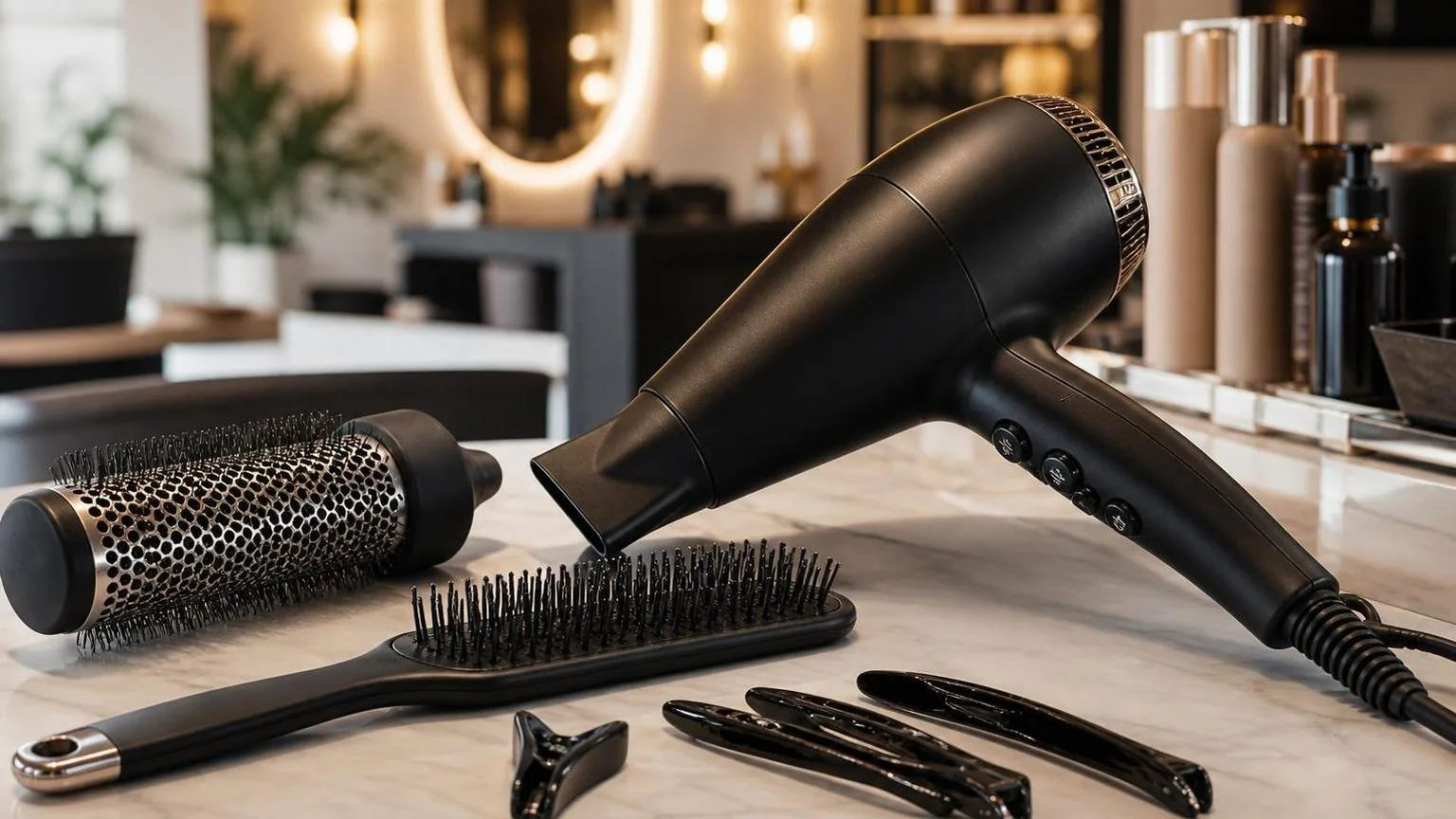
Judging It in Practice
Judge a dryer by drying control, finish, and repeatability on the client’s actual hair, not by the wattage printed on the handle.
Wattage is electrical input; the useful output is the mix of airflow, heat stability, nozzle control, and how the cuticle looks when the hair is fully cool.
In the salon, test on clean, towel-blotted hair after detangling. Use the same brush, same sectioning, same product load, and the same nozzle angle.
A higher-watt dryer that roughens ends or overheats fine hair is not outperforming a calmer, better-controlled tool.
| Test variable | Use this setting | Why it matters |
| Section width | About 5 cm | Keeps tension and heat exposure consistent |
| Nozzle distance | About 10 to 15 cm from hair | Reduces hot-spotting while keeping airflow directed |
| Nozzle direction | Down the hair shaft | Supports a smoother visible finish |
| Brush tension | Firm, not dragging | Shows whether the dryer can polish without excessive heat |
| Cool shot | About 10 seconds per finished section | Lets the shape set before judging shine and frizz |
For fine or fragile-looking hair, start with medium heat and higher airflow. For dense, coarse, or very wet hair, start with higher airflow first, then add heat only if the section is not moving from damp to dry efficiently.
| Hair response | What it tells you | Adjustment |
| Ends feel hot before roots are dry | Heat is outrunning airflow | Lower heat, keep airflow strong |
| Roots stay damp after the shaft is dry | Air is not reaching the base | Use smaller sections and lift at the root |
| Hair expands after cooling | Finish was not fully set | Add more brush tension and a longer cool shot |
| Shine drops at the front hairline | Nozzle control is too aggressive or too close | Increase distance and soften heat |
A simple touch test is useful: the section should feel dry, smooth, and only warm when released from the brush. If it feels hot, puffy, or slightly rough, more wattage will not solve the problem; technique and temperature control will.
Look for manufacturer-stated heat and airflow controls rather than relying on the wattage label alone.
Professional dryers often separate speed and heat settings, which gives a stylist more ways to protect finish quality while still moving water off the hair efficiently.
- Best sign: the hair dries evenly from root to end with fewer passes.
- Warning sign: the dryer needs maximum heat for every hair type.
- Salon test: repeat the same blowout pattern on three clients with different densities before choosing a backbar dryer.
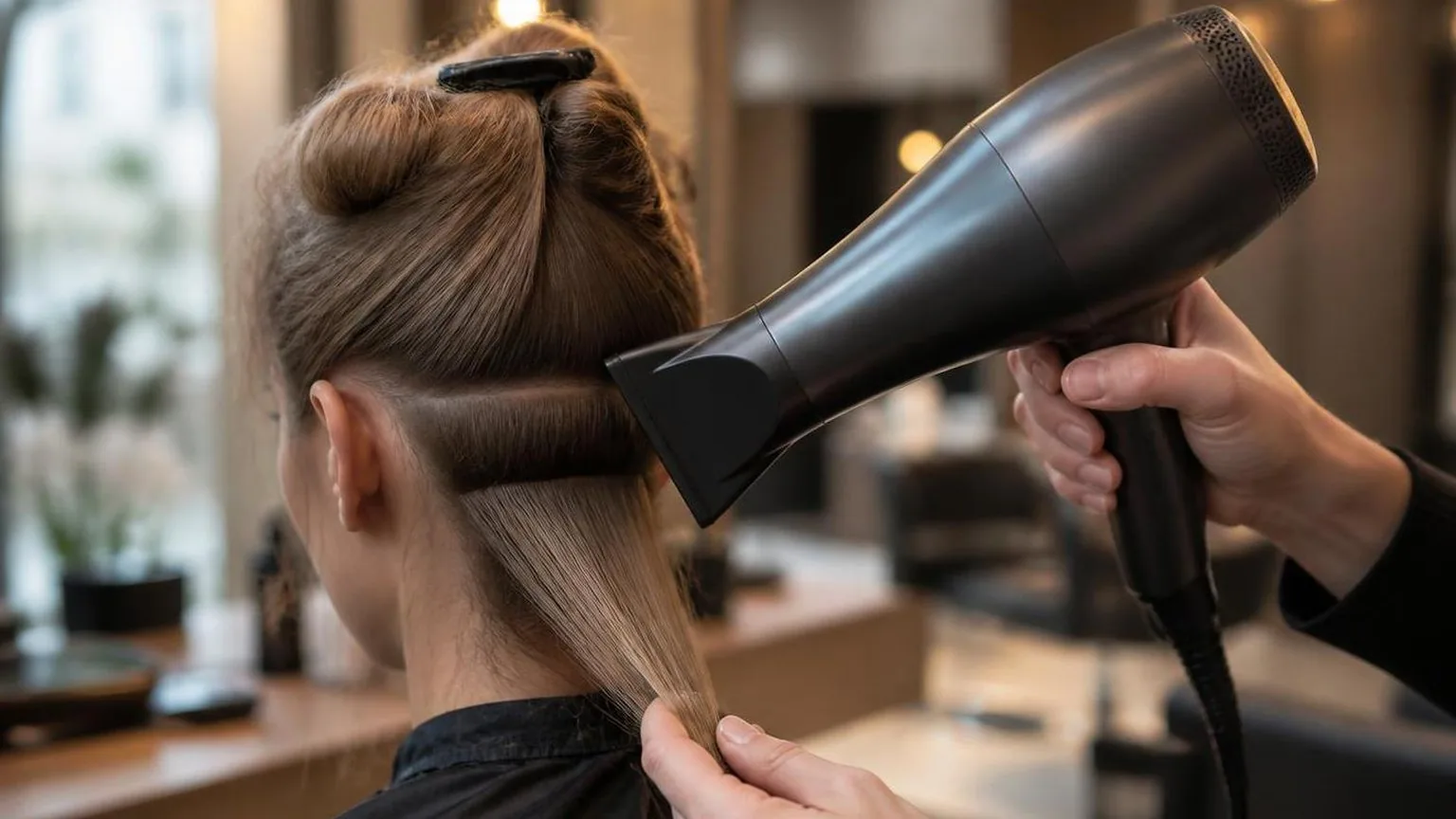
Set Against the Other Options
Higher wattage mainly means the dryer can draw more electrical power, not that it will finish hair better.
A well-designed mid-wattage dryer with a narrow concentrator, stable heat, and strong airflow often beats a hotter, louder unit that wastes energy as surface heat.
For blow dry bars, the fair comparison is not wattage alone. Compare outlet temperature, air speed, nozzle control, hand fatigue, and whether the tool can run all day without tripping circuits or overheating the section you are polishing.
| Tool type | Typical wattage range | Best use | Practical limit |
| Compact travel dryer | 1000-1600 W | Short hair, light rough-drying, gym bags | Slower on dense hair; smaller fan and heater |
| Salon hand dryer | 1600- W | Round-brush work, tension drying, high turnover | Performance depends on motor, ducting, and nozzle fit |
| High-wattage consumer dryer | -2400 W | Fast moisture removal where circuits allow | Can feel aggressive without better airflow control |
| Hot air brush | 900-1200 W | Smoothing ends, adding bend, finishing dry hair | Not a true replacement for rough-drying wet dense hair |
| Soft or hard hood dryer | 800-1200 W | Even, hands-free drying with rollers or sets | Less directional control at the root |
In a busy salon, circuit load matters. On a standard US 120 V, 15 A branch circuit, two powerful dryers can exceed the circuit rating. In the UK, a 230 V supply and 13 A plug allow a higher ceiling, but the dryer still needs safe internal design.
| Setup | Electrical example | What it means at the station |
| One 1875 W dryer on 120 V | About 15.6 A | Already near a common US circuit limit |
| Two 1875 W dryers on 120 V | About 31.2 A combined | Likely unsuitable on one standard circuit |
| One 2200 W dryer on 230 V | About 9.6 A | Usually within a UK 13 A plug rating |
Heat setting is the other alternative to chasing watts. For controlled finishing, many stylists work around lower heat for fine hair, medium heat for normal hair, and reserve maximum heat for brief rough-dry phases on dense sections.
| Hair task | Useful tool choice | Working distance | Timing cue |
| Rough-dry before brush work | 1600- W hand dryer | 15-20 cm from hair | Stop when hair feels about 80 percent dry |
| Polish with a round brush | Concentrator nozzle, 6-8 cm wide | 2-5 cm from the brush, not the scalp | Cool each section for 5-10 seconds |
| Smooth ends or fringe | Hot air brush | Direct contact with moving tension | Use on damp-to-dry hair, not dripping hair |
UL household grooming appliance standards and IEC hair-care appliance standards focus on electrical safety, temperature control, and construction, not on rewarding the biggest wattage label.
For professionals, the better buy is the dryer that converts watts into focused, repeatable airflow.
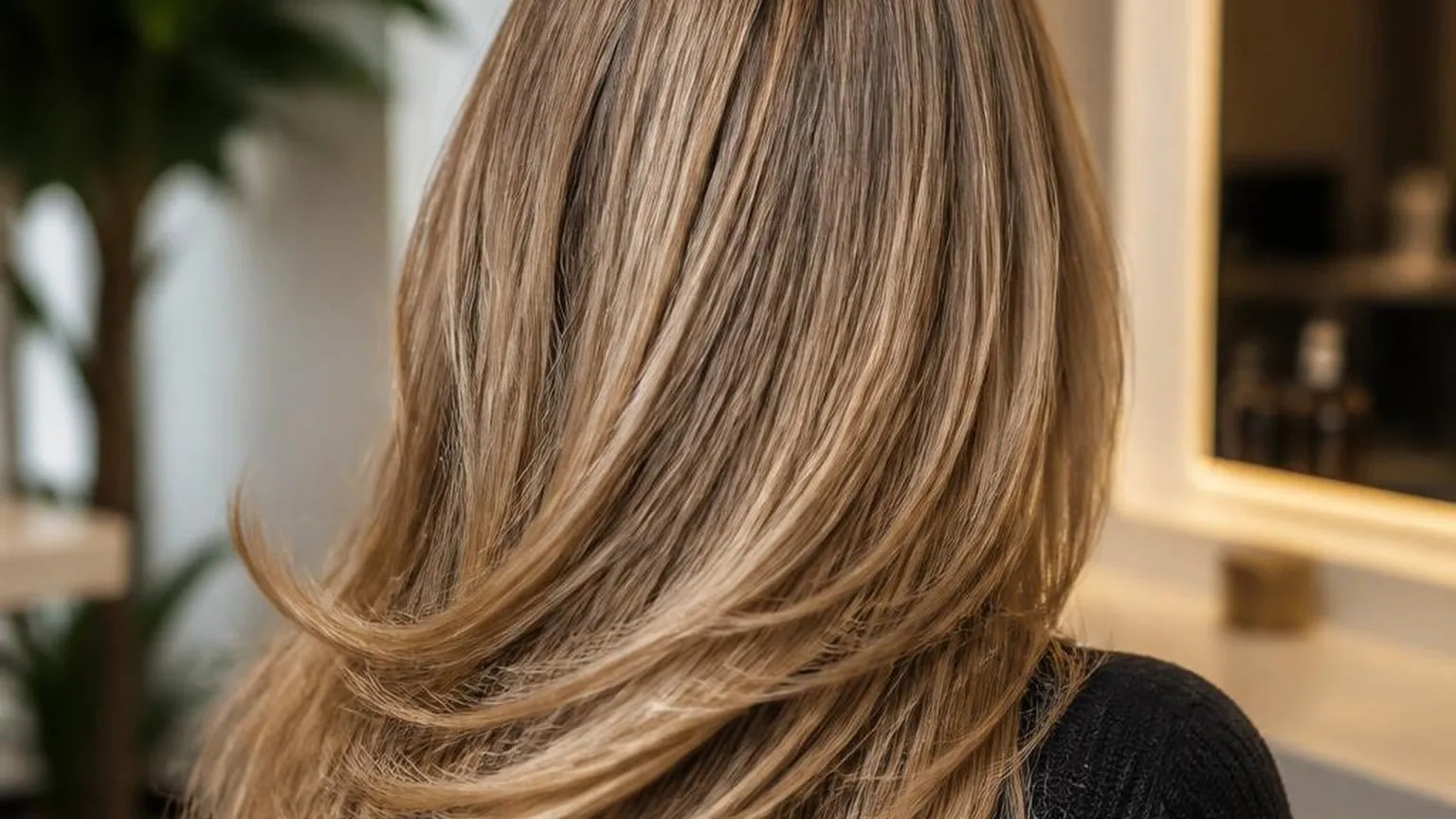
Keeping Condition Through the Dry
Hair stays intact when airflow, heat and brush tension are balanced.
Higher wattage can move more air, but it does not automatically give a safer or faster finish if the nozzle is too close, the brush is over-tight, or one section is reheated repeatedly.
In the chair, the practical target is controlled evaporation: remove surface water quickly, then lower heat as the strand approaches dry.
Hair feels most vulnerable when it is wet because water disrupts hydrogen bonds, so aggressive stretching at that stage is poor craft.
| Drying stage | Moisture feel | Heat choice | Tension choice |
| Rough dry | Dripping to damp | Medium or high airflow, moderate heat | Fingers only, no hard pulling |
| Shape building | Damp, not wet | Medium heat with nozzle attached | Brush tension firm enough to smooth |
| Polish | Almost dry | Low heat or cool shot | Light tension, then release |
Cosmetic science texts describe hair fibre damage as cumulative: repeated hot passes, especially on wet hair, can raise cuticle edges and reduce smoothness.
The useful salon habit is not “maximum heat”; it is moving heat evenly and stopping once the section is dry.
| Control point | Working number | Why it matters |
| Nozzle distance | About 15 cm from hair | Reduces hot-spotting while keeping airflow focused |
| Section width | About 2.5 to 5 cm | Lets air reach the underside without overcooking the surface |
| Brush barrel for short layers | About 25 to 35 mm | Gives lift without needing excessive wrap tension |
| Brush barrel for bouncy lengths | About 45 to 55 mm | Smooths larger panels with fewer passes |
| Pass time per section | About 10 to 20 seconds | Longer usually means the section is too large or too wet |
A concentrator nozzle changes the result more than wattage alone. A narrow outlet directs air along the hair shaft, which helps the cuticle lie flatter. Used sideways into the section, the same nozzle can rough up the finish and encourage frizz.
- Keep the dryer moving: hover heat across the brush line rather than parking it on one point.
- Dry roots first: lift with airflow, then add brush tension once the mid-lengths are damp.
- Match tension to resistance: if the brush stalls, the section is too wet, too wide, or wrapped too tightly.
- Use the cool shot last: set shape after the section is fully dry, not while it is still steaming.
The best wattage is the one that supports steady airflow without forcing extreme heat.
For most professional blow-dry work, technique protects the finish: smaller sections, measured distance, moderate tension, and no repeated hot passes on hair that is already dry.
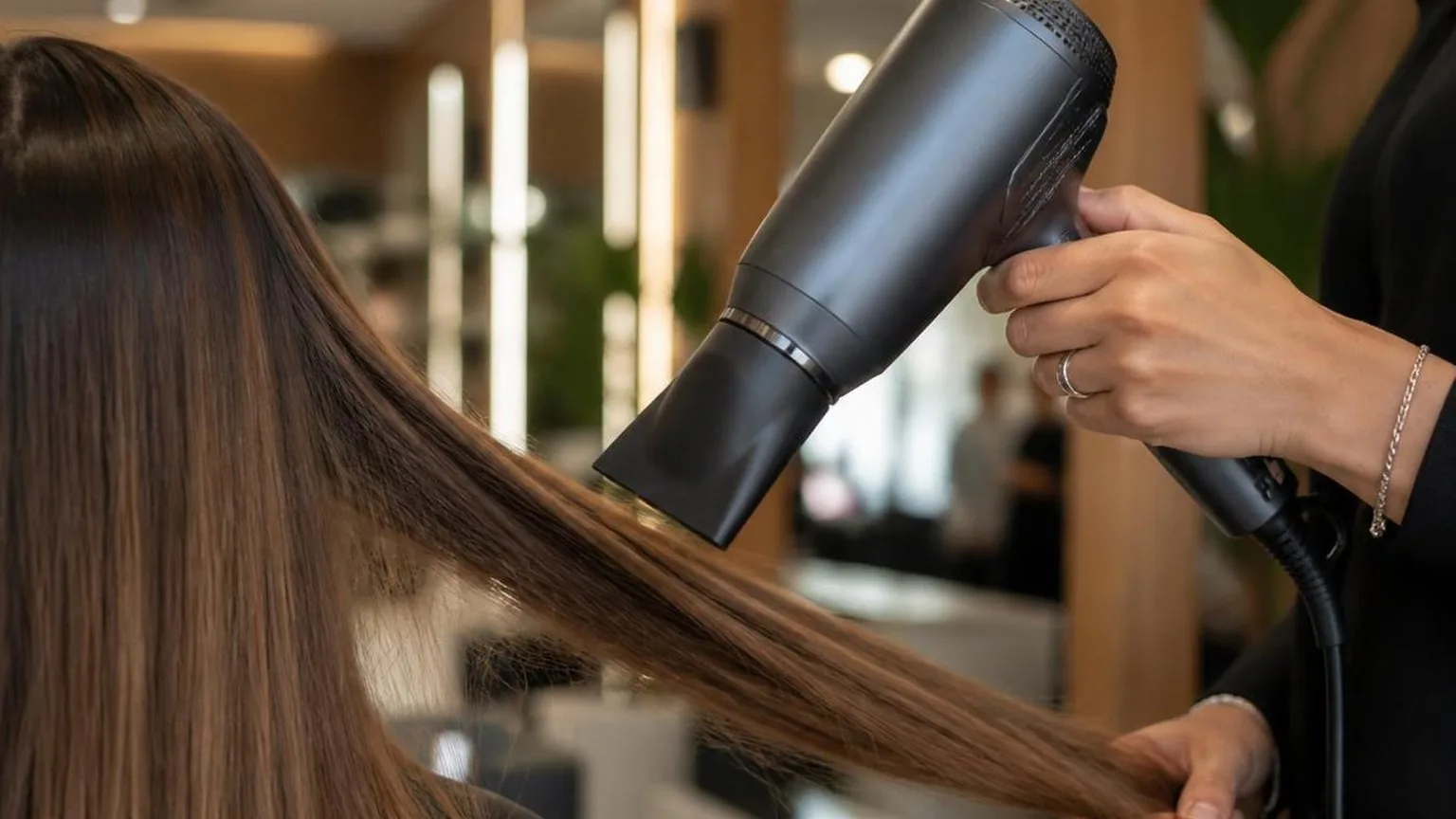
What the Method Actually Changes
Higher wattage does not automatically mean faster drying or a smoother finish. Airflow control, nozzle shape, heat setting, and section discipline usually matter more than the number printed on the dryer handle.
The reason is simple: polish comes from directing controlled heat along the cuticle while the hair is held under tension. Maximum output can remove water quickly, but it does not replace clean sectioning, brush control, or proper nozzle angle.
| Labelled wattage band | Typical working effect | Finish quality |
| Under 1,600 W | Slower on dense hair, workable on fine hair | Good when airflow was concentrated |
| 1,600–1,900 W | Most balanced drying speed | Best polish-to-control ratio |
| Over 1,900 W | Faster rough-dry, not always faster finish | More frizz when used too close |
For smoothing, standard salon sectioning is roughly 2 inches wide and 1 inch deep. Larger 3-inch sections make sense during rough-dry stages, where the goal is moisture removal rather than detailed surface polish.
Hair should be towel-blotted to damp, not dripping, before blow-drying begins. Excess water extends drying time and makes the stylist rely on heat for too long before the brush can create clean tension.
A concentrator nozzle matters because it narrows and directs airflow. Held 3 to 5 inches from the hair, it can follow the brush downward from root to end instead of blowing upward into the cuticle.
| Variable | Working range |
| Section size | 2 inches wide by 1 inch deep for finish work |
| Nozzle distance | 3 to 5 inches from the hair |
| Brush passes | 3 to 5 passes per section |
| Repeat trials | 3 repeats per dryer on comparable sections |
High-wattage dryers can create more correction work when the airflow is too aggressive. On fine and medium hair, the section may blow off the brush before the surface is fully tensioned and aligned.
On coarse and high-density hair, higher wattage is useful during the first moisture-removal stage. Once the hair is about 80% dry, medium heat with steady tension supports cleaner shaping than staying on maximum.
- Fastest rough-dry: higher wattage with wide airflow.
- Smoothest finish: medium heat, concentrator nozzle, controlled brush tension.
- Most common error: holding a powerful dryer closer than 3 inches.
- Best salon rhythm: remove water quickly, then reduce heat for shaping.
Plug-in power expectations follow the standard electrical relationship: watts equal volts multiplied by amps.
That matters in salons because multiple high-wattage dryers on one circuit can trip breakers before they improve service speed.
The practical takeaway: choose enough wattage for the hair density being served, then judge the dryer by airflow direction, heat stability, nozzle fit, and how well it lets the stylist keep tension through each pass.
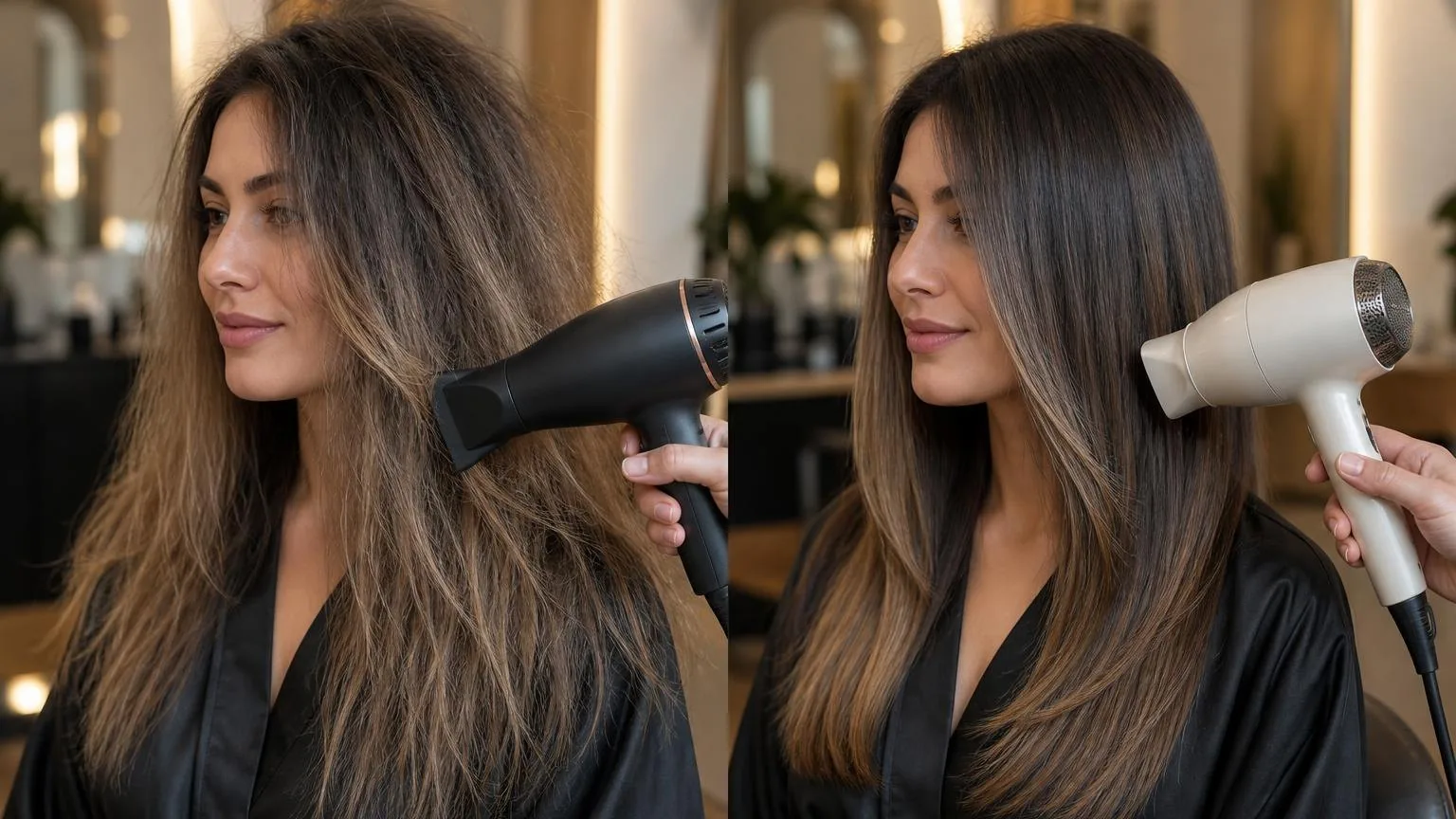
Myths That Keep Going Round
The biggest myth is that the highest wattage dryer automatically gives the fastest, smoothest blowout.
Wattage tells you electrical power draw, not airspeed, heat stability, nozzle control, or how well the dryer keeps the cuticle lying flat during brush work.
In salon use, the better question is: does the dryer move enough air at a controlled temperature without overloading the circuit or fatiguing the stylist’s wrist?
Myth: higher wattage always dries faster
Drying speed depends on airflow, heat transfer, section size, towel-drying, and nozzle discipline. A poorly designed high-watt dryer can feel hot but push weak air, which bakes the surface while leaving moisture inside the section.
| Claim | What to check instead |
| High wattage means high performance | Airflow strength, concentrator fit, heat consistency, motor balance |
| More heat gives a smoother finish | Medium heat, high airflow, tension, and cool-shot setting |
| A salon dryer must be maximum wattage | Circuit capacity, daily comfort, filter access, nozzle precision |
Mistake: ignoring the outlet
In the US, many wall circuits are rated at 15 amps on 120 volts. That sets a practical ceiling for appliances sharing the same circuit. National Electrical Code guidance is the reason salon owners should think in circuits, not just dryer labels.
| Location | Typical supply | Practical concern |
| US blow dry station | 120 volts, 15 amps | Multiple tools can trip a breaker |
| UK blow dry station | 230 volts, 13 amp plug | Plug fuse and load planning matter |
| Shared styling area | Dryer plus irons | Total draw, not one tool, causes overloads |
Myth: hotter air means healthier-looking hair
Hotter air can rush evaporation, but it also makes styling less forgiving. In practice, polished blowouts come from controlled tension, narrow sections, and a concentrator held with the airflow traveling from roots to ends.
| Salon habit | Better practice |
| Using the hottest setting from start to finish | Start warm, increase only for dense or very wet areas |
| Drying large sections | Use sections about the width of the brush barrel |
| Holding the nozzle too close | Keep airflow moving and avoid parking heat on one spot |
Mistake: buying only by the watt number
For professionals, a dryer in the common salon range can perform beautifully if the motor, housing, filter, and nozzle are well engineered.
The label does not reveal static pressure, airflow pattern, or how evenly heat is delivered under real brush tension.
- Check the concentrator: a narrow, secure nozzle gives cleaner root lift and smoother ends than a loose wide mouth.
- Check weight and balance: wrist fatigue affects finish quality during back-to-back services.
- Check cleaning access: a clogged rear filter reduces airflow and makes any wattage rating less useful.
- Check heat control: separate heat and speed switches give more precision than one combined setting.
Frequently Asked Questions
What wattage is enough for a professional blow dry?
For most salon stations, 1,600–1,875 watts is the practical range on a standard US outlet. It gives strong heat recovery without pushing the 15-amp circuit limit, where UL-listed dryers typically must stay below about 1,800 watts.
Why is a 2,000-watt dryer not always faster?
Drying speed depends on airflow, heat stability, nozzle shape, and technique, not wattage alone. A narrow 6–8 mm concentrator, clean rear filter, and 1–2 inch sections often outperform a hotter dryer used too close to the hair.
Can higher wattage make styling harder?
Yes. Excess heat can flash-dry the surface before the brush has shaped the section, especially on fine or low-density hair.
For polished tension work, many stylists use medium heat with high airflow, keeping the nozzle about 3–6 inches from the hair.
What wattage should I choose for home use?
A 1,400–1,800 watt dryer is usually sufficient at home. Pair it with a concentrator nozzle, rough-dry to about 80% dry first, then finish in small sections for 20–40 seconds each with controlled tension.
Does wattage matter more than temperature?
No. Wattage measures electrical power draw, while temperature is what affects the hair during styling. A dryer reaching about 160–200°F at the outlet can style effectively if airflow is consistent and the nozzle is kept moving.
Is a lower-wattage hair dryer better for fine hair?
A lower-wattage dryer can be easier to control on fine hair, especially when paired with medium heat and steady airflow. The right technique matters more than using the highest power setting.
What wattage is best for thick or curly hair?
Thick or curly hair often benefits from a dryer around 1,800 to 2,000 watts. Pair it with controlled heat, steady airflow, and the right nozzle or diffuser.
Does salon dryer wattage affect energy use?
Yes. Higher wattage can draw more power while the dryer is running. Actual use also depends on drying time, heat setting, and how often the dryer is used.
Is wattage the same as airflow power?
No. Wattage shows electrical power, not airflow quality. Motor design, fan speed, nozzle shape, and filter condition all affect how strong the airflow feels.
Related Reading
- Boar, nylon or mixed: choosing round brush bristles
- Ionic or ceramic: what the labels actually mean
- How blow dry stylists are paid: the three structures
- What a blow dry bar is, and how the model works
- Blow drying fine hair for volume that holds
- Sectioning: the step most people skip
- What a paddle brush is actually for
- How long a dryer can run before it needs a rest
- How often a dryer filter needs clearing
- The complete guide to blow dry tools