
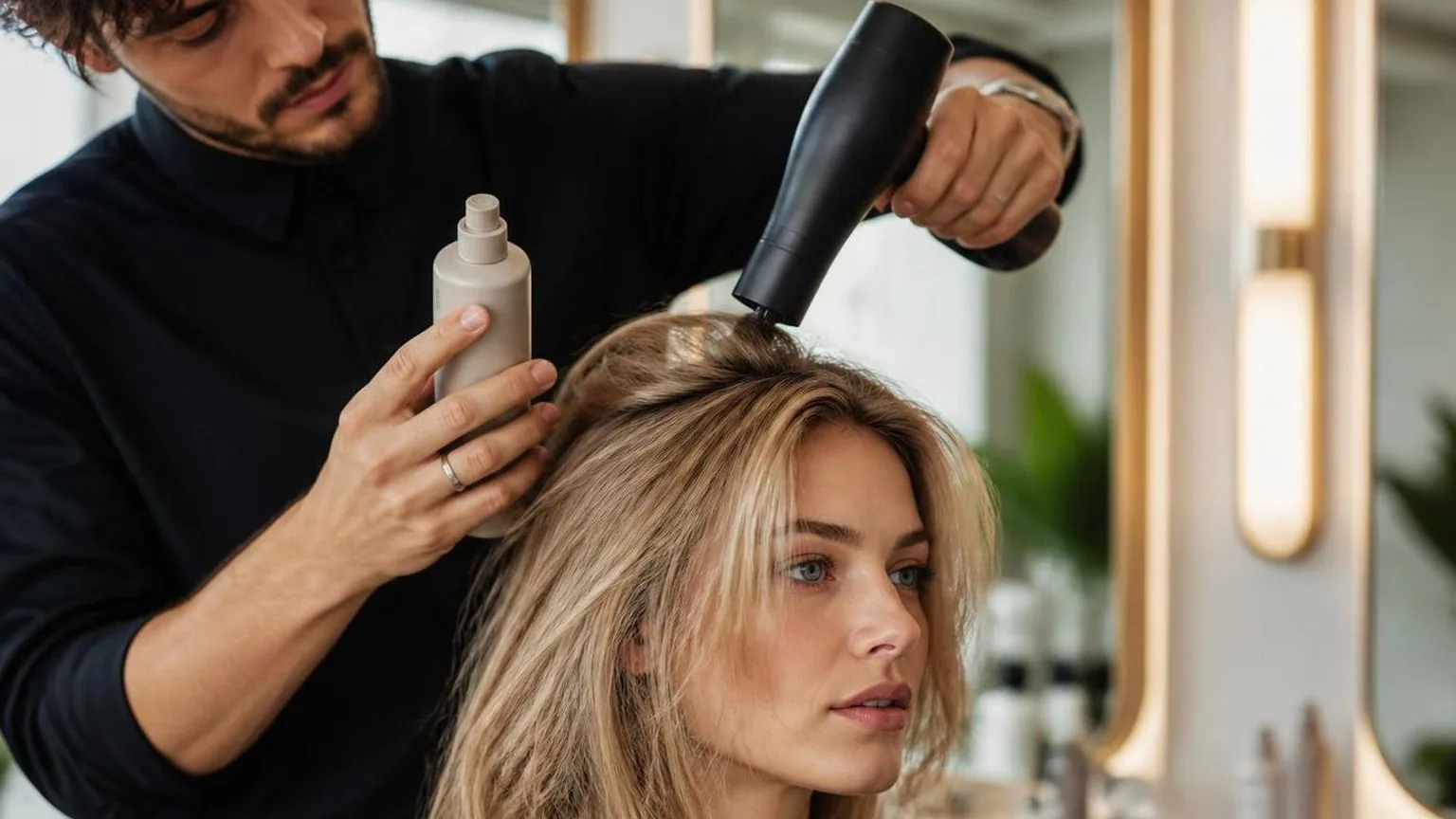
Blow drying fine hair for volume that holds starts with lifting 1-inch sections at the root, drying them at 90 degrees with a concentrator nozzle, then cooling each section for 10 seconds before release.
Fine strands collapse when roots are over-wet, over-brushed, or flattened too early. Work until hair is about 80% dry, switch to a 1.5–2 inch round brush, keep airflow down the shaft, and finish each root with a cool shot to set shape.
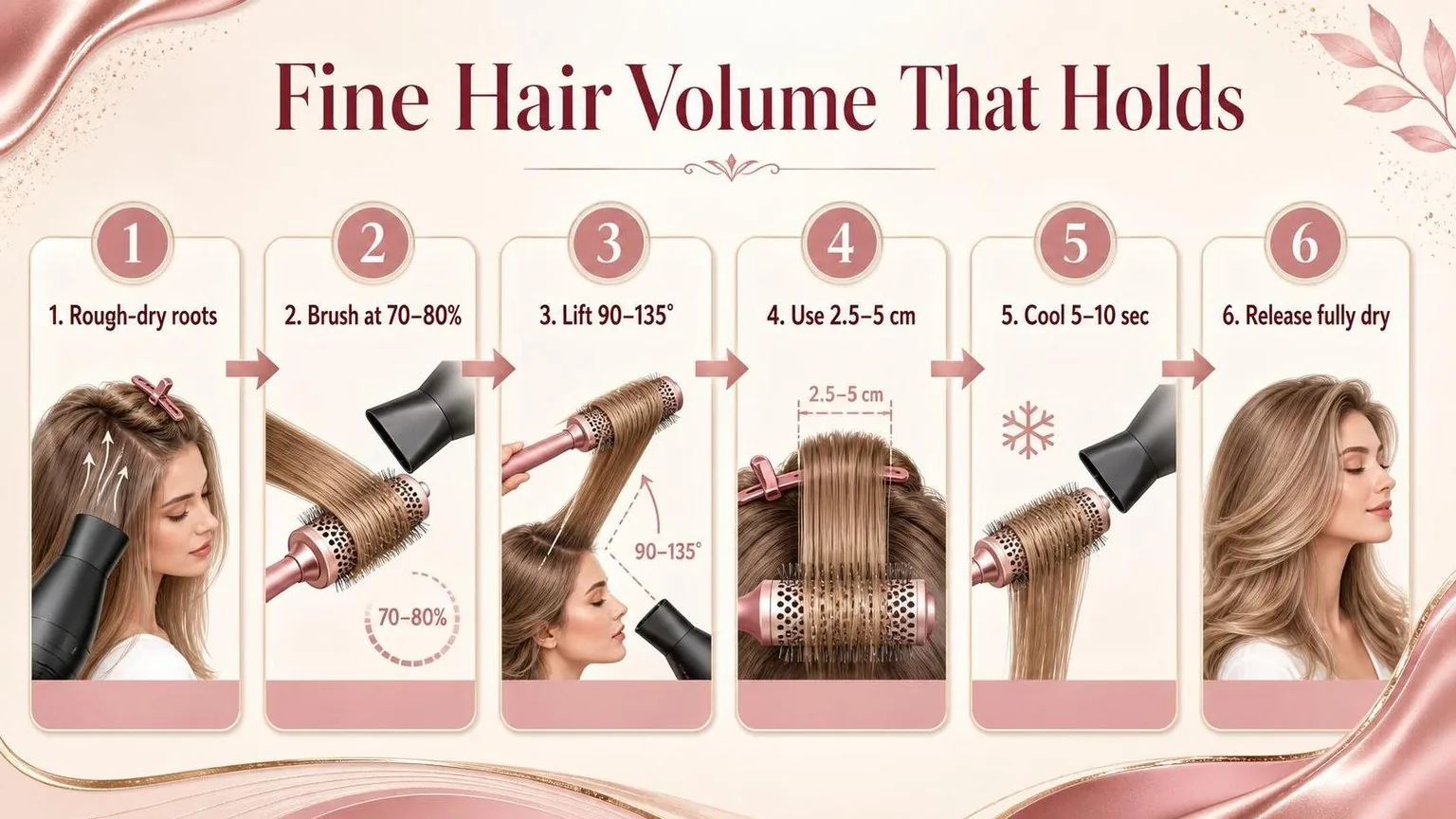
Map Your Root Lift
Use this quick chair-side check before the full blow dry. It helps you choose the right brush size, heat, section size, and cooling time for fine hair that drops fast.
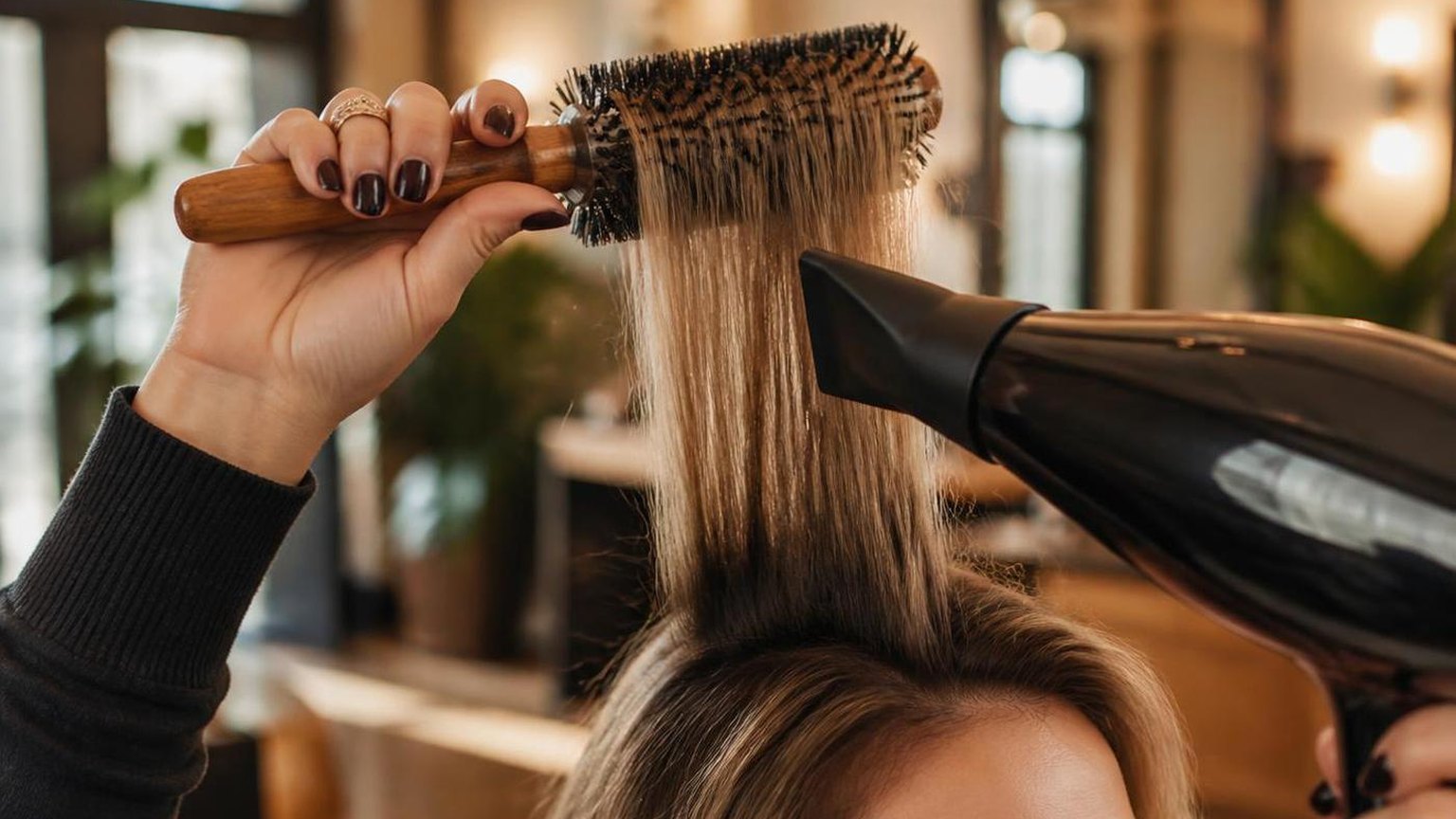
- Check wetness at the root. Towel-blot, then rough dry until the hair is about 80% dry. If the root still feels cold or damp, keep drying before you start brush work.
- Pick the section size. Take 1-inch sections at the crown and hairline. If the hair is very fine or sparse, reduce to 1/2-inch sections so the root can lift cleanly.
- Set the brush angle. Hold each section at 90 degrees from the scalp. Use a vent brush for fast root lift or a 1.5–2 inch round brush when you need bend through the mid-lengths.
- Control heat and air. Use medium heat, around 140–160°F, with a concentrator nozzle. Dry the root first against the natural fall, then direct airflow down the shaft to smooth the finish.
- Lock the shape. Cool-shot each section for 10–15 seconds before release. Finish with a lightweight spray, keeping heavy oils, creams, and serums away from the root area.
If volume still collapses, adjust one factor at a time: smaller sections, longer root drying, or a longer cool shot. Do not add more heavy product to solve a root-lift problem.
Reading the Numbers Properly
Fine hair holds volume best when moisture, heat, airflow direction, and cooling time are controlled, not when the dryer is simply hotter.
The useful numbers are moderate heat, close-but-moving airflow, small sections, and a full cool set before the brush is removed.
Laboratory work often cited in cosmetic science compared air-drying with blow-drying at measured temperatures and distances. The practical takeaway for fine hair is that distance and movement matter as much as heat setting.
| Variable | Useful working number | Why it matters for fine hair |
| Dryer distance from hair | About 15 cm | Close enough to shape the root, far enough to reduce concentrated heat on the cuticle. |
| Air temperature range in published testing | 47°C, 61°C, 95°C | Higher heat dried faster, but surface change increased when heat was concentrated. |
| Movement | Continuous motion | Prevents one hot spot from flattening or over-softening fine strands. |
| Root drying target | 100% dry at the base | Fine hair collapses quickly if the root is left even slightly damp. |
For salon work, I treat fine hair like fabric on a form. The shape is built while the hydrogen bonds reset from wet to dry, then locked by cooling before the brush comes out.
| Step | Number to use | Craft note |
| Section width | 2.5–5 cm | Smaller sections let air reach the underside instead of polishing only the surface. |
| Section depth | 1–2 cm | Thin slices lift cleaner at the root and dry more evenly. |
| Brush diameter at crown | 32–45 mm | Large enough for lift, not so large that fine hair loses bend. |
| Root overdirection | 90–135 degrees | Drying up and away from the fall creates visible elevation. |
| Cool shot per section | 5–10 seconds | Cooling on the brush helps the set hold after release. |
Moisture level before styling is another number that changes the result. Start shaping too wet, and fine hair stretches flat. Start too dry, and the root has already chosen its direction.
| Hair state | Approximate dryness | Best action |
| Fresh from towel | 50–60% dry | Rough-dry at the roots using fingers, lifting opposite the natural fall. |
| Ready for brush work | 70–80% dry | Use round brush tension and nozzle direction from root to end. |
| Ready to release | 100% dry and cooled | Remove the brush only after the section feels dry at the root and cool to touch. |
The nozzle should point with the cuticle, not against it, once root lift is established. A concentrator opening around 6–10 mm gives enough precision for fine hair without blasting the whole section flat.
Cosmetic science texts, including Robbins’ Chemical and Physical Behavior of Human Hair, explain why this works: water temporarily changes hair’s physical behavior, heat speeds drying, and cooling helps preserve the newly formed shape.
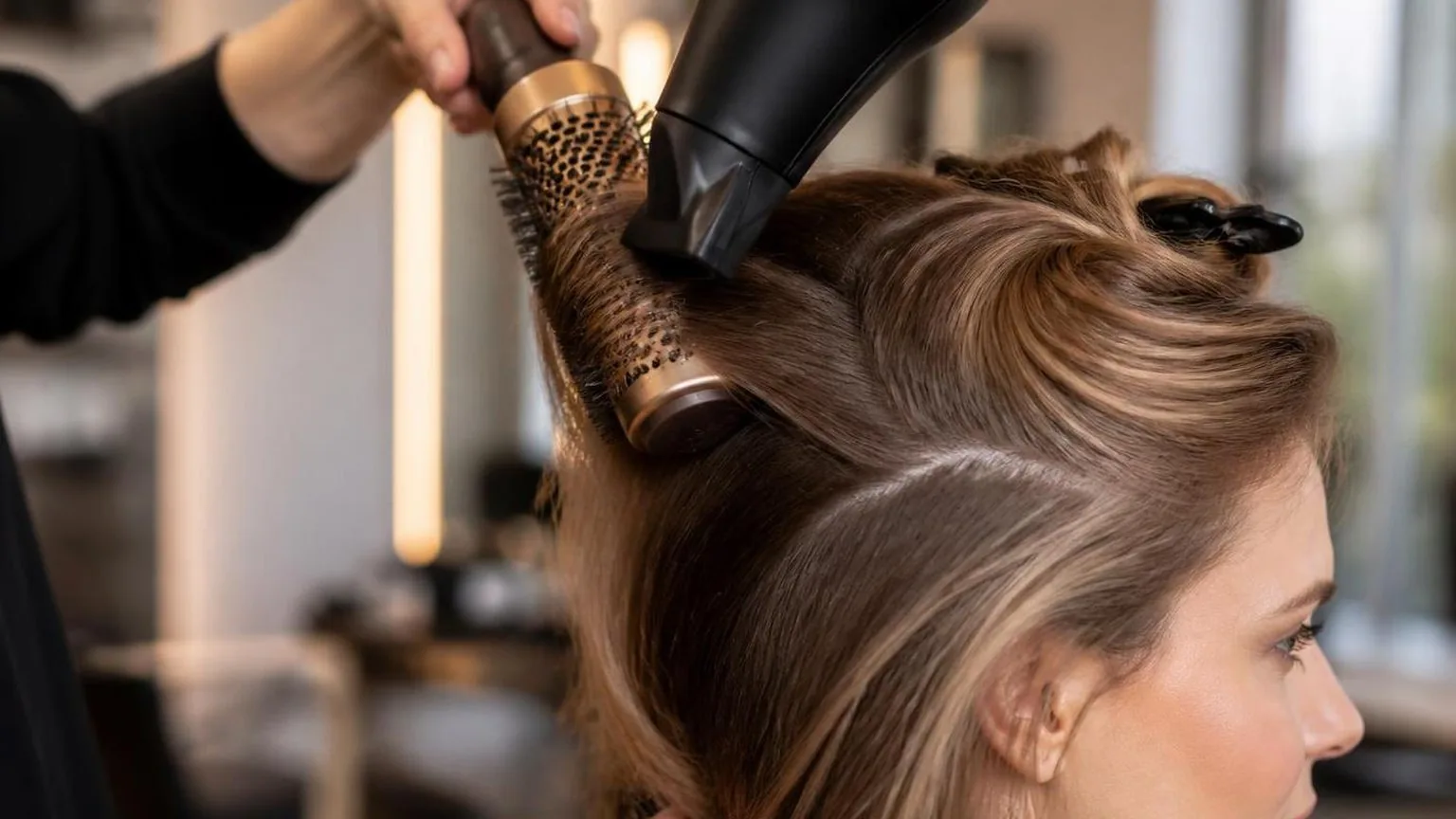
The Variables That Matter
Fine hair holds volume when the root is dried in the opposite direction of fall, then cooled before it is released.
The biggest variables are moisture level, section size, brush diameter, airflow direction, product weight, and whether the root is allowed to set cold.
Start rough-drying before the brush comes in. In salon work, fine hair collapses when it is round-brushed while too wet, because the strand stretches, the root stays damp, and the finished bend relaxes quickly.
| Stage | Target feel | Why it matters |
| Rough dry | Hair feels mostly dry, with slight coolness at the root | Removes water weight before shaping |
| Brush work | Hair feels dry and warm through the section | Sets lift and bend with tension |
| Cool set | Hair feels room-temperature before release | Helps the lifted root keep its shape |
Section size changes tension. A section that is wider than the brush barrel usually dries unevenly: the outside gets hot first, while the inner hair remains damp and drops after dressing.
| Tool or section choice | Best use on fine hair |
| Small round brush | Short layers, fringe, tighter root lift |
| Medium round brush | Crown volume, shoulder-length shaping |
| Large round brush | Smoothing long fine hair, softer bend |
| Section no wider than the barrel | Even heat, cleaner tension, longer hold |
Heat must be controlled, not maximised.
Dyson lists its Supersonic heat settings as fast drying and styling, regular drying, cooler drying, and constant cold shot; that type of stepped control is useful because fine hair often needs precision more than maximum heat.
Air direction is just as important as temperature. Keep the nozzle angled from roots toward ends to flatten the cuticle, but lift the section up and slightly forward at the crown so the root dries against its natural fall.
- For crown lift: over-direct each section toward the face, dry the root first, then roll the brush under the mid-lengths.
- For side volume: dry the section upward before turning the brush away from the face.
- For a fuller hairline: switch direction from left to right while rough-drying, then finish with the brush.
Product weight can make or break fine hair. Use mousse or root spray at the base, not heavy cream through the top. The goal is grip at the root and light control through the ends.
The final change is cooling time. Do not drop the brush while the hair is still warm. Hold the shape until the section cools, then release without pulling; that small pause is often the difference between bounce and flatness.
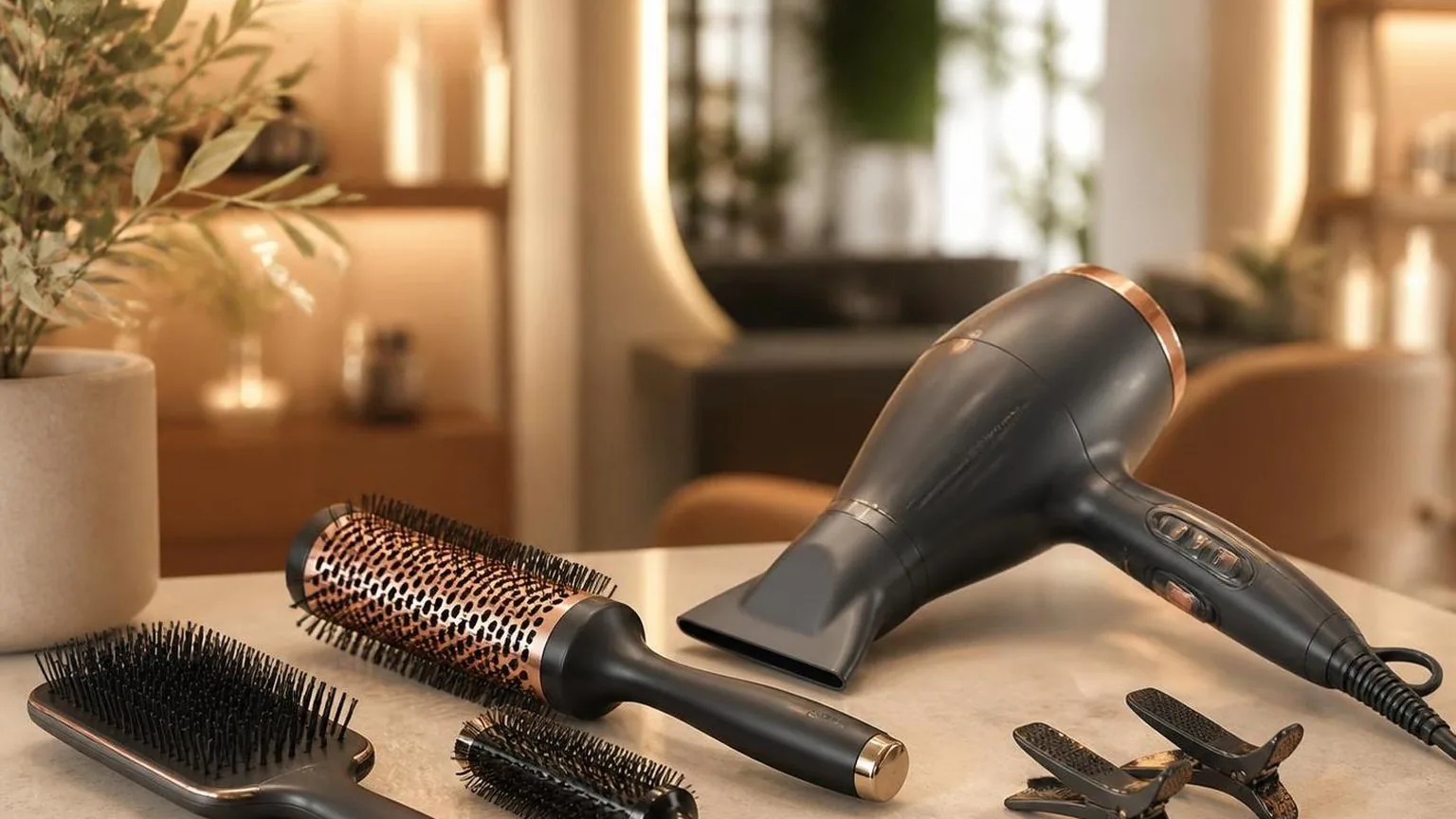
What a Good Result Looks Like
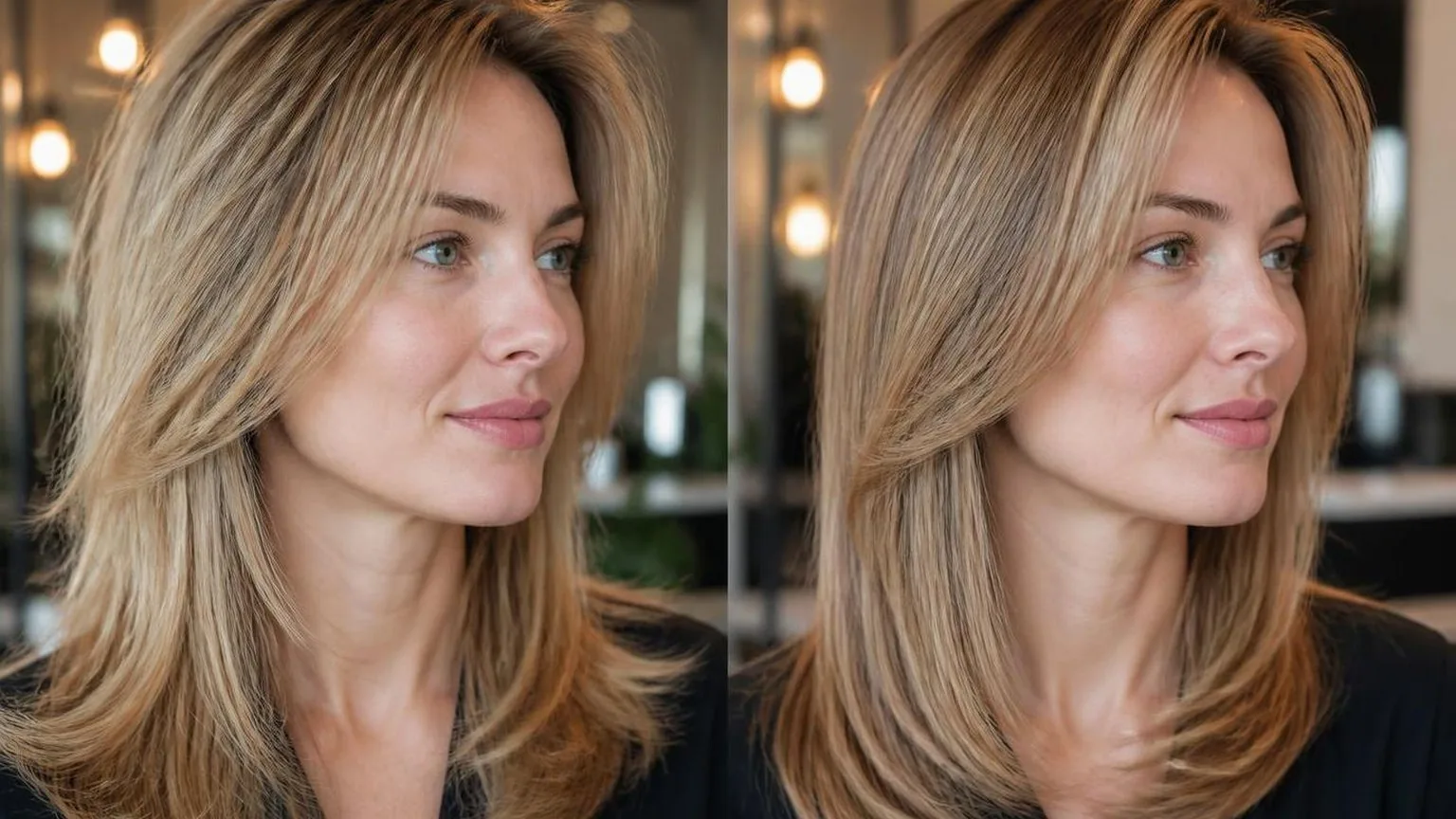
Judge fine-hair volume by lift at the root, separation through the lengths, and whether the shape survives cooling.
A blowout is not finished when it looks big in the mirror; it is finished when the roots feel dry, cool, and supported without stiffness.
In the chair, assess one clean test section before committing to the whole head. Use a section no wider than the brush barrel and no deeper than the bristle length, so air reaches the root rather than polishing only the surface.
| Checkpoint | What to look for | Pass standard |
| Root dryness | Touch the underside of the section at the scalp line | No cool dampness after a 5-second pause |
| Root lift | Section stands away from the head after release | At least 1 finger-width of lift at the parting |
| Shape memory | Hair is allowed to cool before brushing | Lift remains after 30 seconds untouched |
| Finish | Light reflection and strand separation | Shiny, airy, not clumped or wet-looking |
Fine hair usually collapses when moisture remains near the root. Aim the nozzle into the root area first, with airflow following the cuticle from roots to ends once the root is dry. Keep the concentrator about 2 to 4 inches from the hair.
For salon checking, use your hand as much as your eyes. A section that feels warm can still drop if it has not cooled in shape. Clip each lifted section for 30 to 60 seconds before release when maximum hold is needed.
| Hair length | Brush diameter to test | Best volume sign |
| Short layers | 25 to 33 mm | Root kick without bent ends |
| Bob to collarbone | 33 to 43 mm | Rounded crown with soft movement |
| Long fine hair | 43 to 53 mm | Lifted roots, not over-curled mids |
Heat should be enough to reshape, not flatten. Many professional dryers operate with variable heat and airflow; for fine hair, medium heat with high airflow is often more useful than maximum heat.
If the section feels hot to touch, reduce heat or increase distance.
- At the crown, overdirect sections 90 degrees from the head for everyday fullness.
- For a stronger salon finish, overdirect 120 to 135 degrees, then cool before release.
- At the hairline, use lower airflow to prevent flyaway separation.
- At the ends, reduce tension if the hair starts looking stringy.
The final test is movement. Ask the client to turn their head left and right, or do it yourself at home. Good fine-hair volume moves as one airy shape, then returns. If it splits into gaps, the sectioning was too large or product load too heavy.
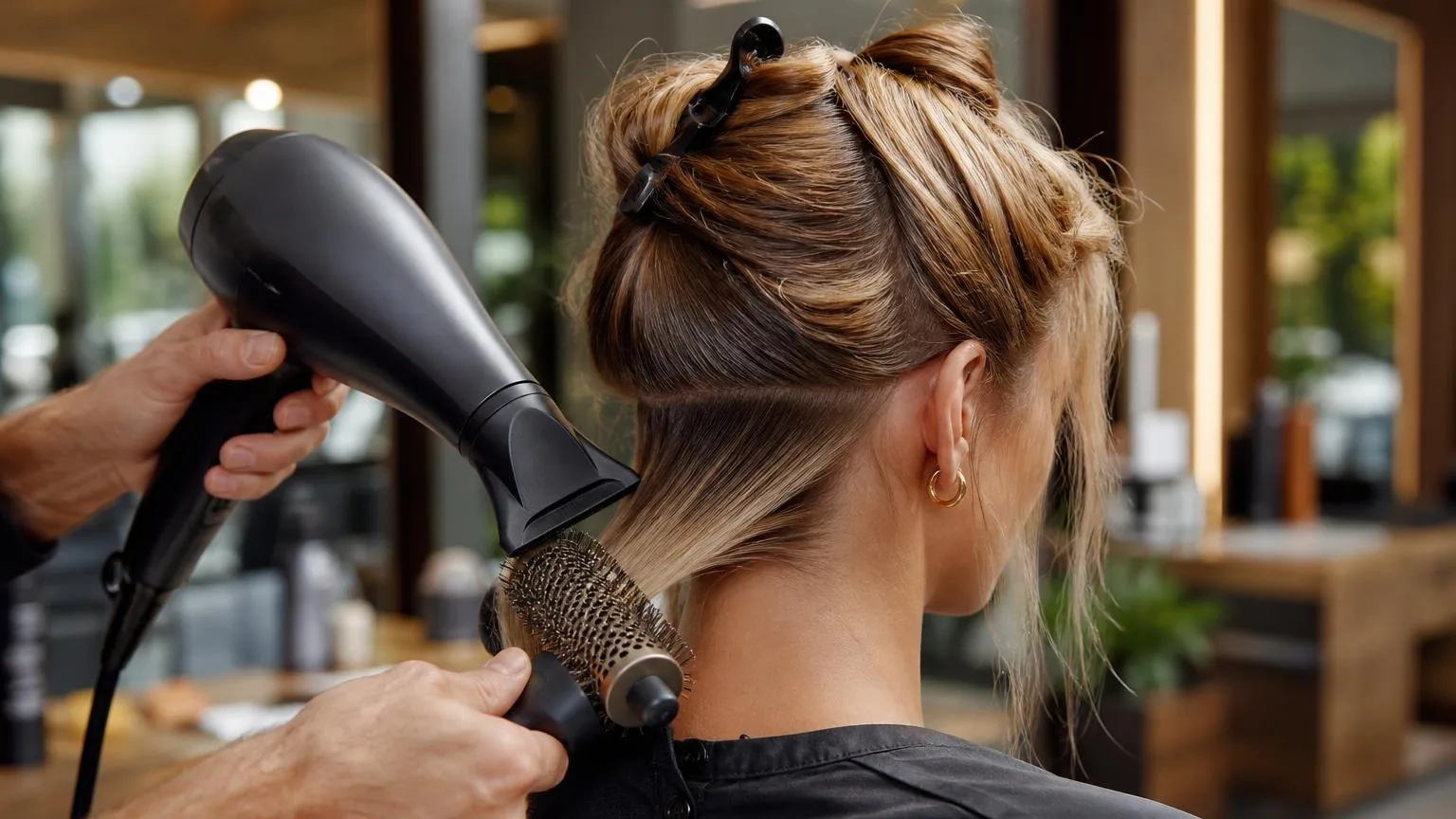
Set Against the Other Options
For fine hair, a controlled blow-dry gives the best mix of lift, speed, and finish retention because it shapes the root while water is leaving the hair.
Air-drying is gentler but flatter; hot tools can polish, but they usually add bend after the root has already collapsed.
The key advantage is timing. Hair is most shapeable while damp, then it “sets” as it cools. In salon practice, that means lifting sections at the root, drying to fully dry, then holding the shape until cool before moving on.
| Method | Best use on fine hair | Typical working numbers | Volume hold |
| Blow-dry with round brush | Root lift, crown height, smooth ends | Brush barrel: 32–43 mm; nozzle gap: about 1–2 cm from hair; section width: no wider than brush barrel | Strongest when each section is cooled for 5–10 seconds |
| Air-dry | Low manipulation, natural texture | No heat; hands-off drying; root direction usually uncontrolled | Lowest at the crown on fine hair |
| Velcro rollers after blow-dry | Extra lift at crown and fringe | Roller diameter: 40–55 mm; set time: 10–20 minutes on fully dry hair | Good support, but needs a dry foundation |
| Hot rollers | Soft bend, set shape, salon-style fullness | Use on dry hair only; cool completely before removal | Good mid-length fullness, less root control than blow-drying |
| Curling iron or tong | Wave and bend through lengths | Fine hair commonly works better at lower heat settings, often around 150–170°C where adjustable | Polish and bend, but limited root lift |
Compared with air-drying, blow-drying gives the stylist control over root direction. For crown lift, sections should be elevated at roughly 90 degrees from the scalp line, then dried from root to ends with airflow following the cuticle direction.
Compared with hot rollers, blow-drying builds volume earlier in the process. Rollers are excellent for reinforcing shape, but they perform best after the root area is already dry and lifted.
On limp fine hair, rollers alone often create rounded ends without enough base height.
Compared with a curling iron, a blow-dry is less about adding curl and more about engineering support. A tong clamps dry hair into a bend; a brush and dryer stretch, lift, smooth, and cool the section into position.
- Use a concentrator nozzle for control; diffuse airflow tends to disturb fine hair and reduce polish.
- Keep sections clean and narrow: about 2–4 cm deep at the crown for better root access.
- Stop brushing once the section is dry; overworking fine hair can make it soft and collapse faster.
- Finish with a cool shot for 5–10 seconds per lifted section before releasing tension.
Industry education from Dyson, ghd, and cosmetology training texts consistently teaches the same principle: heat shapes, cooling sets.
For fine hair, that makes blow-drying the most reliable first step, with rollers or irons working best as optional finishing tools.
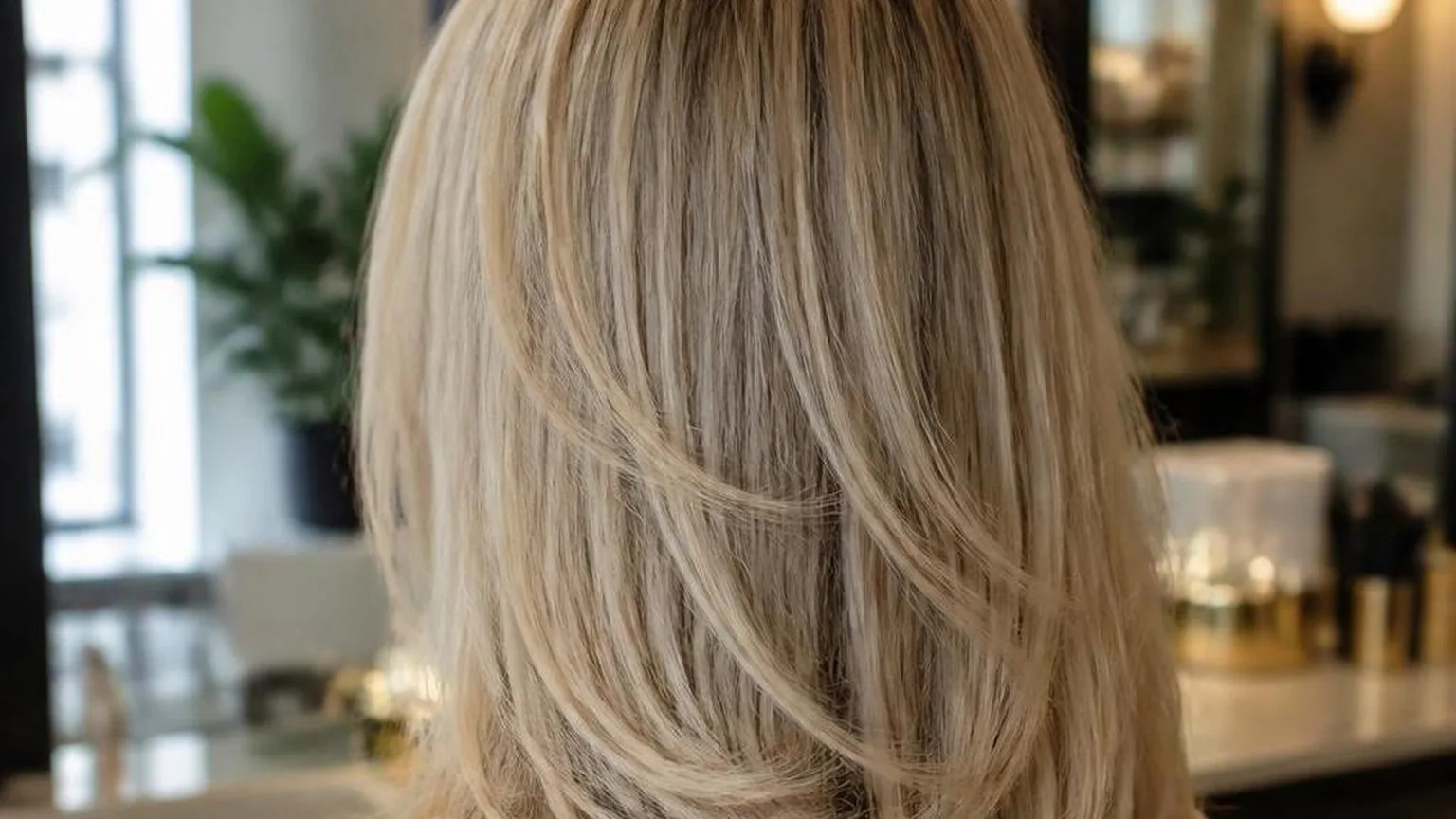
Heat and Tension Without the Damage
Fine hair needs controlled heat, light tension, and fast airflow, not maximum temperature. The goal is to dry the root into lift, then set the shape with cooling before the strand is stretched or overheated.
In salon work, the safest volume comes from keeping the dryer moving and using the brush to support the hair, not to pull it tight.
The International Journal of Cosmetic Science has reported that repeated blow drying damages hair less when distance and airflow are controlled.
Heat settings that give lift without overcooking fine hair
| Drying stage | Recommended setting | Why it matters for fine hair |
| Rough dry at roots | Medium heat, high airflow | Removes water quickly before the hair collapses flat |
| Brush styling | Low to medium heat | Allows shape control without softening the fibre too aggressively |
| Final set | Cool shot until the section feels cool | Helps the bend hold after the brush is removed |
Fine hair usually styles best when it is not soaking wet on the brush. Start brush work when the hair is damp, not dripping, so the section can take shape quickly without repeated heat passes.
| Hair state | Moisture target before round brush | Practical check |
| Too wet | More than mostly damp | Hair feels cold, heavy, and clumps together |
| Ready to style | About three-quarters dry | Hair separates easily but still bends around the brush |
| Too dry | Almost fully dry | Root resists lift and needs re-misting |
Tension: enough grip, not a tug-of-war
Use tension as a shaping tool. A fine section should feel secure on the brush, but the client should not feel pulling at the root. Excess tension stretches wet hair, and wet fibres are more vulnerable during styling.
| Brush choice | Best use on fine hair | Volume effect |
| Small round brush | Short layers, fringe, root lift | Tighter bend and stronger root direction |
| Medium round brush | Bob to shoulder-length hair | Fullness with a soft curve |
| Large round brush | Long fine hair with loose movement | Smoother body, less root spring |
Work in narrow sections so heat reaches the root evenly. A section should be no wider than the brush barrel and shallow enough that airflow passes through it, rather than only drying the outside layer.
- Lift each root section upward and slightly forward before directing airflow into the root.
- Keep the nozzle angled down the hair shaft once the root is lifted.
- Release tension before unwinding the brush to avoid roughing the cuticle.
- Let the section cool in its lifted shape before touching or brushing through.
For home users, the main rule is simple: if the section feels hot to the fingers, pause and cool it. Professional volume is built by alternating heat for shaping and cool air for setting, not by holding high heat in one spot.
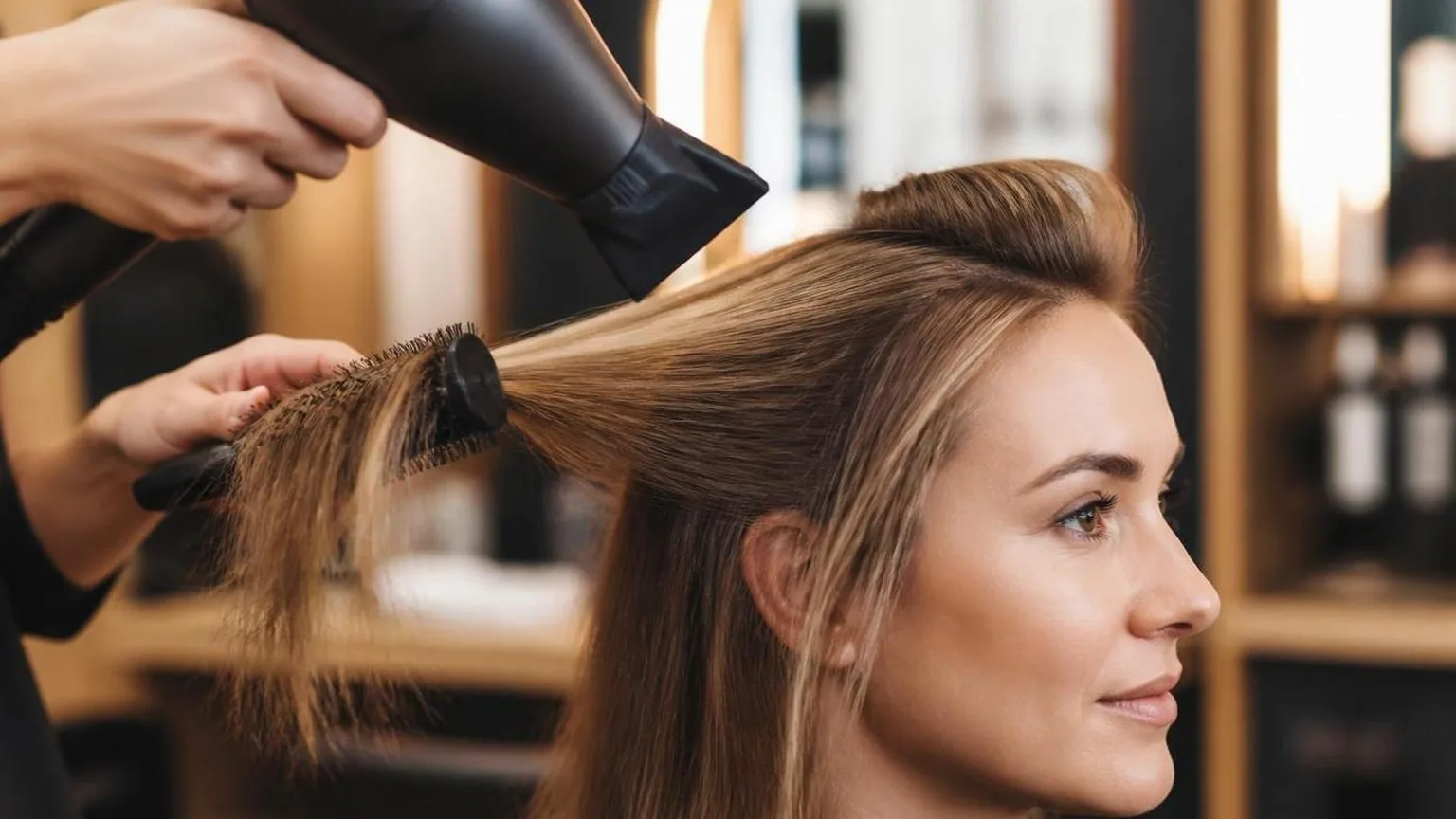
Why the Technique Works
The longest-lasting volume on fine hair comes from treating the roots and mid-lengths as separate jobs. Roots need high airflow, firm lift, and cooling time because shape is set at the base. Ends need less heat and fewer passes to avoid collapse.
The standard working pattern is small, clean sections, a concentrator nozzle, and tension from a ceramic round brush. Over-drying the same section can make it look polished at first, but repeated heat and brushing often leave fine hair limp.
| Variable | Working range | Why it matters |
| Section width | 1 to 1.5 inches | Supports root control and faster drying |
| Section depth | 0.5 to 0.75 inches | Reduces overheating and improves brush tension |
| Nozzle distance | 3 to 5 inches from the hair | Smooths the surface without flattening the root |
| Root passes | 2 warm passes, then 1 cool pass | Sets lift after heat reshapes the base |
| End passes | 1 to 2 warm passes | Adds polish without dragging volume down |
Fine hair should be freshly washed, towel-blotted, detangled, and rough-dried before round brushing. Starting brush work on soaking hair stretches the service because excess water must evaporate before shape can set.
| Moisture stage before round brushing | Expected working effect |
| Very wet, water still transferring to fingers | Slowest finish and weakest crown lift |
| About damp, with no dripping | Best balance of control, shine, and volume |
| Nearly dry before brush work | Fast finish, but less reshaping power at the root |
For the crown, each section should lift straight up from the head, then slightly forward. This overdirection builds height at the base. Holding the brush there for a short cool shot helps lock the shape more effectively than another hot pass.
| Brush barrel diameter | Best use |
| 1 inch | Short layers, fringe, and tighter root bend |
| 1.5 inches | Most fine bobs and shoulder-length layers |
| 2 inches | Longer fine hair needing lift, not curl |
Airflow direction matters more than maximum heat. Pointing the nozzle down the hair shaft keeps the surface neat. At the root, airflow should move across the base first, then upward, before finishing downward for polish.
- Repeat each crown section until the hair feels dry at the root, not just warm.
- Clip each lifted section in place while it cools when extra hold is needed.
- Avoid heavy finishing spray before the hair cools because it can reduce movement.
- Stop brushing once the section is dry to prevent a flat, overworked finish.
The most dependable finish comes from disciplined timing: dry the root fully, cool it before release, then polish the ends briefly. Fine hair rewards restraint more than extra heat.
Mistakes Worth Avoiding
Fine hair loses volume fastest when it is over-wet, over-brushed, over-heated, or finished before the roots are fully dry.
The biggest myth is that more product or a hotter dryer creates longer hold; in practice, controlled moisture removal and root cooling matter more.
Mistake: starting with hair that is dripping wet
Fine hair should be towel-blotted before brush work. A brush pulls best when the hair is damp, not waterlogged, because saturated strands collapse under their own weight and take longer to set.
| Stage | Best action | Why it matters |
| Dripping wet | Blot with a microfiber towel or cotton towel | Reduces water weight before styling |
| Damp | Lift roots with dryer airflow | Builds shape before the hair sets |
| Nearly dry | Use brush tension and cooling | Locks in bend and lift |
Myth: maximum heat gives maximum volume
High heat can dry the surface quickly while leaving moisture near the root. That creates a fluffy mid-length with a flat crown. For fine hair, medium heat with strong airflow is usually more useful than the hottest setting.
| Tool setting | Better use on fine hair | Common problem |
| High heat | Only for brief rough-drying | Can over-dry ends before roots are dry |
| Medium heat | Main drying setting | Needs steady section control |
| Cool shot | Finish each lifted root section | Skipped too often in fast blowouts |
Mistake: using the wrong brush size
Oversized round brushes polish fine hair, but they often flatten the root. For volume, the brush diameter should match the section and the desired bend, not just hair length.
| Brush diameter | Best use | Volume result |
| 25 mm | Short layers, fringe, root lift | Strongest bend |
| 32 mm | Medium layers and crown work | Balanced lift and smoothness |
| 43 mm | Longer lengths and soft polish | Softer, less root lift |
Mistake: taking sections that are too wide
A salon finish depends on airflow reaching both sides of the section. If the section is wider than the brush barrel, the middle stays damp and falls flat first.
- Keep sections no wider than the brush barrel.
- Lift crown sections straight up from the head before drying the root.
- Hold tension until the section feels dry, then cool it before release.
Myth: more mousse means longer-lasting volume
Fine hair is easily overloaded. A golf-ball-size amount of mousse is often enough for shoulder-length fine hair; concentrate it at the roots and mid-lengths, not the ends.
Mistake: touching the hair before it cools
Hair changes shape as it dries, then holds better after it cools. Releasing a warm section too soon softens the lift. Clip the crown while cooling if the client’s hair drops quickly.
Frequently Asked Questions
What heat setting gives fine hair volume without flattening it?
Use medium heat, around 160–180°F for very fine hair and up to 200°F for dense fine hair. Keep the dryer nozzle about 3–4 inches from the strand and finish each section with a 5–10 second cool shot to set lift.
Should fine hair be rough-dried before using a round brush?
Yes, rough-dry to about 80% dry before brush work, using your fingers to lift the roots upward. Starting round-brush tension on soaking hair stretches the process and can collapse volume before the shape sets.
What round brush size works best for volume on fine hair?
For shoulder-length fine hair, use a 1.5–2 inch barrel to create root lift and bend without over-smoothing. For shorter layers, a 1–1.25 inch brush gives better control at the crown and around the face.
How do I make crown volume hold after blow drying?
Lift 1-inch crown sections straight up, direct airflow at the roots for 8–12 seconds, then cool for 10 seconds before releasing. Clip each warm section in place for 3–5 minutes while it cools fully.
How much product should fine hair use before blow drying?
Use a golf-ball size amount of lightweight mousse for medium-length fine hair, worked from roots to mid-lengths. Avoid heavy creams at the root; a pea-size amount on ends is enough if they need polish.
How should I aim the dryer to add volume to fine hair?
Lift each section at the root and aim the airflow upward from underneath while keeping the nozzle moving. Dry the roots first for lift, then direct air down the hair shaft to smooth the lengths without collapsing volume.
Should fine hair be dried upside down for volume?
Yes, briefly. Flip your head forward while drying the roots, then finish upright to smooth the shape and avoid a messy, collapsed finish.
How dry should fine hair be before styling for volume?
Start shaping when hair is about 80% dry. If it is too wet, the brush work takes longer and fine hair can lose lift before the style sets.
Can cool air help fine hair keep volume?
Yes. After lifting a section at the root with heat, use cool air for a few seconds before releasing the brush to help the shape stay raised.
Related Reading
- How to blow dry a finish that survives humidity
- Sectioning: the step most people skip
- Blow dry or air dry: what each does to hair
- Blow drying curly hair straight without wrecking it
- What a blowout is, and how it differs from a blow dry
- Root volume that survives the first hour
- The complete guide to blow drying technique
- PubMed Hair Shaft Damage from Heat and Drying Time of Hair Dryer
- NCBI Bookshelf Hair Anatomy
- Occupational Safety and Health Administration
- Small Business Administration Business Guide
- American Academy of Dermatology Hair Care
- UL Solutions Appliances
- MedlinePlus Hair Problems
- NCBI Bookshelf Anatomy, Hair