
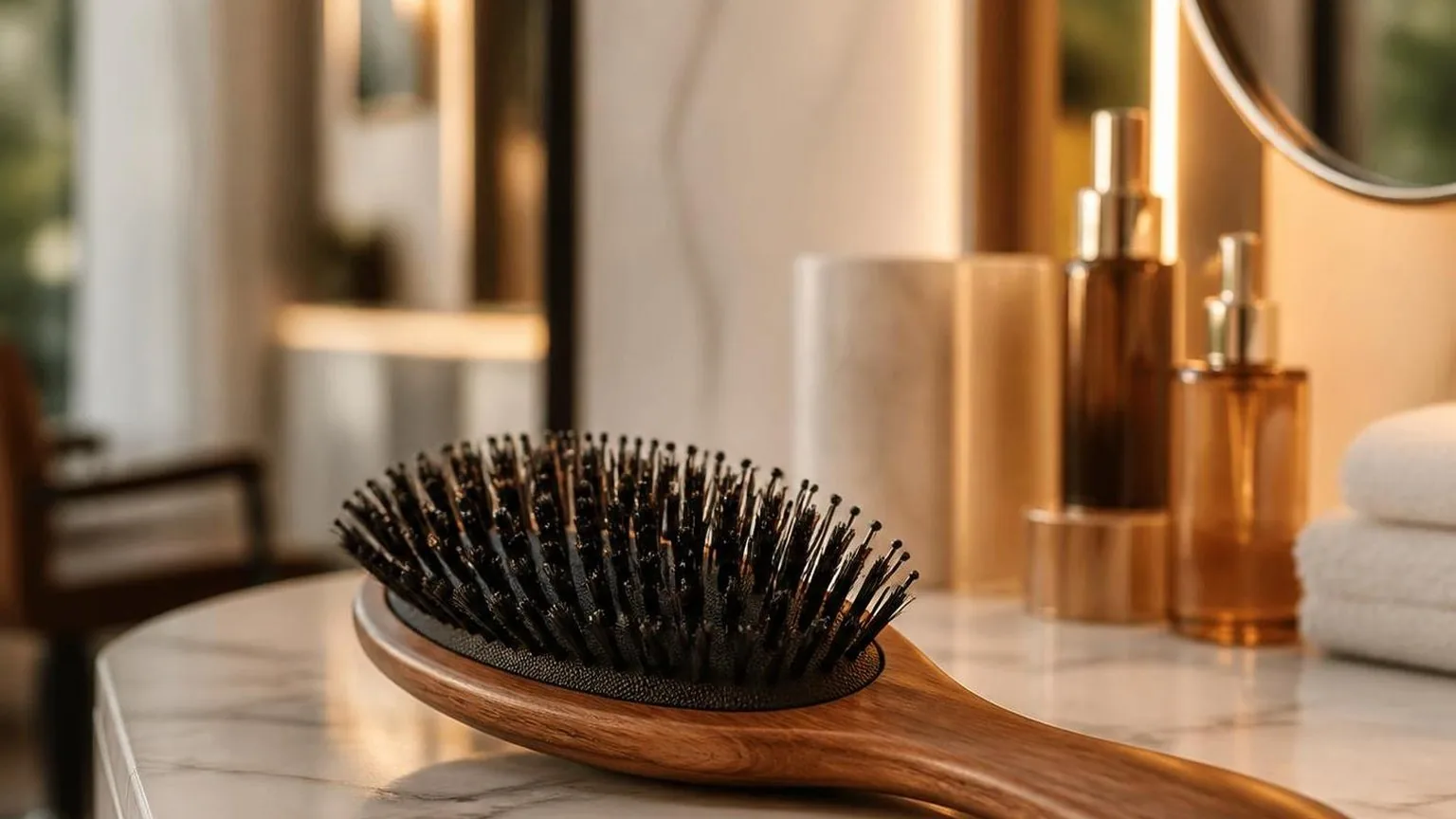
Boar, nylon or mixed: choose boar for polishing low-tension sections, nylon for detangling and lift, and mixed bristles when you need grip plus shine in one brush. In the chair, match bristle type to hair density, section size, and heat control.
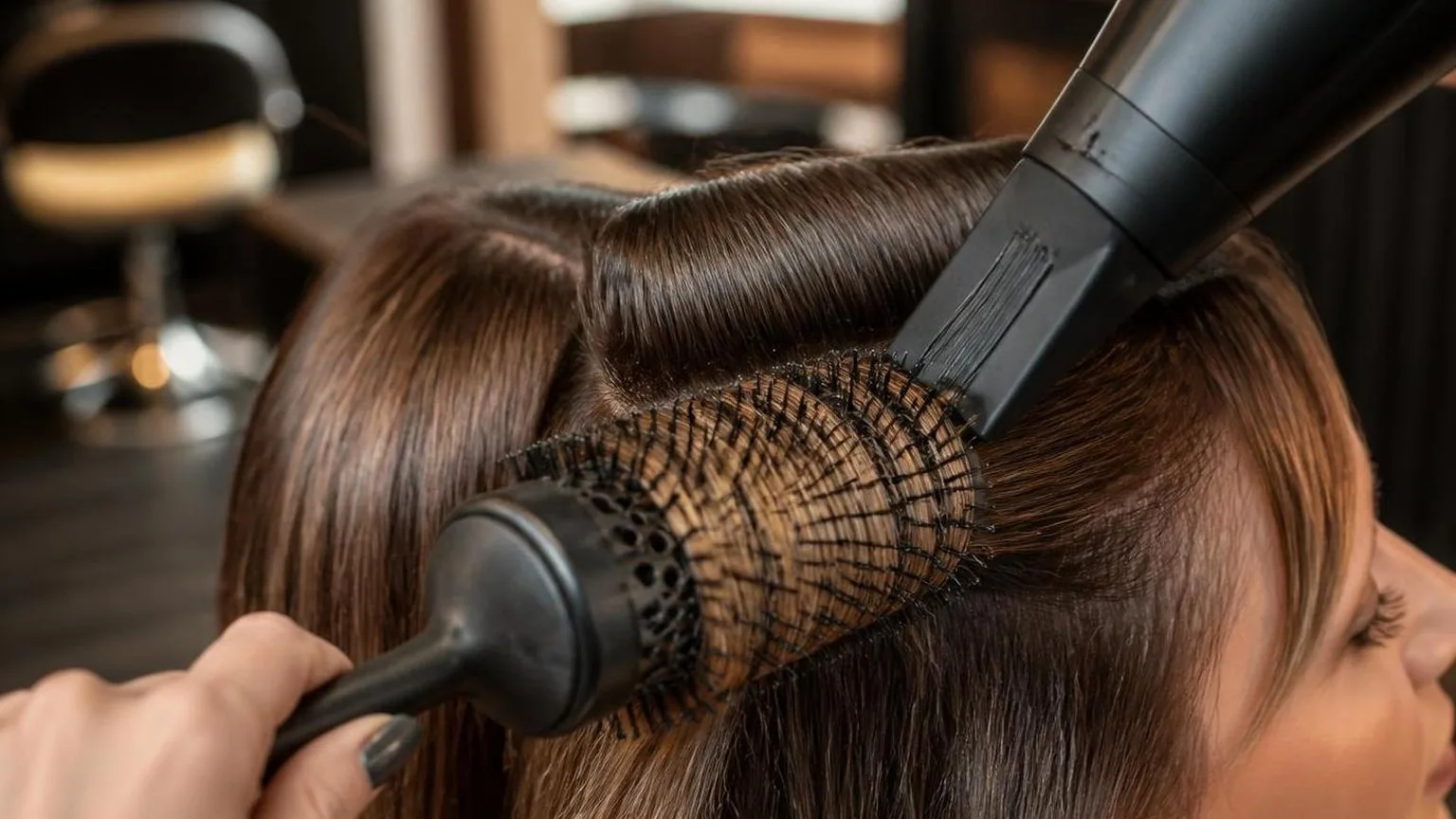
For a classic blowout, use 1–2 inch sections, keep the nozzle 1 inch from the brush, and work around 80–90% dry before shaping.
This guide compares tension, smoothing, airflow, and finish so salon teams and home users can choose with purpose.
Map Your Brush Choice
Use this chair-side check before you pick up the round brush. It works for salon services and home kits, especially when the same client needs lift at the crown but polish through the ends.
- Check density first. For fine or low-density hair, start with boar or mixed. For medium to thick hair, start with mixed. For very dense hair, coarse hair, or heavy roots, start with nylon or mixed with firm pins.
- Set the section size. Use 1-inch sections for strong control, resistant roots, or shorter layers. Use 2-inch sections for faster smoothing on longer, easier hair. If the brush slips, reduce the section before changing the brush.
- Choose the job. Pick nylon-only for root lift, detangling, and strong tension. Pick boar-only for final polish on dry or nearly dry hair. Pick mixed when you need grip at the root and shine through the mid-lengths and ends.
- Check dryness before shaping. Rough-dry to about 80–90% dry, then use the round brush. Keep the nozzle about 1 inch from the brush and keep air moving with the section.
- Audit your kit. Keep at least one mixed brush in your main blowout size, one nylon brush for lift and dense hair, and one boar brush for finishing. If one brush must serve most clients, make it mixed.
If the finish looks fluffy, add boar or mixed bristles. If the root falls flat or the section will not turn, add firmer nylon grip or take a smaller section.
Reading the Numbers Properly
Boar, nylon and mixed bristles do different jobs. Boar is best for smoothing and polishing, nylon is best for grip and lift, and mixed bristles give the most usable balance for salon blowouts.
The measurable differences are heat tolerance, bristle stiffness, barrel size and section size. Those numbers matter more than the label on the brush.
| Material | Useful salon role | Key number to know |
| Boar bristle | Polishing, soft tension, finishing passes | Use on sections no wider than the brush barrel |
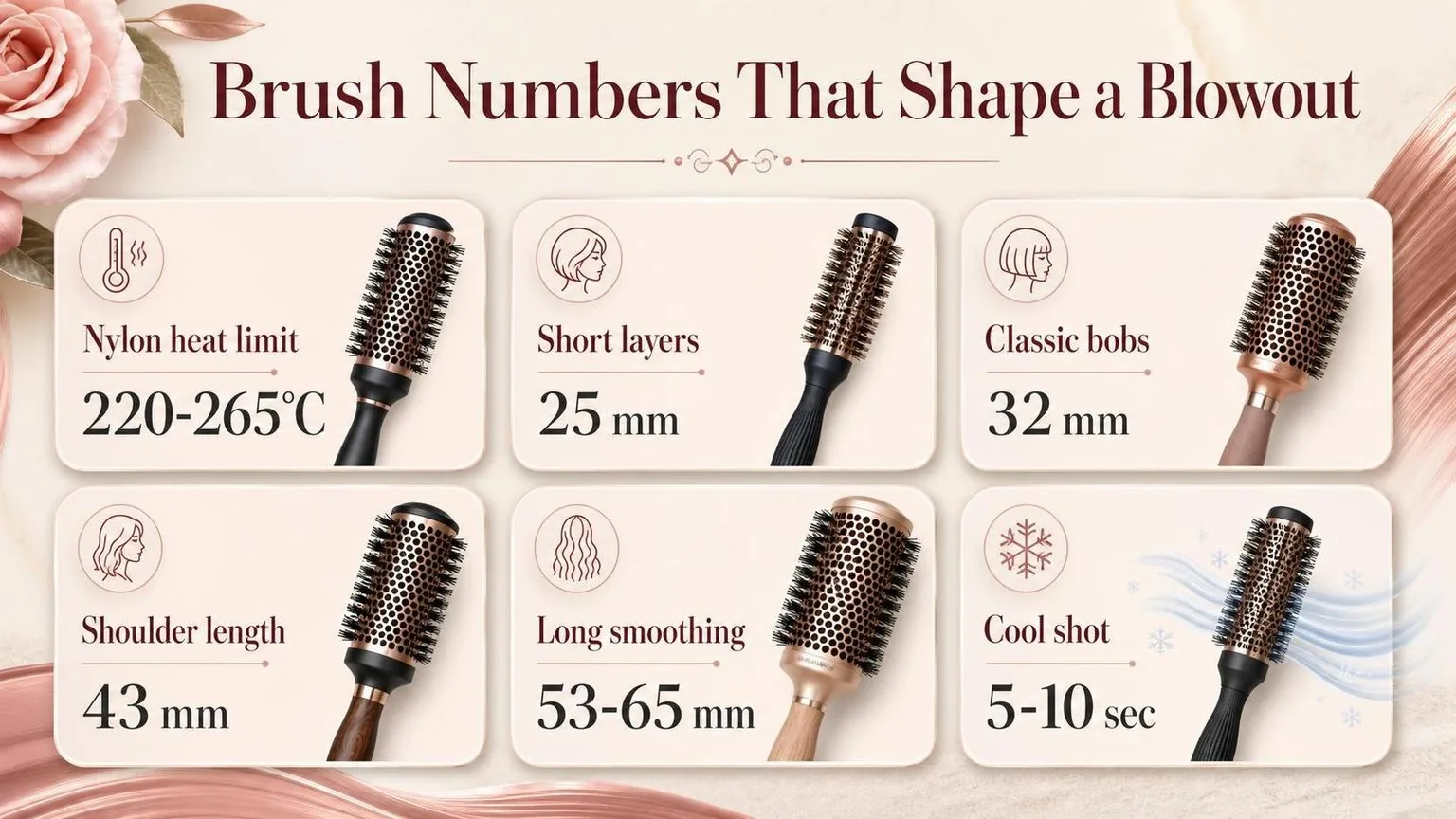
| Nylon bristle | Grip, root lift, coarse or dense sections | Nylon grades commonly melt around 220°C to 265°C, according to MatWeb polymer data |
| Mixed boar and nylon | Daily blow-dry work, smoothing with control | Nylon pins create the first grab; boar bristles refine the surface on the final passes |
Boar bristles are softer and less aggressive. In practice, they give a cleaner surface when the hair is already mostly dry, but they struggle if the section is thick, wet or resistant. They are a finishing tool, not a power tool.
Nylon has the advantage when you need traction. The stiffer pin can reach through a denser section and hold it under tension while the dryer follows. That is why nylon or mixed brushes usually outperform pure boar at the root.
| Round brush barrel | Best use | Finish produced |
| 25 mm | Short layers, fringe work, tight bend | More curl and bevel |
| 32 mm | Bobs, face framing, medium lift | Controlled bend |
| 43 mm | Shoulder-length blowouts | Soft movement and volume |
| 53 mm to 65 mm | Long hair, smoothing, loose ends | Less curl, more stretch |
Section control is just as important as bristle choice. A common professional rule is simple: the section should not be wider than the working barrel, and it should be shallow enough for airflow to pass through cleanly.
| Working factor | Practical number | Why it matters |
| Section width | Match the barrel width | Prevents loose edges and uneven polish |
| Section depth | About 1 cm to 2 cm | Allows heat and air to reach the centre |
| Nozzle distance | About 5 cm to 10 cm from the brush | Reduces hot spots while keeping airflow focused |
| Final cool shot | About 5 seconds to 10 seconds per section | Helps set the shape before release |
For most blow dry bars, mixed bristle brushes are the most efficient default. Keep pure boar for finishing passes, keep nylon for strong control and root work, and choose the barrel size before arguing about the bristle.
Where the Difference Comes From
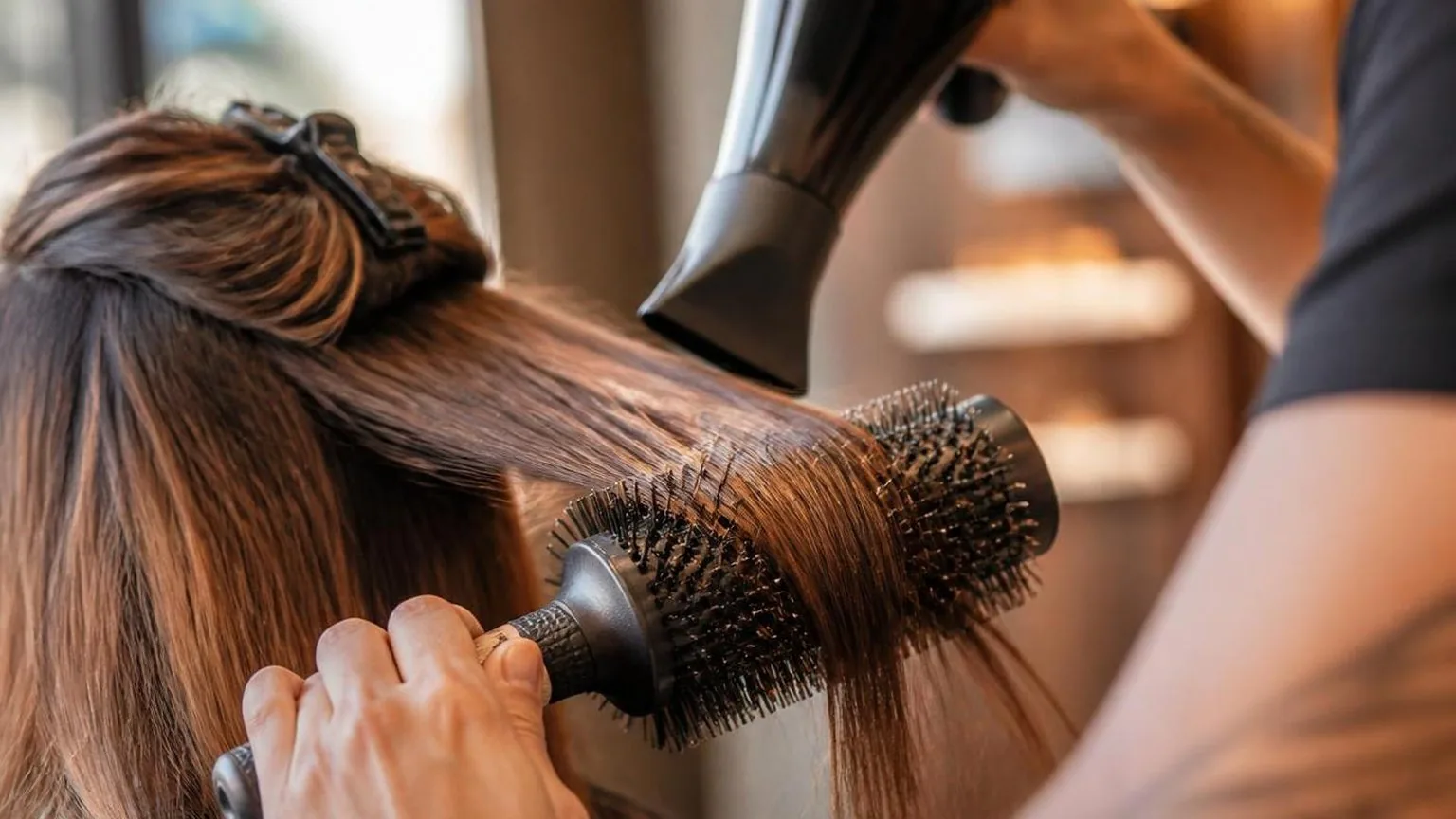
Boar, nylon, and mixed bristles change tension, polish, drying speed, and how much control you have at the root. Boar smooths best, nylon grips and lifts best, and mixed bristles give the most practical salon balance for a classic blowout.
The result is not only the bristle. Barrel diameter, section size, airflow, and how long the hair is heated on the brush decide whether you get bend, volume, or a flatter finish.
Bristle grip and polish
Boar bristles have a cuticle-like surface that creates light, even tension. That helps lay the hair cuticle flatter during brushing, which is why stylists reach for boar when they want shine and a softer edge.
Nylon bristles are stiffer and usually more widely spaced. They penetrate dense sections better than pure boar, especially near the root, so they are stronger for lift, control, and fast detangling during rough-to-smooth work.
| Bristle type | What it changes | Best use |
| Boar | Lower pull, higher surface polish | Fine to medium hair, smooth ends, soft bend |
| Nylon | Higher grip, stronger root control | Dense hair, lift, faster shaping |
| Mixed | Grip from nylon, smoothing from boar | Everyday salon blowouts, round-brush volume |
Barrel size changes bend more than bristle type
For a round brush, diameter sets the curve. A small barrel creates a tighter bevel. A large barrel stretches hair straighter and gives a looser finish. Bristle choice refines the surface, but barrel size decides the silhouette.
| Barrel diameter | Typical result | Best hair length |
| 25 mm | Strong bend, defined ends | Short layers, fringes, bobs |
| 32 mm | Medium bevel, root lift | Chin to shoulder length |
| 43 mm | Loose volume, smoother stretch | Shoulder length and longer |
| 53 mm | Straighter polish, large-set movement | Long hair, low wave finish |
Heat, section size, and cooling time
Keratin fibre studies commonly place hair’s glass transition around 60°C to 80°C when wet, depending on water content. In practical blow-drying, that means hair changes shape most while warm and damp, then sets as it cools.
Use sections no wider than the brush barrel and about 1 to 2 cm deep for dependable tension. Oversized sections dry on the outside first, leaving the centre swollen, which reduces shine and makes the finish collapse faster.
| Control point | Professional target | Result |
| Nozzle distance | 5 to 10 cm from hair | Focused airflow without blasting the section apart |
| Air direction | Root to end | Smoother cuticle alignment and less frizz |
| Heat pass | 3 to 5 seconds per section face | Shape without over-drying the surface |
| Cool set | 5 to 10 seconds on the brush | Longer-lasting bend and lift |
For most blow dry bars, mixed bristle brushes are the safest first choice. They grip enough to create lift, polish enough for a camera-ready surface, and reduce the need to swap tools between fine, medium, and dense clients.
Judging It in Practice
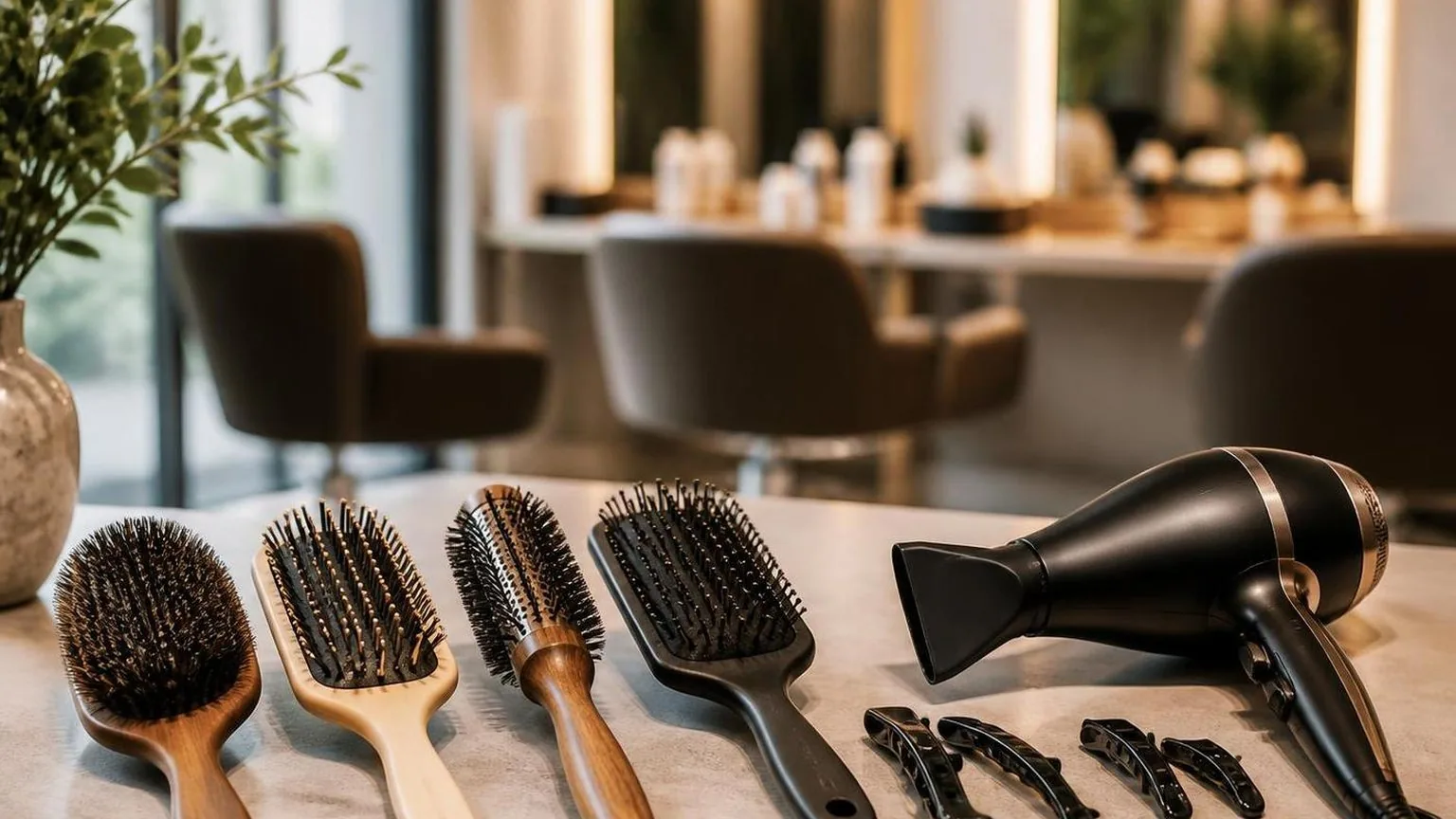
Judge boar, nylon, or mixed bristles by what happens in the first three passes: grip at the root, tension through the mid-lengths, and polish on the last 5 cm.
The right brush should move hair without snagging, overheating, or leaving a fuzzy surface.
Test on clean, towel-dried hair at roughly 70% dry. Use one section from the crown and one from the nape, because density and texture often differ. Keep sections no wider than the brush barrel and no thicker than 2 cm.
| Hair response | Best first test | What to watch |
| Fine, low-density hair | Boar or soft mixed bristle | Too much nylon can collapse lift or leave track marks |
| Medium density with bend | Mixed boar-nylon | Needs enough bite to stretch without roughing the cuticle |
| Coarse or high-density hair | Nylon or firm mixed bristle | Pure boar may skim the surface instead of controlling the section |
For a reliable salon test, set the dryer to medium heat first, then increase only if the section is not shaping.
Many professional dryers produce outlet temperatures around 60°C to 100°C, but hair temperature depends on airflow, distance, and movement.
| Test setting | Use on hair | Pass time |
| Medium heat, high airflow | Fine to medium hair | 6 to 10 seconds per pass |
| High heat, high airflow | Dense or resistant hair | 4 to 8 seconds per pass |
| Cool shot | All hair types | 5 to 10 seconds before release |
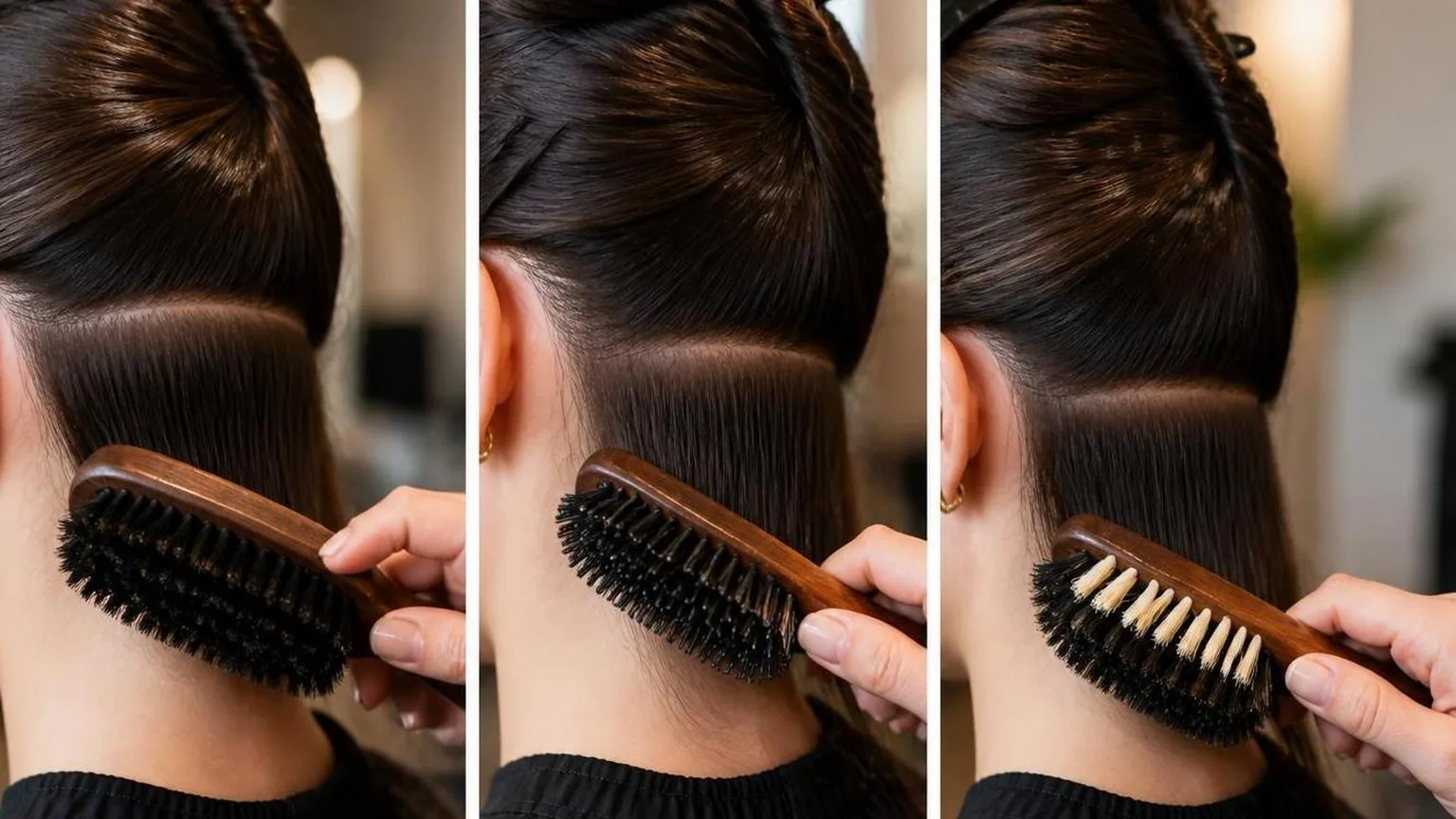
Grip is the clearest difference. Boar bristles spread natural oils and smooth the surface, but they do not always penetrate dense sections. Nylon pins separate and tension hair more directly. Mixed brushes aim to do both in one pass.
- Choose boar if the section wraps easily, looks shiny after one pass, and does not need aggressive stretching.
- Choose nylon if the brush must reach the inner layer of thick sections or lift strongly at the root.
- Choose mixed if boar alone polishes but fails to control, while nylon alone leaves the finish too expanded.
Barrel diameter matters as much as bristle type. A 25 mm to 35 mm brush builds bend and root lift on shorter layers. A 43 mm to 55 mm barrel smooths long hair faster but gives less curl formation.
Stop using a brush on that client if you hear repeated snapping, see deep grooves in the section, or need more than three slow passes to smooth it. Those signs usually mean the bristle stiffness, section size, or heat setting is wrong.
Set Against the Other Options
Boar gives the smoothest surface finish, nylon gives the strongest grip and detangling, and mixed bristle brushes sit between the two.
For most blow-dry bars, mixed bristles are the most versatile choice because they polish while still holding tension at the root.
In chair work, the difference shows up in tension, heat transfer, and how quickly the section dries. A brush that cannot hold a clean section will add passes, even if the barrel size is correct.
| Bristle type | Best use | Typical section width | Airflow setting |
| Boar | Polishing, smoothing, finishing | 1 to 1.5 inches | Medium heat, medium air |
| Nylon | Lift, grip, detangling, stretch | 1.5 to 2 inches | Medium to high air |
| Mixed | Everyday blowouts, bend, shine | 1.25 to 2 inches | Medium heat, high air |
Boar bristles are naturally irregular and softer than molded nylon, so they excel at laying the cuticle flat. They are less effective when the hair is dense, very wet, or resistant to tension. Use them when the hair is already about 80% dry.
Nylon bristles are usually longer, stiffer, and more evenly spaced. That makes them better for reaching through thicker sections and lifting the root.
The trade-off is a less polished finish unless the stylist reduces section size and controls nozzle direction.
| Tool factor | Boar | Nylon | Mixed |
| Grip level | Low to medium | High | Medium to high |
| Finish | Highest shine | More volume, less polish | Balanced shine and control |
| Best barrel size | 1.5 to 2.5 inches | 1 to 2 inches | 1.5 to 2.75 inches |
| Working dryness | About 80% dry | 60% to 80% dry | 70% to 85% dry |
For round-brush work, barrel diameter matters as much as bristle type. A 1-inch barrel creates tighter bend on shorter layers. A 2-inch barrel gives root lift and soft movement. A 2.5-inch barrel smooths long hair with minimal curl.
Heat should stay controlled. Many professional dryers run in the range of 140°F to 200°F at the nozzle, depending on distance and setting. Keep the concentrator about 1 to 2 inches from the brush and keep it moving.
- Choose boar for fine to medium hair when the priority is polish, gloss, and soft bend.
- Choose nylon for dense hair, strong root lift, fringes, and faster tension building.
- Choose mixed when one brush must handle most salon blowouts from damp stretch to final smoothing.
In practice, a mixed bristle brush reduces tool changes. Start with firm tension at the base, roll through the mid-lengths, then hold the ends wrapped for 5 to 8 seconds before cooling for shape memory.
Protecting the Hair While You Work
Boar, nylon and mixed bristles manage heat and tension differently. Boar gives polish with lower grip, nylon gives stronger pull-through, and mixed brushes balance control with surface smoothing when the hair is dried in disciplined sections.
In the chair, the safest finish usually comes from reducing passes, not from simply choosing the “softest” brush.
Robbins’ hair-fibre text describes heat, water and mechanical stress as linked factors in fibre fatigue, so brush choice has to match dryer distance, section size and tension.
| Brush type | Best tension profile | Heat behaviour in use |
| Boar | Light to moderate grip; best for polishing already stretched hair | Lower direct pull, but repeated passes can overheat the same surface |
| Nylon | Firm grip; best for stretching resilient roots and dense sections | Can concentrate tension at fewer contact points if the section is too wide |
| Mixed | Moderate grip with smoothing; useful for most salon blowouts | Good control when the dryer follows the brush rather than blasting ahead of it |
For intact cuticle feel, keep the nozzle moving and avoid holding heat on one bend of hair.
Cosmetic scientist reports and manufacturer safety guidance consistently place control on airflow, distance and dwell time, not only on the labelled heat setting.
| Control point | Practical target | Why it matters |
| Nozzle distance | Keep about 15 cm from the hair surface | Reduces hot spots while preserving directional airflow |
| Dwell time | Keep each heated pass under 5 seconds | Limits repeated heating of the same fibre area |
| Section width | Use sections no wider than the brush barrel | Prevents dragging and uneven drying through the middle |
| Section depth | Work around 2 cm deep on dense hair | Lets air reach the interior without excessive tension |
Boar brushes suit final smoothing on hair that is already mostly dry. They do not penetrate dense sections as aggressively, so stylists often need smaller panels and slower rotations.
That is useful for shine work, but inefficient for first-stage stretching.
Nylon bristles are better for lift and control at the root because they enter the section more decisively. The trade-off is mechanical tension. If the brush stalls, unwrap and reset rather than pulling through resistance.
- Use nylon when the priority is root direction, bend control or high-density hair.
- Use boar when the priority is surface polish on pre-dried lengths.
- Use mixed bristles when you need grip at the root and sheen through the mid-lengths.
- Switch to a cooler airflow before releasing the section to help the shape set.
For most blow dry bars, mixed bristles are the most forgiving service brush.
They shorten the route from wet reshaping to polished finish, provided the stylist keeps panels narrow, airflow parallel to the cuticle direction and tension steady rather than forceful.
Why the Technique Works
Mixed bristle brushes usually create the most reliable salon finish because they combine grip and polish: more control than boar alone, less snagging than nylon alone, and faster surface smoothing on mid-lengths.
Boar bristles suit fine hair because they distribute tension softly and lay the cuticle flatter. Nylon pins suit root work because they reach deeper into the section and hold hair firmly against the barrel.
Standard blow-dry prep starts on clean, towel-dried hair at roughly 70% dry. Straight, wavy, and coily-textured hair all need controlled sectioning, a concentrator nozzle, medium heat first, then a cool shot to set the section.
| Variable | Working range |
| Section width | 1.5 to 2 inches |
| Section depth | 0.5 to 0.75 inch |
| Nozzle distance | 2 to 3 inches from hair |
| Airflow direction | Root to end, cuticle-down |
| Passes per section | 3 to 5 |
| Cool shot | 5 to 8 seconds per section |
On fine, straight hair, pure boar bristles give the cleanest surface because the softer bristle pack smooths without excessive pull. After three passes, the face frame should show fewer flyaways when airflow stays cuticle-down.
Root lift is harder with boar because the bristles do not penetrate dense sections as firmly. Keeping the section under 0.5 inch deep helps the brush reach the base and maintain enough tension.
On dense wavy hair, nylon pins create stronger tension because they reach through the section and press the hair against the barrel. That contact helps stretch bends faster and keeps the section from slipping during rotation.
The trade-off is a rougher feel at the ends if high airflow is placed too close. Dry ends need controlled tension, a 2 to 3 inches nozzle distance, and cuticle-down airflow to avoid fraying the finish.
| Bristle type | Best use | Where it falls short |
| Boar | Surface shine and flyaway control on fine to medium hair | Less root lift and weaker grip on dense sections |
| Nylon | Strongest grip, fastest stretch on wavy hair | Can rough up dry ends if overworked |
| Mixed | Best balance of grip, polish, and control | Still needs small sections for coarse or very dense hair |
Mixed bristles are forgiving because each material handles a different part of the job. Nylon pins pick up and hold the section. Boar clusters smooth the surface and help control flyaways.
On medium-density hair, a 2-inch section can usually finish in four passes when tension, airflow direction, and cool setting are controlled. That timing helps preserve bend and shine without overworking the section.
Barrel size matters as much as bristle type. A 1.5-inch barrel gives more bevel and root movement because the hair wraps tighter. A 2-inch barrel smooths faster on shoulder-length hair because it covers more surface.
Anything larger needs longer hair to keep enough wrap around the brush. Without enough wrap, the brush loses tension, the section slips, and the finish looks flatter or less controlled.
- For fine hair: boar or soft mixed bristle, smaller sections, medium heat, lighter tension.
- For dense wavy hair: nylon or firm mixed bristle, 0.5-inch-deep sections, steady tension.
- For a polished everyday blowout: mixed bristle, nozzle angled down, cool shot before release.
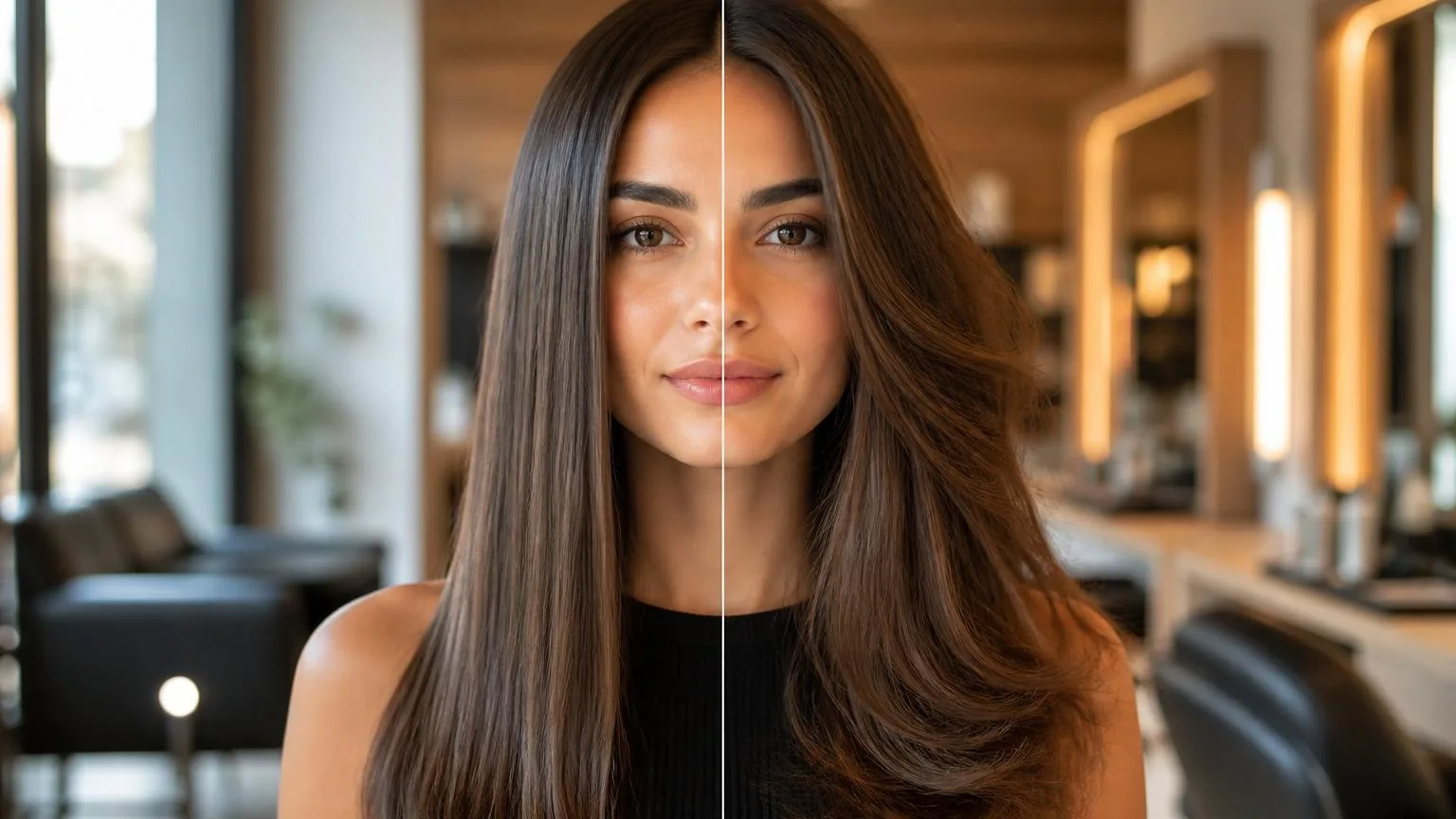
The practical takeaway: choose boar for polish, nylon for grip, and mixed bristle when both are needed. In chair work, mixed bristles give the broadest margin for error without sacrificing a professional finish.
Where It Usually Goes Wrong
Most brush mistakes come from using the bristle type for the wrong job. Boar, nylon, and mixed brushes behave differently under heat, tension, and section size, so one brush cannot deliver every professional finish equally well.
The biggest myth is that boar is always “gentler” and nylon is always “harsher.” In practice, pressure, heat, section thickness, and bristle spacing matter as much as the material.
Myth: boar bristles are best for every blowout
Boar bristles excel at smoothing and polishing because they grip the cuticle lightly and distribute natural oils along the strand. They are less effective when you need strong lift at the root or fast drying on dense hair.
| Brush type | Best use | Common mistake |
| Boar | Polishing dry or nearly dry hair | Using it on wet, dense sections |
| Nylon | Detangling, lift, airflow, control | Using too much tension near the hairline |
| Mixed | Smoothing with extra grip | Assuming it suits every texture and length |
Myth: more tension always gives a smoother finish
Salon-level tension should feel controlled, not forceful. If the section stretches, snaps back, or the dryer stalls in one place, the brush is doing too much pulling and not enough shaping.
| Working factor | Professional target | Risky habit |
| Section width | Same width as the brush barrel | Wrapping oversized panels |
| Section depth | About the bristle length | Loading hair deeper than the bristles can grip |
| Dryer distance | About 2 to 4 inches from the brush | Pressing the nozzle onto the hair |
| Air direction | Root to ends | Blowing upward against the cuticle |
Mistake: using the brush too early
Round brushing soaking-wet hair wastes time and weakens control. Rough-dry first until the hair is damp, not dripping, then switch to boar or mixed bristles for shape and polish.
| Hair state | Better tool choice | Why it matters |
| Very wet | Fingers or vent brush | Better airflow and less drag |
| Damp | Nylon or mixed round brush | Grip for lift and bend |
| Nearly dry | Boar or mixed brush | Polish and surface smoothing |
Myth: barrel size matters more than bristles
Barrel diameter sets bend; bristle type sets grip and finish. A large boar brush may smooth beautifully but fail to create lift on short layers. A smaller nylon brush may lift well but leave less surface polish.
| Barrel diameter | Typical result | Best pairing |
| 1 to 1.5 inches | Tighter bend, root lift, short layers | Nylon or mixed |
| 1.75 to 2.25 inches | Soft movement, medium-length shaping | Mixed |
| 2.5 inches and above | Smoother, looser finish | Boar or mixed |
Mistake: overheating the brush
Brushes are styling tools, not hot tools. Keep the dryer moving, use the concentrator nozzle, and finish each section with a cool shot once the hair is dry to set the shape before unwrapping.
| Heat setting | Use case | Common error |
| Low | Fine, fragile, or detailed hairline work | Taking sections that are too large |
| Medium | Most smoothing and shaping work | Skipping the cool shot |
| High | Brief rough-drying on dense hair | Holding heat on one wrapped section |
Frequently Asked Questions
What does a boar-bristle round brush do best?
Boar bristles grip lightly and polish the cuticle, so they suit fine to medium hair and finishing passes. Use after hair is about 80% dry, with medium airflow and a dryer nozzle held 1–2 inches from the brush.
When is nylon better than boar?
Nylon bristles give stronger tension and detangling, especially on dense, coarse, or long hair. Look for rounded tips and bristles about 0.5–0.75 inches long to reach through sections without scraping or snagging.
Why choose a mixed boar-and-nylon brush?
Mixed bristles combine nylon’s lift and control with boar’s smoothing finish. In salon blowouts, they are the most versatile choice for medium-density hair because one brush can create root lift, bend, and surface shine.
What barrel size works with each bristle type?
For bend and volume, use a 1.5–2 inch barrel on short to mid-length hair and a 2.25–3 inch barrel on long hair. Boar suits softer shaping, nylon gives firmer curl memory, and mixed bristles balance both.
Can the wrong bristle type cause frizz during blow-drying?
Yes, usually from poor tension or overworking damp hair. Start smoothing when hair is 70–80% dry, keep sections no wider than the brush barrel, and use the cool shot for 5–10 seconds before releasing each section.
Is a boar bristle or nylon round brush better for fine hair?
Fine hair often works well with boar bristles because they add polish and gentle tension without rough pulling. If the hair is very limp, a mixed brush can add more grip at the root.
Which round brush is better for thick or coarse hair?
Thick or coarse hair usually needs the stronger grip and separation of nylon bristles. Nylon pins can move through dense sections more easily and help create tension for smoothing during blow-drying.
How should you clean boar bristle and nylon round brushes?
Remove trapped hair after each use, then wash the brush occasionally with mild shampoo and warm water. Avoid soaking wooden handles or natural boar bristles for long periods, and let the brush dry fully before using it again.
Related Reading
- Ionic or ceramic: what the labels actually mean
- Hair dryer wattage, and why more is not better
- How to blow dry a finish that survives humidity
- What a blow dry bar is, and how the model works
- Blow drying fine hair for volume that holds
- What a paddle brush is actually for
- How long a dryer can run before it needs a rest
- How often a dryer filter needs clearing
- Choosing a professional dryer: what actually matters
- The complete guide to blow dry tools