
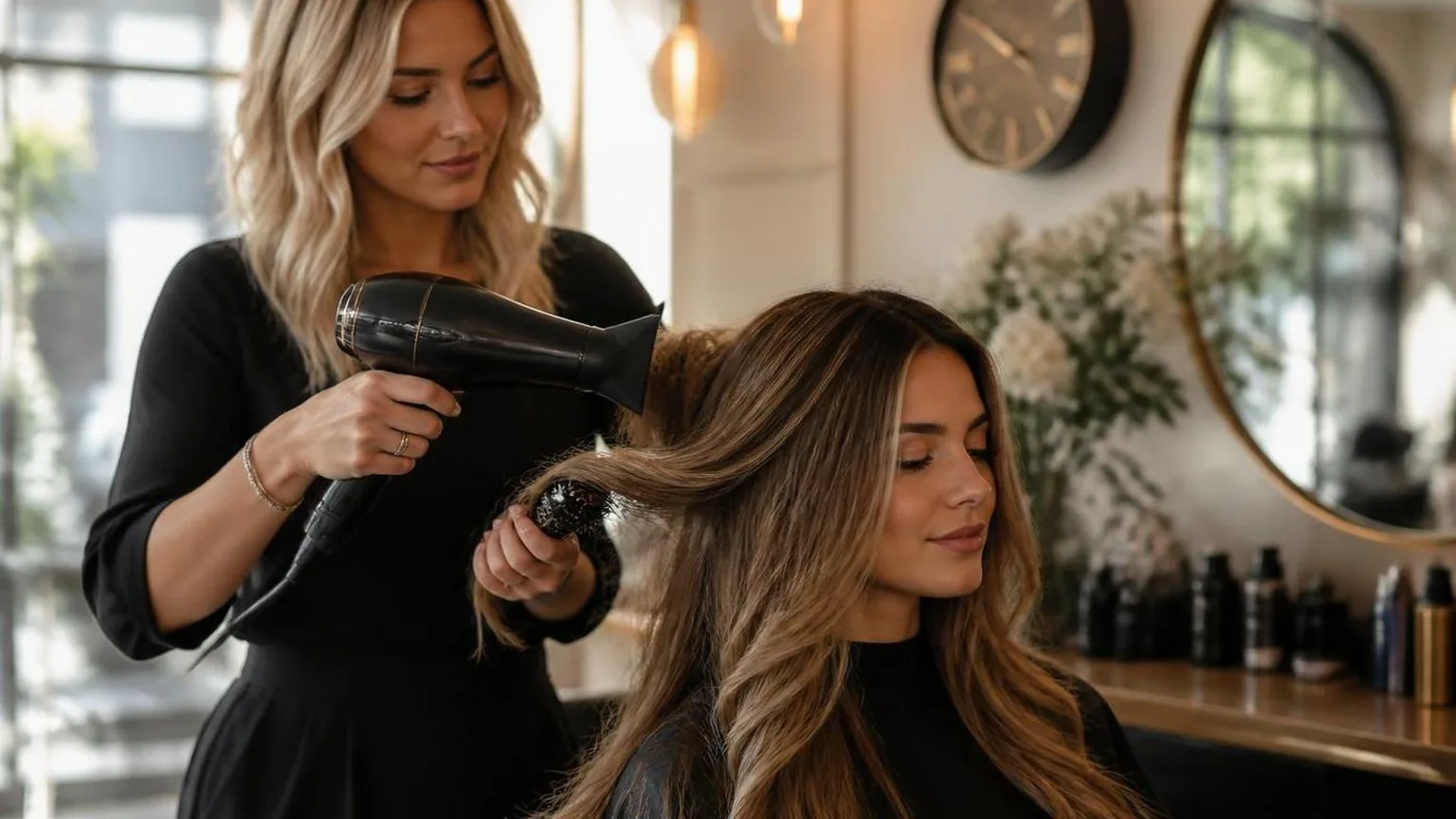
How long a blow dry should actually take: 30 to 45 minutes for shoulder-length, medium-density hair, using 80% rough-drying first, then 2-inch sections with a concentrator nozzle and medium-high heat.
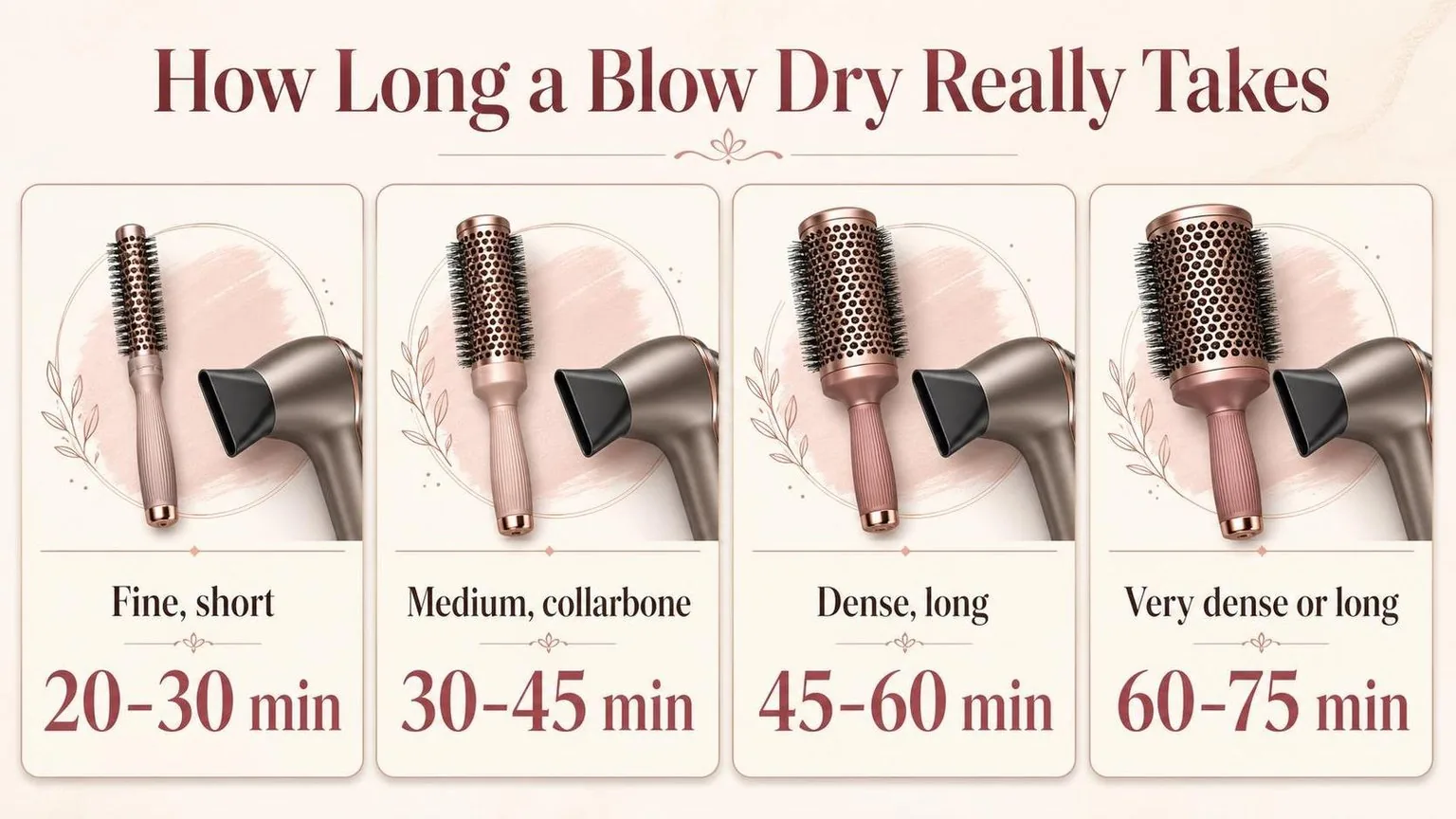
Short, fine hair can finish in 20 minutes; long, dense hair often needs 60. Timing depends on water removal, section size, brush diameter, airflow strength, and how much tension the stylist uses to polish the cuticle.
Time Your Next Blowout
Use this quick floor test to set a realistic service time for your hair, chair, dryer, and brush. Do it once, then adjust your booking slot or home routine from the result.
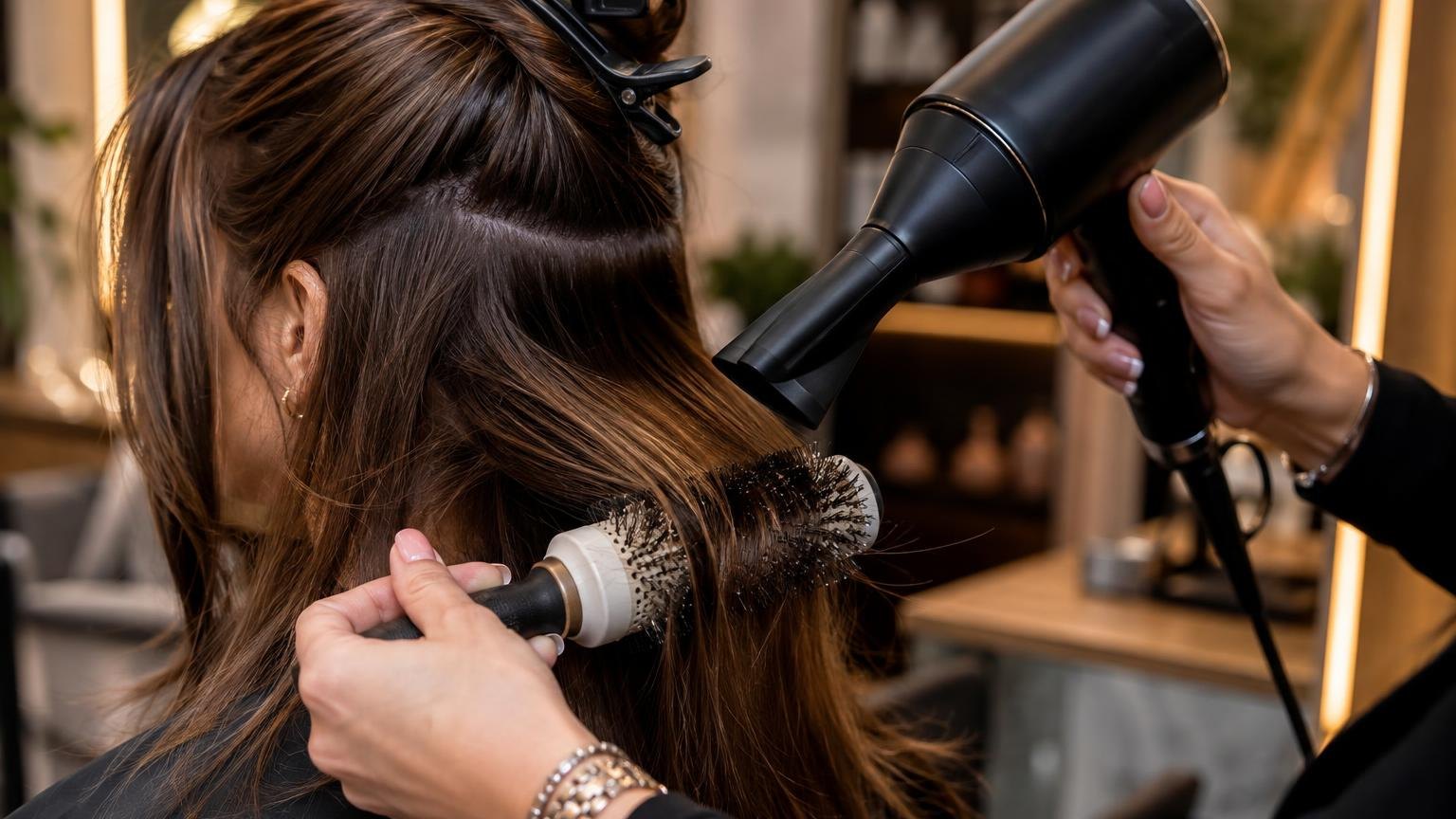
- Start at 70–80% dry. Towel-dry well, then rough-dry until the hair feels damp, not wet. If water is still beading on the ends, add 5–10 minutes before you begin section work.
- Divide into clean sections. Use 2-inch sections for shoulder-length hair. Use 1-inch sections for dense, coarse, or textured hair. Use 3-inch sections only on short or fine hair that smooths quickly.
- Time three middle sections. Pick sections from the back and sides, not the front hairline. Dry each with a concentrator nozzle, medium-high heat, firm tension, then a cool finish. Note the average time.
- Multiply by section count. Short fine hair may have 8–10 sections. Shoulder-length medium-density hair often has 12–16. Long or dense hair can need 18–24. Add 5 minutes for finishing and fringe work.
- Set your working answer. If each section takes 2 minutes across 14 sections, book about 33 minutes including finish time. If each section takes 3 minutes across 20 sections, allow about 65 minutes.
If the result feels too long, do not raise the heat first. Remove more water before sectioning, reduce section size, check the nozzle is fitted, and use a brush diameter that gives tension without dragging.
Reading the Numbers Properly
A blow dry is not one fixed appointment length. In a working salon, the realistic window depends on hair length, density, starting moisture, section size, brush diameter, and whether the finish is smooth, bouncy, or set with extra movement.
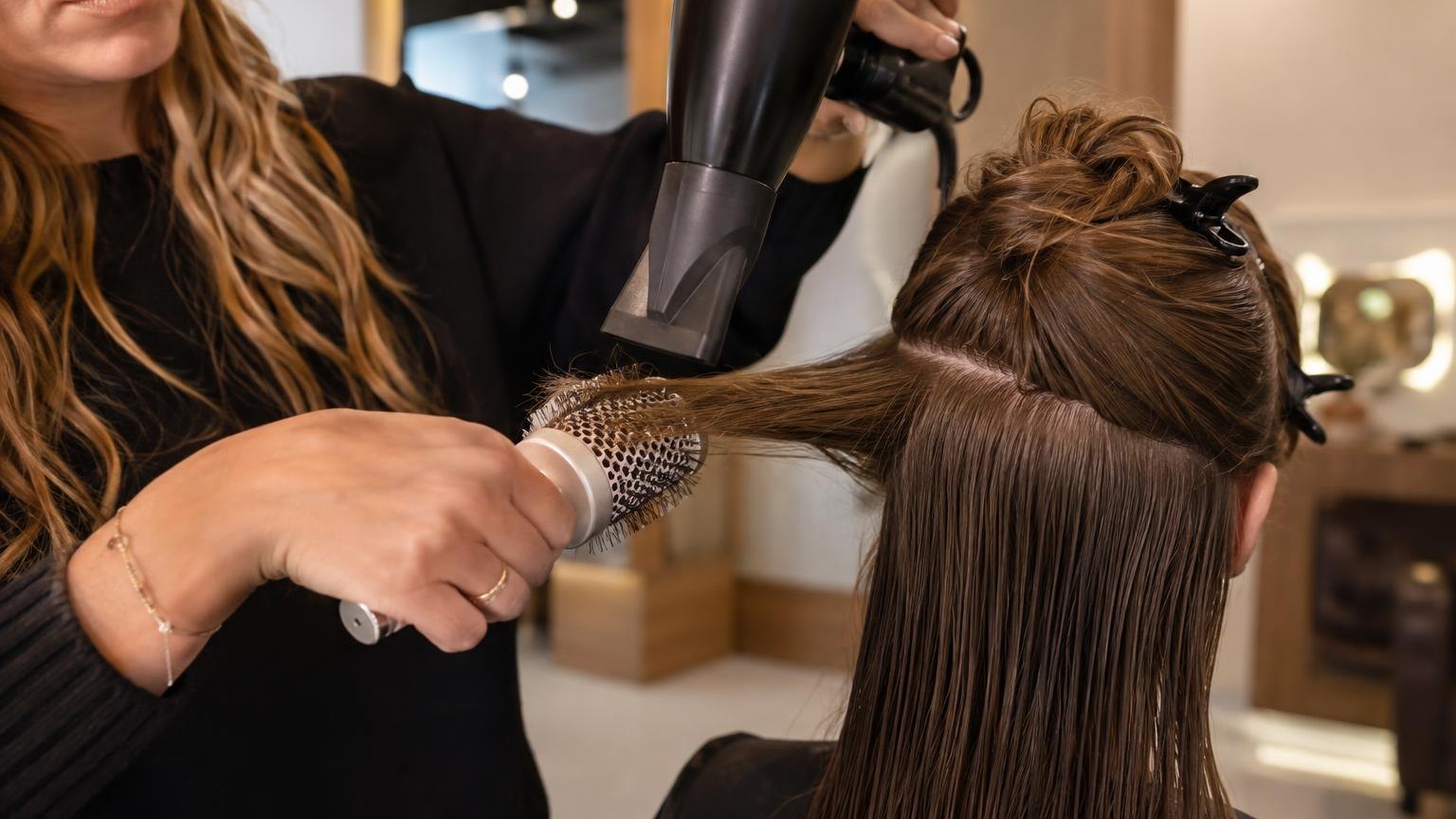
The biggest time saver is removing water before brush work. Milady’s cosmetology training guidance separates rough drying from finish drying because a round brush is a shaping tool, not an efficient water-removal tool.
| Hair and finish | Active drying time | Typical chair time |
| Fine hair, above shoulder, smooth finish | 12–18 minutes | 20–30 minutes |
| Medium density, shoulder to collarbone, polished bend | 18–28 minutes | 30–45 minutes |
| Dense hair, below shoulder, round-brush volume | 30–45 minutes | 45–60 minutes |
| Very dense or long hair, curled blowout finish | 45–60 minutes | 60–75 minutes |
Those timings assume hair is towel-blotted, detangled, and sectioned cleanly before the dryer does serious work. If the client sits down with dripping hair, add time before the first polished section even begins.
| Stage | Useful target | Why it matters |
| Towel blotting | 60–90 seconds | Removes surface water without roughing the cuticle aggressively |
| Pre-dry before brush work | 70–85% dry | Speeds the service and leaves enough moisture to reshape |
| Working section width | 1–2 inches | Keeps airflow controlled and tension even |
| Cooling each section | 5–10 seconds | Helps the shape set before the brush is removed |
Tool choice changes the clock. A narrow concentrator focuses airflow better than a wide, leaky nozzle, and the brush diameter controls how much hair can be shaped per pass.
| Tool variable | Practical range | Effect on timing |
| Concentrator opening | 6–10 mm | Narrower airflow gives faster smoothing on each section |
| Small round brush barrel | 25–35 mm | Slower, more bend, better for short layers |
| Medium round brush barrel | 43–53 mm | Balanced speed, lift, and polish for many blowouts |
| Large round brush barrel | 60–70 mm | Faster smoothing, less curve, best on longer lengths |
| Dryer heat at the outlet | 60–100°C / 140–212°F | Higher heat speeds evaporation but needs constant movement |
In practice, the stopwatch usually exposes sectioning, not dryer power. If sections are too wide, the outside looks dry while the inside stays damp, so the stylist repeats passes and loses minutes.
- Too fast: under the lower range usually means the hair was already very dry, very fine, or the finish was not fully polished.
- About right: the middle range allows rough drying, controlled tension, cooling, and final detailing.
- Too slow: above the upper range usually points to excess starting moisture, oversized sections, low airflow, or an ambitious curled finish.
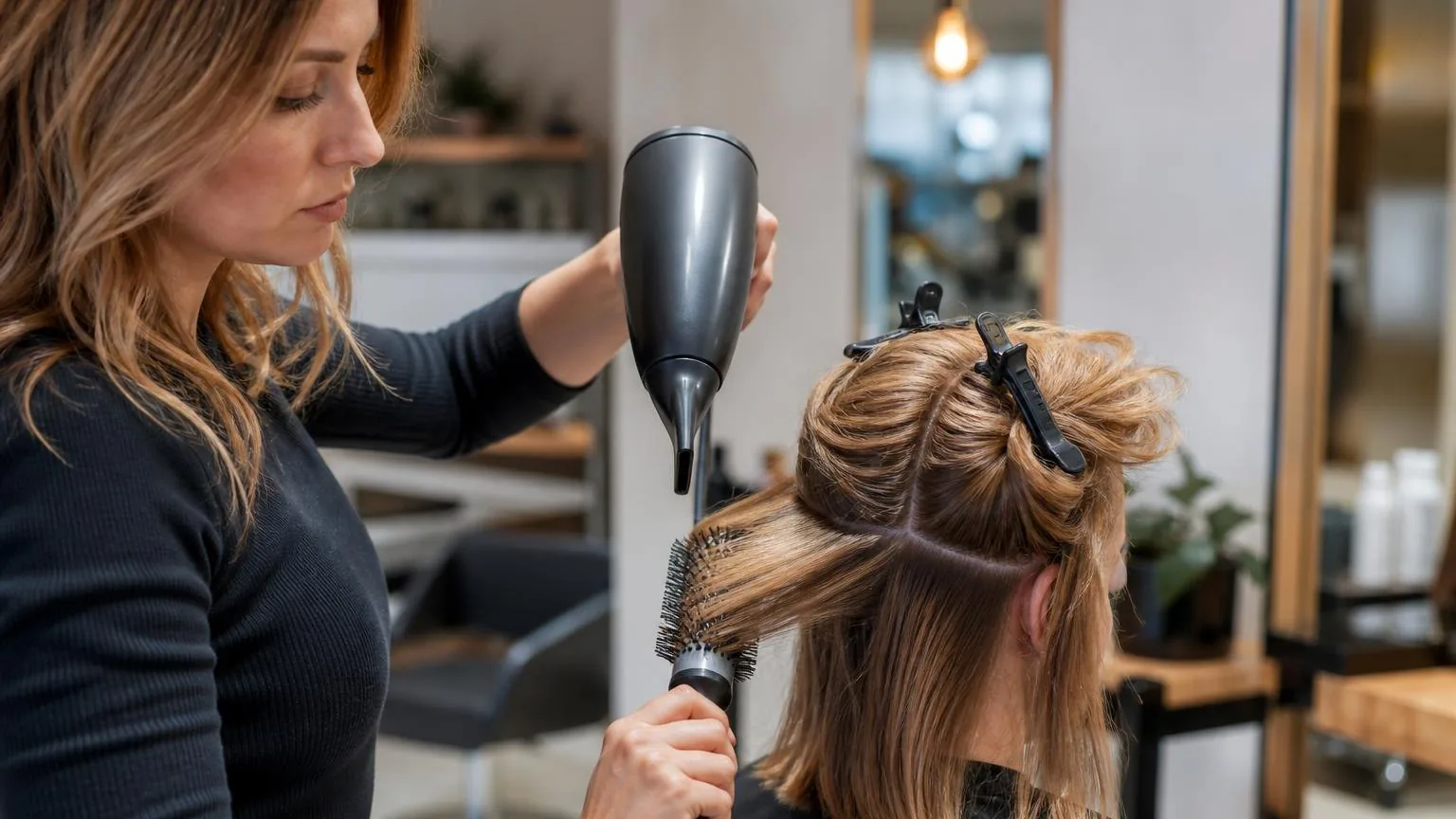
Where the Difference Comes From
The finish changes most when water removal, section size, brush tension, airflow, and heat are controlled. A fast blow dry can still look expensive if the hair is dried evenly from roots to ends and cooled before release.
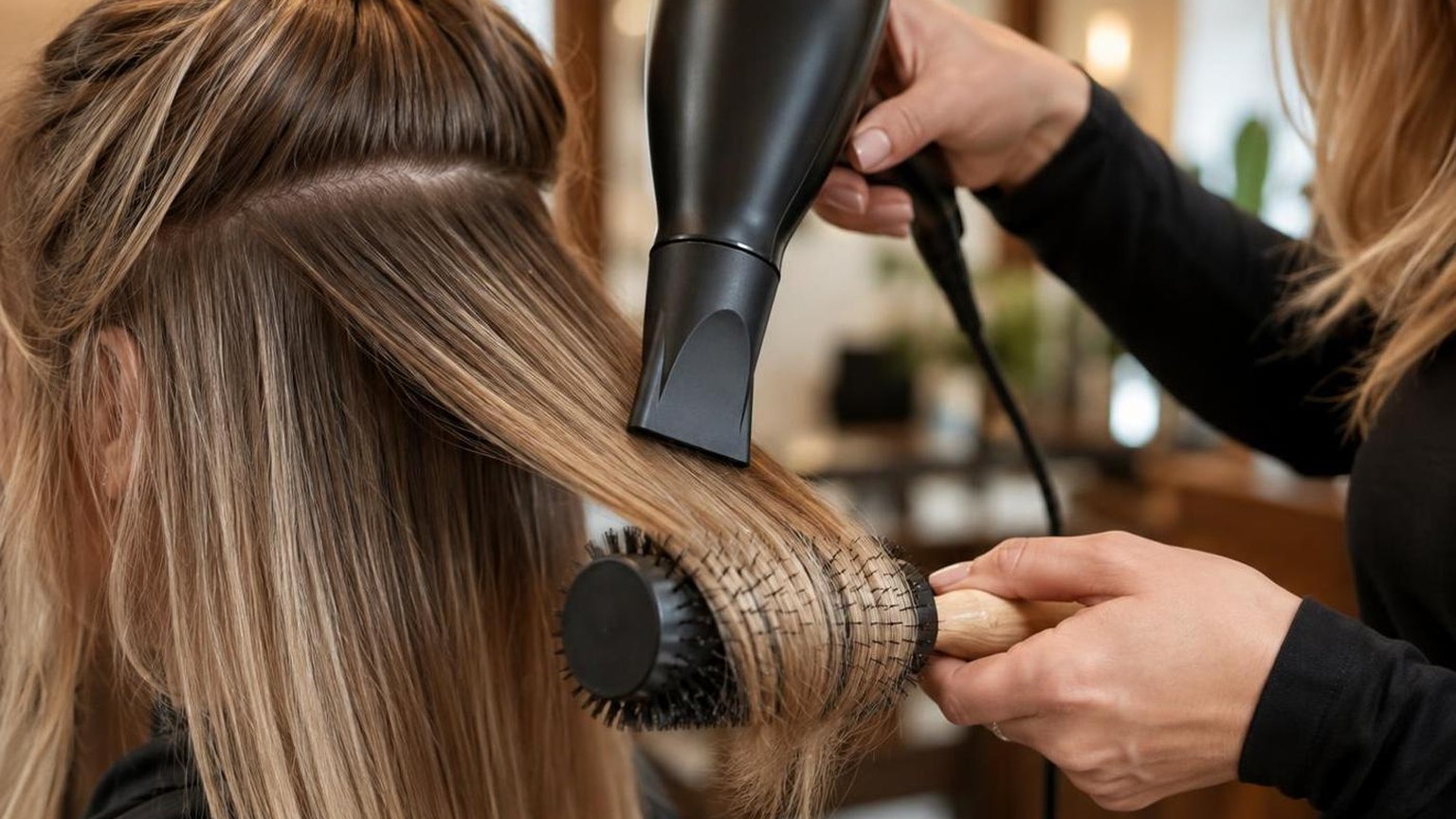
In salon work, the clock is rarely about “just drying.” It is about moving hair from wet to set, with enough control to create polish, lift, bend, or smoothness without repeatedly reheating the same section.
Starting moisture level
Hair that is dripping wet will not style efficiently. Most stylists rough-dry first, then start brush work when the hair is damp but no longer shedding water.
| Starting point | What changes | Typical effect on timing |
| Towel-blotted only | More water must be evaporated before shape can set | Adds several minutes |
| Rough-dried first | Brush work starts sooner and sections respond faster | Shortens styling time |
| Nearly dry before styling | Less time needed, but shape may not hold as well | Fastest, lower control |
Hair density, length, and texture
Two clients with the same haircut can need very different timings. Dense hair hides moisture at the interior, while coarse or highly textured hair often needs smaller sections and slower brush passes for a smooth finish.
| Hair factor | Why it matters | Practical adjustment |
| Fine, low density | Air reaches the roots and mid-lengths quickly | Use lighter tension and wider sections |
| Thick, high density | Inner layers stay damp longer | Subsection more often |
| Short hair | Less surface area to dry and polish | Focus time at the roots |
| Long hair | Ends need controlled airflow to avoid frizz | Work from underneath upward |
Section size and brush choice
Sectioning is where many home blow dries lose time. A section should be narrow enough for air to pass through it, not just over the outside.
| Tool or section | Best use | Result |
| Small round brush | Fringe, crown lift, shorter layers | More bend and root control |
| Medium round brush | Shoulder-length cuts and soft movement | Balanced volume and smoothness |
| Large round brush | Long hair, loose polish | Smoother finish, less curl |
| Wide section | Quick drying on easier hair | Faster but less precise |
| Narrow section | Dense or resistant hair | Slower but more durable |
Heat, airflow, and cooling
Professional dryers work by combining heat with airflow, not heat alone. The British Skin Foundation and cosmetic science texts both emphasise that excessive heat can damage hair fibre, so controlled distance and movement matter.
| Control | Better practice | Why it changes the result |
| Nozzle direction | Point airflow from roots toward ends | Helps the cuticle lie flatter |
| Dryer movement | Keep air moving instead of holding it still | Reduces hot spots |
| Cool shot | Cool each finished section before release | Improves set and shine |
| Brush tension | Firm, even tension without pulling | Creates polish and shape |
The biggest time saver is not rushing the finish. It is removing enough moisture before styling, then using sections small enough that one clean pass works instead of several careless ones.
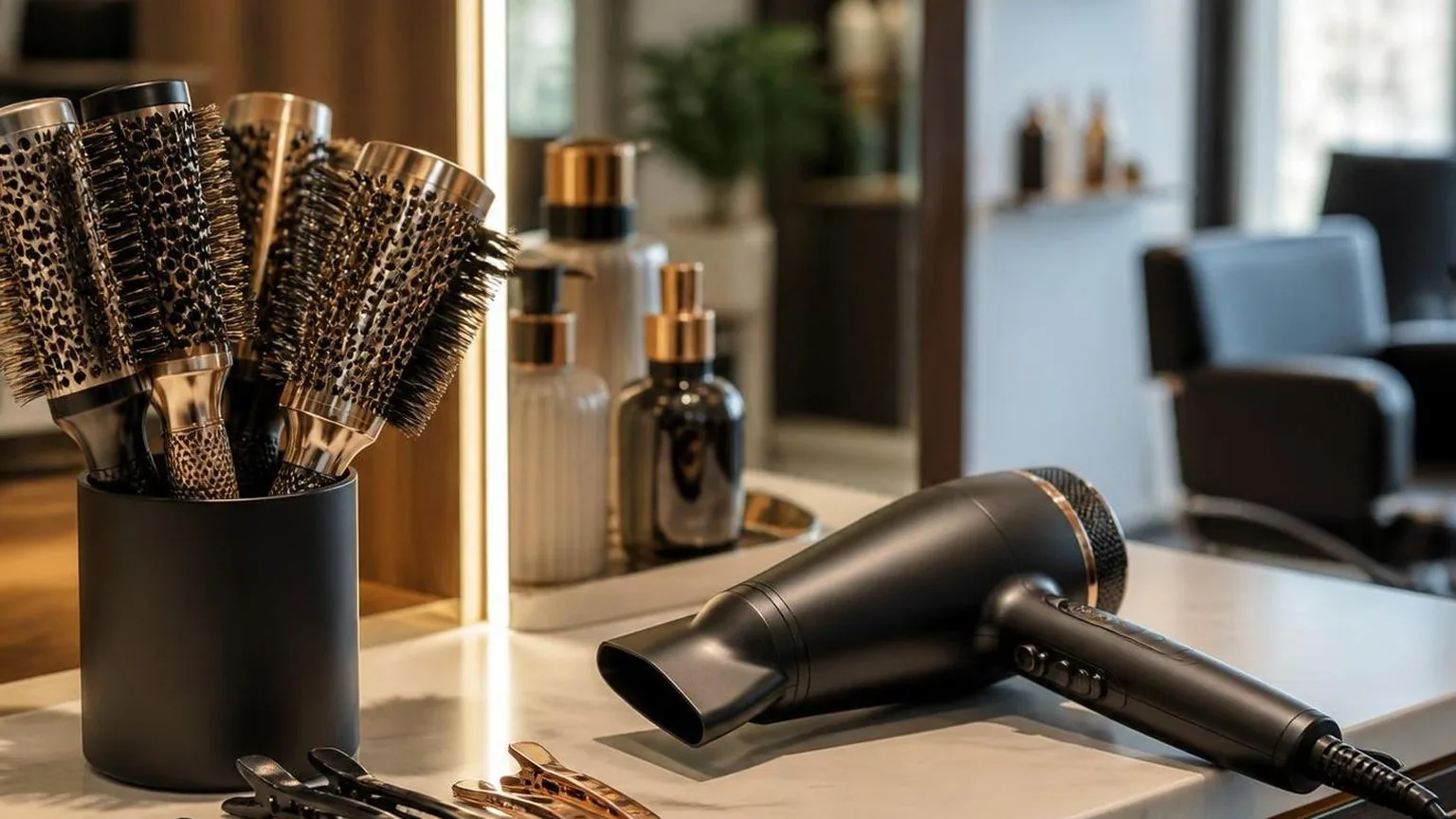
What a Good Result Looks Like
A blow dry is “on time” when the roots are fully dry, the mid-lengths feel warm not damp, and the finish holds its shape after cooling.
Judge the service by density, length, texture, water removal, and brush control, not by the clock alone.
In a salon, start timing after the shampoo bowl, towel squeeze, detangle, product placement, and sectioning. At home, start after hair is towel-blotted and combed through.
Wet hair can easily double the working time if excess water is left at the root.
| Hair situation | Realistic blow-dry window |
| Fine, above-shoulder, low density | 15 to 25 minutes |
| Medium density, shoulder to collarbone | 25 to 40 minutes |
| Long, dense, or coarse hair | 40 to 60 minutes |
| Very dense hair with detailed smoothing or waves | 60 to 75 minutes |
The first checkpoint is the rough dry. For most finishes, remove about 70 to 80 percent of the water before round-brush work.
If the brush is doing the drying from dripping wet, the service feels slow, the arm tires early, and the finish often collapses.
| Stage | What to look for | Time share |
| Towel blot and detangle | No dripping ends, no tangles at the nape | 3 to 7 minutes |
| Rough dry | Roots lifted, lengths barely cool to touch | 30 to 45 percent |
| Brush drying | Each section dried from root to end | 40 to 55 percent |
| Cooling and polish | Shape set before hair is released | 5 to 10 minutes |
Section size is the easiest way to diagnose speed. A round brush should control the whole panel without hair spilling over the barrel. If the section is wider than the brush, drying slows and the surface gets fuzzy.
| Brush barrel | Best section width | Best use |
| 25 to 33 mm | 25 to 40 mm | Fringe, short layers, bend |
| 43 to 53 mm | 40 to 60 mm | Medium volume, shoulder lengths |
| 60 to 65 mm | 55 to 75 mm | Long hair, smoother movement |
Heat should dry efficiently without scorching the section. Many professional dryers operate around 1,600 to 2,000 watts, but technique matters more than wattage. Keep the nozzle moving and aim airflow down the cuticle from roots to ends.
- Use high airflow for the rough dry, then reduce heat or speed for brush work around the hairline.
- Keep the nozzle about 3 to 6 inches from the hair, closer only with constant movement.
- Dry the root first, then the mid-length, then the ends. Damp roots are the main reason a blowout drops.
- Let each curved section cool on the brush for 5 to 10 seconds before releasing it.
A blow dry is taking too long if sections are repeatedly re-dried, the brush is overloaded, or the nozzle is pointed upward. It is too rushed if the root feels cool, the underneath remains damp, or the shape falls before the client leaves the chair.
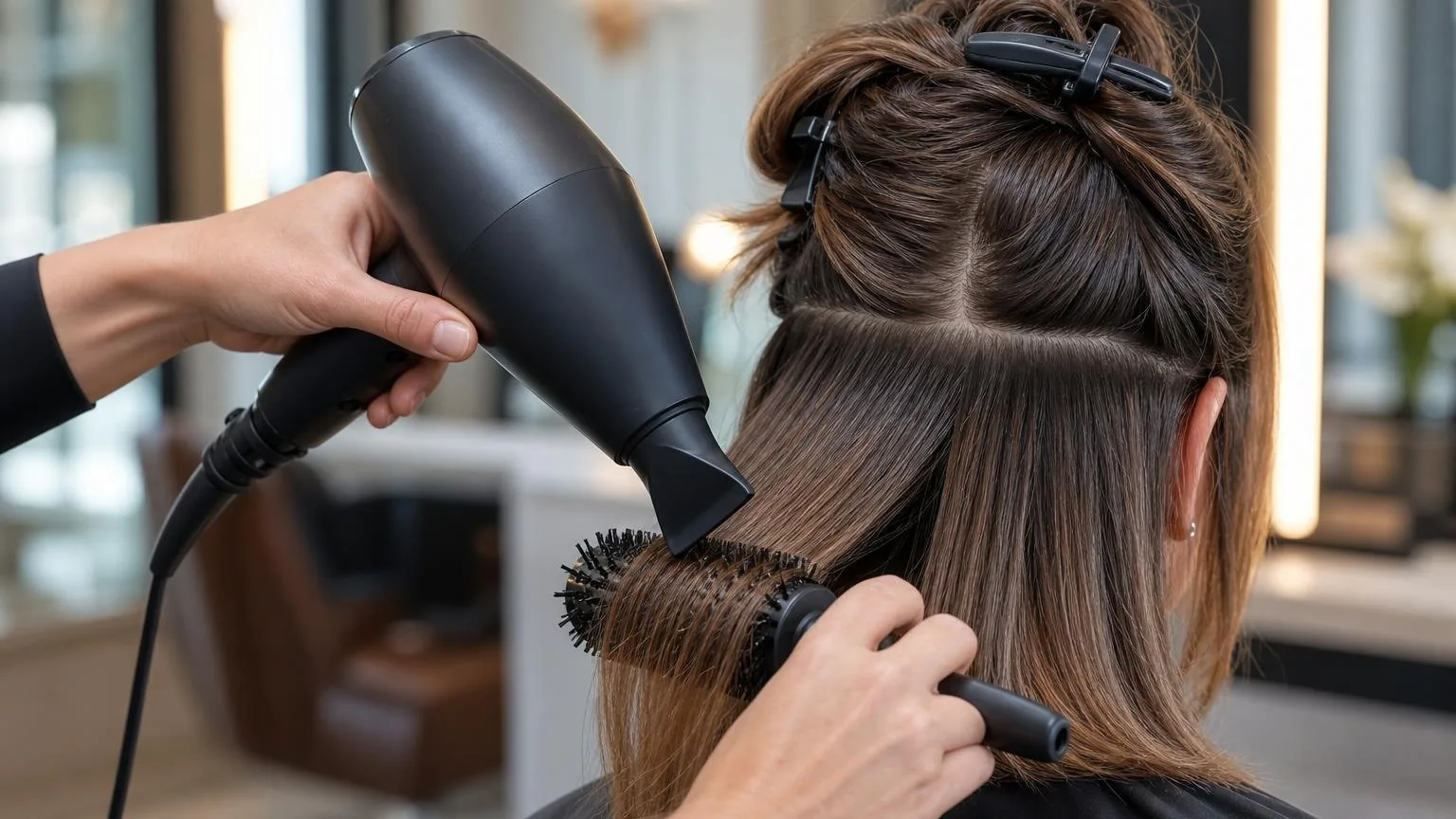
Weighed Against What Else Is Used
A professional blow dry sits between air-drying and heat-styling shortcuts: faster than drying naturally, more polished than rough-drying, and less direct-hot-tool dependent than flat ironing.
In salon timing, the real comparison is not “dry versus styled,” but how much control you get per minute.
For shoulder-length, medium-density hair, a full blow dry usually lands in the 35 to 50 minute range when done properly: towel blot, sectioning, root lift, mid-length smoothing, end finishing, and cool setting.
| Method | Typical active time | Heat contact | Finish quality |
| Air-dry only | 5 to 10 minutes of handling, then 2 to 6 hours drying | None | Natural texture, less root control |
| Rough-dry with dryer | 10 to 20 minutes | Indirect airflow, usually 60°C to 100°C at the outlet | Dry, but often expanded or uneven |
| Full round-brush blow dry | 35 to 50 minutes | Indirect airflow plus brush tension | Smooth roots, shaped ends, volume control |
| Hot brush on damp hair | 20 to 35 minutes | Heated barrel or plate plus airflow | Soft polish, less precision at dense roots |
| Flat iron after rough-dry | 25 to 45 minutes total | Direct plates, commonly 150°C to 230°C | Very smooth, flatter movement |
The full blow dry takes longer because it dries and shapes at the same time. A stylist is not just removing water; they are setting direction at the root, beveling the cuticle area with tension, and cooling each section before release.
Compared with a hot brush, the round-brush blow dry gives more control at the scalp area and hairline. A 32 mm to 45 mm ceramic or metal-core brush can create bend, while a 50 mm to 65 mm brush gives faster smoothing on longer lengths.
Flat ironing can look faster, but only if the hair is already fully dry. Passing plates over damp hair is poor technique.
Most professional irons operate with direct surface temperatures far above dryer airflow, so timing should include a complete pre-dry.
- Choose air-drying when shape is not the priority and you can leave several hours before dressing or sleeping.
- Choose rough-drying when the aim is simply to remove moisture before a ponytail, bun, or later styling.
- Choose a full blow dry when you need root lift, smoothness, movement, and a finish that photographs cleanly.
- Choose flat ironing when the desired result is straighter, flatter, and more compressed than a brush finish.
The practical benchmark is this: if a service claims a polished blow dry in under 20 minutes on medium or dense hair, something is being skipped. It may still look presentable, but it is usually a speed dry, not a fully built finish.
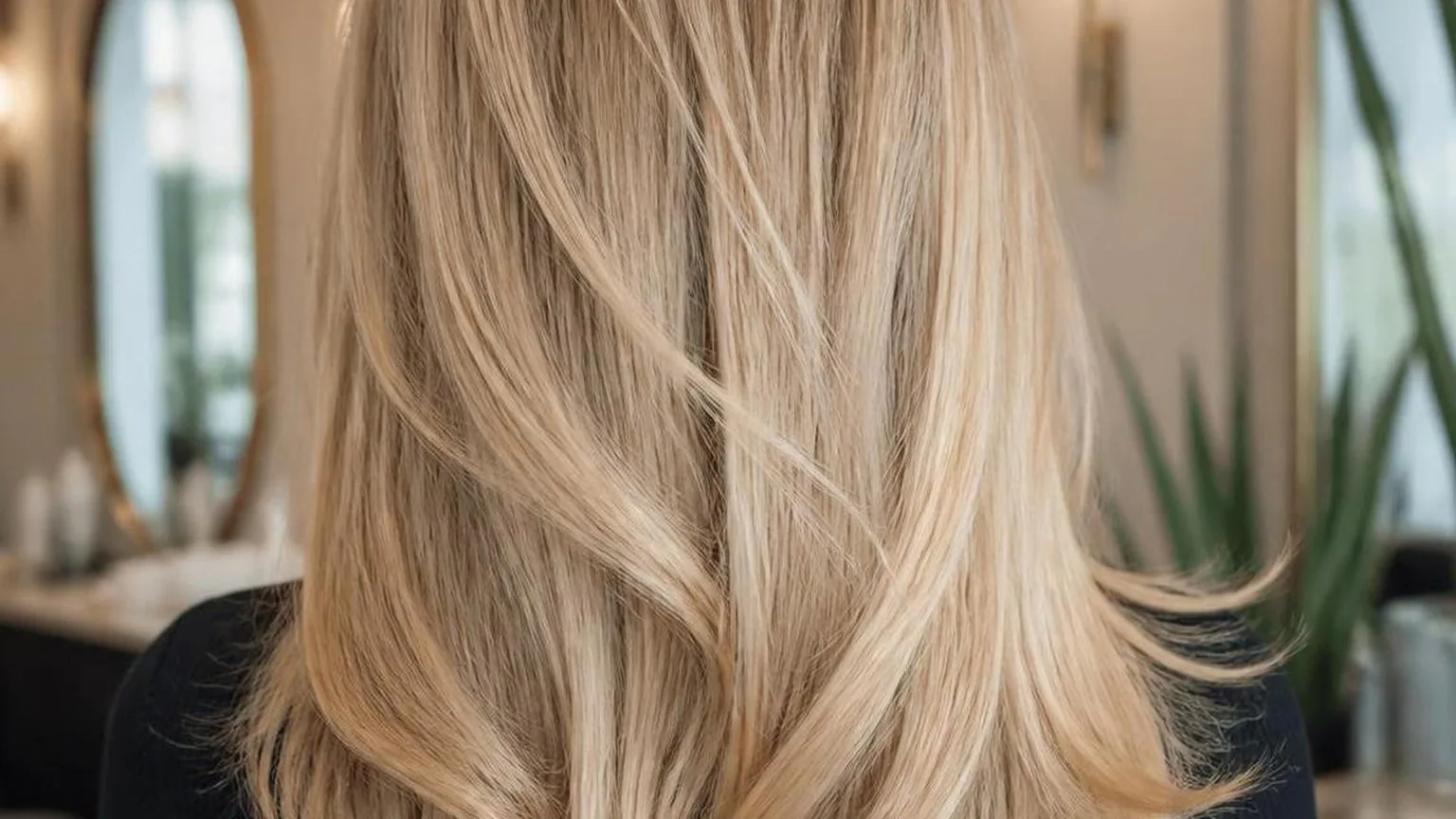
Protecting the Hair While You Work
A blow dry should be fast because water removal, not heat exposure, is the job. Keep airflow moving, use firm but not painful tension, and switch to lower heat once the section is mostly dry to protect the cuticle and maintain polish.
Hair is weakest when wet because absorbed water disrupts hydrogen bonds. The practical rule at the chair is simple: remove most moisture before brush work, then use controlled tension to shape rather than stretching saturated hair.
| Stage | Moisture target | Best tool action |
| Rough dry | About 70% to 80% dry | Fingers or vent brush, nozzle moving continuously |
| Shape | About 80% to 95% dry | Round brush, steady tension, medium to high airflow |
| Set | Fully dry at the surface | Cool shot until the section feels room temperature |
Most professional dryers sit well above hand-comfort temperature at the nozzle, so distance matters.
The Society of Cosmetic Chemists has published repeatedly on heat damage mechanisms, including cuticle cracking and protein denaturation when heat is excessive or repeated on damp hair.
| Control point | Working number | Why it matters |
| Nozzle distance | 6 to 8 inches from hair | Reduces hot-spot exposure while keeping directional airflow |
| Section width | 1 to 2 inches wider than brush barrel | Keeps tension even without overcrowding bristles |
| Section thickness | About 0.5 inch for dense hair | Lets air pass through instead of baking the outside |
| Brush pass | 5 to 8 seconds per pass | Enough time to smooth without parking heat |
For fine hair, the safest speed comes from airflow, not maximum heat. Use a concentrator nozzle, medium heat, and smaller sections.
For coarse or high-density hair, higher heat may be efficient, but only once water has been blotted and rough-dried first.
- Do not press the nozzle onto the brush. Keep an air gap so heat disperses across the section.
- Do not pull wet hair hard. Increase tension only after the section feels damp, not dripping.
- Do not keep reworking dry ends. Direct final passes from mid-lengths to ends, then stop.
- Do use the cool shot. A set section should feel cool before it is released from the brush.
Round-brush size changes timing and tension. A smaller barrel creates more bend but needs more rotations. A larger barrel smooths faster, though it gives less root lift on short layers.
| Brush barrel | Best use | Timing effect |
| 1 to 1.5 inches | Fringes, short layers, root lift | Slower, more turns needed |
| 1.75 to 2.25 inches | Medium lengths, soft bend | Balanced speed and shape |
| 2.5 inches and up | Long hair, smoothing, loose finish | Faster surface drying |
The finish is intact when the hair is dry before it is dressed. If a section still feels cool and damp after release, it was styled too soon; go back with airflow, not extra pulling.
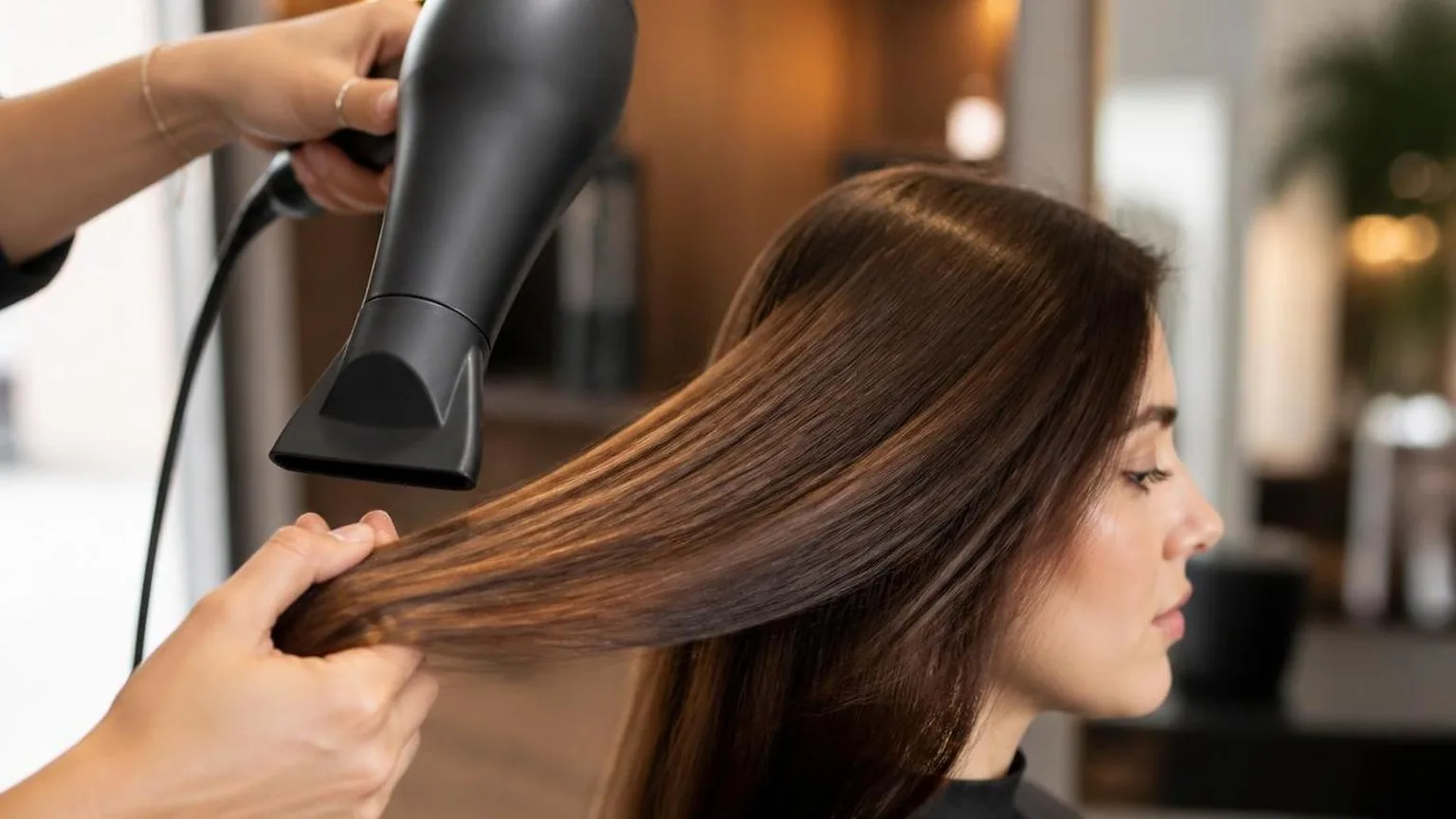
Why the Technique Works
A polished blow dry takes longer than many appointment books allow when the hair is dense, long, or highly textured.
The most reliable finish comes from smaller sections, steady airflow, and fewer corrective passes at the end.
Standard prep starts after towel-blotting, detangling, and applying a light heat-protective styling cream from mid-lengths to ends.
A concentrator nozzle controls airflow, a vented paddle brush speeds rough drying, and round brushes create shape, bend, and polish.
| Hair type | Section size | Nozzle distance | Passes per section | Total finish time |
| Fine, chin-length bob | 2-inch horizontal panels | 3 inches | 2 to 3 | 18 to 24 minutes |
| Medium-density, shoulder-length hair | 2-inch horizontal panels | 3 to 4 inches | 3 to 4 | 29 to 36 minutes |
| Dense, mid-back hair | 1.5-inch horizontal panels | 4 inches | 4 to 6 | 48 to 62 minutes |
| High-texture, collarbone-length hair | 1-inch to 1.5-inch panels | 4 inches | 5 to 7 | 55 to 70 minutes |
Speed improves when most surface water is removed before brush work begins. A brush cannot create clean tension on dripping hair.
Hair that feels cool at the roots still holds moisture, even when the ends look smooth. If that stage is rushed, the crown can frizz and the hairline often needs rework.
| Stage | Standard method | Time used |
| Prep and detangle | Towel-blotted, combed through, clipped into quadrants | 4 to 7 minutes |
| Rough dry | Hands and paddle brush until hair stopped dripping and roots felt warm | 6 to 14 minutes |
| Brush work | Round-brush tension from nape to crown, then sides and fringe | 12 to 43 minutes |
| Cool shot and detail | Set shape, refine hairline, smooth ends | 3 to 6 minutes |
Section control is the variable that changes timing most. Wider panels may look faster at first, but they reduce airflow through the interior and leave damp hair hidden inside the section.
That unfinished moisture adds minutes later, especially during detailing around the crown, sides, and hairline.
- Sections wider than the brush barrel give weaker tension and require extra passes.
- A narrow concentrator aimed down the hair shaft gives the cleanest finish.
- Holding the dryer too close flattens volume and makes the brush harder to rotate.
- Finishing each section with cool air helps the shape hold before unclipping the next panel.
The practical salon benchmark is simple: a true professional finish usually needs a protected, realistic window, not a rushed slot.
Short fine hair can be finished quickly; dense or textured hair needs enough time for controlled drying at the roots and clean tension through the ends.
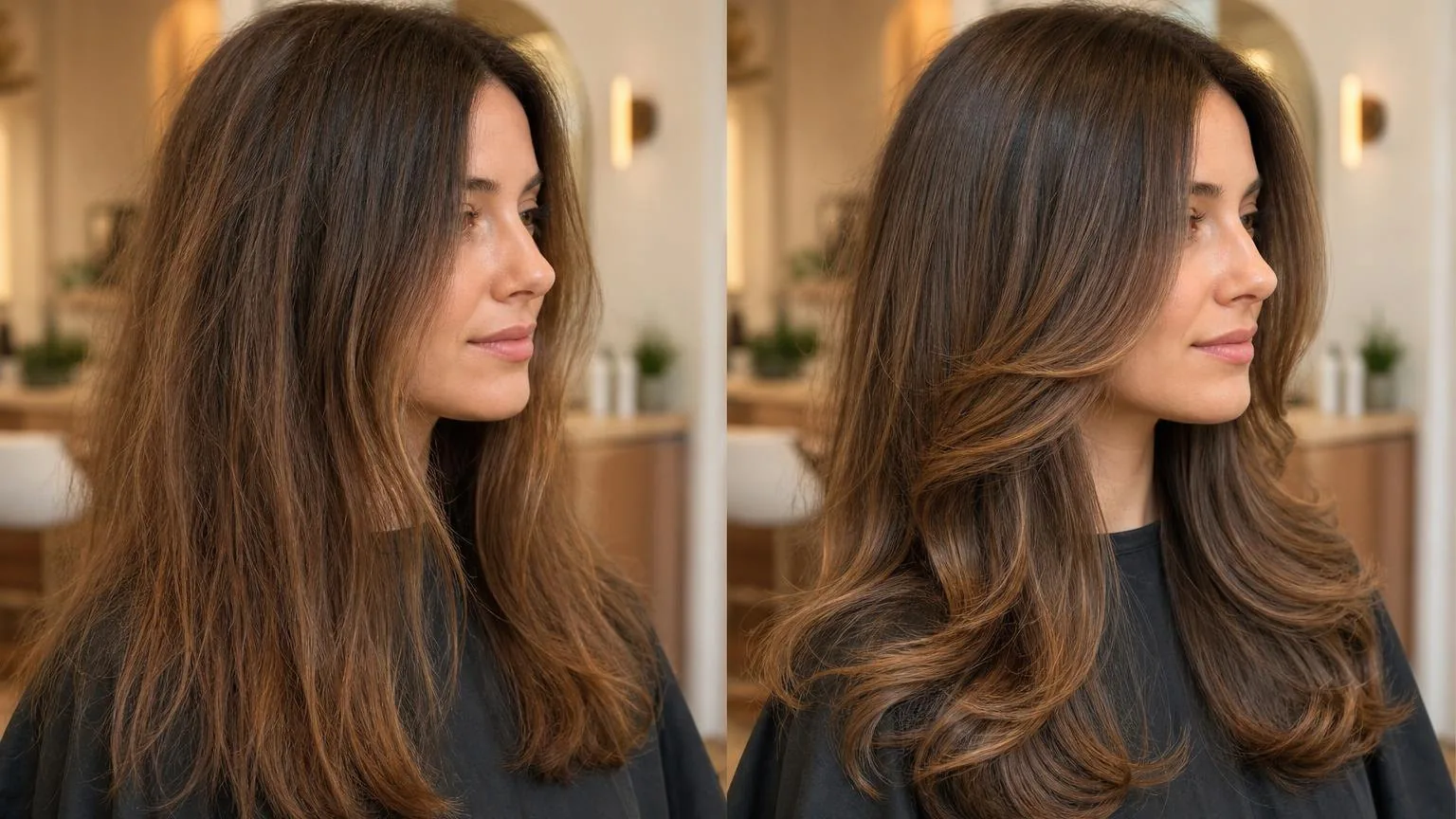
Mistakes Worth Avoiding
Most timing problems come from starting too wet, using the wrong airflow, or trying to style before the hair is dry enough to hold shape.
A professional blow dry is usually slowed less by the brushwork than by poor prep, oversized sections, and repeated passes over damp hair.
The biggest myth is that higher heat always means faster work. In salon practice, airflow, water removal, section control, and nozzle direction usually matter more than maximum temperature.
Myth: towel-dried hair is ready for brushwork
Hair should be rough-dried before round-brush styling unless the finish needs extreme root control. Starting brushwork too early turns every section into a drying job and a styling job, doubling hand fatigue and timing.
| Hair state before brushwork | Typical effect on timing |
| Dripping or freshly washed | Slowest; water must be removed before shape can set |
| Towel-blotted only | Still slow; brush sections collapse and need repeat passes |
| About mostly dry at mids and ends | Fastest for smooth volume and bend |
| Fully dry before styling | May need re-dampening or heat resetting for lasting shape |
Myth: tiny sections always give a better finish
Sections need to match the brush barrel and hair density. If the section is wider than the nozzle or deeper than the brush can tension, the outer hair dries while the inner hair stays cool and damp.
| Tool or section choice | Practical timing result |
| Narrow nozzle, around the width of the section | More controlled airflow and fewer flyaway passes |
| Section deeper than brush radius | Interior dries late, adding repeat passes |
| Small barrel on long hair | More rotations and longer set time |
| Large barrel on short layers | Weak tension and less root lift |
Myth: a fast blow dry means rushed work
Fast can be excellent when the system is disciplined. Many experienced stylists save time by pre-sectioning cleanly, directing airflow from roots to ends, and finishing each section once rather than revisiting it repeatedly.
- Skipping the nozzle: Diffuse airflow roughens the cuticle and makes smoothing take longer.
- Holding the dryer still: Stationary heat can over-dry one spot while nearby hair remains damp.
- Using weak tension: Loose brushwork needs more passes to smooth and bevel the ends.
- Overloading product: Heavy cream or spray can slow evaporation and reduce lift.
- Ignoring cool shot time: Brief cooling helps the shape set before the section is dropped.
Myth: thick hair simply takes twice as long
Density matters, but organization matters more. A thick head can move efficiently when divided into clean panels and dried in consistent layers. Random picking through the hair is what stretches a service far beyond its expected window.
| Mistake | Better salon habit |
| Starting at the front without a plan | Work nape to crown, then sides and hairline |
| Drying large damp panels | Use shallow, brush-width subsections |
| Styling ends before roots are dry | Dry roots first, then polish mids and ends |
| Finishing without checking coolness | Touch-check sections before final spray |
Frequently Asked Questions
How long should a salon blow dry take?
A straight or smooth blow dry on medium-density, shoulder-length hair usually takes 35 to 45 minutes, including shampoo, towel-dry, sectioning, and finish. Add 10 to 20 minutes for very thick hair, curls, extensions, or a round-brush set.
How much of the appointment is actual drying time?
Expect 20 to 30 minutes of active dryer work on most salon blowouts. The rest is prep: shampooing, 5 to 8 minutes of towel-blotting and detangling, heat protectant, 4 to 6 sections, and final cooling or polishing.
What makes a blow dry take longer at home?
At home, the biggest delay is starting too wet. Hair should be about 70 to 80% dry before brush styling; going in from soaking wet can add 15 minutes and causes more brush fatigue and uneven tension.
How long should each section take with a round brush?
A 1 to 2 inch-wide section should take about 60 to 90 seconds, using steady airflow from roots to ends. A 2 to 2.5 inch ceramic or boar-style round brush is efficient for medium lengths; oversized sections slow drying and reduce polish.
What dryer settings keep the blow dry efficient?
Use high airflow with medium to high heat, keeping the nozzle about 2 to 4 inches from the hair and moving continuously. Many professional dryers run around 1,800 to 2,000 watts, but technique matters more: controlled sections beat extra heat.
Does hair type change how long a blow dry should take?
Yes. Fine or short hair usually dries faster, while thick, curly, long, or high-density hair needs more sectioning and tension, so the service or at-home blow dry takes longer.
How can you reduce blow dry time without rushing the finish?
Start with well towel-dried hair, detangle before drying, and use clean sections that match the brush size. Keep airflow moving from roots to ends so moisture leaves evenly and the style stays smooth.
Related Reading
- Sectioning: the step most people skip
- What a blowout is, and how it differs from a blow dry
- Blow dry or air dry: what each does to hair
- Round brush diameter, by hair length
- How to blow dry your hair at home, step by step
- What the cool shot button actually does
- Root volume that survives the first hour
- The complete guide to blow drying technique
- OSHA Hair Salons
- Small Business Administration Stay Legally Compliant
- California Board of Barbering and Cosmetology
- PubMed Hair Dryer Hair Damage Search
- NCBI Bookshelf Hair
- Cornell Human Factors and Ergonomics Research Group
- MedlinePlus Hair Problems
- StatPearls Anatomy, Hair
- U.S. Department of Energy
- American Academy of Dermatology — Hair and Scalp Care
- UL Solutions