
How long a hair dryer lasts, and what shortens it: most pro dryers run about 1,000-2,000 motor hours, while heavy blow bar use can spend that in 12-24 months. At six 10-minute services daily, that is roughly 30 motor hours per month.
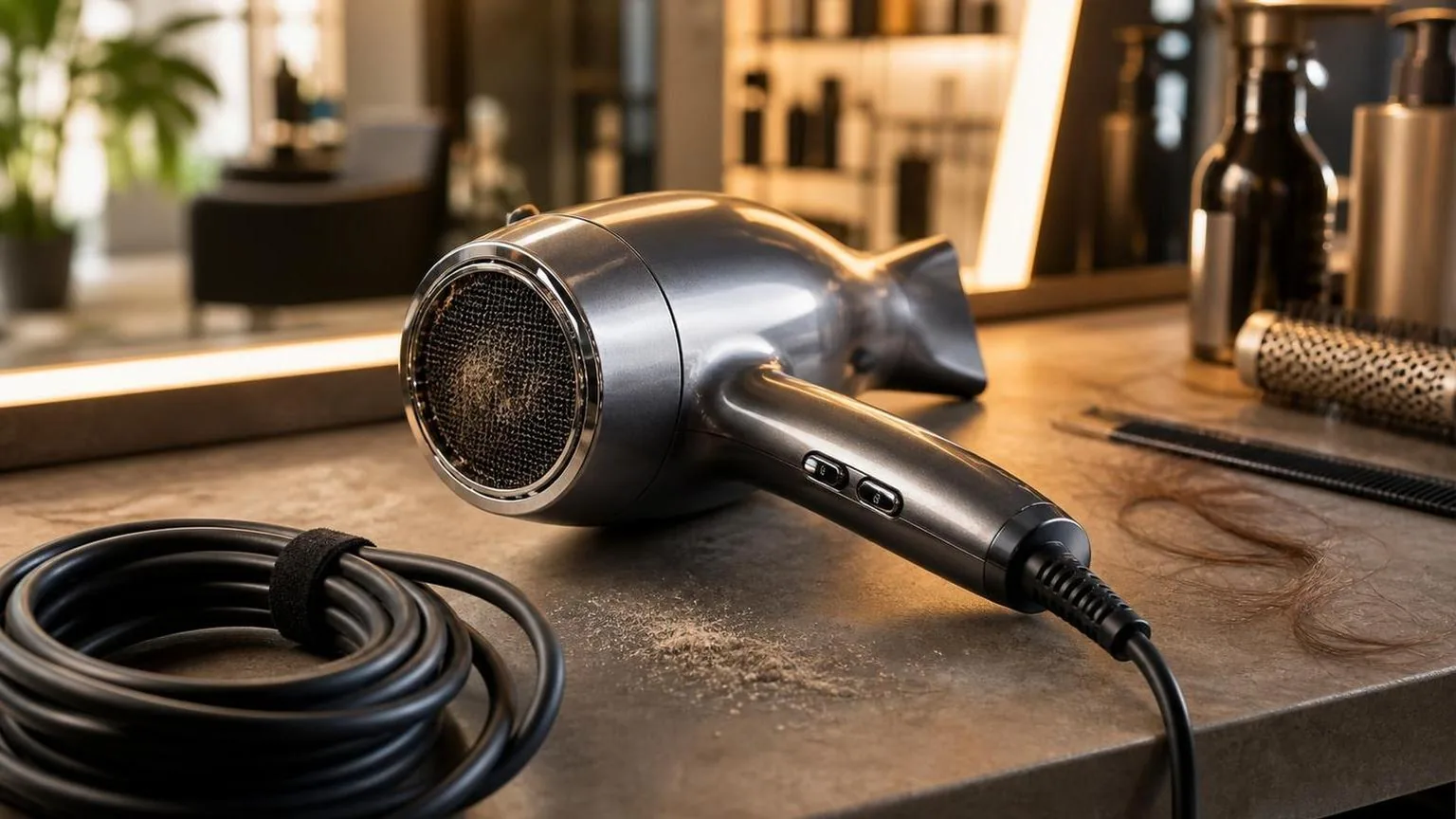
The killers are measurable: blocked rear filters, linted intake mesh, drops onto tile, wrapped cords, and heat settings above about 90°C/194°F used against a clogged airflow path. Each raises motor load or element temperature.
This article shows salon owners and home users how to estimate hours, clean a 40-60mm rear grille in under two minutes, spot bearing noise before failure, and decide when repair is sensible versus replacement.
Estimate Your Dryer Life
Use this quick calculation before you replace a dryer or standardise the kit on a blow-dry bar. You need the wattage label, your average service time, and how often the rear filter is cleaned.
| Your use pattern | Weekly run time | Likely pressure on the motor |
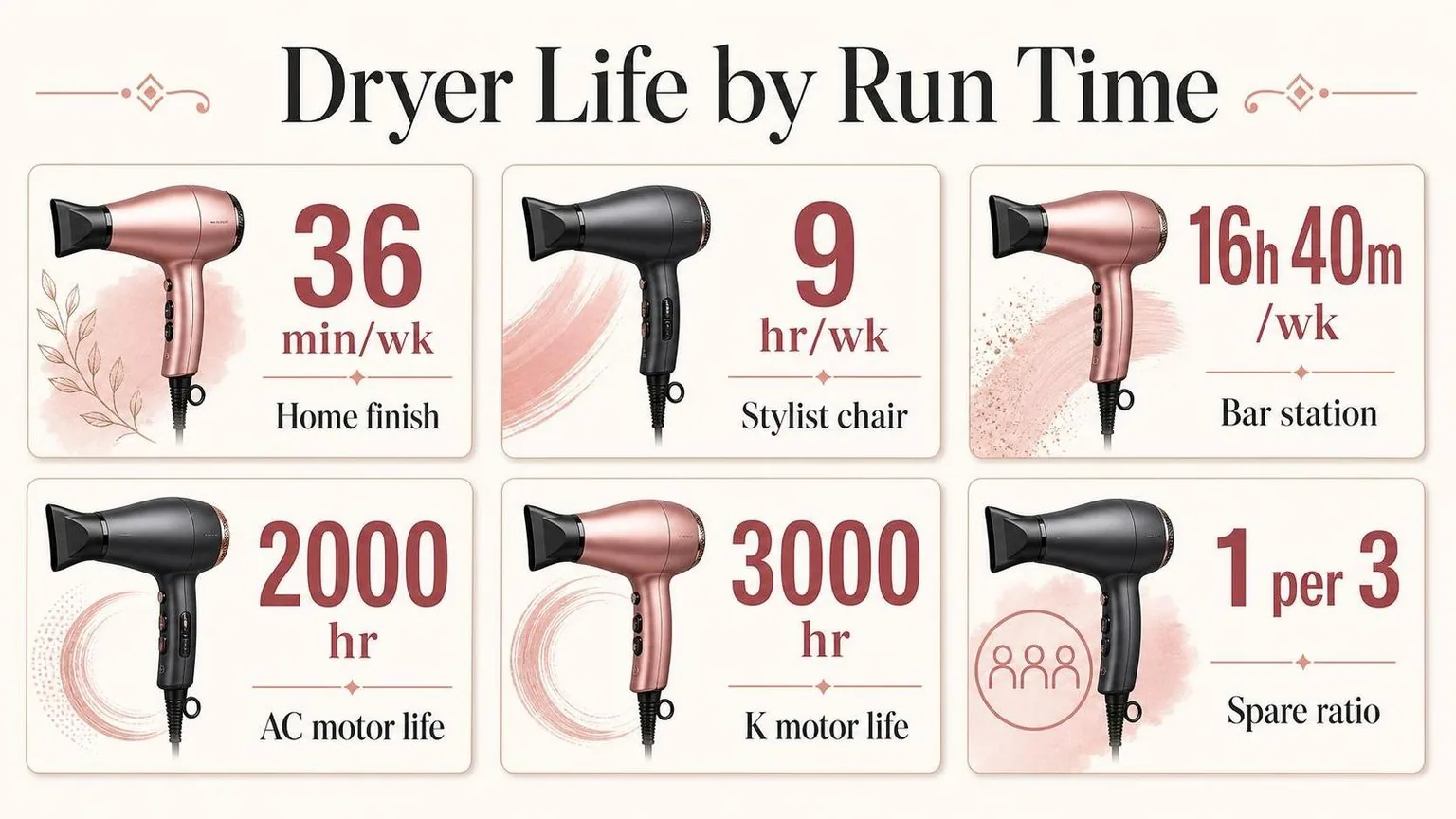
| Home finish, 3 blow-dries at 12 minutes each | 36 minutes | Low, if the filter is cleared every 4 uses |
| Stylist chair, 6 clients daily at 18 minutes each | 9 hours over 5 working days | High, especially on 1,800–2,000 W dryers |
| Blow-dry bar station, 10 clients daily at 20 minutes each | 16 hours 40 minutes over 5 working days | Very high; plan rotation and cooling breaks |
Now check the dryer body after a full service. If the handle, rear grille, or cord exit feels hotter than comfortable to hold for 5 seconds, stop using it until the filter and intake path are clear.
Measure airflow restriction with a simple tissue check. Hold a single-ply tissue 10 cm behind the intake while the dryer runs on high speed, no nozzle attached.
If the tissue is pulled flat and stays there, the filter needs cleaning before the next client.
For salon planning, count hours, not months. A dryer used 16 hours a week reaches the same motor workload in 6 weeks that a home dryer may see in more than 18 months.
Keep one spare per 3 active stations. UL and manufacturer safety guidance both stress unobstructed air inlets, intact cords, and correct plug fit, because heat and electrical strain shorten service life fastest.
What the Data Shows
A dryer’s useful life is better measured in running hours than calendar age.
The clearest published figures sit around professional motor ratings, then shrink or stretch depending on daily chair use, filter cleaning, heat setting, and cord handling.
There is no single salon-wide standard because brands test different motors, fans, heaters, switches, cords, and filters. Still, the numbers below give a practical working range for owners tracking replacement cycles.
| Published or label number | What it means in practice | Source type |
| 1875 watts | Common maximum rating on many US plug-in dryers; it is close to the load limit for a household 120-volt, 15-amp circuit. | Dryer rating labels; NEC-style circuit math |
| to 2400 watts | Common professional UK/EU dryer range, supported by higher-voltage supply. | Manufacturer product specifications |
| hours | Published motor-life figure on some professional AC-motor dryers, including Parlux professional models. | Manufacturer specification sheets |
| 3000 hours | Published motor-life figure on higher-rated professional motors, including selected Parlux K-Advance motor models. | Manufacturer specification sheets |
| 110,000 rpm | Published speed for Dyson’s digital dryer motor; high rpm is not the same as a published whole-tool life rating. | Manufacturer technical description |
For a blow dry bar, the same motor-hour rating can disappear quickly. A dryer used by one stylist for finishing only ages very differently from a dryer shared across back-to-back appointments.
| Average use per day | Time to reach hours | Time to reach 3000 hours |
| 30 minutes | 4000 service days | 6000 service days |
| 1 hour | service days | 3000 service days |
| 2 hours | 1000 service days | 1500 service days |
| 4 hours | 500 service days | 750 service days |
| 6 hours | 333 service days | 500 service days |
The biggest shortening factor is airflow restriction. Dryer manuals from major manufacturers repeatedly instruct users to keep the rear grille and filter clear because lint buildup raises internal temperature and can trip the thermal protector.
| Shortening factor | Number to watch | Why it matters |
| Blocked rear filter | Check every 1 to 5 service days in salon use | Less intake air means hotter heater coils, hotter motor windings, and more thermal cut-out events. |
| High heat held close to hair | Keep the nozzle about 6 inches from the section when rough drying | Very close work reflects heat back toward the outlet grille and concentrator. |
| Long continuous run | Give busy station dryers a 2 to 5 minute cool-down between heavy services when possible | Lower internal temperature slows stress on switches, plastics, bearings, and motor insulation. |
| Cord strain | Avoid wrapping tightly around a body under about 3 inches wide | Tight coils fatigue copper strands near the plug and handle strain relief. |
In practice, a well-filtered professional AC-motor dryer can outlast several bargain DC-motor units under salon load.
But once speed drops, the casing runs hotter, the plug warms, or the cord kinks at the handle, retire it rather than nursing it through another busy book.
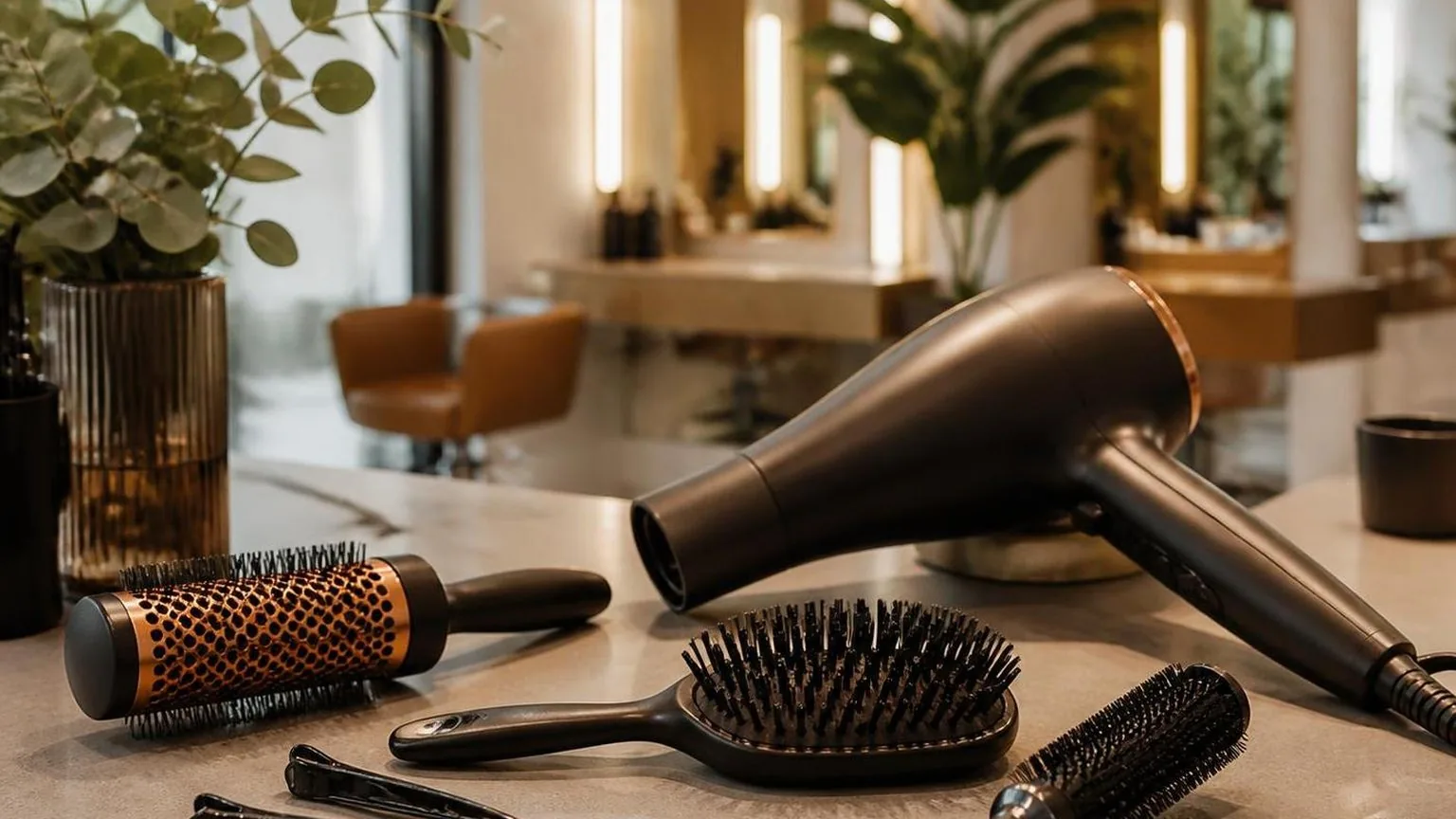
Where the Difference Comes From
A hair dryer lasts longest when heat, airflow, lint control and daily run time stay within the limits the motor and heater were built for.
The fastest way to shorten its life is to choke the intake, run it hot for long stretches, then wrap and store the cord under tension.
Use time and workload
Motor wear is mostly cumulative. In a busy blow dry bar, a dryer may run through repeated long services with little cooling time between clients. At home, the same model usually gets shorter sessions and longer rest periods.
| Setting | Typical active use per day | Why it matters |
| Home user | 10 to 20 minutes | Lower cumulative motor hours and more cooling time |
| Stylist station | 2 to 5 hours | More brushwork, sectioning and repeated heat cycles |
| Blow dry bar peak chair | 5 to 8 hours | High motor hours, frequent restarts and hotter internal parts |
Blocked intake and dirty filters
Restricted intake is the most common preventable failure we see at stations. Lint, hairspray dust and fine towel fibres reduce airflow, so the heater runs hotter while the motor works harder to pull air through the rear grille.
| Maintenance point | Practical salon interval | Home interval |
| Brush lint from rear grille | Daily | Weekly |
| Remove and wash filter if manufacturer allows | Weekly | Monthly |
| Inspect cord, plug and strain relief | Weekly | Monthly |
Heat setting and nozzle distance
Professional dryers commonly push outlet air well above comfortable skin temperature on high heat. That is useful for shaping, but punishing when airflow is blocked or the nozzle sits too close to the brush, towel or cape.
| Practice | Safer working range | Riskier habit |
| Nozzle distance from hair | 15 to 20 cm | Pressing the nozzle against the brush |
| Continuous high-heat blast | Under 60 seconds per section | Several minutes on one dense area |
| Cool-shot use | 5 to 10 seconds to set finish | Skipping cooling between hot passes |
Cord handling and storage
The cord often fails before the motor. Tight wrapping around the handle bends copper strands near the strain relief, the exact point already flexed during round-brush work.
- Loop the cord in a loose coil roughly the width of your hand, not around the dryer body.
- Do not hang the dryer by the cord; use the hanging loop if supplied.
- Let the dryer cool before storing it in a drawer, trolley or heat-resistant pouch.
- Keep aerosol overspray away from the intake; sticky residue traps more dust than dry lint.
Safety standards from bodies such as UL and IEC focus on insulation, overheating protection and electrical construction. Those safeguards help, but they do not replace airflow, cleaning and careful cord handling in daily salon use.
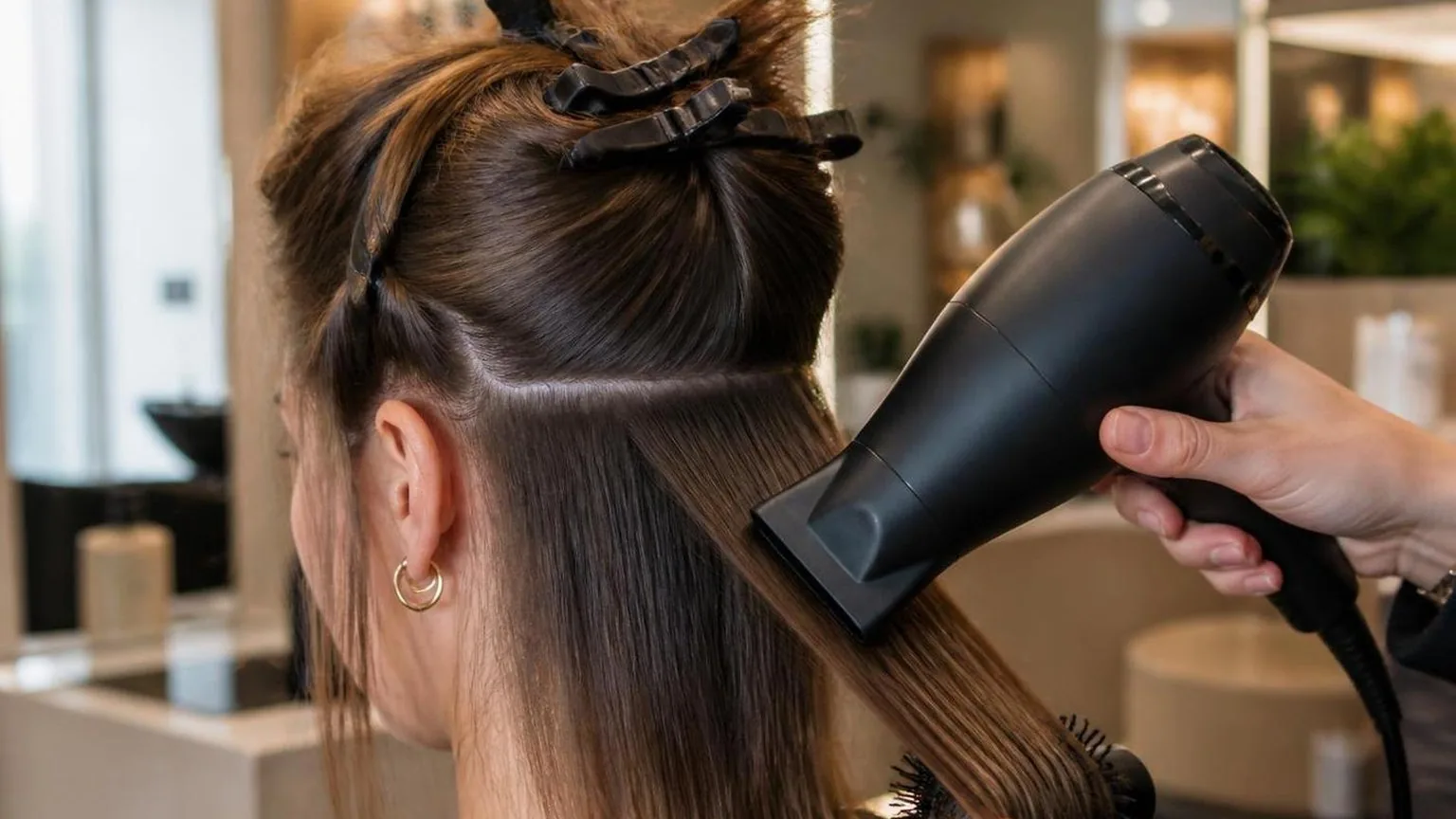
What a Good Result Looks Like
Judge dryer life by performance on a familiar head of hair, not by age alone. If airflow feels weaker, sections need extra passes, or the shell runs hotter than usual, the motor, heater, filter path, or fan may be wearing out.
Use the same towel-dried model, same brush, same nozzle, and the same outlet each time. Salon teams should test after the filter is cleaned, because a clogged intake can mimic a failing motor.
| Real-hair check | Healthy dryer behavior | Warning sign |
| Medium-density shoulder-length hair | Rough-dry to mostly dry in about 5 to 7 minutes | Needing 9 to 12 minutes with the same technique |
| Round-brush section | One controlled pass dries and shapes a section about 2 inches wide | Two or more repeat passes are needed for the same section |
| Nozzle aim | Air stays concentrated through a concentrator about 6 to 8 mm wide | Air feels scattered, pulsing, or weak at the brush |
| Cool shot | Air cools noticeably within about 5 seconds | Air stays warm or fades in pressure |
Do not test by holding the dryer against your hand. Hair shows load better: water content, brush tension, and back-pressure from the nozzle all reveal whether the fan can still move air through the barrel.
- Listen for pitch changes. A steady high-speed whirr is normal. Grinding, rattling, or a surging pitch often points to fan imbalance, bearing wear, or debris at the intake.
- Watch the cuticle finish. If the same product and brush now leave more frizz or damp roots, airflow may be dropping before heat does.
- Check heat recovery. After a pause, a healthy dryer returns to its usual heat quickly. Slow recovery suggests the heater or thermostat is struggling.
- Smell the air. A dusty hot smell after cleaning the filter is a warning. Stop using it if you notice a sharp burning odor.
| Tool area | What shortens life | Field check |
| Rear filter | Lint, hairspray film, and loose hair restrict intake | Remove lint after every busy salon day or every 3 to 5 home uses |
| Cord and strain relief | Tight wrapping and repeated twisting fatigue the conductors | Look for kinks, heat marks, or flickering power during movement |
| Nozzle and barrel | Blocked outlets raise internal temperature | Confirm the nozzle is clear before every blowout |
| Motor vents | Running inside a drawer station traps heat | Leave open air around the intake during the whole service |
Manufacturer manuals from professional dryer brands commonly instruct users to keep air inlets clear and clean removable filters regularly.
Electrical safety bodies also warn against using appliances with damaged cords, intermittent power, or burning smells.
Retire the dryer from professional service when it slows timings, overheats, cuts out, or behaves inconsistently after cleaning. In a salon, unreliable airflow costs more in chair time and finish quality than the remaining motor life is worth.
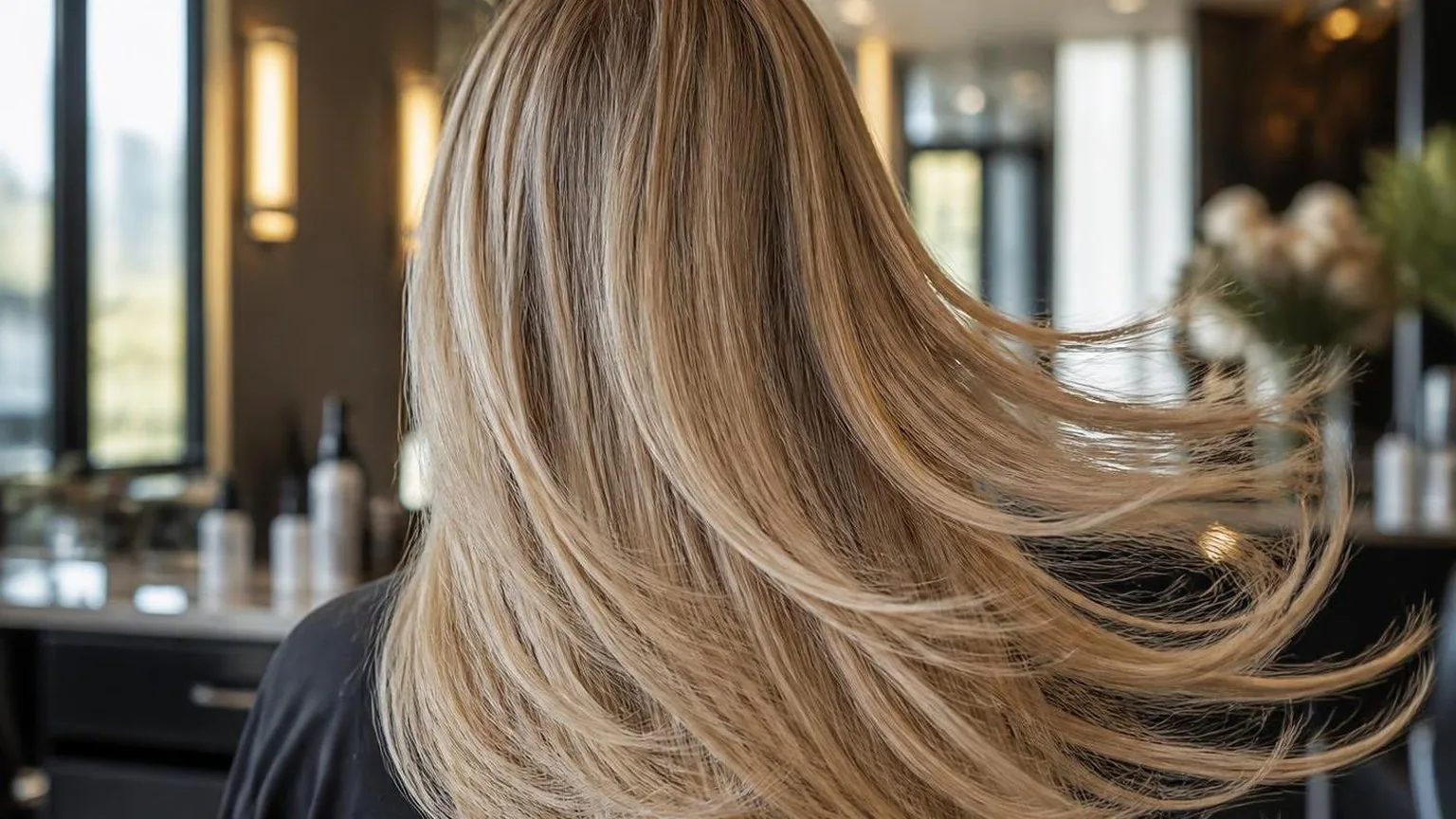
How It Compares to the Alternatives
A handheld blow dryer usually outlasts hot air brushes and rotating stylers, but it is less durable than a well-maintained professional hood dryer.
The main difference is workload: high heat, restricted airflow, hair dust, and repeated cord flex shorten any heated styling tool.
For a busy blow dry bar, the fairest comparison is not calendar age but operating hours.
A dryer used for 6 services daily at 12 minutes per finish runs about 72 minutes per working day, so motor, switch, filter, and cord quality matter more than styling claims.
| Tool | Typical operating pattern | Main wear points | Durability takeaway |
| Professional handheld dryer | 10 to 20 minutes per client; often 4 to 10 clients daily in salon use | Rear filter clogging, cord strain relief, heater cycling, switch contacts | Best balance of speed, serviceability, and daily salon tolerance |
| Consumer handheld dryer | 5 to 15 minutes per home use; usually lower weekly hours | Lint buildup, overheated housing, loose plug, weak rocker switches | Can last well at home, but usually dislikes back-to-back salon workloads |
| Hot air brush | 8 to 25 minutes because the tool dries and shapes at once | Brush bristles, rotating joints, small air inlets, motor bearings | More mechanical parts mean more failure points than a plain dryer |
| Hood dryer | 20 to 45 minutes per set, often at lower air velocity | Timer, thermostat, fan motor, cracked hood, caster damage | Often robust, but slower and less suitable for tension blowouts |
| Heated brush or flat iron | Seconds per section on dry hair; not a drying tool | Plates, hinge, cord swivel, temperature controls | Less airflow wear, but it cannot replace drying from wet |
In practice, a dryer’s enemy is blocked airflow.
UL product safety guidance for household electric heating appliances emphasizes unobstructed ventilation, while most manufacturer care manuals instruct users to clean removable rear filters regularly and avoid covering air inlets.
Compared with a hot air brush, a conventional dryer is easier to keep alive. The filter is usually larger, the airflow path is straighter, and there are no bristle beds collecting styling residue at the outlet.
Compared with a hood dryer, the handheld unit works harder per minute. It pushes concentrated air through a narrow nozzle, often 6 to 9 mm wide, while being moved, dropped onto trolleys, and wrapped by its cord between clients.
- Choose a handheld dryer when speed, root lift, round-brush tension, and nozzle control matter most.
- Choose a hood dryer for hands-free setting, roller work, and long sessions at steadier airflow.
- Choose a hot air brush for low-volume home finishing, not for continuous professional wet-to-dry work.
- Keep any option cooler by clearing lint before airflow drops, not after the casing feels hot.
For longevity, the conventional professional dryer remains the most practical workhorse. It has fewer moving styling parts than air brushes, more speed than a hood, and easier daily maintenance than compact multi-stylers with small intake screens.
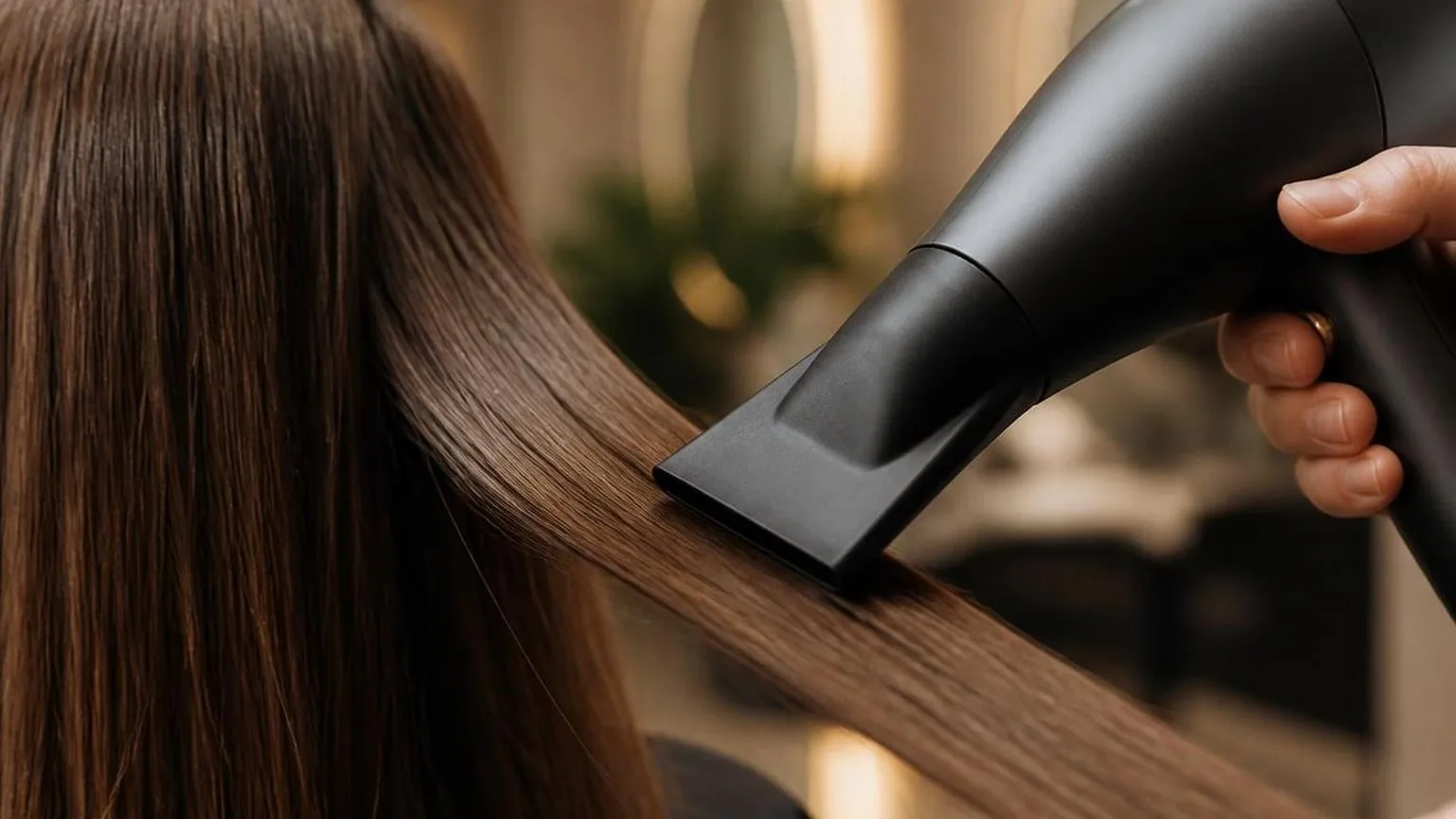
Protecting the Hair While You Work
Heat and tension decide both how polished the finish looks and how much stress the dryer and hair fibre take. Use enough heat to evaporate surface water, but reduce heat once the section is dry and keep brush tension firm, not forceful.
In salon use, the motor works hardest when airflow is blocked, filters are dusty, or the nozzle is pressed into the brush. For hair, the riskiest moment is repeated high heat on an already-dry section.
| Drying choice | Practical target | Why it matters |
| Rough-dry before brush work | About 70% to 80% dry | Less time under tension and less heat exposure per section |
| Nozzle distance | About 6 in to 8 in from hair | Maintains airflow without scorching one spot or overheating the motor |
| Brush section width | No wider than the brush barrel | Even airflow reaches the full section instead of cooking the top layer |
| Final cool shot | About 5 to 10 seconds per section | Sets shape after the hair is dry, reducing repeated hot passes |
The best professional habit is to dry by moisture level, not by habit. If steam, crackling, or a hot-hair smell appears, the section is too wet for the heat level, too close to the nozzle, or being held too long.
Research published in the Annals of Dermatology compared hair drying at controlled temperatures and distances.
Its useful takeaway for blow-dry work is simple: moving airflow at a sensible distance is kinder than holding concentrated heat still on the fibre.
| Heat zone at the hair | Use case | Stylist control |
| Low warmth | Fine hair, fringe, finishing flyaways | Use slower brush rotation and more airflow, not more heat |
| Medium heat | Most smoothing and volume work | Keep the nozzle parallel to the hair shaft, root to ends |
| High heat | Brief root lift or dense sections | Use short passes, then step down before the section feels dry-hot |
Tension should stretch the section into a smooth ribbon, not pull the head or stall the brush. Excess tension encourages repeated passes because the hair bunches, dries unevenly, and resists polish at the ends.
- Point the nozzle down the hair shaft, never back up toward the root on the same section.
- Keep the nozzle off the brush barrel; leave a small air gap so heat can escape.
- Clean the rear filter when airflow drops or the dryer feels hotter than normal.
- Stop hot work when the section is dry to the touch; use cool air for the last setting pass.
For dryer longevity, unrestricted airflow is the non-negotiable. Lint on the intake makes the element run hotter, the motor work harder, and the casing retain heat longer after switch-off.

The Mechanism, Step by Step
Dryer life is changed less by the brand name than by airflow, heat load, run time, and contamination. Craft method decides how hard the motor, heater coil, bearings, filter, switches, and cord are worked during every service.
A dryer is an air-moving heater. Restrict the intake, overheat the outlet, or run it longer than needed, and the same finish costs more thermal stress and mechanical wear.
| Method variable | Working figure | What changes inside the dryer |
| Rear filter cleaning | Every 3 to 5 salon days, or sooner after heavy product use | Lint and spray residue reduce intake area, forcing the fan to pull against resistance. Lower airflow leaves the element hotter and makes thermal cut-outs cycle more often. |
| Nozzle distance | About 15 to 20 cm from the hair for rough-drying; about 5 to 8 cm for brush finishing | Holding the nozzle 5 cm closer raises surface temperature and back-pressure. That can set the cuticle before the root is dry, extending total run time. |
| Section size | 2 to 3 cm deep for tension work; 5 to 7 cm wide around the brush | Oversized sections trap moisture in the centre. The stylist compensates with longer heat exposure, keeping the motor and heater loaded for extra passes. |
| Pre-dry level | Rough-dry to about 70 to 80 percent dry before brush work | Starting round-brush work too wet turns a shaping step into evaporation. Evaporation consumes heat, so the dryer stays at high output longer. |
Airflow is the first protection system. Most handheld dryers use a rear intake, fan, heating element, thermostat or thermal fuse, and outlet grille. When the filter mat is blocked, the element receives less cooling air while still drawing power.
Heat setting changes ageing because plastics, solder joints, insulation, and switches all see higher peak temperatures.
High heat is useful for wet roots and coarse sections, but using it after the hair is nearly dry adds heat without reducing styling time proportionally.
- Use high airflow before high heat: moving more air removes water faster, while excessive heat can finish the surface before inner moisture has left.
- Keep the rear intake clear: hands, capes, towels, and loose hair can starve the fan even when the filter itself is clean.
- Let the cord hang straight: repeated tight wrapping near the strain relief bends copper conductors at the same point, causing intermittent power faults.
- Avoid sealed storage while hot: placing a warm dryer in a drawer or station holster slows heat release from the motor housing and cord entry.
Attachment choice also matters. A narrow concentrator increases air speed at the outlet but can raise local temperature if pressed too close.
A diffuser spreads flow over a larger area, usually lowering spot heat but increasing drying time on dense hair.
| Practice | Typical effect on dryer stress |
| Clean filter, open intake, short sections | Higher airflow, shorter heat exposure, fewer thermal cut-out events |
| Blocked filter, wet brush work, nozzle too close | Lower airflow, hotter element, longer motor run time |
| Cool shot for 10 to 15 seconds at the end | Reduces residual outlet heat before the dryer is set down or stored |
Myths That Keep Going Round
Most dryer failures are caused less by age than by heat restriction, lint build-up, cord stress, and poor cooldown habits.
The biggest myth is that a dryer “just dies” suddenly; in salons, it usually gives warning through weaker airflow, hotter casing, odd noise, or burning dust smell.
A professional dryer used all day has a very different duty cycle from a home dryer used twice a week.
UL and IEC safety testing focuses heavily on overheating protection, cord strain, and blocked-air operation because these are the real-world failure points.
Mistake: ignoring the rear filter
The rear intake is the dryer’s breathing system. When lint blocks it, the motor works harder, the heating element runs hotter, and thermal cut-outs cycle more often.
In a blow dry bar, check the filter between clients and deep-clean removable mesh at the end of each shift.
| Use pattern | Filter check | Why it matters |
| Home use, 2–4 sessions weekly | Every 2–4 weeks | Prevents lint matting over the intake |
| Daily home use | Weekly | Keeps airflow consistent on long drying sessions |
| Salon or blow dry bar | Every client or shift | Reduces overheating during repeated use |
Myth: higher heat dries faster and is better for the dryer
High heat can speed water evaporation, but airflow does much of the work. A dryer with a narrow concentrator and clean intake often dries faster on medium heat than a blocked dryer on maximum heat.
For finishing, many stylists work around 6–8 inches from the hair, keep the nozzle moving, and use the cool shot for 10–20 seconds per section to set the shape. Holding heat in one spot cooks the dryer and roughens the finish.
Mistake: wrapping the cord tightly around the handle
Repeated tight wrapping stresses the copper conductors near the strain relief. That weak point can cause intermittent power, flickering heat, or failure under movement. Let the cord cool, then coil it in loose loops of about 6–8 inches across.
Myth: a burning smell always means the motor is finished
A dusty smell at first switch-on often comes from lint on the element, especially after storage. A sharp electrical smell, visible sparking, casing discoloration, or a plug that feels hot is different.
Stop using the dryer and have it inspected or replaced.
- Do not block the intake: keep hands, towels, capes, and hair at least 2 inches away from the rear grille.
- Do not run it nonstop for long services: give the tool a short rest after heavy use, especially if the shell feels unusually hot.
- Do not remove the nozzle while hot: concentrators can deform or loosen if twisted immediately after high-heat work.
- Do not store it with damp lint inside: clean the filter only when unplugged and fully dry before reassembly.
The practical rule is simple: protect airflow, protect the cord, and avoid trapped heat. Those habits do more for dryer lifespan than choosing the highest wattage number on the box.
Frequently Asked Questions
How long does a hair dryer usually last?
In salon use, a dryer often lasts 1,000 to 2,000 operating hours before airflow, heat stability, or switches decline. At home, that can mean several years if the rear filter is cleaned and the cord is not twisted.
What shortens a hair dryer fastest?
Blocked intake is the biggest killer. Lint on the rear filter makes the motor work hotter, reduces airflow, and can trip the thermal cutout specified in safety standards such as UL and IEC appliance testing.
How often should the filter be cleaned?
For a busy blow dry bar, check the intake screen daily and deep-clean removable filters weekly. At home, inspect it every 5 to 10 uses, removing lint only when the dryer is unplugged and fully cool.
Does using the hottest setting wear out a dryer?
Constant high heat adds thermal stress, especially if airflow is restricted. For professional finishing, use high airflow to remove moisture, then drop heat for brush work and finish with a cool shot for 10 to 20 seconds.
When should a hair dryer be replaced?
Replace it if airflow drops after cleaning, the plug or cord feels warm, the casing smells scorched, or the dryer cuts out repeatedly. Also retire it if the nozzle no longer fits securely, as poor direction control slows the blowout.
Can a hair dryer last longer with proper storage?
Yes. Let it cool before putting it away, avoid wrapping the cord tightly around the body, and store it where it will not be dropped or exposed to moisture.
Do professional hair dryers last longer than basic models?
Professional dryers often have stronger motors, better airflow, and parts designed for frequent use. They can last longer when maintained well, but lifespan still depends on cleaning, handling, and how often they are used.
Related Reading
- Hair dryer wattage, and why more is not better
- What a diffuser does that a concentrator cannot
- Ionic or ceramic: what the labels actually mean
- Cleaning a dryer filter, and how often it needs it
- Boar, nylon or mixed: choosing round brush bristles
- What a paddle brush is actually for
- How long a dryer can run before it needs a rest
- How often a dryer filter needs clearing
- Choosing a professional dryer: what actually matters
- The complete guide to blow dry tools
- Occupational Safety and Health Administration Hair Salons
- Occupational Safety and Health Administration Electrical Safety
- U.S. Small Business Administration
- PubMed
- Health and Safety Executive Electrical Safety
- UL Solutions
- Electrical Safety Foundation International
- National Fire Protection Association Electrical Safety
- MedlinePlus — Hair Problems
- PubMed Central
- Occupational Safety and Health Administration