
How long can a hair dryer run at a time: most consumer dryers should run for 15 to 20 minutes continuously before a 5-minute cool-down. That window protects the motor, heating element, and plastic housing from heat build-up during a full blowout.
In salon use, stylists rarely hold one dryer at full heat for longer than a section-by-section service because airflow, distance, and nozzle control matter as much as runtime.
Keep the nozzle 6 to 8 inches from hair, use high airflow before high heat, and switch to cool air once hair feels dry.
This guide explains safe run times, overheating signs, cool-down timing, and the practical difference between compact travel dryers, 1,800-watt salon dryers, and professional brushless models.
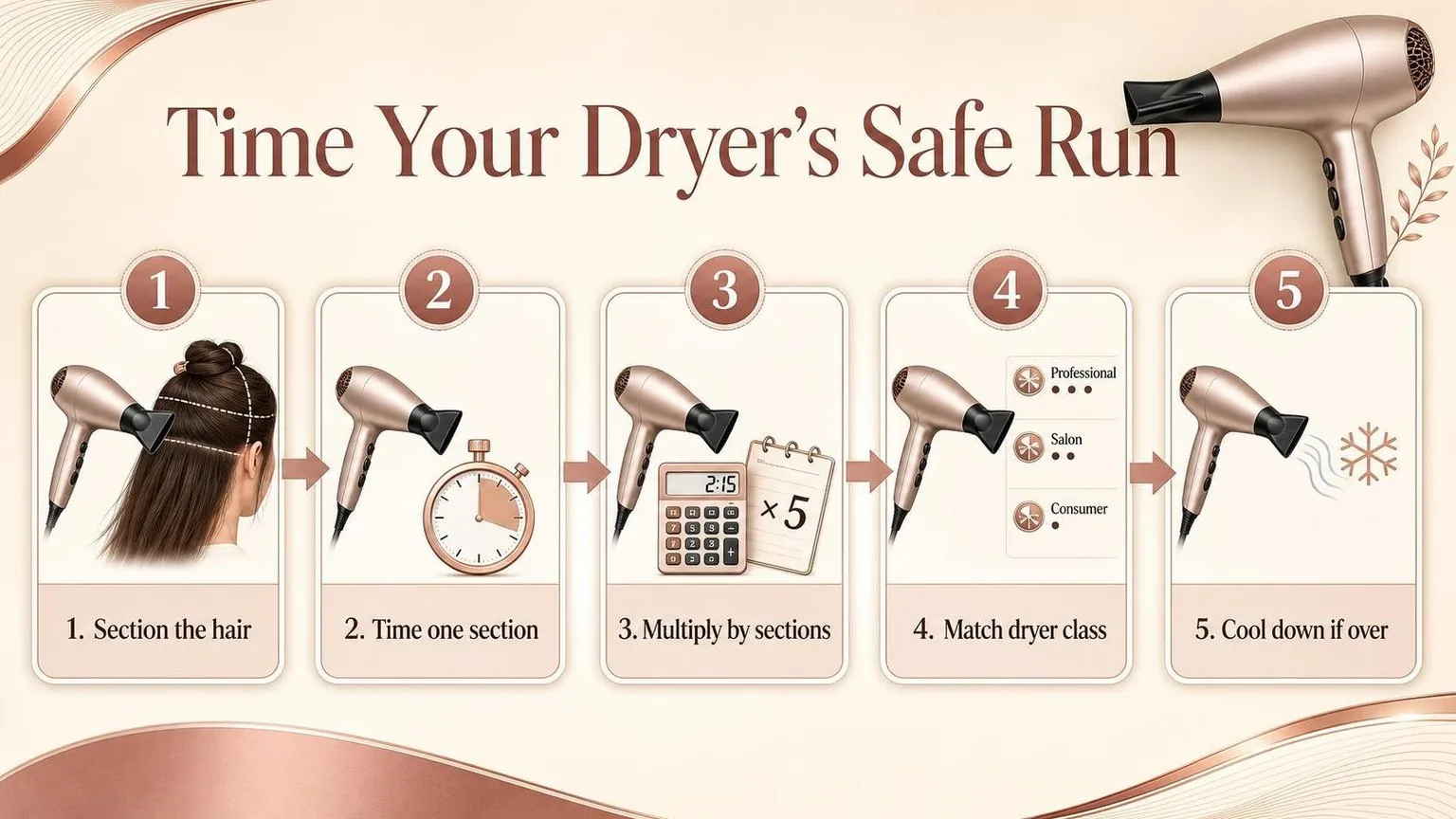
Time Your Safe Run
Work out your dryer’s continuous run limit with one client, one timer, and your usual brush. You need the wattage on the handle label, the nozzle you normally use, and one sectioning pattern you repeat every day.
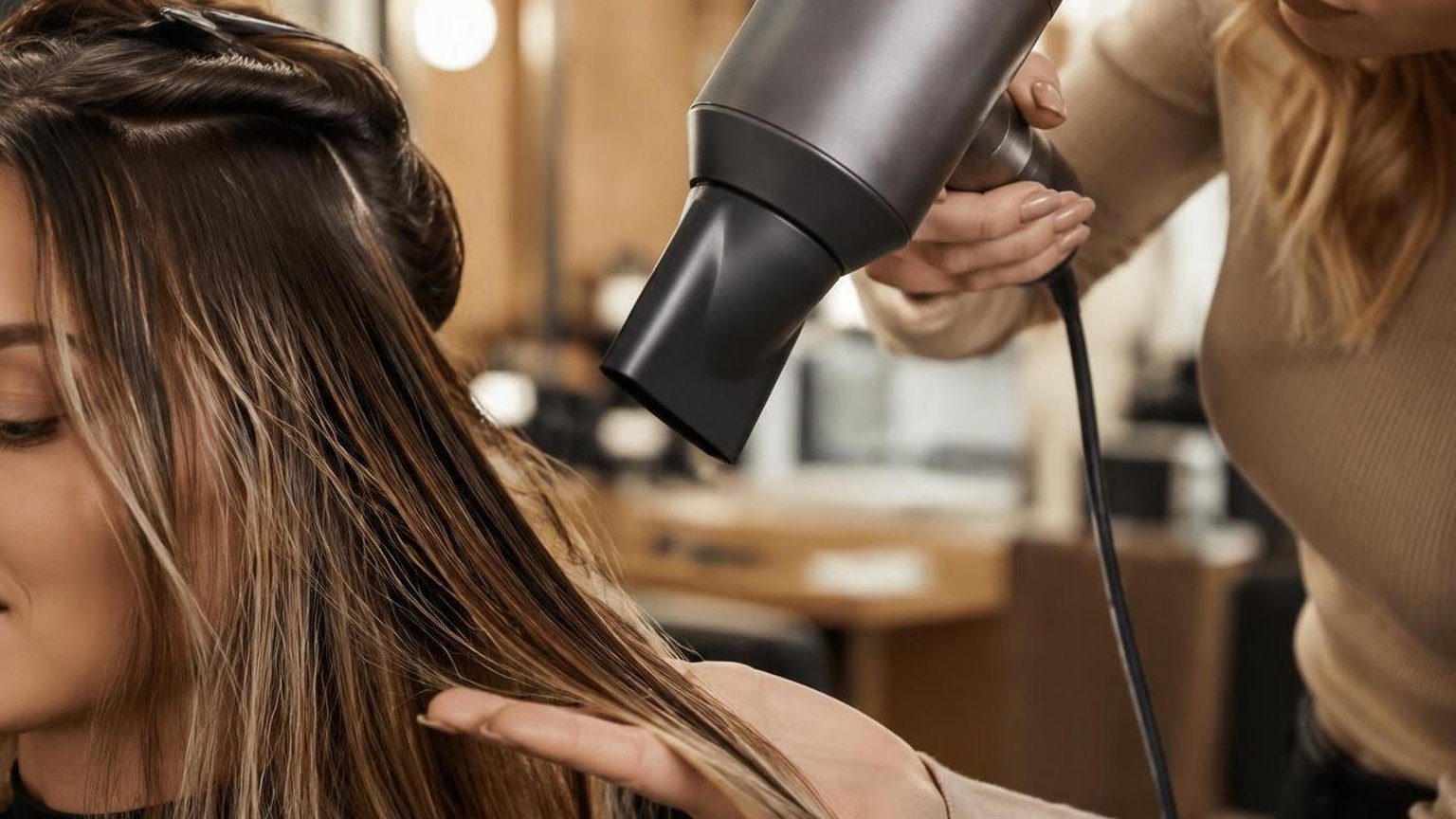
Keep the filter clean before you start.
Use your normal heat and airflow, not a reduced “test” setting. Count only active blowing time. Pause the timer whenever the dryer is on the trolley, on the counter, or switched off between sections.
| Step | Action | Numbers to use |
| 1 | Section the hair as you usually would for a full blowout. | Fine or short hair: 4 sections. Medium density: 6 sections. Thick or long hair: 8 sections. |
| 2 | Time one complete section from damp to dry at your root and mid-length working distance. | Nozzle on. Hold dryer about 10-15 cm from hair. Use a 25-35 mm round brush for short to medium lengths, 43-53 mm for longer lengths. |
| 3 | Multiply that section time by your total sections. | If one section takes 3 minutes and you have 6 sections, active run time is 18 minutes. |
| 4 | Read your answer against the dryer class below. | Under 1600 W: aim for 12-15 minutes continuous use before a cooling break. 1600- W: 15-20 minutes. Over W: 20-30 minutes, if airflow stays strong and the handle does not heat up. |
If your calculated time sits above the range, split the blow-dry into two runs. Give the dryer 3-5 minutes off the heat setting between runs. That lowers motor and heater stress and helps keep airflow steady through the service.
If the body gets hotter than comfortable to hold, airflow drops, or the filter shows visible dust, stop earlier. Your real answer is the shortest safe time your dryer can repeat all day without losing performance.
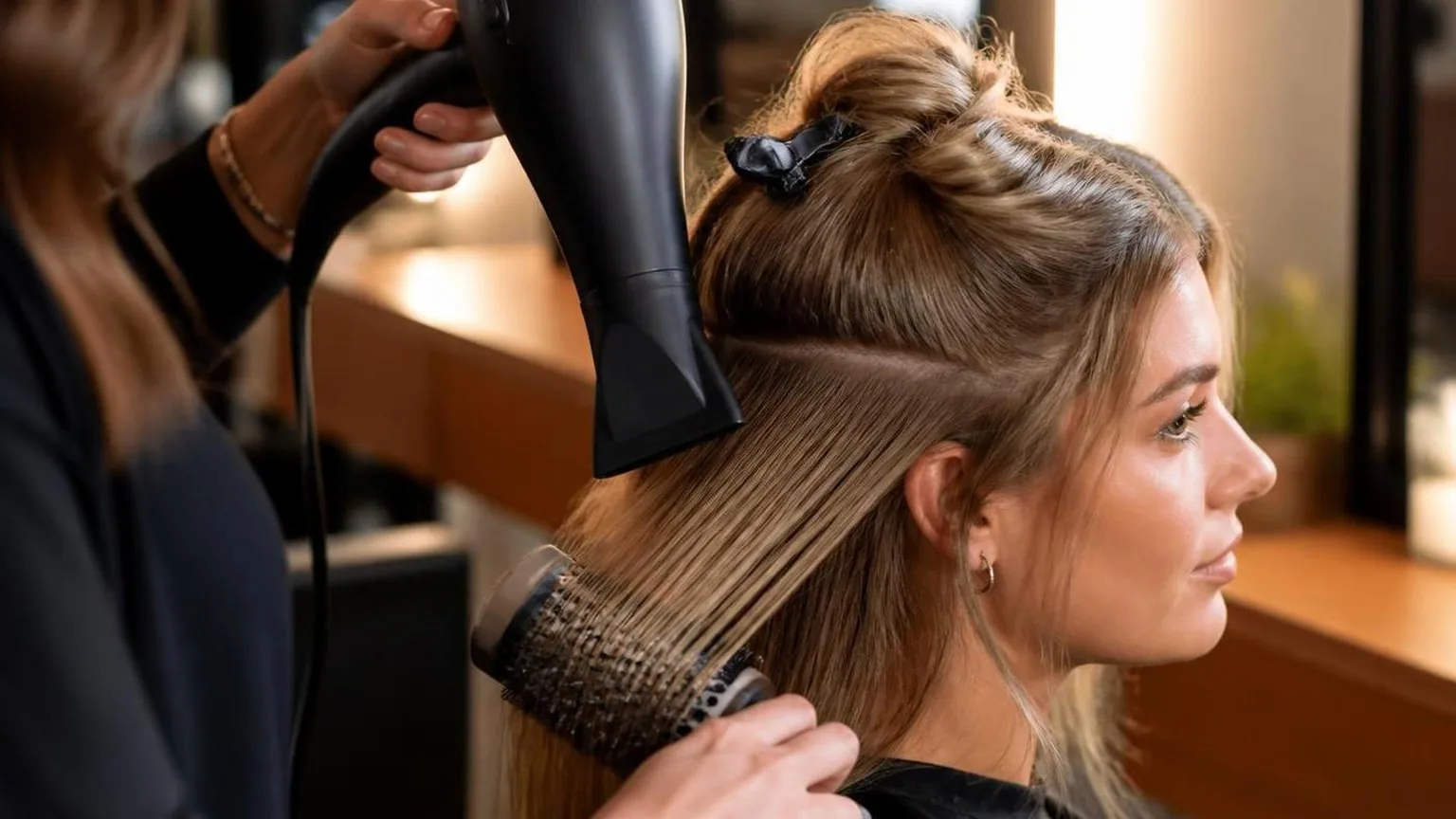
Reading the Numbers Properly
Most consumer hair dryers can run continuously for about 10 to 20 minutes before heat buildup becomes the limiting factor.
Professional models often tolerate 30 minutes or more, but that depends on motor design, airflow path, filter cleanliness, and whether the heater cycles on and off.
The practical limit is not a universal timer. It is temperature rise inside the tool, especially around the motor, heating element, rear filter, and cord entry point. Higher wattage alone does not guarantee longer run time.
Power draw sets the electrical load. In the US, common dryers are rated from 1,500 to 1,875 watts. In the UK, many sit around 1,800 to 2,200 watts. That load produces both airflow and waste heat inside the housing.
| Market | Common dryer wattage | Voltage |
| US | 1,500 to 1,875 W | 120 V |
| UK | 1,800 to 2,200 W | 230 to 240 V |
Airflow helps the dryer cool itself. A blocked filter cuts that cooling first, then raises internal temperature. Even a partial lint layer can reduce intake area enough to trigger thermal protection sooner during a long blowout.
| Factor | Shortens run time | Extends run time |
| Rear filter | Lint buildup | Clean mesh and clear intake |
| Heat setting | High heat | Medium heat or cool shot breaks |
| Speed setting | Low airflow on high heat | High airflow with controlled heat |
| Use pattern | Continuous blasting | Sectioning with pauses |
Thermal cutoffs are the safety backstop. Many dryers use a thermostat and a one-time thermal fuse. The thermostat can cycle the heater off when internal temperatures climb too high. The fuse is not resettable and is there for fault protection.
In salon use, section timing matters. Drying one head in 15 to 25 minutes rarely stresses a healthy pro dryer. Running 3 back-to-back services with no filter check, no cooldown, and high heat throughout is harder on the tool.
A simple operating rule works well. If the barrel, handle seam, or cord base becomes unusually hot, stop for 5 to 10 minutes, clean the filter, and restart on lower heat. Warm is normal. Sharp heat rise is the warning sign.
- Home use: expect 10 to 20 minutes continuous operation as a conservative range.
- Professional use: 20 to 30 minutes is common when airflow stays unobstructed.
- Cooldown habit: use the cool shot for 30 to 60 seconds before switching off.
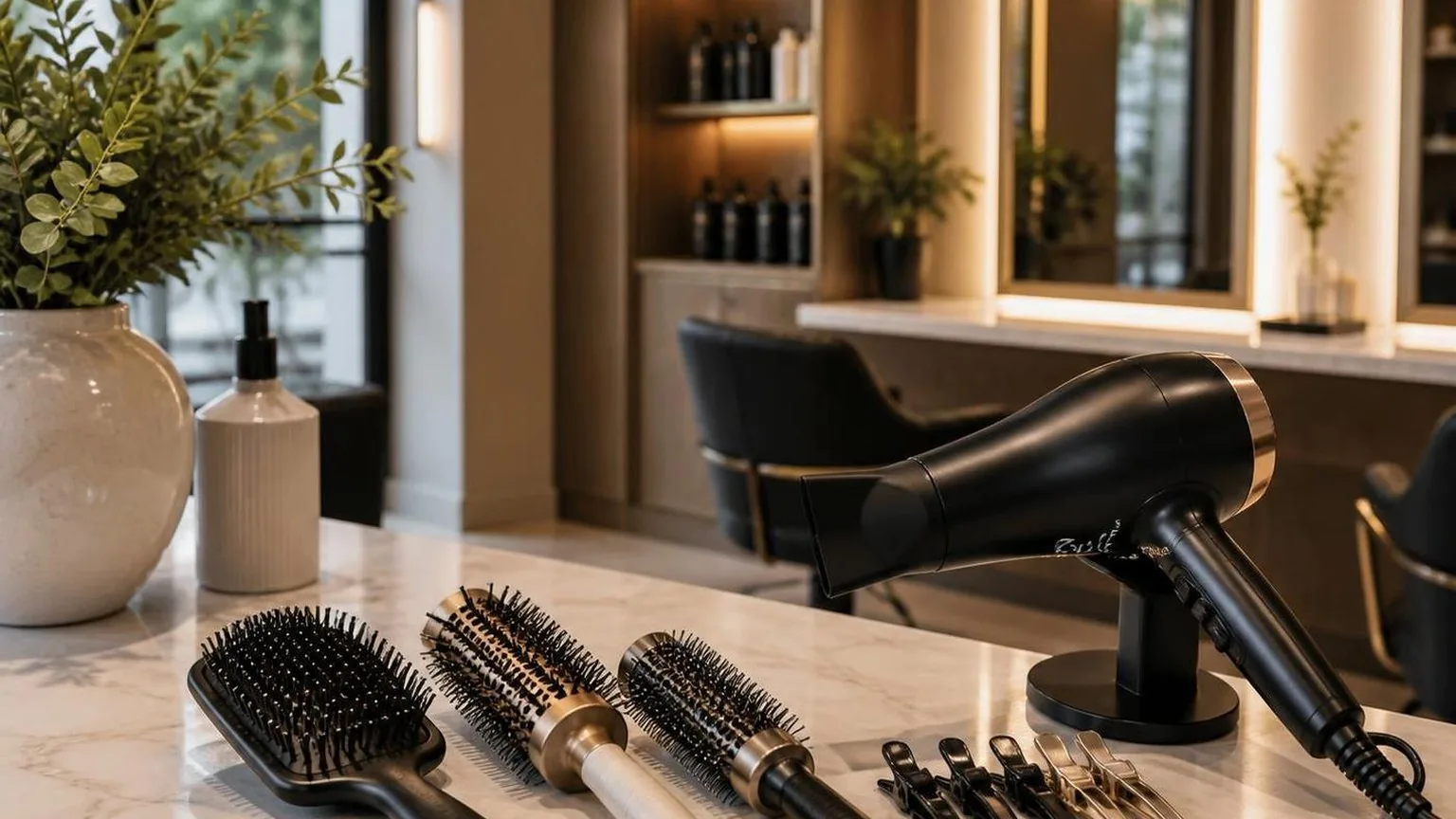
The Levers You Control
Run time changes with heat load, airflow resistance, motor design, and how clean the dryer stays. A dryer can run longer when air moves freely and the heating element does not recycle excess heat.
It runs shorter when vents clog, attachments choke airflow, or the room itself is hot.
Motor and heater design set the baseline. Professional AC and digital motors are built for longer duty cycles than many lightweight consumer DC units. That does not mean infinite run time.
Internal thermal cutoffs still stop the dryer when heat builds faster than the fan can remove it.
| Factor | What changes | Typical effect on continuous use |
| Motor type | DC, AC, or high-speed digital | AC and digital models usually tolerate longer salon-style sessions |
| Heat setting | Low, medium, high | Higher heat loads the element and raises internal temperature faster |
| Airflow path | Open intake vs blocked filter or nozzle | Restricted airflow shortens run time and can trigger thermal shutoff |
| Room conditions | Cool, dry room vs warm, humid room | Warmer rooms reduce cooling margin inside the dryer |
| Attachment choice | Wide concentrator, narrow concentrator, diffuser | Narrow nozzles often increase back pressure more than wider fittings |
Airflow matters more than wattage alone. A dryer with a clean intake and a wide concentrator can often run longer than a stronger unit with lint packed into the rear screen.
Less moving air means less cooling for the element, switchgear, and motor housing.
Technique changes the result too. Holding the dryer close to the head for long passes reflects heat back toward the barrel and front grill.
Keeping the tool moving and using the cool-shot between sections reduces internal heat soak during a full blowout.
| Use condition | Common measurement | Why it matters |
| Rear filter cleanliness | Visible lint layer vs clear mesh | Lint cuts intake airflow and raises motor temperature |
| Nozzle opening width | About 6 mm to 8 mm vs 10 mm to 12 mm | Narrow openings concentrate air but can increase restriction |
| Surface temperature at outlet | Often about 50 C to 75 C on low to medium | Higher outlet heat usually means less safety margin for long runs |
| Section drying time | Rough dry about 5 to 10 minutes, full blowout about 20 to 45 minutes | Longer sessions build more cumulative heat inside the tool |
- Clean the intake screen often. A blocked filter is the fastest way to shorten safe run time.
- Use medium heat for rough drying. Save high heat for brief polishing passes.
- Choose the widest nozzle that still gives control. It lowers restriction.
- Let the dryer idle on cool for a short period after long styling sessions. That helps purge stored heat.
If a dryer smells hot, pulses, or cuts out, the practical run time has already been exceeded for that setup. The tool, the attachment, and the airflow condition decide the result more than the label on the box.
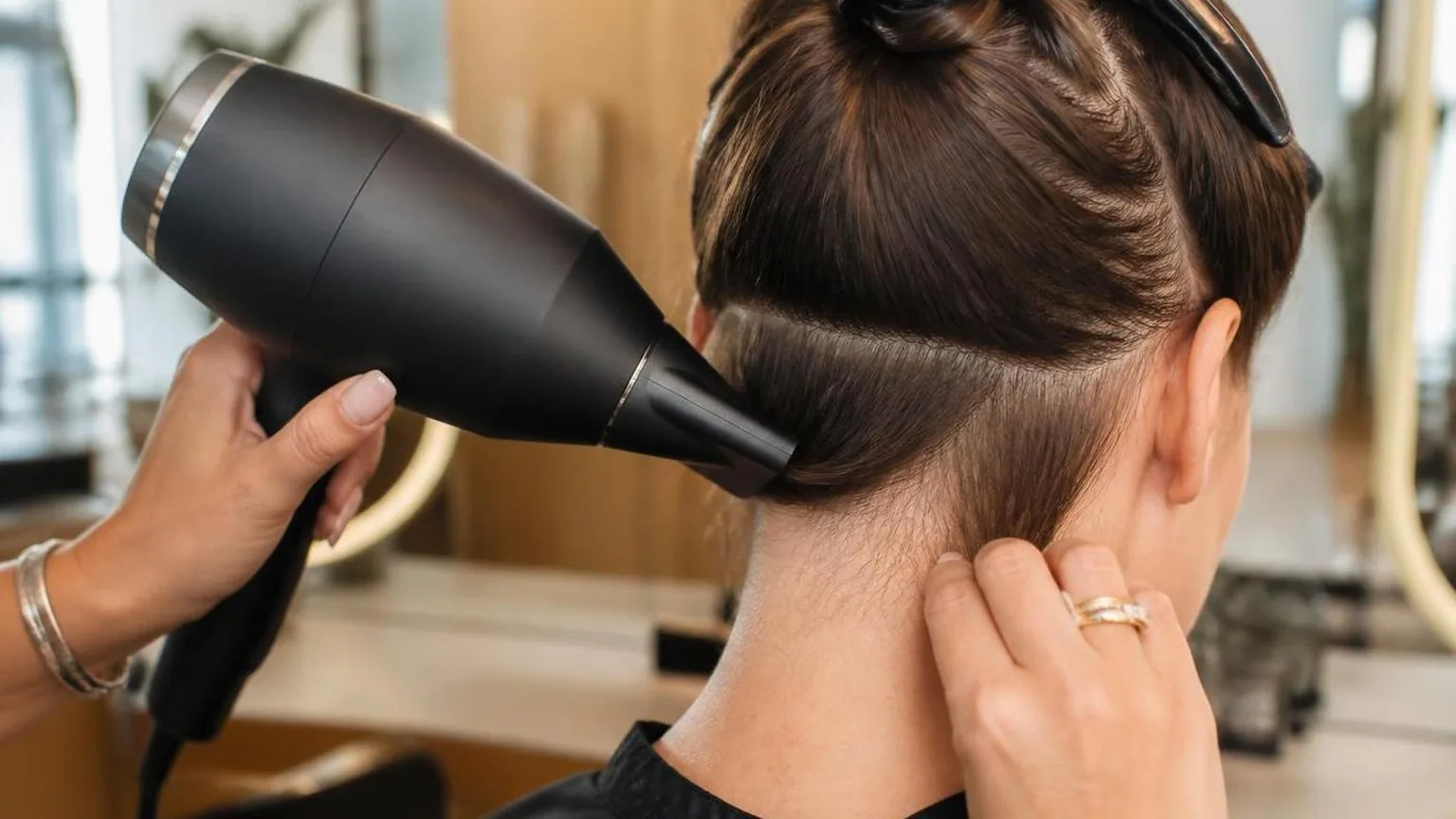
Spotting It on the Day
Judge run time by the dryer’s housing temperature, airflow consistency, and how fast each section reaches about 80 to 90 percent dry.
On real hair, a healthy dryer can usually work through one full blowout without fading in power, but it should not run continuously for long blocks if the rear filter is loaded or airflow is restricted.
Test it on a standard service, not empty air. Use freshly washed, towel-blotted hair, apply product, then work in clean sections. Watch whether drying speed stays steady from the first section to the last.
Section size matters because it sets the true workload. Use medium sections about 2 inches wide and 1 inch thick for straightening, or slightly smaller sections around a 1.5-inch width for bend and root lift. Oversized sections hide weak airflow.
| Hair type | Section guide | Typical pass time | Continuous run cue |
| Fine, shoulder length | 2 inches wide | 45 to 75 seconds | 8 to 12 minutes |
| Medium, shoulder to chest | 2 inches wide | 60 to 90 seconds | 12 to 18 minutes |
| Dense or coarse, chest length | 1.5 to 2 inches wide | 75 to 120 seconds | 15 to 25 minutes |
Keep the nozzle 2 to 4 inches from the hair. Closer than 2 inches raises heat stress on the tool and the hair. Farther than 4 inches wastes airflow, extends run time, and can make a dryer seem weaker than it is.
Use high airflow first, then lower heat for the brush finish. Most pro dryers are worked hardest during the rough-dry phase, when hair goes from wet to about 70 percent dry.
That first phase often takes 4 to 10 minutes, depending on density and length.
Check for warning signs during the service. A strained motor note, a hotter handle, a burnt-dust smell, or a drop in airflow after several minutes usually points to a blocked filter, lint buildup, or thermal protection stepping in.
| What you feel on hair | What it usually means | Action |
| Air stays strong, finish time stays consistent | Normal operating window | Continue service |
| Air turns very hot but feels slower | Restricted intake or overheating | Clean filter, let cool 10 to 20 minutes |
| Drying time doubles section to section | Heat cycling or motor fatigue | Stop continuous use and inspect |
On a busy salon floor, the best rule is practical. If one full blowout takes 20 to 35 minutes, a sound dryer should finish it without power drop. If performance changes before the last quadrant, judge the tool by airflow loss, not by the clock alone.
Side by Side With the Options
A standard handheld hair dryer usually runs in practical blocks of 10 to 30 minutes before users pause it.
That is longer than most hot brushes and flat irons in one pass, but shorter than bonnet and hood dryers built for 30 to 60 minutes of steady airflow.
The difference is motor load, heat concentration, and ventilation.
A blow dryer moves high air volume through a compact body, often at 1,500 to 1,875 watts in the US plug format, so heat buildup inside the housing matters more than with passive hot tools.
| Tool type | Typical power | Typical continuous use window | Main limit |
| Handheld hair dryer | 1,500 to 1,875 W | 10 to 30 minutes | Motor and internal heat buildup |
| Professional hood dryer | 900 to 1,500 W | 30 to 60 minutes | User comfort and salon timer setting |
| Bonnet dryer | 500 to 1,200 W | 20 to 45 minutes | Lower airflow, slower drying speed |
| Hot air brush | 300 to 1,200 W | 10 to 20 minutes | Smaller vents and barrel heat concentration |
| Flat iron | 35 to 150 W | 15 to 60 minutes powered on | Plate temperature, not airflow or motor strain |
A hood dryer wins on continuous runtime. It uses lower air velocity and a larger shell, so heat spreads across a wider chamber instead of concentrating around one small motor housing and rear filter.
A bonnet dryer also tolerates longer sessions than a handheld. Drying is slower, but the lower watt draw and indirect heat path reduce stress on the tool during a full roller set or wrapped style.
A hot air brush is the closest alternative, but usually not the better one for long nonstop use. The barrel sits against the hair, airflow channels are narrower, and lint clogs build faster around the intake and brush base.
A flat iron can stay switched on longer than a dryer because it has no fan motor. That does not make it better for wet-to-dry work. Plates are designed for dry hair passes, while dryers remove surface moisture first.
| Best choice | Use it when | Why |
| Handheld dryer | Fast rough-dry and brush work | High airflow, directional control |
| Hood or bonnet dryer | Long set-and-dry sessions | Longer duty window, gentler airflow |
| Hot air brush | Quick smoothing on nearly dry hair | One-hand styling, lower bulk |
| Flat iron | Finishing and polish on dry hair | Direct plate smoothing |
If runtime is the deciding factor, a handheld dryer sits in the middle. It outlasts short-pass styling tools, but purpose-built hood and bonnet dryers are better for sustained drying blocks without repeated cool-down pauses.
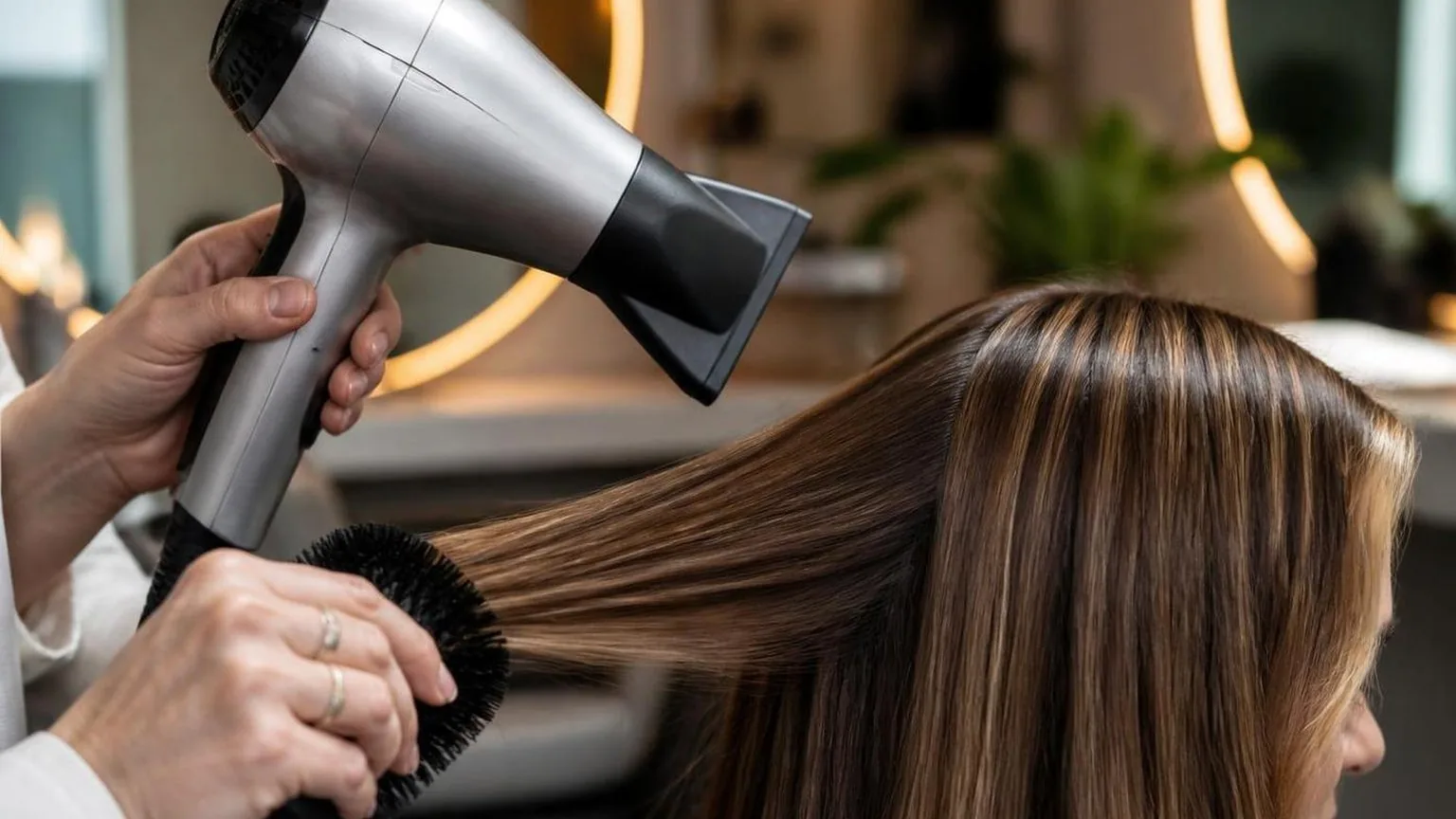
Heat, Tension and Keeping Hair Intact
Hair stays intact when dryer time is broken into short passes, heat is matched to hair density, and brush tension stays firm but not aggressive.
For most blowouts, the safer pattern is medium heat first, high heat only to set shape, then a cool shot to lock the cuticle flatter.
Long, uninterrupted blasting dries the surface fast and overworks the same section. That creates roughness, flyaways, and soft ends that collapse early.
Better control comes from smaller sections, steady airflow, and movement that keeps heat from sitting in one spot.
| Control point | Working range | Why it matters |
| Nozzle distance | 5-10 cm / 2-4 in | Keeps airflow concentrated without scorching one patch |
| Section width | 2.5-5 cm / 1-2 in | Lets air reach the root and mid-length evenly |
| Brush size | 25-35 mm for short to medium; 43-53 mm for longer lengths | Smaller barrels build bend; larger barrels smooth faster |
| Heat setting at root | Low to medium | Prevents rough lift and frizz where hair is newest and most visible |
| Heat setting on mid-lengths and ends | Medium, with brief high heat only if needed | Limits repeated stress on older, drier lengths |
| Passes per section | 2-4 controlled passes | Enough to dry and polish without endless reheating |
| Target dryness before round brush | 70-80% dry | Reduces brush drag and cuts total hot-tool time |
| Cool-shot finish | 5-10 seconds per section | Helps the shape hold after heat is removed |
Tension should guide the hair, not yank it. If the brush stalls, the section is too large, too wet, or wrapped too tightly. Reduce width, pre-dry longer, then keep the nozzle parallel to the hair shaft so the cuticle is pushed flat, not blown open.
Motor runtime matters here. Many professional dryers are built for salon-duty airflow, but even they perform better with brief resets during a full blowout.
If the body feels unusually hot or airflow drops, stop, clear the rear filter, and let the unit cool.
- Pre-dry with fingers until the hair is mostly dry, then switch to a brush for polish.
- Keep the concentrator on for smooth finishes. Diffuse airflow lifts the cuticle more.
- Do not park the nozzle on the ends. They dry first and lose shape fastest.
- Use higher tension only at the root for lift. Ease off through the ends to avoid over-stretching.
- Finish each section only when it feels dry and warm, not hot and brittle.
For home users, the simplest rule is this: shorten contact time before lowering temperature. Controlled passes beat one long blast. That protects finish quality, preserves movement, and lets the dryer run more efficiently over the whole service.
The Mechanism, Step by Step
Method changes heat load, airflow exposure, and moisture removal rate. Those three variables decide how long a dryer can run before internal temperature rises, the motor stays under strain, and the hair reaches a finished state.
The tool does not run for one fixed safe period. Nozzle distance, section size, heat setting, and whether the airflow keeps moving all change how quickly heat builds in the dryer and on the hair surface.
Nozzle distance changes surface temperature first. Holding the nozzle 5 cm closer raises heat concentration on a smaller area, which sets the cuticle sooner while deeper moisture remains in the section.
| Variable | Lower load method | Higher load method | Why it changes the outcome |
| Nozzle distance | 12-15 cm | 5-8 cm | Closer distance concentrates heat and reduces cooling from room air dilution |
| Section width | 3-5 cm | 7-10 cm | Larger sections trap moisture, so the dryer stays on longer for the same pass |
| Brush tension | Light to medium | High on wet hair | Higher tension slows brush movement and keeps heat parked in one zone |
| Airflow pattern | Constant sweep | Static hold | Moving airflow spreads heat; static airflow creates a hot spot |
Section size changes drying time more than many users expect. A 3 cm section can clear moisture in one to two slow passes of 8-12 seconds each. An 8 cm section often needs 20-30 seconds more because inner strands stay shielded.
Heat setting changes the dryer’s own thermal load. High heat for 10 minutes continuously asks more from the heating element than medium heat for the same time, especially when the rear filter has lint restricting intake air.
Airflow matters because the motor also depends on moving air for cooling. Running high heat with low intake efficiency raises internal temperature faster than using a clean filter and steady airflow through the barrel.
| Method change | Typical effect on run time demand | Practical result |
| Rough-dry to about 80% before brush work | Reduces brush-dry time by 2-5 minutes on medium density hair | Less continuous heat exposure on one section |
| Keep nozzle moving every 2-3 seconds | Lowers heat concentration in one spot | More even finish, less parked heat |
| Clean filter after heavy salon use | Maintains airflow volume | Slower internal heat buildup |
| Use concentrator only for finishing passes | Reduces prolonged restricted airflow | Shorter high-precision heat window |
The method also changes when the finish is considered done. Stopping when the roots, mid-lengths, and ends feel uniformly dry prevents extra idle passes, which often add 30-60 seconds per section without improving shape.
In craft terms, the efficient method is small sections, 10-15 cm nozzle distance, constant movement, and a rough-dry first. That shortens total runtime because moisture is removed before detailed smoothing begins.
Common Mistakes and Myths
There is no single maximum run time for every hair dryer. A dryer can often run through one full blowout, but safe continuous use depends on motor design, wattage, airflow, filter cleanliness, and whether the housing is getting hot to the hand.
The common mistake is treating heat buildup as normal. If airflow drops, the rear filter is dusty, or the barrel becomes excessively hot, stop and let the unit cool instead of pushing through the service.
| Myth | Reality | Useful numbers |
| A stronger dryer can run forever | Higher wattage adds heat load. Motor cooling still depends on clean intake and clear exhaust. | Many salon dryers are 1,600 to 2,000 W. Check heat every 10 minutes during heavy use. |
| The “cool shot” cools the motor instantly | It drops outlet temperature, but it does not erase internal heat already stored in the motor and heater assembly. | Use cool shot for 20 to 30 seconds before switching off after long styling. |
| Overheating always means a faulty dryer | Blocked filters and attachments are frequent causes. Reduced intake airflow raises internal temperature fast. | Clean the rear screen after lint buildup is visible, and inspect it between clients. |
| A concentrator makes no difference to run time | A narrow nozzle can increase back pressure and trap heat if the dryer is already struggling for airflow. | Typical concentrators are about 6 to 9 cm wide, with narrow outlets around 0.6 to 1.2 cm. |
Another myth is that “warm casing” and “too hot to hold comfortably” are the same. They are not. A warm body is expected. A handle or barrel that becomes uncomfortable in under 15 seconds is a stop signal.
Users also mistake longer drying for better smoothing. Pro results come from sectioning and distance, not endless runtime. Work in sections about 5 to 7.5 cm wide, and keep the nozzle roughly 10 to 15 cm from the hair.
Holding the dryer too close is a double error. It raises strand temperature and makes the heater cycle harder. On high heat, outlet air can exceed 60°C near the nozzle, so distance matters for both finish and tool stress.
- Do not cover the rear intake with the palm during brush work.
- Do not set the dryer on a towel while running. The intake can clog in seconds.
- Do not store the cord tightly wrapped around the handle after a long service. Let the unit cool first.
- Do not ignore repeated thermal cut-off. That is a maintenance cue, not a feature to lean on.
The practical rule is simple. Run the dryer as long as airflow stays strong, the casing stays manageable, and the filter stays clear. If performance drops or heat spikes, pause for several minutes and reset the setup.
Frequently Asked Questions
How long can a hair dryer run continuously?
Most consumer dryers are built for short, repeated use, not nonstop operation. A practical limit is 10 to 20 minutes on high heat before giving the motor and heating element a 5 to 10 minute cool-down, especially with 1600 to watt models.
Can a professional salon dryer run longer than a home dryer?
Usually, yes.
Professional handheld dryers often tolerate longer sessions because they use more durable motors and better airflow management, but stylists still cycle heat and speed during a service rather than holding maximum heat for 30 minutes straight.
What causes a hair dryer to overheat during a long blowout?
Restricted airflow is the main cause.
A clogged rear filter, a blocked nozzle, or holding the intake against clothing makes the heating element run hotter, so clean the filter regularly and keep at least a few inches of clearance around the air intake.
Should you turn a dryer off during sectioning?
Yes. If sectioning takes more than 30 to 60 seconds, switch the dryer off or move to cool shot. That reduces heat soak inside the housing, lowers wear on the motor, and helps prevent the handle and barrel from getting unnecessarily hot.
How do you know a hair dryer needs a break?
Stop if the body becomes unusually hot, airflow drops, or the dryer cuts out and restarts after cooling. Many dryers have thermal protection, so let it sit unplugged for 10 to 15 minutes, then check the filter and vent before using it again.
Is it safe to leave a hair dryer running unattended?
No. A hair dryer should be turned off whenever it is not in your hand or actively being used. Leaving it running unattended can block airflow, overheat the motor, or create a fire risk.
Does the heat setting affect how long a hair dryer can run?
Yes. High heat puts more strain on the heating element and can make the dryer warm up faster. Using medium heat with strong airflow is often better for longer drying sessions.
Related Reading
- Hair dryer wattage, and why more is not better
- Ionic or ceramic: what the labels actually mean
- Choosing a professional dryer: what actually matters
- Paddle or round: which brush does which job
- Cleaning a dryer filter, and how often it needs it
- The complete guide to blow dry tools
- PubMed
- Small Business Administration
- American Academy of Dermatology – Hair Care
- Milady
- North Carolina State University Extension – Hair Care
- Electrical Safety Foundation International
- Occupational Safety and Health Administration
- National Fire Protection Association
- MedlinePlus — Hair Problems
- PubMed Central
- OSHA — Personal Protective Equipment