
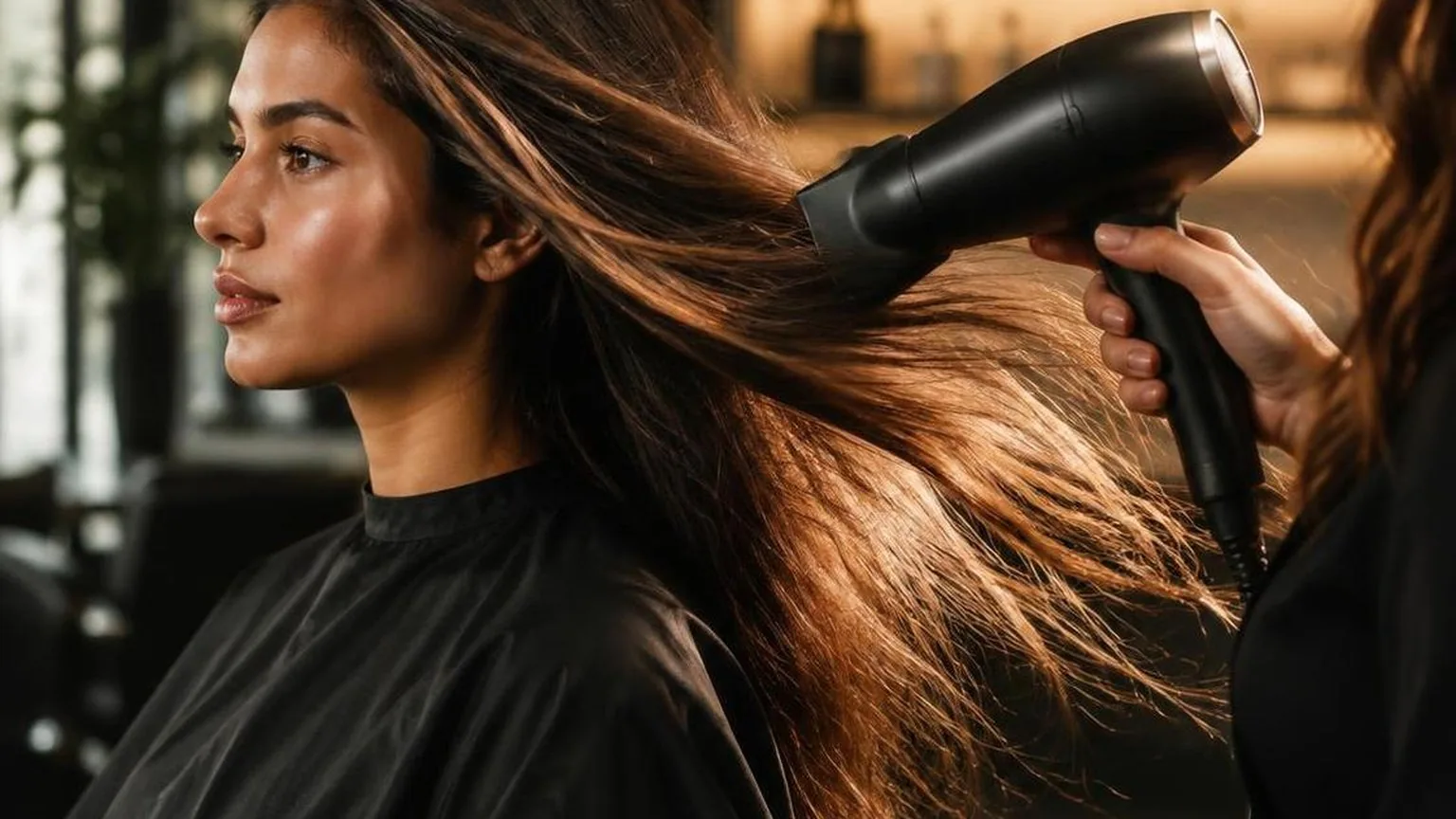
How hot do hair dryers get: most blow dryers push outlet air around 140–200°F on high heat, while salon concentrators can feel hotter when held within 2 inches of the hair.
Heat rises fastest when airflow is restricted, the filter is clogged, or the nozzle sits too close.
For a polished blowout, keep the dryer 6 inches from the section, use high airflow before high heat, and finish each pass with 10–15 seconds of cool air. The goal is controlled evaporation, not scorching the cuticle.
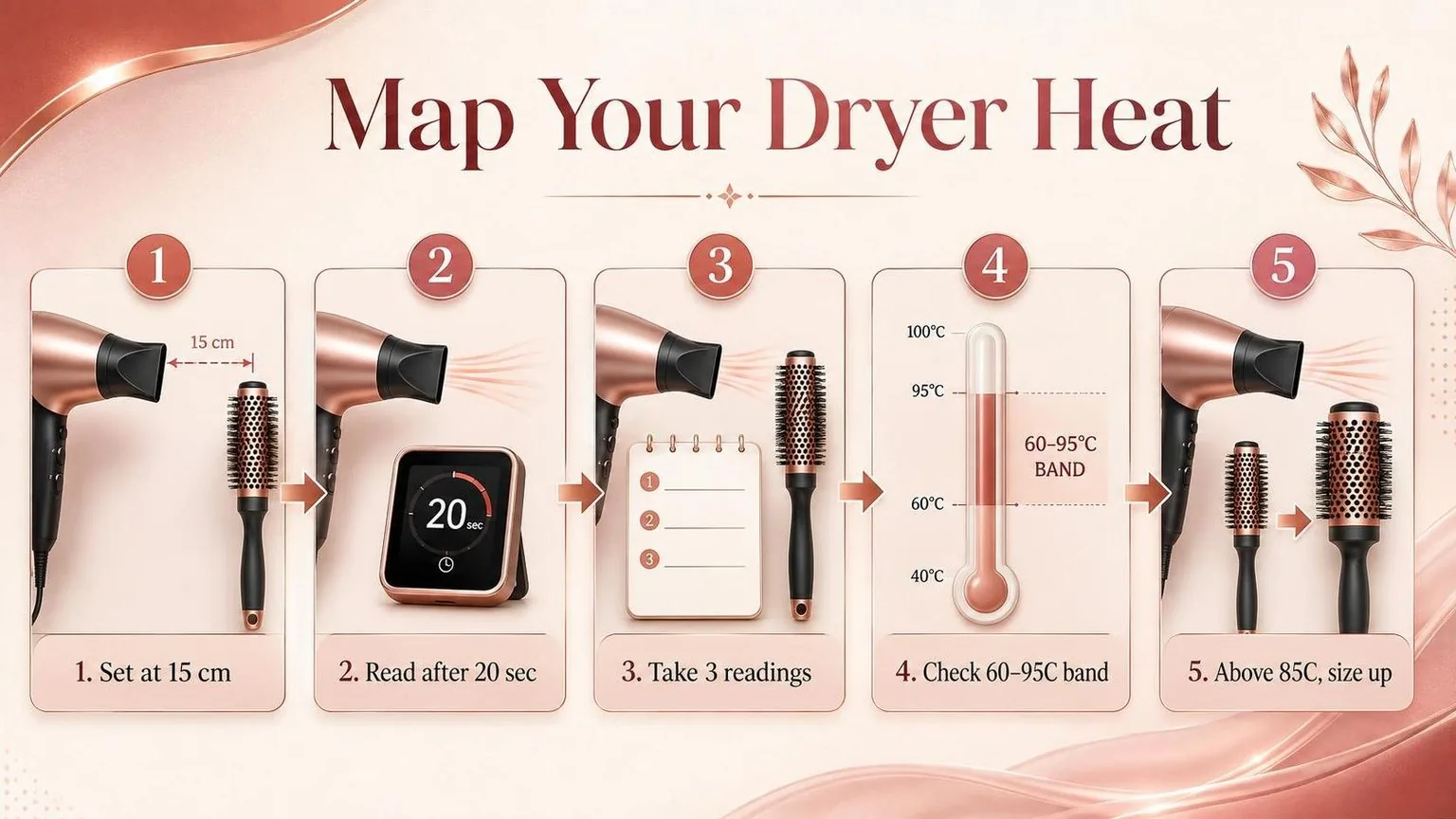
Map Your Dryer Heat
Work out your real drying temperature before you change tools, airflow, or brush size. Measure the air where hair actually sits, then match that reading to your texture, density, and service speed.
- 1. Set the test point. Hold the dryer 15 cm from a clean paddle brush or round brush barrel. Use the heat setting you use most. Keep the nozzle on if you normally work with one.
- 2. Read the air. Aim an infrared thermometer at the brush surface after 20 seconds of continuous airflow. Take three readings: centre, left edge, right edge. Write down the highest number in degrees C and degrees F.
- 3. Check your working range. Under 60C usually feels gentle and slow. Around 60C to 80C is a common styling band for fine to medium hair. Around 80C to 95C is faster, but needs more movement and less dwell time.
- 4. Match brush size to heat load. A 25 mm round brush concentrates heat and tension. A 43 mm or 53 mm barrel spreads both over more hair. If your reading is above 85C, size up the brush or increase distance to 20 cm.
| Your highest reading | Do now |
| Below 60C | Reduce section size to 2.5 cm and slow your pass for more polish. |
| 60C to 80C | Use 5 cm sections for control, then finish each section with a cool shot. |
| 80C to 95C | Keep the dryer moving every 2 to 3 seconds and avoid parking heat on the ends. |
| Above 95C | Step back 5 cm, lower one heat setting, or remove the concentrator for diffuse airflow. |
That gives you your answer: not how hot hair dryers get in theory, but how hot your dryer runs in your hands, at your distance, on your brush.
The Figures Behind It
Hair dryers usually push air at roughly 50°C to 110°C at the nozzle on a hot setting, which is about 120°F to 230°F. The exact figure shifts with the heat setting, airflow, attachment, and the distance between the nozzle and the hair.
That is why two dryers with similar wattage can feel very different in use. Measure at the grille, then measure 15 cm away, and the number drops fast because the air mixes with room air.
No single temperature defines a hair dryer. The useful number is outlet air temperature at a stated distance, not heater temperature inside the barrel. Internal heating elements run far hotter than the air reaching the hair.
| Measurement point | Typical hot-setting range | What it means in practice |
| At nozzle opening | 50°C to 110°C 120°F to 230°F |
Peak outlet reading, strongly affected by attachment and airflow restriction |
| About 5 cm from nozzle | 45°C to 95°C 113°F to 203°F |
Closer to real blow-dry use during rough drying |
| About 15 cm from nozzle | 40°C to 80°C 104°F to 176°F |
More typical during brush work and finishing |
| Cool-shot setting | Near room temperature to about 35°C up to about 95°F |
Used to set shape after tension and heat |
Distance matters more than most users expect. Move the dryer from 5 cm to 15 cm away and the air at the hair can drop by 15°C to 30°C, sometimes more, depending on airflow speed and room temperature.
Attachments change the reading too. A concentrator nozzle narrows the airstream, so the same dryer can produce a hotter, more focused stream at one spot. A diffuser spreads flow, usually lowering peak temperature at any single point.
| Variable | Typical effect on measured air temperature |
| Higher heat setting | Raises outlet temperature |
| Higher airflow setting | Can lower peak temperature slightly by moving more air across the heater |
| Concentrator attachment | Raises heat intensity at the target area |
| Diffuser attachment | Lowers peak heat at one point and broadens coverage |
| Greater distance | Lowers temperature at the hair quickly |
| Blocked rear filter | Can increase internal heat and reduce performance |
Wattage is not a direct temperature rating. A 1,800 W dryer and a 2,000 W dryer can deliver similar nozzle temperatures, because design, airflow, heater control, and nozzle geometry decide how that power reaches the hair.
Most salon technique keeps the dryer moving and the nozzle 10 cm to 20 cm from the hair. That working distance usually puts the actual hair exposure well below the highest nozzle reading shown in product demonstrations.
For a smoother finish, stylists often pair moderate heat with higher tension rather than chasing the hottest possible setting.
In practical terms, controlled airflow, a concentrator around 6 cm to 9 cm wide, and steady movement usually outperform raw heat alone.
The bottom line is simple. Expect roughly 50°C to 110°C at the nozzle, lower temperatures at the hair, and large differences based on distance and attachment.
If you want a meaningful comparison, ask where the temperature was measured and on which setting.
Which Factors Carry Weight
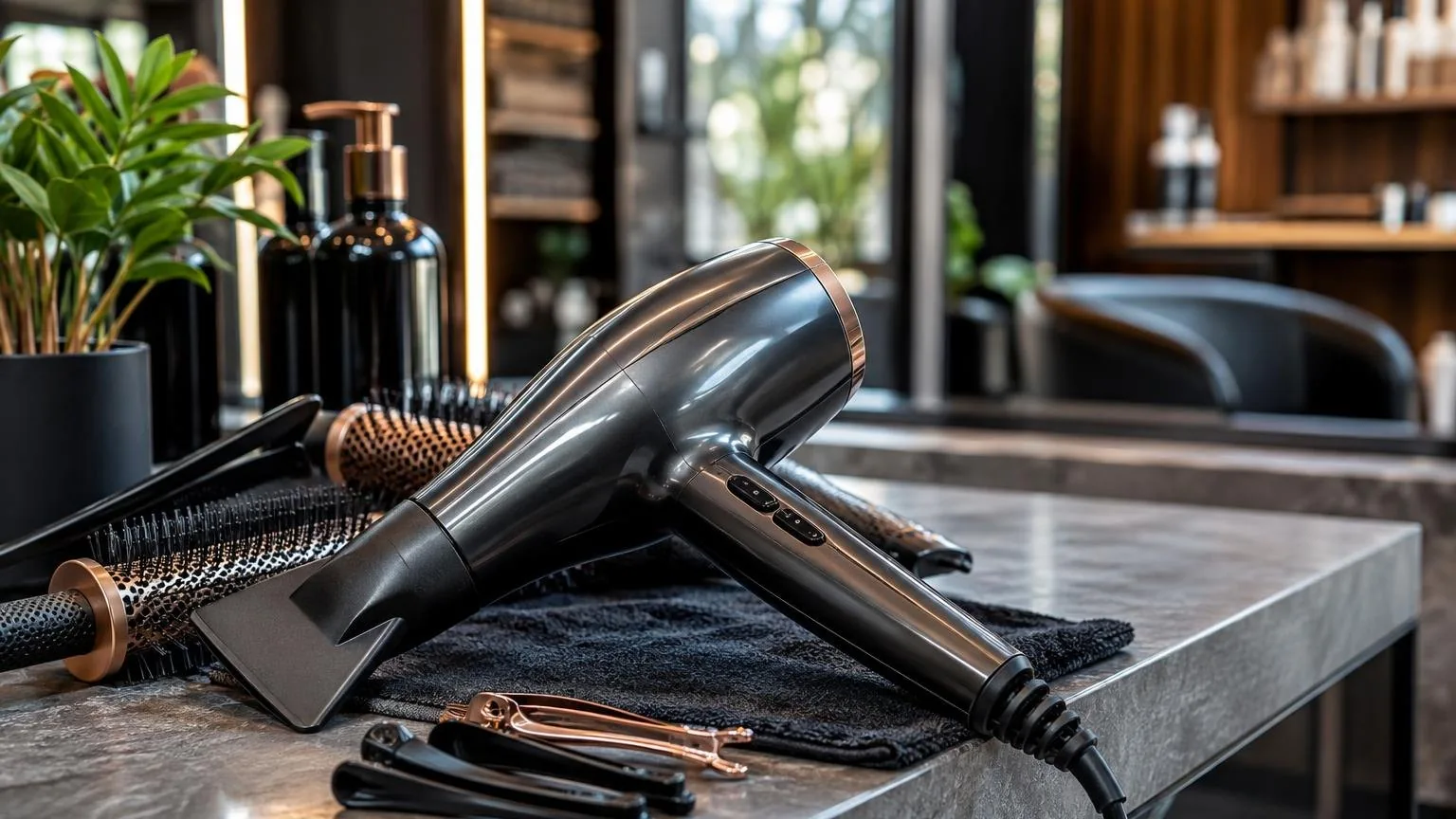
Hair dryer heat varies because the tool is balancing heater output, airflow, and distance from the hair. The hottest reading is usually at the nozzle, on high heat, with restricted airflow. The same dryer can feel much cooler a few inches away.
The biggest difference comes from how much air the motor moves past the heating element. Fast airflow carries more heat toward the hair, but it also cools the element and can lower peak outlet temperature.
Slower airflow often reads hotter at the nozzle.
That is why two dryers with similar wattage can behave differently in use. A strong motor paired with a controlled heater often dries faster without feeling scorching. A weaker motor can feel hotter because the air lingers around the element longer.
| Factor | What changes | Typical effect on outlet heat |
| Wattage | Electrical power available to heater and motor | Many full-size dryers sit around 1600-1875 W in the US, with salon models commonly near 1800- W on circuits that allow it |
| Airflow | How much air passes the element | Higher airflow can reduce peak nozzle temperature but improve drying speed |
| Nozzle size | How concentrated the stream is | Narrow concentrators raise measured heat and velocity at the target area |
| Distance | How far the dryer is from the hair | Heat drops sharply between contact-near use and a working distance of 6-8 inches |
Nozzle design changes the reading more than many users expect. A narrow concentrator compresses the airstream, increasing local temperature and velocity at the brush.
A diffuser spreads the same heat over a larger area, so it feels cooler and gentler.
Distance is the easiest variable to control behind the chair. At the nozzle opening, many dryers can exceed temperatures comfortable for direct skin contact. At a practical styling distance, the stream is cooler because room air mixes in immediately.
| Measurement point | Typical range | Why it differs |
| Nozzle opening, high heat | About 140-200°F | Heat is most concentrated before mixing with room air |
| Working distance of 6-8 inches | About 110-160°F | Ambient air dilution lowers the effective temperature |
| Cool shot | Near room temperature to mildly warm | Heater cycles off while airflow continues |
Internal controls matter too. Better dryers use thermostats or thermistors to cycle the heater and prevent runaway heat. Some systems sample temperature many times per second. The goal is consistency, not a single extreme reading.
Build quality affects the result over a full service. A clean rear filter supports airflow and keeps temperatures more stable. A clogged filter reduces intake, which can make the stream hotter at the outlet while slowing actual drying.
Voltage and circuit limits also explain regional differences.
A dryer designed for 120 V may deliver different heat behavior than one built for 230-240 V, even when both feel “professional.” What matters in practice is the heat-airflow balance at the hair.
| Salon-use variable | Action | Result |
| Section size | Work in clean sections around 2-3 inches wide | Heat reaches the brush line evenly |
| Brush diameter | Use 1.5-2 inch barrels for bend, 2.5-3 inch for smoother finishes | Surface area changes how hot the section feels |
| Pass timing | Keep the nozzle moving, roughly 2-4 seconds per spot | Prevents heat buildup on one panel |
For owners and stylists, the takeaway is simple. Heat differences come from concentration, airflow, and distance more than marketing labels.
Measure performance at the hair, not only at the nozzle, and choose settings that keep the section moving while the brush maintains tension.
Reading the Result at the Chair
At the chair, a hair dryer’s nozzle air commonly lands around 120°F to 160°F on medium and 160°F to 200°F on high, with hotter spikes possible at the outlet. The number that matters is not only the setting.
Distance, attachment choice, airflow speed, and how long you hold one section all change the actual heat reaching hair.
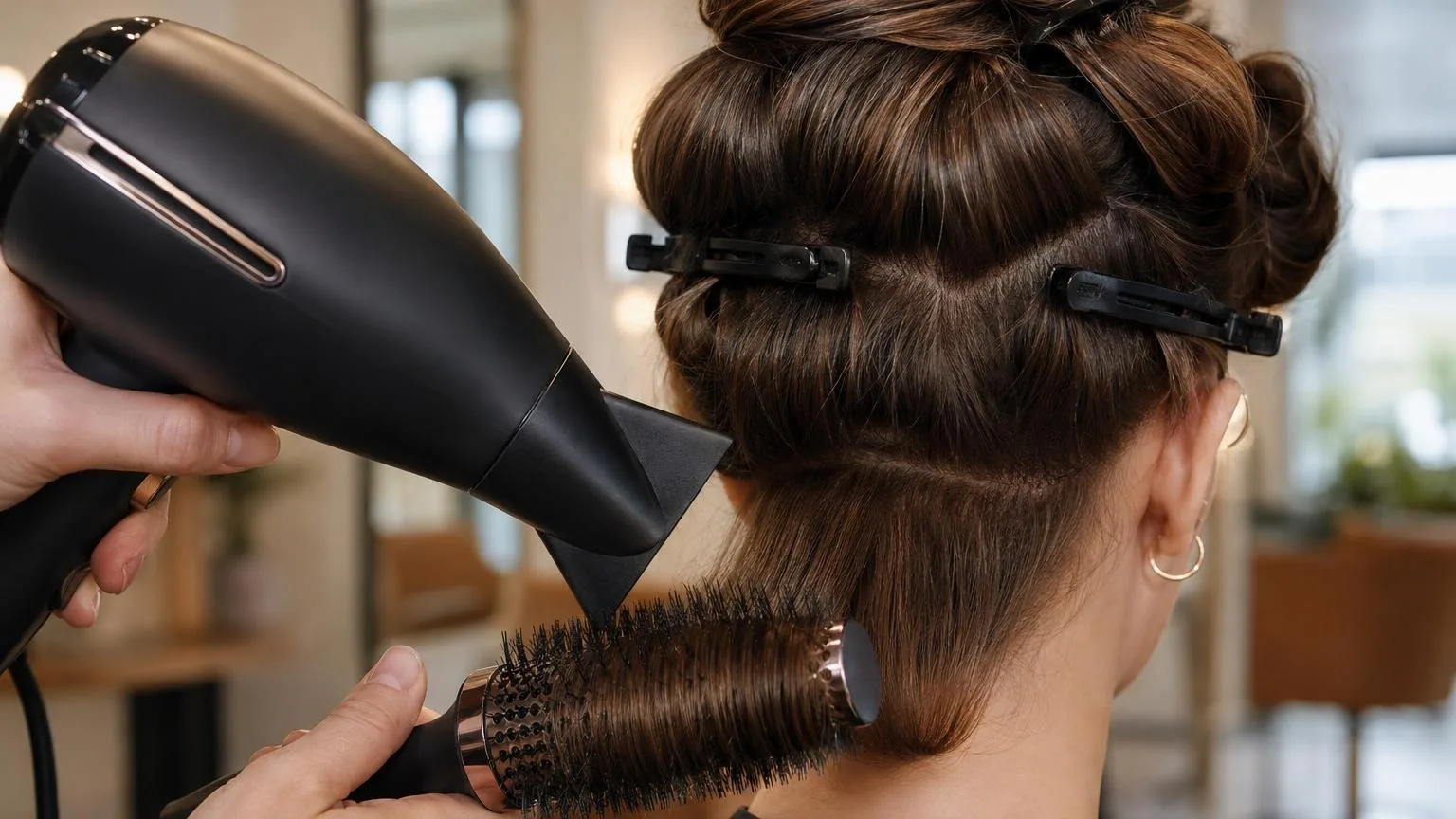
Start with position before power. Hold the nozzle roughly 6 to 8 inches from the hair for general blow-drying. Move closer only for brief polishing passes. That keeps heat more even across the section and reduces hot spots at the cuticle surface.
Nozzle temperature is always higher than hair-surface temperature. A dryer can push very hot air at the grille, yet the reading drops fast as that air mixes with room air.
This is why “high heat” at the switch does not tell you the full story at the chair.
| Check point | Typical reading | Why it matters |
| Nozzle outlet, high heat | 160°F to 230°F | Shows the dryer’s maximum air temperature close to the source |
| Hair surface, 2 inches away | 140°F to 190°F | Closer work raises the risk of over-drying small areas |
| Hair surface, 6 to 8 inches away | 110°F to 160°F | More realistic for controlled salon blowouts |
| Cool shot | Near room temperature to warm | Sets shape after tension work without adding more heat |
Use the back-of-hand test only as a quick screen, not a measurement. Human skin is inconsistent.
A small infrared thermometer gives a better read on hair-surface temperature during repeated passes, especially when comparing dryers, nozzles, and brush sizes on the same service.
Attachment choice changes the result. A concentrator nozzle narrows airflow, so the same dryer can read hotter on one small target area.
A diffuser spreads air over a wider field, lowering intensity at any single point and reducing direct heat concentration.
Section size affects heat build-up. A section about 2 inches wide and 1 inch deep dries more evenly than a thick panel. Dense sections trap moisture, extend drying time, and tempt the stylist to hold high heat in one place for too long.
| Variable | Chairside adjustment | Expected effect |
| Distance | Move from 2 inches to 6 to 8 inches | Lowers hair-surface temperature quickly |
| Nozzle | Use concentrator only when tension is controlled | Raises precision and local heat intensity |
| Airflow | Choose high airflow before max heat | Speeds evaporation with less temperature loading |
| Pass time | Keep each pass about 2 to 3 seconds | Prevents one spot from accumulating excess heat |
Brush choice matters too. A round brush in the 1.5-inch to 2-inch range gives enough tension for most medium lengths without forcing the dryer too close.
Smaller barrels create tighter bend, but they also keep the nozzle nearer the hair and raise local heat exposure.
Watch the moisture stage. Hair should move from damp to almost dry before you chase polish. Use higher airflow while water is still visible, then reduce heat for the last 10 to 20 percent of drying.
Finishing on a nearly dry section avoids baking in one wet spot.
The reliable chairside rule is simple. Measure or estimate the heat at the hair, not at the switch. Keep the nozzle moving, maintain 6 to 8 inches for most work, and reserve close, hotter passes for brief finishing only.
Set Against the Other Options
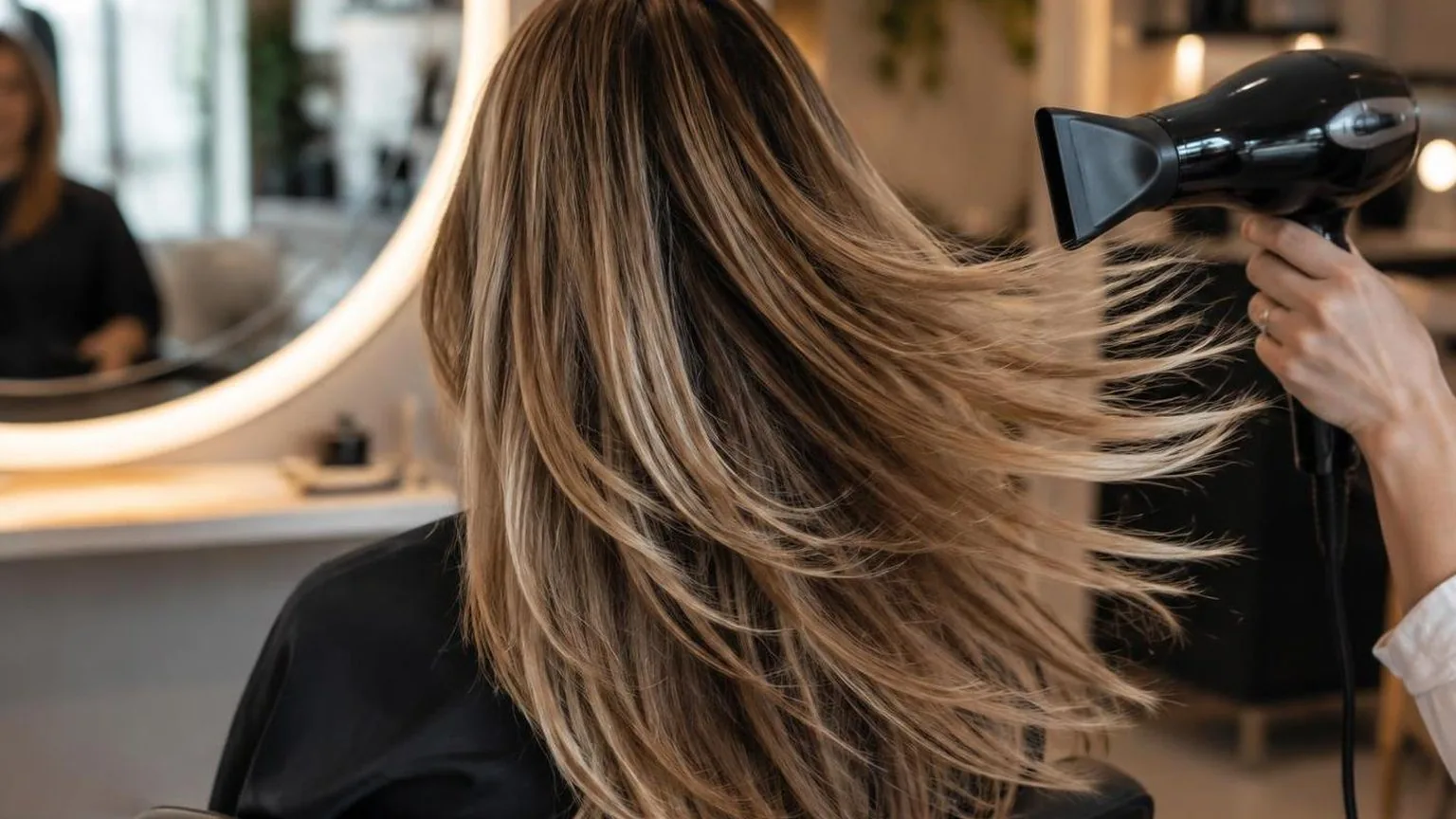
A hair dryer runs hot, but usually not as hot as direct-contact hot tools. Most dryers deliver outlet air around 140°F to 160°F on high heat, while the air cools as it travels from nozzle to hair.
Flat irons and curling irons push much higher surface temperatures.
That difference matters in the salon and at home. A dryer heats hair with moving air, so heat is less concentrated than a 1-inch ceramic iron clamped onto one section. Tool choice changes speed, finish, and the margin for heat control.
| Tool | Typical heat at tool | How heat reaches hair | Best use |
| Hair dryer | About 140°F to 160°F at the outlet on high; some tests show peaks near 200°F at close range | Moving air across the cuticle | Rough-drying, stretch, volume, smooth blowouts |
| Hot air brush | Often about 150°F to 210°F at the barrel surface, depending on setting | Heated airflow plus contact with barrel | One-step smoothing and bend |
| Curling iron | Common settings from 250°F to 400°F | Direct contact with heated barrel | Defined curl and polished bend |
| Flat iron | Common settings from 250°F to 450°F | Direct contact between two heated plates | Maximum smoothing and straight finish |
| Hood dryer | Often around 110°F to 140°F inside the hood | Diffuse warm air around the head | Set work, gentle drying, lower airflow finishing |
Consumer Reports found many handheld dryers blow air in the mid-140s to mid-150s Fahrenheit on high. Good Housekeeping tests have also recorded dryer outlet temperatures well above 150°F, depending on distance and setting.
The nozzle area is the hottest zone.
Distance changes the number fast. Hold a dryer 2 inches from the hair and the section receives much more heat than it does at 6 inches. That is why pros rough-dry at a safer distance, then come closer only for tension work.
Against a hot air brush, a standard dryer usually gives more airflow and less direct surface heat. That helps with faster water removal.
A hot air brush places heated bristles or a barrel against the hair, so the finish can look smoother but the heat is more localized.
Against a flat iron, a dryer is the lower-temperature option. A plate set to 365°F or 410°F transfers heat directly and evenly to the same section until the pass ends.
A dryer exposes each section for longer, but the heat load per contact point is lower.
Against a curling iron, the same rule applies. A 1-inch iron at 350°F shapes hair faster because the barrel heat is concentrated. A dryer with a round brush needs more passes, but gives more control over root lift, movement, and tension at the ends.
What this means behind the chair
- Use the dryer first for water removal. Hair goes from wet to damp fastest with airflow, not with a contact tool.
- For smooth blowouts, keep the nozzle about 4 to 6 inches away during most of the pass. Move closer only at the brush for short finishing strokes.
- Switch to medium heat for fine hair and fringe. High airflow with moderate heat often dries faster than low airflow with extreme heat.
- Reserve flat irons and curling irons for detail work after the hair is fully dry. Direct-contact tools on damp sections waste time and raise heat exposure.
Set against the other options, the hair dryer sits in the middle. It is hotter than many people expect, but it is still cooler than most irons. Its advantage is airflow, reach, and shape-building, not the highest temperature on the station.
Heat Without the Cost to Hair
Protect hair by controlling both heat and distance.
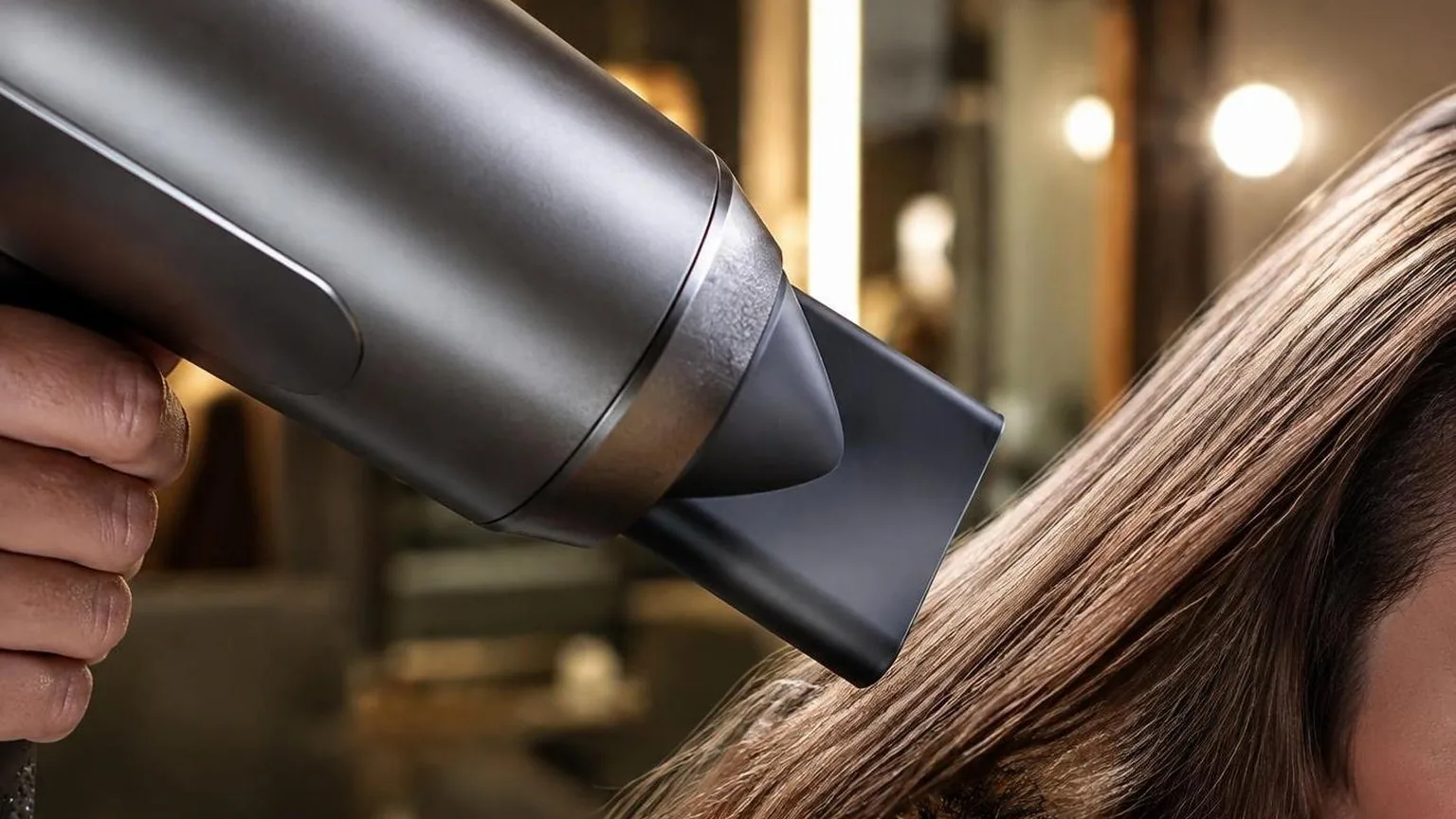
Most home and pro dryers can push outlet air well above 60°C on medium settings and close to or above 100°C on high, but the hair fiber sees less heat when you keep the nozzle moving.
The goal is not the hottest blast. The goal is fast water removal with the least repeated exposure, using moderate heat, strong airflow, and a working distance that avoids concentrated hot spots on the same section.
Start with moisture control before the dryer touches the hair. Towel blot or use a microfiber towel until the hair is damp, not dripping. Removing surface water first shortens drying time and cuts the number of hot passes needed.
Use heat protectant on mid-lengths and ends, then comb through for even distribution.
Uneven product placement creates uneven slip, uneven drying, and patchy heat exposure, especially around the hairline and crown where people tend to overwork sections.
| Stage | Recommended setting | Why it protects |
| Very wet hair | Low to medium heat, high airflow | Removes bulk water without baking the surface |
| About 70% dry | Medium heat, controlled tension | Shapes the cuticle with less total exposure |
| Final polish | Cool shot or low heat | Sets direction and reduces extra hot passes |
Keep the nozzle about 15 to 20 cm from the hair for rough drying. Move closer, around 5 to 10 cm, only when the hair is mostly dry and the brush is controlling tension. Closer than that concentrates heat too sharply.
Always aim airflow down the shaft, from roots toward ends. Random angles rough up the cuticle and force extra passes to regain smoothness. More passes mean more cumulative heat, even when the dryer setting itself looks reasonable.
Section size matters. Work in panels no wider than the barrel of the brush and no thicker than 2.5 to 5 cm. Oversized sections stay damp inside, so the outer hair overheats while the interior still needs more drying.
| Tool | Best use | Protection benefit |
| Concentrator nozzle | Smooth blowouts | Keeps airflow targeted, so you finish faster |
| Diffuser | Drying curls with less disruption | Spreads air, lowering direct heat intensity |
| Round brush 25 to 35 mm | Short hair or strong bend | Smaller sections, better control |
| Round brush 43 to 53 mm | Medium to long blowouts | Creates tension without overwrapping |
Do not park the dryer on one spot. Keep each pass to a few seconds, then move on. If the hair feels too hot on the back of your hand, it is too hot for repeated passes on fragile ends.
Roots usually tolerate more airflow because water gathers there first, but ends dry fastest and need the most restraint. Shift heat down as moisture drops. The last 10% of drying often causes the most unnecessary damage.
For fine, porous, or already fragile hair, use lower heat and rely on tension, sectioning, and nozzle direction. For dense or coarse hair, resist jumping straight to maximum heat.
Higher airflow often improves speed more safely than higher temperature.
- Rough dry to about 70% before round-brush work.
- Use medium heat for shaping, not maximum heat by default.
- Keep the dryer moving with each pass.
- Finish each section with cool air for 5 to 10 seconds.
- Stop when the section is dry and smooth, not hotter.
The protective rule is simple: less water, fewer passes, lower necessary heat. Control the section, direct the airflow, and finish with cooling. That produces a smoother blowout with less stress on the hair fiber.
Frequently Asked Questions
How hot does a hair dryer get at the nozzle?
Most consumer dryers blow air around 120°F to 160°F at the nozzle on high heat. Professional models can peak closer to 170°F to 190°F, depending on wattage, airflow, ambient room temperature, and whether a concentrator nozzle is attached.
Does the temperature drop as the dryer moves away from the hair?
Yes. Air cools fast with distance, so heat at 6 inches is markedly lower than at 1 to 2 inches. That is why stylists often keep the nozzle about 4 to 8 inches from the hair for control without concentrating peak heat on one small section.
Are ionic and ceramic dryers actually cooler?
Not always cooler, but often more even.
Ceramic components tend to regulate heat more steadily, while ionic dryers can speed water evaporation, which may reduce the time hair spends under heat even if outlet temperatures still sit in the 140°F to 180°F range.
How hot is the cool-shot button on a hair dryer?
The cool shot is not ice cold. It usually pushes unheated or lightly warmed room air, often landing near ambient temperature after the heating element switches off.
In practice, it helps set bend and smooth the cuticle after a section has been shaped with hot airflow.
Does a concentrator nozzle make a dryer feel hotter?
Yes. A narrow nozzle, often around 2 to 3 inches wide, compresses airflow into a smaller path, so the heat feels more intense on the section.
That focused stream improves tension and polish during a blowout, but it also requires more movement to avoid overheating one area.
What heat setting is best for fine, medium, and coarse hair?
Fine hair usually responds well to low or medium heat, often closer to 120°F to 140°F.
Medium hair can handle roughly 140°F to 160°F, while coarse or dense hair often needs 160°F to 180°F paired with strong airflow, sectioning, and steady brush tension.
How can you tell if your dryer is running too hot?
If the barrel becomes hard to hold, the scalp feels uncomfortably hot, or a section dries in seconds while snagging on the brush, the heat is too aggressive.
Lower the setting, increase distance to 6 to 8 inches, and keep the dryer moving every few seconds.
Related Reading
- How often a dryer filter needs clearing
- Ceramic or tourmaline: what changes inside the barrel
- Safe heat settings for a blow dry, by hair type
- Ionic or ceramic: what the labels actually mean
- Choosing a professional dryer: what actually matters
- What a diffuser does that a concentrator cannot
- What a paddle brush is actually for
- The complete guide to blow dry tools