
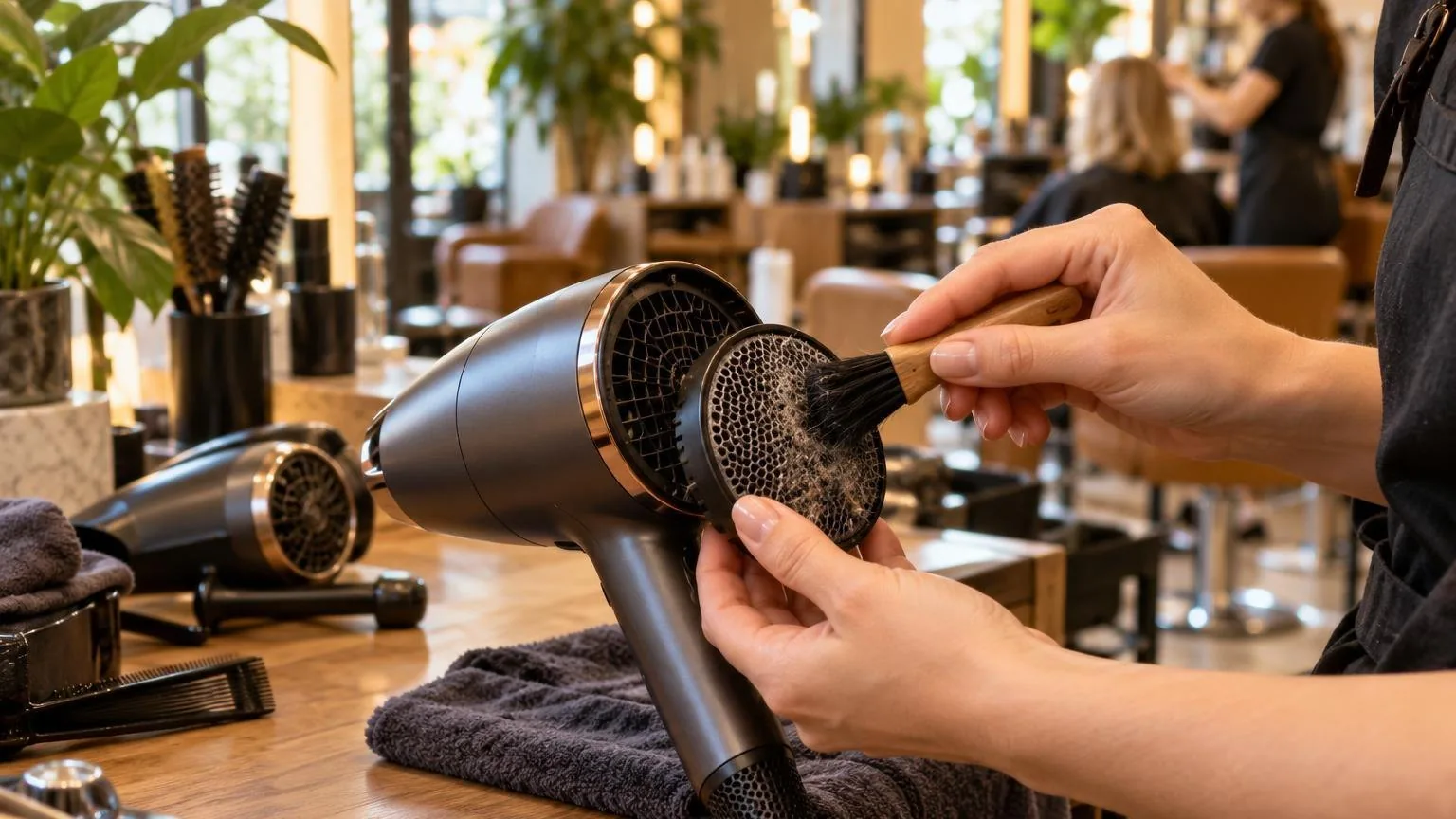
A salon dryer maintenance schedule should include daily filter checks, weekly intake cleaning, and monthly airflow testing to prevent overheating and preserve consistent drying performance.
Record each inspection, because blocked vents increase drying time and place extra load on the motor.
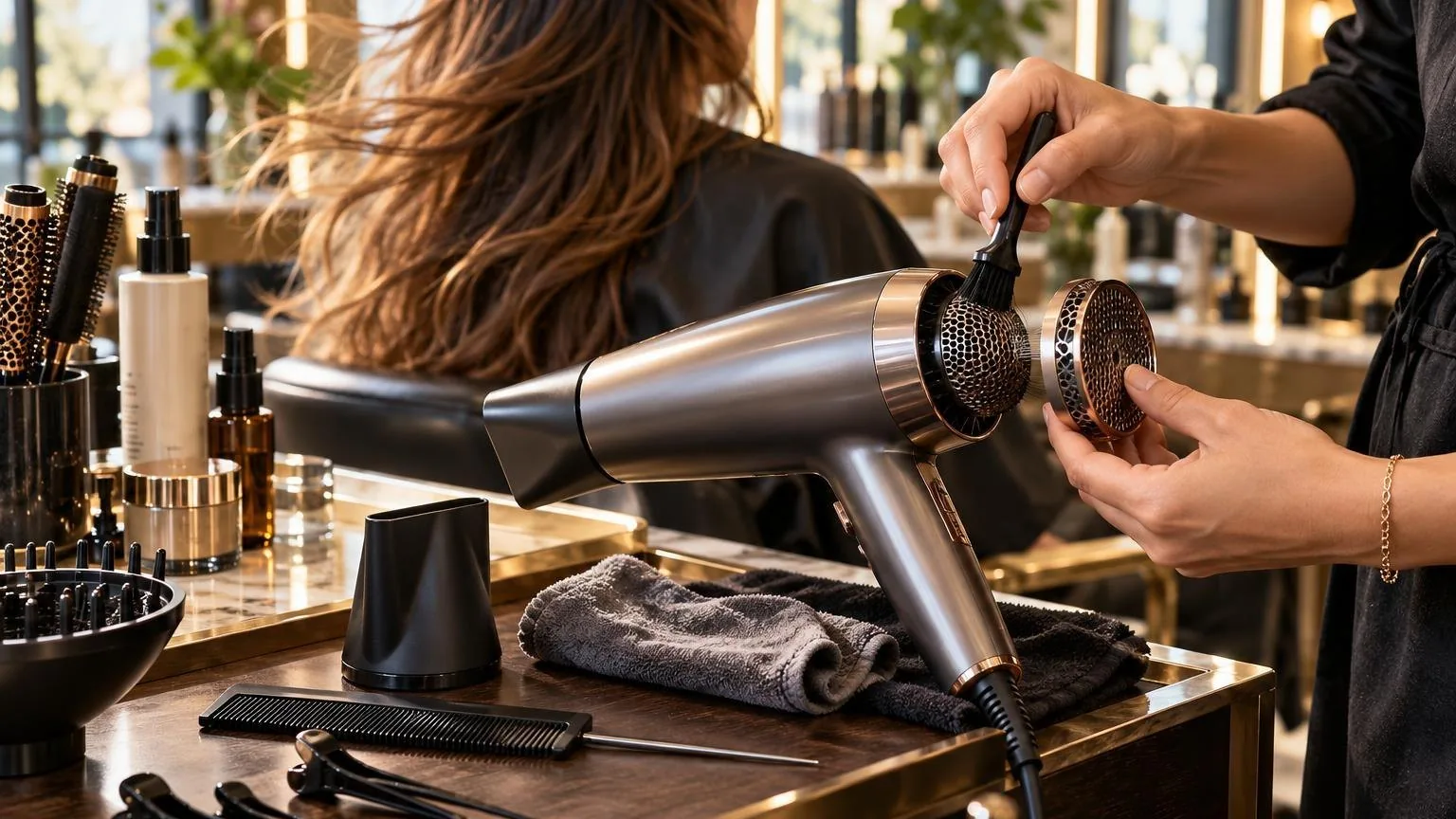
After every shift, remove lint from the filter and housing with a soft brush. Each week, unplug the dryer, inspect the cord and plug, and clear the intake using a vacuum attachment. Never push debris deeper into the grille.
Monthly, measure drying time on the same towel type and setting, then compare results with your baseline. Arrange qualified servicing when airflow drops, the motor sounds uneven, or the casing becomes unusually hot.
This schedule gives salon owners a repeatable maintenance record.
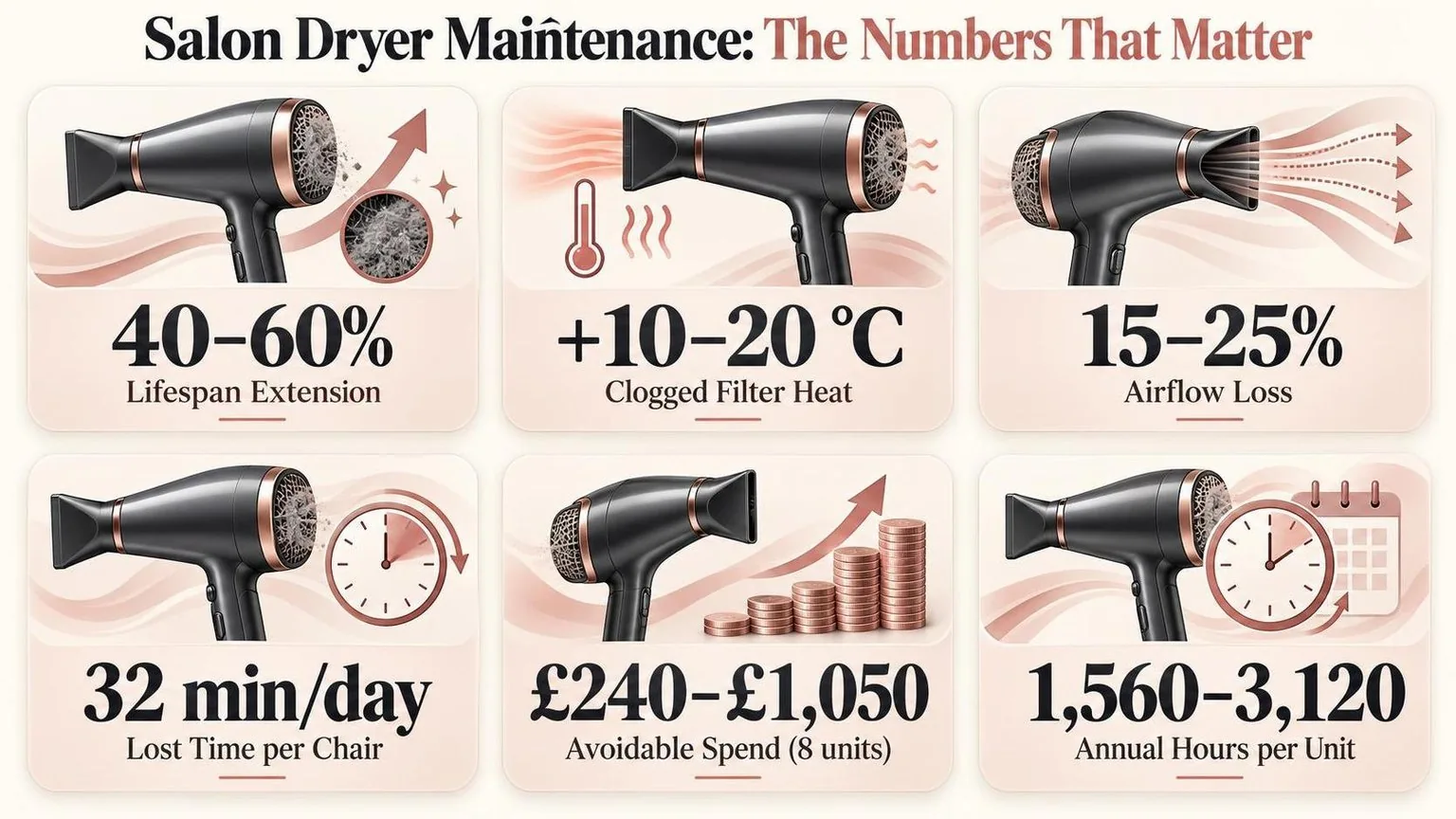
What the Figures Add Up To
Professional salon dryers represent a significant capital outlay, and the maintenance numbers make a clear financial case. Replacing a commercial dryer costs 8–15 times more than a single scheduled service.
Preventive upkeep extends average dryer lifespan by 40–60 percent.
The core metric is operating hours. A busy blow dry bar runs each dryer 6–10 hours per day, six days a week — roughly 1,560–3,120 hours annually per unit.
Maintenance Intervals by Operating Hours
| Task | Frequency | Approx. Hours Interval |
| Lint filter cleaning | Daily | Every 6–10 hours |
| Air intake vent inspection | Weekly | Every 36–60 hours |
| Cord and plug inspection | Weekly | Every 36–60 hours |
| Heating element check | Monthly | Every 150–260 hours |
| Motor brush assessment | Every 6 months | Every 780–1,560 hours |
| Full professional service | Annually | Every 1,560–3,120 hours |
A clogged lint filter raises internal operating temperature by 10–20 °C within minutes. That accelerated heat degrades the heating element and stresses motor windings simultaneously.
Cost Comparison: Maintenance vs. Replacement
| Item | Typical Cost Range |
| Daily filter cleaning (staff time, 2 min per dryer) | Negligible |
| Replacement lint filter | £3–£8 / $4–$10 |
| Motor brush replacement (parts + labour) | £25–£60 / $30–$75 |
| Full professional service per unit | £40–£90 / $50–$110 |
| New commercial-grade dryer | £120–£350 / $150–$400 |
A salon running eight dryers that skips routine maintenance can expect to replace two to three units per cycle. That translates to £240–£1,050 in avoidable hardware spend alone.
Wattage output drops measurably on neglected dryers. A 2,200 W dryer with a partially blocked intake can lose 15–25 percent of its effective airflow, forcing stylists to increase drying time per client by 3–5 minutes.
Those added minutes compound across a full column. At eight clients per stylist per day, a 4-minute average overrun equals 32 lost minutes — roughly one fewer blowout per chair daily.
Key Maintenance Metrics to Track
- Operating hours per dryer per week (log or estimate from bookings)
- Internal temperature at the nozzle, checked monthly with an infrared thermometer — target within 5 °C of factory specification
- Airflow velocity at 5 cm from the nozzle, measurable with an anemometer — compare against the manufacturer baseline
- Number of unscheduled replacements per quarter
- Average blowout time per stylist, reviewed weekly for upward drift
Tracking these five data points turns dryer maintenance from a reactive chore into a measurable operational discipline. The numbers consistently favour prevention over replacement.
What Actually Shifts the Finish
Three variables determine how long a salon dryer performs at spec: daily cycle count, lint accumulation rate, and heating-element duty cycle.
A dryer running 18–22 clients per day degrades measurably faster than one handling 8–10, compressing every maintenance interval by roughly 40%.
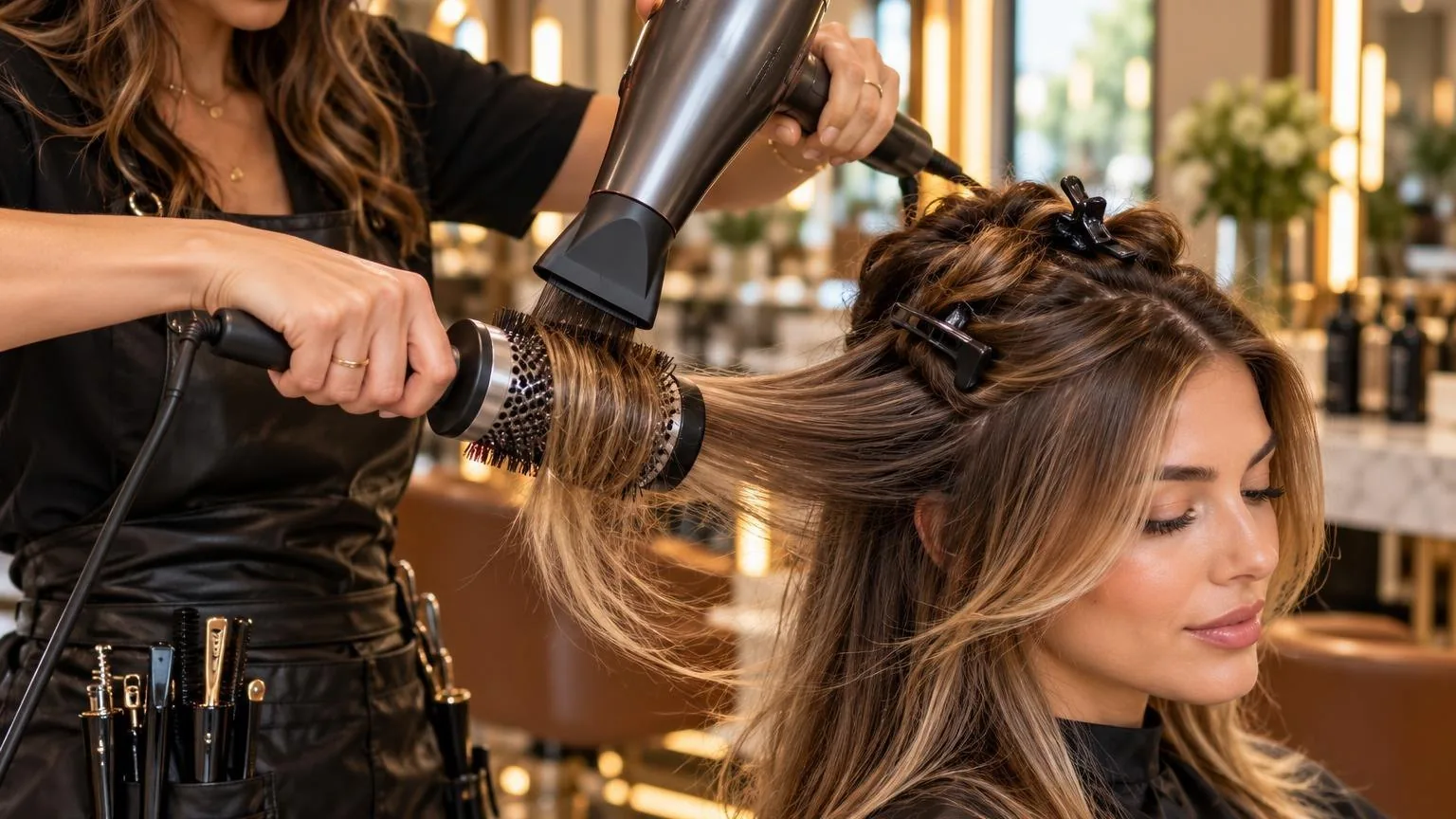
Airflow restriction is the single largest performance killer. A filter clogged to 60% capacity forces the motor to work harder, raising internal temperature by 10–15 °C above design limits.
Cycle Count and Component Wear
| Daily Cycles | Filter Clean Interval | Element Inspection | Motor Brush Check |
| 8–10 | Every 7 days | Every 90 days | Every 180 days |
| 12–16 | Every 4 days | Every 60 days | Every 120 days |
| 18–22 | Daily | Every 30 days | Every 75 days |
These intervals assume a standard AC motor dryer rated at 1800–2200 W. Brushless DC motor units tolerate higher cycle counts before requiring motor service, but filter and element schedules remain identical.
Product Residue Buildup
Thermal protectant sprays, dry shampoo, and finishing aerosols deposit a fine film on intake grilles and heating coils. Salons using aerosol-heavy finishing routines should wipe intake vents with isopropyl alcohol (70%) every 48 hours.
Residue on the heating element acts as insulation, creating hotspots that can exceed safe operating temperature by 20–30 °C.
This accelerates nichrome wire oxidation and shortens element life from an expected 1,200–1,500 operating hours down to 700–900.
Environmental Factors
- Humidity above 65%: increases internal condensation risk; wipe motor housing weekly with a dry microfibre cloth
- Ambient temperature above 30 °C: reduces thermal headroom; run dryers on medium heat when station temperature is elevated
- Hard water areas (above 200 ppm CaCO₃): mineral dust from wet hair accelerates filter clogging by approximately 25%
Cord and Plug Integrity
A dryer cord flexed 20+ times daily at the strain relief point develops micro-fractures in the copper conductors. Inspect the first 15 cm of cord from the housing every 30 days for stiffness, discolouration, or exposed insulation.
Loose plug prongs increase electrical resistance at the socket, generating heat that can deform the plug body. Replace any plug showing scorch marks or that fits loosely in the outlet immediately — this is a non-negotiable safety item.
What a Good Result Looks Like
A well-maintained salon dryer delivers consistent airflow at its rated temperature, runs quietly, and reaches full heat within 8–12 seconds of switching on.
The motor draws steady amperage without surging, and the housing stays cool to the touch during a full client service.
Airflow and Temperature Benchmarks
Professional dryers typically produce 38–60 mph airflow when unobstructed. A lint-clogged rear filter can reduce that by 20–40%, forcing longer dry times and excess heat exposure on the hair shaft.
| Metric | Well-Maintained Dryer | Neglected Dryer |
| Airflow at nozzle | 38–60 mph | 22–36 mph |
| Time to reach set temp | 8–12 seconds | 18–30 seconds |
| Operating noise level | 70–80 dB | 85–95 dB |
| Motor lifespan (brushless AC) | 2,000–3,000 service hours | 800–1,200 service hours |
| Cord integrity | No exposed wiring, firm strain relief | Frayed sheath, loose swivel joint |
Visual and Tactile Checks
A properly serviced dryer shows a clear rear filter mesh with no visible lint accumulation. The concentrator nozzle seats flush and clicks into place without wobble or gaps.
Run a hand along the barrel after 10 minutes of continuous use at high heat. Surface temperature should stay below 60 °C (140 °F). Anything hotter signals restricted internal airflow.
What Stylists Should Notice at the Chair
- A single-pass smoothing section takes roughly 6–8 seconds per 2.5 cm (1 in.) panel at 80 °C nozzle temp
- No burning smell, which indicates dust carbonising on the heating element
- Consistent tone from the motor — whining or rattling points to worn bearings or a loose impeller fan
- Even heat distribution across the full width of a 75 mm concentrator nozzle
Tracking Results Over Time
Log average blow-dry duration per service weekly. A creeping increase of 2–3 minutes over a month signals declining dryer performance before any audible symptom appears.
Record amperage draw quarterly using a clamp meter. A healthy 1,800 W dryer on a 120 V circuit should pull approximately 15 A. Readings above 16 A suggest motor strain.
Salons running 6–10 dryers should assign each unit a number and maintain a simple spreadsheet tracking filter cleanings, cord inspections, and nozzle replacements.
This log turns reactive repairs into predictable maintenance cycles, reducing unplanned downtime and extending fleet life by an estimated 30–50%.
How It Compares to the Alternatives
A structured maintenance schedule outperforms both reactive repair and full unit replacement on cost, downtime, and drying performance.
Salons running preventive routines report fewer mid-service failures and longer equipment lifespans than those waiting for breakdowns to force action.
Preventive Maintenance vs. Reactive Repair vs. Replacement
The three approaches differ sharply in annual cost, disruption frequency, and impact on airflow performance. The table below compares them across key operational metrics for a typical six-station blow dry bar.
| Factor | Scheduled Maintenance | Reactive Repair Only | Annual Replacement |
| Avg. filter cleaning frequency | Every 2–4 weeks | Only at failure | N/A (new unit) |
| Typical dryer lifespan | 1,800–2,200 service hours | 900–1,200 service hours | Varies by model |
| Unplanned downtime per quarter | 0–1 incidents | 3–5 incidents | 0–1 incidents |
| Airflow loss over 6 months | 5–10% | 25–40% | 0% (new unit) |
| Relative annual cost per dryer | Low | Medium-High | Highest |
Why Reactive Repair Falls Short
Lint buildup inside the barrel and rear filter reduces airflow by roughly 5% per month without cleaning.
A dryer operating at 60–65% airflow capacity forces stylists to compensate with longer service times, often adding 8–12 minutes per client.
Motor bearings running hot from restricted ventilation degrade faster. Internal temperatures can climb 15–20°C above normal operating range when exhaust vents are blocked, accelerating wear on heating elements and thermal fuses.
Why Constant Replacement Is Wasteful
Replacing professional dryers on a fixed cycle regardless of condition discards usable service life. A well-maintained motor assembly can deliver 2,000+ hours before performance measurably drops. Premature disposal ignores that value entirely.
Replacement also introduces inconsistency. New dryers often differ in weight, balance, and heat-up time — even within the same product line — requiring stylists to readjust technique with each swap.
What a Maintenance Schedule Actually Covers
- Weekly lint removal from rear filter and air intake grilles
- Biweekly inspection of cord insulation and strain relief at the plug
- Monthly check of barrel attachment security and switch responsiveness
- Quarterly deep clean of internal fan blades using compressed air at 30 PSI or below
- Logging service hours per unit to flag motors approaching 1,500 hours for closer monitoring
Tracking these intervals on a shared calendar or salon management platform prevents tasks from slipping. Assign one team member per shift to handle daily filter checks — it takes under 90 seconds per dryer.
Scheduled maintenance sits between the two extremes: lower cost than replacement, far less disruption than reactive repair, and measurably better airflow consistency across every station.
Heat Without the Cost to Hair
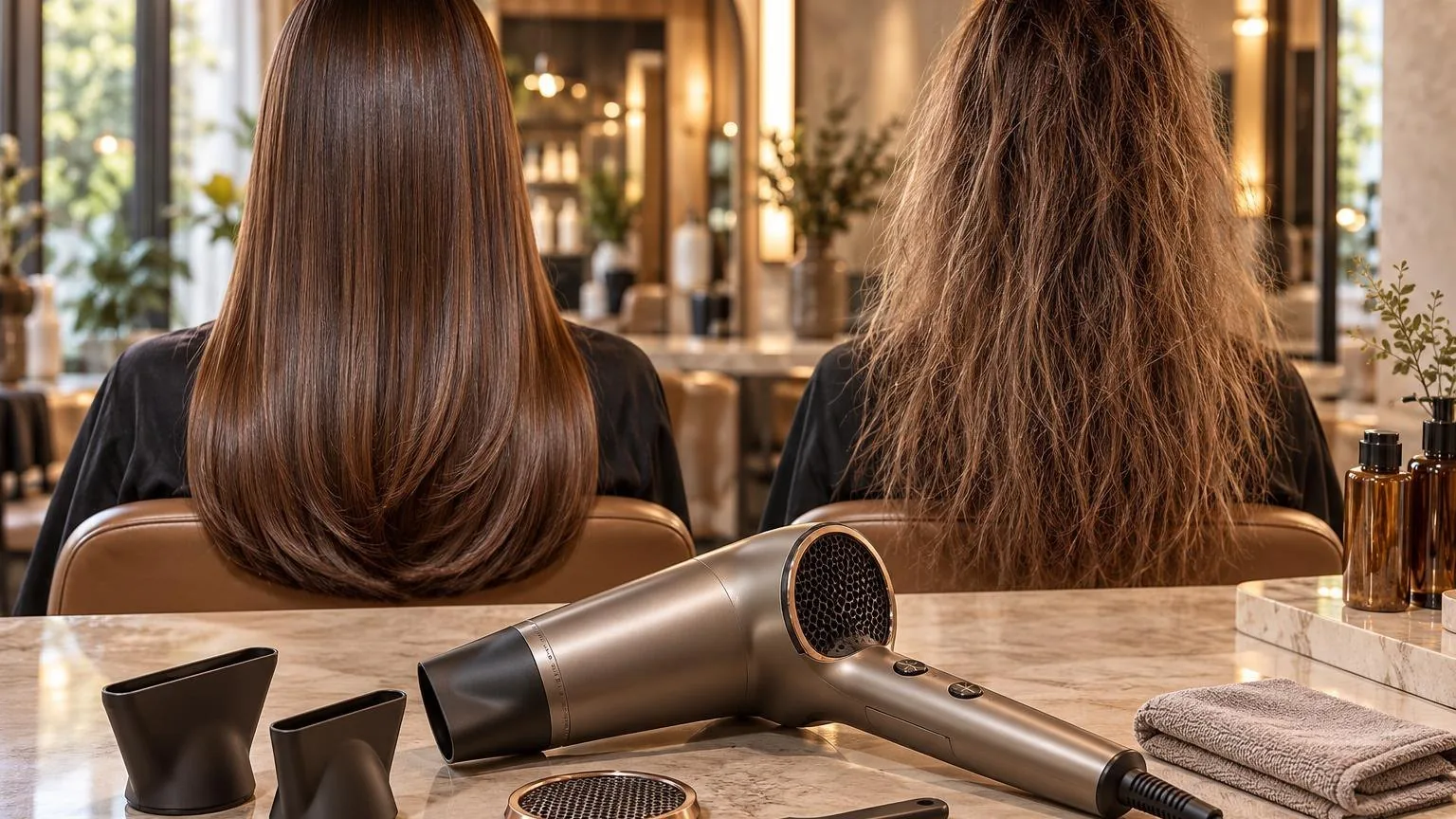
A poorly maintained salon dryer delivers uneven heat, hotspots, and particulate blow-back — all of which degrade the cuticle mid-service. Scheduled maintenance protects client hair as directly as product selection does.
Clean filters, calibrated thermostats, and intact nozzles keep heat delivery predictable and safe.
How Clogged Filters Raise Effective Heat
A blocked rear filter restricts airflow, forcing the heating element to work harder against reduced volume. The air that does exit the nozzle carries more concentrated heat per square centimetre of hair surface.
Stylists often compensate by increasing distance from the hair shaft, but this sacrifices tension control and extends service time. Cleaning the filter eliminates the problem at its source.
| Filter condition | Measured airflow (litres/min) | Nozzle temperature at 10 cm |
| Clean filter | ~500 | ~80 °C on medium-high |
| 50% lint blockage | ~350 | ~95 °C on same setting |
| 75% lint blockage | ~220 | ~110 °C+ (thermal cutoff risk) |
These figures represent typical readings from professional 1800–2200 W AC motor dryers. Actual values vary by model, wattage, and ambient temperature. Use an infrared thermometer to verify your own units.
Nozzle Integrity
A cracked or warped concentrator nozzle widens the airstream from the intended 8–10 mm slot to an uncontrolled scatter pattern. This forces the stylist to hold the dryer closer, increasing heat exposure per strand.
Inspect nozzles weekly. Replace any concentrator that no longer clips firmly or shows visible deformation. Most manufacturers sell replacements individually for under the cost of a single retail product.
Maintenance Actions That Directly Protect Hair
- Clean rear filters after every full service day — remove lint with a soft brush or low-pressure air
- Spot-check barrel temperature with an infrared thermometer monthly; readings above 120 °C at 10 cm on medium indicate a servicing need
- Replace concentrator nozzles at the first sign of cracking, warping, or loose fit
- Wipe the barrel interior with a dry microfibre cloth weekly to remove product residue that can become airborne particulate
- Rotate dryers across stations so no single unit accumulates disproportionate run-hours
Cord and Housing Checks
Frayed cords cause intermittent power drops, producing unpredictable temperature fluctuations mid-pass. A stylist working a smooth section at 80 °C who suddenly receives a 60 °C burst will need an additional pass, increasing total heat exposure.
Inspect cords at the strain relief point where they enter the handle. Any exposed copper or cracked insulation means the dryer must be removed from service immediately.
The Mechanism, Step by Step
A salon blow dryer follows a repeatable airflow-and-heat cycle that degrades predictably without maintenance. Understanding each mechanical stage tells you exactly where buildup, wear, and failure occur — and when to intervene.
Stage 1: Air Intake and Filtration
The rear filter screen draws ambient air into the barrel. In a busy salon averaging 12–16 blowouts per day, lint and hair accumulate on this screen within 3–5 working days, restricting airflow by up to 30%.
Restricted intake forces the motor to spin harder, increasing internal temperature and accelerating brush wear. Clean the rear filter every 3 days in high-volume salons, every 7 days in low-volume settings.
Stage 2: The Motor and Fan Assembly
Most professional dryers use either AC or brushless DC motors. AC motors in units rated above 1,800 watts typically contain carbon brushes that erode over 800–1,200 hours of cumulative use.
Brushless DC motors eliminate brush replacement but still require internal dust removal. Compressed air at 30 PSI, directed through the intake port for 3–5 seconds, clears particulate from the fan blades and motor housing.
- AC motor brushes: inspect every 500 hours; replace at 1,000 hours or when shorter than 5 mm
- Brushless DC motors: blow out dust every 200 hours
- Fan blades: check for cracks or warping every 6 months
Stage 3: The Heating Element
Nichrome wire coils heat incoming air as it passes through the barrel. Operating temperatures range from 80°C on low settings to approximately 150°C on high. Product residue bakes onto these coils over time.
Coated coils distribute heat unevenly, creating hot spots that damage hair and stress the thermal fuse. Wipe accessible coil areas with a dry microfiber cloth monthly. Never use water or solvents on heating elements.
Stage 4: The Thermal Safety Circuit
A bimetallic thermal cutoff switch trips when internal temperature exceeds the manufacturer’s threshold, typically between 140°C and 160°C. Clogged filters cause frequent trips, which fatigue the switch over repeated cycles.
| Component | Inspection Interval | Replacement Trigger |
| Rear filter screen | Every 3–7 days | Visible damage or warping |
| Carbon brushes (AC) | Every 500 hours | Length below 5 mm |
| Heating coils | Monthly | Visible discoloration or breakage |
| Thermal cutoff switch | Every 6 months | Repeated false trips |
| Power cord and strain relief | Weekly visual check | Exposed wire or cracked insulation |
Following this stage-by-stage schedule keeps each dryer operating within its designed airflow and temperature range, extending service life and protecting the quality of every blowout.
Frequently Asked Questions
How often should blow dryer filters be cleaned in a high-traffic salon?
Clean rear filters every 3–5 working days in salons averaging 20+ clients daily. Lint buildup forces the motor to overwork, raising winding temperature by 15–20 °C above normal operating range.
A blocked filter also extends drying time per client by roughly 2–4 minutes, cutting into appointment throughput.
What is the correct way to clean a commercial dryer’s heating element?
Disconnect power, remove the rear housing, and use compressed air at 30 PSI maximum to clear dust from the coil. Never use water or liquid cleaners on exposed nichrome elements.
Perform this every 200–250 service hours, or roughly once a month in a six-station salon.
When should the power cord and strain relief be inspected?
Inspect cords weekly for fraying, kinks, or exposed copper near the handle junction and plug. Replace any cord showing damage immediately.
The strain relief boot at the dryer’s base takes the most stress; if it cracks or loosens, the internal wiring is at risk of a short.
How frequently should salon dryer brushes or motor components be replaced?
Carbon brushes in brushed-DC motors typically need replacement every 800–1,000 operating hours. A grinding noise or visible sparking through the rear vent signals worn brushes.
Brushless (BLDC) motors skip this step entirely, which is one reason manufacturers rate them for 2,000+ hour lifespans.
What maintenance does the nozzle concentrator require?
Wipe concentrator nozzles with a damp cloth after each client to remove product residue. Heat-warped nozzles that no longer clip firmly should be replaced, as a loose fit misdirects airflow and adds drying time.
Stock at least two spare nozzles per dryer to avoid downtime.
How should a salon log and track dryer maintenance?
Assign each dryer a numbered tag and maintain a simple spreadsheet or wall chart recording filter cleans, deep cleans, brush replacements, and cord inspections. Log the date and the technician’s initials.
This paper trail helps identify units nearing end-of-life and supports warranty claims if a motor fails prematurely.
At what point should a salon dryer be retired rather than repaired?
Retire a dryer when repair cost exceeds 50% of replacement cost, or when airflow at the nozzle drops below 70% of its original CFM rating despite servicing. Most commercial dryers reach this threshold after 3,000–4,000 service hours.
A handheld anemometer reading at the nozzle confirms output decline.
Does the hanging hook or retractable cord mechanism need specific care?
Lubricate the retractable cord reel’s spring mechanism with a single drop of silicone-based lubricant every 8–10 weeks.
Wall-mount hooks should be checked monthly for secure anchoring; a dryer dropping from a loose bracket damages the housing and can crack internal solder joints on the control board.
Related Reading
- How often a dryer filter needs clearing
- Ceramic or tourmaline: what changes inside the barrel
- How long a hair dryer lasts, and what shortens it
- Cleaning a dryer filter, and how often it needs it
- Paddle or round: which brush does which job
- What a paddle brush is actually for
- The complete guide to blow dry tools
- OSHA — Salon Safety and Health Topics
- U.S. Small Business Administration — Manage Your Business
- PubMed — Hair Cosmetics: An Overview
- NIH — National Institute of Environmental Health Sciences
- UL Standards & Engagement — Appliance Safety
- Professional Beauty Association
- Cosmetology Board — Texas Department of Licensing and Regulation
- EPA Indoor Air Quality