
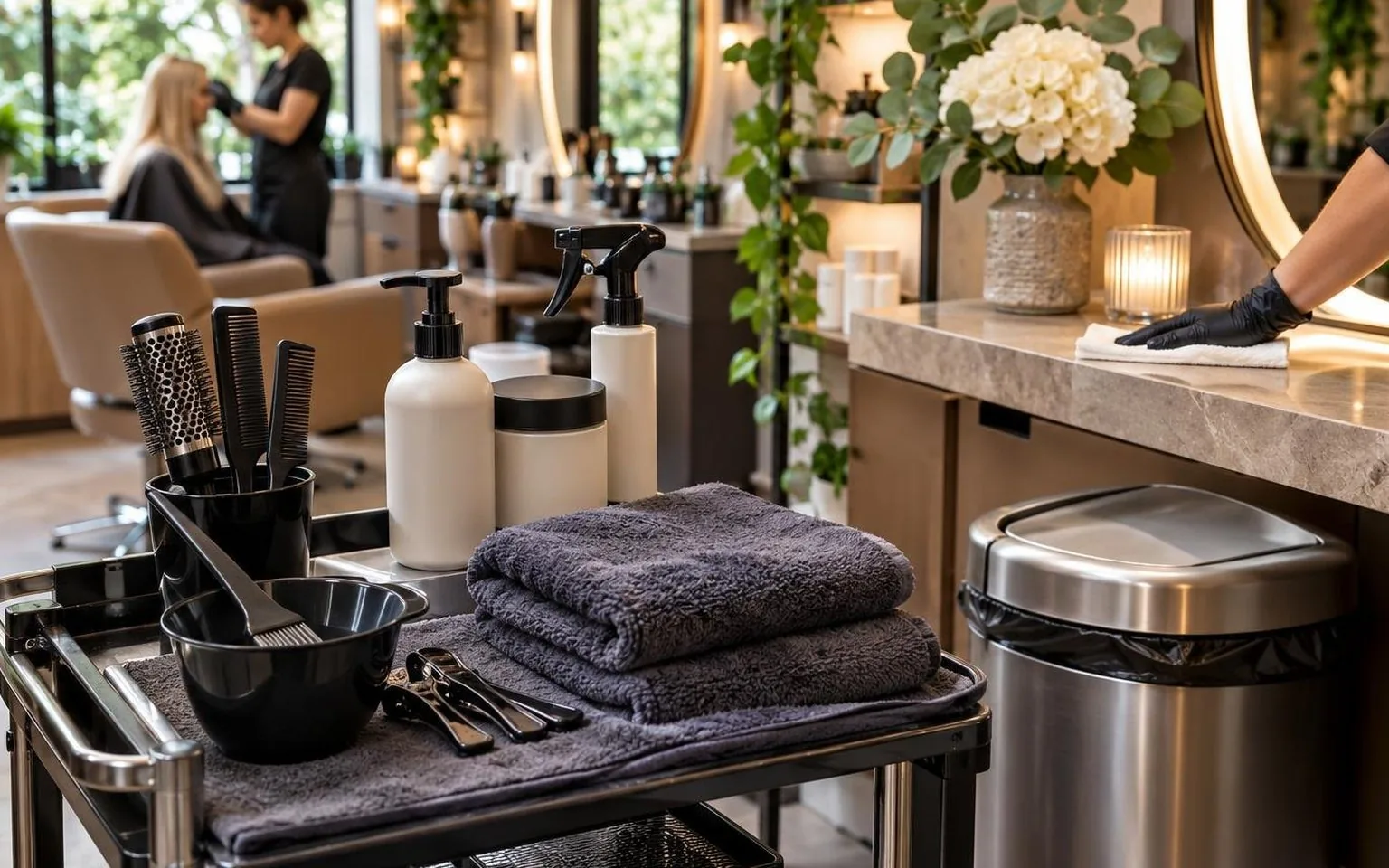
Salon health and safety requirements come down to four numbers: water heater storage at 60°C, basin delivery capped at 45°C, autoclave cycles at 121°C for 15 minutes, and patch tests logged 48 hours before a first colour service.
Airflow comes next. Extraction serving a styling station should move at least 15 litres of fresh air per second, and UV steriliser cabinets run 5-8 minute cycles between clients. Anything longer slows chair turnover without improving the result.
Records carry the audit. Have appliances tested on a 12-month cycle, replace sharps bins at three-quarters full, and check floor slip risk at every opening shift.
Inspectors ask for evidence first, so a signed, current logbook outweighs verbal assurance.
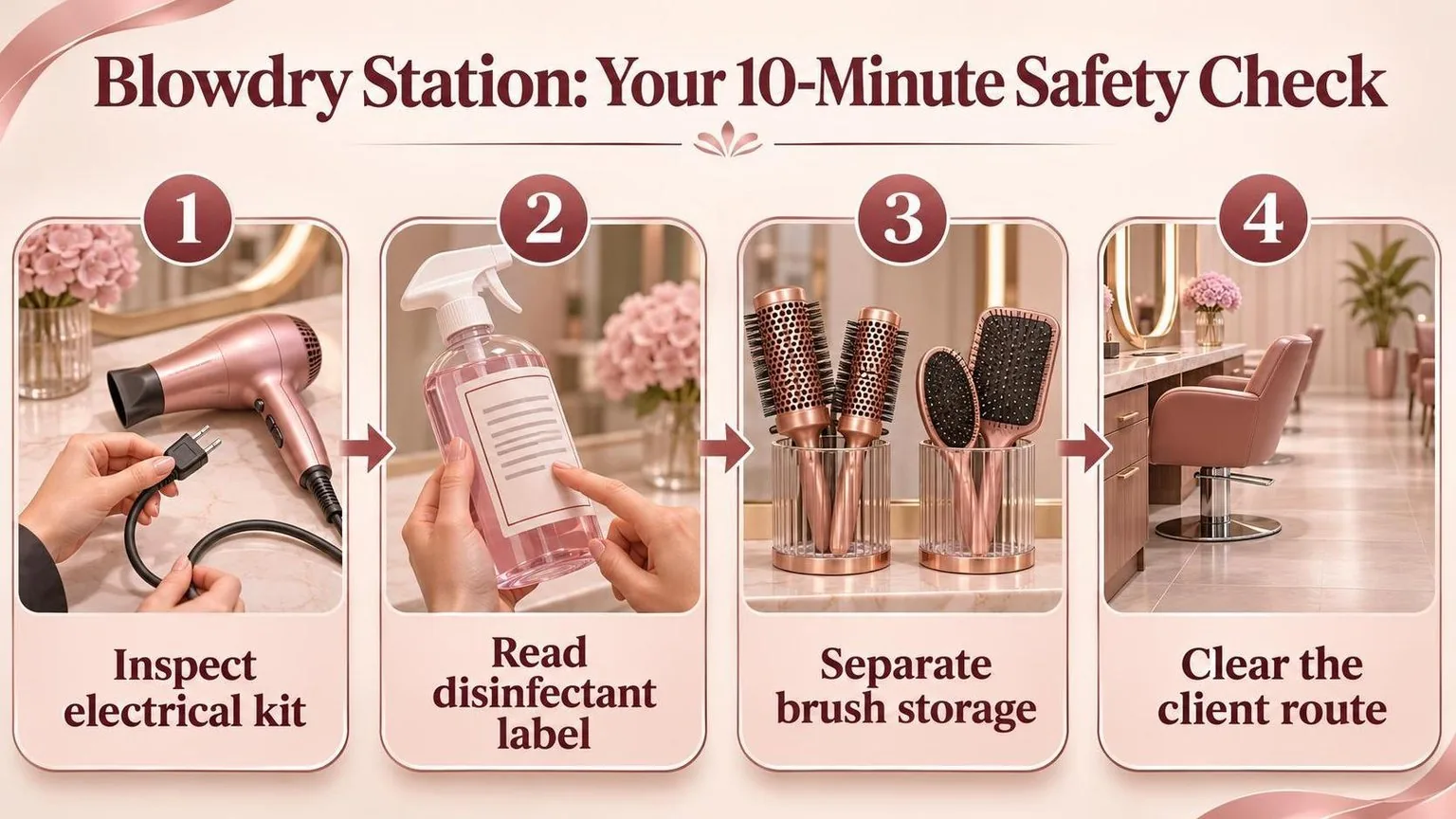
Audit Your Blowdry Station Now
Give each styling station a 10-minute check before the next client. Bring your dryer, brushes, cleaning products and appointment schedule. Use the checks below to decide what stays in service, what needs cleaning and what must come out of use.
These are practical screening checks, not universal legal thresholds. Confirm local licensing, fire and workplace requirements separately.
| Check | Your finding | Do this now |
|---|---|---|
| 1. Inspect electrical kit for 2 minutes. | A cable has exposed wires, a plug is cracked, or the dryer smells burnt. | Stop using it. Disconnect it if safe, label it “Do not use” and arrange qualified inspection. Never tape over damage and continue. |
| 2. Read the disinfectant label. | Your turnaround is shorter than its required contact time. | Add enough duplicate tools to cover that interval. A product requiring 10 minutes cannot complete its contact time in a 5-minute gap. |
| 3. Separate brush storage. | Used brushes share space with ready-to-use tools. | Create 2 labelled areas: “Used” and “Ready”. Include every barrel size you use, such as 25 mm and 45 mm. Follow tool-compatible cleaning instructions. |
| 4. Walk the client route. | A lead, trolley or wet patch obstructs movement. | Remove the obstruction immediately. Check the route from chair to exit, then confirm required clearances locally. |
Record your answer: List each failed check, the person responsible and the correction needed before reuse.
Consult HSE electrical-safety guidance or OSHA electrical requirements for your jurisdiction; follow product labels for cleaning and disinfection.
The Numbers That Matter Here
The useful numbers are staffing thresholds, clear exit widths, inspection intervals and disinfectant contact times.
Separate legal minimums from product instructions: a salon needs both, but US rules and Great Britain’s requirements are not interchangeable.
| Jurisdiction | Number | Requirement and source |
| Great Britain | 5 or more employees | Record significant risk-assessment findings and put the health and safety policy in writing. Source: HSE, “Managing risks and risk assessment at work” and “Prepare a health and safety policy.” |
| US federal OSHA | 10 or fewer employees | Where an emergency action plan is required, employers at this staffing level may communicate it orally. Larger employers must keep a written plan. Source: OSHA, “Emergency action plans.” |
| US federal OSHA | 28 inches minimum | Exit access must meet this minimum width throughout. Occupant load can require greater width. Source: OSHA, “Design and construction requirements for exit routes.” |
| US federal OSHA | Monthly; annually | Where OSHA’s portable-extinguisher provisions apply, visually inspect extinguishers monthly and arrange an annual maintenance check. Source: OSHA, “Portable fire extinguishers.” |
| Great Britain | Normally at least 16°C | HSE’s workplace-temperature guidance gives this benchmark for indoor work that does not involve rigorous physical effort. It is not a universal statutory minimum. Source: HSE, “Temperature in the workplace.” |
Contact Time Comes From the Label
There is no universal disinfectant timing for every salon tool. For US products, EPA guidance requires the treated surface to remain visibly wet for the label’s contact time.
Clean first, then follow the product’s dilution, application and surface-compatibility instructions.
Keep the selected product’s instructions beside the mixing area. Assign responsibility for preparing solutions and checking when replacement is required. Never substitute a quick spray-and-wipe for the specified wet contact time.
Turn Requirements Into Opening Checks
- Check the entire escape route before opening. Move trolleys, delivery boxes and waiting chairs out of it; an unobstructed doorway does not guarantee an unobstructed route.
- Remove damaged dryers, plugs and leads from use. Follow manufacturer instructions for cleaning intake filters, and unplug equipment before cleaning.
- Keep inspection records where the opening manager can find them. Record defects, corrective action and who completed the check.
Confirm local requirements before treating these figures as a complete compliance checklist. US state-plan rules, licensing boards and fire codes can add obligations; Great Britain’s HSE framework does not cover Northern Ireland.
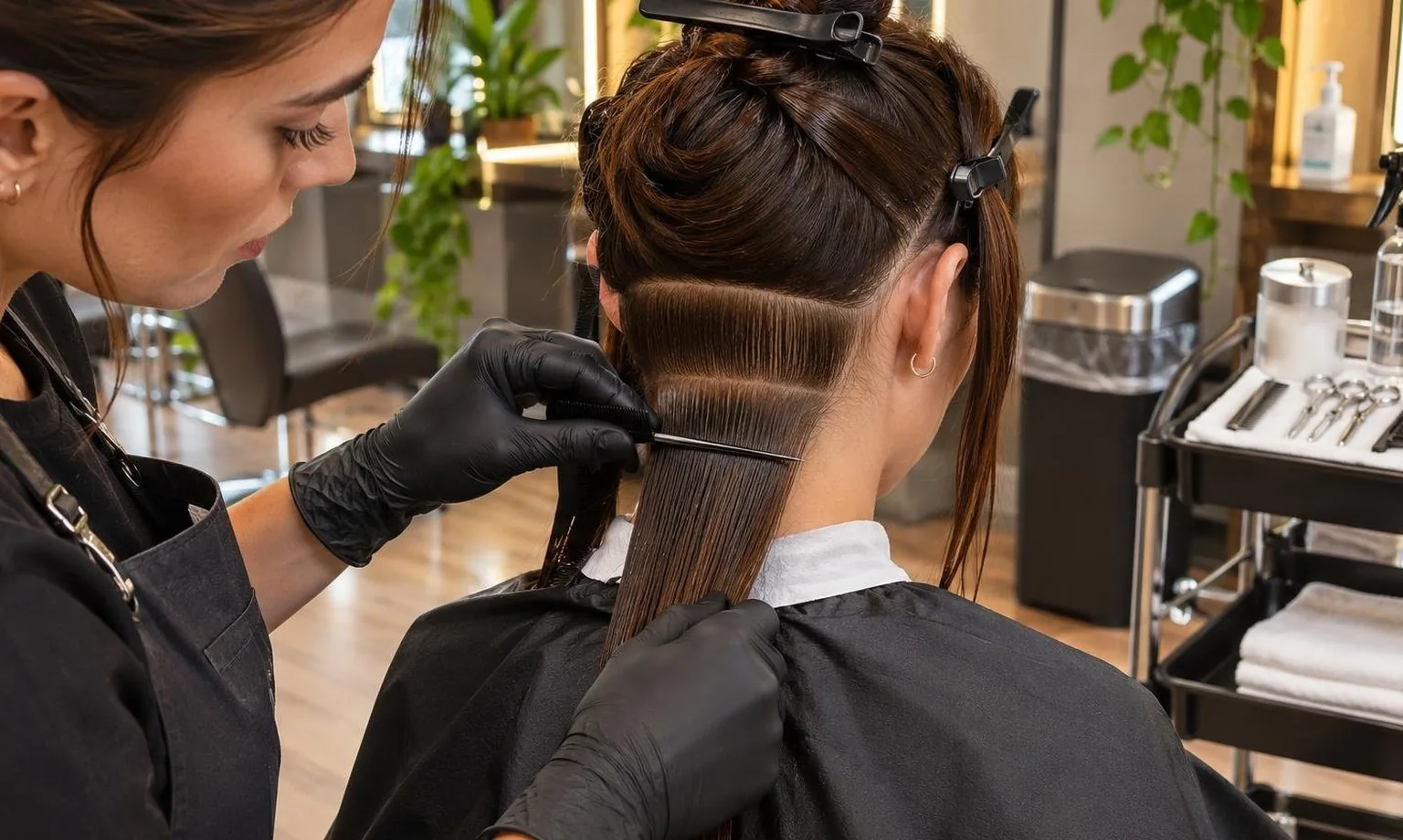
The Variables That Matter
Salon health and safety requirements depend on jurisdiction, services, layout, equipment and staffing.
Separate legal duties from operating procedures: a blow dry bar needs clear escape routes, controlled electrical risks and effective tool hygiene, but inspection and licensing rules vary by location.
Jurisdiction and premises
In the US, check state cosmetology board rules, applicable federal or state occupational safety requirements, and local fire codes. In Great Britain, use HSE guidance alongside local authority requirements.
Do not treat an American salon checklist as evidence of British compliance.
The following federal OSHA dimensions apply within their stated scope. They are not universal salon design standards; local fire and accessibility requirements may impose additional constraints.
| Variable | Federal OSHA requirement | Source |
| Exit access width | At least 28 inches at all points; sufficient capacity is also required. | 29 CFR.36(g) |
| Class A extinguisher access | Maximum employee travel distance: 75 feet, where provided for employee use. | 29 CFR.157(d)(2) |
| Class B extinguisher access | Maximum travel distance from the Class B hazard area: 50 feet, where provided for employee use. | 29 CFR.157(d)(4) |
Turnover and tool hygiene
Appointment density changes the number of clean brushes, combs and towels required. Stock enough sets to complete the required cleaning and disinfection process between clients without shortening product contact times.
Separate used tools from ready-to-use tools at the workstation.
- Remove trapped hair and visible debris before disinfection. California Board of Barbering and Cosmetology section 979 specifies cleaning and disinfection requirements for reusable, non-electrical tools.
- Follow the disinfectant label for dilution, contact time and compatible surfaces. Do not substitute a quick spray for required immersion.
- Clean electrical tools according to applicable board rules and manufacturer instructions. Never immerse powered equipment unless expressly designed for it.
Electrical load, products and staff
Several dryers operating simultaneously make circuit capacity a practical constraint. Have a qualified electrician assess the actual nameplate loads and circuit arrangement.
Keep cables away from sinks, walking routes and hot barrels; remove damaged equipment from service.
HSE states that portable appliance testing has no universally prescribed annual interval. Set inspection and testing frequency through risk assessment, considering equipment type, use and environment.
Record faults and corrective action rather than relying solely on a test sticker.
Maintain product safety information and follow storage and ventilation instructions. Assess hazardous substances under COSHH in Great Britain.
Train staff in spill response, emergency evacuation and safe equipment use; reassess procedures whenever the layout, product range or workload changes.
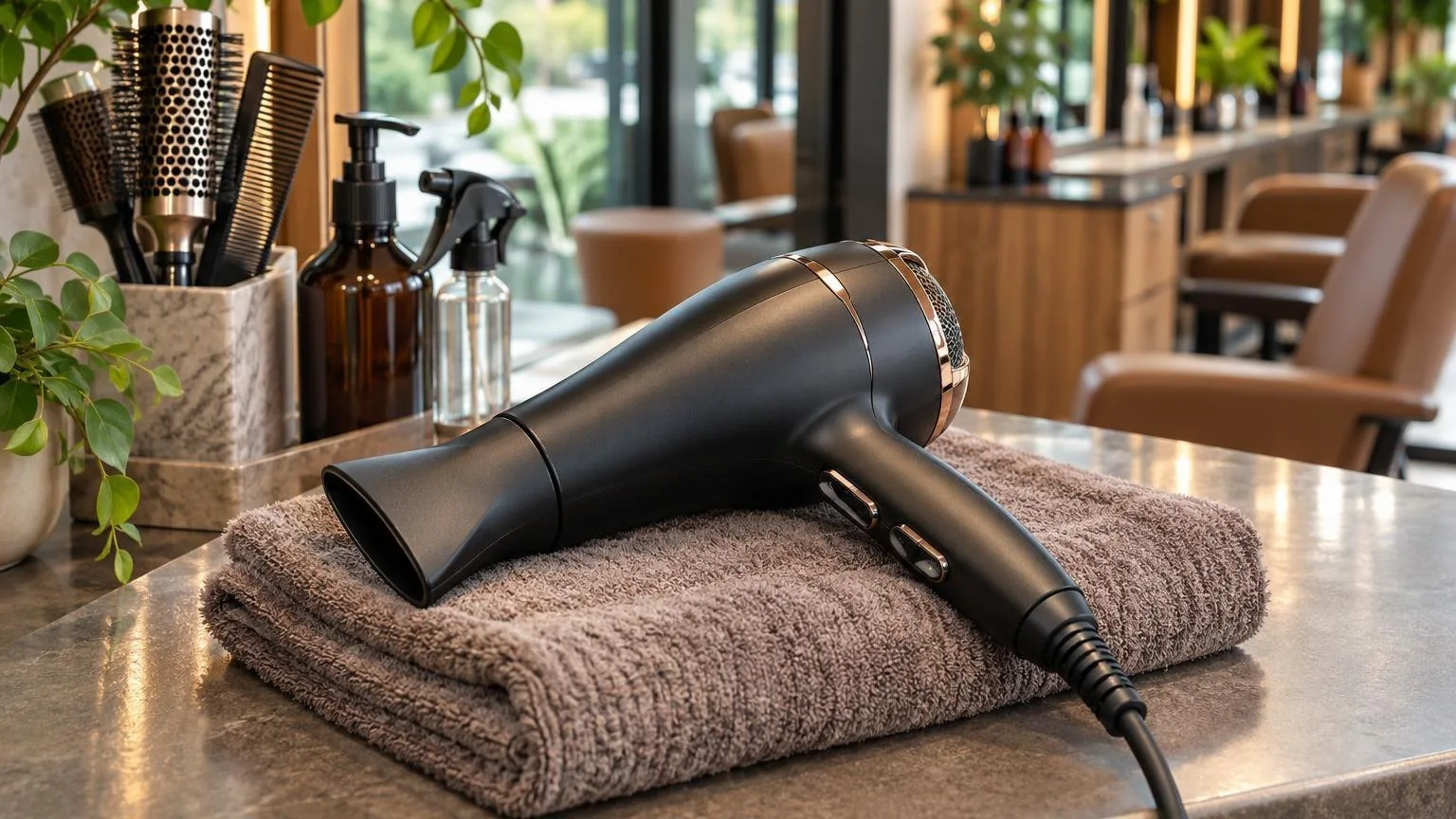
Spotting It on the Day
Spot salon health and safety problems by following the client’s route from reception to the basin, styling chair and exit.
Look for clear walkways, clean tools, dry electrical connections and staff who can explain their cleaning and emergency procedures.
Check the Floor Before the Finish
Hair clippings, loose leads and water around backwash units create immediate slip and trip hazards. Staff should remove clippings between clients, deal with spills promptly and keep dryer cables out of walking routes.
A warning sign does not replace cleaning up.
Check that exits open without a key from inside and that stock, laundry and trolleys do not obstruct escape routes.
The UK government’s workplace fire-safety guidance requires clear escape routes; local fire requirements determine the salon’s specific arrangements.
Inspect Electrical Setups
Look for split cable insulation, exposed wires, scorched plugs and damaged sockets. Staff should take damaged equipment out of service, not tape it up and continue styling. Keep plugged-in dryers and straighteners away from basins and wet worktops.
| Check | Relevant number | What it means |
| UK supplementary shock protection | RCD rated at no more than 30 mA | HSE recommends this rating where an RCD provides additional personal protection. It does not make damaged equipment safe. |
| US electrical-panel access | Generally at least 3 ft deep; at least 30 inches wide or the equipment’s width, whichever is greater | OSHA’s electrical working-space rules apply where examination or servicing while energised is likely. Required depth varies with voltage and conditions. |
Sources: HSE, “Electrical safety and you”; OSHA, “Electrical—General requirements.” These are jurisdiction-specific checks, not interchangeable UK and US legal requirements.
Electrical working space must not become storage space.
Watch the Turnaround Between Clients
- Staff remove trapped hair and visible debris before disinfecting reusable tools where required. Disinfectant must remain in contact for its labelled time.
- Clean brushes, combs and towels stay separate from used items. A tidy drawer alone does not demonstrate effective cleaning.
- Hot tools rest on suitable heat-resistant surfaces, away from towels, aerosols and clients’ reach.
- Cleaning products retain readable labels, and staff can access the relevant safety data sheets.
Ask which local rules govern tool disinfection and where staff record equipment faults. In the US, check the applicable state cosmetology board’s requirements.
In the UK, HSE guidance supports risk assessment, while local licensing conditions may add requirements.
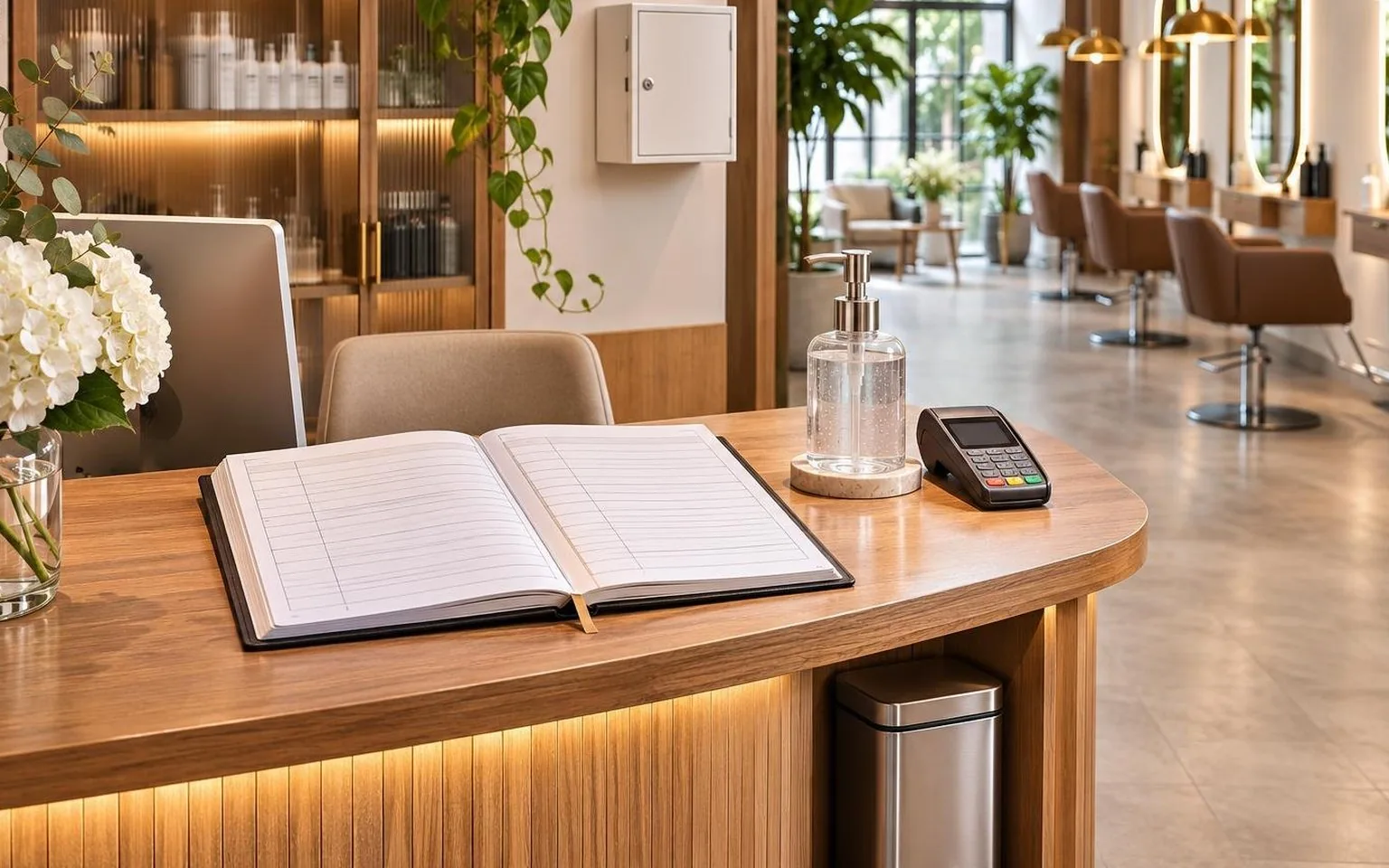
How It Compares to the Alternatives
Salon health and safety requirements are more task-specific than a generic workplace checklist, but operating from home or travelling to clients does not automatically remove them.
Compare business models by their actual hazards, local licensing rules and employer duties—not by premises size alone.
Dedicated salon versus home or mobile services
A fixed blow dry bar controls its workstations, electrical supply, cleaning facilities and escape routes.
Home and mobile operators must assess the environments they use, including trailing dryer cables, stable tool placement, ventilation and access to suitable cleaning facilities.
In the US, licensing depends on the state and sometimes the locality. California’s Board of Barbering and Cosmetology distinguishes licensed establishments, mobile units and services permitted through a Personal Service Permit.
A practitioner’s licence alone does not establish permission to work anywhere.
Small team versus larger employer
In Great Britain, the Health and Safety Executive distinguishes the duty to assess risks from the duty to record significant findings.
The employee threshold changes documentation requirements; it does not make smaller salons exempt from risk assessment.
| Comparison | Employers with 1–4 employees | Employers with 5 or more employees |
| Risk assessment | Required. | Required. |
| Recording significant findings | Not required by this employee threshold. | Required. |
| Written health and safety policy | Not required by this employee threshold. | Required. |
Source: HSE, “Managing risks and risk assessment at work” and “Prepare a health and safety policy”. Written records remain useful below the threshold because they help communicate controls and track corrective actions.
Salon-specific procedures versus generic cleaning
A visibly clean brush is not necessarily ready for another client.
California’s board requires reusable non-electrical instruments to undergo cleaning before disinfection, using an EPA-registered disinfectant with bactericidal, fungicidal and virucidal activity, following its instructions.
- Remove trapped hair and debris before processing reusable tools.
- Follow the disinfectant label’s dilution and contact time; do not substitute a universal salon timing.
- Keep processed implements separate from used implements to prevent recontamination.
Source: California Board of Barbering and Cosmetology, “Disinfection of Non-Electrical Instruments and Equipment”. Other jurisdictions may specify different approved products or processes.
Routine maintenance versus automatic annual testing
HSE states that electrical equipment must be maintained safely, but the law does not require annual portable appliance testing. Choose inspection and testing intervals according to equipment, use and environment.
Check dryer plugs and flexes routinely, and remove damaged equipment from service.
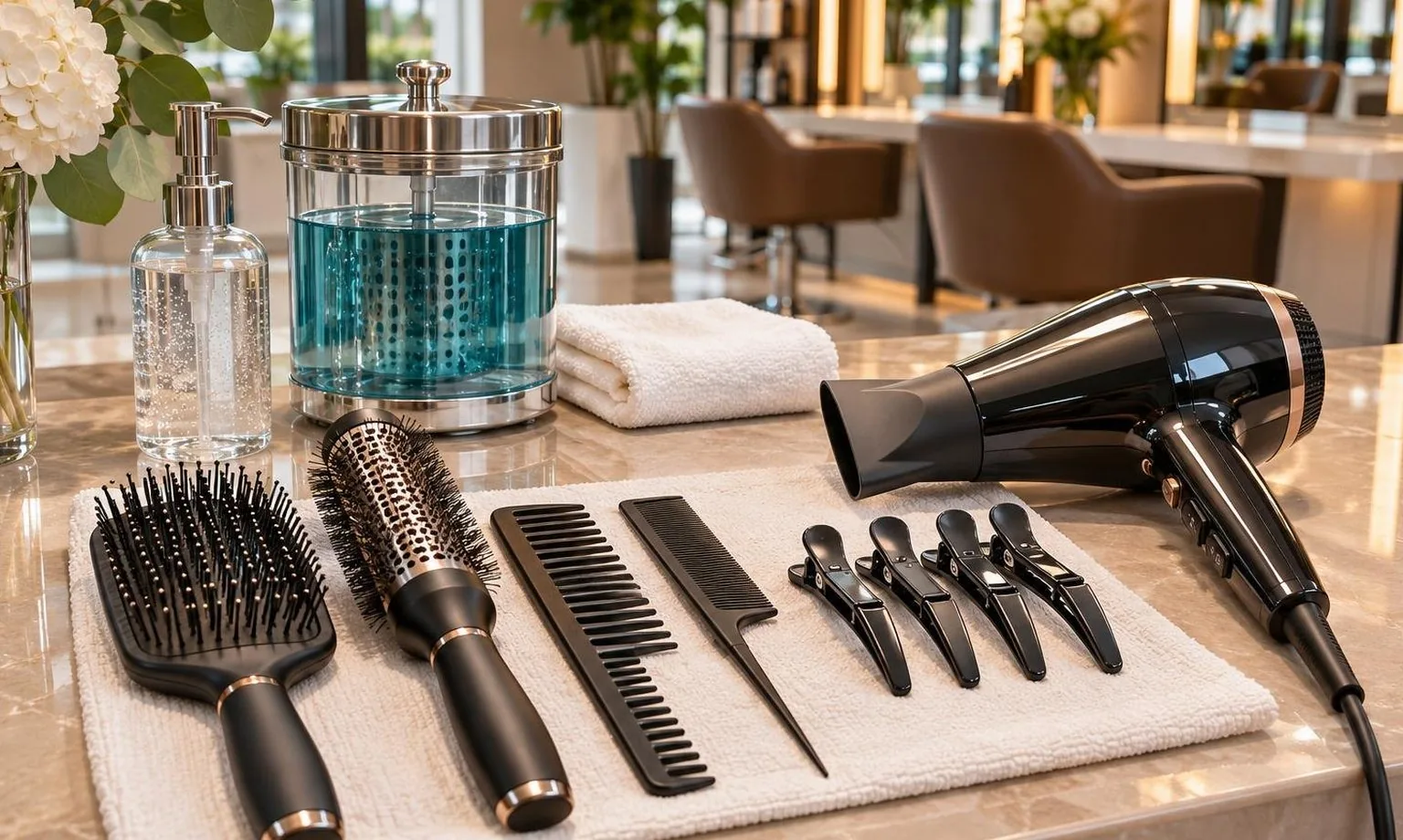
Heat and Tension Without the Damage
Control heat exposure and brush tension together: keep the dryer moving, use the lowest effective setting, and release any section that pulls uncomfortably.
These measures reduce avoidable damage; no temperature or technique guarantees damage-free styling.
Separate laboratory findings from salon settings
Research published in Annals of Dermatology, “Hair Shaft Damage from Heat and Drying Time of Hair Dryer,” compared repeated drying conditions. Surface damage increased as temperature rose.
The following paired distances and temperatures describe that experiment, not universal safe settings for salon dryers.
| Dryer distance in the experiment | Reported drying temperature |
| 15 cm | 47°C |
| 10 cm | 61°C |
| 5 cm | 95°C |
Distance alone cannot establish safety: airflow, nozzle design, heat setting and exposure duration also matter.
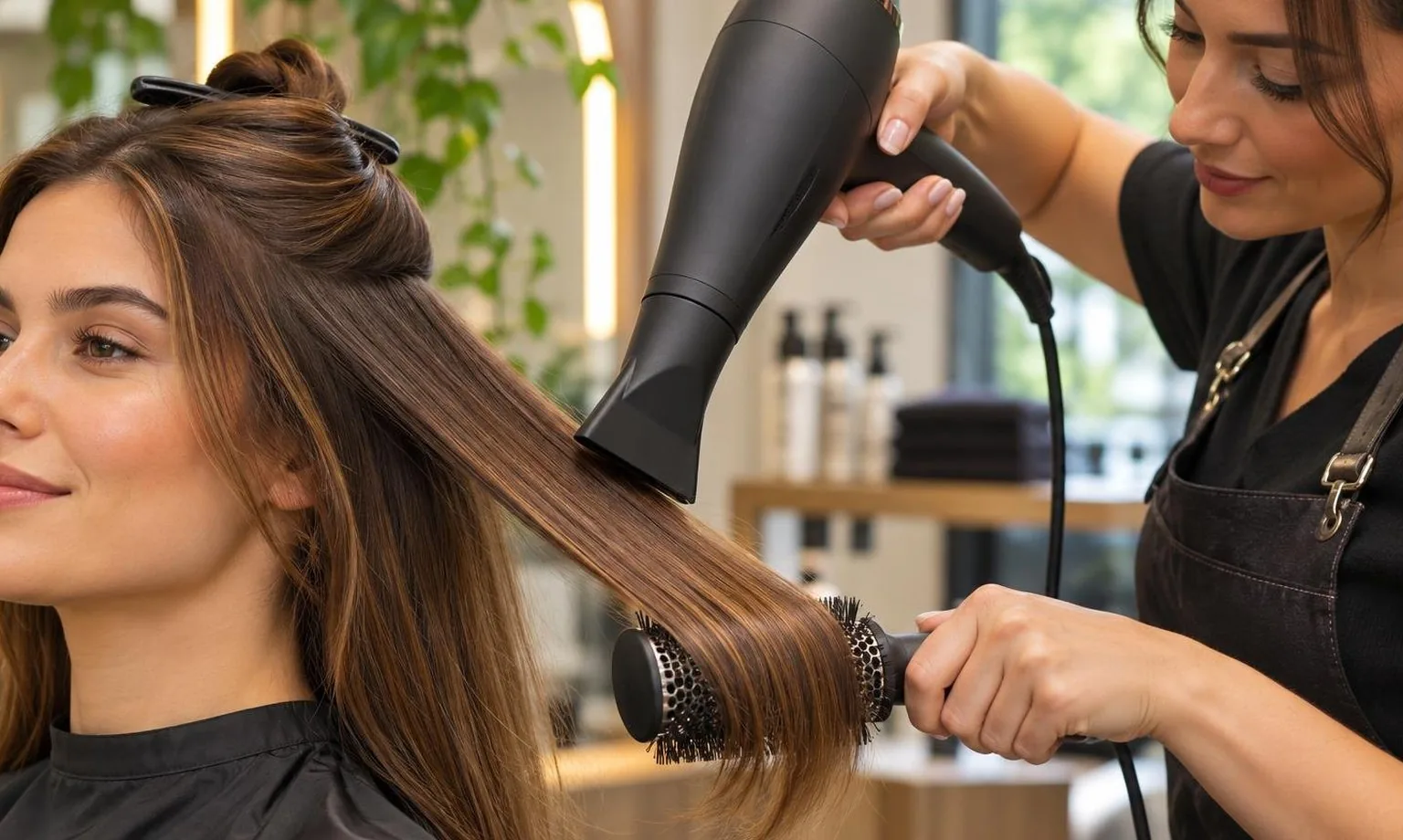
Keep the nozzle off the hair and brush, direct airflow along the section, and move continuously rather than parking heat at the roots or ends.
Build control into each section
- Blot excess water before drying. Do not rub vigorously with a towel; detangle gently before introducing brush tension.
- Remove excess moisture with moving airflow before shaping. Avoid prescribing a universal percentage-dry target: staff cannot measure it reliably by sight.
- As a practical starting point, take sections approximately 2 cm deep. Reduce section size if the interior stays damp while the surface becomes hot.
- Keep each section narrower than the brush barrel’s working length. Overloaded brushes encourage repeated passes and uneven drying.
- Apply only enough tension to align the strands. Stabilise the section without levering the brush against the head; release immediately if the client reports pulling or excessive warmth.
- Let the shaped section cool before disturbing it. Do not compensate for poor section control by increasing temperature.
Control contact heat and workstation hazards
The American Academy of Dermatology advises using flat irons only on dry hair, at low or medium heat. Follow the tool’s instructions; an adjustable display does not make its maximum temperature appropriate for every client.
Check hair throughout the section before using contact heat. Heat protectant does not replace drying, temperature control or restrained passes. Stop if you see smoke or smell scorching; switch off the tool and assess the section before continuing.
Inspect plugs, cables and tool housings before service. Keep hot tools on a stable, heat-resistant rest away from towels and workstation edges. Unplug before cleaning, follow manufacturer cooling instructions, and remove damaged equipment from use.
Step by Step Through the Change
Introduce salon health and safety changes by identifying hazards, assigning controls and checking each workstation before service resumes.
Separate legal duties from operating procedures: electrical protection, disinfectant contact times and dryer positioning require different checks because each controls a different exposure.
Identify the duty before changing the routine
Map wet areas, trailing leads, hot tools, cleaning products and obstructed exits. Record who could encounter each hazard, then assign responsibility for correction.
Removing a trailing cable prevents contact with the hazard; a warning sign leaves that contact possible.
| Variable | Requirement or control | Why it matters |
| Employer size in Great Britain | Employers with 5 or more employees must record significant risk-assessment findings, according to HSE. | A written record makes controls and outstanding actions traceable. |
| Additional electrical protection | HSE recommends an RCD with a rated tripping current not exceeding 30 mA where additional protection is needed. | It limits the duration of some electrical faults, but does not make damaged equipment safe. |
Reset cleaning around the product label
Remove hair and visible debris before disinfecting suitable reusable tools and surfaces. Dirt can prevent effective disinfectant contact.
Follow local licensing rules and the product’s approved uses; a surface disinfectant is not automatically suitable for brushes or electrical appliances.
For a product whose label specifies a 10-minute contact time, keep the surface visibly wet throughout those 10 minutes. Earlier wiping shortens exposure and may compromise performance.
EPA’s disinfectant guidance identifies label contact time as essential; no universal salon timing replaces it.
Standardise the blow-dry station
Unplug equipment before inspecting plugs, leads and accessible filters, following manufacturer instructions. Remove damaged tools from service rather than wrapping damaged insulation with tape.
Keep appliances away from basins: water proximity creates an electrical hazard that careful styling technique cannot resolve.
For a practical starting technique, use sections approximately 2 cm thick and keep the moving nozzle around 15 cm from the hair, subject to manufacturer guidance.
Thicker sections obstruct airflow; stationary close-range heating concentrates energy. Neither dimension guarantees a safe temperature.
Check the handover
- Keep exits and walking routes clear before reopening the station.
- Store cleaning products in labelled containers and retain accessible safety data sheets.
- Demonstrate each revised procedure, observe staff completing it and correct missed steps.
Use HSE risk-assessment and electrical-safety guidance in Great Britain.
In the US, consult OSHA’s Hazard Communication Standard for workplace chemical information and the relevant state cosmetology board for salon-specific sanitation requirements.
Frequently Asked Questions
Which health and safety requirements apply to a salon?
US salons must follow applicable OSHA standards, state licensing-board sanitation rules, and local fire codes.
UK salons must assess workplace risks under HSE guidance; businesses with five or more employees must record significant findings and maintain a written health and safety policy.
How should salons check dryers and electrical tools?
Check plugs, cables, casings, and dryer intake filters before use; unplug and remove damaged equipment from service.
HSE recommends risk-based inspection and testing rather than automatic annual PAT testing, while US OSHA requires electrical equipment to remain safe and be used according to its listing or labeling.
How should brushes and combs be cleaned between clients?
Remove trapped hair and clean away residue before disinfecting reusable, nonporous tools as your licensing board requires.
US EPA disinfectant labels specify dilution and wet contact time: keep surfaces wet for that entire interval, and never assume one minute is sufficient.
What must salons do about wet floors and trailing cords?
Sweep clippings between clients, remove spills immediately, and route dryer cords away from walking routes.
OSHA’s walking-working surfaces standard and UK HSE guidance require slip and trip risks to be controlled; restrict access to a wet area until it is safe, rather than relying solely on a warning sign.
How should salons manage aerosols and other hazardous products?
Keep products labeled, follow safety data sheets for storage and ventilation, and keep flammable aerosols away from ignition sources.
OSHA Hazard Communication requirements and UK COSHH rules require applicable product hazards to be assessed and staff instructed; check quantities and storage arrangements against local fire requirements.
Related Reading
- How many stylists a blow dry bar actually needs
- The licences a blow dry bar needs, and who issues them
- Employee or contractor: how salons get this wrong
- Pricing a blowout: the four inputs that set the number
- What it costs to open a blow dry bar
- How booth rental works, and who it suits
- Cutting salon no-shows without punishing regulars
- The complete guide to the blow dry bar business
- Occupational Safety and Health Administration — Electrical Safety
- U.S. Small Business Administration — Business Licenses and Permits
- California Board of Barbering and Cosmetology
- Texas Department of Licensing and Regulation
- UK Office for Product Safety and Standards
- Electrical Safety First
- National Fire Protection Association
- UL Solutions