
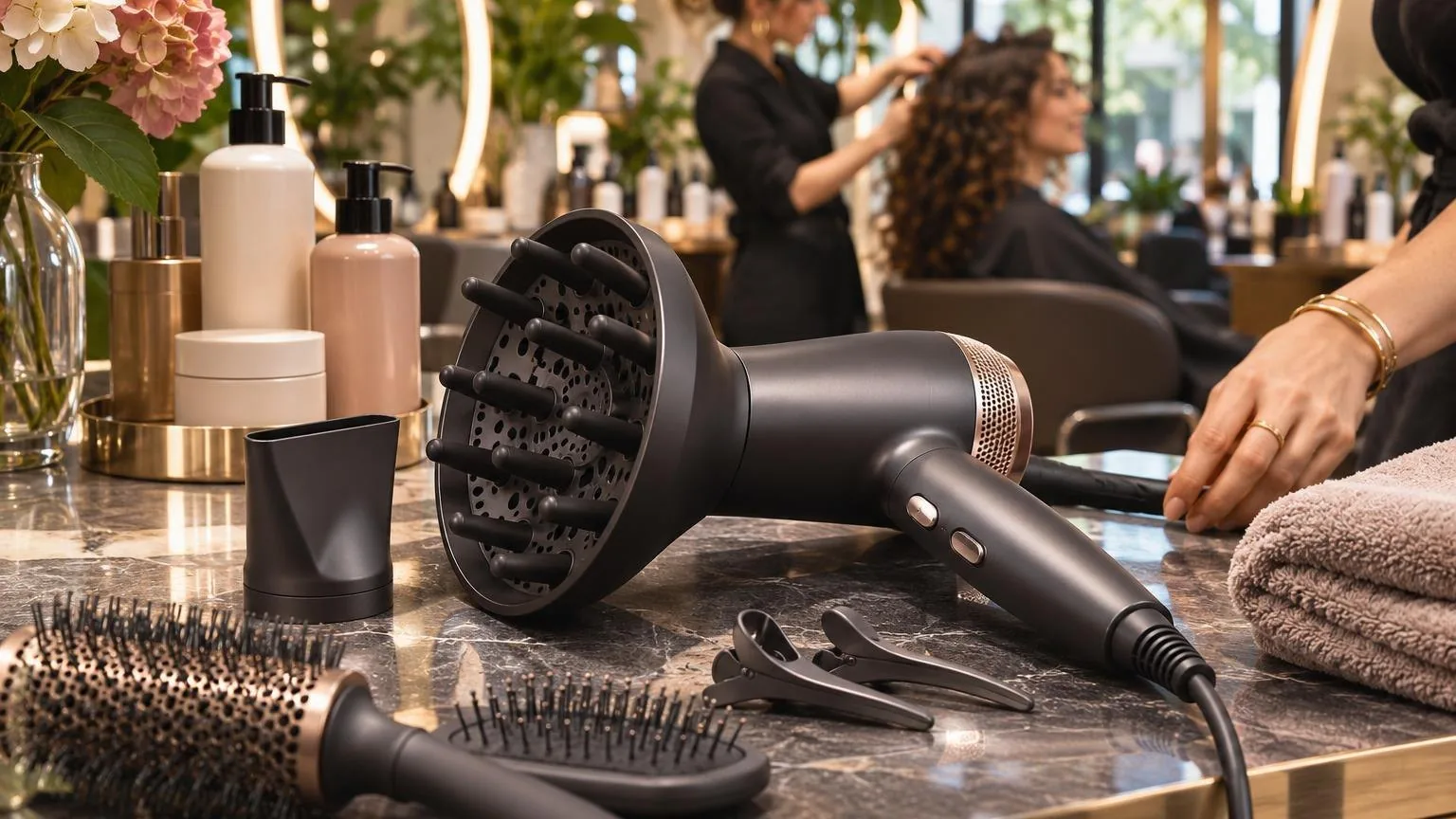
Salon retail attachment rate is the percentage of service transactions that include at least one retail product; calculate it by dividing retail-attached tickets by total service tickets, then multiplying by 100.
For example, 28 product purchases across 100 service tickets equals a 28% attachment rate. This gives owners a clear baseline without relying on sales totals alone.
Track the figure weekly and by stylist, service type, and product category. A blowout ticket may call for a heat protectant or finishing spray, while a client asking for lasting volume may benefit from a root-lift product.
Keep recommendations tied to the look, explain how much to use, and demonstrate the finish at the chair.
Use the rate alongside average retail spend and units per transaction: attachment shows how often clients buy, not how much they spend.
Review results with the team, note which demonstrations lead to purchases, and set a realistic next target from your own baseline. Consistent tracking helps separate useful education from pressured selling.
Calculate Your Retail Attachment
Pull the last 50 completed blow-dry service tickets from your salon’s point-of-sale system. Use the matching product-line report to mark each ticket that includes at least one take-home retail item.
These two reports are your source records; a product-units total alone cannot show how many clients bought something.
| Count | Example | Your salon |
|---|---|---|
| Completed service tickets | 50 | _____ |
| Tickets with at least one retail item | 12 | _____ |
| Attached tickets ÷ service tickets × 100 | 24% | _____% |
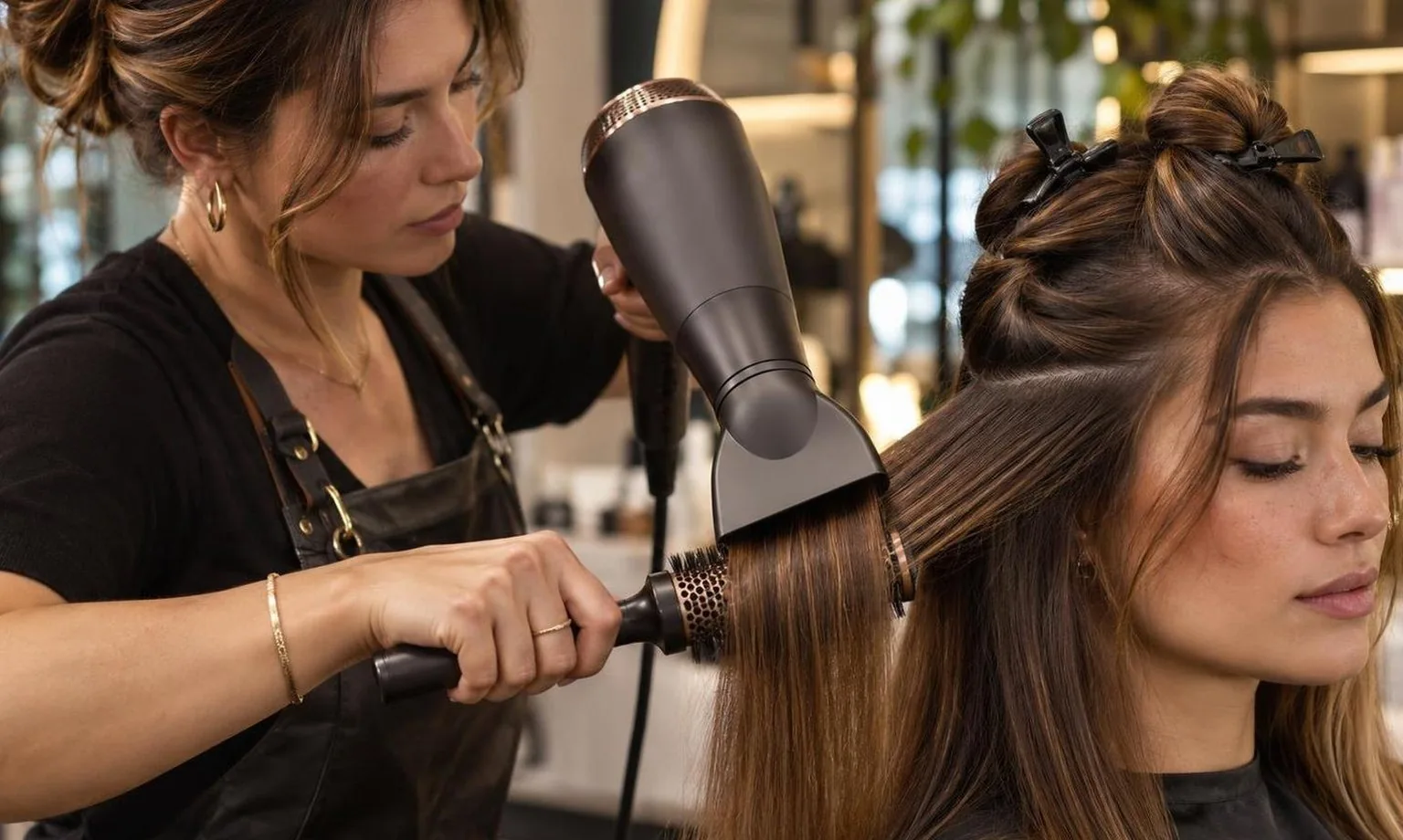
Count tickets, not products. A client buying a 35 mm round brush and a 50 mL styling product on one ticket adds one attached ticket, not two. Exclude retail-only purchases, cancelled services and products fully returned.
If one receipt covers two clients, check which service the product belongs to before assigning it.
Now run the same calculation for each stylist, using only their completed service tickets. A stylist with 6 attached tickets from 20 services has a 30% attachment rate.
Compare that with the salon figure, but keep the underlying counts visible: 3 from 10 is also 30%, with less evidence of a consistent pattern.
Finally, check your own kit against the items clients actually bought. Pick one product you use during a blow-dry but rarely see on attached tickets.
At the next appointment, name the product, demonstrate the amount used and explain the finish it creates. Record whether that client buys it; add the result to your next 50-ticket count.
What the Figures Add Up To
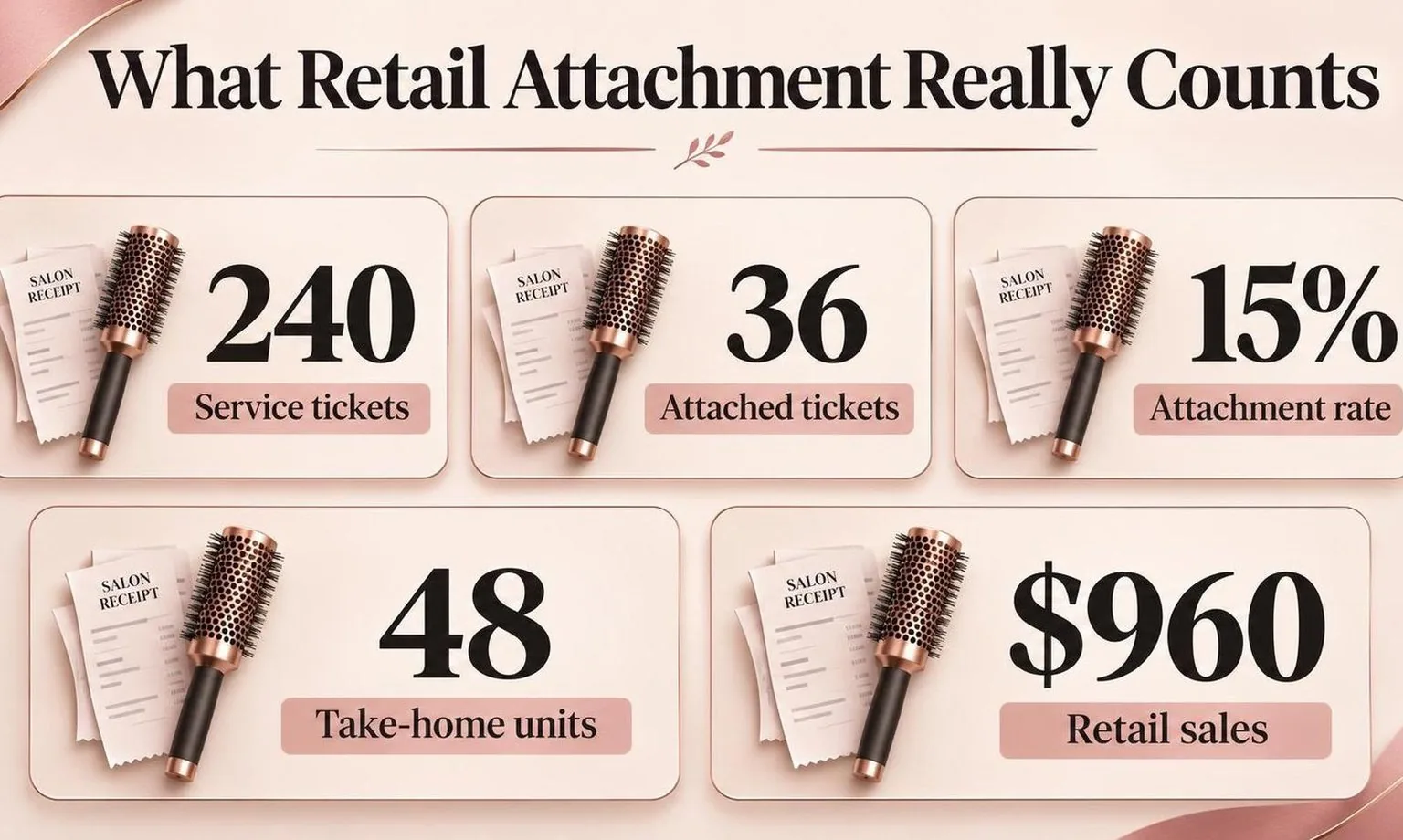
Salon retail attachment rate is the share of eligible service tickets that include a take-home product. It measures how often a service leads to a product purchase, not how many products are sold or how much retail revenue the salon earns.
Calculate it from closed tickets in the point-of-sale system: divide service tickets with at least one take-home product by all eligible service tickets. Count each ticket once, even when a client buys several products.
The worked example below uses hypothetical register data, not an industry benchmark.
| Measure | Worked example |
| Eligible service tickets | 240 |
| Service tickets with a take-home product | 36 |
| Retail attachment rate | 36 ÷ 240 = 15% |
| Take-home units sold | 48 |
| Units per attached ticket | 48 ÷ 36 = 1.33 |
| Unit price in this example | $20 |
| Retail sales | 48 × $20 = $960 |
| Retail sales per service ticket | $960 ÷ 240 = $4 |
| Additional attached tickets needed to reach 20% | 12, assuming 240 eligible tickets |
The table shows why attachment and retail sales answer different questions. Additional units on an already attached ticket raise sales but leave attachment unchanged.
Conversely, a product added to a previously unattached ticket raises attachment; its effect on sales depends on the product and any discount.
Set the denominator before reviewing staff performance. For a blow dry bar, eligible tickets might include completed blowouts and styling appointments while excluding product-only transactions, cancelled bookings and no-shows.
Apply that rule consistently across stylists and locations, and document it beside the report.
Check returns against the original ticket. If a product is returned and no take-home product remains on that service ticket, remove its attached status when reporting net results. Exchanges should not create a second attached ticket.
Keep gift cards and service add-ons out of the product count.
At closeout, inspect a sample of receipts against the exported product lines.
A brush or finishing spray rung through under a generic service code can disappear from the attachment calculation; a styling upgrade mistakenly coded as retail can inflate it. Fix the coding before interpreting a shift in performance.
Use the rate alongside units per attached ticket and retail sales per service ticket. Together, they distinguish broader participation from larger baskets.
A useful team discussion then starts with the appointment record: which finishing product was used, whether its purpose was explained, and whether the client was offered the matching take-home option.

The Variables That Matter
Retail attachment rate moves with the denominator you choose, the relevance of the recommendation, product availability and whether the client is ready to buy.
Measure those variables separately: a higher retail total does not necessarily mean more service clients bought a product.
Start with the service ticket
For a blow dry bar, use completed service tickets as the denominator and tickets containing at least one retail item as the numerator. Exclude retail-only visits from that calculation.
This makes attachment a measure of how often a service visit leads to a purchase, rather than a measure of product volume.
The illustrative figures below show why the denominator matters. In the final row, the team sells retail on the same number of tickets as in the first row, but attachment falls because more service tickets were completed.
| Illustrative period | Service tickets | Tickets with retail | Attachment rate |
| Baseline | 100 | 25 | 25% |
| More attached visits | 100 | 35 | 35% |
| More service visits | 125 | 25 | 20% |
Watch the recommendation and the handoff
A useful recommendation connects a product to a finish the stylist has just created. Name what was used, explain its role and show the client the amount applied.
A generic question at checkout gives the client less to work with, particularly when the stylist who performed the service is no longer present.
Record who made the recommendation and whether the item reached the ticket. Comparing those steps can reveal whether the difficulty is product knowledge, the conversation during the service or the handoff to reception.
Review patterns by stylist alongside service mix; a team member doing different finishes may have different retail opportunities.
Check whether clients can buy the item
A recommendation cannot attach if the product is out of stock or absent from the display. Check availability of the products used most often in services, then compare those checks with item-level sales.
Shopify Help Center’s guidance on ABC inventory analysis offers a way to prioritise products by their contribution to sales.
Price and pack size also affect the decision. Keep attachment separate from retail revenue and units per attached ticket: a client buying one item and a client buying several both count as attached.
Square Support’s sales-report guidance describes item-level reporting that can help distinguish those outcomes.
Finally, compare like with like. Track attachment by service type and review it alongside stock availability and staff coverage.
Change one part of the recommendation process at a time, then check whether more completed service tickets contain retail—not merely whether the retail total has risen.

How a Healthy Setup Behaves
A healthy retail setup produces product sales across the appointment book, not just on busy days or through one persuasive stylist. Clients hear a relevant recommendation, see how the product fits their finish, and can find it at checkout.
Attachment rate measures how often that sequence ends with a product on the service ticket.
Calculate attachment using eligible service tickets as the denominator and tickets containing a retail product as the numerator. The worked example below is illustrative, not an industry benchmark.
Square’s point-of-sale reporting separates transaction counts from item counts; that distinction matters because a ticket with several products still counts as one attached ticket.
| Worked-example measure | Result |
| Eligible service tickets | 80 |
| Tickets with a retail product | 20 |
| Tickets without a retail product | 60 |
| Retail attachment rate: attached tickets ÷ eligible tickets | 25% |
| Retail items sold | 26 |
| Items per attached ticket: items sold ÷ attached tickets | 1.3 |
Decide what “eligible” means before reviewing performance. Include a blowout when the guest could reasonably buy a finishing or maintenance product.
Exclude a refunded service, a staff practice appointment, or a ticket where retail was not available. Apply the same rule throughout the reporting period and across stylists.
Look beneath the headline rate. Separate first-time guests from returning guests and blowouts from event styling.
A strong overall figure can conceal a weak service category, while a change in booking mix can shift the rate without any change in the team’s recommendation habits.
On the floor, the handoff should be observable. The stylist names the product used, explains the result it supports, and shows the guest how much to apply or how to use the tool.
The product is stocked, labelled clearly, and easy for the front desk to locate without interrupting checkout.
Use a brief service check to find the breakdown: was a suitable product available, was it demonstrated, and was it mentioned at handoff? Record the answers alongside ticket data.
If demonstrations happen but attached tickets remain scarce, check whether the recommended item is actually available to take home.
Review attachment alongside units per attached ticket, returns, and stock availability rather than treating a higher rate as the only win. Multiple items on a small number of tickets can lift unit sales without broadening attachment.
The useful signal is consistent, relevant purchasing across eligible appointments, supported by a recommendation the guest can repeat at home.
Where the Alternatives Win and Lose
Stylist-led recommendations usually have the clearest link to the finished blowout, while checkout displays make products easy to pick up without interrupting the service.
Bundles simplify the decision, and digital follow-up reaches clients after they leave; neither replaces a recommendation tied to what the stylist actually used.
| Approach | Practical setup | Where it wins | Where it loses |
| Stylist demonstration | Show one product while working a section around a 45 mm round-brush barrel. | The client sees its role in the finish. | A rushed explanation can sound like a sales pitch. |
| Checkout display | Stock three clearly labelled products used in common blowout finishes. | Clients can find the recommendation quickly. | A display alone cannot explain application. |
| Take-home bundle | Pair two products with distinct roles, such as prep and finishing. | The routine is easier to remember. | Clients may reject the whole bundle if they already own one item. |
| Digital follow-up | Send one link to the products used, with application notes. | The client can buy after checking products at home. | The sale may not appear on the service ticket. |
The strongest stylist recommendation answers a question the service has already raised: what gave the roots lift, kept the ends smooth, or added hold without changing the finish? Name the product, show the amount used, and explain where it goes.
A generic instruction to “shop the shelf” gives the client less to act on.
A checkout display works best as a retrieval point, not a substitute for that explanation. Put the product the stylist named within easy reach, with a label that matches the language used at the chair.
Keep unopened stock available so the display does not depend on a tester being present.
Bundles win when each item has a separate job. Shopify Help Center’s product-bundle documentation defines bundles as products sold together, but that structure does not establish whether clients buy more.
Check the bundle’s item-level sales alongside individual products before treating it as an attachment improvement.
Follow-up is useful when the client wants to check what is already in their bathroom. Send the exact product names and a short application reminder, rather than a link to the full shop.
Google Analytics Help documents campaign parameters for tracking links; those can help identify visits from a follow-up message.
Finally, keep the denominator consistent. Count service tickets with a retail purchase, not products sold: several items on one ticket still represent one attached ticket.
Square’s point-of-sale reporting documentation describes item-level sales reports, which can help identify popular products, but ticket-level attachment needs a separate check.
That distinction matters most when comparing bundles with individual recommendations.
Where Owners Get Caught Out
Owners get caught out when they call every retail sale an attachment, divide by bookings instead of completed services, or count a refunded purchase as a win.
The resulting rate looks precise but cannot tell the team whether its recommendations are working.
Define the measure before putting it on a dashboard: customers who buy a take-home product during a completed service visit, divided by customers who complete a service visit. Count the customer, not the number of products or till transactions.
Keep walk-in retail purchases separate from service-led attachment.
| Illustrative salon reporting period | Count or rate |
| Bookings | 200 |
| Completed service visits | 160 |
| Service customers purchasing retail | 32 |
| Retail transactions by those customers | 38 |
| Products purchased | 49 |
| Attachment rate: purchasers ÷ completed visits | 20% |
| Rate after full refunds from four distinct purchasers | 17.5% |
The table is an arithmetic example, not an industry benchmark. A customer buying shampoo and a styling brush still represents one attached visit.
If that customer makes a separate purchase after leaving, decide whether your system can link it to the visit; otherwise, report it as later retail.
Refunds need the same discipline. The adjusted example assumes each refunded customer returned their entire purchase and bought nothing else.
A partial return should reduce retail revenue, but it should not erase that customer from the attachment numerator if they kept another product.
Shopify Help Center’s sales-report definitions distinguish gross sales, discounts, returns and net sales.
Attachment also hides economics. A stylist can raise the rate by recommending an unsuitable low-margin item or a discount customers would have accepted without prompting. Review product mix and gross profit alongside attachment.
Keep tax treatment, staff incentives and other operating costs out of a simple product-margin calculation unless they are explicitly included.
| Illustrative product sale | Amount |
| Selling price | $30 |
| Product cost | $12 |
| Gross profit before other costs | $18 |
| Gross margin: gross profit ÷ selling price | 60% |
| Staff incentive | $3 |
| Remainder before other costs | $15 |
Finally, do not make a recommendation script the whole strategy. Check whether the recommended product is stocked, visible at checkout and relevant to the finish delivered.
Record which product was demonstrated during the blowout, then compare that with what customers actually bought. That gives coaches something more useful than a leaderboard.
If staff promote incentivised products on salon social accounts, make the commercial connection clear.
The US Federal Trade Commission’s endorsement guidance addresses disclosure of material connections; the UK Advertising Standards Authority’s CAP Code requires marketing communications to be recognisable as such.
A strong attachment rate is not a substitute for a trustworthy recommendation.

What Happens Behind the Front Desk
Retail attachment rate changes when a product recommendation survives the handoff from stylist to cashier.
A client may like the finish, but the sale depends on whether the front desk knows which product created it, can find that product, and can make checkout straightforward.
The denominator matters before any sales conversation does. Define attachment as service visits with a retail purchase divided by service visits, then keep that definition consistent.
Counting units instead of purchasing visits makes a multi-item basket look like broader adoption; counting walk-in purchases among service clients distorts the result.
| Check | Illustrative figures or working specification | Why it matters |
| Attachment | 12 purchasing visits ÷ 40 service visits = 30% | Measures how often a service visit leads to retail, not basket size. |
| Units | 16 products sold across those 12 visits | Useful for stock planning, but not a substitute for attachment. |
| Stylist handoff | 5 cm sections; nozzle about 15 cm from the hair; a 30-second checkout explanation | Gives the cashier a reproducible technique and a concise reason for the recommendation. |
A specific handoff carries more weight than “used a styling spray.” The stylist can record the product, the point at which it was applied, and the brush or nozzle technique behind the finish.
Section size and nozzle distance explain the result; the product name alone does not tell the client how to repeat it.
Availability changes the outcome independently of persuasion. If the demonstrated item is missing from the shelf, the cashier must propose a substitute the stylist has not explained.
Square’s inventory-management guidance describes tracking stock by item and variation; that distinction matters when nearby sizes or versions have different uses.
Placement also affects whether a recommendation is acted on. Keep the demonstrated item identifiable at checkout, with its label visible, rather than relying on the cashier to search a mixed display.
The question should connect to the service: whether the client wants the product used before the round-brush finish, not whether they want “anything else.”.
Record a declined recommendation without treating it as a failed demonstration. The client may already own the product, prefer a different routine, or want to decide later.
Those reasons point to different actions: replenishment advice, a technique explanation, or permission-based follow-up.
Follow-up has its own boundary. The UK Information Commissioner’s Office guidance on direct marketing and the US Federal Trade Commission’s CAN-SPAM guidance set out requirements relevant to promotional messages.
A checkout conversation does not itself establish permission to send one.
Review attachment alongside stockouts, product returns, and stylist handoff notes. A rate on its own cannot show whether the constraint is the recommendation, the shelf, or checkout; those records can.

Frequently Asked Questions
What is salon retail attachment rate?
It is the percentage of eligible service tickets that include at least one take-home product. Use service tickets rather than all transactions if you want to measure how often a blowout leads to a retail purchase.
How do I calculate it?
Divide service tickets with at least one retail item by total eligible service tickets, then multiply by 100. For example, 18 attached tickets out of 60 service tickets equals 30%; your POS line-item export supplies both counts.
Should two products on one ticket count twice?
No: a ticket with a brush and a finishing spray is still one attached ticket. Track units per attached ticket separately if you want to see whether guests buy more than one item.
Which tickets should be excluded?
Exclude retail-only purchases from the service-ticket denominator and count a refunded product only if another purchased product remains on that ticket.
Document these rules before comparing weeks so a change in reporting does not look like a change in performance.
What is a useful attachment-rate target?
Start with your own POS baseline rather than an unsourced industry benchmark. If 30 of 100 eligible tickets attach retail, a target of 35 of 100 is a five-percentage-point increase, not a 5% increase.
When should a stylist recommend a product?
Make the recommendation while using the product, when the guest can see its effect on the finish.
Name the tool or product, show the amount used, and explain one repeatable step, such as directing a 45 mm round brush from roots to ends under steady airflow.
How can I tell whether a retail initiative worked?
Compare equal-length periods using the same eligible-ticket and refund rules, then check both attachment rate and retail revenue per service ticket.
Read the POS line-item report alongside stock availability: an empty shelf can limit attachments even when recommendations improve.
Related Reading
- The types of salon insurance, and what each covers
- The blow dry bar business model, explained
- Filling empty chairs: what works for blow dry bars
- How many stylists a blow dry bar actually needs
- The health and safety rules a salon must meet
- What a booth renter actually takes home
- Employee or contractor: how salons get this wrong
- Chair renters and insurance: who covers what
- The complete guide to the blow dry bar business