Insurance for hairdressers renting a chair should cover public liability, treatment risks and equipment from the first client onward.
A £1 million public-liability limit is a common business benchmark, but the required level depends on your landlord, salon contract and professional duties.
Chair renters remain responsible for claims arising from their own services, even when working inside another business.
Check whether the salon’s policy covers independent stylists, because many policies protect only the salon owner and employed staff.
Compare public liability, professional indemnity, tools, stock, legal expenses and business interruption cover. Confirm exclusions for mobile work, assistants, freelance bookings and services performed away from the rented chair.
Keep certificates, policy schedules and incident records accessible. This guide explains what to ask insurers, which documents to review and how to match cover with your exact chair-rental arrangement.

Calculate Your Chair Rental Insurance Cost
Chair renters typically need three policies layered together. Grab your lease agreement and work through this list to pin down what you actually need to budget.
- Check your lease for minimum liability limits. Most salon owners require chair renters to carry general liability of at least £1 million (UK) or $1 million (US) per occurrence. Some high-traffic locations push that to $2 million aggregate. Your lease will state the exact figure — that number sets your baseline.
- Inventory your kit at replacement cost. List every dryer, iron, and brush you bring to the chair. A professional-grade blow dryer runs roughly £200–£350; a titanium flat iron £150–£280. Tally the replacement total. If it exceeds £1,000, a separate contents or tools policy is worth quoting.
- Decide on professional indemnity cover. This protects against claims of service-related damage — a client alleging heat damage to hair, for example. Standard professional indemnity for a single-chair stylist starts around £100–£180 per annum in the UK.
- Add up the three layers. General liability plus tools cover plus professional indemnity gives your annual insurance spend. For a solo chair renter carrying £1 million liability, £2,000 in tool cover, and standard indemnity, expect a combined annual premium in the range of £300–£600.
Request quotes from at least three insurers that specialise in hair and beauty. Compare the excess (deductible) amounts — a lower premium often hides a £250-plus excess per claim.
The Numbers That Matter Here
Chair renters typically pay between $100 and $300 per month for a general liability policy, depending on location, coverage limits, and add-ons.
That cost is substantially lower than full salon insurance because the footprint of risk is smaller — one station, one operator, one client at a time.
General liability policies for individual booth renters commonly start at $1 million per occurrence and $2 million aggregate. These are the minimums most landlords and salon owners require before handing over a lease agreement.
| Coverage Type | Typical Annual Premium Range | What It Covers |
| General Liability | $150–$350 | Client injury, property damage at the station |
| Professional Liability (Malpractice) | $100–$250 | Claims from service outcomes — burns, allergic reactions, dissatisfaction |
| Product Liability | Often bundled with general liability | Harm caused by products sold or applied |
| Business Personal Property | $50–$150 | Tools, dryers, brushes, retail inventory at the chair |
Bundled policies — often called a Business Owner’s Policy (BOP) — combine general liability with property coverage. BOPs for solo stylists frequently land between $250 and $500 per year.
Why Chair Renters Get Quoted Differently Than Employees
The distinction matters financially. A salon owner’s policy does not cover a chair renter. Renters are classified as independent contractors, so they carry their own risk entirely.
Insurers assess chair renters on annual revenue, not square footage. A stylist grossing $60,000 annually will see a different quote than one grossing $120,000, even if they sit three feet apart in the same salon.
Costs That Catch Renters Off Guard
- Additional insured endorsements: Salon owners often require being listed as additional insured on the renter’s policy. This endorsement typically adds $25–$75 per year.
- Hired and non-owned auto coverage: Relevant if a renter does mobile blowouts using a personal vehicle. Expect $50–$150 annually.
- Equipment floater: A standard BOP may cap tool coverage at $2,500. High-end dryers and titanium flat irons can push a kit past $4,000, requiring a floater add-on.
The Professional Beauty Association notes that roughly 40% of licensed cosmetologists in the US operate as independent contractors or booth renters rather than W-2 employees.
That means a significant share of the industry carries individual policies — or, more critically, carries none at all.
Operating without coverage exposes the renter to out-of-pocket liability that can exceed $50,000 for a single slip-and-fall claim.
Where UK Chair Renters Diverge
In the UK, public liability insurance for self-employed hairdressers typically starts at £40–£80 per year for £1 million cover. Policies at £5 million cover — common for high-street locations — run £80–£150 annually.
UK renters should also confirm whether their policy includes treatment risk cover, which is the equivalent of US professional liability. Not all basic public liability policies include it by default.
What Tips It One Way
Three variables determine whether a chair renter’s insurance claim gets paid or denied: the structure of the rental agreement, the specific policy type held.
And whether liability has been clearly allocated between the salon owner and the renter in writing.
Chair renters occupy a unique legal position. They are not employees. Most operate as self-employed independent contractors, meaning the salon’s own business insurance almost never extends coverage to them.
Policy Types That Apply
Chair renters typically need to carry their own coverage. The relevant policy types serve distinct functions, and gaps between them are where most disputes arise.
| Policy Type | What It Covers | Typical Limit Range |
| General Liability | Third-party bodily injury, property damage, personal injury claims from clients | $1M per occurrence / $2M aggregate |
| Professional Liability (Malpractice) | Claims arising from the service itself — e.g., heat damage, allergic reaction to a product applied | $1M per occurrence / $2M aggregate |
| Product Liability | Claims tied to products sold or applied during the appointment | Often bundled into general liability |
| Business Personal Property | Tools, dryers, styling equipment owned by the renter | $5,000–$25,000 |
General liability alone is insufficient. A client claiming a burn from a 230°C flat iron could trigger a professional liability claim, not a general liability one. Carrying both is standard practice.
The Rental Agreement’s Role
The booth rental contract directly shapes insurance outcomes. Insurers review these documents during claims. Ambiguous language about who controls the workspace can void coverage or shift liability unexpectedly.
- Hold-harmless clauses — many salon owners require renters to indemnify them, pushing all client-facing liability onto the renter’s policy
- Additional insured endorsements — salon landlords often demand to be listed as additional insureds on the renter’s policy, typically adding $25–$50 to the annual premium
- Proof of insurance requirements — most commercial leases specify minimum coverage of $1M/$2M before a chair renter can operate
Without a written agreement specifying these terms, both parties risk coverage gaps. Insurers may deny claims where the relationship between owner and renter is undefined.
Factors That Raise or Lower Premiums
Annual premiums for chair renter policies in the US generally fall between $150 and $400 for a combined general and professional liability package. Several factors move the number.
- Location — renters in higher-litigation states like California or New York pay 20–35% more than those in lower-risk states
- Services offered — blow-dry-only operators typically pay less than stylists who also perform colouring or chemical services
- Revenue volume — annual gross receipts above $50,000 may push premiums higher
- Claims history — a single prior claim can increase renewal rates by 10–25%
- Deductible selection — raising a deductible from $500 to $1,000 can reduce annual premiums by roughly 8–12%
The outcome hinges on documentation. Renters who carry the right policies, maintain clear contracts, and keep proof of coverage current face far fewer surprises when a claim lands.
How to Judge It on Real Hair
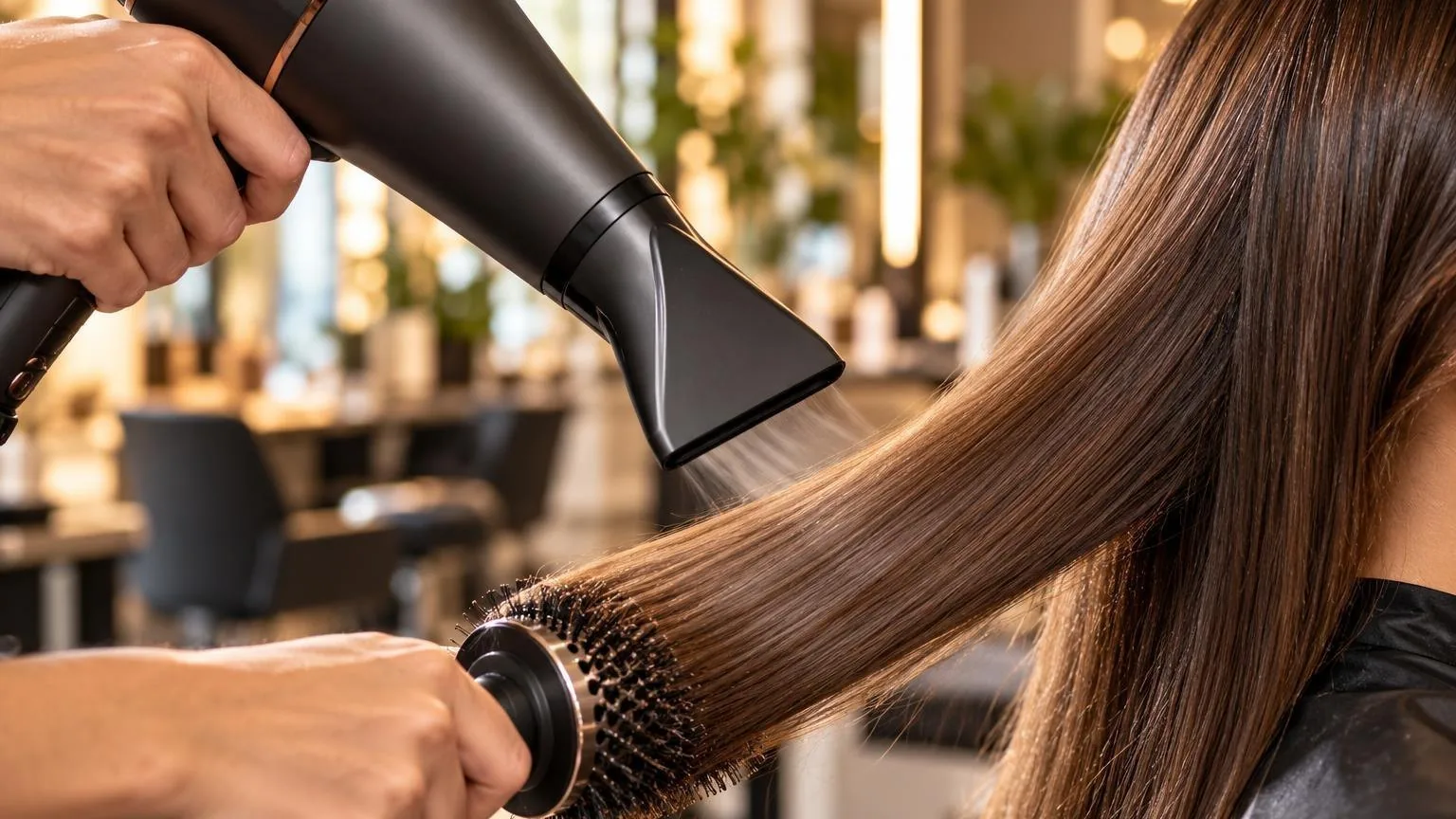
Judging chair-rental insurance on real hair means testing whether the policy actually covers what happens at your station daily. Review the certificate of insurance against your lease, your service menu, and the specific tools you use.
Paper coverage that excludes your core services is worthless.
Check Your Service Menu Against the Policy Schedule
Most general liability policies for booth renters carry limits of $1 million per occurrence and $2 million aggregate. Those figures mean nothing if the policy excludes thermal styling, chemical services, or extension application.
Request the declarations page and read every exclusion. A policy that covers cuts but excludes hot-tool styling leaves a gap for roughly 60–80% of the services a typical blowout specialist performs.
Key Coverage Areas to Verify
- General liability — covers client injury at your station, such as a burn from a 230°C iron or a trip over your cord
- Professional liability (malpractice) — covers claims that your service itself caused damage, such as breakage from improper tension during a round-brush blowout
- Product liability — covers reactions to products you apply, provided you are not making medical claims about them
- Property coverage — covers your own tools; a full kit of dryers, irons, and brushes often runs $2,000–$5,000 in replacement value
Compare Real Premiums
Booth-renter policies vary widely. The table below shows typical US premium ranges for stylists performing blowouts and thermal styling only, not chemical services.
| Coverage Type | Annual Premium Range | Typical Per-Occurrence Limit |
| General liability only | $150–$300 | $1,000,000 |
| General + professional liability | $250–$500 | $1,000,000 |
| General + professional + property | $350–$700 | $1,000,000 liability / $5,000–$10,000 property |
Premiums increase significantly if your service menu includes colour, relaxers, or keratin treatments. Adding those categories can raise annual costs by $100–$300 depending on the insurer.
What the Salon Landlord Usually Requires
Most booth-rental agreements require you to name the salon owner as an “additional insured” on your policy. This costs nothing with most carriers but must be requested explicitly.
Landlords typically require proof of at least $1 million per occurrence. Some high-traffic locations in cities like London or New York require $2 million per occurrence.
The Real-World Stress Test
Pull your last 30 days of client tickets. Identify every service performed, every product opened, every tool heated above 150°C. Then cross-reference each one against the policy exclusions list.
Any service that appears on your tickets but not in your coverage is an uninsured exposure. One client complaint about heat damage to a $400 set of tape-in extensions can exceed a small-claims threshold fast.
Call your insurer with specific scenarios drawn from your actual work, not hypotheticals. Ask whether a client burn at 210°C from a titanium barrel iron is covered. Ask whether lending a finishing product to a neighbouring renter creates a gap.
Concrete questions surface concrete limitations in the policy language.
Where the Alternatives Win and Lose
Alternatives to traditional salon insurance policies offer chair renters flexibility and lower upfront costs, but they introduce coverage gaps that can prove expensive.
Understanding where each option excels — and where it falls short — prevents costly surprises when a claim lands.
Option 1: Salon Owner’s Policy Extension
Some salon owners add chair renters to their existing business owner’s policy (BOP) as additional insureds. This typically costs the owner $50–$150 per renter added, depending on the insurer and number of stations.
The win: zero administrative burden on the stylist. The loss: the renter has no independent coverage and no control over policy limits, exclusions, or cancellation.
If the owner drops coverage or fails to renew, the renter is exposed with no notice period guaranteed. The renter also cannot file a claim independently.
Option 2: Pay-Per-Use or On-Demand Policies
Several insurers now offer daily or weekly liability coverage aimed at freelance stylists. Premiums run roughly $3–$8 per active working day, depending on selected limits.
The win: no long-term commitment and minimal cash outlay on slow weeks. Stylists working two to three days weekly may pay less annually than a 12-month policy.
The loss: coverage gaps on non-purchased days. Product liability and completed-operations coverage — protecting against reactions that surface 48–72 hours post-service — often require a separate rider or are excluded entirely.
Option 3: Professional or Trade Association Group Plans
Organisations such as the Professional Beauty Association and the National Hairdressers’ Federation offer group liability schemes to members.
Annual membership fees range from $40–$89, with insurance premiums discounted 10–20% below individual market rates.
The win: negotiated group rates and typically broader coverage than on-demand alternatives, often bundling general liability with professional liability at $1 million per occurrence.
The loss: coverage is tied to active membership. Lapsed dues mean lapsed insurance. Policy terms are non-negotiable — you accept the group’s chosen insurer, limits, and exclusions.
Side-by-Side Comparison
| Factor | Owner’s Extension | On-Demand | Association Group | Individual Policy |
| Typical annual cost to renter | $0 (owner pays) | $300–$830 | $350–$700 | $250–$900 |
| Renter controls policy | No | Partial | No | Yes |
| Product liability included | Varies | Rarely | Usually | Usually |
| Completed-operations coverage | Varies | Rarely | Usually | Usually |
| Portable between salons | No | Yes | Yes | Yes |
| Gap risk | High | High | Medium | Low |
The Bottom Line for Chair Renters
Alternatives work best as transitional or supplemental coverage.
Stylists building a full-time chair-rental business should treat an individual policy — with general liability, professional liability, and product coverage — as the baseline.
- Use on-demand cover only during genuinely irregular schedules
- Verify any owner’s extension names you as additional insured in writing
- Check association plans for completed-operations clauses before enrolling
- Keep certificates of insurance accessible at every station you rent
Portability matters most. A policy that follows you between chairs, salons, and cities protects revenue continuity — the single biggest financial risk for independent stylists.

Keeping Condition Through the Dry
Control heat, airflow and distance to preserve hair condition. For chair renters, consistent equipment care also reduces avoidable damage claims and shows that tools were maintained, stored and operated responsibly.
Begin with damp hair, not dripping hair. Remove excess water with a towel pressed through the lengths. Rough drying creates friction and tangles; squeezing adds unnecessary tension before the dryer is introduced.
Set the dryer from its manufacturer’s instructions. If no temperature range is supplied, measure the outlet air with a separate meter at 15 cm. Avoid guessing, because jet settings, motor speed and salon voltage alter the reading.
| Dryer configuration | Distance from hair | Technique |
| High-speed dryer with concentrator | 15–20 cm | Keep the dryer moving and direct airflow along the section |
| High-heat dryer with diffuser | 20–25 cm | Use a wide, low-flow attachment to spread the force |
| Cool setting | 15–20 cm | Capture each section for 10–15 seconds after main drying |
Work from the roots toward the ends in sections about 5 cm wide. A section wider than 5 cm takes longer to dry and forces the dryer to travel repeatedly over the same hair, increasing heat exposure.
Keep the concentrator about 2 cm above the hair and use a 15 cm nozzle for precise control. Hold a dryer stationary over one spot only while checking progress; repeated passes are gentler than concentrating heat continuously.
Keep the dryer moving at roughly 5 cm per second. Follow the shape of each section rather than scrubbing the nozzle across it. This maintains airflow while avoiding repeated contact and knot formation.
For chair-rental insurance, record the dryer make, model and serial number. Photograph its cord and plug at setup and after an impact. Report damaged cables, plugs or casings immediately rather than continuing service.
Schedule maintenance according to the manufacturer and insurer’s requirements. In the UK, retain the latest portable-appliance inspection record for each salon dryer, including work performed on salon-owned and chair-renter equipment.
Ask the insurer in writing whether accidental damage, electrical malfunction and business interruption are covered for tools kept permanently at the rented chair. A salon contents policy may apply only at the named insured address.
Stop when the section is fully dry. Overdrying adds no measurable benefit and prolongs exposure to moving air. Let the hair cool for at least 5 minutes before separating or brushing it, then finish with a wide-tooth comb.
Frequently Asked Questions
What insurance do I need as a chair renter versus an employed stylist?
Chair renters are classified as self-employed, so the salon’s policy typically does not cover you.
You need your own public liability insurance (minimum £1 million cover in the UK; $1 million in the US is standard) plus professional indemnity to protect against client claims for service-related damage.
Does the salon owner’s insurance cover my equipment at the station?
Almost never. The landlord’s policy covers the building and their own contents. Your dryers, irons, brushes, and product stock require a separate portable equipment or tools policy.
Cover limits usually start around £500–£2,000 depending on the insurer, so inventory your kit and insure to replacement value.
Am I liable if a client slips near my rented chair?
Liability depends on the rental agreement. If your contract makes you responsible for your station area, a slip-and-fall claim could land on you personally. Public liability insurance covers legal costs and compensation.
Read your chair rental contract carefully — the negligence allocation clause determines who the claim follows.
Can I get insurance if I rent a chair only part-time?
Yes. Most specialist insurers offer policies for part-time or mobile stylists working as few as one day per week. Premiums are typically lower than full-time policies.
Confirm with the provider that the cover applies at the specific salon premises named in your rental agreement, not just mobile locations.
What does professional indemnity cover that public liability does not?
Public liability covers physical injury or property damage to third parties — a burn from a styling tool, for example.
Professional indemnity covers financial loss from your professional advice or service, such as a client claiming a colour service ruined their hair. Chair renters should carry both policies for full protection.
Related Reading
- What a booth renter actually takes home
- The blow dry bar business model, explained
- Pricing a blowout: the four inputs that set the number
- Insuring a stylist's hands: what cover exists
- The licences a blow dry bar needs, and who issues them
- The types of salon insurance, and what each covers
- The complete guide to the blow dry bar business
- U.S. Small Business Administration – Business Insurance Guide
- OSHA – Hair Salons Workplace Safety
- IRS – Independent Contractor vs. Employee Classification
- PubMed – National Library of Medicine Search
- Professional Beauty Association
- USA.gov – Starting a Business
- Cornell Law Institute – Legal Information on Independent Contractors
- Insurance Information Institute