
Ceramic or tourmaline: choose ceramic for steady, even heat on most blowouts, and tourmaline when frizz control and a smoother finish matter more.
Ceramic barrels and plates distribute heat evenly, typically working well around 160–185°C for fine to medium hair. Tourmaline-coated tools emit more negative ions, helping reduce static during a 6–10 minute section-by-section blow-dry.
Choose By One Blowout
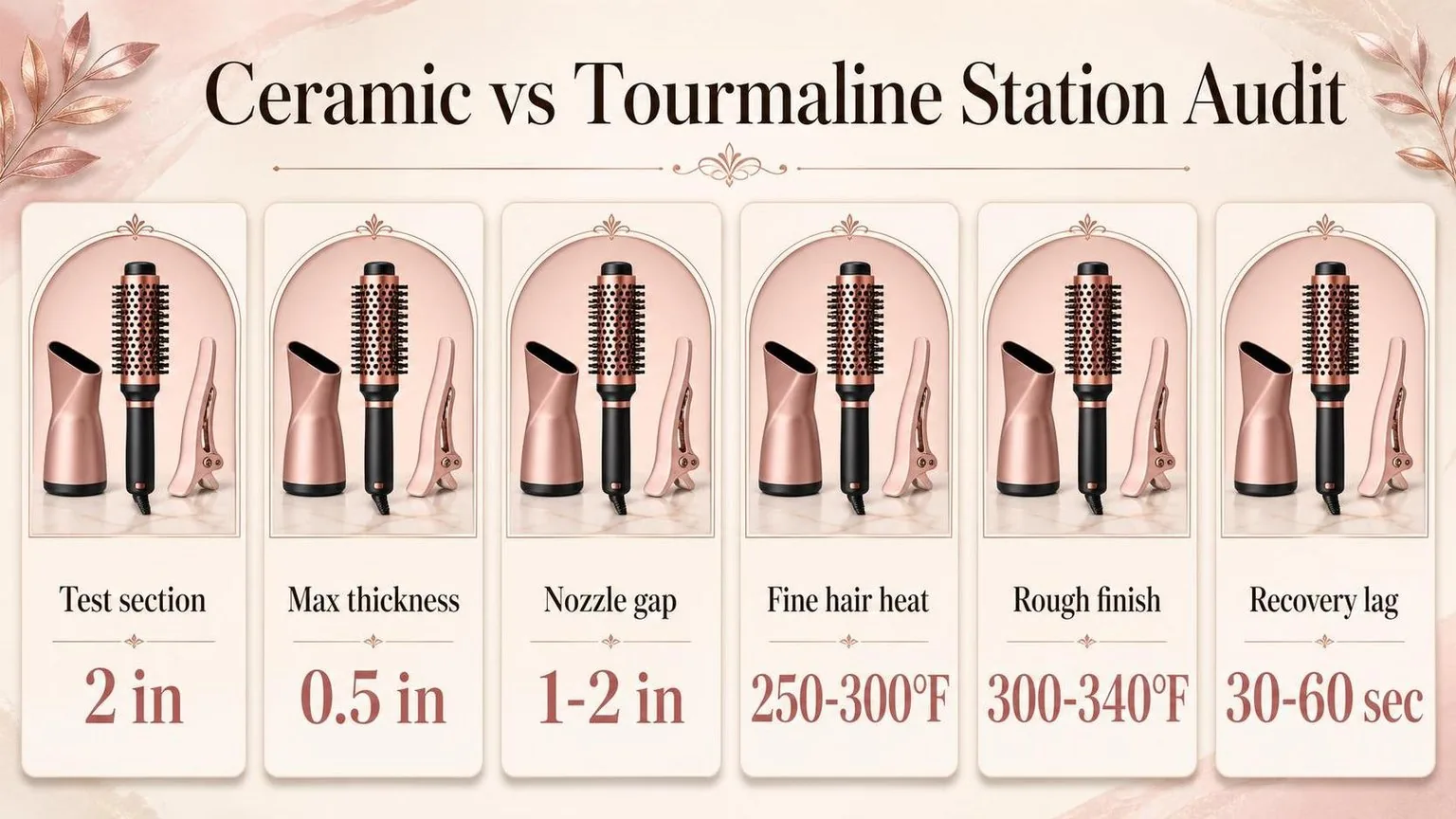
Run this quick station audit before buying another dryer, brush dryer, or hot brush. You need your usual heat protectant, a timer, a 2-inch section clip, and the tool you already use most.
| Your result after one 2-inch test section | Choose |
| Section feels rough, expands, or loses shape within 10 minutes at 300-340°F. | Tourmaline, especially for smoothing passes and high-humidity finish work. |
| Section dries evenly, holds bend, but needs more body at the root. | Ceramic, particularly on round brushes and dryers used for lift. |
| Ends look polished, but roots stay damp after 6-8 minutes per quadrant. | Ceramic dryer plus tourmaline finishing brush, not one do-everything tool. |
| Fine hair collapses when you use high heat or tight tension. | Ceramic with a lower setting, around 250-300°F where available. |
Use the same section size each time: 2 inches wide and no thicker than 0.5 inch. Keep the nozzle 1-2 inches from the brush, and time one full pass from wet to dry, not from damp to glossy.
If your salon handles back-to-back blowouts, judge recovery speed too. A tool that drops heat between sections can slow a stylist more than a slightly heavier handle.
Note whether the next section starts drying immediately or needs an extra 30-60 seconds.
For home users, pick the material that fixes your most frequent failure. Ceramic is usually the safer first call for controlled, even heat. Tourmaline earns its place when the final surface finish is the problem.
What the Data Shows
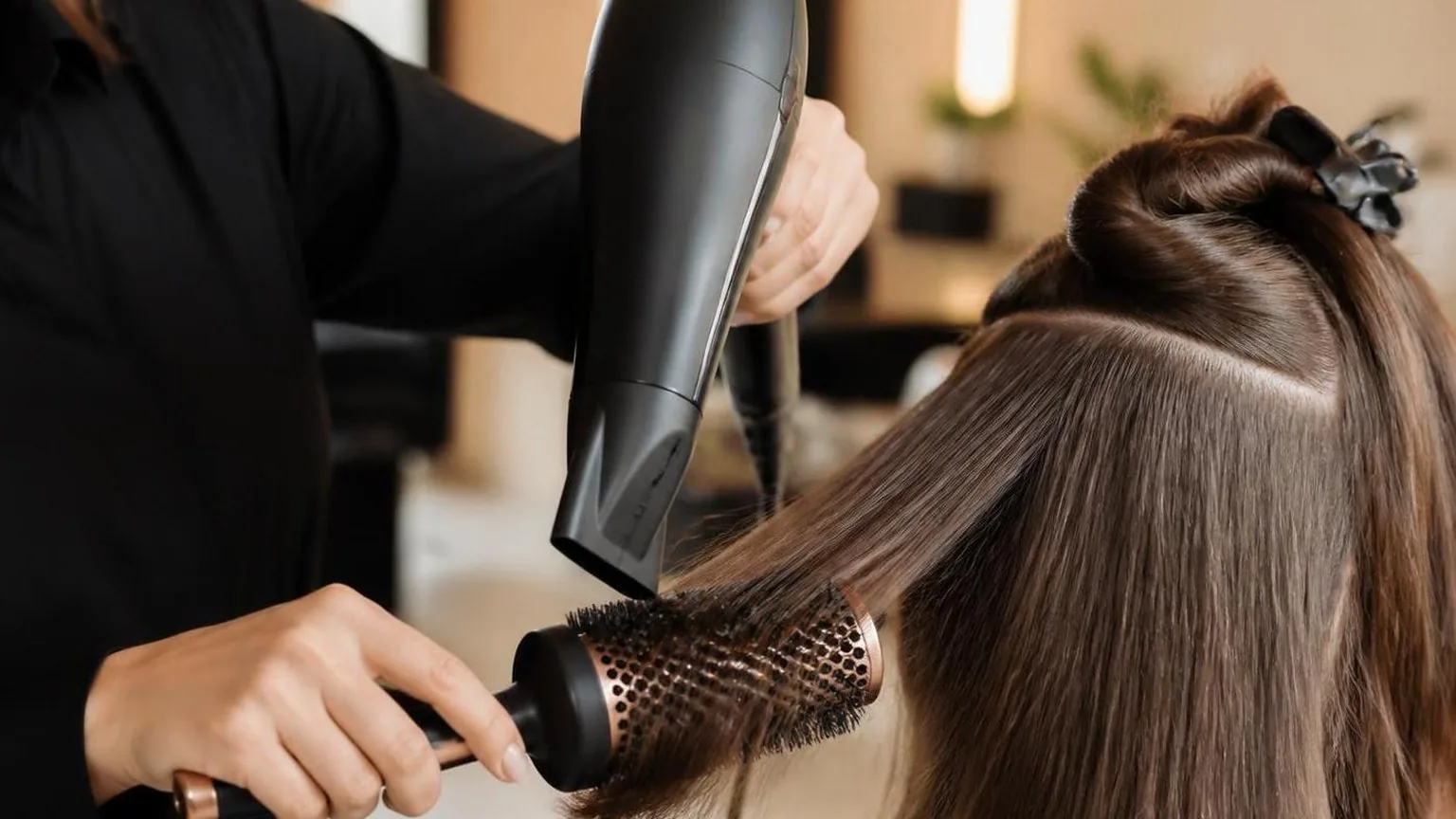
Ceramic and tourmaline are not performance guarantees by themselves. The useful numbers are heat stability, outlet temperature, airflow, wattage, plate or barrel contact area, and how fast the tool recovers heat after touching damp hair.
In salon testing, ceramic usually means a ceramic-coated barrel, plate, heater housing, or grille. Tourmaline usually means crushed mineral blended into a coating.
The mineral label matters less than how evenly the tool holds the working temperature you actually use.
| Number to check | Why it matters | Practical salon target |
| Dryer wattage | Higher wattage can support stronger airflow and faster heat recovery, depending on motor design. | US salon dryers commonly sit around 1,600 to 1,875 W; UK dryers commonly sit around 1,800 to 2,200 W. |
| Outlet temperature | This is the air temperature reaching the hair, not the element temperature inside the dryer. | Use medium heat for fine hair; reserve high heat for dense, wet sections with constant movement. |
| Nozzle width | A narrow concentrator increases air speed and polish at the brush line. | About 6 to 8 cm wide for controlled blowouts. |
| Section size | Oversized sections make any material perform poorly. | About 2 to 5 cm deep, matched to brush diameter and density. |
| Distance from hair | Closer airflow raises heat exposure quickly. | Keep the nozzle about 2 to 5 cm from the brush, moving continuously. |
Ceramic’s measurable advantage is heat distribution. A well-made ceramic-coated barrel or plate reduces hot spots compared with thin bare metal, but coating thickness, sensor placement, and thermostat accuracy decide the result.
| Tool type | Useful temperature range | What to measure |
| Hot brush | About 120 to 180°C | Temperature drop after one pass through a damp section. |
| Round-brush blowout | Air heat varies by dryer and setting | Drying time per section and finish at the cuticle. |
| Flat iron touch-up | About 150 to 190°C for most finishing work | Plate consistency from root area to ends. |
Tourmaline’s measurable claim is ion output. Negative ions can reduce static during drying, but product labels rarely state a verified ions-per-cubic-centimetre figure, test distance, humidity, or fan speed.
Without that method, “tourmaline” is a material claim, not a comparable performance number.
- Choose ceramic when your priority is steady heat, smooth tension, and predictable barrel or plate temperature.
- Choose tourmaline when static control is the main selling point, but only if the dryer also has strong airflow and reliable heat settings.
- For professional finishing, airflow control, nozzle shape, sectioning, and temperature recovery beat the ceramic-versus-tourmaline label.
The best in-salon test is simple: time the same section, with the same brush, same product load, same distance, and same heat setting. If one tool finishes a 5 cm section faster with less re-pass work, that number matters more than the coating name.
What Changes the Result
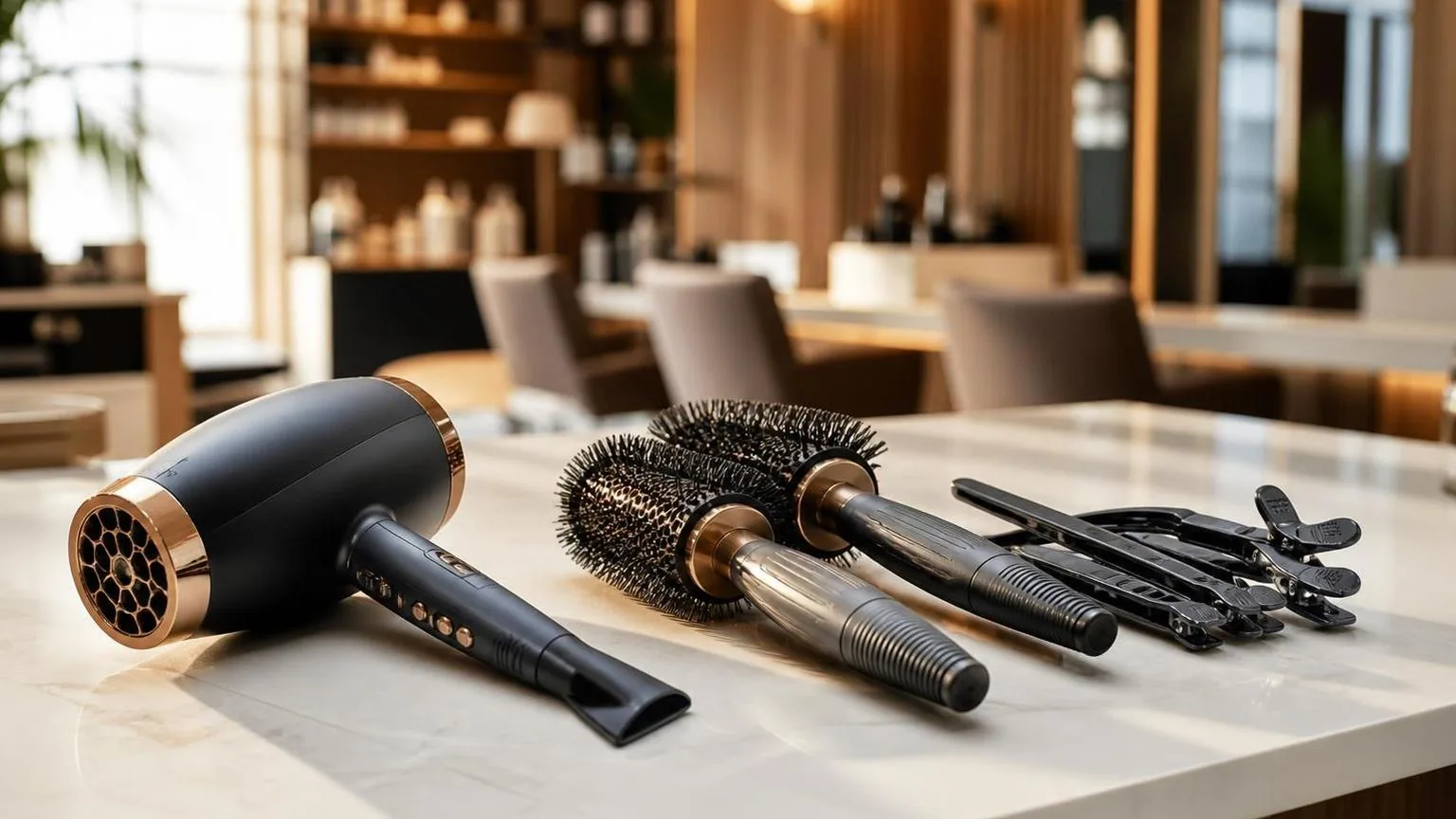
Ceramic changes the result by evening out heat across the plate, barrel, or dryer grille.
Tourmaline changes the finish by adding a mineral coating that can increase negative ion output, helping the cuticle lie flatter when the hair is dried with tension.
The practical difference is not “which is hotter.” It is how consistently heat reaches the hair, how much airflow is used, and how long each section stays under heat.
Heat delivery
Ceramic is valued in pro tools because it holds and distributes heat evenly. On a round brush, ceramic-coated barrels warm through the core, so the hair is heated from the dryer side and the brush side during a blowout.
Tourmaline is usually applied as a crushed mineral coating over ceramic, titanium, or another heated surface. When heated, it can contribute negative ions, which reduce static and help water droplets break down faster during drying.
| Feature | Ceramic | Tourmaline |
| Main job | Even heat spread | Smoother, lower-static finish |
| Best visual result | Polished bend, controlled volume | Glossy surface, less flyaway |
| Common build | Solid ceramic or ceramic coating | Tourmaline coating over another heat material |
| Salon caution | Coatings can wear | Ion effect depends on coating quality |
Temperature, section size, and contact time
Results shift quickly when sectioning is too thick. A ceramic or tourmaline tool cannot smooth hair evenly if heat only reaches the outside of the section.
| Hair texture | Blow-dry section width | Brush barrel | Typical heat range |
| Fine | 1 to 1.5 inches | 1.25 to 1.75 inches | 250 to 300°F |
| Medium | 1.5 to 2 inches | 1.75 to 2.25 inches | 300 to 350°F |
| Coarse | 1 to 1.5 inches | 1.5 to 2 inches | 350 to 400°F |
For a blowout, the best change often comes from timing rather than turning the tool up. Keep the nozzle moving, stretch the section with steady tension, then cool the shape before releasing it.
| Step | Working time | What it changes |
| Rough dry | Until hair feels about 80% dry | Reduces unnecessary brush heat |
| Brush pass | 6 to 10 seconds per section | Smooths and shapes the cuticle |
| Cool shot | 5 to 8 seconds | Sets bend and reduces collapse |
Airflow matters as much as the coating
A concentrator nozzle changes the finish more than many shoppers expect. Use a narrow nozzle, aim airflow from roots to ends, and keep the dryer about a hand’s width from the hair.
- Choose ceramic when the priority is predictable heat, round-brush volume, and controlled beveling.
- Choose tourmaline when the priority is a sleeker surface, less static, and faster polishing on frizz-prone finishes.
- Choose both if the tool uses a ceramic base with tourmaline coating and the coating quality is clearly stated by the manufacturer.
How to Judge It on Real Hair
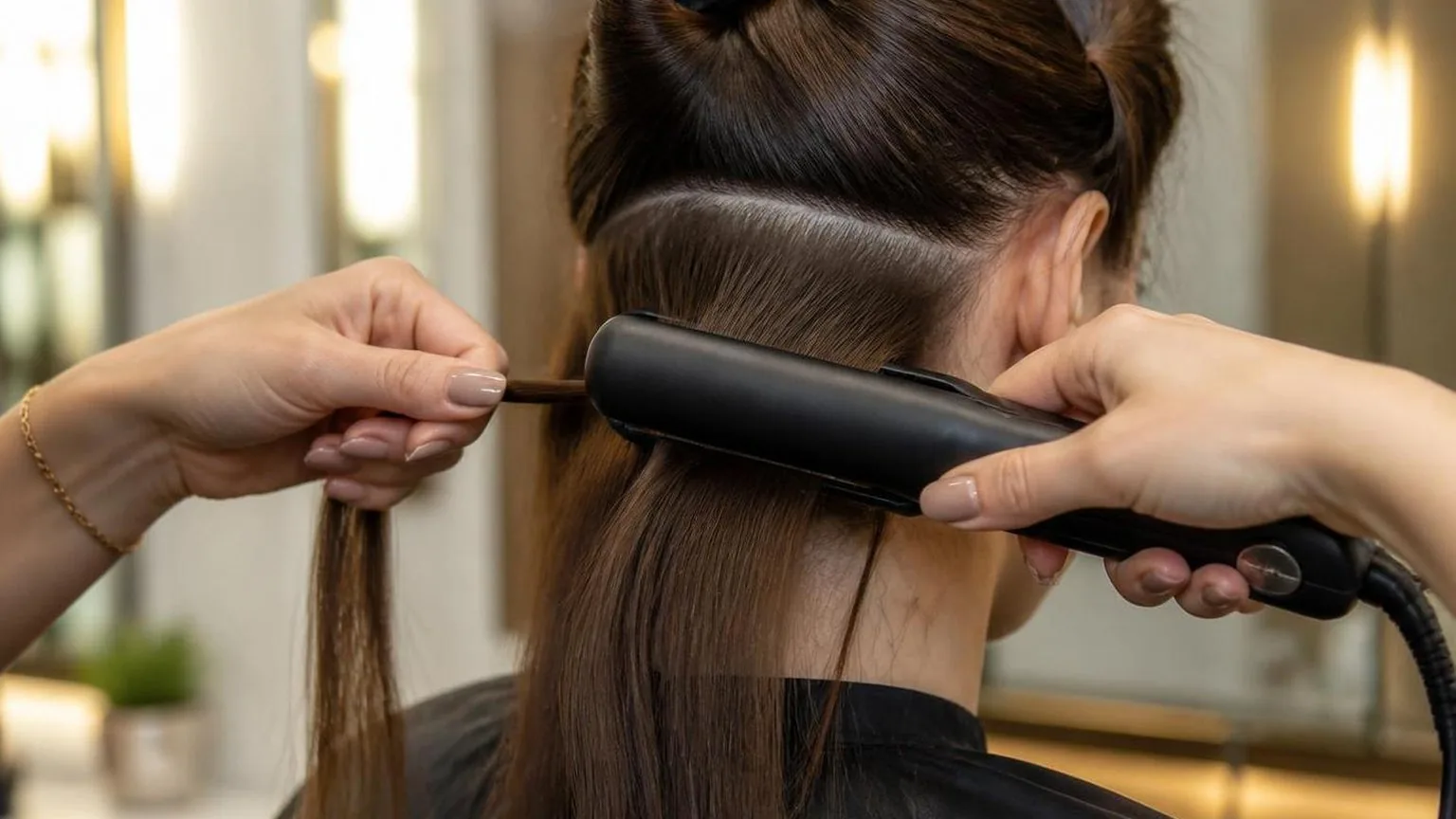
Judge ceramic or tourmaline by the finish it leaves on the same washed, towel-blotted section, not by the label on the barrel.
Ceramic should feel steady and even; tourmaline should show its value most on frizz-prone lengths that need a smoother surface.
Run the test on one head, using the same dryer, brush diameter, product load, tension, and section size. Change only the hot tool or attachment coating. If two variables move at once, the result is salon folklore, not a useful comparison.
| Test control | Use this number | Why it matters |
| Section width | 5 cm | Keeps airflow and brush contact consistent |
| Section depth | 1 cm | Prevents damp hair hiding inside the section |
| Nozzle distance | 3 cm from hair | Close enough to smooth, not so close it scorches |
| Brush angle | About 45 degrees from the head | Gives tension without creasing the root |
| Pass timing | 8 to 12 seconds per pass | Long enough to dry, short enough to avoid overworking |
For ceramic, watch temperature recovery. A good ceramic-coated barrel or plate should not feel grabby after touching damp hair. If the first pass is smooth but the second drags, the coating may be even, but the tool is losing heat too quickly.
For tourmaline, judge the surface after the cool shot. Tourmaline is used because the mineral can support negative ion output when heated, helping reduce static charge on the fibre surface.
In practice, the visible test is flyaway control at the crown and ends.
| Hair feel after cooling | What it suggests |
| Even bend, soft shine, no hot spots | Ceramic is doing its main job well: steady heat distribution |
| Smoother ends, fewer short flyaways, less puff | Tourmaline may be helping with static and surface polish |
| Flat root, shiny mid-length, dry-looking end | Heat or tension is too concentrated, regardless of coating |
| Steam, sizzling, or rough feel | Hair is too wet, section is too thick, or heat is too high |
Use conservative working temperatures. Fine or fragile-feeling hair usually needs less heat than dense, coarse hair. The aim is to set the shape as moisture leaves, not to keep reheating dry hair.
| Hair type | Starting tool temperature | Adjustment rule |
| Fine | 150 to 165°C | Increase only if the shape collapses after cooling |
| Medium | 165 to 185°C | Use steady tension before adding heat |
| Coarse or very dense | 185 to 200°C | Use smaller sections before going hotter |
After both sides cool for 60 seconds, compare in neutral light. Check root lift, mid-length sheen, end smoothness, and touch.
Clarence Robbins’ hair fibre work is a useful reminder: shine and smoothness come from surface alignment, moisture control, and controlled mechanical tension, not coating alone.
- Choose ceramic when your main problem is uneven heat, patchy drying, or sections that bend differently from root to end.
- Choose tourmaline when your main problem is static, halo frizz, or puff appearing after the blowout cools.
- Reject either one if it needs repeated passes on already-dry hair to look polished.
Set Against the Other Options
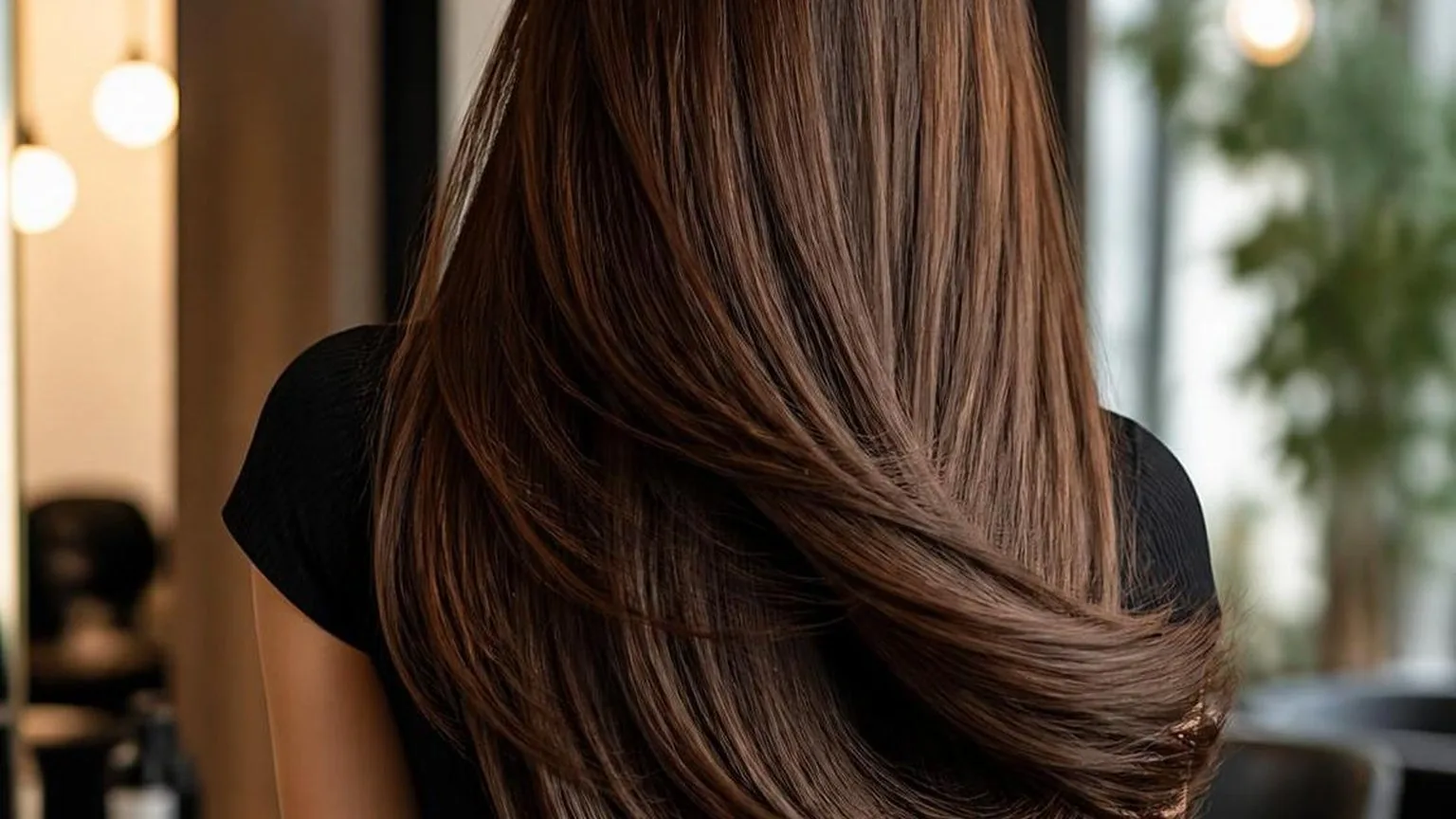
Ceramic is the steadier heat choice; tourmaline is the smoother, more static-controlled finish choice.
Against titanium, plain metal, and “ionic-only” tools, the difference is less about marketing and more about heat distribution, airflow discipline, and how fast the cuticle is dried flat.
In salon use, ceramic-coated heaters and barrels are forgiving because they buffer hot spots.
Tourmaline, a crystalline boron silicate mineral, is commonly crushed into coatings or grilles; when heated, it can support negative-ion output, helping reduce flyaway on dry, fine, or high-friction hair.
| Option | Best salon use | Practical difference |
| Ceramic | Daily blowouts, medium tension, mixed textures | More even heat feel; slower to spike than bare metal |
| Tourmaline | Polished finish, frizz-prone lengths, static control | Adds ion-focused smoothing when built into ceramic or dryer grilles |
| Titanium | Fast work on dense, resilient hair | Transfers heat quickly; less forgiving if held still |
| Plain metal | Low-cost tools, short styling windows | Can create sharper hot spots under poor technique |
| Ionic-only dryer | Speed drying with less puff | Ion effect without the same heat-buffering benefit as ceramic |
Material data supports the feel behind the chair.
Engineering references such as MatWeb list alumina ceramic far below aluminium for thermal conductivity, which helps explain why ceramic-coated surfaces tend to feel gentler and more controlled than exposed metal.
| Material | Typical thermal conductivity | What stylists feel |
| Aluminium | About 205 W/m·K | Fast heat transfer, fast hot-spot formation |
| Titanium | About 22 W/m·K | Quick, direct heat with strong surface response |
| Alumina ceramic | About 20 to 30 W/m·K | More buffered, even-feeling surface heat |
For blow-dry bars, the real comparison is workflow. Ceramic suits repeat appointments because assistants can rough-dry safely before stylists refine.
Tourmaline is valuable at the finish station, especially with a concentrator nozzle and a round brush used with clean downward airflow.
| Technique setting | Ceramic advantage | Tourmaline advantage |
| Nozzle distance | Works well at 2 to 5 cm from the brush | Best kept close enough to direct ions and airflow cleanly |
| Section width | 5 to 8 cm sections stay manageable | 3 to 5 cm sections show the smoothest finish |
| Cool-shot timing | 5 to 10 seconds locks shape after heat | 5 to 10 seconds reduces rebound and flyaway |
| Brush barrel | 33 to 53 mm covers most blowout work | 43 to 53 mm gives the glossiest, stretched finish |
Choose ceramic if your priority is consistent heat, staff training, and lower risk of overworking one patch. Choose tourmaline if the service promise is gloss, smoothness, and reduced static.
The strongest professional setup is often ceramic-tourmaline together, not one material alone.
Heat and Tension Without the Damage
Ceramic and tourmaline are not “safer” by themselves; hair stays intact when heat is even, tension is controlled, and the section is dried before repeated passes.
Ceramic helps steady heat delivery, while tourmaline is valued for a smoother glide and negative-ion output in many dryer components.
In chair work, the bigger risk is stacking heat, stretch and time on the same strand.
Robbins’ Chemical and Physical Behavior of Human Hair describes wet hair as more stretchable than dry hair, so aggressive brushing during the wettest phase is where avoidable stress often begins.
| Stage | Moisture feel | Tool choice | Tension target |
| Rough dry | Dripping to damp | Hands or vent brush | Low pull, lift at roots |
| Shape | Damp, not wet | Ceramic or tourmaline round brush | Firm, steady, no yanking |
| Polish | Almost dry | Nozzle and brush alignment | Light tension, quick pass |
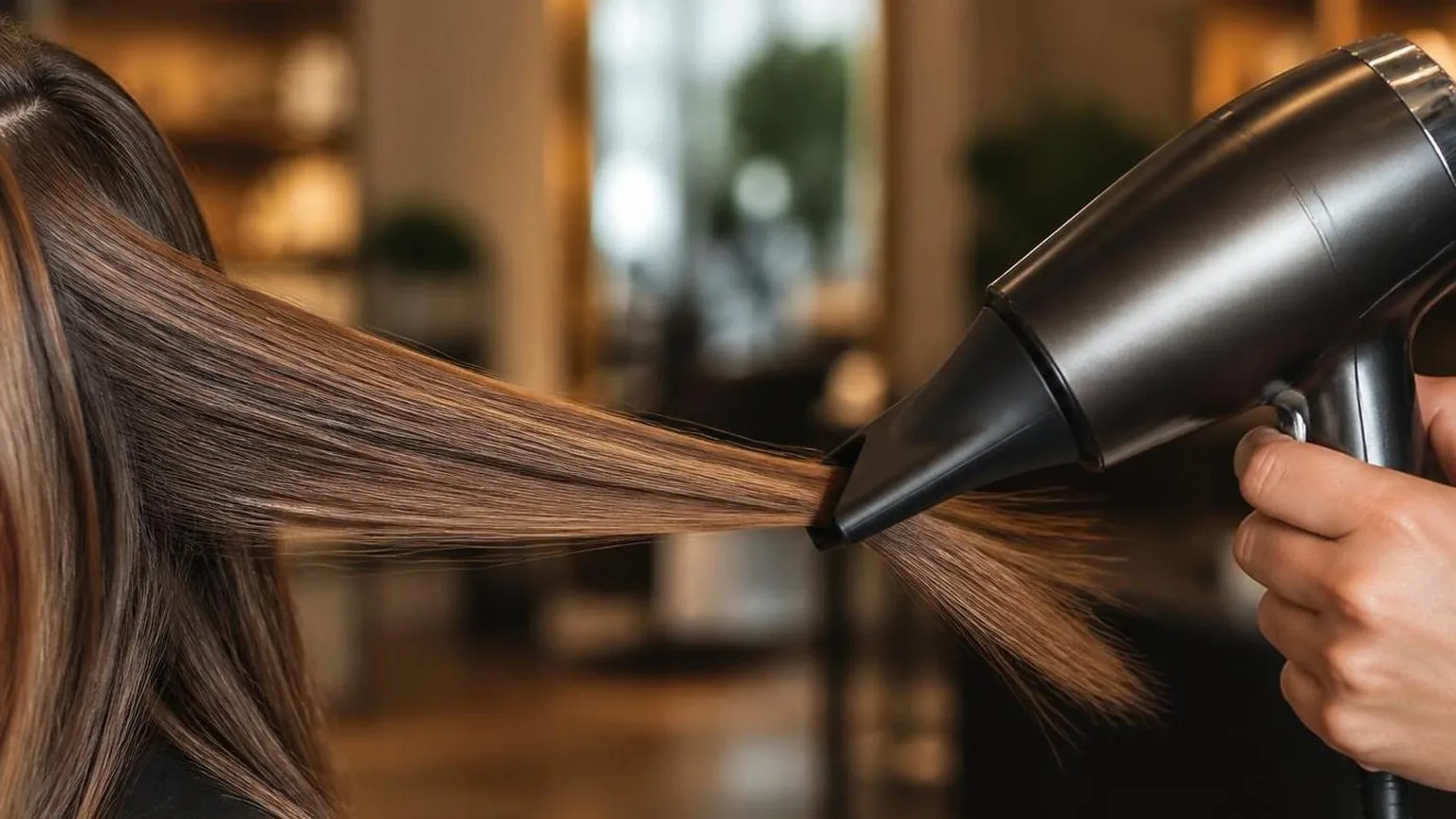
Keep the dryer nozzle moving with the airflow pointed from roots to ends. Holding heat still on one area creates a hot spot, even if the dryer uses ceramic-coated parts or a tourmaline-infused grille.
| Control point | Practical salon range | Why it matters |
| Nozzle distance | 15 to 20 cm from hair | Reduces concentrated heat on one section |
| Section width | 2.5 to 5 cm | Lets air reach the full subsection |
| Round brush barrel | 25 to 53 mm | Smaller barrels bend, larger barrels smooth |
| Pass time | 3 to 8 seconds per movement | Encourages drying without stalling |
Ceramic tools suit operators who want consistent heat across the surface. That consistency is useful when working dense sections, because the stylist can rely on even warming rather than pressing harder to get a result.
Tourmaline is usually chosen for finish. In dryers and brushes, crushed tourmaline is marketed for negative-ion output, which can help water disperse faster on the hair surface and reduce the feel of drag during smoothing.
| Hair feel during blow-dry | Better control move | Tool note |
| Snagging on the brush | Lower tension and take a narrower section | Tourmaline-coated barrels may glide more smoothly |
| Puffy mid-lengths | Use a concentrator and downward airflow | Ceramic heat stability helps repeated styling rhythm |
| Ends drying first | Move heat back to roots and mids | Avoid overworking the last 2 to 4 cm |
- Dry before you stretch: detangle first, then add brush tension only once the section is damp rather than wet.
- Use the nozzle: a concentrator narrows airflow, so less heat is wasted around the section.
- Release before cooling: hold the shape briefly, then unwind without pulling through the ends.
- Stop when dry: extra passes add friction and heat without improving structure.
What the Method Actually Changes
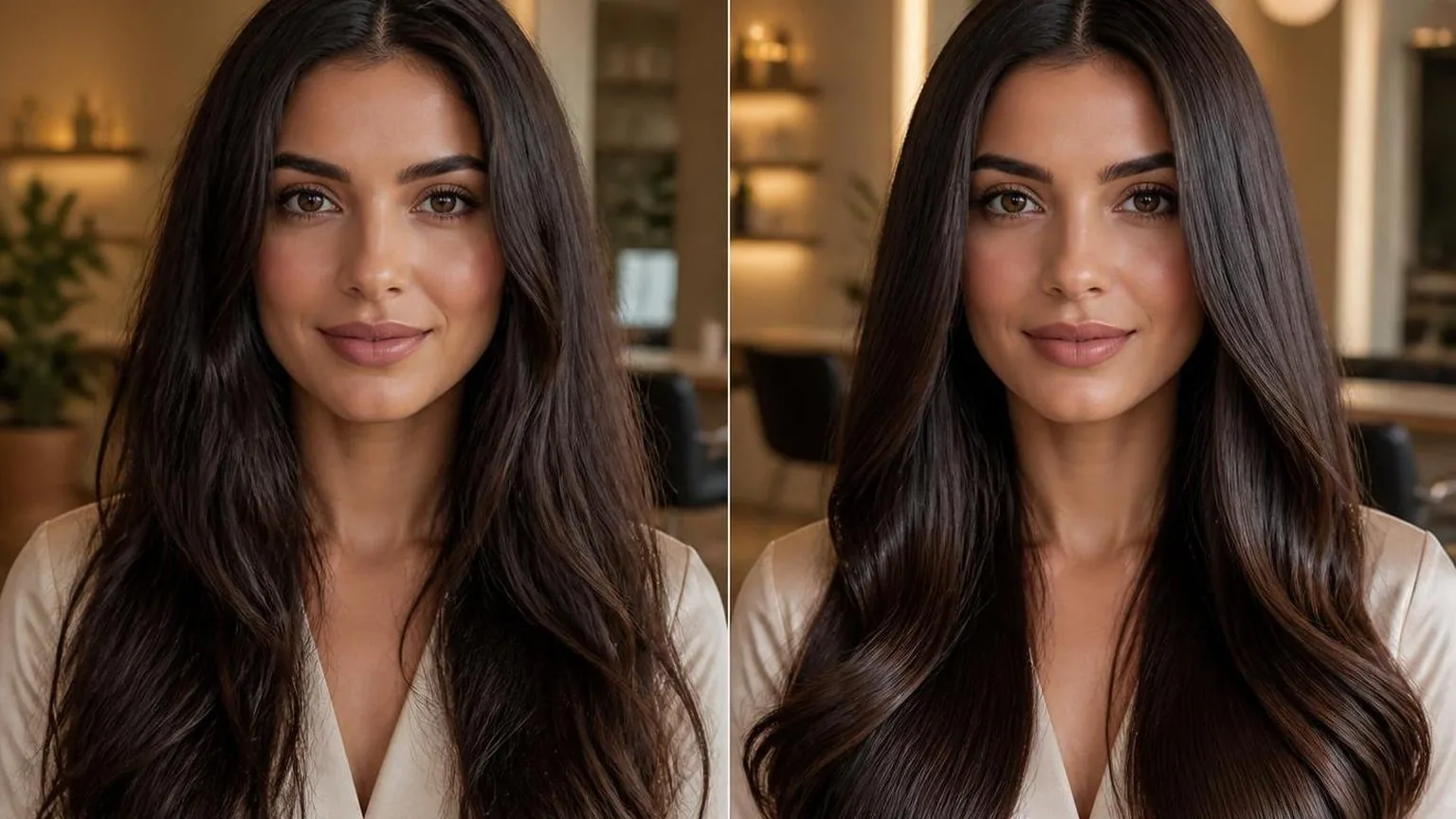
Ceramic changes the way heat is delivered; tourmaline changes the way charged airflow behaves around wet fibre. The finish depends less on the label and more on distance, section thickness, airflow direction, and when tension is applied.
A ceramic-coated grille or barrel buffers heat spikes, so the surface receives steadier warmth.
Tourmaline, usually ground into a coating, is used for its ability to support negative ion output when heated, which can reduce static and help the surface lie flatter.
| Variable | Working range | What changes in the finish |
| Nozzle distance | 5-10 cm from hair | Closer placement raises surface temperature and sets the outer cuticle faster, sometimes before the root area is fully dry. |
| Section width | 2-5 cm per pass | Narrower sections let airflow reach the underside, reducing damp pockets that later swell and lose polish. |
| Section depth | 1-2 cm thick | Thicker panels trap moisture in the centre, so the outside looks smooth while the interior keeps expanding. |
| Air direction | Root to end | Downward airflow presses cuticle edges in the same direction, increasing light reflection and reducing roughness. |
| Brush dwell | 3-6 seconds per rotation | Short dwell leaves water inside the section; long dwell overheats the surface before the shape is fixed. |
With ceramic heat, the advantage is control. A round brush held under a 2 cm section can warm the panel evenly while the nozzle follows from roots to ends. This gives tension time to stretch the fibre before the outside dries rigid.
With tourmaline-assisted airflow, the advantage is surface behaviour. Charged airflow can reduce flyaway caused by static friction between fibres, especially near the ends.
The result is not extra straightening force; it is a calmer surface when the section is already properly dried.
- For lift: the brush must be placed at the root before the mid-length is polished. If the nozzle sits too close to the ends first, the length sets flat and root elevation collapses.
- For smoothness: the nozzle should track the brush, not lead it. Air arriving ahead of tension roughens the surface because the fibre dries before it is aligned.
- For curl under: the final 5 cm of hair needs the longest controlled dwell. The ends cool in the brush shape, so release timing changes bend retention.
- For speed: rough-drying to about 70-80% dry before brush work leaves enough moisture for reshaping without forcing the brush to act as a towel.
Ceramic is most noticeable when heat steadiness matters: dense sections, coarse texture, or slow brush work. Tourmaline is most noticeable when static and flyaway are the problem, particularly on fine ends and layered perimeters.
The method decides the outcome. Holding the nozzle 5 cm closer raises surface temperature; increasing section depth to 3 cm slows internal drying; changing airflow from downward to sideways lifts cuticle edges.
Material helps, but geometry and timing do the visible work.
Myths That Keep Going Round
Most mistakes come from treating “ceramic” and “tourmaline” as quality grades, when they are material choices with different jobs.
Ceramic mainly supports even heat transfer; tourmaline is usually added to help reduce static and smooth the finish.
The right choice depends more on heat control, airflow, section size, and technique than the word printed on the handle. In salon testing, a steady medium setting often outperforms a hotter tool used too close to the hair.
Myth: Tourmaline is always better than ceramic
Tourmaline is commonly ground into coatings or components, not used as the whole hot surface. It can help with slip and static reduction, but it does not guarantee better temperature stability, faster drying, or less mechanical stress.
For blow-dry bars, ceramic heating elements are valued because they distribute heat evenly across the airstream. Tourmaline is useful when the goal is a polished finish on hair that expands or frizzes during the final pass.
| Feature | Ceramic | Tourmaline |
| Main role | Even heat delivery | Static control and smooth finish |
| Best use | Consistent rough-dry and round-brush work | Finishing passes and high-shine styling |
| Common form | Heater, coating, barrel, or plate | Crushed mineral blended into coating or grille |
Myth: Ceramic means the tool cannot overheat hair
Ceramic does not make heat harmless. It can still run too hot if the thermostat is poor, the nozzle is held too close, or the stylist pauses on one section for too long.
| Use point | Practical salon target |
| Dryer nozzle distance | 15 cm from the hair for general drying |
| Concentrator opening | 6 to 9 mm for controlled tension work |
| Round-brush section width | No wider than the brush barrel |
| Finishing pass time | 3 to 5 seconds per section |
| Cool-shot set time | 5 to 10 seconds before releasing the brush |
Myth: Higher heat gives a better blowout
Higher heat can remove water faster, but it also shortens working time and makes over-drying more likely. The professional finish usually comes from tension, directional airflow, and cooling the shape before the section is dropped.
| Hair feel during styling | Better heat choice |
| Fine or fragile-feeling lengths | Low to medium heat with high airflow |
| Medium density hair | Medium heat with controlled tension |
| Coarse or very dense sections | Medium-high heat, smaller sections |
Myth: Negative ions repair damage
Ion technology can help reduce visible static and speed water droplet breakup, as described in cosmetic science texts on grooming appliances.
It does not rebuild the fibre or replace careful brush tension, clean sectioning, and an intact cuticle surface.
- Mistake: buying by buzzword instead of checking heat settings, nozzle fit, filter access, and weight.
- Mistake: using a tourmaline tool without enough airflow; polish needs movement as well as heat.
- Mistake: assuming ceramic coating equals solid ceramic; coatings can wear, chip, or expose a different base material.
- Mistake: skipping the cool shot; the finish softens quickly if the section is released while still hot.
Frequently Asked Questions
Is ceramic or tourmaline better for a smooth blowout?
Ceramic is the safer default for controlled, even heat across the airflow path or brush barrel. Tourmaline can add more negative ions, which helps reduce static when hair is 80–90% dry and you finish with 2-inch sections under firm tension.
When should a salon choose ceramic tools over tourmaline?
Choose ceramic when consistency matters across back-to-back services.
A ceramic-coated round brush or dryer grille helps soften heat spikes, useful when working at 160–190°F on medium-density hair with each section heated for about 10–15 seconds.
When is tourmaline the better choice?
Tourmaline suits frizz-prone finishes, high-polish straight blowouts, and clients who react badly to static. Use it on smaller 1–1.5 inch sections, then cool each section for 5–10 seconds before releasing the brush to lock in shape.
Can ceramic and tourmaline be used together?
Yes. Many professional tools combine a ceramic heat surface with tourmaline particles to balance even heat and static control.
For a salon finish, rough-dry to about 70% first, then finish with a 1.75–2.5 inch round brush depending on desired bend.
Which lasts longer in daily salon use?
Solid ceramic components usually tolerate heavy service better than thin coatings, while tourmaline performance depends on how it is embedded in the tool.
Inspect plates, barrels, and grilles weekly; chips, hot spots, or drag on the hair are signs to retire the tool.
How do ceramic and tourmaline hair dryers affect heat distribution?
Ceramic hair dryers are valued for steady, even heat that helps reduce hot spots. Tourmaline dryers also provide even heat, while adding negative ions that can help the hair surface look smoother.
Are tourmaline hair dryers suitable for fine hair?
Tourmaline hair dryers can be used on fine hair, but lower heat and airflow settings are important. Fine hair can dry quickly, so too much heat or tension may cause dryness or flatness.
Related Reading
- What a diffuser does that a concentrator cannot
- Hair dryer wattage, and why more is not better
- How long a hair dryer lasts, and what shortens it
- Cleaning a dryer filter, and how often it needs it
- Boar, nylon or mixed: choosing round brush bristles
- Ionic or ceramic: what the labels actually mean
- What a paddle brush is actually for
- How long a dryer can run before it needs a rest
- The complete guide to blow dry tools