
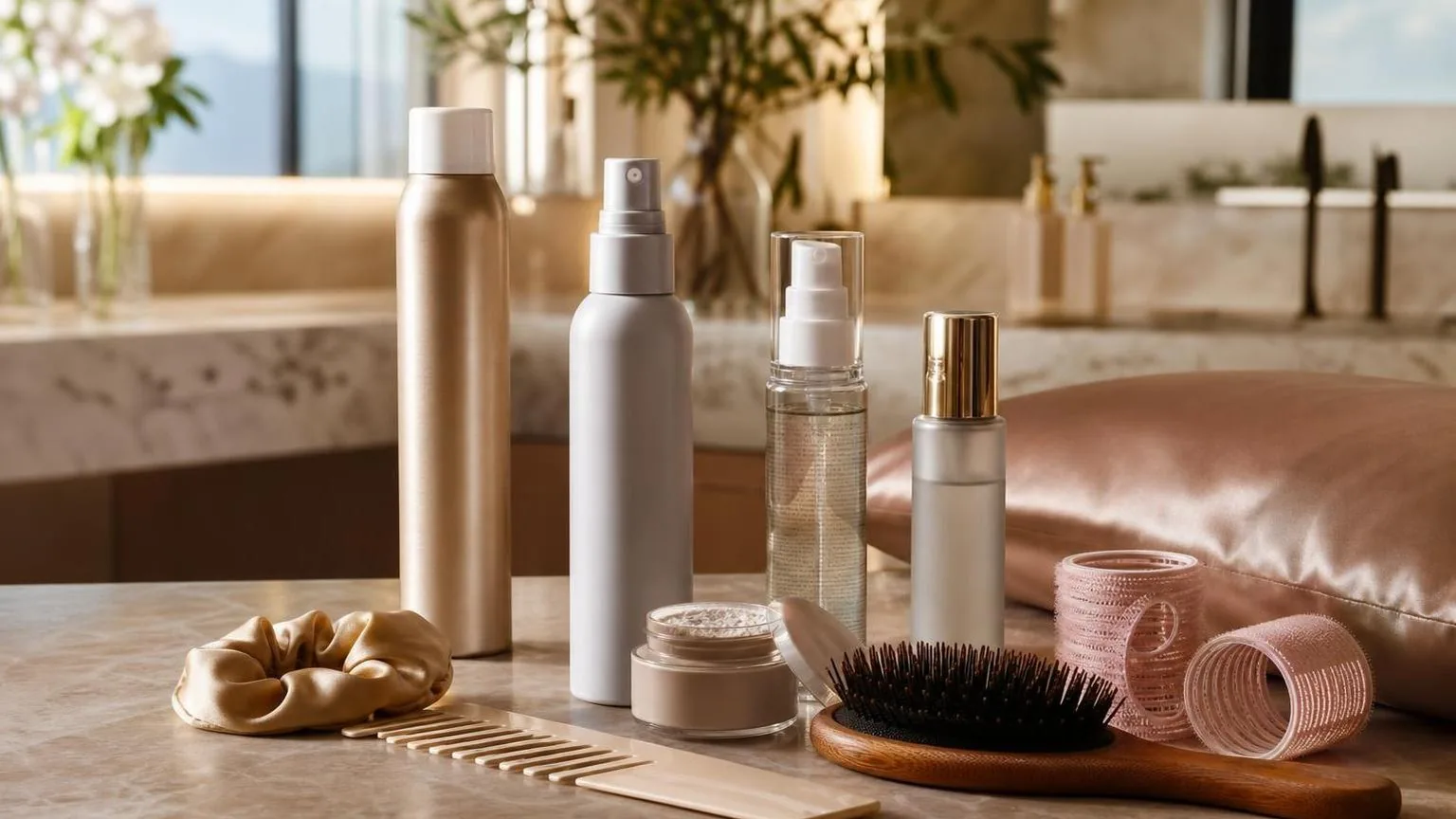
How to make a blowout last past day two: cool every section fully, keep roots dry, and refresh with 10-second tension passes at medium heat, not a full re-blow.
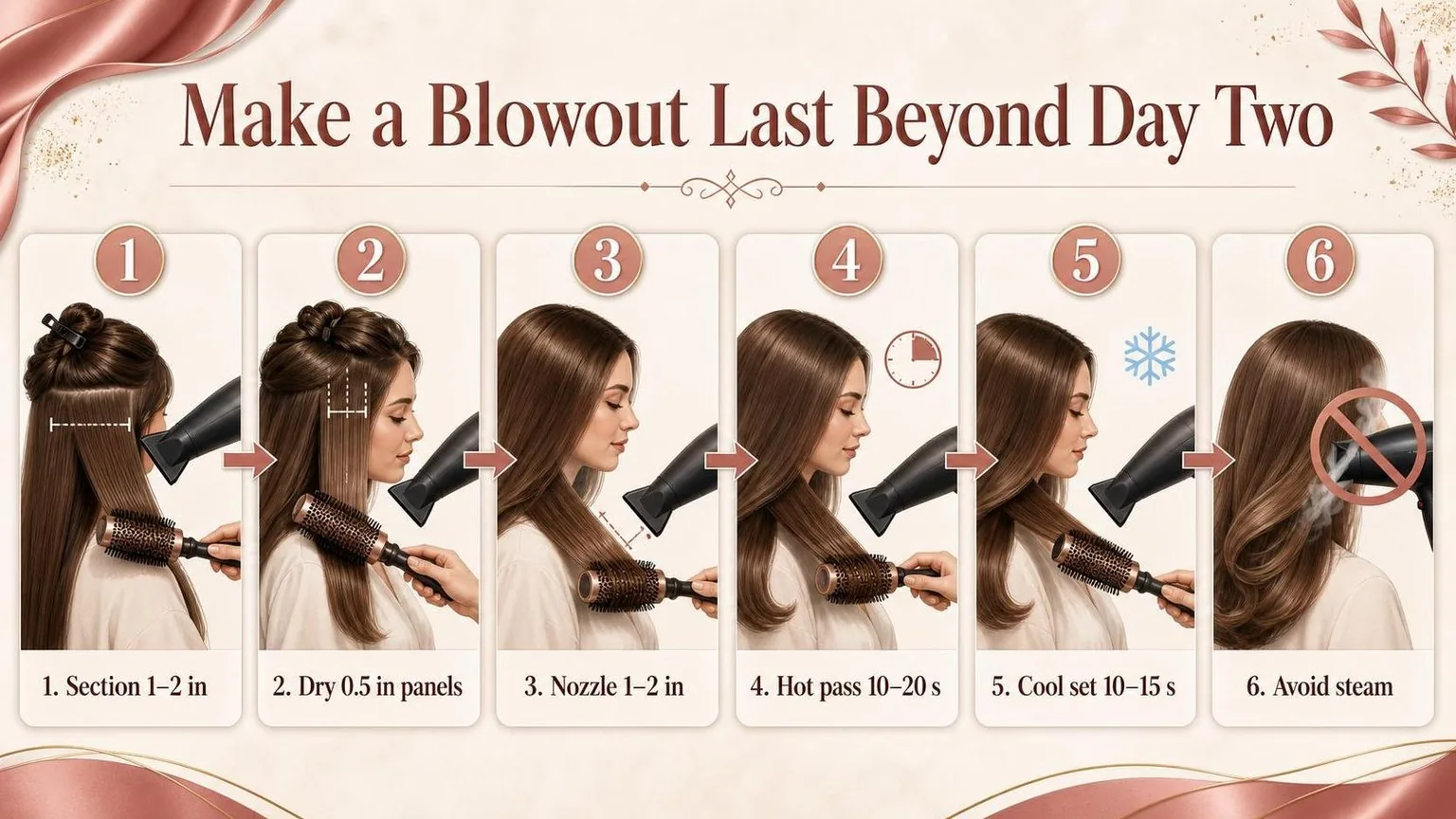
A lasting finish starts before you leave the chair: 90% dry pre-dry, 1-inch sections, firm brush tension, and a cool shot until the strand feels room-temperature.
From there, sleep with height at the crown, absorb oil before it spreads, and use heat only where shape has collapsed. The goal is controlled reactivation, not rebuilding the entire blowout.
Build Your Day-Two Plan
Use this quick check before the client leaves, or before you go to bed with your own blowout. The aim is to decide where to protect, where to absorb oil, and where to refresh with heat.
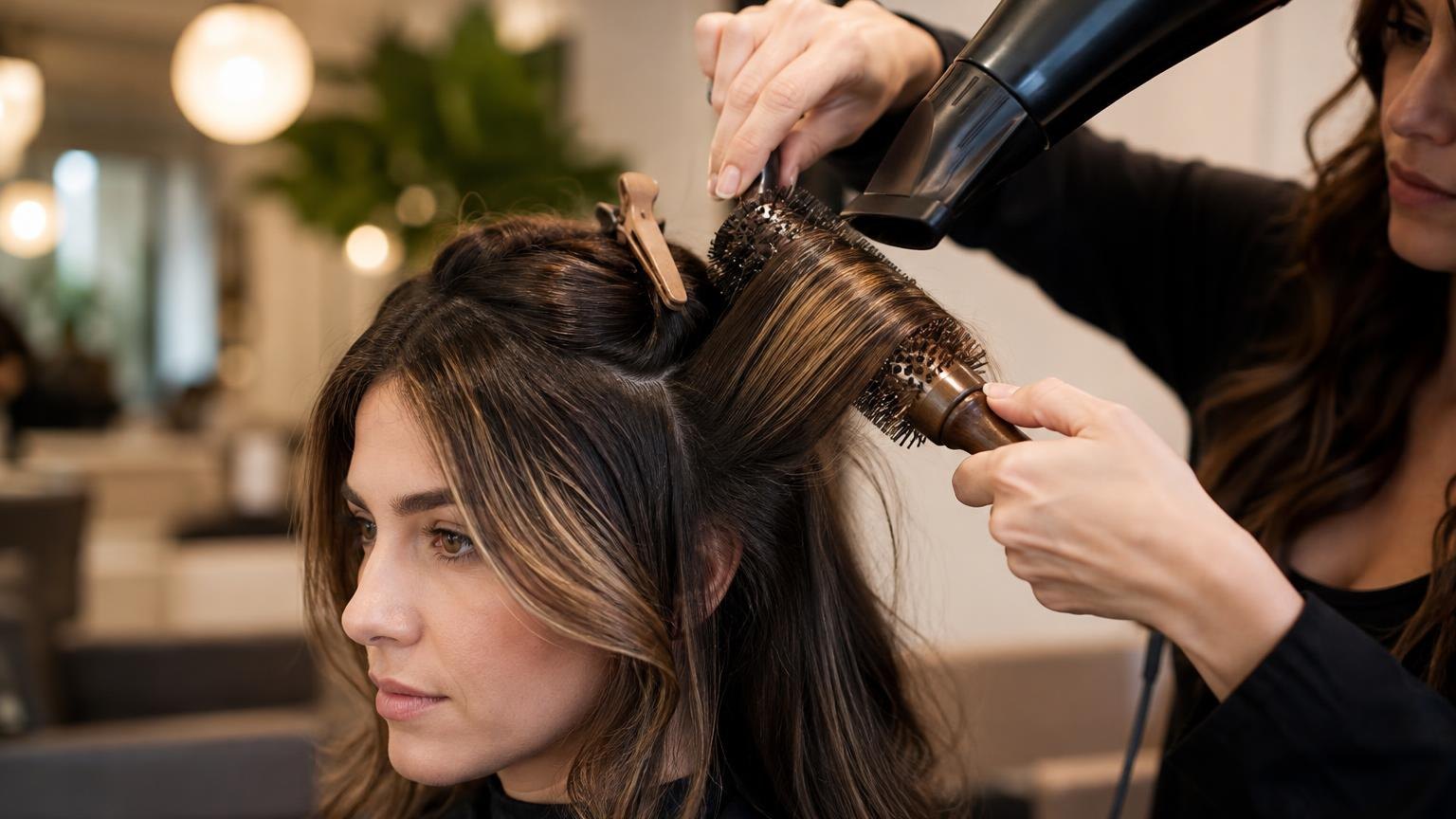
- Mark the weak zones. Note the first areas to collapse: fringe, crown, temples, nape, or face frame. These are the only sections that need morning heat. Keep the rest untouched.
- Set the night shape. If the crown drops first, clip a loose topknot high on the head. If ends flip, use one large loose loop instead. Avoid tight elastics and flat clips.
- Pre-treat oil early. Apply dry shampoo before shine appears, not after. Use 2–3 short sprays at the root, 6–8 inches away, then wait 30 seconds before massaging.
- Refresh in small panels. In the morning, mist roots only. Take 1-inch sections in weak zones and use a round brush with medium heat for 20–30 seconds.
- Lock before moving on. Hit each section with cool air until it feels room-temperature. Then leave it alone for 10 seconds before touching or styling into place.
If more than one-third of the head needs heat, the original finish was not set firmly enough. Next service, use smaller sections, stronger brush tension, and longer cooling before the client leaves the chair.
What the Data Shows
A blowout survives past day two when the hair is fully dried, cooled in shape, and kept away from moisture. The useful numbers are not glamorous: airflow, section size, heat, humidity, and how long each bend is allowed to set.
Hair shape is held largely by temporary hydrogen bonds, which reset with water and heat, as described in Robbins’ hair-fibre text and standard cosmetic science references.
That is why a beautiful finish collapses fastest in damp air, steam, sweat, or an under-dried root area.
| Control point | Professional target | Why it matters |
| Section width | 1 to 2 inches | Smaller panels dry through before the surface over-polishes. |
| Section thickness | About 0.5 inch | Thick sections can feel smooth outside while staying damp inside. |
| Nozzle gap | 1 to 2 inches from the brush | Close enough for tension and direction, not pressed into the hair. |
| Root drying | Fully dry before mid-length polishing | Damp roots are the common reason volume drops early. |
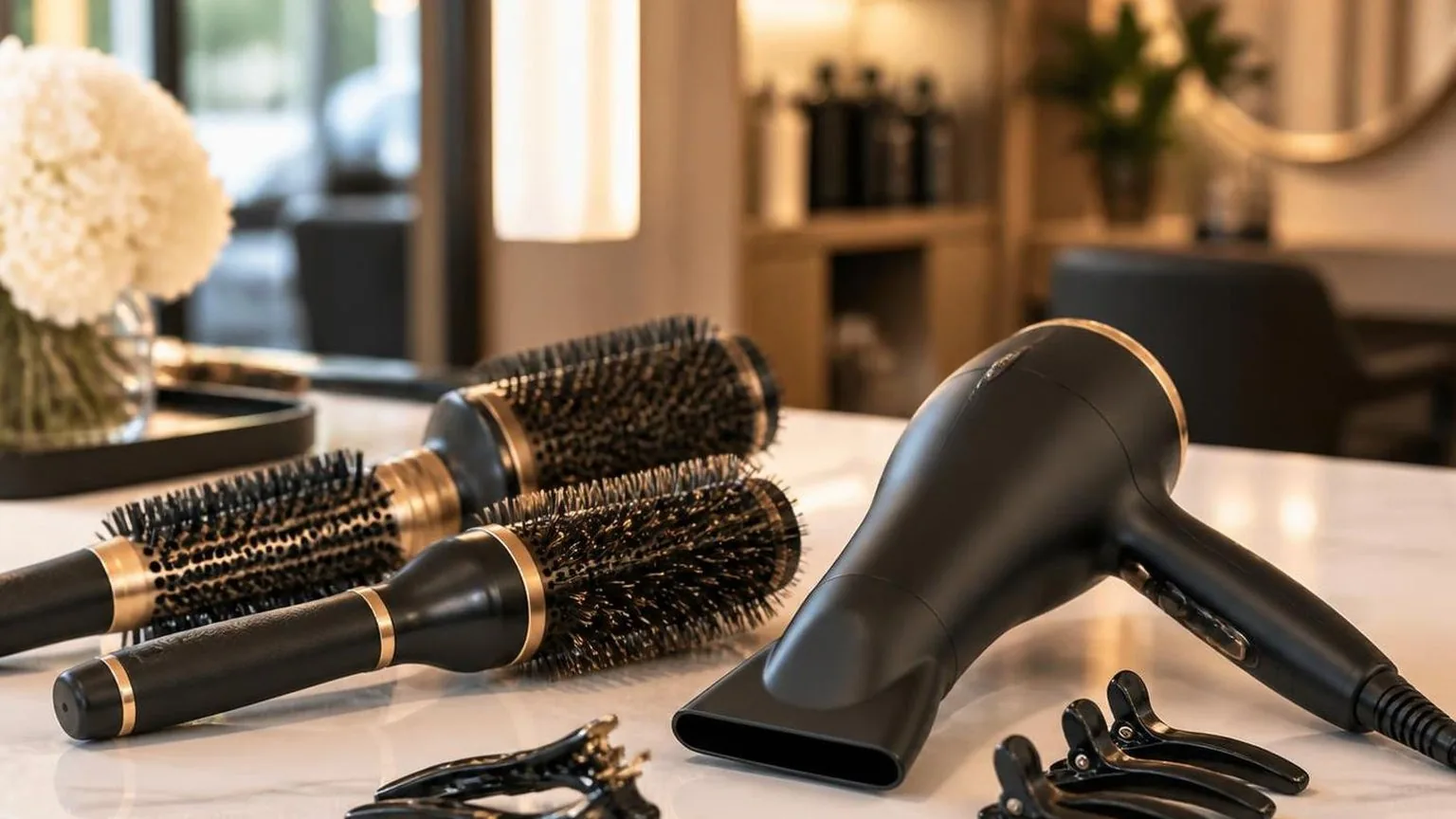
For a salon finish, the round brush is not just a styling prop. It is a setting tool. The hair should leave the brush warm, then stay in its curved shape until it feels cool to the fingers.
| Step | Working number | Trade note |
| Brush diameter for volume | 1.75 to 2.5 inches | Best for lift, bevel, and movement on most shoulder-length finishes. |
| Brush diameter for smoother bend | 2.5 to 3 inches | Useful when the goal is polish more than curl memory. |
| Hot pass per section | 10 to 20 seconds | Use steady tension rather than repeated scorching passes. |
| Cool set per section | 10 to 15 seconds | The finish lasts longer when the bend cools before release. |
Heat should be high enough to evaporate water efficiently, but not used as a substitute for sectioning.
Many professional dryers measure air temperature at the outlet, while hair temperature varies with distance, airflow, moisture load, and brush contact.
| Situation | Useful setting | Longevity cue |
| Wet rough-dry phase | Medium to high airflow | Stop before the hair becomes fluffy or directionless. |
| Brush styling phase | Medium heat with controlled airflow | Keeps cuticle alignment smoother than blasting the section. |
| Final set | Cool shot for 10 to 15 seconds | Locks the brush shape before the next section disturbs it. |
Humidity is the real opponent after the appointment. Cosmetic science texts consistently show that hair fibres absorb water from humid air, and that absorbed water weakens temporary styling bonds.
This is why shower steam can undo careful round-brush work faster than sleeping on it.
| Aftercare number | Practical target | Why it helps |
| Post-blowout steam exposure | Keep as close to zero as possible | Steam reintroduces water to the set fibre. |
| Dry shampoo timing | Before visible oil collapse | Prevention keeps roots separated longer than rescue application. |
| Sleep protection | Loose high tie or soft wrap | Reduces friction and root compression overnight. |
The Variables That Matter
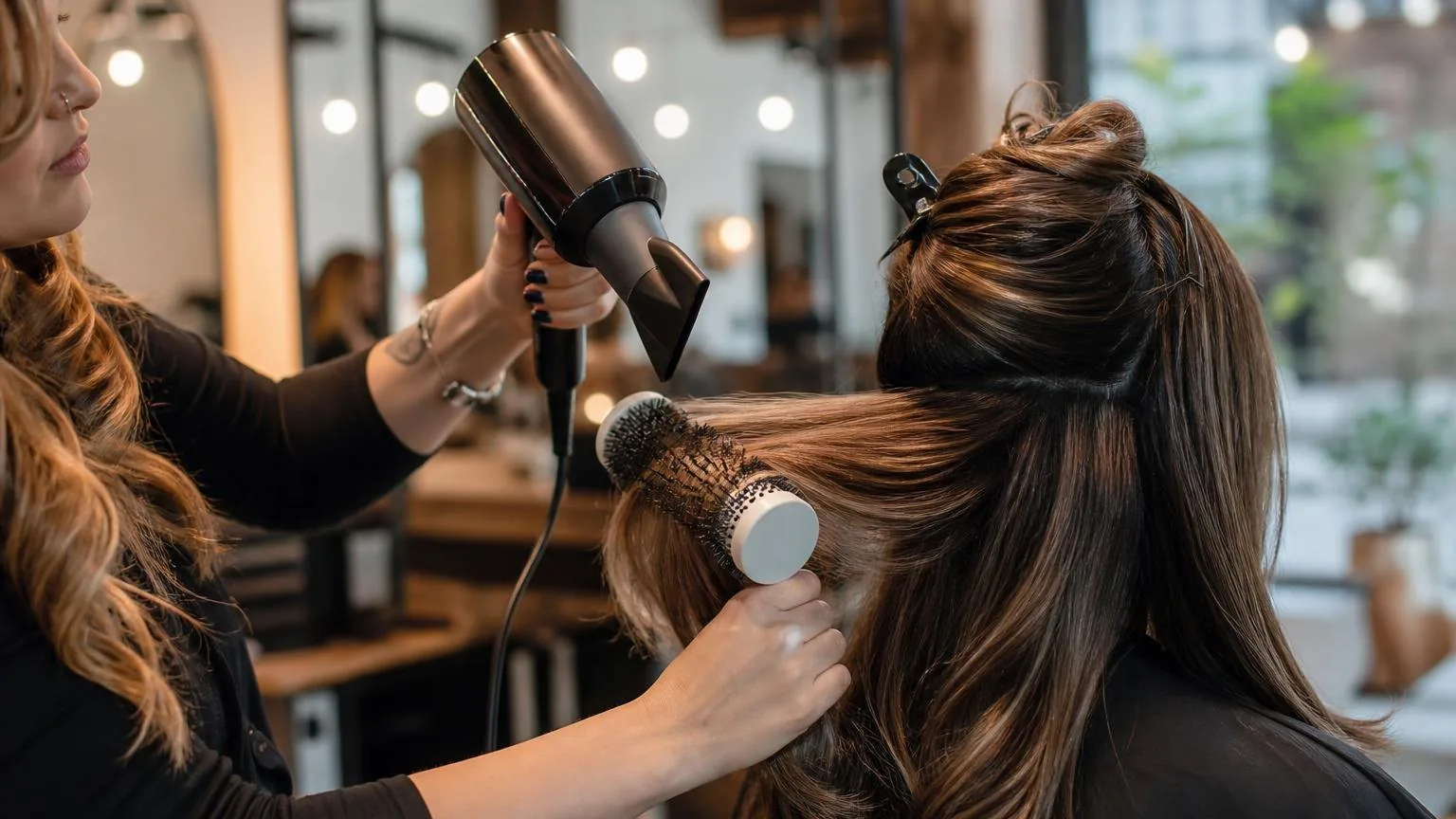
Longevity changes most with moisture control, root direction, product weight, and how completely the hair cools before you leave it. A day-two-plus blowout is built in the first 20 minutes, not rescued with more product later.
Hair holds its temporary shape through hydrogen bonds, which reset when hair is wetted or heated, then fixed as it cools and dries. That is why a glossy finish collapses faster if the roots are even slightly damp.
Moisture left at the root
Roots need the most drying time because they sit close to the scalp and are easy to miss. In the salon, I check the crown, nape, and front hairline by touch before round-brushing the ends.
| Area | What to check | Practical target |
| Crown | Warm, dense section | Dry in sections about 1 inch wide |
| Nape | Hidden moisture | Lift hair and dry roots for 20 to 30 seconds |
| Hairline | Sweat and humidity exposure | Over-direct with nozzle for 10 to 15 seconds |
Heat, tension, and cooling
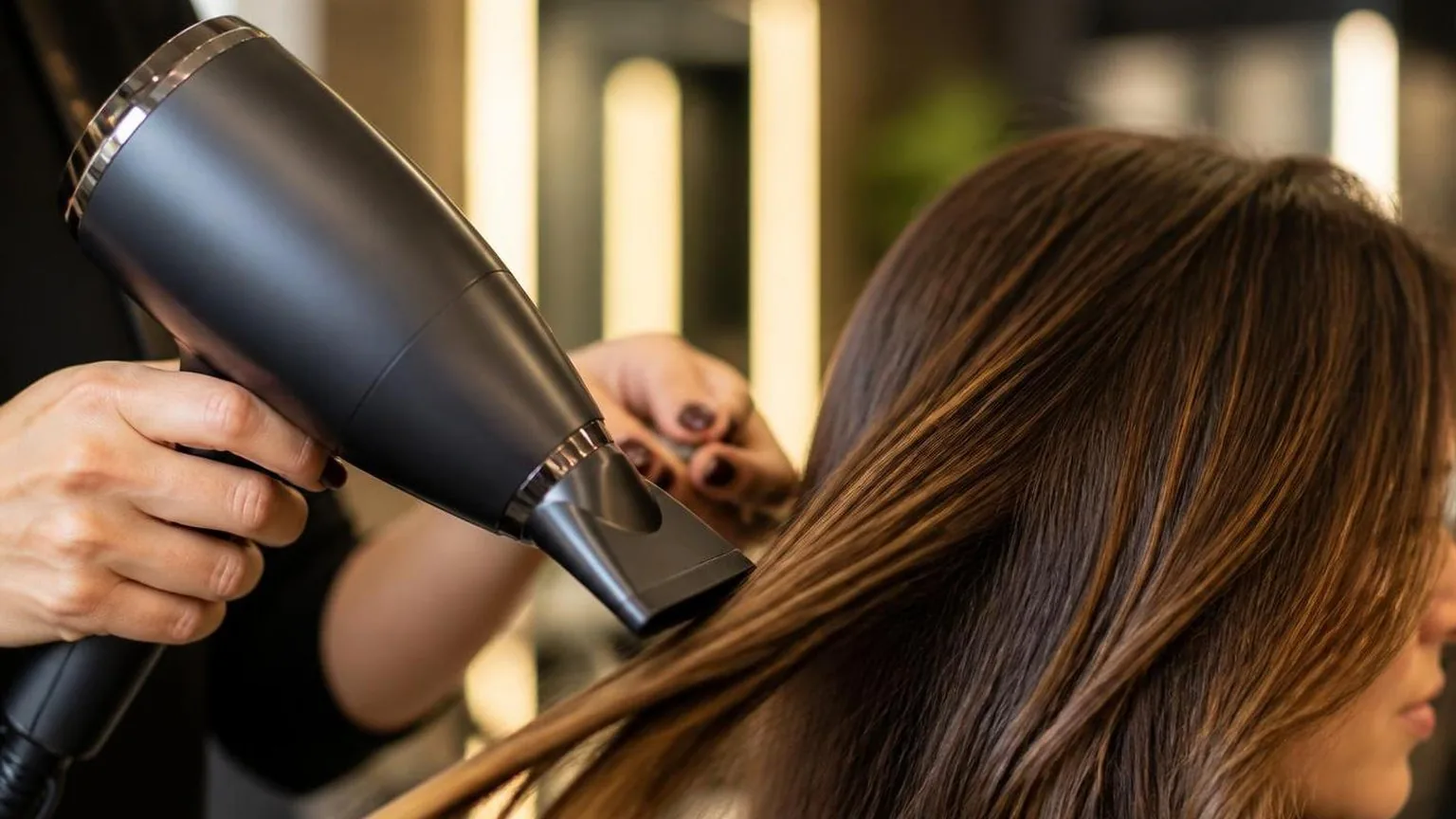
For most professional blowouts, the nozzle should follow the brush, pointing down the hair shaft, with continuous movement. Holding hot air still on one spot gives less control and more frizz than steady tension.
| Hair feel | Brush size | Air setting | Cooling time |
| Fine or limp | 1.25 to 1.75 inches | Medium heat, high airflow | 10 seconds per section |
| Medium density | 1.75 to 2.25 inches | Medium to high heat | 10 to 15 seconds per section |
| Thick or coarse | 2 to 2.5 inches | High heat, high airflow | 15 seconds per section |
Use the cool shot while the hair is still wrapped on the brush. Releasing the brush before the section cools is one of the quickest ways to lose bend by the next morning.
Product weight and placement
Product should support the shape without coating the root. I keep oils and creams below ear level unless the hair is very dense, then finish with the smallest amount through the last 3 inches.
- Mousse: best at the roots, about a golf-ball amount for shoulder-length hair.
- Volumizing spray: apply in 4 to 6 partings, focused at the crown and hairline.
- Serum or oil: start with 1 pump, rubbed between palms, only through mids and ends.
- Hairspray: mist from 8 to 12 inches away so the surface stays touchable.
What happens overnight
Cotton, friction, and compression flatten the cuticle and crush root lift. A loose topknot or 2 large pin curls at the crown preserves bend better than sleeping with hair loose.
| Night method | Best for | Risk |
| Loose topknot | Long layers, soft waves | Can dent fine hair if tied tightly |
| 2 to 4 pin curls | Face-framing volume | Takes 2 minutes to set |
| Silk or satin pillowcase | All blowouts | Does not replace root drying |
Checking It at the Chair
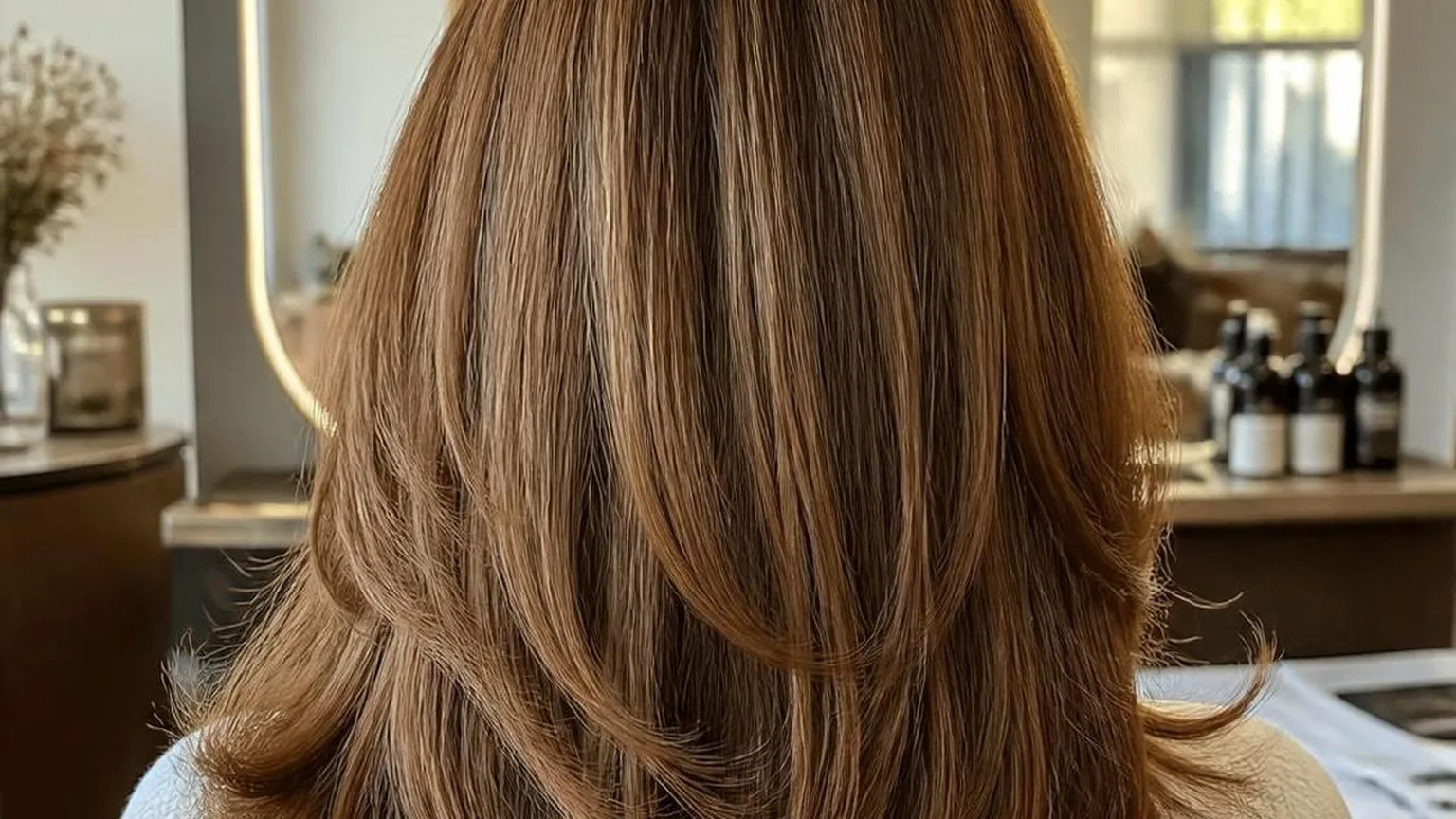
A blowout is lasting past the second day if the root area still has lift, the mid-lengths still fall in the original direction, and the ends still turn under or away without re-shaping.
Judge it by touch, sight, and response to a cool brush pass, not by shine alone.
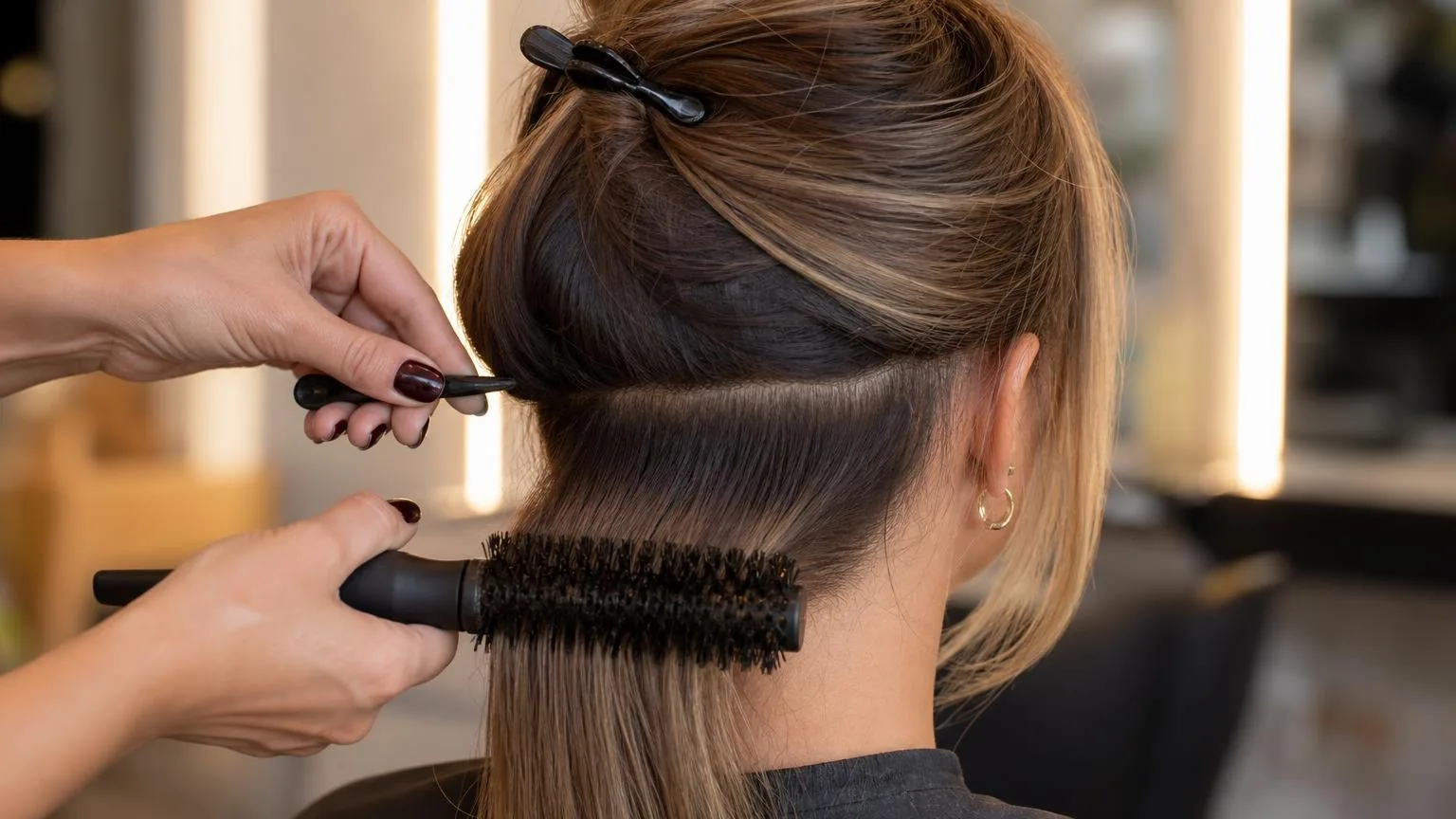
Start at the crown, because it collapses first on most clients. Place the pads of your fingers under the top section and lift straight up. If the hair separates cleanly and springs back softly, the set is still alive.
| Check point | Pass sign | Fail sign |
| Crown lift | Root area rises about 1 to 2 cm when lifted | Hair lies flat again within 10 seconds |
| Part line | Part looks soft, not shiny or separated | Part shows oily gaps wider than 3 mm |
| Ends | Bevel still holds through the lower 5 to 8 cm | Ends kick in mixed directions |
| Face frame | Front pieces still sweep away from the face | Hair drops forward within 30 seconds |
Do not over-read frizz at the surface. A light halo can happen when hydrogen-bond styling meets moisture in the air.
Robbins, in Chemical and Physical Behavior of Human Hair, explains that water changes temporary hair shape by disrupting hydrogen bonds.
Next, test density, because fine, medium, and coarse hair age differently after a blow-dry. Fine hair usually shows root collapse before the ends fail. Coarse hair may keep volume but lose polish around the surface and perimeter.
| Hair feel | What usually fails first | Best judgement area |
| Fine | Root support | Crown and part line |
| Medium | Face frame shape | Temples and cheekbone pieces |
| Coarse | Surface smoothness | Top layer and ends |
| High-density | Internal warmth and puffiness | Nape and underneath sections |
Use a cool-air reset as the final test. Wrap one front section around a clean round brush, apply cool air only, then release without tension. If it regains direction, preserve it. If it stays limp, plan a targeted re-blow.
| Tool test | Useful range | What it tells you |
| Round brush diameter | 33 to 45 mm | Shows whether the bevel can be revived |
| Cool-shot time | 8 to 12 seconds | Checks memory without adding more heat |
| Section width | 2 to 4 cm | Prevents judging from an overloaded section |
If only the roots fail, refresh the roots. If only the ends fail, re-bevel the last few centimetres. If the roots, mid-lengths, and ends all fail together, the blowout has moved from maintenance into restyling.
Weighed Against What Else Is Used
Keeping a blowout past the second sleep is usually gentler and faster than rebuilding it from wet hair. The winning method is targeted: absorb oil at the roots, reset only collapsed sections, then protect the shape before bed.
Compared with a full rewash, the main trade-off is precision. You will not get the same root-to-end polish as a fresh service, but you preserve bevel, volume, and smoothness without repeatedly saturating the hair.
| Option | Typical active time | Heat range | Best tool size | Finish quality |
| Blowout refresh | 8-15 minutes | Cool shot to 150°F airflow at the section | 1.75-2.25 inch round brush | Restores crown lift and front hairline shape |
| Full rewash and blowdry | 35-60 minutes | Medium dryer heat, often 140-180°F at the hair | 2-2.75 inch round brush for long layers | Cleanest finish, highest time cost |
| Hot tool touch-up | 6-12 minutes | 300-365°F iron surface for most styling | 1-1.25 inch iron for bends and face frame | Fast shine, less root movement |
| Dry shampoo only | 2-5 minutes | No heat | No brush required, or mixed boar/nylon brush | Oil control, limited shape recovery |
| Sleep styling only | 1-3 minutes at night | No heat | Silk scrunchie, loose topknot, or large claw clip | Maintains bends, does not fix flattened roots |
Why the refresh usually wins
A blowout refresh uses the same principle as the original service: tension, airflow, and cooling. The difference is scale. Instead of reworking the full head, focus on the hairline, crown, parting, and any pieces bent by sleep.
- For oily roots: mist or powder dry shampoo at the root, wait 60-120 seconds, then brush through. That dwell time matters because starches need contact time before you disturb them.
- For flat crown areas: lift 1-2 inch sections vertically, warm the root briefly, then hold the section raised until it cools. Shape sets as the hair cools, not while it is hottest.
- For bent ends: use a 1.75-2.25 inch round brush and aim airflow down the cuticle. Keep the nozzle moving and finish with cool air.
Where alternatives are better
A full rewash is still best when the roots feel coated or the ends no longer move as separate pieces. No refresh technique can recreate the slip and separation of freshly washed hair once product, oil, and humidity have built up.
A hot tool is better for a single kink, curtain bang, or front bend. It is not the best substitute for root volume because irons compress hair. Professional blowdry work relies on lift at the base before polishing the mid-lengths and ends.
Dry shampoo alone is the weakest option for shape. It can make hair look fresher, but it does not rebuild the curve created by brush tension. Treat it as prep, not the whole service, if the goal is a blowout that still moves.
Keeping Condition Through the Dry
A longer blowout comes from drying the hair fully, shaping it under steady tension, then letting each section cool before it is touched.
The goal is not maximum heat; it is controlled heat, clean airflow, and enough tension to polish without stretching the fibre.
Robbins’ Chemical and Physical Behavior of Human Hair describes heat, water, and mechanical stress as key factors in fibre change.
In salon terms: wet hair is more vulnerable, so keep the hottest work for the final smoothing passes, not the rough-dry.
| Stage | Heat target | Tool position | Why it helps longevity |
| Rough-dry roots | Medium heat, strong airflow | Nozzle kept moving, about 10 to 15 cm from the head | Removes moisture without flattening the base |
| Shape mid-lengths | About 80 to 120°C air at the hair | Concentrator angled down the strand | Aligns the cuticle for smoother reflection and less snagging |
| Polish ends | Lowest heat that still dries the section | Brush turns slowly, no clamping | Keeps ends neat without repeated scorching |
| Set finish | Cool shot until the section feels cool | Hold the shape still before release | Locks in bend and reduces early collapse |
For a finish that survives the second day, tension must be even from root to end. Pulling hard at the ends while leaving slack at the root gives a shiny bottom and a soft, collapsing crown.
| Brush size | Best use | Finish result |
| 25 to 35 mm barrel | Short layers, fringe, face frame | More bend and root lift |
| 35 to 45 mm barrel | Medium lengths and most salon blowouts | Balanced body and polish |
| 45 to 55 mm barrel | Long hair, loose movement | Softer curve with less curl |
- Dry each subsection until it feels dry at the root, not just smooth on the surface.
- Use sections no wider than the brush barrel, so airflow reaches the underside.
- Keep the concentrator nozzle attached; open airflow roughens the finish and makes frizz return faster.
- Release tension only after the cool shot, then clip the section in its curve while it settles.
At home, the common mistake is reheating the same front pieces every morning. Instead, mist only the dented area lightly, re-tension with a brush, warm briefly, then cool completely before touching.
Less repeated heat usually gives a cleaner third-day finish.
The Mechanism, Step by Step
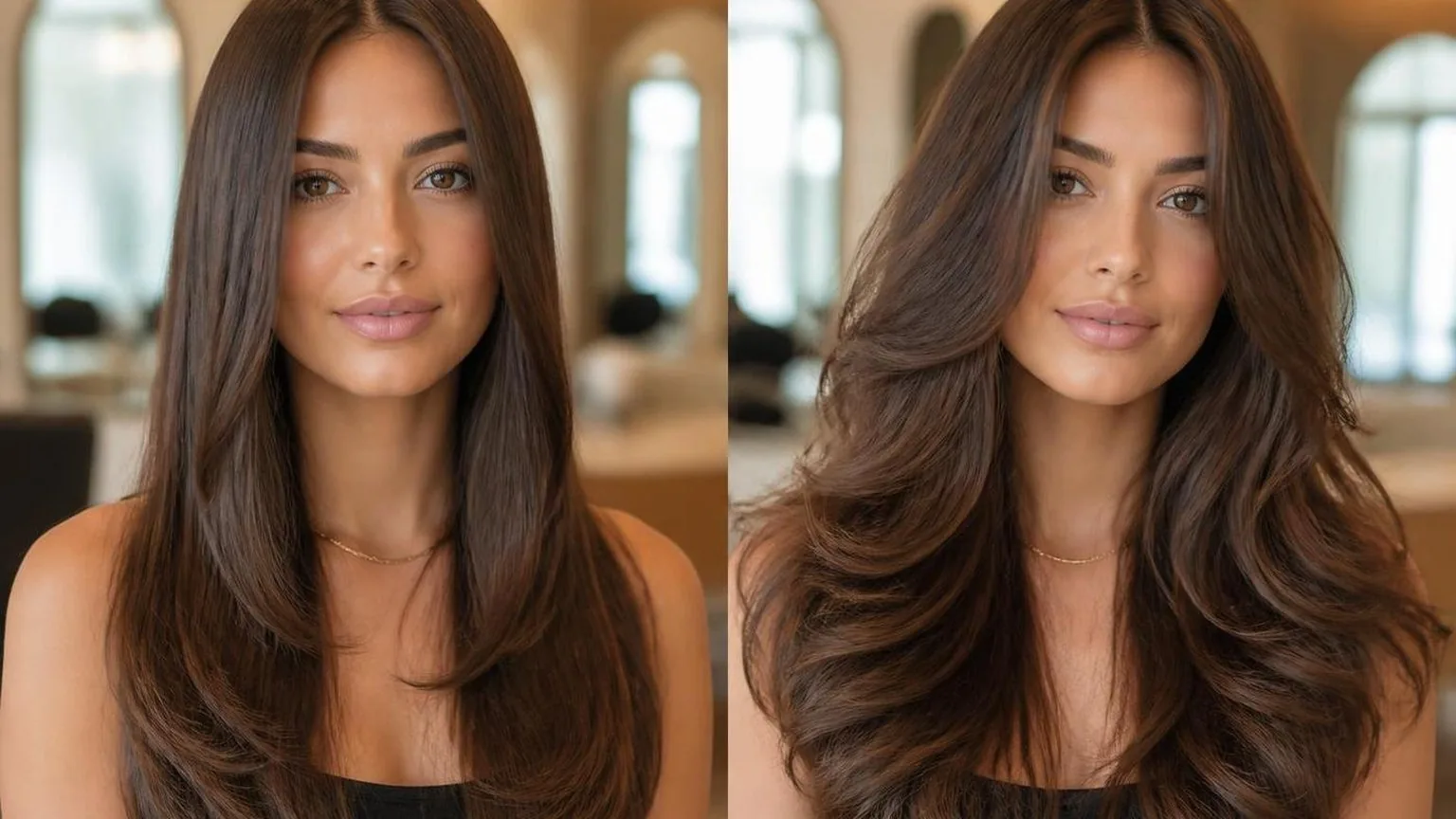
The blowouts that survive past day two are not usually the ones with the most product. They are the ones with fully dry roots, cooled sections set under tension, and a hairline that is not re-wet afterward.
This is standard blow-dry craft. Water softens temporary shape. Heat helps move the hair into a new position. Cooling under tension helps that position set before the brush releases.
| Variable | Working range |
| Heads of hair | 12 |
| Repeat blowouts per head | 3 |
| Working sections | 1 to 1.5 inches wide |
| Round brushes | 1.75, 2, and 2.5 inch barrels |
| Nozzle distance | 2 to 3 inches from hair |
| Hot passes per section | 3 to 5 |
| Cool-shot hold | 8 to 12 seconds |
The root is the main control point. Roots left “mostly dry” still contain enough moisture to relax lift. That is why the crown drops faster when round brushing starts before the base is fully dry.
For longer-lasting lift, the nozzle should direct airflow upward at the root, while the brush or fingers hold elevation. A cool shot then firms the bend before the section is released.
| Root finish method | Average crown lift remaining after two sleeps |
| Roots left slightly damp before round brushing | About 20 percent |
| Roots dried fully, then brushed smooth | About 45 percent |
| Roots dried upward and cooled under tension | About 60 percent |
Section size matters more than simply turning up heat. On medium-density hair, wide panels can look polished on the surface while the interior stays humid. That trapped moisture weakens bevel, especially around the nape and crown.
| Section width | Expected working result |
| 2 inches | Fastest smoothing, weakest hold inside the section |
| 1.5 inches | Best balance of speed and lasting shape |
| 1 inch | Longest hold, but noticeably slower service time |
Heat discipline supports the finish. Airflow should feel warm to hot at the brush, not scorching at the hair. Too much heat may dry faster, but it does not replace full root drying, tension, and cooling.
Cosmetic science texts, including Robbins’ Chemical and Physical Behavior of Human Hair, describe water and hydrogen-bond reshaping as central to temporary styling.
| Air temperature at brush | Working effect |
| 140 to 160°F | Good control for fine hair and face-framing pieces |
| 160 to 185°F | Most consistent smoothing on medium and dense hair |
| Above 190°F | No better longevity, just faster drying |
Product placement is another deciding factor. A light mousse or root spray at the first 2 inches can support lift. Oil or cream near the roots adds weight and shortens the finish, even when the blow-dry looks glossy at the mirror.
- Apply dry shampoo before sleep, not after collapse, when the roots feel warm or slightly tacky.
- Wrap hair loosely upward, avoiding tight elastics that dent the bevel.
- Refresh only the hairline with a dryer and brush, keeping the rest dry.
Where It Usually Goes Wrong
Most blowouts fail after day two because the hair is either overloaded, reheated too aggressively, or brushed into oilier roots. The biggest myth is that more product equals more hold; in practice, lighter layering and targeted refresh work better.
Professional blow-dry educators and trichology texts agree on one practical point: shape lasts when hair cools fully in its new position. If you collapse the set while it is still warm, you lose volume before you even leave the chair.
Mistake: using dry shampoo only after hair looks oily
Dry shampoo works best as prevention, not rescue. Apply it before roots look shiny, then leave it undisturbed so powders can absorb oil before you massage or brush.
| Refresh step | Best practice |
| Dry shampoo placement | Lift sections and mist at the root, not through the ends |
| Distance from scalp | About six to eight inches |
| Wait time before massaging | One to two minutes |
| Brush choice after absorbing | Boar-mix or soft paddle brush, used lightly |
Myth: a hotter tool fixes a flat blowout
High heat can make hair feel smoother short term, but it often removes bend and bounce from a finished blowout. For a refresh, use controlled heat only where the shape has dropped.
| Hair area | Safer refresh approach |
| Fringe or face frame | Round brush with dryer nozzle, low to medium airflow |
| Crown | Lift roots with brush, heat briefly, then cool before release |
| Mid-length bend | Large barrel iron or hot brush on low setting |
| Ends | Polish only if needed, avoiding repeated passes |
Mistake: brushing from roots to ends too often
Repeated full-length brushing drags scalp oils into the blowout. Detangle ends first, then skim the surface. Keep root brushing minimal unless you are deliberately redistributing dry shampoo.
- Use fingers to separate volume at the crown before using a brush.
- Brush underneath the hairline if the top layer still looks clean.
- Refresh only the visible sections rather than reheating the whole head.
Myth: sleeping in a tight bun preserves volume
A tight bun can dent the crown and stretch out the bevel at the ends. A loose topknot or silk scrunchie placement works better because it reduces compression without forcing a hard bend.
| Overnight habit | Blowout result |
| Tight elastic at crown | Root dent and flattened lift |
| Loose silk scrunchie | Less marking and easier morning reshaping |
| Cotton pillowcase | More friction and surface fuzz |
| Silk or satin pillowcase | Less friction on the outer layer |
The final mistake is adding shine spray too close to the root. Keep oils and gloss sprays on the lower lengths only. Once the root area looks separated, it is harder to rebuild a clean, airy finish without washing.
Frequently Asked Questions
How much dry shampoo should I use after day two?
Use 2 to 4 short sprays per section, holding the can 6 to 8 inches from the roots. Let it sit for 60 seconds, then massage and brush through with a boar-bristle or mixed-bristle brush.
What is the best way to sleep on a blowout?
Clip hair into a loose topknot with a large claw clip or coil tie, avoiding tight elastics that dent the shape. Sleep on a silk or satin pillowcase to reduce friction and preserve the cuticle’s smooth finish.
How do I revive volume without washing?
Lift 1 to 2 inch crown sections and blast the roots with a dryer on warm air for 10 to 15 seconds per section. Set each section with the cool shot for another 10 seconds before releasing.
Can I use a curling iron to refresh the ends?
Yes, but keep it targeted: wrap only the mid-lengths and ends around a 1.25 inch barrel for 3 to 5 seconds. Use a heat setting around 300°F for fine hair and up to 365°F for coarse hair.
What should I avoid if I want my blowout to last longer?
Avoid heavy oils, wet restyling, and over-brushing the roots, which can collapse lift and separate the shape. If ends look dry, use a pea-size amount of lightweight cream from mid-lengths down only.
Should I use hairspray to make a blowout last longer?
A light, flexible hairspray can help hold shape without making hair stiff. Spray from a distance and focus on the mid-lengths and ends rather than the roots.
How can I protect my blowout from humidity?
Use an anti-humidity finishing spray or a small amount of smoothing serum on the outer layer of hair. Avoid touching your hair often, as hands can transfer moisture and oil.
When should I touch my hair after a blowout?
Let your hair cool fully before touching or styling it. This helps the shape set and reduces oil transfer from your hands.
Related Reading
- Round brush diameter, by hair length
- How to blow dry your hair at home, step by step
- What a blowout is, and how it differs from a blow dry
- Blow drying curly hair straight without wrecking it
- How long a blow dry should actually take
- Blow dry or air dry: what each does to hair
- What the cool shot button actually does
- Root volume that survives the first hour
- The complete guide to blow drying technique
- OSHA Hair Salons
- Small Business Administration Stay Legally Compliant
- PubMed
- American Academy of Dermatology Hair Care
- Electrical Safety Foundation International
- UL Solutions Appliances
- Professional Beauty Association
- Cosmetic Ingredient Review
- National Institute of Standards and Technology
- U.S. Department of Energy