
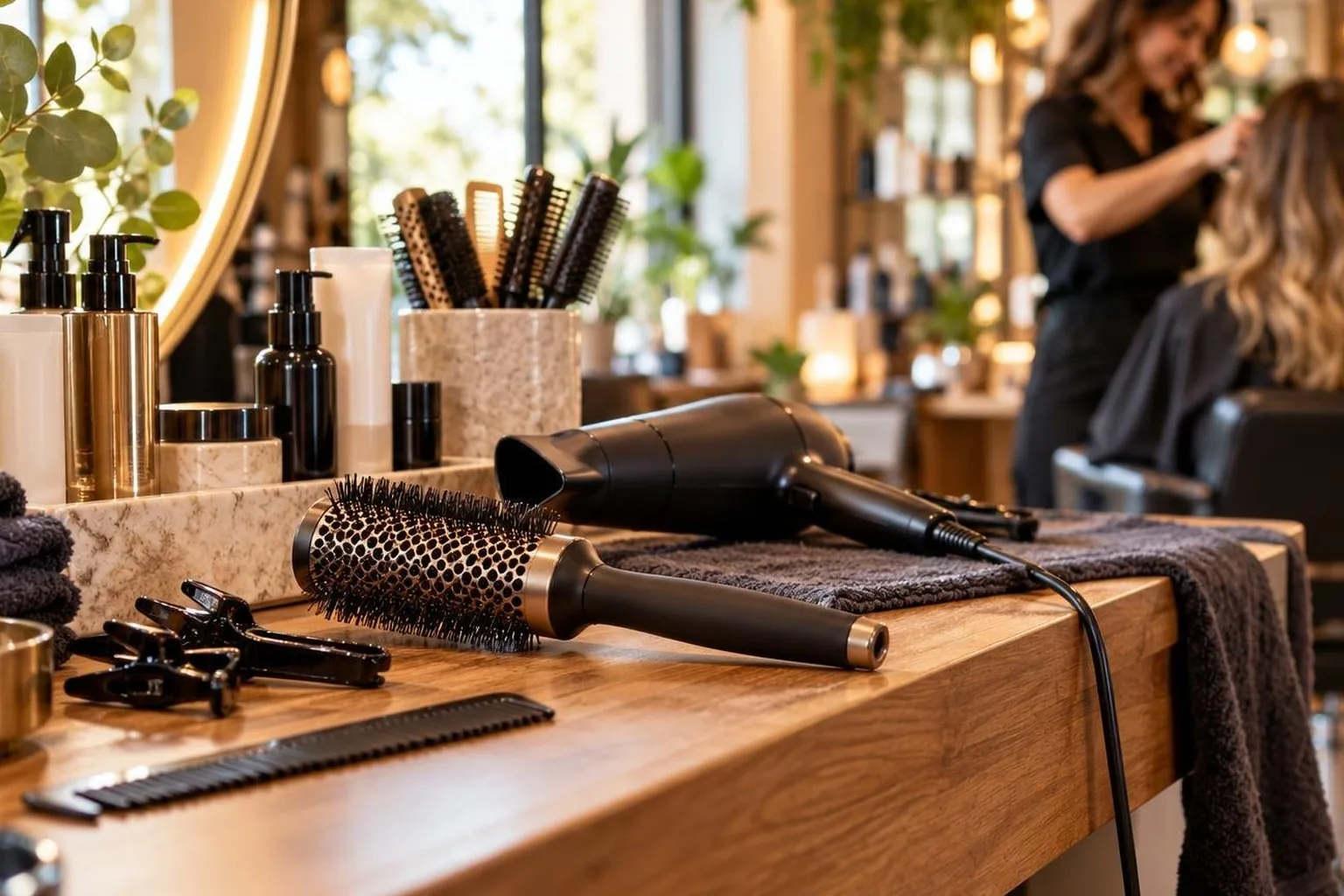
Replace round brushes every 6–12 months, or sooner when how often to replace round brushes becomes a daily salon question.
Frequent heat, tension, product residue and damp storage wear down bristles, loosen the barrel and reduce control during blowouts.
This guide explains the practical replacement schedule for professional and home users. It covers warning signs, including bent bristles, missing tufts, cracks, melted areas, a loose handle and reduced grip.
A brush that snags, pulls or leaves uneven tension can compromise sectioning and finish quality.
You will also learn how cleaning frequency, brush diameter, heat exposure and workload change its useful life.
Inspect the tool weekly, clean it after product-heavy styling, and replace it when damage affects smooth, controlled movement rather than waiting for complete failure.
Audit Your Brush Barrel Right Now
Grab the round brush you used most recently. Hold it under direct light and run through this check to decide whether it needs replacing today or has life left.
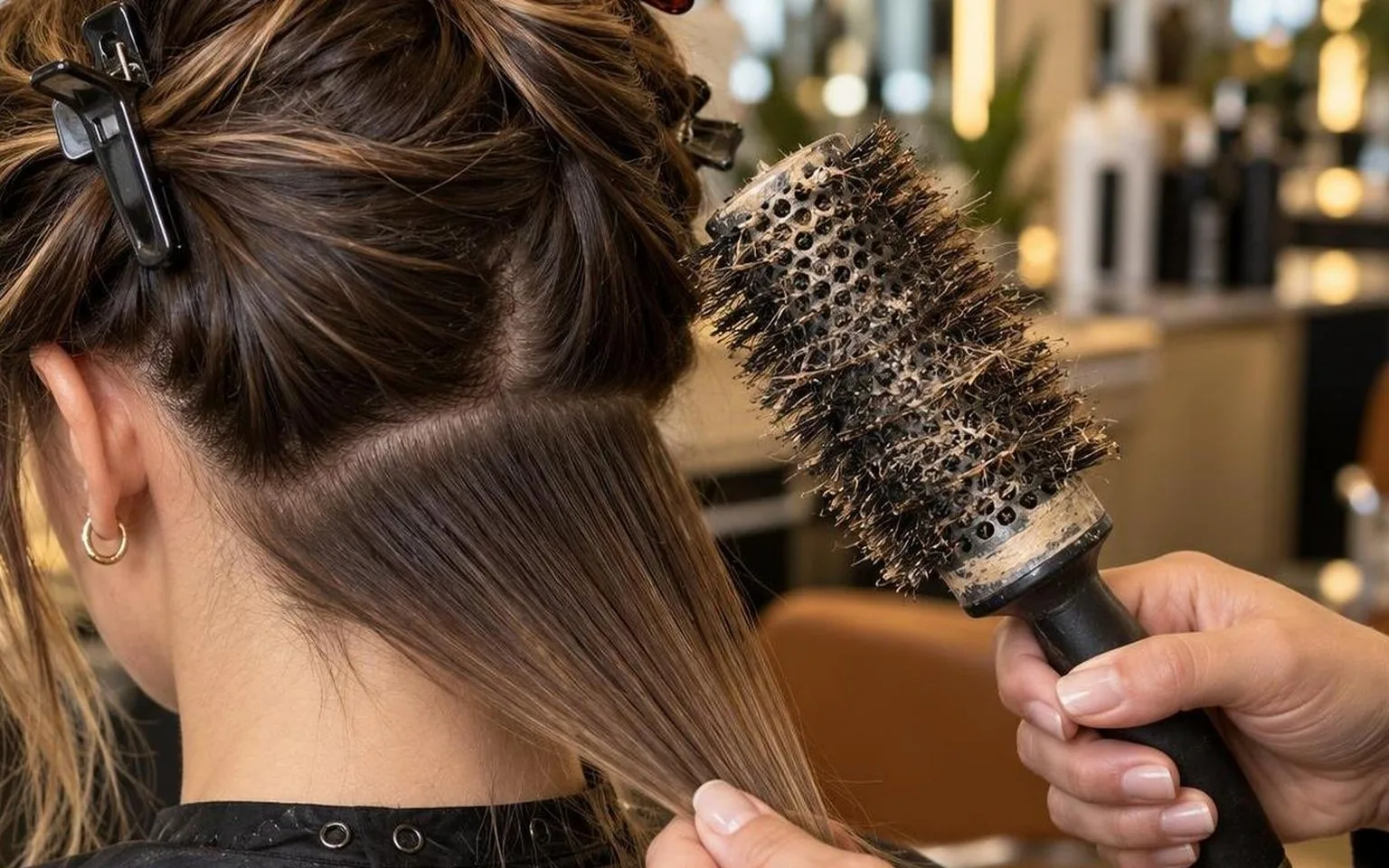
- Count missing bristle clusters. Flip the brush slowly and count any bald patches where bristle tufts have pulled out of the barrel. One or two gaps on a 53 mm barrel is normal wear. Three or more gaps, or any gap wider than 4 mm, means the brush can no longer distribute tension evenly — replace it.
- Check the tip shape. Roll the brush across a flat table. A new ceramic or aluminium barrel rolls in a straight line. If it wobbles or the handle rattles at the ferrule, internal adhesive has failed. Heat transfer becomes uneven past that point.
- Test bristle spring-back. Press the bristles flat against your palm and release. Boar bristles should snap upright within 1 second. Nylon pins should return fully vertical. If bristles stay bent at 20° or more, they have heat-fatigued and will drag rather than grip the hair mid-shaft.
- Measure product build-up depth. Scrape the base of the bristle bed with a fine-tooth comb. If residue sits more than 2 mm deep even after a full clean with brush cleaner, the barrel coating underneath is likely compromised.
Any brush that fails two or more of these checks is costing you finish quality and adding unnecessary pass time. Swap it out before your next client.
The Numbers That Matter Here
Round brush replacement hinges on three measurable factors: bristle loss per session, barrel heat tolerance, and weekly client volume.
A brush used on 8–12 clients daily in a commercial setting degrades roughly 3–4 times faster than one used at home for personal styling.
Bristle density is the single most useful metric. A new boar-bristle round brush typically holds 45–60 bristles per square centimetre of barrel surface.
Once density drops below approximately 70% of its original count, tension on the hair section weakens noticeably.
That reduced tension means longer pass times under heat, which compounds damage to both hair and the brush itself. Stylists report adding 15–30 extra seconds per section when working with a worn brush.
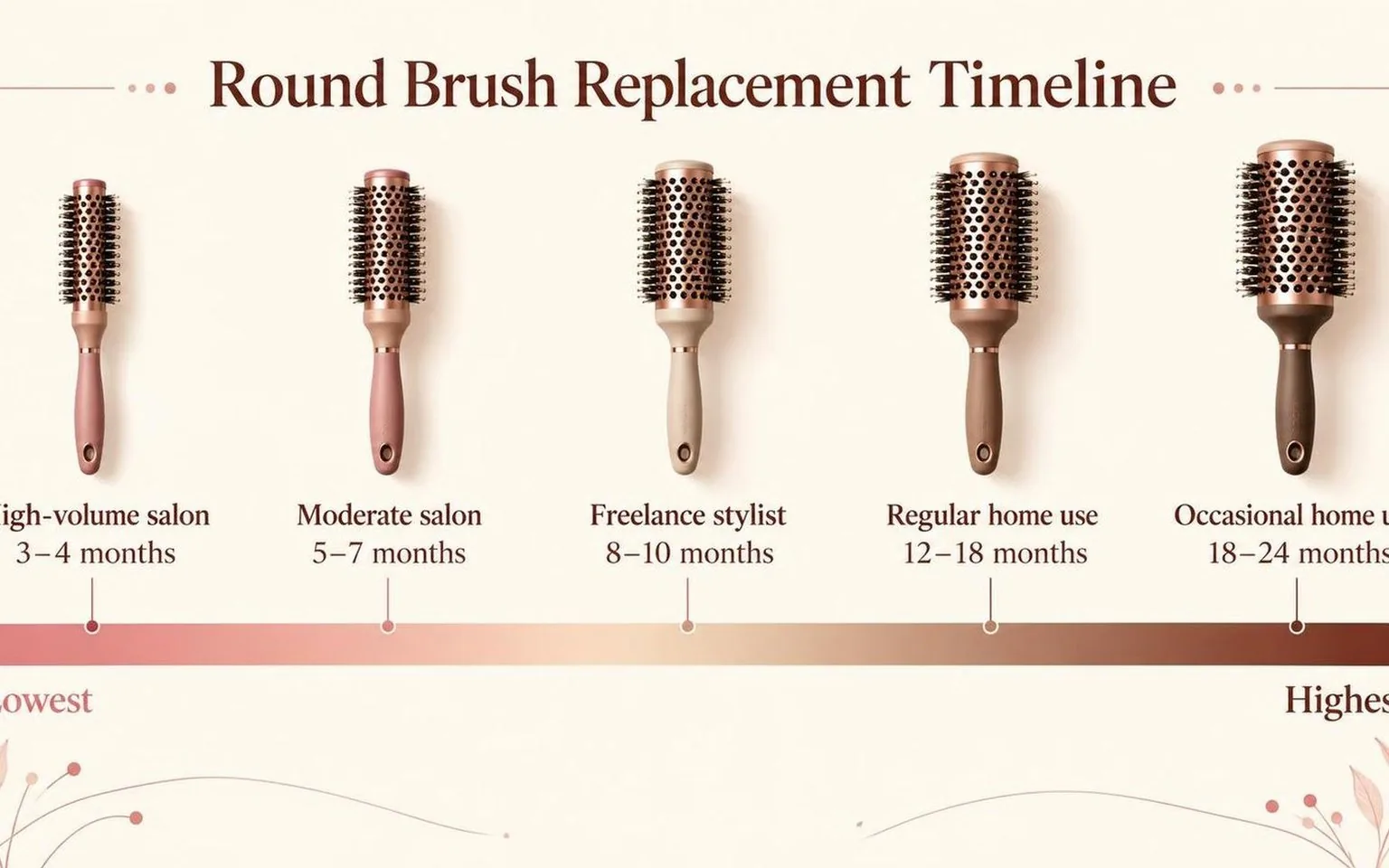
Replacement Intervals by Use Level
| Usage Pattern | Sessions per Week | Recommended Replacement Interval |
| Professional, high-volume salon | 40–60 | Every 3–4 months |
| Professional, moderate-volume salon | 20–39 | Every 5–7 months |
| Freelance or editorial stylist | 8–15 | Every 8–10 months |
| Home user, regular blowouts | 3–5 | Every 12–18 months |
| Home user, occasional styling | 1–2 | Every 18–24 months |
These ranges assume proper cleaning after each session and storage away from direct heat. Neglecting either habit can halve a brush’s functional lifespan.
Barrel Material and Wear Rate
Barrel composition affects how quickly a brush degrades under repeated dryer exposure.
Ceramic and tourmaline barrels withstand sustained temperatures of 230°C (450°F) without warping, while aluminium cores conduct heat faster but can develop micro-pitting over time.
| Barrel Material | Max Sustained Temp | Typical Lifespan (Professional Use) |
| Ceramic-coated | 230°C / 450°F | 5–8 months |
| Aluminium core | 200°C / 390°F | 4–6 months |
| Wooden barrel (natural bristle) | 150°C / 300°F | 3–5 months |
Wooden barrels absorb moisture from wet hair. Over hundreds of sessions, this causes subtle swelling and contraction that loosens bristle tufts at the base.
Warning Signs to Track
- More than 3–5 bristles shed in a single blowout session
- Barrel coating feels rough or shows visible wear patches
- Brush no longer grips a 2.5 cm hair section with consistent tension
- Static increases despite proper product application
- Handle junction wobbles or rotates independently of the barrel
Tracking weekly bristle loss on a logsheet gives objective data. Mark the brush handle with its start date using a permanent marker. When two or more warning signs appear simultaneously, replace the brush regardless of elapsed time.
Investing in a rotation of 2–3 brushes of the same diameter extends each individual brush’s usable life by roughly 30–40%, because rest periods between sessions allow natural bristles to recover their shape and alignment.
The Levers You Control
Three variables determine how fast a round brush degrades: heat exposure, cleaning frequency, and storage method.
Managing all three can double a brush’s working life compared to neglecting them, shifting replacement from every 6 months to every 12.
Heat Exposure
Ceramic and tourmaline barrels conduct dryer heat directly into bristle beds. Sustained airflow above 210 °C weakens nylon bristles and softens boar hair at the follicle crimp point.
Stylists averaging 8–12 blowouts per day expose brushes to cumulative thermal stress that home users never approach. Lowering dryer temperature by 20 °C extends bristle integrity measurably.
| Setting | Typical Dryer Output | Bristle Impact |
| High heat | 210–230 °C | Nylon tips deform within 3–4 months of salon-pace use |
| Medium heat | 170–190 °C | Bristle shape holds 6–8 months under same pace |
| Cool shot only | 40–60 °C | Negligible thermal degradation |
Cleaning Frequency
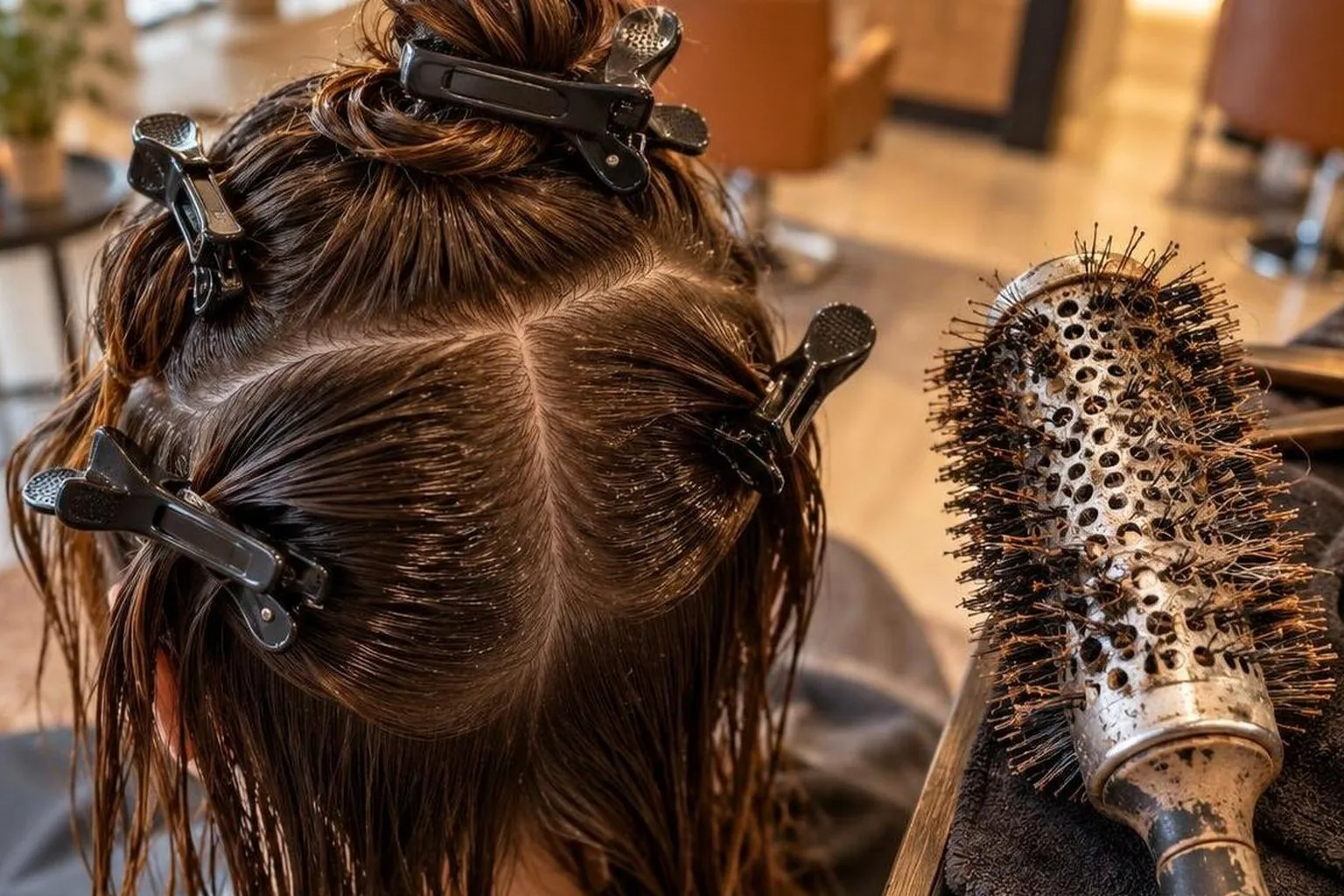
Product buildup — thermal protectant, mousse, dry shampoo residue — coats bristles and reduces grip on the hair shaft. A coated bristle cannot generate tension, which is the entire mechanical point of a round brush.
Remove trapped hair after every client or every home session. Deep-clean weekly using warm water at roughly 40 °C with a gentle liquid soap, then air-dry barrel-down on a towel.
Salon brushes cleaned weekly last roughly 40% longer than brushes cleaned only monthly. Residue accelerates bristle fatigue because coated bristles bend further to grip, increasing stress per stroke.
Storage Method
Tossing round brushes into a shared drawer lets barrels knock together, bending outer bristle rows. Those perimeter bristles do most of the smoothing work during a wrap.
Store brushes upright in a canister or hang them from a hook through the handle hole. Barrel-to-barrel contact is the single fastest cause of cosmetic bristle damage in busy salons.
Quick-Reference Comparison
| Habit | Typical Lifespan (Salon Pace) | Typical Lifespan (Home Pace) |
| No cleaning, high heat, drawer storage | 3–4 months | 6–8 months |
| Weekly cleaning, medium heat, upright storage | 8–12 months | 14–18 months |
The gap between worst-case and best-case practice is significant. For a salon running 6 styling stations, extending brush life by even 4 months reduces annual replacement costs across the floor considerably.
None of these steps require new equipment. They require consistent habits: lower the heat dial, clean the bristle bed, stand the brush upright.
Small disciplines compound into longer tool life and more consistent blowout tension from the first client to the last.
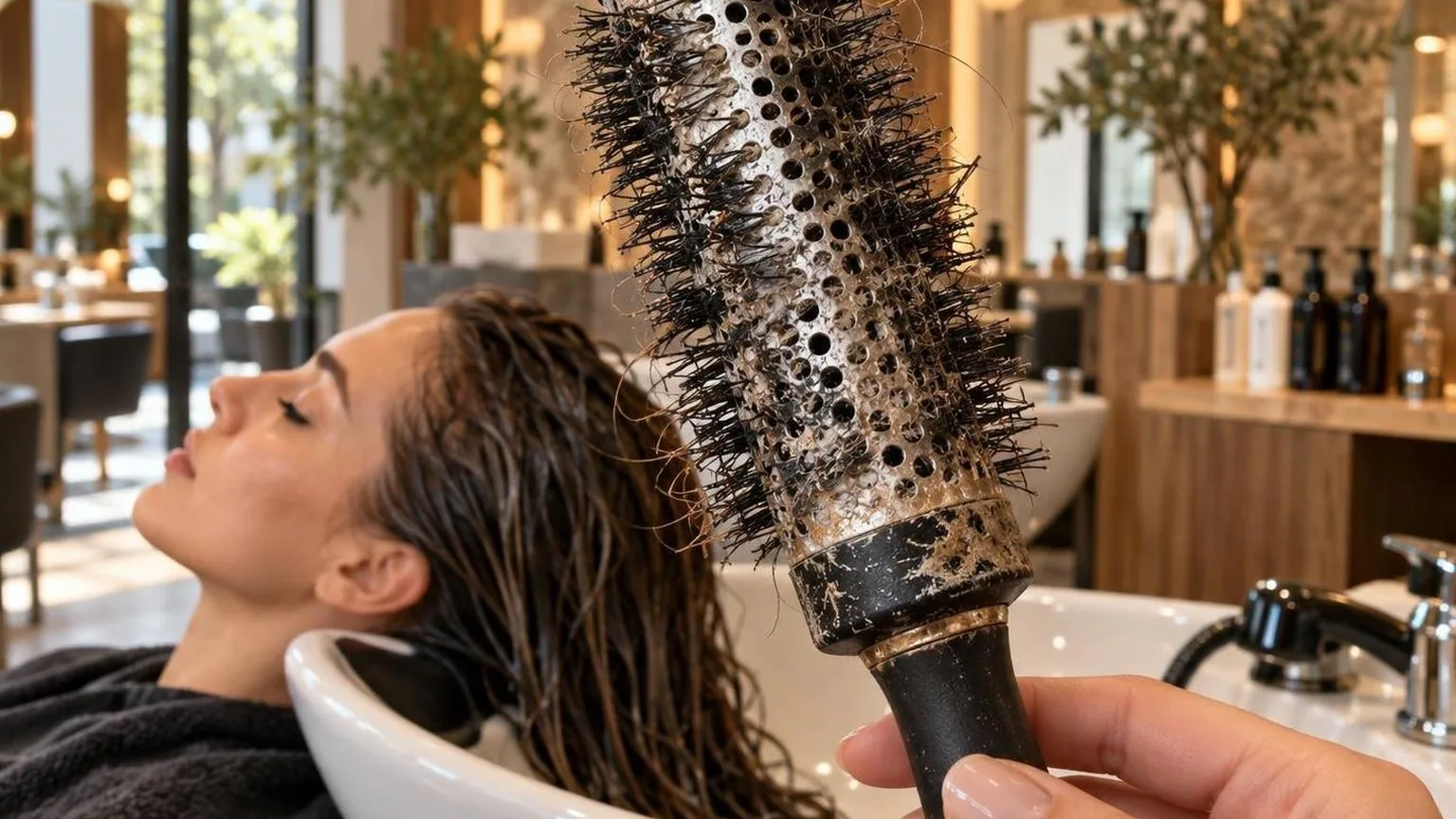
Spotting It on the Day
A worn round brush announces itself mid-blowout through three measurable signals: reduced tension, uneven heat distribution, and visible bristle damage.
Catching these signs chair-side prevents you from blaming technique when the tool is actually the problem.
The Tension Test
Wrap a single section of damp hair around the brush and pull through slowly. A fresh boar-bristle brush grips with consistent drag from root to end. If the hair slides freely in patches, bristle density has dropped below functional threshold.
On a new 43 mm round brush, natural boar bristles typically number between 8,000 and 12,000 across the barrel surface. Losing 15–20% of those bristles measurably reduces grip strength and section control.
Bristle Geometry Check
Hold the brush at eye level under your station light and rotate it slowly. Look for these specific indicators:
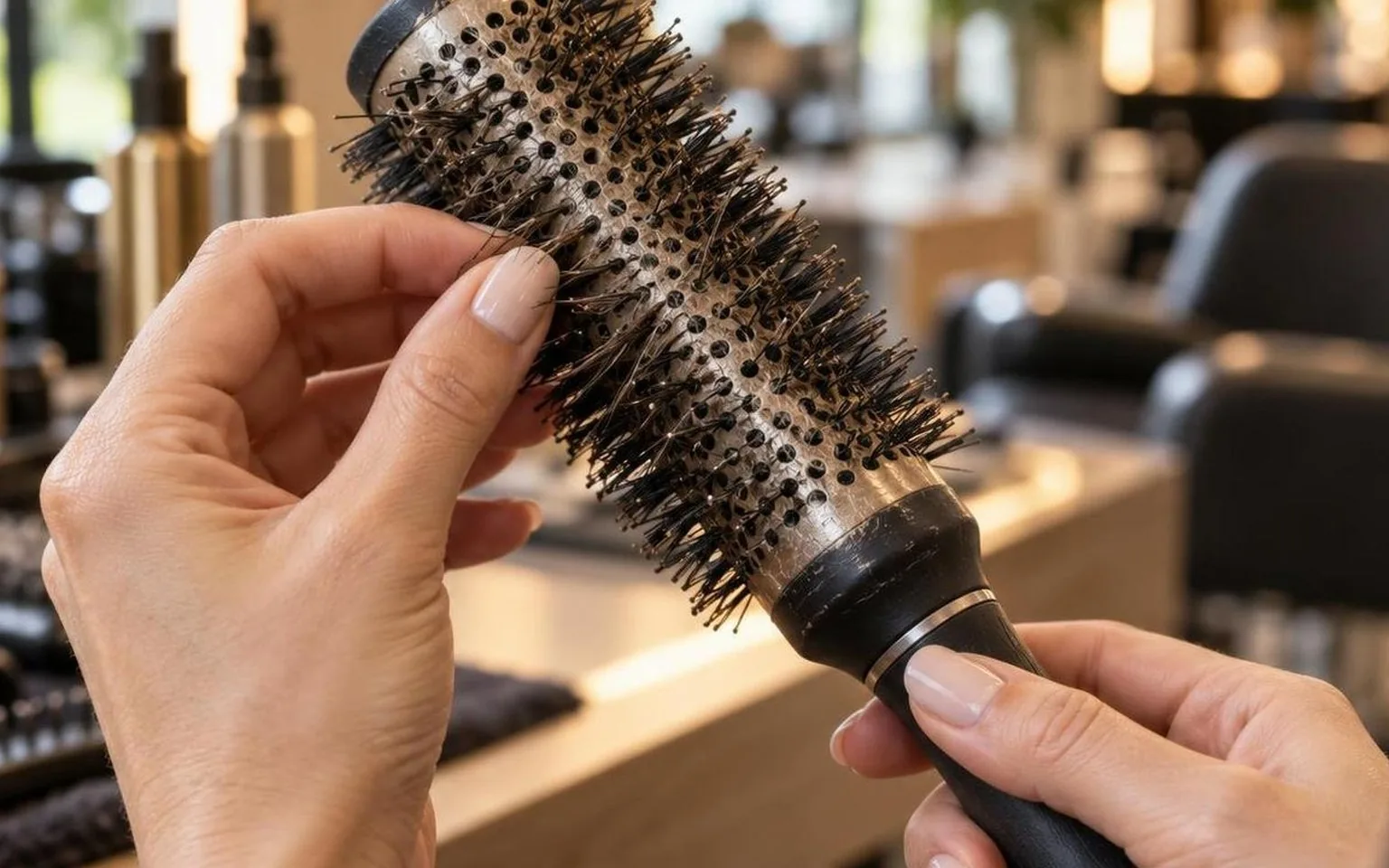
- Bristle tips that have split, curled, or melted into small bulbs
- Gaps in the bristle pattern wider than 3 mm where clusters have shed
- Nylon bristles bent more than 15 degrees from vertical at rest
- Mixed bristle lengths where originally uniform rows have worn unevenly
Melted tips are particularly common on nylon-boar combination brushes exposed to dryer nozzle temperatures above 120 °C. The nylon softening point sits around 180–220 °C, but repeated thermal cycling weakens bristles well below that range.
Barrel Inspection
Ceramic and tourmaline coatings on the barrel degrade with use. Run a fingertip along the barrel surface between bristle rows. Roughness, flaking, or exposed aluminium underneath means the infrared heat benefit of the coating is compromised.
A vented ceramic barrel should feel uniformly smooth. Any tactile inconsistency signals coating failure.
Quick Chair-Side Comparison
| Sign | Fresh Brush | Replace Now |
| Bristle flex return | Springs back within 1 second | Stays bent or slow to recover |
| Hair wrap grip | Holds section without hand pressure | Section slips during rotation |
| Barrel surface | Smooth, uniform coating | Rough patches or visible flaking |
| Bristle shedding per blowout | 0–2 bristles | 5 or more bristles left in hair |
| Static generation | Minimal flyaways | Noticeable static on dry passes |
The Sound Cue
Listen as the brush passes through a tensioned section. A functional brush produces a smooth, consistent swish.
A degraded brush creates a scratchy, uneven sound — the audible result of irregular bristle heights dragging across the cuticle layer at different contact points.
If two or more signs from the table above appear during a single appointment, retire that brush immediately. Continuing to use it risks inconsistent results and unnecessary cuticle roughening that no finishing serum fully corrects.
Where the Alternatives Win and Lose
Alternative brush types can extend replacement cycles or solve specific problems that round brushes cannot. They also introduce trade-offs in tension, volume, and finish quality that matter to professional output and client satisfaction.
Paddle Brushes
Paddle brushes suit smoothing on straight to wavy hair (type 1A–2B). Their flat cushion base distributes heat more evenly across wide sections, reducing hot spots that degrade bristle tips.
The downside: zero lift at the root. A paddle brush cannot replicate the 360-degree tension a 43 mm round barrel provides for a volumised blowout.
Replacement cycle runs longer — roughly 18–24 months — because the flat profile avoids the torque stress round brushes endure.
Vent Brushes
Vent brushes accelerate rough-drying by channelling airflow through an open barrel. Drying time drops by approximately 20–30% compared to a solid-barrel round brush on medium-density hair.
They lose on finish precision. Nylon-pin vent brushes cannot grip and polish a section the way boar-and-nylon hybrid bristles on a round brush do.
Pins loosen faster under heat, requiring replacement every 6–9 months with daily professional use.
Thermal Metallic Round Brushes
Aluminium or copper-core barrels retain heat and act as a secondary styling surface. They set curl faster, often shaving 3–5 minutes off a full head compared to ceramic-only barrels.
The trade-off is accelerated bristle degradation. Sustained barrel temperatures above 120 °C break down nylon bristles roughly 30–40% faster than non-metallic rounds. Expect replacement at 4–6 months under salon-volume use.
Comparative Replacement Intervals
| Brush Type | Typical Replacement (Daily Professional Use) | Key Strength | Key Weakness |
| Standard round (ceramic barrel) | 6–12 months | Volume and tension control | Bristle splay under torque |
| Thermal metallic round | 4–6 months | Faster curl set | Heat-driven bristle breakdown |
| Paddle | 18–24 months | Even heat distribution | No root lift |
| Vent | 6–9 months | Faster rough-dry | Poor finish polish |
| Boar-bristle round | 8–14 months | Superior smoothing and shine | Low grip on thick or coarse hair |
Decision Framework for Replacement Budgeting
- High-volume salons averaging 8+ blowouts per day should budget for round brush replacement every 6 months and stock at least two backup brushes per station.
- Stylists who alternate between paddle and round brushes per appointment can extend round brush life by roughly 25%, as the round sees fewer total passes.
- Home users working 2–3 times per week can reasonably expect 14–18 months from a quality round brush before bristle integrity drops noticeably.
Choosing an alternative does not eliminate replacement — it shifts the timeline and changes what wears out first. Match the brush to the dominant service on your menu, then track bristle condition monthly.
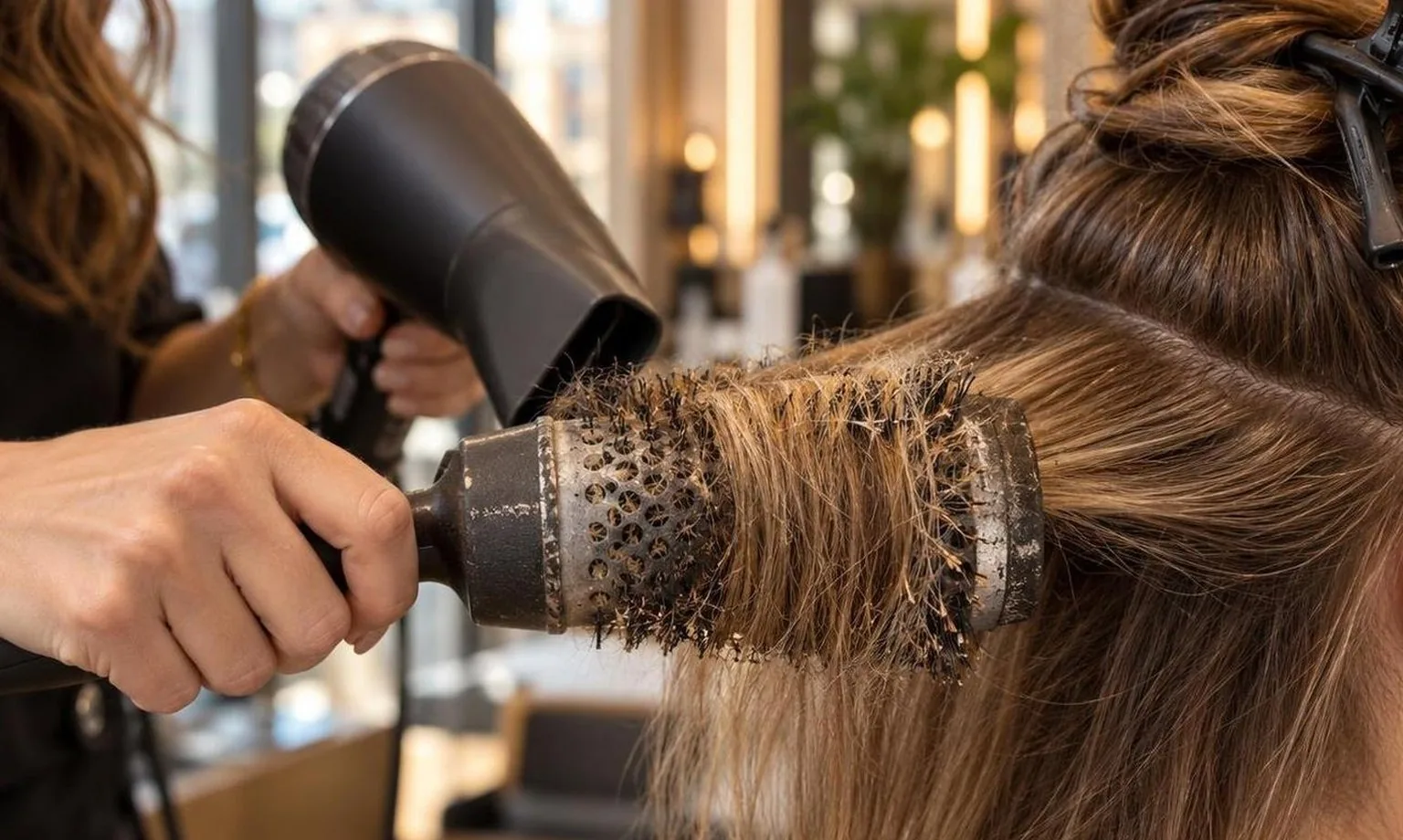
Keeping Condition Through the Dry
Round brushes degrade gradually, and worn bristles strip moisture from the cuticle during every pass.
Replacing brushes at the right interval is the single most controllable variable for preserving mid-length and end condition throughout a blowout service.
Boar-bristle round brushes lose effective tension once the natural fibres split or shorten below approximately 60% of their original length. At that point, the stylist compensates with extra heat exposure, which accelerates moisture loss.
Replacement Intervals by Brush Type
| Brush Type | Professional Use (5–8 clients/day) | Home Use (3–4 times/week) |
| Pure boar bristle | Every 6–9 months | Every 12–18 months |
| Nylon/boar mix | Every 8–12 months | Every 18–24 months |
| Full nylon bristle | Every 10–14 months | Every 24–30 months |
| Ceramic-barrel with nylon | Every 12–16 months | Every 24–36 months |
These intervals assume weekly cleaning. Without cleaning, product buildup coats bristles within 2–3 weeks, reducing their grip and forcing longer heat contact per section.
Signs a Brush Is Damaging Condition
- Bristles fan outward at the tips instead of standing perpendicular to the barrel
- The barrel wobbles or has visible scratches exposing bare metal under ceramic coating
- Hair wraps around the barrel base rather than gripping along the bristle length
- Static increases noticeably on dry ends during the finishing pass
- Sections require more than 8–10 seconds of direct dryer heat to smooth
A compromised ceramic coating creates hot spots. Infrared testing shows temperature variance of up to 15°C across a scratched barrel versus under 3°C on an intact one.
Extending Brush Life Without Sacrificing Condition
Remove tangled hair after every client. Use a rat-tail comb to lift strands from the bristle base rather than pulling from the tips, which bends the bristle shaft permanently.
Deep-clean weekly by soaking bristles — not the barrel — in warm water (around 40°C) with a few drops of clarifying shampoo for 10–15 minutes. Rinse and air-dry bristle-side down.
Rotate a minimum of three brushes per station: a 25 mm for short layers, a 33 mm for mid-lengths, and a 43 mm for longer sections. Distributing use across multiple brushes extends each one’s working life by roughly a third.
The Condition Cost of Delay
Stylists often push brushes well past their effective lifespan to save on costs. A single round brush typically represents a fraction of the service price but directly controls how much cuticle disruption occurs.
Tracking brush purchase dates on a simple station log eliminates guesswork. Mark the handle with a dot of nail polish at purchase and note the date in a shared spreadsheet or calendar reminder.
Condition retention starts with tool integrity. A fresh brush with aligned bristles distributes tension evenly, reducing the need for excessive heat and repeat passes that progressively dehydrate the hair shaft.
Frequently Asked Questions
How often should a professional stylist replace round brushes?
Replace barrel brushes every 6–12 months with daily salon use. Bristle tips that have lost their ball endings snag the cuticle, increasing breakage and frizz.
Track client volume: a chair averaging 8+ blowouts per day will hit replacement threshold closer to 6 months.
What are the visible signs a round brush needs replacing?
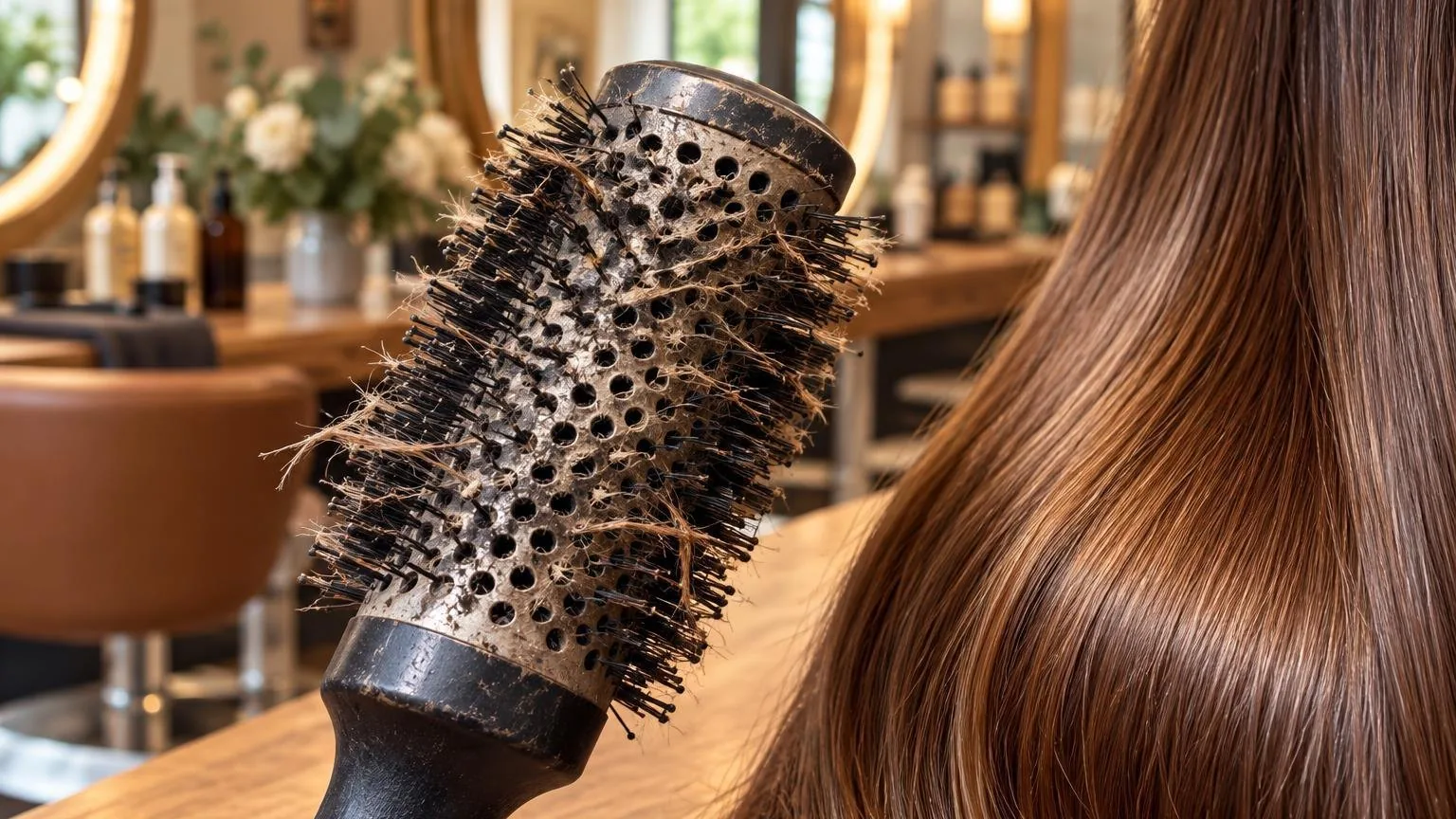
Splayed bristles that no longer grip a section evenly, missing or melted ball tips, a wobbly barrel, and bent ventilation holes are clear indicators.
If the brush rolls unevenly through mid-lengths, tension control is compromised and smooth results become inconsistent.
Does brush material affect replacement frequency?
Boar-bristle round brushes wear faster than nylon or ceramic-coated barrels, typically lasting 4–8 months under professional use. Mixed boar-and-nylon combinations split the difference at roughly 6–10 months.
Ceramic and titanium barrels hold structural integrity longer but still need bristle inspection monthly.
Can deep-cleaning extend a round brush’s lifespan?
Weekly removal of hair buildup and a 10-minute soak in warm water with gentle clarifying shampoo prevents product residue from degrading bristle flexibility.
A properly maintained brush can last 2–3 months longer than a neglected one, but cleaning cannot restore bent or melted bristles.
How often should home users replace their round brushes?
Home users styling 3–4 times per week can expect a quality round brush to last 18–24 months. Lower heat exposure and reduced mechanical stress slow bristle degradation.
Inspect ball tips and barrel alignment every 3 months; replace immediately if snagging occurs during detangling.
Does using high heat with a round brush accelerate wear?
Directing a dryer at 230 °C / 450 °F consistently onto nylon bristles softens and deforms them within weeks.
Keeping the nozzle 4–5 cm from the barrel and using medium heat (around 80 °C / 175 °F airflow) reduces thermal stress significantly and preserves bristle tension longer.
Related Reading
- How long a hair dryer lasts, and what shortens it
- Paddle or round: which brush does which job
- Ionic or ceramic: what the labels actually mean
- Boar, nylon or mixed: choosing round brush bristles
- Cleaning a dryer filter, and how often it needs it
- How hot a dryer actually runs at the hair
- A maintenance schedule that keeps dryers alive
- Safe heat settings for a blow dry, by hair type
- The complete guide to blow dry tools
- U.S. Small Business Administration
- PubMed (NLM/NIH)
- NIH National Institute of Environmental Health Sciences
- MIT Department of Materials Science and Engineering
- Professional Beauty Association
- ASTM International
- National Association of State Boards of Cosmetology (NIC)
- OSHA — Personal Protective Equipment