
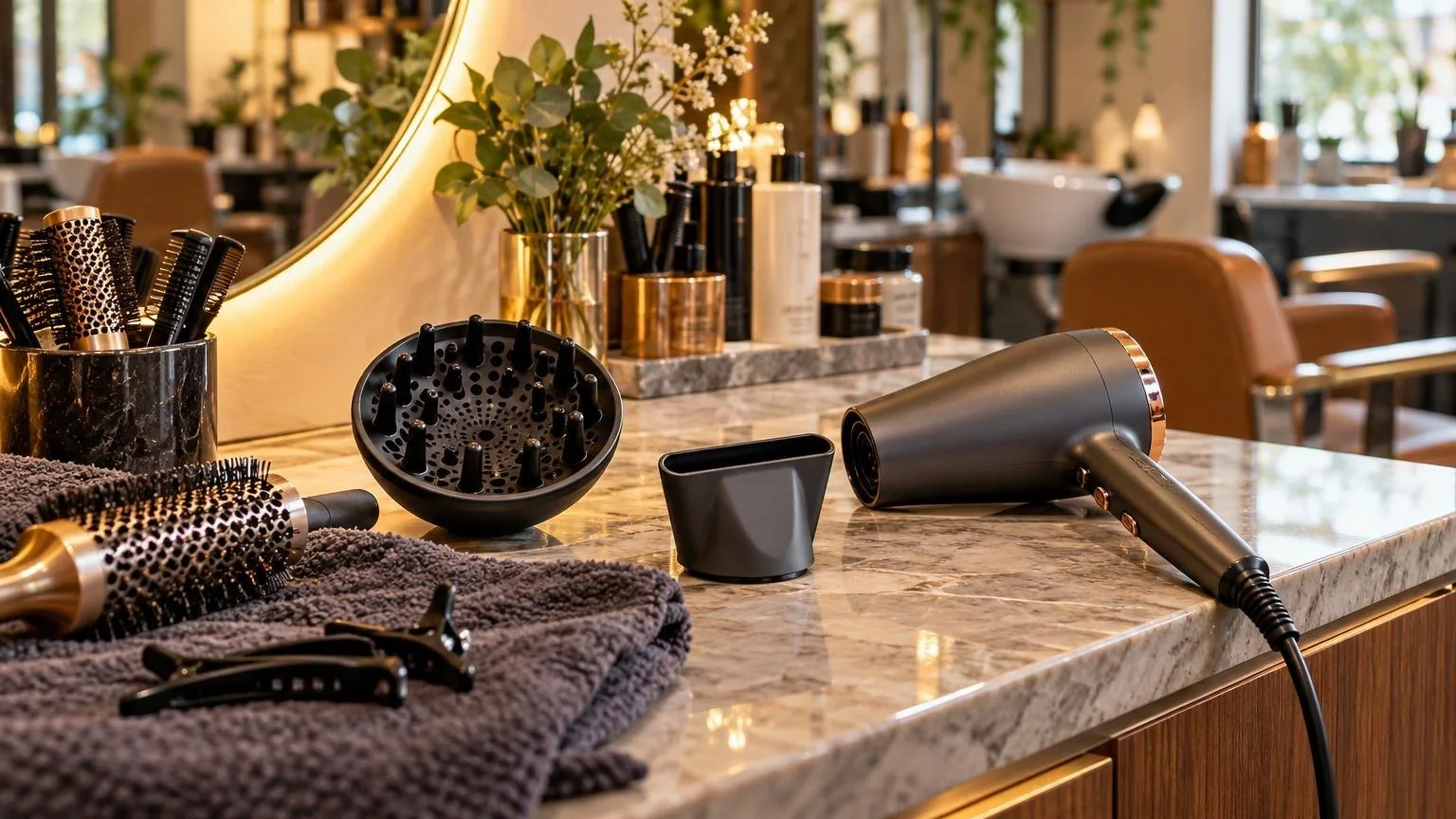
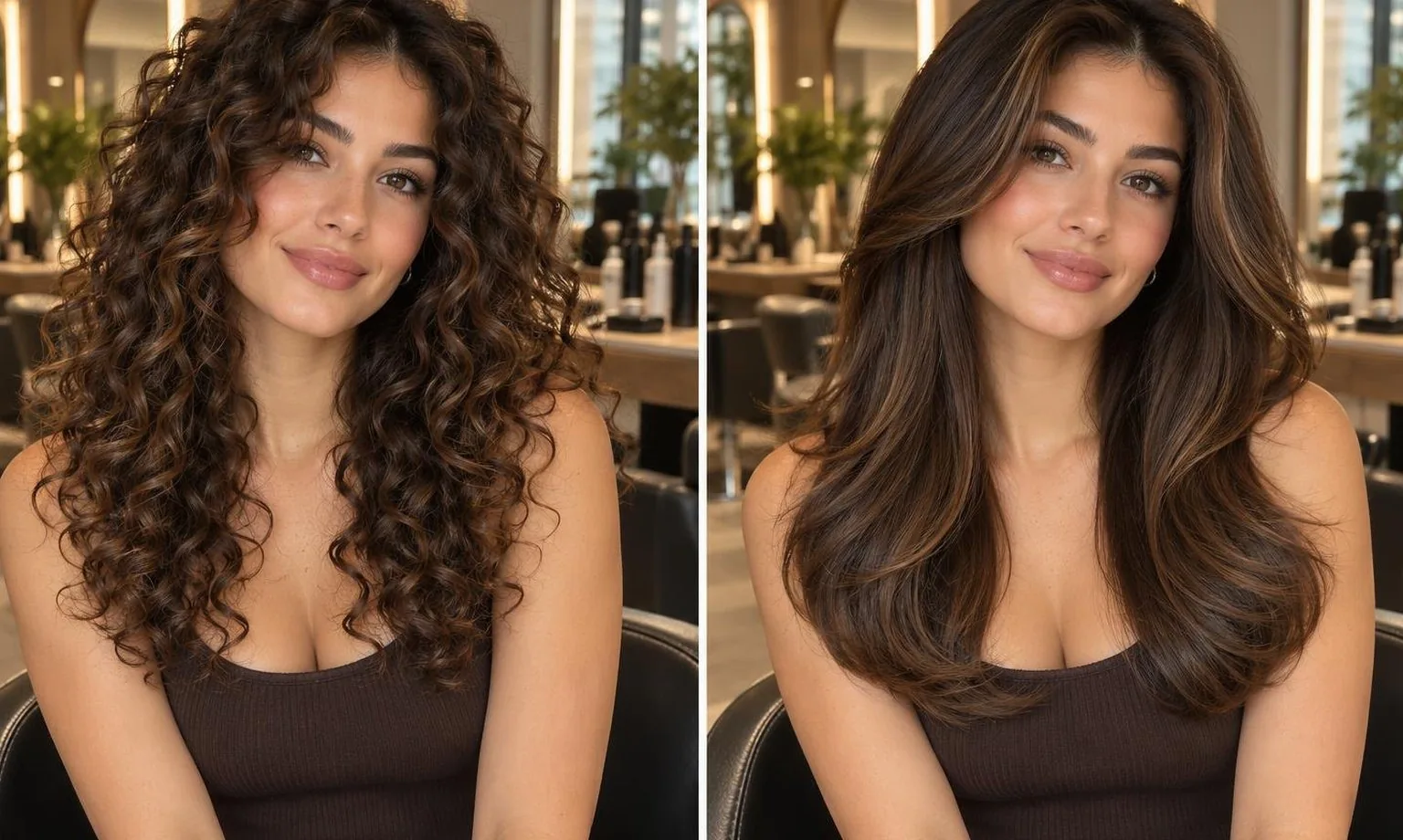
In diffuser vs concentrator, a diffuser spreads airflow to preserve curl clumps, while a concentrator channels air along a brush for a smoother finish.
Choose the diffuser for curl definition and less disturbance; choose the concentrator for controlled tension, polished lengths and deliberate bends at the ends.
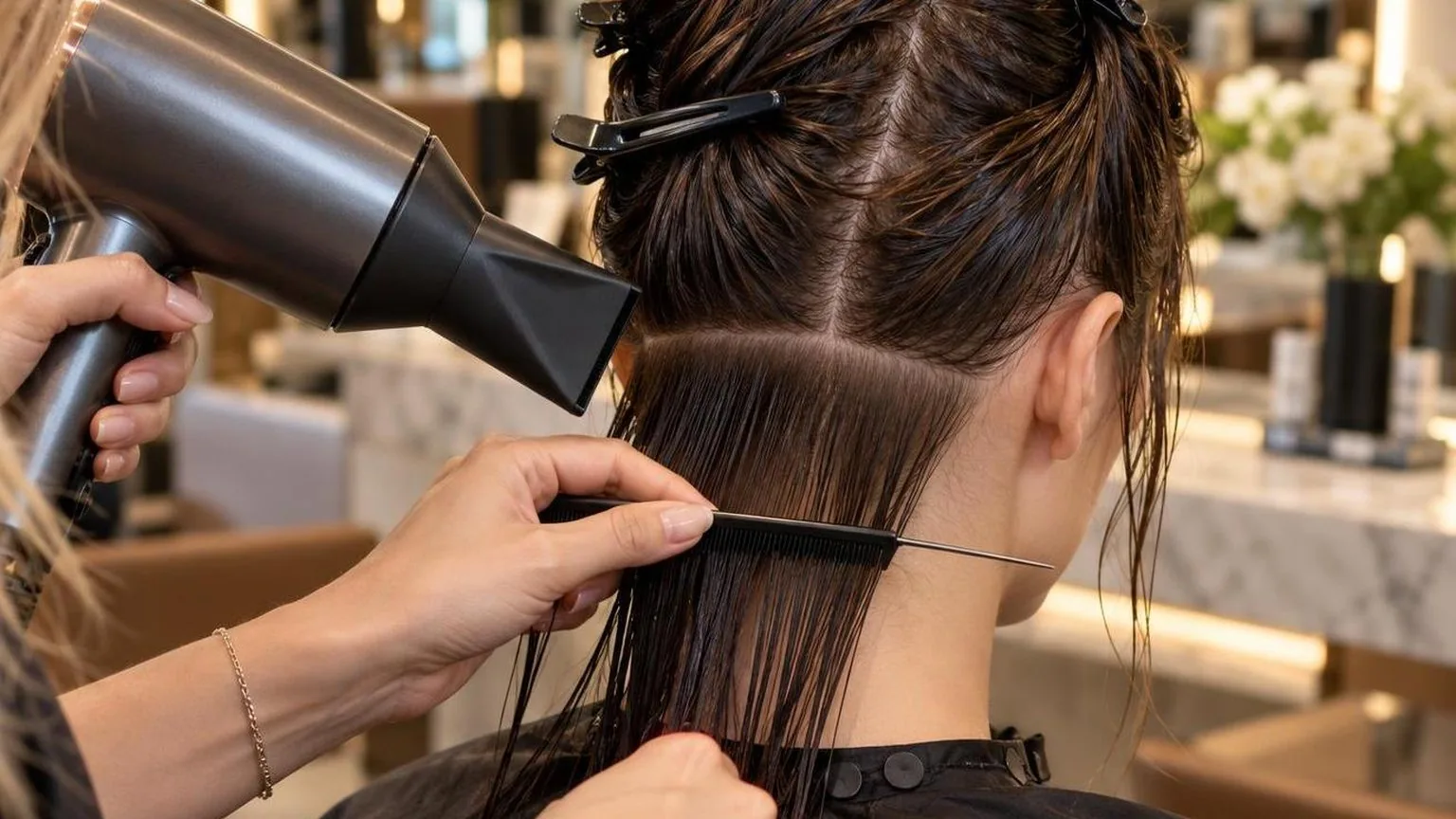
Technique matters as much as the attachment. Start diffusing on low airflow to avoid scattering curls. For a concentrated blowout, work in sections roughly 2–3 cm wide, directing air from roots toward ends.
This guide compares finish, control and handling so you can match the nozzle to your goal.
Match Your Nozzle to Your Curl Pattern
Grab the dryer you use most and the hair in front of you. This takes under two minutes and tells you which attachment earns its place on the barrel.
- Measure your nozzle opening. Most concentrators taper to a slot 3–5 mm tall and 70–90 mm wide. Most diffusers spread to a disc 120–150 mm across with prongs 30–40 mm long. If your diffuser disc is narrower than 100 mm, it will not cup enough hair to matter on anything past shoulder length.
- Identify your dominant curl diameter. Wrap one dry strand around your finger. If the loop is tighter than a pencil (under 7 mm), a diffuser on low speed at 50–60 °C preserves definition. If the strand falls in a wave wider than 20 mm or sits nearly straight, a concentrator aimed 15–20 cm from the surface at 70–80 °C delivers tension and smoothness faster.
- Run a single-section test. Take a 2.5 cm square section at the crown. Dry it fully with one attachment, then repeat on the mirror section with the other. Compare volume at the root, frizz along the mid-shaft, and time to full dry. Record all three.
The table below lets you cross-reference curl diameter with the result you want.
| Curl diameter | Goal: definition | Goal: smoothness |
|---|---|---|
| Under 7 mm | Diffuser, 50 °C, low speed | Diffuser first, concentrator to finish |
| 7–20 mm | Diffuser, 60 °C, medium speed | Concentrator, 70 °C, with round brush |
| Over 20 mm / straight | Concentrator on medium heat | Concentrator, 80 °C, narrow 5 mm slot |
Pin this where your station mirror is. Every new client gets the two-minute check before you reach for an attachment.
The Figures Behind It
Diffusers and concentrators reshape the same airflow in measurably different ways. The divergence shows up in outlet velocity, heat distribution across the hair surface, and drying duration per section.
These differences are not subtle — they alter finished texture, cuticle alignment, and moisture retention.
Airflow Velocity and Outlet Diameter
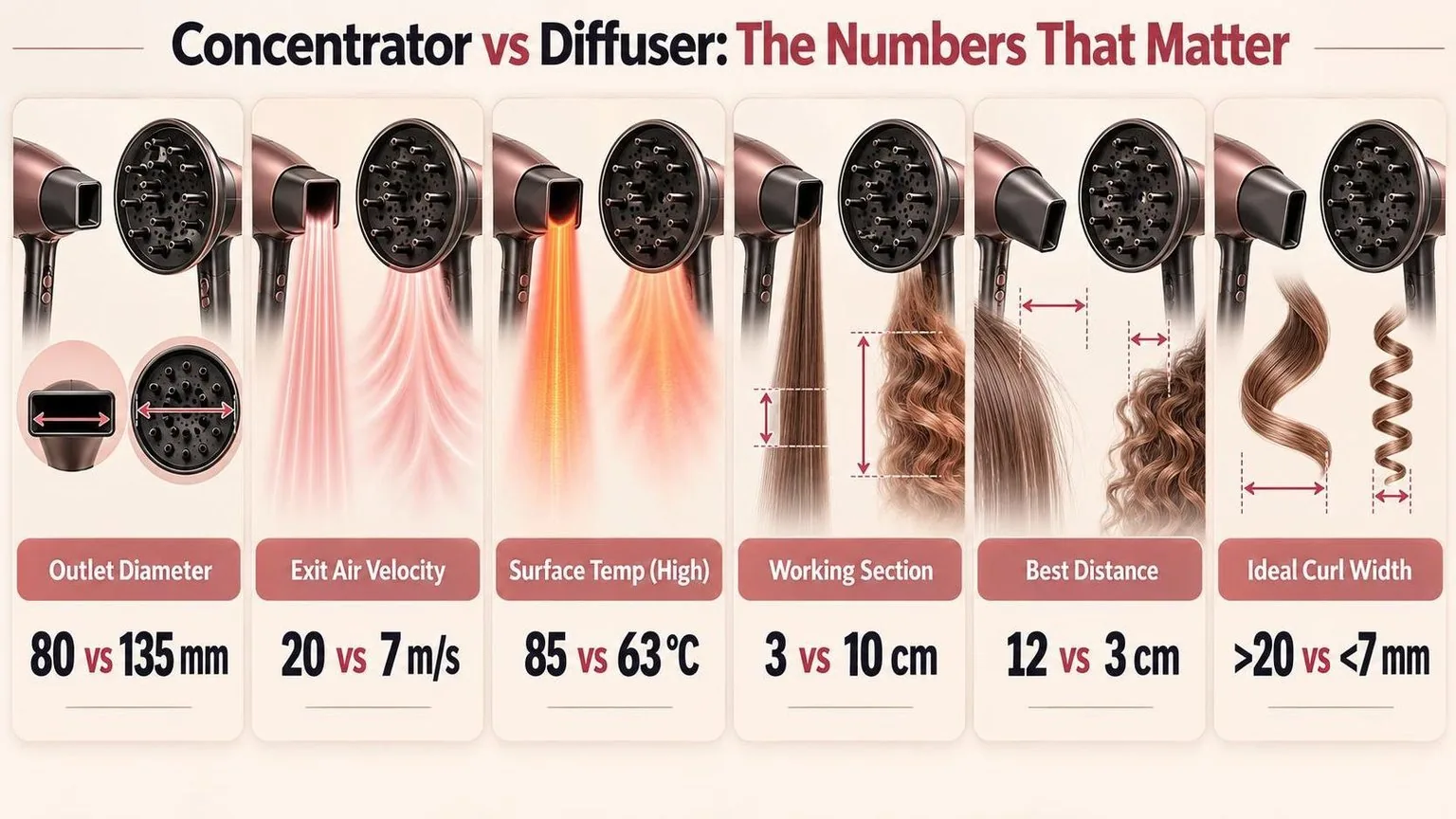
A standard concentrator nozzle measures roughly 70–90 mm wide and 8–10 mm at the slot opening. This narrow exit accelerates airflow, producing directional velocity that can exceed 20 m/s at the nozzle tip on high speed.
A diffuser attachment typically spans 120–150 mm in diameter with multiple vent holes or prongs.
This wider surface area disperses airflow, reducing exit velocity to approximately 5–10 m/s, depending on prong configuration and dryer wattage.
| Metric | Concentrator Nozzle | Diffuser Attachment |
| Outlet width / diameter | 70–90 mm (slot: 8–10 mm) | 120–150 mm |
| Typical exit air velocity (high setting) | 18–22 m/s | 5–10 m/s |
| Airflow pattern | Narrow, directional stream | Wide, dispersed circulation |
| Recommended distance from hair | 10–15 cm | Direct contact to 5 cm |
| Ideal working section width | 2–3 cm | Full curl cluster (8–12 cm) |
Temperature at the Hair Surface
With a concentrator held at 10 cm, surface temperature on the strand can reach 80–90 °C when the dryer is set to high heat (typically 1800–2200 W units). This concentrated thermal load is why stylists keep the nozzle moving.
A diffuser, by contrast, spreads heat across a broader area. Surface temperature on individual strands generally stays between 55–70 °C under the same power settings. Lower peak temperatures reduce thermal stress per pass.
| Dryer Setting | Concentrator Surface Temp | Diffuser Surface Temp |
| Low heat / low speed | 50–60 °C | 40–50 °C |
| Medium heat / medium speed | 65–75 °C | 50–60 °C |
| High heat / high speed | 80–90 °C | 55–70 °C |
Drying Time per Section
A concentrator dries a 2–3 cm section of medium-density hair in roughly 15–25 seconds when used with tension from a round brush. Full-head blowouts on medium-length hair typically run 20–35 minutes depending on density.
Diffusing takes longer per pass because velocity is lower. A full head of shoulder-length curly hair commonly requires 25–45 minutes. Each curl cluster needs 30–60 seconds of hovering or scrunching contact with the diffuser bowl.
When the Numbers Guide the Choice
- Smooth, straight finishes: the concentrator’s high velocity (18–22 m/s) seals the cuticle flat along the hair shaft when angled downward at roughly 45 degrees
- Curl definition without frizz: the diffuser’s lower velocity (5–10 m/s) prevents disruption of the curl clump, preserving wave pattern integrity
- Heat-sensitive or fine hair: diffusing keeps peak surface temperature 15–25 °C lower than concentrating at the same power setting
- Time-critical appointments: concentrator work is roughly 30–40 % faster on straight styles compared to diffusing curly textures of equivalent length
These figures make attachment selection a technical decision, not a preference. Match the nozzle geometry to the target texture, and the physics does the rest of the work for you.
What Changes the Result
Airflow pattern, heat concentration, and drying speed are the three variables that shift when you swap a concentrator for a diffuser.
Each attachment reshapes the same motor output into a fundamentally different thermal and mechanical event at the hair strand.
Airflow Pattern
A concentrator nozzle compresses air through a slot typically 5–8 mm wide and 60–75 mm across. This creates a focused, high-velocity stream that travels in one direction along the cuticle.
A diffuser disperses that same airflow through 20–40 prongs across a disc 12–15 cm in diameter. Velocity drops sharply because the air exits from multiple openings rather than a single channel.
| Variable | Concentrator | Diffuser |
| Outlet area | 3–6 cm² | 120–175 cm² |
| Air velocity at 15 cm | High, directional | Low, dispersed |
| Cuticle disruption risk | Higher if angle is wrong | Lower overall |
| Best suited hair type | Straight to wavy blowouts | Wavy to coily, curl preservation |
Heat Concentration
A concentrator focuses thermal energy onto a narrow band of hair. At high settings on a W dryer, strand-surface temperature at 10 cm distance can reach 70–80 °C within seconds when the nozzle stays stationary.
A diffuser spreads heat across a wider area. The same dryer and setting produces strand-surface temperatures closer to 55–65 °C because energy is distributed rather than pinpointed.
This difference matters for cuticle integrity. Sustained exposure above 150 °C causes irreversible keratin damage, but even moderate heat applied unevenly creates hygral fatigue over repeated sessions.
Drying Speed
Concentrated airflow removes surface moisture faster per strand. A mid-density, shoulder-length head of straight hair typically takes 8–12 minutes with a concentrator, sectioning included.
The same hair with a diffuser can take 15–25 minutes. Reduced velocity means less mechanical displacement of water from the hair surface, extending total chair time.
Mechanical Tension and Frizz
High-velocity air from a concentrator lifts cuticle edges if the nozzle points against the direction of growth. Angling the nozzle 45° downward along the shaft keeps scales flat, producing smoother results.
A diffuser cradles sections without imposing directional force. This preserves curl clumps and spring pattern by avoiding elongation during the drying phase.
- Concentrator held at wrong angle: cuticle lifts, creating visible frizz and rough texture
- Diffuser on straight hair: minimal smoothing effect, extends drying time without benefit
- Diffuser with scrunching technique: enhances curl definition by supporting natural coil shape during moisture evaporation
Practical Takeaway
Attachment choice is not about quality — it is about matching the physics of airflow to the client’s curl pattern and desired finish. A concentrator controls direction; a diffuser controls disruption.
Switching between the two mid-service is a valid technique. Use a diffuser at the roots for volume on wavy hair, then a concentrator on mid-lengths and ends for a polished finish.
Judging It in Practice
Judging a diffuser against a concentrator means watching three things: how evenly heat distributes across the hair, how long the style holds without product intervention, and whether the cuticle lies flat or lifts.
Each attachment solves a different structural problem.
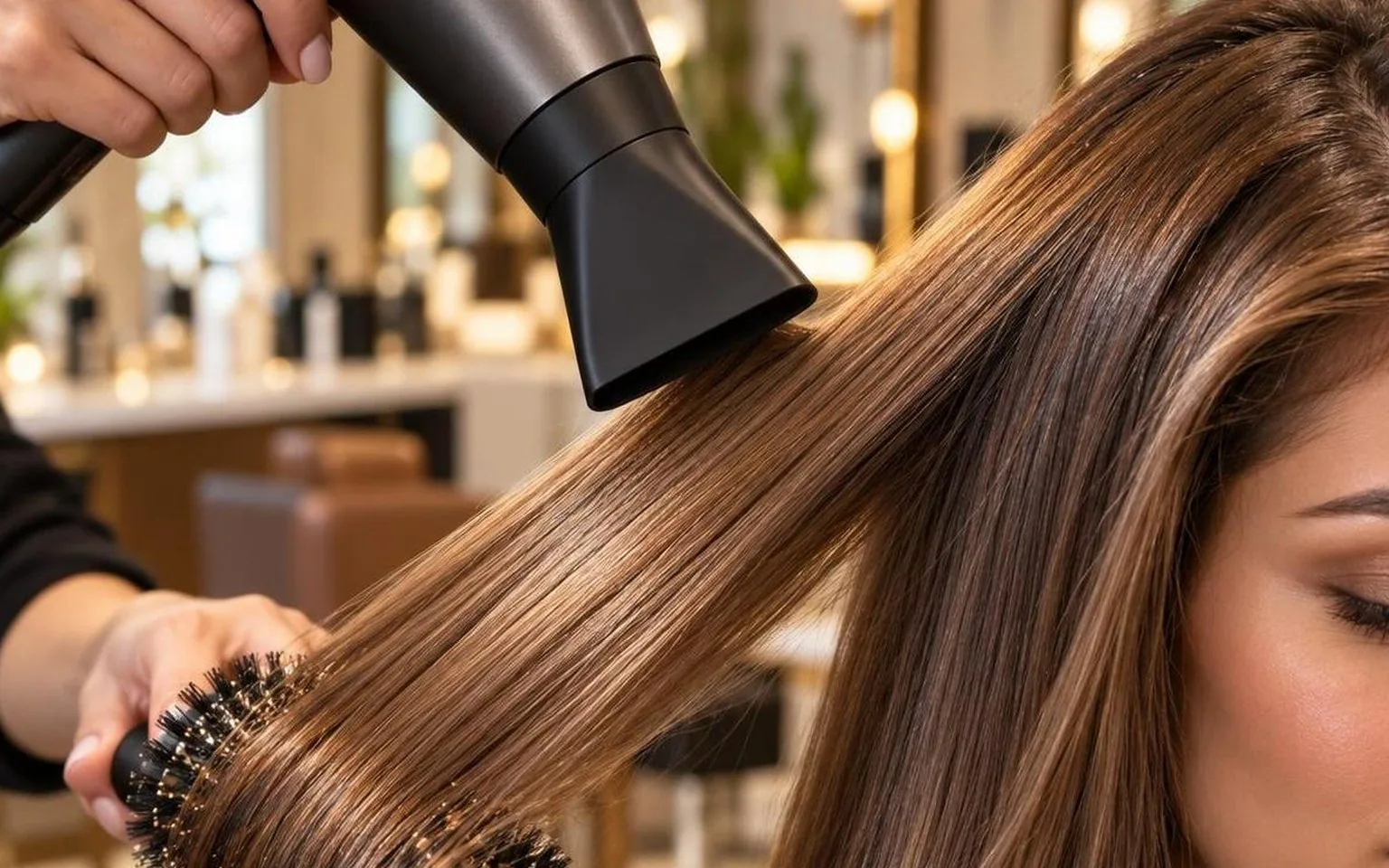
A concentrator nozzle narrows airflow to a rectangular slot typically 1–2 cm wide. This focuses velocity onto a specific section, pushing cuticle scales closed in one direction.
The result is measurably smoother strands with higher light reflectance.
A diffuser disc spreads airflow across 10–15 cm of surface area through multiple prongs or fingers. Air velocity drops, but coverage increases.
Curls dry in their natural clump formation rather than being disrupted by a single jet of forced air.
Side-by-Side Performance Metrics
| Factor | Concentrator | Diffuser |
| Airflow pattern | Narrow, directional (1–2 cm slot) | Wide, dispersed (10–15 cm disc) |
| Ideal hair texture | Straight to wavy (type 1–2B) | Wavy to coily (type 2A–4C) |
| Avg. drying time, medium-density shoulder-length hair | 8–12 minutes | 15–25 minutes |
| Frizz control method | Seals cuticle via directed airflow | Reduces disruption via low velocity |
| Volume effect | Smooths and compresses volume | Preserves or enhances natural volume |
| Recommended heat setting | Medium to high (70–80 °C at nozzle) | Low to medium (50–60 °C at prong tips) |
| Distance from scalp during use | 10–15 cm | Direct contact to 5 cm |
Technique Differences That Affect Results
With a concentrator, the stylist angles the nozzle downward at roughly 45 degrees, following the direction of the cuticle. The nozzle stays parallel to the brush or comb, moving root to tip in each section.
With a diffuser, the technique reverses. Hair is gathered into the bowl from the ends upward, then pressed toward the root. The dryer stays stationary for 30–60 seconds per section to set each curl clump without breaking its shape.
- Concentrator users should keep each section no wider than the nozzle opening — typically 6–8 cm — for adequate tension and heat coverage.
- Diffuser users get better definition by tilting the head to each side, letting gravity assist clump formation while drying.
- Switching between attachments mid-blowout is valid: diffuse roots for volume, then concentrate mid-lengths and ends for smoothness on type 2A–2B hair.
Hold and Longevity
A concentrated blowout on straight hair typically holds 2–3 days with minimal touch-up, assuming humidity stays below 60%. The sealed cuticle resists moisture reversion effectively.
Diffused curls hold their defined shape for 1–2 days before requiring refresh. A light mist of water reactivates styling product and restores clump definition without full re-drying.
Common Mistakes to Watch
- Using a concentrator on curly hair without a brush — this creates undefined frizz rather than smooth strands.
- Holding a diffuser too far from the hair — beyond 5 cm, it functions as an unfocused dryer and defeats its purpose.
- Running a concentrator on maximum heat without movement — dwelling more than 7 seconds on one spot risks cuticle damage.
The right attachment is dictated by the texture sitting in the chair, not personal preference. Match the tool to the structure and the result follows predictably every time.
Where the Alternatives Win and Lose
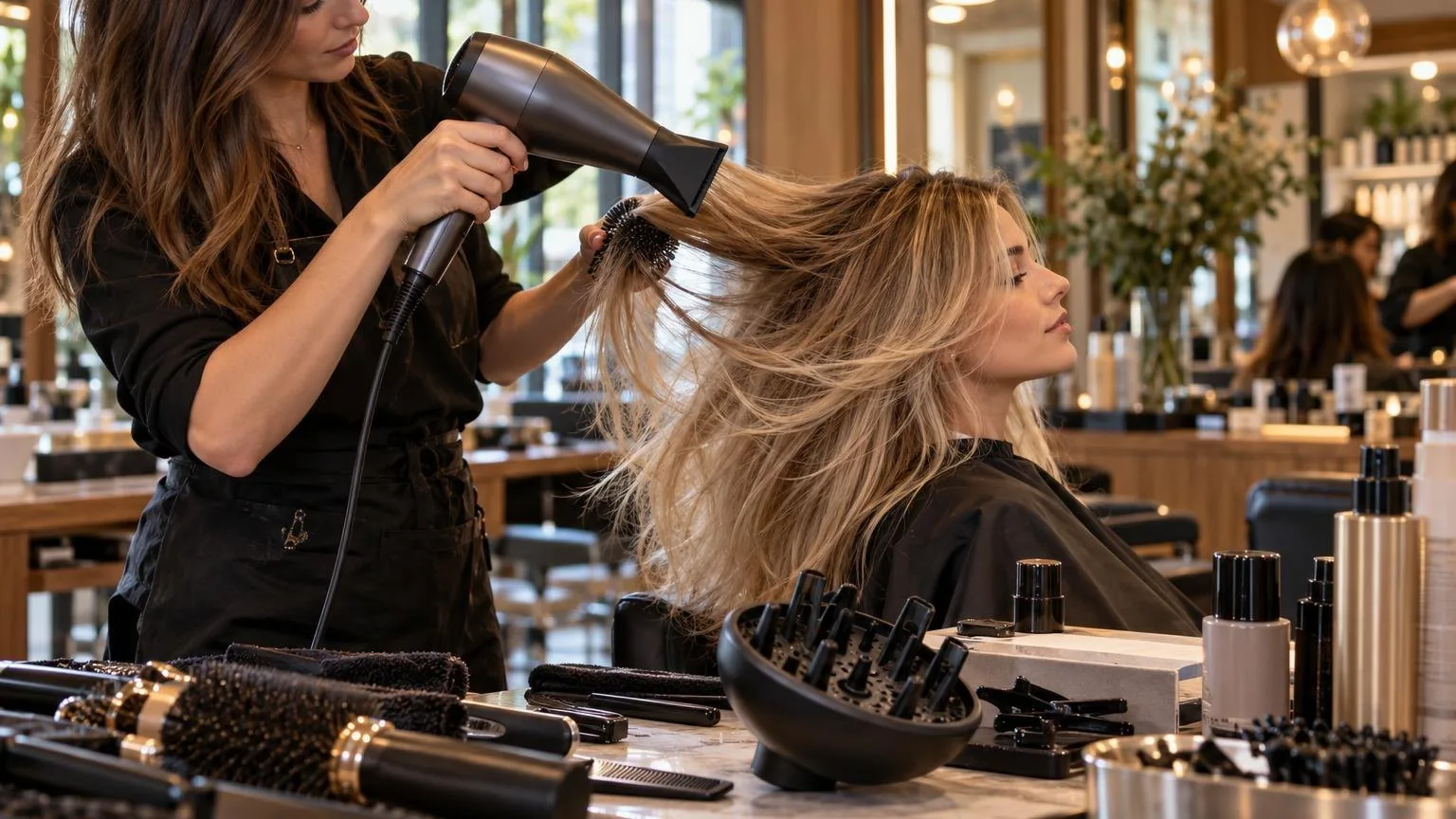
Diffusers distribute airflow across a wide area at lower velocity, preserving curl pattern and reducing frizz. Concentrators funnel air into a narrow stream for targeted smoothing and tension styling.
Each attachment solves a different structural problem in the hair shaft.
The core trade-off is speed versus texture preservation. A concentrator finishes a blowout faster but can destroy wave formation. A diffuser protects curl integrity but extends drying time significantly.
Airflow and Temperature Comparison
| Attribute | Diffuser | Concentrator |
| Nozzle opening width | 10–15 cm diameter bowl | 6–9 cm wide, 3–5 mm slot |
| Air velocity at hair | Lower (dispersed across prongs) | Higher (channelled into a focused stream) |
| Recommended heat setting | Medium: 60–80 °C | Medium-high: 80–100 °C |
| Typical drying time (medium-density, shoulder-length hair) | 15–25 minutes | 8–15 minutes |
| Best hair types | Type 2B–4C waves and coils | Type 1–2A straight to slight wave |
Where the Diffuser Wins
- Curl definition: The bowl shape and prongs cradle sections without displacing them. Curls set in their natural clump formation rather than being blown apart.
- Reduced frizz on textured hair: Lower air velocity means less disruption to the cuticle layer, which sits flatter when not hit by a concentrated jet.
- Volume at the root for fine curls: Tilting the head and cupping sections upward with the diffuser bowl lifts roots without elongating the curl pattern.
Where the Diffuser Loses
- Speed: Dispersed airflow dries hair 40–60 % slower than a concentrator on equivalent settings.
- Smoothing control: It cannot direct air along a section wrapped around a round brush. The wide airflow pattern undermines tension-based techniques.
- Precision styling: Finishing work like bevelling ends or sealing a fringe demands a narrow stream a diffuser cannot produce.
Where the Concentrator Wins
- Section control: The narrow slot lets stylists aim airflow parallel to the hair shaft, sealing cuticles in one direction for maximum smoothness and shine.
- Round-brush compatibility: A 43 mm or 53 mm barrel paired with a concentrator nozzle creates consistent tension across each section for a polished, bouncy result.
- Speed to finish: Focused airflow at higher velocity removes moisture faster, cutting appointment time on straight-to-wavy clients.
Where the Concentrator Loses
- Curl destruction: The narrow, high-velocity stream separates curl clumps and roughens cuticles on textured hair, producing frizz rather than definition.
- Heat concentration risk: Holding a concentrator closer than 15 cm to a single spot for more than 5–7 seconds can push surface temperature past 150 °C, risking thermal damage to the cortex.
- Poor results on coily hair: Type 3B and above shrinks and tangles under directed airflow, making the concentrator counterproductive without prior stretching.
Practical Guidance
Stock both attachments. Most professional dryers ship with a concentrator only. Adding a universal diffuser — typically fitting nozzle diameters of 4.5–5.5 cm — costs little and doubles the texture range a station can serve.
Switch attachments mid-service when needed. Dry roots with a concentrator for lift, then finish mid-lengths and ends with a diffuser to protect existing wave. This hybrid approach saves 3–5 minutes versus diffusing the entire head.
Protecting the Hair While You Work
Both attachments protect hair differently because they control airflow distribution. A concentrator narrows the stream to roughly 1–2 cm at the nozzle opening, intensifying heat on a small section.
A diffuser spreads air across a 10–15 cm diameter disc, lowering velocity and dispersing thermal energy.
Understanding how each attachment interacts with the cuticle layer determines whether you preserve moisture, reduce frizz, or cause unnecessary thermal stress during every service.
Heat Distribution: Concentrator
A standard concentrator nozzle measures approximately 7–9 cm wide and 0.5–1.5 cm at the slot opening.
This funnels air into a focused stream that can reach the hair surface at temperatures between 80–100 °C when measured 5 cm from the nozzle tip.
The narrow airflow means each subsection receives concentrated heat. Working distance matters: holding the nozzle 10–15 cm from the hair surface drops the temperature reaching the strand by roughly 30–40 %.
Stylists should keep the nozzle angled at approximately 45 degrees, pointing down the hair shaft from root to end. This smooths the cuticle flat rather than lifting it, which reduces frizz and increases light reflection.
Heat Distribution: Diffuser
A diffuser disc typically spans 10–15 cm in diameter with prongs (fingers) ranging from 2–5 cm in length.
Air exits through multiple holes across the disc surface, reducing velocity from approximately 15–20 m/s to about 5–8 m/s.
Lower velocity means less mechanical disruption to the curl pattern. The distributed airflow also reduces peak surface temperature on any single strand, typically keeping contact heat below 70 °C at a normal working distance of 3–8 cm.
Comparative Thermal Impact
| Factor | Concentrator | Diffuser |
| Nozzle/disc diameter | 7–9 cm wide, 0.5–1.5 cm slot | 10–15 cm disc |
| Typical airflow velocity | 15–20 m/s | 5–8 m/s |
| Surface temperature at working distance | 80–100 °C at 5 cm | Below 70 °C at 3–8 cm |
| Cuticle action | Smooths when angled correctly | Minimal disruption |
| Best working distance | 10–15 cm from hair | 3–8 cm or cradling curls |
Practical Protection Strategies
- Apply a heat protectant rated for temperatures up to 230 °C before using either attachment. Distribute evenly from mid-lengths to ends.
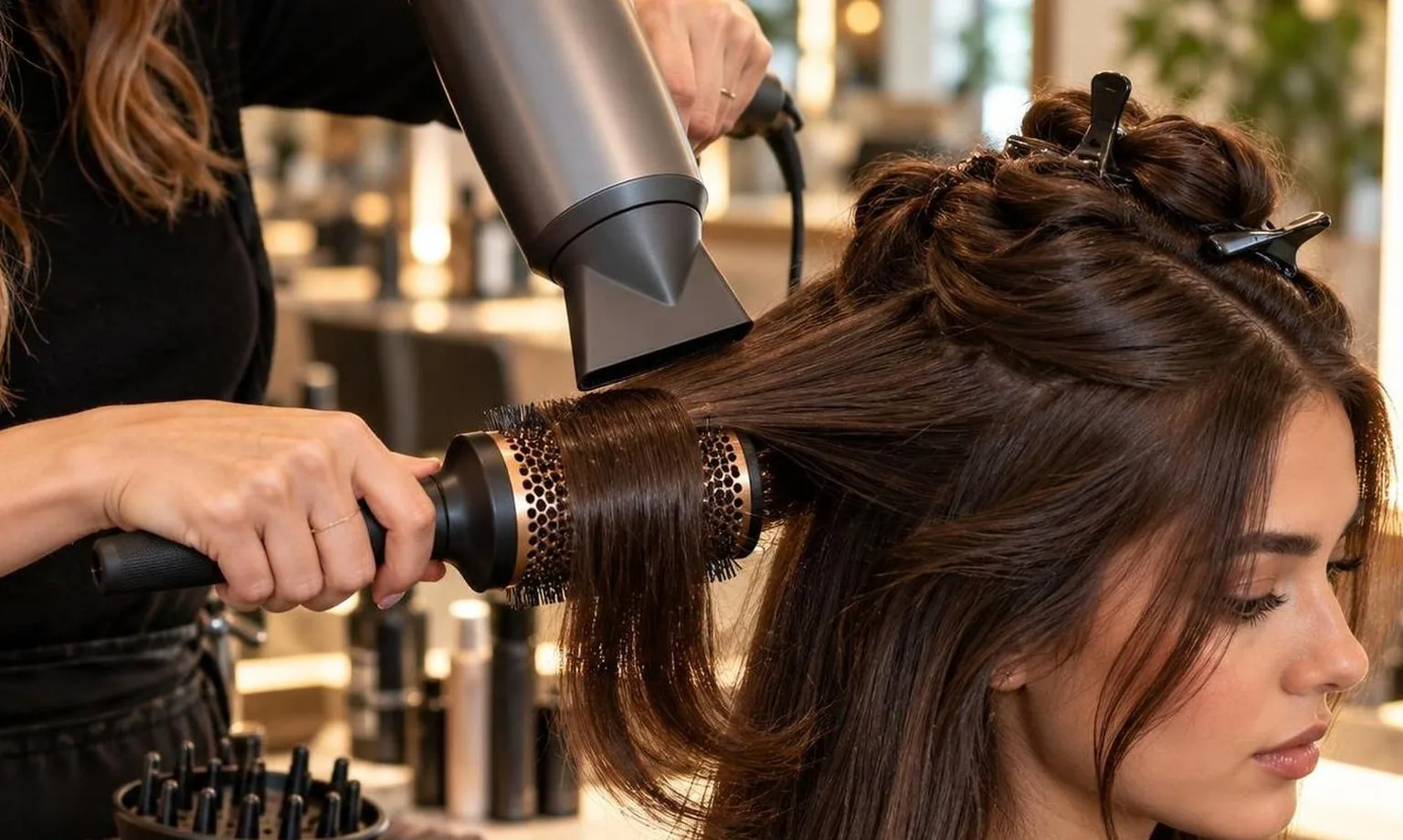
- Section hair into clips of roughly 2–3 cm depth when using a concentrator. Thinner sections dry faster, reducing total heat exposure time per strand.
- Use the dryer’s medium heat setting (typically 60–70 °C at the unit) with a diffuser for textured or curly hair. High heat is rarely necessary given the close working distance.
- Limit drying time per section to 15–20 seconds with a concentrator before moving on. Return for a second pass rather than holding heat in one place.
- With a diffuser, cup curls upward into the prongs and hold for 20–30 seconds per section without scrunching aggressively, which disrupts clump formation.
Moisture Retention
Hair that starts at roughly 30 % water content after towel-drying should finish at approximately 5–10 % moisture. Over-drying below that range causes brittleness and static.
A diffuser’s gentler airflow makes it easier to stop at the right point.
With a concentrator, the focused stream can push sections past that threshold quickly. Monitor strand feel: hair that sounds “squeaky” when pinched between fingers has likely lost too much moisture.
Stop drying and move to the next section.
Frequently Asked Questions
What is the core functional difference between a diffuser and a concentrator?
A concentrator compresses airflow into a narrow slot (typically 60–75 mm wide) to direct heat onto a specific section of hair.
A diffuser disperses airflow through multiple prongs or fingers across a wide disc (usually 120–150 mm diameter), distributing heat over a larger area at lower velocity.
Which attachment works better for straight blowouts?
The concentrator. Its focused stream lets you chase a round brush down the hair shaft, sealing the cuticle in one direction.
Tension plus directed heat at 80–90 °C measured at 15 cm from the nozzle creates the smooth, flat finish that defines a classic blowout.
Why do stylists recommend diffusers for wavy and curly textures?
Diffusers reduce air speed from roughly 20 m/s to under 8 m/s, preventing frizz caused by disrupting the curl pattern. The prongs cradle sections of hair, allowing curls to set in formation rather than being blown apart by concentrated force.
Does using a concentrator increase the risk of heat damage compared to a diffuser?
Concentrated airflow delivers more heat per square centimetre of hair. At the same dryer setting, surface temperature on the strand can read 30–40 °C higher under a concentrator than a diffuser at equal distance.
Lower speed settings and continuous brush movement offset this.
Can you use a diffuser on straight hair for added volume?
Yes. Flipping the head upside down and cupping sections into a diffuser at medium heat lifts the root area without flattening mid-lengths.
This technique is common in editorial prep when a stylist needs body without the polished direction a concentrator gives.
What concentrator width should a blow dry bar stock?
Most professional nozzles range from 60 mm to 90 mm wide. Narrower nozzles (60–65 mm) suit precision smoothing and fringe work.
Wider nozzles (75–90 mm) cover more surface area per pass, reducing total dry time on thick, long hair by an estimated 15–20 percent.
How do you attach a universal diffuser to a dryer it was not sold with?
Measure the dryer barrel’s outer diameter — common sizes are 45 mm, 50 mm, and 55 mm. Universal diffusers ship with silicone adapter rings sized to these increments.
Slide the correct ring onto the barrel, then press-fit the diffuser until it clicks or seats firmly.
Should you change dryer temperature when switching between attachments mid-service?
Standard practice is to drop one heat setting when moving from diffuser to concentrator on the same client.
The concentrator’s focused stream compensates with higher localised temperature, so reducing the dryer’s output keeps the effective heat on the strand roughly consistent and within a safe working range.
Related Reading
- Hair dryer wattage, and why more is not better
- How hot a dryer actually runs at the hair
- Cleaning a dryer filter, and how often it needs it
- What heat protectant does, and what it cannot do
- How long a dryer can run before it needs a rest
- Ceramic or tourmaline: what changes inside the barrel
- How long a hair dryer lasts, and what shortens it
- Boar, nylon or mixed: choosing round brush bristles
- What a paddle brush is actually for
- The complete guide to blow dry tools